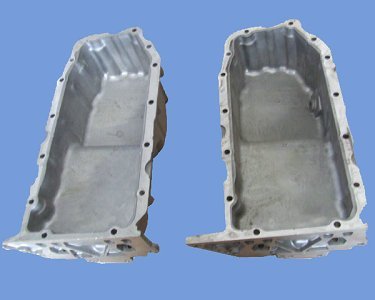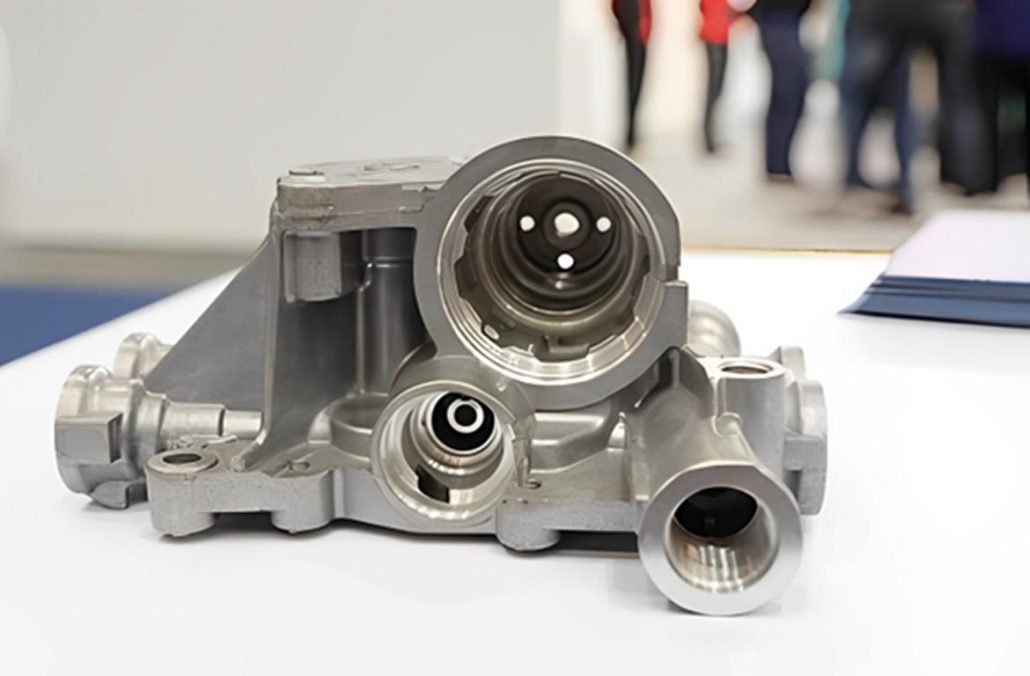
ما هي أجزاء زماك الزنك المصبوبة بالقالب الزنك

شركة صب القوالب, مُصنِّع قوالب الصب بالقالب, أجزاء الصب بالقالب, منتجات الصب بالقالب, صب الزنك بالقالب

يُشار إلى أجزاء صب الزنك بالقالب بالقالب بعملية الغرفة الساخنة. إنها الطريقة التي يتم من خلالها تسخين الزنك (الزماك) تحت درجات حرارة عالية ويتم دفع المادة المنصهرة في قالب الصب بالقالب الزنك تحت ضغط عالٍ لإنتاج منتج بشكل مماثل للقالب. وبينما يتحرك المعدن عبر القالب، يتسرب الهواء من خلال الفتحات. وبمجرد أن يمتلئ القالب، يتم الحفاظ على الضغط العالي حتى يتصلب ويتم فصل القالب لتحرير قالب الزنك المصبوب النهائي. بعد الصب، لا يلزم عادةً إجراء أي تعديل إضافي. استخدام الزنك الصب بالقالب الزنك يُعرف الزنك (الزماك) بقوته العالية ودقته وليونته وسهولة صبه وتوصيله الحراري والكهربائي العالي وعمره الطويل. وعلى هذا النحو، يتم استخدام قالب الصب بالزنك في تصنيع مواد صناعية ومواد بناء عالية الجودة. بدأ الصب بالقالب في صناعة السيارات ولا يزال يستخدم على نطاق واسع في تصنيع مكونات السيارات. غلاف أقفال الأبواب، والبكرة، وعمود الكامات هي بعض أجزاء السيارة المصنوعة من الزنك المصبوب. وفي صناعة البناء والتشييد، يُستخدم صب الزنك في تصنيع مكونات مثل مقابض الأبواب والحنفيات والأسقف. من ناحية أخرى، هناك العديد من أجزاء ماكينات صب الزنك، مثل التركيبات الكهربائية. عملية صب الزنك بالقالب يتم صب الزنك باستخدام عملية الغرفة الساخنة نظراً لانخفاض درجات حرارة انصهاره. يتم تطبيق عملية الغرفة الباردة في صب المعادن ذات درجات حرارة الانصهار العالية مثل الألومنيوم. تتضمن عملية صب الزنك بالقالب تحضير المعدن وإعداد القالب والتشطيب. وتبدأ بتحضير القالب متبوعًا بالمعدن. وتجدر الإشارة إلى أنه يمكن استخدام القالب مرة واحدة أو عدة مرات حسب المكوّن الذي يتم تصنيعه. إذا تم استخدامه من قبل، فيجب تشحيمه لتسهيل إزالة المعدن المصبوب. بعد ذلك، يتم شد نصف قالب القاذف ونصف قالب الغطاء. يحتوي نصف قالب الغطاء على ذرب يتم من خلاله حقن المعدن المنصهر بينما يحتوي قالب القاذف على دبابيس قاذفة لإزالة المسبوكات. ويتبع تحضير القالب صهر سبيكة ZA أو سبيكة ZAMALAK في فرن. تحدد الخصائص الفيزيائية للمنتج اختيار السبيكة. نظرًا لصلابة المعدن وقوته، عادةً ما تكون درجة حرارة الفرن عالية جدًا. تتم إزالة الأجزاء المؤكسدة من المعدن في هذه المرحلة لرفع نقاء المنتج النهائي. ويمكن إضافة مواد كيميائية مختلفة لتحسين الخواص الفيزيائية للسبيكة النهائية. بمجرد تحضير المعدن المنصهر، يتم حقنه في نظام التغذية تحت ضغط عالٍ. تحتوي معظم الأنظمة على العديد من القوالب لتحقيق الكفاءة والإنتاج الضخم. ويضمن الضغط المرتفع دخول سبيكة الزنك المنصهر إلى القالب بأسرع ما يمكن، وعدم دخول الهواء إلى المعدن المنصهر، وطرد الهواء الموجود في القالب من خلال فتحات التهوية. بعد ملء القالب، يتم رفع الضغط أكثر حتى تتصلب سبائك الزنك المصبوبة. تتضمن العملية أيضًا التبريد باستخدام الماء. بعد ذلك، يتم فصل القالبين وإزالة المعدن المصبوب. ويلي ذلك تنظيف نظام التغذية للتخلص من الوميض. يمكن إجراء المزيد من التشطيبات اعتمادًا على الاستخدام النهائي للمنتج. عادةً ما يتم إعادة تدوير العداء الذي تتم إزالته من المنتج النهائي والفلاش.
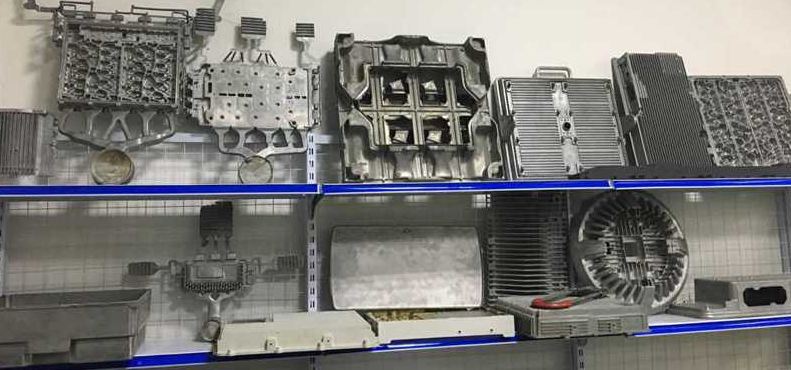
شركة تصنيع قوالب صب الألومنيوم بالجملة

أجزاء الصب بالقالب

مُصنِّع قوالب الصب بالقالب, أجزاء الصب بالقالب

عمليات التصنيع والتشطيب لقطع الصب بالقالب الجاهزة للتجميع. على مدار 20 عامًا، قدمت شركة CNM لصب القوالب، Incorporated، قطع وخدمات صب القوالب من الألومنيوم والمغنيسيوم والزنك عالية الجودة. تتخصص شركة CNM TECH في تصميم وهندسة وإنتاج الأجزاء المصبوبة بالقالب المعقدة في مجموعة كبيرة من الأحجام. يتفوق فريقنا المتمرس من المهندسين والفنيين والمصممين والميكانيكيين وعمال التشطيبات وموظفي الإنتاج لدينا في إنتاج مصبوبات دقيقة يتم تشكيلها بدقة متناهية وفقًا لتفاوتات دقيقة ويتم تشطيبها وفقًا لمواصفات العميل وتسليمها جاهزة للتجميع. بغض النظر عن الكمية، ونوع الجزء، والسبائك، والتشطيبات المصبوبة والتشطيبات التجميلية، فإن شركة CNM TECH هي شريك في مجال صب القوالب يعتمد على الحلول ويعمل معك لإنتاج أفضل المنتجات الممكنة بفعالية من حيث التكلفة والكفاءة. من أجل توريد أجزاء الصب بالقالب الجاهزة للتجميع، تحتفظ شركة CNM TECH لتصنيع قوالب الصب بالقالب بمتجر ماكينات إنتاج مجهز بالكامل. وهي مزودة بميكانيكيين ذوي خبرة في العمل مع الألومنيوم والزنك. هنا، يمكن لأدوات الماكينات الحديثة، المدعومة بالصيانة الدورية وبرنامج التحكم في العمليات الإحصائية، إنتاج كميات إنتاج من الأجزاء عالية الجودة لتلبية جداول التصنيع الخاصة بك. تمتلك شركة CNM TECH القدرة على التعامل مع متطلبات التصنيع الآلي حيث يجب أن تكون التفاوتات المسموح بها في حدود عشرة آلاف من البوصة وحيث يجب توفير سجلات مراقبة جودة الإنتاج. كما تحتفظ شركة CNM TECH أيضًا بعلاقات عمل وثيقة مع الموردين المحليين لمجموعة متنوعة من خدمات التشطيب مثل الطلاء والأكسدة والطلاء. وهذا يضمن لك تدفقًا سلسًا للعمل من خلال مصدر واحد ومسؤول، وفي الوقت نفسه، يوفر لك إمكانية الوصول إلى مجموعة واسعة من خيارات التشطيب. قدرات المخزون لتلبية احتياجات الإنتاج في الوقت المناسب. تقوم شركة CNM TECH بتخزين مخزون قطع الغيار للعملاء الذين لديهم جداول إنتاج في الوقت المناسب. بمجرد تحديد مستوى مخزون محدد مسبقًا، يمكننا وضع جداول التصنيع للحفاظ على المخزون الذي تحتاجه. ويساعدنا في التسليم الفعلي لقطع الغيار موقعنا المركزي وسهولة الوصول إلى الطرق السريعة بين الولايات. دعنا نتحدث عن الفرق الذي يمكن أن تحدثه الجودة في أجزاء الصب بالقالب الخاص بك. إذا كنت مهتمًا بخفض معدل رفض الصب الحالي الخاص بك أو إذا كنت تشعر أن كميات الأجزاء الخاصة بك تصل إلى حجم يمكن أن يبرر صب القوالب، يرجى الاتصال بنا. لقد استثمرنا الكثير من أنفسنا في الحفاظ على معايير صارمة لمراقبة الجودة ونود أن نضع هذا الاستثمار في العمل من أجلك. يمكن تعبئة الأجزاء الجاهزة حسب أي مواصفات للتسليم في الوقت المناسب في أي مكان في البلاد. يضع موقع CNM TECH منطقة الغرب الأوسط العلوي بأكملها ضمن وقت التسليم الليلي.  

صب الألومنيوم بالقالب

خدمة صب القوالب الصينية

صب القوالب الألومنيوم, شركة صب القوالب, مُصنِّع قوالب الصب بالقالب, صب الزنك بالقالب

القدرة على تلبية احتياجاتك من الألومنيوم والمغنيسيوم والزنك والصب بالقالب الفراغي. الألومنيوم الصب بالقالب الألومنيوم يتطلب توفير أجزاء صب قوالب الألومنيوم عالية الجودة بأسعار تنافسية معدات صب القوالب الحديثة. ولتقليل الآثار التي تتركها درجات حرارة التبريد القصوى على القوالب تقوم شركة CNM TECH بتحويل نظام تبريد القوالب من الماء إلى الزيت. يحافظ الزيت على درجة حرارة أكثر دفئًا للقالب مما يساهم في الحصول على صب أكثر اتساقًا ويطيل عمر القالب، وهو عامل مهم في تكاليف القِطع. تعمل شركة CNM TECH لصب القوالب على تكييف أدوات التحكم الآلي لتشغيل ماكينات الصب بالقالب. وهذا يسمح بزيادة كبيرة في معدلات الإنتاج، وهو أمر مهم في كل من التحكم في التكاليف وتلبية متطلبات التسليم. كما يتيح لنا أيضًا استخدام موظفينا بطرق تستفيد بشكل أفضل من مهاراتهم وخبراتهم. ولخفض تكاليف الإنتاج، قامت شركة CNM TECH لتصنيع قوالب الصب بالقالب بتطوير أفران صهر الألومنيوم الجديدة منخفضة الحجم والموفرة للطاقة وحصلت على براءة اختراعها. نظرًا لإمكانية صهر الألومنيوم بكفاءة بكميات صغيرة، فإن ذلك يسمح للشركة بتزويد ماكينات الصب بسبائك مختلفة من الألومنيوم في وقت واحد. لا يتعين على آلات الصب أن تقف في انتظار فرن كبير لتزويدها بالسبائك المناسبة. لا يتم بناء الجداول الزمنية حول السبيكة الموجودة في الفرن. صب الزنك بالقالب بالنسبة للتطبيقات التي تكون فيها قوة الصدمات العالية والتكلفة المنخفضة وحدود الأبعاد القريبة من اعتبارات التصميم المهمة، يلعب صب الزنك بالقالب دورًا مهمًا. يسمح الزنك عادةً بمعدلات إنتاج أعلى من الألومنيوم ويمكن تصميم الأجزاء بمقاطع عرضية أرق. وتتميز الأجزاء الناتجة بمقاومة عالية للتآكل وتقبل مجموعة متنوعة من التشطيبات الجميلة. يتم الحفاظ على معدلات إنتاج عالية وجودة موحدة من خلال ماكينات الصب بالقالب المزودة بمستخلصات أوتوماتيكية. الصب بالقالب بالقالب التفريغي يُفضل العديد من مشتري الصب بالقالب التفريغي لأنه ينتج عنه جزء أقل مسامية. إن ماكينات Vert-a-Cast من شركة CNM TECH، التي تتمتع بقوة تثبيت تبلغ 400 طن، قادرة على إنتاج المسبوكات آليًا بوتيرة أسرع بكثير من الماكينات الأفقية التي يتم تشغيلها يدويًا. غالبًا ما تكون عملية الصب بالقالب بالتفريغ، وهي إحدى قدرات CNM TECH منذ عشر سنوات، هي الطريقة الاقتصادية الوحيدة لتلبية مواصفات المسامية الحرجة. يتم إنجاز أعمال الصيانة والإصلاح والتغييرات والتصحيحات على القوالب على الفور في ورشة الأدوات والقوالب المجهزة بالكامل في CNM TECH. يتم صهر مواد السبائك وتدفقها وتنظيفها في الفرن المركزي قبل نقلها إلى معدات الصب بالقالب. إذا كان لديك أي متطلبات لصب القوالب، فنحن نرحب بك لإرسال متطلباتك إلينا للحصول على عرض أسعار.

أجزاء الصب بالقالب

أجزاء الصب بالقالب عالية الجودة

شركات صب القوالب, شركة صب القوالب, مُصنِّع قوالب الصب بالقالب, أجزاء الصب بالقالب, صب الزنك بالقالب

مصدرك عالي الجودة لمسبوكات الألومنيوم والمغنيسيوم والزنك المصبوبة بالقالب؛ مُصنَّعة ومُنتهية وجاهزة للتجميع. من خلال وضع جودة المنتج كهدف للشركة، ارتقت شركة CNM Die Casting إلى قمة صناعتها خلال السنوات العشر الماضية. يتطلع مشترو قوالب الصب بالقالب إلى شركة CNM TECH للمساعدة في الحد من مشاكل الرفض التي واجهوها مع موردي أجزاء المكونات الأخرى. واجهت إحدى الشركات المصنعة لصمامات الغاز الطبيعي مستويات رفض تصل إلى 40% حتى تم صبها بواسطة CNM TECH. والآن، لم يفشل سوى عدد قليل جدًا من أجزائها في تلبية مستوى اختبار صارم يصل إلى 100% لتسريبات الضغط. الجودة المبنية على الخبرة الهندسية في شركة CNM TECH Die Casting، تبدأ الجودة بالمساعدة الهندسية ذات الخبرة. تُعد الاستشارات بشأن تصميم القِطع واختيار سبائك الألومنيوم جزءًا من الخدمة. في بعض الأحيان، يمكن أن تؤدي التغييرات الطفيفة في تصميم القِطع إلى زيادة معدلات الإنتاج والقضاء على مشاكل الجودة المحتملة. والنتيجة النهائية هي جزء أفضل بتكلفة أقل للوحدة. للتأكد من مطابقة أجزاء الصب بالقالب النهائي لمواصفات السبائك، يتم فحص كل من المواد الواردة وعينات المنتج النهائي على مطياف جاريل-آش. الجودة التي تتحرك مع الإنتاج بدلاً من مجرد فحص الجزء النهائي يبدأ الإنتاج بعد قبول تصميم الجزء النهائي. ثم يبدأ برنامج مراقبة الجودة لدينا سلسلة من الفحوصات لتحديد أن الجزء قد تم إنتاجه ضمن التفاوتات المسموح بها المحددة. أولاً، يتم اختبار السبائك للتأكد من مطابقتها لمواصفات عملائنا. بعد ذلك، يوفر أخذ العينات الإحصائية أثناء عمليات الصب والتصنيع الآلي إنذارًا مبكرًا بعيوب التصنيع ويساعد على منع إنتاج أجزاء تامة الصنع معيبة. يمكن تحديد ترددات الفحص مسبقًا حسب متطلبات الوظيفة للتأكد من أن الأجزاء التي تتلقاها هي أجزاء يمكنك استخدامها. تسمح ماكينة قياس الإحداثيات الثلاثية (CMM) بفحص أبعاد القِطع المكتملة مقابل المواصفات المخزنة بالكمبيوتر للتأكد من الحفاظ على الدقة طوال فترة الإنتاج بأكملها. يمكن أيضًا إجراء اختبار التعب للأجزاء المكتملة في ظل ظروف تشغيل محاكاة إذا طلب العميل ذلك. وسواءً كانت مواصفاتك تتطلب إحكام الضغط، أو الأبعاد والتفاصيل الحرجة، أو الخلو من الانقطاعات تحت السطح، فإن موظفي ضمان الجودة في CNM TECH لديهم المعدات والتدريب اللازمين للمهمة. ويساعدنا برنامج الفحص المنتظم على معدات الصب والتشغيل الآلي في الحفاظ على تفاوتات متقاربة. إن المعدات التي تكون في أفضل حالة تشغيلية تفيد عملاءنا من حيث انخفاض التكاليف وتقليل المهل الزمنية. يمكن لموظفي الصيانة داخل المصنع تصحيح مشاكل الماكينات بسرعة وتسهيل تدفق الإنتاج. سيعرّفك هذا الكتالوج على الإنترنت بقدراتنا ويمنحك جولة موجزة في منشأتنا. يشاركنا أكثر من 150 موظفًا اهتمامنا بتوفير تسليم أجزاء الصب بالقالب الجاهزة للتجميع في الوقت المحدد وهدفنا المتمثل في السعي لتحقيق أعلى مستويات الجودة. يتوفر مهندسو CNM TECH للتشاور في مراحل التصميم المبكرة للمساعدة في ضمان تلبية الأجزاء النهائية لمتطلبات التفاوت والجودة مع الاستخدام الاقتصادي لعمليات الصب بالقالب. تُستخدم آلة قياس الإحداثيات الإحداثية لقياس المسبوكات مقابل التفاوتات المحددة. يمكن لتقنيات ضمان الجودة الصارمة التي أثبتت جدواها والمطبقة في مصنع CNM TECH لصب القوالب أن تلبي المعايير الصناعية الأكثر تطلبًا.

الماكينات الهندسية الصينية

الماكينات الهندسية الصينية

In 2011, the competition in the hex bolt China engineering machinery market will be more intensely, on the basis of enhancing domestic enterprises’ self-confidence previously, the battle of Chinese engineering machinery market is bound to become fiercely, except the competition between domestic jaw crusher brands, the competition with foreign brands also will continue to upgrade with the pace of China local enterprises’ international development accelerating. China blow molding machine market has attracted international attention with its rapid development in 2010. Under the guidance of the state a series of correct measures, the bag making machine industry economic operation maintains steady and rapid growth; the main economic benefit indices are better. 2011 is the beginning year of the Twelfth Five Year, under the pressure of the state strengthening the macroeconomic regulation and the real estate industry’s control, the growth rate of engineering plastic valve industry will fall back significantly. Under the inflation pressure, the terminal sales of blow molding machine industry will be influenced to a certain degree. But these are not able to stop the engineering machinery market to go strong clip continuously, the signing of the indemnification house construction sign military order and the new investment upsurge of water conservancy construction have shored up Chinese engineering machinery market to a great extent. The major medium-sized PVC fitting enterprises have begun to expand their production capacity and market share in 2010, which has left hidden unsafety for the overcapacity of engineering slitting machine market in 2011 or even the future. The capacity expansion has promoted the demand for engineering machinery market tending to saturation; however, the increasing white hot of engineering machinery market has speeded up the pace of capacity expansion. If this situation is not improved, the continuous cycle certainly will result in overcapacity. As for the current development situation of Chinese engineering machinery market, the products such as excavators, cranes and concrete machinery have huge development potential, and the market is optimistic. Take the excavator industry as an example, enterprises such as Wuliangye, Rongan, Chery and Geely have turned around the excavator market. Such a large scale cross-industry restructuring, combined with the uneven brand degree, product performance and quality of engineering machinery market, it not only will impact the whole industry sales, but also will trigger a series of low-end overcapacity, and even lead to unfair competition in the industry. In addition, at the beginning of this year, from the recruitment situation all over the country, we can see that the talent shortage is particularly acute in construction machinery industry, especially the urgent need for high-end integrated talent, not a “labour shortage ” can be described. The labour costs rising and the raw material costs increase is certainly a challenge for engineering machines industry. Especially at present, many enterprises are facing that no matter how high wages they provide, they still can’t recruit much-needed talent. In 2011, the competition in engineering machinery market will be even more intense, under the situation of all kinds of risks, China construction machinery industry must have a long-term perspective, while occupying mainland market actively, it also should accelerate the pace of approaching overseas market, speed up energy saving pace, and find new opportunities for the transformation development of machinery enterprise constantly in crisis.

عملية الصب بالقالب

صب القوالب الألومنيوم, صب القوالب, شركات صب القوالب, قالب الصب بالقالب, أجزاء الصب بالقالب, عملية الصب بالقالب

تمتلك شركة CNM Die Casting القدرة على تقديم العديد من المسبوكات بما في ذلك الصب بالقالب والصب الاستثماري والصب بالقالب الدائم والصب بالرمل لمجموعة كبيرة من السبائك، بما في ذلك جميع سبائك القوالب المصبوبة والعديد من سبائك القوالب الدائمة والعديد من سبائك المغنيسيوم. وقد حظيت عمليات التصنيع لدينا بالقبول في سوق الصب العالمي باعتبارها مساوية أو متفوقة على عمليات الصب بالقالب التقليدية. مزايا عملية الصب بالقالب CNM تحكم أفضل في الأبعاد تحكم أفضل في الأبعاد تحسين تفاوتات خط الفصل المتقاطع تقليل مسامية الغاز تحسين خصائص التوازن للأجزاء الدوارة النهائية استخدام إدخالات “الصب في المكان” تحسين الخواص الميكانيكية بسبب التعديل الفعال للسبائك تحسين خصائص التآكل بسبب البنية المجهرية الأصغر حجمًا للحبيبات تحسين المرونة فيما يتعلق بالسبائك وأنواع المسبوكات يستخدم قسم التصنيع في CNM Die Casting مفهوم خلية العمل ومعدات التصنيع المرنة عالية السرعة لإكمال العمليات الثانوية لمسبوكات CNM بحيث يكون الجزء أو التجميع الفرعي جاهزًا للتركيب عند مغادرته منشأتنا. لقد تطورت شركة CNM Die Casting واستجابت بقوة لطلبات العملاء لتوفير خدمات التصنيع الآلي والتجميع عالية السرعة دون نفقات رأسمالية أولية. ومن خلال احتساب جزء من تكلفة المعدات الموجودة في كل جزء، يستفيد العميل من عمليات التجهيز الأسرع والحد الأدنى من النفقات الرأسمالية الأولية. تقوم شركة CNM لصب القوالب بتشغيل 8 ماكينات صب القوالب، وصناعة قوالب الصب الداخلية الكاملة والتصنيع الآلي باستخدام الحاسب الآلي في منشأة تزيد مساحتها عن 20,000 قدم مربع في دونجوان، الصين. تتيح لنا قدراتنا التصنيعية المتكاملة، إلى جانب أكثر من 100 موظف، أن نكون شركة صب القوالب المتكاملة ذات الخدمة المتكاملة في مكان واحد، وأن نكون قادرين على المنافسة في الأسعار، مع الحفاظ على مستوى عالٍ من الجودة. فيما يلي مقارنة بين عمليات الصب بالقالب المعادن التي يمكن صبها الحد الأدنى والحد الأقصى للكتلة، كجم، 1تشطيب السطح، µ م. الحد الأدنى لحجم المقطع، مم، درجة السحب معدل الإنتاج، قطعة/ساعة الحد الأدنى للثقب المحفور، مم المسامية المسامية صب الرمل الألومنيوم الصلب CI وغيرها 0.03، 100 0.10، 200، 000 0.03، 50، 000 0.09 إلى 0.03 4 4 8 8 8 8 3 6 3.5 3.5 4 إلى 7 10 إلى 15 6 5 الصب الدائم للقالب صب الحديد الزهر الألومنيوم الألومنيوم والمغ 0.01، 50 0.01، 10 0.01 دقيقة 2 5 3 2 2 50 4.5 إلى 6 6 4 صب القوالب الألومنيوم المغنيسيوم الزنك 0.015، 35 0.015، 35 0.05، 35 0.05، 80 0.0015 0.0015 0.0015 1 1 1 1 0.8 1.2 0.5 0.5 2 2 2 2 2 2 2 75 إلى 150 من 75 إلى 150 من 300 إلى 350 2.5 2 2 2 مصبوبات استثمارية دقيقة من الصلب الألومنيوم 0.005، 25 0.002، 10 0.003، إلى 0.005 1 1 1 1 1 0.8 1 إلى 3 1 غير متاح 0.5 إلى 1.25 1 صب قشرة الصلب الحديد الزهر الألومنيوم 0.05، 120 0.03، 120 0.03، 50 0.03، 50 0.03، 15 0.01 إلى 0.003 6 6 6 2.5 3.5 3 3 1 1 1 1 1 1 1 1 الصب بالطرد المركزي الألومنيوم الصلب الحديد الزهر حتى 400 0.002 0.004 0.004 0.004 0.6 إلى 3.5 0.6 إلى 1.2 3 30 إلى 50 غير متاح 1 إلى

شركة تصنيع قوالب الصب بالقالب

صب القوالب الألومنيوم, أجزاء الصب بالقالب

CNM Die Casting is your one-stop, complete service Die Caster for various die casting parts including aluminum die casting, investment casting, sand casting. We offer you a single source for engineered die castings, together with cutting-edge engineering resources, advanced production capabilities and complete secondary finishing. CNM Die Casting supplies high-quality aluminum, zinc, brass and magnesium die castings. We operate our casting factory in DongGuan, China for various castings, machining, assembly and die building, with over 20,000 square feet of total floor space. We are a leader in innovative quality control systems. Our quality manufacturing system includes a process failure detection system at every casting press. Rigorous 100% inspection is as much a production operation as any other manufacturing step and is woven into the sequential standardized work to assure manufacturing quality in finishing and machining. As one of the divisions of CNM Manufacturing Group, CNM Die Casting can be more responsive to its customers and, simultaneously, offer more competitive, “made in China” pricing on quality products.   CNM Die Casting’s tooling department builds dies with state-of-the-art equipment. Along with our experienced engineering and tooling department, we design tooling and assist customers with casting design issues. Excellent control of design and tool building allows us to produce high quality tools and parts at lower cost, and more quickly than anyone else in the industry. Our Engineering and Tooling Department offers: Tool Engineers to ensure specifications and dimensional criteria are met to the customer’s requirements Design Engineers with the latest CAD/CAM technologies to design both product and tooling for the customer’s specification. Technical on-site product design assistance for die castings Production tooling built with CNC machines by in-house full capability large tooling facility state-of-the-art EDM machines rapidly burn cavities to near-finished condition with oscillating feed. Prototyping in the same tooling intended for production Production tools are built with premium grade materials

نبذة عن خدمات صب المعادن

صب القوالب الألومنيوم, شركات صب القوالب, أجزاء الصب بالقالب, صب القوالب بالضغط العالي, صب المغنيسيوم, صب المغنيسيوم بالقالب المغنيسيوم, صب الزنك بالقالب

Metal casting services involve the shaping of free-flowing liquid metals through the use of dies, molds, or patterns.  Castings are generally roughly finished due to the nature of their production.  In many cases, additional finishing is required to remove burrs and other artefacts of the casting process.  Metal castings services are used to design a wide range of components and finished products.  Everything from simple nails and fasteners to engine blocks can be fabricated using metal casting services.  Common metal casting processes include sand casting, die casting, permanent mold casting, investment casting, centrifugal casting, and lost foam casting. Sand Casting Sand casting is used to make large parts (typically iron, but also bronze, brass, aluminum). Molten metal is poured into a mold cavity formed out of sand (natural or synthetic). Sand castings generally have a rough surface, sometimes with surface impurities and surface variations. Die-casting includes a number of processes in which reusable dies or molds are used to produce casting.  The die contains an impression of the finished product together with it’s running, feeding and venting systems.  The die is capable of a regular cycle and of (quickly) dissipating the heat of the metal poured into it.  Once the liquid metal has cooled sufficiently, the mold is opened and the casting can be removed and finished. Permanent Mold Casting In permanent mold casting, molten metal is poured into cast iron molds, coated with a ceramic mold wash. Cores can be a metal, sand, sand shell, or other materials. When completed, the molds are opened and the castings are ejected.   Investment casting services involve molding patterns by the injection of a special wax into a metal die.  The patterns are assembled into a cluster around a wax runner system. The ‘tree’ of patterns is then coated with 8-10 layers of refractory material. The assembly is heated to remove the wax.  The hot mold is cast, and when cool, the mold material is removed by impact, vibration, grit blasting, high-pressure water blasting or chemical dissolution leaving the castings, which are then removed from the runner system. Centrifugal casting Centrifugal casting services are used to produce castings that are cylindrical in shape.  In centrifugal casting, a permanent mold is rotated about its axis at high speeds as the molten metal is poured. The molten metal is centrifugally thrown towards the inside mold wall, where it solidifies. The casting is usually a fine grain casting with a very fine-grained outer diameter, which is resistant to atmospheric corrosion, a typical need with pipes. The inside diameter has more impurities and inclusions, which can be machined away. Lost foam casting Lost foam casting (LFC) is metal casting services that use foam filled patterns to produce castings.  Foam is injected into a pattern, filling all areas, leaving no cavities.  When molten metal is injected into the pattern, the foam is burned off allowing the casting to take shape. Die casting Die casting and metal casting includes a number of processes in which reusable dies or molds are used to produce casting. The die is capable of a regular cycle and of (quickly) dissipating the heat of the metal poured into it. Once the liquid metal has cooled sufficiently, the mold or is opened and the casting can be removed and finished.   In the die casting process, molten metal is injected under pressure into a reusable mold or die. The die contains an impression of the casting together with it’s running, feeding and venting systems. The die is capable of a regular cycle and of (quickly) dissipating the heat of the metal poured into them. Once the liquid metal has cooled sufficiently, the mold or is opened and the metal casting can be removed and finished. high pressure die casting The high pressure die casting process is the most widely used, representing about 50% of all light alloy casting production. Low pressure die casting currently accounts for about 20% of production and its use is increasing. Gravity die casting accounts for the rest, with the exception of a small but growing contribution from the recently introduced vacuum die casting and squeeze casting process. the design of low pressure and gravity die casting dies for improved die filling, optimized solidification pattern and maximum yield. Gravity die-casting is suitable for mass production and for fully mechanized casting. Low-pressure die casting is especially suited to the production of components that are symmetric about an axis of rotation. Light automotive wheels are normally manufactured by this technique. Die casting metals can vary widely, and different die casting companies may have the ability to work with anyone or number of them. Some of the most common metal casting types include aluminum die casting, brass die casting, lead die casting (the most popular for model die casting), magnesium die casting, and zinc die casting. Hope all of that information is enough for your reference, but if you want to know more information, you are welcome to contact us by phone or email.

دروكجوس

صب الألومنيوم

Druckguss-Was ist Druckguss Druckgießen ist eine weitverbreitete, nicht ausfahrbare Technik, bei der Metall unter hohem Druck in den Formhohlraum gedrückt wird. Druckgießformen, die als Matrizen bekannt sind, können wiederholt zur Herstellung von Gussstücken in verschiedenen Größen, Formen und Wandstärken verwendet werden. Die Formhohlräume sind mit komplizierten Designs entworfen, die es ermöglichen, komplexe Formen mit Genauigkeit, Oberflächengüte und Attraktivität herzustellen. In den frühen Tagen des Druckgusses wurde nur ein Niederdruck-Einspritzverfahren verwendet, aber heutzutage werden Hochdruck-Druckgusstechniken wie Squeeze Casting und halbfeste Druckgussverfahren verwendet, um mehr als 4500 Pfund pro Quadratzoll zu gießen. Anfangs waren nur Zinn und Blei die Kaste, aber jetzt müssen auch Magnesium, Kupfer und andere Legierungen mit diesem sehr beliebten Verfahren gegossen werden. Druckguss-Prozess Bei diesem Verfahren werden geschmolzenes Metall oder andere Materialien unter hohem Druck in die Hohlräume der Stahlform gedrückt. Dies sind zweiteilige Formen, die aus legiertem Werkzeugstahl hergestellt sind – Die Fixierwerkzeughälfte und die Ausstoßwerkzeughälfte. Die Matrize oder Form wird mit dem Eindruck der Komponente hergestellt, die gegossen werden soll. Es gibt vier Arten von Formen: Einzelner Hohlraum, um eine Komponente zu produzieren Mehrere Hohlräume zur Herstellung einer Anzahl von identischen Teilen Einheit sterben um verschiedene Teile auf einmal zu produzieren Kombinationen sterben, um mehrere verschiedene Teile für eine Montage herzustellen Das geschmolzene Metall wird unter hohem Druck und hoher Geschwindigkeit in die Form eingespritzt, was dazu beiträgt, ein Gussteil herzustellen, das glatt und genau wie die ursprüngliche Form ist. Das Druckgießen erfolgt durch Anwendung von Druck unter Verwendung eines Kompressors, wodurch Luftblasen aus dem Formgummi eliminiert werden. Der Druck wird auf der Form aufrechterhalten, bis das heiße Metall erstarrt. Wenn das Metall gehärtet ist, wird die Form geöffnet, um das Gussteil zu entfernen. Es gibt verschiedene Varianten des grundlegenden Prozesses, mit denen Gussteile für bestimmte Anwendungen hergestellt werden können. Diese beinhalten: Pressgießen – Ein Verfahren, bei dem geschmolzene Legierung ohne Turbulenz und Gaseinschluss bei hohem Druck gegossen wird, um qualitativ hochwertige, dichte, wärmebehandelbare Komponenten zu erhalten. Semi-Solid-Moulding – Ein Verfahren, bei dem halbfeste Metallblöcke gegossen werden, um dichte, wärmebehandelbare Gussstücke mit geringer Porosität bereitzustellen. Legierungen verwendet Beim Druckguss werden vorwiegend Aluminium-, Kupfer-, Blei-, Zink- und Zinnlegierungen eingesetzt.Automatisierung In der heutigen Zeit werden hochentwickelte Druckgießmaschinen eingesetzt, die eine konsequente Qualitätskontrolle gewährleisten. Jeder maschinell bearbeitete Druckguss unterscheidet sich in dem Verfahren, bei dem geschmolzenes Metall in die Form gegossen wird. Automatisierungen werden verwendet, um Werkzeuge zu schmieren, das Metall in die Kammer zu gießen, usw. Zwei Verfahren, die als Heißkammer- und Kaltkammerverfahren bezeichnet werden, werden zum Druckgießen verwendet.Anwendungen Druckguss eignet sich am besten zum Gießen von mittelgroßen Teilen mit komplexen Details. Druckguss ist die größte Gusstechnik, die zur Herstellung von Konsumgütern, gewerblichen und industriellen Produkten wie Automobilen, Spielzeug, Teilen von Spülen, Steckergehäusen, Zahnrädern usw. verwendet wird. Die meisten Druckgussstücke werden aus Nichteisenmetallen wie Aluminum  Druckguss und Magnesium-Druckguss hergestellt , etc.Vorteile Ein wirtschaftlicher Prozess, der für eine breite Palette komplexer Anwendungen eingesetzt werden kann Teile haben eine längere Lebensdauer, Maßgenauigkeit und enge Toleranz Die Nachbearbeitung kann vollständig entfallen Ein Prozess, der vollständig automatisiert werden kann Form kann auch wiederholt verwendet werden.Nachteile Das Wurfgewicht muss zwischen 30 Gramm liegen. Gießen muss kleiner als 600 mm sein Hohe Anschaffungskosten Begrenzt auf hoch fließfähige Metalle.

جزء الصب بالقالب بالضغط العالي

ما هو الصب بالقالب

صب القوالب

What is die casting Die casting is a manufacturing process for producing accurately dimension, sharply defined, smooth or textured-surface metal parts. It is accomplished by forcing molten metal under high pressure into reusable metal dies. The process is often described as the shortest distance between raw material and finished product. The term, “die casting,” is also used to describe the finished part. The term “gravity die casting” refers to castings made in metal molds under a gravity head. It is known as permanent mold casting in the U.S.A. and Canada. What we call “die casting” here is known as “high pressure die casting” in Europe. How are die castings produced First, a steel mold capable of producing tens of thousands of castings in rapid succession must be made in at least two sections to permit removal of castings. These sections are mounted securely in a machine and are arranged so that one is stationary (fixed die half) while the other is moveable (injector die half). To begin the casting cycle, the two die halves are clamped tightly together by the die casting machine. Molten metal is injected into the die cavity where it solidifies quickly. The die halves are drawn apart and the casting is ejected. Die casting dies can be simple or complex, having moveable slides, cores, or other sections depending on the complexity of the casting. The complete cycle of the die casting process is by far the fastest known for producing precise non-ferrous metal parts. This is in marked contrast to sand casting which requires a new sand mold for each casting. While the permanent mold process uses iron or steel molds instead of sand, it is considerably slower, and not as precise as die casting. Types of machines for die casting Regardless of the type of machine used, it is essential that die halves, cores and/or other moveable sections be securely locked in place during the casting cycle. Generally, the clamping force of the machine is governed by (a) the projected surface area of the casting (measured at the die parting line) and (b) the pressure used to inject metal into the die. Most machines use toggle type mechanisms actuated by hydraulic cylinders (sometimes air pressure) to achieve locking. Others use direct acting hydraulic pressure. Safety interlock systems are used to prevent the die from opening during the casting cycles. Die casting machines, large or small, very fundamentally only in the method used to inject molten metal into the die. These are classified and described as either hot or cold chamber die casting machines. Hot Chamber die casting machines Hot chamber machines (Fig.1) are used primarily for zinc, and low melting point alloys which do not readily attack and erode metal pots, cylinders and plungers. Advanced technology and development of new, higher temperature materials have extended the use of this equipment for magnesium alloy die casting. Figure 1: Hot Chamber Machine. Diagram illustrates the plunger mechanism which is submerged in molten metal. Modern machines are hydraulically operated and equipped with automatic cycling controls and safety devices. In the hot chamber machine, the injection mechanism is immersed in molten metal in a furnace attached to the machine. As the plunger is raised, a port opens allowing molten metal to fill the cylinder. As the plunger moves downward sealing the port, it forces molten metal through the gooseneck and nozzle into the die. After the metal has solidified, the plunger is withdrawn, the die opens, and the resulting casting is ejected. Hot chamber machines are rapid in operation. Cycle times vary from less than one second for small components weighing less than one ounce to thirty seconds for a casting of several pounds. Dies are filled quickly (normally between five and forty milliseconds) and metal is injected at high pressures (1,500 to over 4,500 psi). Nevertheless, modern technology gives close control over these values, thus producing castings with fine detail, close tolerances and high strength. Cold Chamber die casting machines Cold chamber machines (Fig. 2) differ from hot chamber machines primarily in one respect; the injection plunger and cylinder are not submerged in molten metal. The molten metal is poured into a “cold chamber” through a port or pouring slot by a hand or automatic ladle. A hydraulically operated plunger, advancing forward, seals the port forcing the metal into the locked die at high pressures. Injection pressures range from 3,000 to over 10,000 psi for both aluminum and magnesium alloys, and from 6,000 to over 15,000 psi for copper base alloys. Figure 2: Cold Chamber Machine. Diagram illustrates die, cold chamber and horizontal ram or plunger (in charging position). Die casting provides complex shapes within closer tolerances than many other mass production processes. In a cold chamber machine, more molten metal is poured into the chamber that is needed to fill the die cavity. This helps sustain sufficient pressure to pack the cavity solidly with casting alloy. Excess metal is ejected along with the casting and is part of the complete shot. Operation of a “cold chamber” machine is a little slower than a “hot chamber” machine because of the ladling operation. A cold chamber machine is used for high melting point die casting alloys because plunger and cylinder assemblies are less subject to attack since they are not submerged in molten metal. Die casting and their construction Die casting dies (Fig. 3) are made of alloy tool steels in at least two sections called fixed die half and ejector die half. The fixed die half is mounted on the side toward the molten metal injection system. The ejector die half, to which the die casting adheres, and from which it is ejected when the die is opened, is mounted on the moveable platen of the machine. The fixed die half of the die is designed to contain the sprue hole through which molten metal enters the die. The ejector half usually contains the runners (passageways) and gates (inlets) which route molten metal to the cavity (or cavities) of the die. The ejector

انتقل إلى الأعلى

احصل على عرض أسعار