χύτευση ψευδαργύρου

Εταιρείες χύτευσης αλουμινίου στις ΗΠΑ

Εταιρείες χύτευσης αλουμινίου στις ΗΠΑ

χύτευση αλουμινίου, εταιρείες χύτευσης μήτρας, εταιρεία χύτευσης μήτρας

Aluminum die casting is now one of the surest and most economical production procedures in the United States of America, particularly to manufacturers that require robustness, longevity and precision. This is done by high pressure injection of molten aluminum into steel castings and this produces parts which are not only lightweight but also dimensionally accurate and durable. It is this strength and low weight that makes aluminum die casting the material of choice in the automotive and aerospace industry, electronics, industrial machineries, and consumer goods. The U.S market boasts of some of the most established aluminum die casting industry worldwide in the form of large scale manufacturers with global presence to small and specialized firms, specializing in custom parts and niche applications. These firms are very crucial in the sustenance of the key industry by supplying such segments of the industry as engine blocks, transmission housings, electronic enclosures, and structural parts. The U.S. based manufacturers have earned their reputation of reliability and innovative products in the world through their high quality technologies, certification and focus on quality products. The trend in the last few years has seen a massive surge in demand of die-cast aluminum parts because of the recent developments in lightweighting of vehicles, the production of electric vehicles, and the drive to manufacture energy efficiently. American firms are embracing automation, sustainable castings, and superior alloys so as to achieve high results to meet these requirements. This article lists some of the best aluminum die casting manufacturers in the USA and their achievements, potential, and contributions to the contemporary industry. It does not matter whether you are getting parts to perform a large-scale manufacturing process or a highly-technical application, these manufacturers are the embodiment of the finest American technology in aluminum die casting. What Is Aluminum Die Casting? Aluminum die casting is a production technique where high pressure on a molten aluminum is forced into a steel mold also referred to as a die. When the metal cools and solidifies the mold is opened and the completed part is ejected. This is the process with the help of which the manufacturers can create strong, light and highly detailed components with high level of dimensional accuracy and smooth surface finishes. The fact that aluminum die casting can produce complex shapes that would otherwise be challenging or costly to produce using other manufacturing processes is the key benefit. It finds extensive application in the manufacture of such parts as engine blocks, transmission housings, electronic enclosures, heat sinks and structural components. The Aluminum Die Casting has several major advantages: Thanks to such strengths, aluminum die casting has emerged as a better alternative in industries, which require dependable and efficient components of high-quality to match its technical and economical necessities. Top USA Aluminum Die Casting Companies 1. Dynacast International Dynacast International has been one of the best known companies in the area of precision die casting globally. The company has decades of experience in the production of small, complex components with the use of aluminum, zinc and magnesium alloys. They are good at producing components that have stringent tolerances and that have complex features, which are needed by the automotive, consumer electronics, telecommunications, and medical devices industries. Being global also means that Dynacast is able to serve small businesses and multinational companies with the flexibility, innovations and quality that do not vary among projects. 2. Pace Industries Having become the largest die casting companies in North America, Pace industries have established a good reputation of offering to offer solutions in totality. Their service ranges include designs and engineering support, die castings, machining, surface finishing and final assembly; they have been providing a one-stop solution to clients in the automotive, industrial and consumer industries. High-volume projects and custom projects can be dealt with because of the scale of their operations. Pace also follows the culture of putting money in the modern technology and sustainable practices such that they can be able to remain competitive in the rapidly changing industry. 3. Ryobi Die Casting (USA), Inc. Ryobi is a renowned brand in the world die casting segment, and it has a major presence in the United States. Their operations in the U.S. are centered on medium to large scale aluminum die cast components, majorly to the automotive sector. Ryobi manufactures engine block, transmission housing, and structural parts that they need to be durable and precise. The firm has utilized cutting edge technology and quality management which has seen it become a supplier of choice to major automobile manufacturers in the world. 4. Gibbs Die Casting Gibbs Die Casting, the other leader in the U.S. market is based in Henderson, Kentucky. The company specializes in the aluminum and magnesium die castings in the automotive industry, especially the transmission housings and power train parts. Gibbs lays strong emphasis on innovation where automation and sophisticated manufacturing techniques are being used to ensure high standards of efficiency and quality of work. The company also incorporates the concept of sustainability in its business by curbing wastage and encouraging environmental friendliness business practices. 5. Apex Aluminum Die Casting Co., inc. Apex Aluminum Die Casting is situated in Ohio and it is used in automotive, electronic, and appliances industries. The business is reputable in working with mid-volume production lots, which makes it the perfect option with firms that require a steady output quality but does not require the enormous powers of bigger importers. The team of Apex is concerned with customer satisfaction, reliability of service, engineering and accuracy in manufacturing. They have established themselves as a reliable partner to a number of U.S. companies because of their good reputation to deliver consistent results. 6. KenWalt Die Casting Company KenWalt Die Casting is based in California and has over several decades of experience with producing die castings; aluminum and zinc. The firm also focuses on bespoke jobs and serves the industries of both industrial equipment and consumer goods. KenWalt stands out as a company that collaborates closely with the client during the
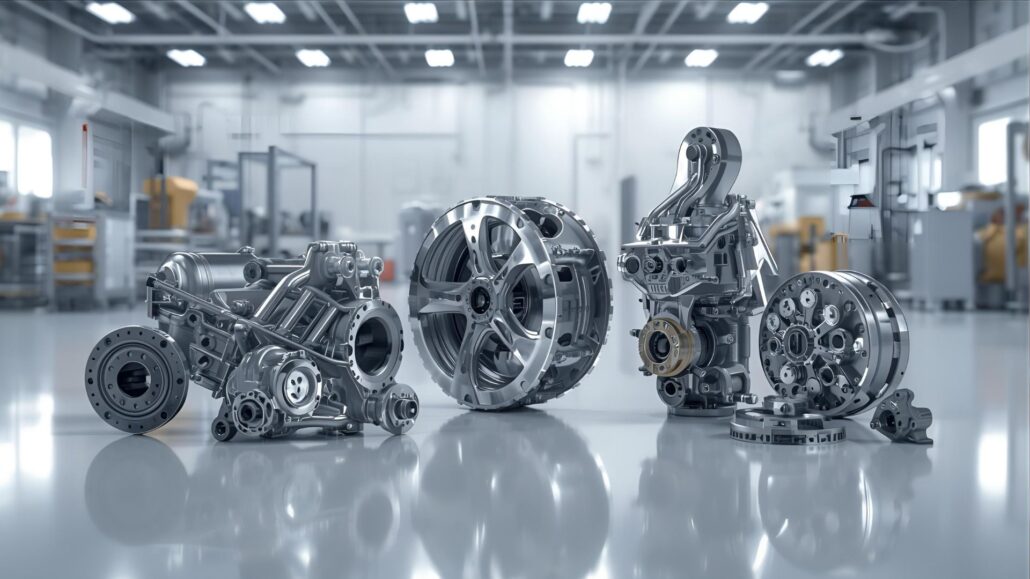
Αλουμίνιο υψηλής πίεσης Die-Casting Auto Parts

Αλουμινίου υψηλής πίεσης Die-Casting Auto Parts: Ανθεκτικά και αποτελεσματικά

χύτευση αλουμινίου, χύτευση υπό υψηλή πίεση

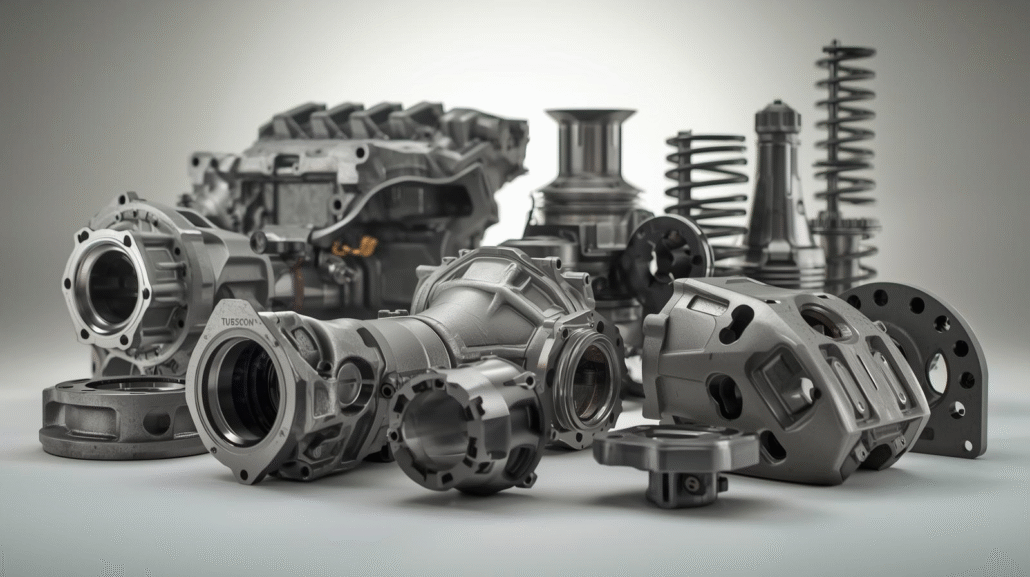
Η αυτοκινητοβιομηχανία αλλάζει λόγω της χρήσης εξαρτημάτων αυτοκινήτων από αλουμίνιο υψηλής πίεσης με χύτευση υπό πίεση. Παρέχουν στους κατασκευαστές τη δυνατότητα να σχεδιάζουν ελαφρύτερα, ισχυρότερα και αποδοτικότερα αυτοκίνητα. Με αυτή την τεχνολογία, οι κατασκευαστές αυτοκινήτων μπορούν να εξοικονομήσουν βάρος, να γίνουν αποδοτικοί ως προς την κατανάλωση καυσίμου και να έχουν πράσινη κινητικότητα, χωρίς συμβιβασμούς στην αντοχή του αυτοκινήτου. Η χύτευση εξαρτημάτων αυτοκινήτων είναι η διαδικασία κατά την οποία λιωμένο αλουμίνιο εγχέεται σε χαλύβδινο καλούπι με πολύ υψηλή πίεση. Αυτό παράγει ένα ισχυρό σχήμα που είναι λείο και αιχμηρό. Η μέθοδος επιτρέπει ταχύτερη παραγωγή, μειωμένη κατεργασία και σταθερή ποιότητα. Με τη χύτευση εξαρτημάτων αυτοκινήτου σε μήτρα, οι εταιρείες είναι σε θέση να σχεδιάζουν πολύπλοκα εξαρτήματα σε ένα μόνο βήμα, γεγονός που τους εξοικονομεί χρόνο και χρήμα. Τα εξαρτήματα αυτοκινήτων που κατασκευάζονται με χύτευση αλουμινίου είναι πλέον πολύ απαραίτητα στα σύγχρονα οχήματα. Πρόκειται για μια συχνή μέθοδο παραγωγής μπλοκ κινητήρων, περιβλημάτων κιβωτίων ταχυτήτων, εξαρτημάτων φρένων και περιβλημάτων μπαταριών σε ηλεκτρικά αυτοκίνητα. Ελαφριά, αλλά σκληρά, ανθεκτικά στη διάβρωση και σχεδιασμένα για να ανταποκρίνονται σε σκληρές συνθήκες στο δρόμο, κατασκευάζονται αυτά τα εξαρτήματα. Η ζήτηση των εξαρτημάτων αυτοκινήτων που κατασκευάζονται με χύτευση αλουμινίου αυξάνεται ραγδαία, ιδίως καθώς προχωράμε σε ηλεκτρικά και υβριδικά αυτοκίνητα. Η απώλεια του συνολικού βάρους των αυτοκινήτων αυξάνει τη διάρκεια ζωής της μπαταρίας, τις επιδόσεις και μειώνει τις εκπομπές ρύπων. Αυτό καθιστά τη χύτευση αλουμινίου σε μήτρα σημαντικό στοιχείο της πράσινης παραγωγής. Εν ολίγοις, η χρήση εξαρτημάτων αυτοκινήτων με χύτευση αλουμινίου υψηλής πίεσης σε μήτρα στην κατασκευή αυτοκινήτων δεν αποτελεί πλέον επιλογή. Έχουν διαδραματίσει καθοριστικό ρόλο στη δημιουργία των σύγχρονων οχημάτων, τα οποία όχι μόνο θα ανταποκρίνονται στα σημερινά πρότυπα επιδόσεων, αλλά θα είναι και πράσινα. Ισχυρά, αποτελεσματικά και σταθερά, θα βρίσκονται επίσης στο επίκεντρο του σχεδιασμού των αυτοκινήτων στο μέλλον. Τι είναι η χύτευση αλουμινίου υπό υψηλή πίεση; Η χύτευση υπό πίεση είναι μια διαδικασία χύτευσης μετάλλων. Σε αυτήν, το λιωμένο αλουμίνιο εξαναγκάζεται υπό πολύ υψηλή πίεση σε μια κοιλότητα ενός χαλύβδινου καλουπιού. Όταν ψύχεται, το μέταλλο σκληραίνει στο ίδιο σχήμα με το καλούπι. Το αποτέλεσμα είναι ομαλό, ακριβές και μακράς διαρκείας. Αυτός είναι ο λόγος για τον οποίο η χύτευση υπό πίεση έγινε ένας από τους πιο δημοφιλείς τρόπους παραγωγής σύγχρονων εξαρτημάτων αυτοκινήτων. Σε σύγκριση με την παραδοσιακή τεχνική, η χύτευση υπό πίεση μπορεί να κατασκευάσει πολύπλοκα εξαρτήματα σε ένα χρόνο. Αυτό εξοικονομεί χρόνο, απαιτήσεις κατεργασίας και κόστος για τους κατασκευαστές. Γιατί αλουμίνιο για εξαρτήματα αυτοκινήτων; Ο λόγος για τον οποίο τα εξαρτήματα αυτοκινήτων από αλουμίνιο με χύτευση υψηλής πίεσης είναι τόσο δημοφιλή είναι ότι δεν υπάρχει άλλο υλικό που να διαθέτει συνδυασμό ιδιοτήτων τόσο πολύ όσο το αλουμίνιο. Είναι πράσινο και ακατέργαστο- επομένως, είναι ελαφρύ και, ως εκ τούτου, μπορεί να χρησιμοποιηθεί στην αυτοκινητοβιομηχανία. Η αυξανόμενη αποδοτικότητα και οι περιβαλλοντικές απαιτήσεις έχουν καταστήσει το αλουμίνιο την επιλογή της χύτευσης υπό πίεση στα εξαρτήματα αυτοκινήτων. Η απώλεια βάρους είναι ένα από τα μεγαλύτερα οφέλη. Ο χάλυβας είναι πολύ βαρύτερος από το αλουμίνιο. Οι κατασκευαστές αυτοκινήτων μπορούν να ελαφρύνουν ένα συνολικό όχημα ενσωματώνοντας εξαρτήματα αυτοκινήτων χύτευσης υπό πίεση που παράγονται με αλουμίνιο. Όσο ελαφρύτερο είναι ένα αυτοκίνητο, τόσο καλύτερη είναι η οικονομία καυσίμου, οι εκπομπές ρύπων και οι επιδόσεις του. Αυτό θα ήταν σημαντικό τόσο σε ένα συμβατικό όσο και σε ένα ηλεκτρικό όχημα. Εν τω μεταξύ, το αλουμίνιο δεν χάνει την αντοχή του. Έχει καλή αναλογία αντοχής προς βάρος, και αυτό είναι καλό γιατί ακόμη και όταν το εξάρτημα καταπονείται, δεν μαλακώνει. Αυτό είναι που καθιστά τα χυτά εξαρτήματα αυτοκινήτων από αλουμίνιο τόσο χρήσιμα σε κινητήρες, κιβώτια ταχυτήτων και εξαρτήματα πλαισίου. Το άλλο σημαντικό πλεονέκτημα είναι η αντοχή στη διάβρωση. Το αλουμίνιο δεν σκουριάζει και δεν φθείρεται όπως τα άλλα μέταλλα. Αυτό παρέχει αυξημένη διάρκεια ζωής στα εξαρτήματα αυτοκινήτων χύτευσης αλουμινίου και μειωμένα έξοδα συντήρησης στους ιδιοκτήτες οχημάτων. Τα σημαντικότερα εξαρτήματα αυτοκινήτων παράγονται με χύτευση σε μήτρα Οι κατασκευαστές αυτοκινήτων χύνουν τα περισσότερα εξαρτήματά τους χρησιμοποιώντας χύτευση σε μήτρα αλουμινίου. Πρόκειται για ελαφριά αλλά ισχυρά εξαρτήματα που μπορούν να χρησιμοποιηθούν τόσο σε συμβατικά όσο και σε ηλεκτρικά αυτοκίνητα. Μπλοκ κινητήρων Τα μπλοκ κινητήρων πρέπει να αντιμετωπίσουν τη θερμότητα, τους κραδασμούς και την πίεση. Όταν πρόκειται για χύτευση εξαρτημάτων αυτοκινήτων σε μήτρα, τα μπλοκ αλουμινίου ζυγίζουν λιγότερο αλλά είναι αρκετά σταθερά ώστε να λειτουργούν σε πολύ σκληρές συνθήκες. Αυτό θα εξοικονομήσει το συνολικό βάρος του κινητήρα και την κατανάλωση καυσίμου. Περιβλήματα κιβωτίων ταχυτήτων Τα περιβλήματα κιβωτίων ταχυτήτων πρέπει να είναι ακριβή και ανθεκτικά. Χρησιμοποιούνται εξαρτήματα αυτοκινήτων με χύτευση υπό πίεση προκειμένου να επιτευχθεί η ακρίβεια των ομαλά κινούμενων γραναζιών. Αυτό εγγυάται υψηλή αξιοπιστία με την πάροδο του χρόνου και απαιτείται ελάχιστη κατεργασία. Εξαρτήματα φρένων Τα φρένα αντιμετωπίζουν συνεχή καταπόνηση. Οι κατασκευαστές παράγουν ισχυρά εξαρτήματα που δεν είναι βαριά, καθώς χρησιμοποιούν εξαρτήματα αυτοκινήτων χύτευσης αλουμινίου. Αυτή η ισορροπία εφαρμόζεται για να αυξηθεί η δύναμη πέδησης και να μειωθεί το βάρος του οχήματος. Εξαρτήματα πλαισίου Τα εξαρτήματα του πλαισίου χρησιμοποιούνται για να παρέχουν ασφάλεια και σταθερότητα. Είναι ισχυρά αλλά όχι ογκώδη όταν κατασκευάζονται με τη χρήση εξαρτημάτων αυτοκινήτου χύτευσης αλουμινίου. Αυτό αυξάνει τη διαχείριση και την παραγωγικότητα. Κινητήρας και μπαταρία του ηλεκτρικού περιβλήματος EV Τα μέρη αυτοκινήτου που προστατεύουν τους κινητήρες και τις μπαταρίες κατασκευάζονται με χύτευση αλουμινίου υψηλής πίεσης σε ηλεκτρικά οχήματα. Τα περιβλήματα προστατεύουν τα ευαίσθητα συστήματα και εξακολουθούν να παρέχουν ένα ελαφρύ πλαίσιο, αυξάνοντας την απόσταση που καλύπτεται κατά την οδήγηση. Συλλογικά, αυτά τα στοιχεία αναδεικνύουν το ρόλο της χύτευσης εξαρτημάτων αυτοκινήτων με εκτύπωση υπό πίεση στη βοήθεια του σχεδιασμού νέων αυτοκινήτων. Η χύτευση αλουμινίου έχει κάνει τους κινητήρες, τις μπαταρίες των ηλεκτρικών συσκευών και πολλά άλλα να αποδίδουν αποτελεσματικά, να διαρκούν περισσότερο και να είναι ανθεκτικά. Διαδικασία χύτευσης αλουμινίου υπό υψηλή πίεση 1. Προετοιμασία καλουπιών Αρχίζει η προετοιμασία των καλουπιών. Το χαλύβδινο καλούπι πλένεται σχολαστικά προκειμένου να εξαλειφθούν όλα τα υλικά που αποτελούν ακαθαρσίες και θερμαίνεται στην κατάλληλη θερμοκρασία. Στην επιφάνεια εφαρμόζεται μια προστατευτική επίστρωση που εμποδίζει την προσκόλληση του λιωμένου αλουμινίου στην επιφάνεια και βοηθά στον έλεγχο του ρυθμού ψύξης. Αυτό γίνεται για να εξασφαλιστεί η ενισχυμένη κυκλοφορία των μετάλλων και η μεγαλύτερη διάρκεια ζωής των καλουπιών και η συνοχή των εξαρτημάτων ανά κύκλο παραγωγής. 2. Λιώσιμο του αλουμινίου Τα εν λόγω κράματα αλουμινίου λιώνουν σε κλίβανο με συγκεκριμένες ελεγχόμενες θερμοκρασίες. Απαιτείται όμως και επαρκής θερμοκρασία, καθώς έτσι αποτρέπεται η οξείδωση και το λιωμένο μέταλλο θα ρέει εύκολα στην κοιλότητα του καλουπιού. Τυχόν ακαθαρσίες απομακρύνονται με τον εξευγενισμό των μέσων ή με φίλτρα. Έτσι διασφαλίζεται ότι τα χυτά εξαρτήματα αυτοκινήτων από αλουμίνιο δεν περιέχουν ελαττώματα και έχουν καλές και σταθερές ιδιότητες. 3. Έγχυση υπό υψηλή πίεση. Στη συνέχεια, το λιωμένο αλουμίνιο εξαναγκάζεται σε

Εξαρτήματα αυτοκινήτων που κατασκευάζονται με χύτευση:

Εξαρτήματα αυτοκινήτων που κατασκευάζονται με χύτευση: Επιλογή υλικού και διαδικασίας

εξαρτήματα χύτευσης

The modern automobile is a sophisticated machine that consists of thousands of separate parts with their own purpose to provide safety, performance, and reliability. Casting is one of the various manufacturing processes that are employed in the automotive industry. Casting is now an irreversible procedure where major parts of a vehicle are formed by shaping molten metal into extremely detailed and strong parts. The engines, transmissions, and braking systems of most vehicles are among the most significant systems that require parts made by casting. Indeed, when designers and builders discuss efficiency, durability, and cost-effectiveness in the production, casting of automobile parts are often at the centre stage of the debate. The art of casting is not new; it was invented thousands of years ago. However, its application in the motor industry has undergone a revolutionary shift to harness hi-tech technologies and the most recent alloys that can fit the high demands of the modern car. Casting has been instrumental in enabling cars to maintain high-performance standards at a relatively low cost through lightweight aluminum engine blocks that are tough and, resilient cast-iron brake components. The article will review the history of the automobile casting parts, processes, advantages, and future trends of automobile casting parts and reveal the reasons why the automobile casting parts continue to be a pillar in the automotive manufacturing industry. History  of Casting It was actually the aluminum casting process that penetrated the sphere in the middle of the 20th century. Casting has been in use in vehicles since the late 19th and early 20th centuries, when the automobile was first developed to replace the horse-drawn carriage. Early engines demanded powerful but inexpensive parts, and casting was the right way to go. One of the first methods to make engine blocks, crankshafts, and housings was iron casting. With the increase in the automobile industry, casting techniques increased and became advanced. The automobile manufacturers learned that they could increase fuel efficiency without reducing the lifetime of the vehicles due to lighter engines and structural parts. Casting is applied to different systems of vehicles in accordance with their application and importance. Finally, the automobile casting parts have the important role of giving strength, accuracy, and cost-effectiveness to reduce the cost, which is why automobile parts are the giants of the automotive industry. What are Automobile Casting Parts? Automobile Casting Parts can be defined as parts of a vehicle that are produced through pouring molten metal into a mold, and the resulting molten metal hardens into a desired shape. This has enabled the manufacture of robust, sturdy, and intricate components that are utilized in automobiles, including engine blocks, cylinder heads, transmission housings, brake drums, and wheels. They are very popular since casting offers: Taking the case of an engine block, the block has various chambers and coolant passages with threaded openings that can be cast correctly. What is Casting? The process of casting is a type of manufacturing where molten metal is poured into a mold and allowed to cool in the shape of the mold. After cooling, the casting is removed, machined (where needed),, and fitted into the finished product. It is an operation in which it is possible to produce both strong and geometrically complex parts. The reason why automobile manufacturers like to use casting is that they can produce large quantities of complicated parts of uniform quality. The proper melting temperature should also be maintained to remove defects such as porosity or underfill We are discussing not only structurally significant parts of automobiles, but also those that must be precise and durable under severe conditions of high temperatures, pressures, and constant wear. Process of Casting in Automobile Parts High-volume production also automates machines or high-pressure systems to ensure a high level of accuracy and consistency. 1. Pattern Making It starts with the production of a pattern, an imitation of the finished part. Patterns tend to be made of wood, metal, or plastic. They also determine the accurate shape and size of the mold cavity into which the molten metal will be poured. 2. Mold Preparation Sand, metal, or ceramic materials are used to form a mold. The two halves of the mold make the cavity to shape the part. Hollows can also be introduced within the mold,, such as internal passages within an engine block. 3. Melting the Metal In a furnace, a controlled temperature is used to melt the selected metal or alloy (cast iron, aluminum, or magnesium). This is to bring mechanical properties to high-performance applications such as engines or gearboxes. 4. Pouring When the metal is melted, it is filled into the mold. The proper sizes and finishes are ensured during drilling, milling, and turning. 5. Solidification and Cooling The heated material is left to cool and harden within the mold, assuming the shape of the mold. The part should avoid a shrinkage defect or crack due to uncontrolled cooling rates. 6. Mold Removal When solidifying, the mold is broken (in sand casting) or the mold is opened (in permanent and die casting). A raw casting is then removed and processed further as a casting blank. 7. Fettling and Cleaning Unneeded material, including sprues, risers, or flash, is eliminated. The casting could be shot blasted or ground to clean up the surface to make it easy to machine. 8. Heat Treatment (if required) Cast parts can be heat-treated to enhance their strength, hardness, or toughness. Sand Casting – Sand casting is one of the oldest and most common ways in which a mold of sand is molded into a more complicated shape. 9. Machining and Finishing Despite the fact that casting generates near-net shapes, a lot of automobile parts have to be machined to be precise. It is used with the engine block, cylinder head, and manifold. 10. Inspection and Testing Lastly, quality checks are done on the cast part. Non-destructive testing (NDT), dimensional testing, and material inspection are conducted to ensure that the part is up to industry standards before assembly into

Γιατί το σφυρηλατημένο αλουμίνιο είναι καλύτερο από το χυτό μέταλλο;

Γιατί το σφυρηλατημένο αλουμίνιο είναι καλύτερο από το χυτό μέταλλο;

Σφυρηλατημένο αλουμίνιο

Forged aluminum is among the most trusted materials in contemporary engineering practice. It is formed by pressing solid aluminum with a high amount of heat and pressure. It alters the internal structure of the metal and makes it stronger and tougher than cast aluminum. Due to this, industries that require safety and durability use forged aluminum. Aluminum in itself is already rated as lightweight, resistant to corrosion and versatile. It is present in vehicles, aircraft, buildings, electronics and even in common tools. Not everything that is made of aluminum is the same, though. The performance of the metal is directly affected by how the metal is formed. Aluminium is melted and poured into molds when it is cast. This may cause flaws such as air bubbles and holes. Forging eliminates those issues. Rather than melting, the aluminum is pressed into form so that the grain is forced to conform to the design of the part. This yields a very powerful and homogeneous material. Forged aluminum has become popular now that industries are shifting to lighter, safer and more efficient solutions. This paper tells us why it is better than cast metal, the process involved in forging metals, where it is applied and the future of forging of aluminum. What Is Forged Aluminum? Forged aluminum is done by pressing solid aluminum under high pressure. The metal is not melted all the way as in casting. Rather, it is heated till it turns soft and malleable. After being softened, the aluminum is stamped or beaten into the required shape by means of heavy forging machines. This stress flattens the metal and also perfects its internal grains. The grain is oriented in the shape direction, and it contributes to the part’s better strength and toughness. Such a fine structure also removes numerous defects present in cast aluminum, including pores or cracks. Consequently, forged aluminum is safer, more durable and stronger. How an Aluminum Forge Works? Forging is done in an aluminum forge. There are a few steps involved in the process: This process ends up with a thick, solid, and homogeneous portion. It does not have weak spots or air bubbles like casting. Benefits of Forged Aluminum Cast metal and other materials cannot do what forged aluminum can do. It has become the tool of preference in industries where we cannot afford to compromise on performance and safety. Superior Strength Forged aluminum is very strong, and this is one of the key benefits of forged aluminum. The grain structure of the metal is refined through the forging process. The tensile and fatigue strength are enhanced by this alignment. False components can bear heavy loads as well as stresses and strains repeatedly without failure. This also positions them very well in high-performance activities like plane landing gear, suspension systems, and industrial machinery. Lightweight but Tough Aluminum is inherently lighter than steel, and forging goes even deeper with it. Forged aluminum is very strong for its weight. This enables engineers to ensure that they make lighter machines and vehicles that are still safe and strong. The weight loss makes cars and aeroplanes more fuel efficient, but also gives them durability. Increased Resistance to Fatigue Cast parts wear out much more than forged aluminum. Fatigue is a condition in which a part has worn out due to multiple stress cycles. Due to weak grain structure, cast parts tend to crack. Aluminum that has been forged does not crack easily, and thus parts made with this material will survive long in the hands of those who use them. Uniform Grain Structure The forging process is used to match the part shape with the grain in the metal. Such homogeneous graining makes it harder and harder to strike. Quite the contrary, casting gives arbitrary grain structures that create weak positions. Safety and Reliability Safety is the first priority in high-pressure industries like aerospace, automotive and defense. Forged aluminum is reliable as it provides power, hardness and steadiness over time, even in extreme circumstances. Aluminum Forging uses Aluminum forging has made an impression in the world where weightless, powerful and enduring parts are required. Forged aluminum parts are believed to be safe and, therefore, are commonly trusted in critical applications related to safety. Automotive Industry Modern automobiles are involved in fraudulent aluminum. A very common application is in wheels. Compared to cast wheels, forged wheels are lighter, more durable and safer. This type of weight loss improves manoeuvrability and fuel efficiency. Suspension parts are another significant use that should resist heavy loads, impact, and vibration on the road. The aluminum used is forged, so they are not stressed. Moreover, most engine parts, including connecting rods and pistons, are forged. These sections can withstand high pressure and hot temperatures with long durability. Concisely, forged aluminum improves the automobile’s performance and safety. Aerospace Industry Aircraft require components that are lightweight in nature and strong. Forged aluminum fits this specification. It applies to landing gears, which are supposed to withstand high levels of impact during landing and takeoff. It also occurs in wing structures where efficiency depends on lightness. Forged aluminum parts deal with pressure, heat and vibration in aircraft engines. Failure is not an option in flight; this is why the aerospace industry relies on forging. Military and Defense Defense applications require forged aluminum. Forged parts of tanks, aircraft, and naval ships have to endure the extreme conditions of combat. Forging guarantees maximum toughness, strength and reliability even in the most strenuous conditions. Industrial Machinery Major equipment is usually operated at full load. Forged aluminum products are wear-resistant and minimize downtime. This makes them cost-effective and long-term solutions for manufacturers. Sports and Lifestyle The sports and lifestyle items also use forged aluminum. Forged components are used to manufacture high-end bicycles, climbing gear and sports equipment. Such objects need to be lightweight and durable over a long period of time, which is why forging is the best method. The Reason Why Industries use forging rather than casting? Forging is the option

Το μέλλον των χυτών αυτοκινήτων

Το μέλλον των χύτευσης αυτοκινήτων: Καινοτομία, αποδοτικότητα και απόδοση

Die Casting Κατασκευαστής, χύτευση σε μήτρα

Automobiles have never been left behind in technological development. Since the first steel framing in automobile manufacturing up to the latest lightweight alloys, each part of a car has been improved through innovation to enhance safety, durability and performance. One of the most significant areas of progress lies in the world of automotive castings. This has helped in the designing, production, and optimization of vehicles. In plain terms, the term automotive castings can be defined as the process through which the molten metal is measured and poured into the moulds to shape intricate parts of the vehicle. The method is precise, cost-efficient and can be scaled to mass production. These processes are important in the industry because almost all vehicles on the road today have several parts that have been cast. This article examines the history, manufacturing, advantages, and future of the so-called automotive castings, and also takes a look at how the so-called automotive casting, die casting automotive parts, and cast automotive parts contributed to the shaping of the modern automobile. The History of Automotive Castings The methods of casting date back several thousand years, although it was not until the end of the 19th and very early 20th centuries that they were used in the automotive industry. The first automobiles were ineffective and weighed a lot, with mostly forged steel components. With the increased need to produce in large quantities, manufacturers were required to find a cheaper and quicker solution. Then is the period when the techniques of automotive casting started to substitute traditional ones. Through casting, car manufacturers would be able to create numerous of the same parts in large quantities with less wastage of materials. This brought about mass production, one of the reasons why automobiles became affordable to ordinary people in the industrial boom. Modern automotive castings today use state-of-the-art alloys, accurate moulds, and automation to satisfy the high standards of the international automotive standards.  What is Automotive Casting? Automotive casting is a manufacturing process that is applied in automobile manufacturing to make parts of their vehicles through pouring of molten metal into the moulds, where it solidifies and hardens into the desired shape. This is a technique that enables manufacturers to make complex, long-lasting and accurate parts cost-effectively and with less effort as compared to traditional machining or forging. It finds application in engine block parts, cylinder head parts, transmission housing parts, brake parts, and suspension parts. Through various alloys such as aluminum, cast iron, steel, and magnesium, the automotive casting offers the strength, lightweight design, and durability needed in modern automobiles. This technique is popular because: Common Automotive Parts Made by Casting: Types of Automotive Casting Concisely, automotive casting is necessary since it assists automakers in developing dependable, lightweight, and cost-effective components on a mass basis. Modern cars cannot be produced in mass without it. Materials in the automotive castings Aluminum A lightweight and corrosion-resistant glass, aluminum is among the most favoured materials in the field of automotive castings. It makes huge savings in the total weight of cars, enhancing fuel efficiency and manoeuvrability. Aluminum is also a good thermal conductor and therefore it is good on engine blocks, cylinder heads and transmission housings. Aluminum is used to create many die-casting automotive parts since it enables manufacturers to create high-precision and lightweight components without losing strength. With its flexibility and stability, aluminum is one of the best materials in contemporary automobile manufacturing. Cast Iron Other popular materials in automotive castings are cast iron because the material has high strength, heat resistance, and wear properties. Cast iron is heavier than aluminum, and it is suitable for structural and heavy-duty applications as engine blocks, brake drums and other parts of the suspension. The structure is very durable, which means that such parts can resist the pressures of long-term service and high-temperature conditions, making it vital to vehicles that need strong and reliable performance. Steel In the automotive castings, steel has been preferred due to its high strength and flexibility. Heat-treatment of steel parts increases toughness, so they are ideal in chassis parts, brackets, and structural frames. Although steel weighs more than aluminum, it offers the strength and carrying capacity to some of the safety-critical parts of the car. It is flexible, and engineers can come up with components that satisfy both the performance and regulatory requirements. Magnesium Alloys Magnesium alloys are finding increased applications in so-called automotive castings where weight loss is a priority. These alloys are very light, yet offer sufficient strength to non-structural parts. Magnesium parts may be used in interior fittings, engine covers, and certain structural parts, especially in high-performance vehicles and electric vehicles, where minimizing total weight is important to performance and handling. Copper Alloys Copper alloys are sometimes made into so-called automotive castings due to their high electrical and thermal conductivity. These are resistant to corrosion and strong materials that can be applied to certain electrical components or heat-sensitive parts of the modern vehicle. Copper alloys are not as widely used as aluminum or steel, but have niche uses, such as where performance and conductivity are important. Composite Materials Some manufacturers are experimenting with composite materials in cast automotive parts with the development of automotive technology. These materials are developed to save weight and still offer strength, and can be very handy in electric and hybrid vehicles. Composites also have better thermal regulation and corrosion resistance, and are a new technology in the next-generation car parts. Types of Automotive Casting Processes The automotive industry employs a number of casting techniques, each with its own parts and materials. We will consider the most popular ones: Sand Casting One of the oldest techniques is sand casting, in which large, intricate components are made by means of sand moulds. It is most suitable for prototypes and heavy parts such as engine blocks. Die Casting Die casting is the process that requires high-pressure injection of molten metal into reusable steel moulds. It is a technique that is especially relevant in fabricating light but

Επιμετάλλωση Ψευδαργύρου Χύτευση:

Επιμετάλλωση Ψευδαργύρου Χύτευση: Τεχνικές, οφέλη και βιομηχανικές εφαρμογές

Χύτευση ψευδαργύρου

Zinc die casting is a common method of production commonly applied in industries where speed, accuracy, strength, and affordability really matter. Zinc alloys are used in automotive, aerospace, consumer electronics applications and more because of their high casting properties, dimensional control, strength and versatility. They can be used to make complicated shapes with smooth surfaces, and it makes they highly demanded to be used in mass production. Bare zinc surfaces tend to be easily corroded, tarnished and generally worn with exposure to adverse environments, necessitating the need to apply a protective finish. It is here that plating becomes one of the most important steps, both in the usability and the lifetime of the products, as well as in the attractiveness and professional appearance of the products in the market. When addressing such as surface finishing, plating zinc die cast parts guarantees enhanced resistance to ageing environments, appearance and durability. The more common processes in the manufacturing industry across the world are chrome plating, zinc die casting, and nickel plating on zinc die cast. Besides lifespan, plating also creates commercial value because customers always want products that are strong yet possess a lustrous, high-quality finish. This renders plating to be a fundamental activity in the current industries. In this article, I will give a detailed extrapolation of arguments as to why plating is necessary, how the technical process works, challenges, and the industrial benefits attached to the process. What is Zinc Plating Die Casting? Zinc die casting is the process used to evenly coat a protective and decorative metal coating on components that were cast using zinc die casting. Given that zinc alloys are strong and cost-effective, but corrosive and wear-dependent, plating extends the durability, appearance and operation. Put simply, zinc die casting is the process that produces the real part or component, whereas plating applies an extra layer, which places a protective coating on the surface and provides the needed finishing. Plating and plating zinc die cast products to achieve a mirror finish through chrome plating zinc die casting, or a protective, up-market finish through nickel plating, zinc die cast. This composite leads to the plated zinc die casting finding a wide range of applications in automotive trim, electronic housings, household and industrial equipment, where good appearance and strength are potential requirements. What is plating? Plating is the addition of a thin layer of metal over the surface of another material, either by electroplating (use of electric current) or by chemical plating (not using electric current). Plating is done to enhance the aesthetic, abrasion resistance, corrosion resistance, conductivity and wear resistance of the substrate. An example is when we use nickel or chrome over zinc die cast parts to add protection and lustre to the base zinc, which offers the strength and shape. The glossy surface of a car’s shiny chrome handle or a bathroom feature is a direct result of plating. In brief, plating is a similar process of providing a product with a shield and a beautiful finish to make things appear more lasting and attractive. The Reason Why Zinc Die Casting need Plating Despite the strengths of zinc alloys that may be used in a variety of applications, there are some limitations when they are raw. Uncoated zinc is subject to tarnishing or corrosive attack by moisture, chemicals and thermal change. The plain, uncoated part is not sufficient in many industries to use long-term reliability. Surface finishes by plating not only serve the cosmetic purpose they also bring about various advantages in engineering. Manufacturers increase the precautionary measures against corrosion, abrasion, and oxidation by the use of the so-called plating zinc die cast techniques. This guarantees the durability of the product in terms of both the integrity of its structure and its aesthetic appeal in the long run. Besides, special coatings such as chrome plating, zinc die casting, which provides a high gloss finish best suited to consumer product components, as well as nickel plating on zinc die cast, which is both protective as well as a decorative coating, are possible. The Process of Plating on Zinc Die Castings Plating is a complicated process that takes delicate preparation and implementation. Unlike aluminium and steel, zinc alloys pose unusual challenges because of the reactivity of zinc. As such, plating on zinc presupposes special treatment in order to guarantee a good adhesion. Surfacing 1: Surface Preparation The initial process is degreasing, where oil, lubricant and impurities are removed from the casting. Without strict cleansing, peeling or flaking would occur, which means a poor adhesion on the use of zinc die cast parts. Step 2: Selecting The castings are deoxidised and cleaned off by immersion in acid. This makes the surface clean, active and capable of accepting plating layers. Step 3: Apply Strike Layer The zinc alloys are very reactive; thus, a thin strike coat of copper or nickel is normally used to enhance the adhesion before finishing. This is a crucial step to both the chrome plating, zinc die casting, and nickel plating on zinc die cast. Step 4, final plating layer Non-resistant metals, chrome, nickel or other alloys are electroplated to cover the surface. Durability and appearance of the finished product are dependent on this layer and its thickness and quality. Chrome Plating of Zinc Die Castings The most appreciated finishing technique applied to zinc die casting is called chrome plating; this type of finishing is used in order to increase the durability of the zinc part, its functionality, as well as its beauty. Chrome plating refers to the adherence of a very thin film of chromium metal on the surface of zinc die-cast objects through an electroplating process. The outcome is a shiny, mirror-like coating that can enhance the aesthetics of it but also reinforces the part against corrosion, scratches, and day-in, day-out wear. Origins have been found that chrome-plated objects will protect a raw zinc surface that has the propensity to tarnish quickly in more difficult conditions, and the products are durable. Important Advantages of

Μπορείτε να βάψετε αλουμίνιο με πούδρα;

Μπορείτε να βάψετε αλουμίνιο με πούδρα;

Αλουμίνιο

Aluminum is one of the most significant materials in the industry. It has become essential in everything from construction to the automotive industry, aerospace to consumer goods, because of the combination of its light weight, its resistance to corrosion, and its strength. However, in cases where the customers desire a more stable, colored, and protective finish, one single question is always raised: Can you powder coat aluminum? The brief response is: yes. There is no doubt that to increase the durability, corrosion resistance, as well as overall appearance, one may powder coat aluminum. Aluminum, however, has a natural layer of oxide that causes proper preparation to be important, as sufficient adhesion is concerned. Otherwise, without going through the correct steps, your finish can peel off or rather come out early. Here we go in depth on what exactly powder coating is, why it works so well on aluminum, the process, advantages, uses, and maintenance advice, including that of the differences between powder coating and anodizing. At the end, you will already know about the effective powder coating of aluminum. What is Powder Coating? Powder coating is a finishing procedure that entails the use of a dry powder (derived from finely ground resin, pigments, and additives) on a metal surface with the help of electrostatic attraction. One then heats the coated section in an oven where the melted powder flows and cures into a solid, hard protective material. Powder coating is devoid of solvents and emits few volatile organic compounds (VOCs) as compared to liquid paint. In the case of aluminum, a more wear-resistant, UV-resistant and decorative option is known as powder coated aluminum. Why Powder Coated Aluminium? Manufacturers decide to undergo the process of coating called powder coating aluminum for several reasons: As compared with the traditional painting, powder coating aluminum has the advantage of being able to provide a more uniform coverage and generally thicker, more reliable and durable coating. Learning about Aluminum as a Coating Surface Talking about coating, but first, we should know about the physical and chemical properties of aluminum: Though this oxide coating acts as a defensive mechanism, it may impose difficulties on coating procedures. The key point of great aluminum powder coating is to prepare the surface well to make the powder stick well to the surface. The Step by Step Procedure of Powder Coating Aluminum 1. Surface Preparation Powder coating of aluminum starts with surface preparation, which is the most important step. Relevant cleaning will guarantee that the powder sticks well and gives a lasting finish. Dirt and grease, oils, and oxidations must not be present on the aluminum surface. This is normally attained through detergents, solvents, or alkaline cleaners. In certain situations, there is chemical and ultrasonic cleaning done in order to remove any microscopic residues. It is also possible to perform surface etching to roughen the aluminum a bit, to increase adhesion. Once the cleaning has been done, the aluminum is then rinsed and dried to eliminate any defects on the coating. 2. Pretreatment Metallic pretreatment: Chemical Aluminum may be chemically pretreated to increase its resistance to corrosion and to provide appropriate bonding of powders. One of the common techniques is conversion coating that provides a thin protective film on the surface of the aluminum. This can be carried out with chromate or non-chromate treatments. Besides enhancing adhesion, these pretreatments will prolong the lifetime of the coating since aluminum will not be exposed to the elements. Phosphate coating is also an option on some applications, but less so than on steel since at least chromium would have to be used in a multi-coat procedure. 3. Powder Application The powder coating is then applied after the aluminum has been made ready and treated. The most common method is electrostatic spraying. In this technique, aluminum components are grounded and dust particles become charged due to electrodynamics with the help of a spray gun. The positively charged particles are drawn towards the aluminum surface resulting in a level and smooth coating. Another technique is known as the fluidized bed method: here the parts can be aluminum, heated and placed into a bath of powder, which melts when contacted and forms a coating. This provides one hundred percent coverage even on complicated shapes and corners. 4. Curing Coating formed by using the powder needs to be cured after which a durable finish is obtained. Aluminum components are then placed in a curing oven and baked between 180200 o C in 1020 minutes, depending on the powder employed. The powder particles melt, flow and chemically cross link into a uniform and hard coating due to the heat. When the cure is complete, the parts are cooled slowly down to room temperature, hence the coating is even and without defects. 5. Quality Inspection Every aluminum part is then tested to make sure the coating is of a quality nature after curing. Eye examination is done to verify consistency of color and smoothness free of sags, runs, and uncovered spots. This coating thickness is checked, which is between 50 and 150 microns generally. Examination of durability of the coating is done through adhesion and hardness tests like tape test or impact test. Corrosion resistance tests will also be conducted where tests like salt spray tests will be conducted, in critical applications in order to ascertain long-term protection. 6. Optional Final Finishing Sometimes further finishing is done to the coated parts of aluminum. This could be in the form of polishing, embossing or laser marking to either enhance decorative or practical purposes. Lastly, the parts are packed and cushioned well to store or ship and the finish is not damaged until the end user receives the product. Benefits of Aluminum Powder Coated There are numerous advantages of using powder coated aluminum that would make it very attractive to most industries. Its major plus is superb corrosion resistance. It offers protection in that the coating is done in the powder form, and it becomes a shield, and this protects

Ηλεκτρολυτική επιμετάλλωση αλουμινίου

Ηλεκτρολυτική επιμετάλλωση αλουμινίου: Αλουμίνιο: Ενίσχυση της ανθεκτικότητας και της αισθητικής

Αλουμίνιο

Electroplating has become an important process in many sectors, providing a way of improving metal properties. Electroplating offers numerous advantages when it comes to aluminum; it offers better corrosion resistance, greater hardness of its surface hardness, as well as a better appearance. Electroplating aluminum enables the manufacturers to overcome several wear and tear issues, hence it is a vital process to use in most applications, whether automotive or electronics. This paper is going to discuss the process of electroplating aluminum, the advantages of aluminum electroplating, and some hints on how to electroplate aluminum. The role of electroplated aluminum cannot possibly be overemphasized because it is vital in the enhancement of efficiency and durability of the components that are based on aluminum. Aluminum in itself is a lightweight and flexible metal, though it is usually susceptible to staining and wear, given the fact that it has a comparatively soft surface. Metallization of aluminum with plating metals such as nickel, chrome, or gold will provide a strong corrosion-resistant finish, which greatly increases the lifespan of aluminum components and makes it a finer material to work in harsh conditions. Besides, it is aesthetically pleasing; electroplating improves the appearance of aluminum in addition to its functional benefits. It has a bright metallic appearance due to a special technique called aluminum electroplating; this could enhance the product’s appearance and is therefore common in industries where the product’s appearance and performance are important. Be it on an automotive component, a piece of consumer electronic product, or even an ornament, the procedure of electroplating aluminum provides a package of protection, durability, and aesthetics, which is why it is a ready-made solution to numerous manufacturing problems in the market. What is Electroplating Aluminum? Electroplating aluminium is the process where a metal film is deposited onto aluminium using an electrochemical reaction that deposits a thin film of metal on the aluminium. In the process, components made of aluminum are put in an electrolytic solution that contains metal ions. By running an electric current through the solution, these ions are reduced and deposited on the aluminum surface, forming a metal coating. The method improves the physical characteristics of the aluminum metal, including its chemical resistance, wear resistance, and cosmetic appeal. Aluminum electroplating is a very widely applicable and versatile process for many applications in industries such as the automotive industry and the electronics industry. Why Electroplate Aluminum? Typical Applications History of Electroplating Electroplating in its early form originated in the 19thcentury when the aspect of electrochemical reactions was discovered. The initial methods of electroplating were mostly applied about gold and silver coating, but with time, aluminum electroplating got to be introduced because of the lightweight and flexible character of the used material. It made aluminum a favourite attraction to be electroplated into many different industries, including manufacturing and even decorating items. History of Aluminum Electroplating Such developments in Electroplating Technology The second was that the process was made more efficient and reliable through the advancements of the electroplating techniques in the 20th century. Major events are: The process of electroplating aluminum has been made efficient and scalable using these innovations as an efficient solution to enhance aluminum parts in contemporary manufacturing industries without departing from the core values that were developed a century earlier. Electroplating Aluminum Process The process is denoted as electroplating aluminum, whereby a thin coating of metal is applied to the surface of aluminum by passing an electrochemical reaction. The method improves the properties of the aluminum, as it makes the metal more corrosion-resistant, durable on the surface, and more attractive. This process is indispensable in manufacturing different industries, such as cars to electronic appliances, to enhance the durability and performance of aluminum components. 1. Surface Treatment of Aluminum Cleaning / Surface Preparation Surface preparation of the aluminum is the initial process in the procedure of electroplating aluminum. Aluminum also develops a natural oxide coating that has to be removed to facilitate proper binding of the metal being electroplated. Mechanical cleaning of the surface is also done by either sanding or using chemicals to eliminate any grease marks, stubborn dirt, or otherwise. Etching Once the aluminum is cleaned, it is put through a process of dissolving the oxide layer in an acidic solution, in this case, etching. This will be one of the most important steps that can be taken in regard to firmly making the electroplated metal adhere to the aluminum substrate. 2. The Electrolyte Solution Preparationon Formulation of electrolyte solutions: Electrolyte solutions Electroplating of aluminum is dependent on the electrolyte solution. It has metal ions of the metal to be plated, e.g., nickel, chromium, or gold, and chemicals to enhance the quality of the coating. These additions contribute to the regulation of plating thickness, uniformity, and smoothness, and produce high quality finish. Electrolyte used Types In the case of the term electroplated aluminum, some of the most used metals are nickel in terms of corrosion resistance and chrome to provide an aesthetic value. The composition of the electrolyte is adjusted to suit a particular metal and finish. 3. The process of Electroplating Electroplating Setup To plate the cleaned aluminum component, the process begins by immersing it in the electroplating solution. The aluminum is the cathode (negative) electrode, and the plating metal forms the anode (positive) electrode. Applying the electric current, ions of metal are deposited on the surface of the aluminum since ions of metal within the electrolyte are being reduced. Thickness Control of Plating The thickness of the electroless aluminum layer is determined by the time spent on the plating of this metal and also by the strength of the current. It may take only a few minutes or hours, depending on the thickness of the coating required. The outcome is a uniform and smooth finish, which improves the properties of aluminum. 4. Post-Plating Treatments Rinsing and Drying Following the electroplating procedure, the section of the aluminum that has received electroplating is thoroughly rinsed of any remaining electrolyte. The component piece is then

Περίβλημα θερμοστάτη αλουμινίου

Περίβλημα θερμοστάτη αλουμινίου: Εξαρτήματα κινητήρα

Αλουμίνιο

Το περίβλημα του θερμοστάτη αλουμινίου είναι εξαιρετικά σημαντικό για την αποτελεσματική λειτουργία και την αντοχή των κινητήρων αυτοκινήτων και των βιομηχανικών κινητήρων. Η ανάγκη διατήρησης του κινητήρα σε βέλτιστη θερμοκρασία για την αποφυγή του κινδύνου υπερθέρμανσης, η οποία μπορεί να οδηγήσει σε σοβαρή βλάβη του κινητήρα, καθιστά αναγκαία τα συστήματα ψύξης του κινητήρα. Κατά συνέπεια, η δομή και τα υλικά που χρησιμοποιούνται για την κατασκευή εξαρτημάτων όπως το περίβλημα του θερμοστάτη είναι ζωτικής σημασίας για την όλη αποτελεσματικότητα του συστήματος ψύξης. Το αλουμίνιο έχει εξελιχθεί σε ένα δημοφιλές υλικό λόγω του ελαφρού βάρους, της αντοχής και των εξαιρετικών ιδιοτήτων διάχυσης της θερμότητας- ως εκ τούτου, το αλουμίνιο είναι μια δημοφιλής επιλογή υλικού όταν απαιτείται υπό την περίσταση που είναι γνωστή ως περίβλημα θερμοστάτη αλουμινίου. Το περίβλημα θερμοστάτη αλουμινίου έχει αποκτήσει αυξημένη δημοτικότητα σε διάφορους εμπορικούς κλάδους, καθώς πολλές βιομηχανίες απαιτούν εξαρτήματα υψηλής απόδοσης και αποδοτικότητας. Τα περιβλήματα θερμοστάτη αλουμινίου για μοτοσικλέτες, βαρέα μηχανήματα και ναυτικούς κινητήρες απολαμβάνουν επίσης την αξία της αντοχής σε υψηλές θερμοκρασίες και άλλα στοιχεία που το υλικό έχει επιδείξει κατά την εφαρμογή του και σε κινητήρες αυτοκινήτων. Η έννοια του σημαντικού περιβλήματος θερμοστάτη αλουμινίου, η χρήση, τα πλεονεκτήματα, η κατασκευή και η εφαρμογή του στο σύστημα ψύξης του κινητήρα θα συζητηθούν σε αυτό το άρθρο. Θα διερευνήσουμε επίσης την επιλογή του προσαρμοσμένου περιβλήματος θερμοστάτη και πώς η κατασκευή περιβλήματος θερμοστάτη είναι ένα κρίσιμο στοιχείο όταν πρόκειται για την κατασκευή εξαρτημάτων υψηλής ποιότητας και μεγάλης διάρκειας. Τι είναι ένα περίβλημα θερμοστάτη αλουμινίου; Ένα περίβλημα θερμοστάτη, που τις περισσότερες φορές κατασκευάζεται από αλουμίνιο, είναι ένα πολύ σημαντικό μέρος του συστήματος ψύξης ενός κινητήρα εσωτερικής καύσης, ειδικά ενός κινητήρα αυτοκινήτου. Ο κύριος ρόλος του είναι να φιλοξενεί τον θερμοστάτη, ο οποίος ρυθμίζει τη ροή του ψυκτικού υγρού στον κινητήρα και το ψυγείο. Ο θερμοστάτης ελέγχει τη θερμοκρασία του κινητήρα, κλείνοντας και ανοίγοντας ανάλογα με τη θερμοκρασία του ψυκτικού υγρού, και η θερμοκρασία του κινητήρα είναι στη βέλτιστη δυνατή. Το περίβλημα αποτελείται συνήθως από αλουμίνιο λόγω των ελαφρών χαρακτηριστικών του, της ικανότητάς του να αντιστέκεται στη διάβρωση και της θερμικής αγωγιμότητας. Κατασκευάζεται για να μπορεί να αντέχει σε συστήματα ψυκτικού υγρού υψηλής πίεσης και σε σκληρά περιβάλλοντα λειτουργίας και να μην προκαλεί υποβάθμιση μετά από αρκετά χρόνια. Το περίβλημα ενός θερμοστάτη αλουμινίου δεν είναι μόνο ελαφρύ σε βάρος, αλλά είναι επίσης εξαιρετικά ανθεκτικό στη θερμοκρασία, γεγονός που είναι ζωτικής σημασίας για τη διασφάλιση του σωστού συστήματος ψύξης του κινητήρα. Γιατί το περίβλημα του θερμοστάτη πρέπει να είναι κατασκευασμένο από αλουμίνιο; Η επιλογή του αλουμινίου στην παραγωγή περιβλήματος θερμοστάτη έχει ευνοηθεί πάρα πολύ, καθώς συνοδεύεται από πολλά πλεονεκτήματα, συγκεκριμένα: α. Ελαφρύ και ισχυρό Η ελαφριά φύση του αλουμινίου έχει δει το υλικό αυτό να χρησιμοποιείται εκτενώς σε εξαρτήματα αυτοκινήτων που απαιτούν μειωμένο βάρος χωρίς να διακυβεύεται η αντοχή και η απόδοση των εξαρτημάτων. Το χαμηλότερο βάρος θα οδηγήσει σε μεγαλύτερη αποδοτικότητα καυσίμου, η οποία είναι σημαντική μεταξύ των σημερινών οχημάτων. β. Αντοχή στη διάβρωση Το αλουμίνιο είναι φυσικά ανεπηρέαστο από τη διάβρωση, η οποία είναι αρκετά σημαντική στους κινητήρες αυτοκινήτων, όπου υπάρχει πάντα έκθεση σε ψυκτικά υγρά, νερό και χημικά. Η παρουσία αντίστασης στη διάβρωση καθιστά το περίβλημα του θερμοστάτη αλουμινίου δομικά σταθερό και του δίνει την ικανότητα να αντέχει με αξιόπιστη απόδοση κατά τη διάρκεια της ζωής του. γ. Διάχυση της θερμότητας Το αλουμίνιο έχει υπάρξει μεγάλος αγωγός θερμότητας. Επιτρέπει την ψύξη του κινητήρα μακριά, κάνοντας τον θερμοστάτη να έχει βέλτιστη θερμοκρασία. Αυτή η αγωγιμότητα της θερμικής ενέργειας βοηθά στη ρύθμιση των θερμοκρασιών του κινητήρα και αποφεύγει την υπερθέρμανση, η οποία θα οδηγήσει στην καταστροφή των εξαρτημάτων του κινητήρα. δ. Οικονομικό Το αλουμίνιο είναι ένα φθηνό μέταλλο σε σύγκριση με άλλα μέταλλα, επομένως αποτελεί μια οικονομικά αποδοτική εναλλακτική λύση όταν πρόκειται για μαζική παραγωγή. Επιπλέον, μπορεί να κατεργαστεί και να χυτευτεί ελαφρά, επιτρέποντας προσιτές διαδικασίες παραγωγής- ως εκ τούτου, έχει μειώσει το κόστος παραγωγής για την προσφορά μιας λύσης προσαρμοσμένου περιβλήματος θερμοστάτη. Τα υλικά του περιβλήματος θερμοστάτη από αλουμίνιο Τα υλικά του περιβλήματος θερμοστάτη από αλουμίνιο είναι σημαντικά όσον αφορά την απόδοση, την ανθεκτικότητα και την αντοχή σε σκληρές συνθήκες λειτουργίας του κινητήρα. Τα συνθετικά κράματα που είναι κοινά είναι: 1. Κράμα αλουμινίου 356 Το αλουμίνιο 356 είναι γνωστό ότι είναι ένα ασύγκριτο χυτευτό, ανθεκτικό, ανθεκτικό στη διάβρωση μέταλλο που το καθιστά αγαπημένο μέσο στο περίβλημα του θερμοστάτη λόγω των αξιοθαύμαστων ιδιοτήτων του. Αποδίδει ανθεκτικά σε ακραία θερμές κλιματικές συνθήκες. 2. Κράμα αλουμινίου 6061 Το κράμα αυτό έχει καλή αναλογία αντοχής προς βάρος και αντοχή στη διάβρωση, τα οποία είναι κατάλληλα χαρακτηριστικά για να χρησιμοποιηθούν ως προσαρμοσμένο περίβλημα θερμοστάτη για τα αυτοκίνητα ή τις βιομηχανίες PMFMI. 3. Κράμα αλουμινίου 7075 Το αλουμίνιο 7075, ένα εξαιρετικά ισχυρό κράμα που ταιριάζει σε εξαρτήματα υψηλής απόδοσης, είναι ιδανικό ως προσαρμοσμένο περίβλημα για θερμοστάτη σε κινητήρες όπου η καταπόνηση και οι θερμοκρασίες είναι εξαιρετικά υψηλές. 4. Κράμα 319 Αλουμίνιο Με ανώτερες ιδιότητες χύτευσης, το αλουμίνιο 319 χρησιμοποιείται σε περιβλήματα θερμοστατών αλουμινίου σε αυτοκίνητα και βιομηχανικούς κινητήρες, όπου πρέπει να επιτευχθεί μακροχρόνια αντοχή στη φθορά. 5. Κράμα 5083 Αλουμίνιο Το αλουμίνιο 5083 έχει καλή αντοχή στη διάβρωση, γεγονός που το καθιστά ιδιαίτερα χρήσιμο στη ναυτιλιακή βιομηχανία και στις βιομηχανίες βαρέων μηχανημάτων, όπου πρέπει να αντιμετωπίσει διαβρωτικούς παράγοντες λόγω υγρασίας και σκληρών συνθηκών. Αυτά τα υλικά εγγυώνται ότι η κατασκευή περιβλήματος θερμοστάτη θα παράγει ανθεκτικά, ελαφριά και αποτελεσματικά εξαρτήματα ψύξης του κινητήρα. Τύποι περιβλήματος θερμοστάτη αλουμινίου Το περίβλημα θερμοστάτη αλουμινίου είναι επίσης διαφόρων τύπων, ανάλογα με τη διαδικασία κατασκευής, την απαίτηση σχεδιασμού και τη φύση της συγκεκριμένης εφαρμογής κινητήρα. Τα τυπικά υλικά για την αυτοκινητοβιομηχανία και τη βιομηχανία παρατίθενται παρακάτω: 1. Περίβλημα θερμοστάτη με χύτευση άμμου Η δημιουργία μεγαλύτερων και πιο σύνθετων εξαρτημάτων γίνεται συνήθως μέσω μιας διαδικασίας γνωστής ως αεροδιαστημική χύτευση άμμου, όπου καθορίζεται ένα περίβλημα θερμοστάτη αλουμινίου. Εδώ, ένα καλούπι άμμου χύνεται πάνω στο μοτίβο του περιβλήματος του θερμοστάτη και το λιωμένο αλουμίνιο χύνεται στο καλούπι έτσι ώστε να δημιουργηθεί το εξάρτημα. Η τεχνική αυτή ενδείκνυται καλύτερα για την κατασκευή περίτεχνων σχεδίων και για χαμηλό έως μεσαίο όγκο παραγωγής. 2. Θερμοστατικό περίβλημα με χύτευση σε μήτρα Στη χύτευση σε μήτρα, το λιωμένο αλουμίνιο εγχέεται επανειλημμένα με δύναμη σε ένα χαλύβδινο καλούπι, σχηματίζοντας ένα περίβλημα θερμοστάτη αλουμινίου συνήθως ακριβών διαστάσεων και λείων επιφανειών. Αυτή η διαδικασία είναι καταλληλότερη για την κατασκευή μεγάλου όγκου και χρησιμοποιείται συνήθως σε περιπτώσεις όπου πρέπει να τηρούνται συγκεκριμένες, αυστηρές ανοχές και ομοιομορφία. 3. Χύτευση σε μόνιμο καλούπι περιβλήματος θερμοστάτη Η διαπερατή χύτευση σε καλούπι χρησιμοποιεί τη χρήση μεταλλικών καλουπιών στην παραγωγή περιβλήματος θερμοστάτη και τα εξαρτήματα που κατασκευάζονται με αυτή τη μορφή έχουν πολύ

Χυτό αλουμίνιο

Τι είναι το χυτό αλουμίνιο; Το ευπροσάρμοστο μέταλλο που χρησιμοποιείται στη σύγχρονη μεταποίηση

Αλουμίνιο, χύτευση αλουμινίου

Τα χυτά αλουμινίου είναι ένα από τα πιο ευπροσάρμοστα και συνηθισμένα υλικά στη σύγχρονη μεταποίηση. Χρησιμοποιείται για την τήξη και την έκχυση λιωμένου αλουμινίου σε καλούπια για την υιοθέτηση των επιθυμητών σχημάτων, και με αυτή τη διαδικασία μπορούν να κατασκευαστούν πολύπλοκα και περίπλοκα εξαρτήματα που διαφορετικά θα ήταν δύσκολο να βγουν με τη χρήση εναλλακτικών τεχνικών, και ως εκ τούτου, η διαδικασία μπορεί να παράγει πολλά τέτοια εξαρτήματα με σχετικά χαμηλότερο κόστος. Τα προϊόντα χύτευσης αλουμινίου έχουν βρει την αξία τους μέσω διαφόρων χρήσεων που εκτείνονται σε μέρη κινητήρων αυτοκινήτων, αεροδιαστημικής, καφετιέρες, μαγειρικά σκεύη και ακόμη και οικιακά. Η απίστευτη έλλειψη βάρους, καθώς και οι ταυτόχρονες αντοχές και αντιστάσεις έναντι της διάβρωσης και η καλή θερμική αγωγιμότητα, το καθιστούν τον καλύτερο προμηθευτή σε πολυάριθμες βιομηχανίες. Το χυτό αλουμίνιο παρέχει επίσης στον κατασκευαστή μεγάλη σχεδιαστική ευελιξία, επιτρέποντας τη δημιουργία πολύπλοκων γεωμετριών που μπορούν να βελτιστοποιήσουν τις επιδόσεις χωρίς τη χρήση πολλών υλικών. Η διαδικασία της χύτευσης είναι επίσης πολύ αποτελεσματική και οικονομικά βιώσιμη, ιδίως όταν πρόκειται για μαζική παραγωγή εξαρτημάτων. Επιπλέον, το αλουμίνιο είναι μία από τις κατηγορίες μετάλλων που ανακυκλώνονται εύκολα, πράγμα που σημαίνει ότι μπορεί να μειώσει το οικολογικό κόστος της παραγωγής. Παρόλο που το χυτό αλουμίνιο έχει πολλά πλεονεκτήματα, έχει επίσης ορισμένα μειονεκτήματα, όπως η εύθραυστη φύση του σε σύγκριση με το σφυρηλατημένο αλουμίνιο και ότι είναι δύσκολο να συγκολληθεί. Αυτοί οι παράγοντες πρέπει να λαμβάνονται υπόψη όταν επιλέγεται το χυτό αλουμίνιο για συγκεκριμένες εφαρμογές. Αυτό το άρθρο θα δώσει μια ευρεία εικόνα των ιδιοτήτων, των πλεονεκτημάτων και των εφαρμογών του χυτό αλουμινίου, μιας από τις πιο κοινές ουσίες στον σύγχρονο κόσμο. Τι είναι το χυτό αλουμίνιο; Το χυτό αλουμίνιο αποτελείται από την αρκετά υγρή εμφάνιση του αλουμινίου που έχει αναδιαμορφωθεί σε ένα σχήμα που σχηματίζει ένα προϊόν. Αυτή η διαδικασία, ή αλλιώς χύτευση, είναι μια πολύ παλιά διαδικασία κατασκευής προσαρμοσμένη στις σημερινές πρακτικές. Σε αντίθεση με το σφυρηλατημένο αλουμίνιο, το οποίο χύνεται με τη διαδικασία έλασης ή διέλασης, το αλουμίνιο χύνεται στο καλούπι ως λιωμένο μέταλλο, μετά το οποίο αφήνεται να σκληρυνθεί. Η χύτευση παρέχει πιο πολύπλοκα, κοίλα και ακόμη και τρισδιάστατα σχήματα που δεν θα μπορούσαν να διαμορφωθούν εύκολα ή με εύκολο κόστος με μηχανική κατεργασία ή σφυρηλάτηση, δεδομένου ότι ξεκινά ως υγρό. Αυτή η ευελιξία είναι που κάνει τα προϊόντα από χυτό αλουμίνιο να χρησιμοποιούνται τόσο ευρέως σε όλο το φάσμα των προϊόντων μας- δηλαδή, εξαρτήματα κινητήρων, καθώς και ηλεκτρονικός εξοπλισμός και μαγειρικά σκεύη, για να αναφέρουμε μερικά. Απλή σύνθεση χυτού αλουμινίου Το αλουμίνιο, τις περισσότερες φορές, δεν είναι καθαρό αλουμίνιο. Αντίθετα, είναι κράμα, δηλαδή μείγμα αλουμινίου και άλλων υλικών προκειμένου να βελτιωθεί η αντοχή ή η ρευστότητα ή και τα δύο. Η πιο συχνή πτυχή του κράματος είναι Ο συνδυασμός είναι συγκεκριμένος, ο οποίος εξαρτάται από τη χρήση. Ενδεικτικά, κράματα με υψηλή θερμική αγωγιμότητα και αντοχή στη διάβρωση θα χρησιμοποιούνταν σε εξοπλισμό υψηλής θερμοκρασίας, όπως εξαρτήματα αυτοκινήτων, και μαγειρικά σκεύη θα έπαιρναν αυτό με την υψηλή περιεκτικότητα σε πυρίτιο-αλουμίνιο που έχει υψηλή θερμική απόδοση και αντοχή στη φθορά. Ιστορία και ανάπτυξη του χυτού αλουμινίου Η χύτευση των μετάλλων έχει ιστορία της τάξης των χιλιάδων ετών από τότε που οι πρώτες κοινωνίες ήταν γνωστό ότι έριχναν χαλκό και χυτοσίδηρο για την παραγωγή εργαλείων και όπλων. Το αλουμίνιο δεν εξορύχθηκε μέχρι τις αρχές του 19ου αιώνα και ήταν ασύμφορο μέχρι τη δημιουργία της διαδικασίας Hall-Héoult στα τέλη του 19ου αιώνα. Η χύτευση αλουμινίου έγινε μια από τις διαδικασίες της αεροπορίας και των μαγειρικών σκευών στις αρχές του 20ού αιώνα. Κατά την εποχή του Β' Παγκοσμίου Πολέμου η ζήτηση του αλουμινίου ήταν η υψηλότερη, λόγω της αναλογίας αντοχής προς βάρος που το καθιστούσε καταλληλότερο στα αεροπλάνα. Μετά τον πόλεμο, η χύτευση αλουμινίου είχε περισσότερες εμπορικές εφαρμογές στα καταναλωτικά προϊόντα, την αυτοκινητοβιομηχανία και την αρχιτεκτονική. χάρη στην πρόοδο της μηχανικής σχεδιασμού των καλουπιών, της μεταλλουργίας και των χυτών, το χυτό αλουμίνιο αποτελεί μέρος της σημερινής παραγωγής. Διαδικασία χύτευσης αλουμινίου Η χύτευση αλουμινίου είναι μια διαδικασία που απαιτεί μια σειρά από σημαντικά στάδια για τη μετατροπή του λιωμένου αλουμινίου σε εξαρτήματα που μπορούν να χρησιμοποιηθούν με τη μορφή συγκεκριμένων σχημάτων. Το έργο της βασικής επεξήγησης της διαδικασίας εξελίσσεται ως εξής: 1. Προετοιμασία καλουπιού Η αρχική διαδικασία της χύτευσης είναι η κατασκευή ενός καλουπιού στο οποίο θα χυθεί το λιωμένο αλουμίνιο. Ανάλογα με τη μέθοδο χύτευσης, το καλούπι μπορεί να αποτελείται, μεταξύ άλλων, από υλικά όπως άμμος, μέταλλο ή κεραμικό. Σχεδιάζεται επίσης με ένα καλό καλούπι ώστε να έχει το επιθυμητό σχήμα για να διασφαλιστεί ότι το αλουμίνιο στερεοποιείται στο σωστό σχήμα. 2. Λιώσιμο του αλουμινίου Όταν το καλούπι είναι έτοιμο, κάποια θραύσματα αλουμινίου ή ράβδοι αλουμινίου τοποθετούνται σε κλίβανο όπου λιώνουν σε θερμοκρασία 660 έως 750 °C (1220 έως 1382 o F). Το λιωμένο αλουμίνιο παρακολουθείται επίσης συνεχώς με σκοπό να επιτευχθεί η σωστή θερμοκρασία και ποιότητα χύτευσης. 3. Έκχυση του λιωμένου αλουμινίου στο καλούπι του Μόλις το λιωμένο αλουμίνιο χυθεί στην κοιλότητα του καλουπιού, το λιωμένο μέταλλο χύνεται στην κοιλότητα του καλουπιού. Η χύτευση γίνεται, ανάλογα με το είδος της χύτευσης, δηλαδή χύτευση με μήτρα, χύτευση με άμμο ή χύτευση με επένδυση. Ορισμένες από τις τεχνικές που χρησιμοποιούνται περιλαμβάνουν τη χύτευση με μήτρα, όπου το λιωμένο αλουμίνιο εγχέεται υπό πίεση, ενώ σε άλλες τεχνικές, το λιωμένο αλουμίνιο απλώς χύνεται στο καλούπι και αφήνεται να κρυώσει. 4. Ψύξη και στερεοποίηση Κατασκευή και επίβλεψη: Έχοντας ένα πολύ παχύ ή περίπλοκο εξάρτημα θα χρειαστεί πολύς χρόνος για να ψυχθεί. Σε αυτό το στάδιο, το λιωμένο αλουμίνιο ψύχεται στο απαιτούμενο σχήμα και αποβάλλει την εσωτερική πίεση. 5. Εγκατάσταση και επιθεώρηση Αφού το αλουμίνιο κρυώσει και στερεοποιηθεί, το καλούπι στη συνέχεια απελευθερώνεται και το χυτευμένο εξάρτημα παραμένει. Ο διαχωρισμός σε ορισμένες περιπτώσεις γίνεται με το σπάσιμο του τεμαχίου του καλουπιού, ιδίως με τη χύτευση σε άμμο, ενώ με άλλες τεχνικές, όπως η χύτευση με μήτρα, το άνοιγμα του καλουπιού και η εκτίναξη του τεμαχίου. 6. Φινίρισμα και επιθεώρηση Μετά την κοπή του τεμαχίου, αυτό συνήθως υφίσταται περαιτέρω επεξεργασία με εργασίες φινιρίσματος, όπως λείανση, στίλβωση, μηχανική κατεργασία κ.λπ. προκειμένου να εξομαλυνθεί η επιφάνεια ή να επιτευχθούν στενότερες ανοχές. Με το τεμάχιο, στη συνέχεια ελέγχεται

Κύλιση στην κορυφή

Αποκτήστε μια προσφορά