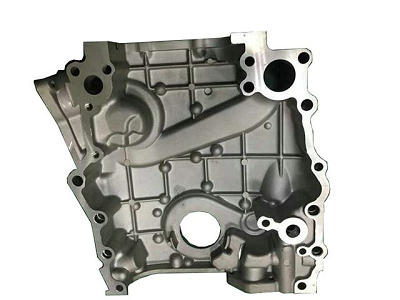
アルミダイキャスト

ダイカスト部品の肉厚は一定でなければならない

アルミダイキャスト

There are no hard and fast rules governing die casting parts wall thickness and consistency.  Inherent in the process is a wall section that possesses a dense fine-grained skin, 0.015-0.020 in. thick (0.4-0.5 mm).  The material between the surface skins tends to be less dense and large grained as a result of a longer solidification time.  This is where defects tend to congregate. Die casters have demonstrated the capability of casting 0.06-0.07 in. (1.5-1.8 mm) thick aluminum walls over large surface areas.  It is feasible to cast small areas as low as 0.04 in. (1 mm). Zinc alloys flow more readily, and can be cast to wall thickness as low as 0.03 in. (.75 mm) Magnesium alloys can be cast to wall thickness 0.035-0.045 in. (.89-1.14 mm) Wall sections should be as uniform as possible.  It is difficult to achieve uniform and rapid solidification of the alloy if the heat load varies from one location to another in the die.  Thinner walls contribute a lesser heat load than heavier walls and will have a longer die life. Intersections of walls, ribs and gussets should blend with transitions and generous radii Generous radii, outside corners, and transitions promote metal flow and internal integrity.  Radii and fillets also enhance structural integrity by reducing stress concentrations in the casting.  Additionally, fillets reduce heat concentration in both the die and castings.  Hot spots that result from sharp corners promote shrinkage voids in the casting. These hot spots also reduce die life at sharp corners in the die cavity steel. Standard draft should be specified Draft is highly desirable on surfaces parallel to the direction of die draw because it facilitates ejection by allowing the casting to release easily from the die surfaces.  The NADCA Product Standards recommendations for minimum draft should be specified. Sharp corners should be eliminated or minimized If sharp corners are required, they readily are accommodated at parting lines and at the junctions of die components.  Sharp corners should be broken with radii or chamfers. Undercuts should be avoided Undercuts should be avoided because they may require machining operations or additional die components, such as retractable core slides.  Slides increase the cost of die fabrication and maintenance.  They can also add to cycle time and manufacturing problems if they flash.  If possible, the component should be redesigned to eliminate undercuts.

アルミニウム航空宇宙部品

航空宇宙産業におけるアルミダイカストとその重要性

アルミ鋳造, アルミ鋳造用金型, アルミダイキャスト, アルミダイカスト, ダイカスト会社, ダイカスト会社

アルミニウム ダイ カスト項目は精密および最高標準項目が最も大きい重大さの航空宇宙工学の異なった企業のセクターそしてそうで顕著な使用です。これらのアイテムは、航空業界の小さなコンポーネントだけでなく、大きなコンポーネントを構築する際に使用されます。さらに、アルミダイカストは、極めて重要な軍事分野だけでなく、商業分野でも使用されています。その理由は簡単で、費用対効果の高いソリューションであり、素晴らしい結果をもたらすからです。費用対効果とは別に、アルミダイカストで作られた部品はさらに、極端な気象状況や増加する損傷に耐えられるように準備されています。航空機にアルミニウム製品を使用するもう一つの重要な理由は、ダイカスト鋳造される他の金属よりも比較的手頃な価格であることです。さらに、アルミニウムは耐久性と柔軟性を提供するために、他の金属と一緒になる可能性を秘めています。アルミ鋳造製品では、規格に妥協する必要はなく、手頃な生産コストで製造することができます。さらに、金属部品を使用するために設定されているすべての基準は、アルミニウムは最大限の必要性を緩和します。それゆえ、飛行機で使用するための安全性が証明され、手頃な価格で、空飛ぶ工芸品に必要なすべての品質を持っています。そのため、アルミ鋳造はかつてないほどの盛り上がりを見せている。さらに、アルミダイカスト部品について最も重要なことは、その重量が航空機の作品にとって有利であるということです。では、実際にアルミ鋳造はどのように行われ、どのような工程があるのでしょうか?答えは簡単です。アルミ合金はまず、最高級の鋼の中に高温で高速かつ強制的に押し込まれます。その結果、非常に軽量で薄肉という航空機部品に最適な優れた標準製品ができるのです。ここで、アルミダイエットキャストは難しい技術であることを述べておきます。本当に経験豊富で最高水準の技術者チームだけが、部品が最高の体積を持つか、優れた公差と表面仕上げを持つかを確認することができます。実際、この種の力鋳造は、重力ダイカストや砂型鋳造よりもはるかに有名です。これは、亜鉛やアルミニウムの鋳造のためのこのタイプの天候は、密接な鋳造公差のために機械加工の必要性が非常に低いためです。アルミ鋳造の金型費用は、他の2つの鋳造方法よりもかなり高くなりますが、その分、機械的特性ははるかに優れています。.

ダイカストの型締力とは

A380アルミダイカスト, アルミ鋳造用金型, アルミダイキャスト, ダイカスト会社

型締力とは、HPDCダイカストマシンの型締装置によって金型に加えられる力のことです。金型に溶湯を注入する際にかかる力です。金型に溶湯を注入する際にかかる力です。 型締力>型離れ力 型離れ力(型開き力)の計算方法は?型開き力とは、ダイカスト部品を製造する際に、金型を押し広げるためにキャビティに作用する力のことです。開離力は次の式で計算できます:F=PXA F:開離力 P:比射出圧力 A:全投影面積 比射出圧力とは?溶湯はショット孔からコールドチャンバーに注入され、ショットプランジャーによって金型内に押し込まれます。プランジャーが金属を金型に押し込むときにかかる圧力が比射出圧力です。射出圧力は鋳造の種類によって使い分けます:標準鋳造の場合 =600 kg/cm2 技術鋳造の場合 =600-800 kg/cm2 圧力試験鋳造の場合 =800 kg/cm2 投影面積とは何ですか?投影面積とは、3次元の成形品の平面上の形状を予測し、2次元の領域を推定したものです。総投影面積=鋳造投影面積+スライド投影面積+湯道投影面積+オーバーフロー投影面積 例)鋳造投影面積=56000mm2 オーバーフロー+湯道投影面積=22400mm2 (鋳造総投影面積の40%(鋳造総投影面積の40%) スライド中子1投影面積=中子進行方向に垂直な面内で投影面積を選択する必要がある x tan↪Ll_AB3E ꬾ ウェッジ角度=フィンガーカム角度+2度 力 FY = F X Tan ꬾ ꬾ = ウェッジロック角度 例.スライドコア1の投影面積=進行方向法線面積×tanળ=5000×tan20°=5000×0.36=1800m2 スライドコア2の投影面積=4500×tan20°=1620mm2 ですから、総投影面積=56000+22400+1800+1620mm2=81820mm2 分離力(開離力)は?(技術鋳造の場合=600-800kg/cm2) (800kg/cm2 =8kg/mm2) 開離力=比圧×全投影面積=8kg/mm2×81820mm2 =654560kg/mm2 (1トン=1000kg) =654.56T 型締力 型締力は分離力より大きくなければなりません。必要な型締力=F×1.2=654.56×1.2=785.472トン 900Tの機械を選びます 充填率とは何ですか。これは、ウイルスチャンバーの絶対容積に対する液体金属の脆弱なチャンバーの割合です。例えば、50%フル(金属)=50%エア残量です。充填率は、理想的な適度なショット速度を確認するために利用されるという事実に照らして重要です。これは鋳造の品質に影響を与えます。充填率(30~40%)は、自動車ダイカスト部品の品質に適しています。.

ダイカスト製造会社

ダイカスト・プロセス ステップ・バイ・ステップ

アルミ鋳造用金型, アルミダイキャスト, ダイカスト, アルミダイカスト, ダイカスト会社, ダイカスト会社, ダイカストメーカー

上昇段階:第1段階は、各金型の面を清掃し、潤滑剤または離型剤を塗布して、鋳造用の金型半体を準備することである。金型の準備が完了したら、ダイハーフを閉じ、ダイカストマシンから圧力をかけてクランプします。クランプ力はマシンのサイズによって異なりますが、鋳造工程でダイを開こうとする力よりも大きくなければなりません。射出段階:インゴットを炉に入れ、使用する金属に応じて設定された温度で溶融状態に保ちます。溶融金属は射出チャンバーに移され、1000~20,000psiの範囲の閉鎖型圧力で射出される。圧力は金属が凝固する間維持される。ダイに注入される量は「ショット」と呼ばれ、ダイへの金属の注入は非常に短いため、ダイが完全に満たされる前に金属が凝固し始めることはありません。冷却段階:射出が完了した後、金型を開く前に溶融金属を凝固させる必要があります。冷却時間は、部品の形状と金属の熱力学的特性によって異なります。部品の肉厚は冷却時間に大きく影響し、肉厚の厚い部分ほど冷却時間が長くなります。排出段階:冷却時間が経過すると、2つの金型を開くことができます。その後、排出機構が凝固した鋳物をダイから押し出します。排出の力は、部品の大きさによって決まりますが、部品が冷却中に収縮し、金型表面に付着する傾向があることを念頭に置いてください。部品が射出されたら、金型を閉じて次の射出サイクルに備えます。トリミング段階 冷却と凝固の段階では、鋳物は部品、フラッシュ、ランナーシステムを含む完全な鋳造ユニットとして凝固します。トリミングの方法には、トリムツール、バンドソー、手作業による切り抜きなどがある。切り落とされた金属は、廃棄されるか、許可されていればリサイクルされます。ダイカストの利点ダイ カストは速いです ダイ カストは秒の各部分および数量の何百から何千もの金属部分毎日作り出すことができます。ニアネットシェイプ ダイカストは、どんなに複雑な形状でも、どんなに公差が厳しくても、「ニアネットシェイプ」で製造されます。軽量 ダイカスト鋳造は、材料の厚さではなく、材料の表皮のために強いので、部品はより薄い鋳物の壁の厚さでより少ない重量を量ることができます。ダイカストは多目的である ダイカストの製造工程を使用して、より多くの部品の形およびサイズを作り出すことができる。ダイカストは耐久性がある ダイカスト部品は金属であり、耐用年数が長い。ダイカストは安価です ダイカストは生産が速く、無駄な材料がありません。ダイカストは通常、他のほとんどの金属部品製造プロセスよりも安価です。.    

亜鉛ダイカスト

亜鉛ダイカストプロセスにおける有利な製造方法

アルミダイキャスト, アルミダイカスト, ダイカスト会社, 亜鉛ダイカスト

加圧射出によるダイカストのプロセスは、1800年半ばまでたどることができる。使用された部品は錫と鉛だったが、亜鉛とアルミニウム合金の登場とともにその用途はなくなった。このプロセスは、低圧射出金型から最大4,500psiの圧力で鋳造する金型へと、長い年月をかけて進化してきました。このプロセスは、優れた端面を持つ高品質の製品を作り出すことができます。ダイカストは、様々な形状を作るための経済的で効率的なプロセスです。他の製造技術よりも優れていると考えられており、耐久性と美観に優れ、その一部である機械の他の部品と完璧に組み合わされます。ダイイングには多くの利点がある。なかでも主なものは、他の大量生産方法よりも高い公差レベルで複雑な形状を製造できることである。新しい金型ツールを追加する前に、何千もの同じプリントを生産することができます。ハイダイ加圧とは、作りたいモデルのデザインや細部のパーツを作るために、溶かしたアルミニウムを鋳造機で鉄や金型に極圧をかけて注入する製造方法です。トンの万能締めで鋳造する。この記録は、母型に与えられた圧力の大きさを反映している。エンジンの大きさは400トンから4000トンまで様々です。ダイキャストプロセスを使用することには、他と比べて多くの利点があります。ダイカスト鋳造では、肉厚が薄く、サイズ制限が狭い部品を製造でき、工程を短縮できます。人件費と仕上げはサイコロで最も低くなります。このプロセスは、より狭い公差で複雑な形状を得ることを容易にします。贋物プロセスとは異なり、このプロセスで作られた製品にカーネルを挿入することができます。棒や管では得られない形状が、鋳造では容易に得られる。作業工程が少ないため、廃棄物の削減につながります。ダイカストは、寸法が安定し、耐久性のある部品が必要な場合に使用されます。熱に耐え、優れた機械の各部品にとって重要な条件である公差を維持します。他の印刷法で作られた部品よりも丈夫で軽い。その部品は溶接やねじ止めされていないため、効率が大幅に向上する。もうひとつの利点は、立ち上げで得られる多くの回避策だ。表面は平滑にもテクスチャーにもできるため、アプリケーションとその使用が容易になる。うまくいけば、この情報はあなたを助けることができ、亜鉛ダイカストについての記事を読んでいただきありがとうございます。.

アルミダイカスト

中国ダイカストサービス

アルミダイキャスト, ダイカスト会社, ダイカストメーカー, 亜鉛ダイカスト

Capacity To Meet Your Aluminum, Magnesium, Zinc and Vacuum Die Casting Needs. Aluminum Die Casting Providing high-quality Aluminum die casting parts at competitive prices requires modem die casting equipment. To reduce the effects that extreme cooling temperatures have on dies CNM TECH is converting its die cooling system from water to oil. Oil maintains a warmer die temperature that contributes to a more uniform casting and extends die life, an important factor in part costs. CNM TECH Die Casting company is adapting robotic controls to the operation of die casting machines. This permits a substantial increase in production rates, important in both controlling costs and meeting delivery requirements. It also allows us to use our people in ways which make better use of their skills and experience. To lower production costs, CNM TECH Die Casting manufacturer has developed and patented, new, low volume, energy efficient aluminum melting furnaces. Since aluminum can be melted efficiently in small quantities, it allows the company to supply casting machines with different alloys of aluminum simultaneously. Casting machines don’t have to stand to wait for a large furnace to supply the proper alloy. Schedules aren’t built around what alloy is in the furnace. Zinc Die Casting For applications where high impact strength, low cost and close dimensional limits are important design considerations, zinc die casting plays an important role. Zinc normally permits higher production rates than aluminum and parts can be designed with thinner cross-sections. The resulting parts are highly resistant to corrosion and receptive to a variety of beautiful finishes. High rates of production and uniform quality are maintained by die casting machines with automatic extractors. Vacuum Die Casting Vacuum die casting is preferred by many casting buyers because it results in a less porous part. CNM TECH’s Vert-a-Cast machines, with a clamping force of 400 tons, are capable of producing castings automatically at a much faster pace than manually-operated horizontal machines. Vacuum die casting, a CNM TECH capability for ten years, is often the only economical way to meet critical porosity specifications. Maintenance, repair, changes and corrections on dies are accomplished promptly in CNM TECH’s fully-equipped tool and die shop. Alloy materials are melted, fluxed and cleaned in the central furnace before being transferred to die casting equipment. If you have any die casting requirement, you are welcome to send us your requirement for a quotation.

ダイカストプロセス

アルミダイキャスト, ダイカスト, ダイカスト会社, ダイカスト金型, ダイカスト部品, ダイカストプロセス

CNM Die Casting has the ability to offer various castings including die casting, investment casting, permanent mould casting, and sand casting for a wide range of alloys, including all die-cast alloys, many permanent mold alloys, and many magnesium alloys. Our manufacturing processes have been accepted by the world casting market as equal or superior to conventional die casting. Benefits of the CNM Die Casting Process Better dimensional control Improved cross parting line tolerances Reduction in gas porosity Improved balance properties of finished rotating parts Use of “cast-in-place” inserts Improved mechanical properties due to effective alloy modification Better wear properties due to smaller grain size microstructure Improved flexibility regarding alloys and types of castings Machining CNM Die Casting’s Machining Section utilizes the work cell concept and high-speed flexible machining equipment to complete secondary operations to CNM’s castings so that a part or subassembly is ready to install when it leaves our facility. CNM Die Casting has evolved and responded aggressively to customer demands for providing high-speed machining and assembly services without initial capital expenditures. By factoring a portion of the cost of the existing equipment into each part, the customer benefits from faster set-ups and minimal initial capital outlays. CNM Die Casting operates 8 die cast machines, complete in-house die casting mold making and CNC machining in an over 20,000-square-foot facility in DONGGUAN, China. Our integrated manufacturing capabilities, together with over 100 employees, allow us to be your One-Stop, complete service die caster, and be consistently price competitive, while also maintaining a high standard of quality.   Below are Comparison of die casting processes Metals that can be cast Min.and Max mass, kg Tolerance on dim.,% Surface finish,µ m Min. section size, mm Draft deg Production rate,pcs/hr Min. cored hole,mm Porosity Sand Casting Aluminium Steel CI and others 0.03, 100 0.10, 200, 000 0.03, 50, 000 0.09 to 0.03 4 8 8 3 6 3.5 4 to 7 10 to 15 6 5 Permanent Mould Casting Cast iron Al and Mg 0.01, 50 0.01, 10 0.01 min 2 5 3 2 50 4.5 to 6 6 4 Die Casting Al Mg Zn 0.015, 35 0.015, 35 0.05, 80 0.0015 0.0015 1 1 1 0.8 1.2 0.5 2 2 2 75 to 150 300 to 350 2.5 2.5 0.8 2 Precision Investment Casting Steel Aluminium 0.005, 25 0.002, 10 0.003, to 0.005 1 1 1 0.8 1 to 3   N/A 0.5 to 1.25 1 Shell moulding Steel Cast iron Aluminium 0.05, 120 0.03, 50 0.03, 15 0.01 to 0.003 6 6 2.5 3.5 3 1.5 2 to 3 30 to 80 3 to 6 1 Centrifugal casting Aluminium Steel Cast iron up to 400 0.002 0.004 0.004 0.6 to 3.5 0.6 to 1.2 3 30 to 50  N/A 1 to

ダイカスト製造会社

アルミダイキャスト, ダイカスト部品

CNM Die Casting is your one-stop, complete service Die Caster for various die casting parts including aluminum die casting, investment casting, sand casting. We offer you a single source for engineered die castings, together with cutting-edge engineering resources, advanced production capabilities and complete secondary finishing. CNM Die Casting supplies high-quality aluminum, zinc, brass and magnesium die castings. We operate our casting factory in DongGuan, China for various castings, machining, assembly and die building, with over 20,000 square feet of total floor space. We are a leader in innovative quality control systems. Our quality manufacturing system includes a process failure detection system at every casting press. Rigorous 100% inspection is as much a production operation as any other manufacturing step and is woven into the sequential standardized work to assure manufacturing quality in finishing and machining. As one of the divisions of CNM Manufacturing Group, CNM Die Casting can be more responsive to its customers and, simultaneously, offer more competitive, “made in China” pricing on quality products.   CNM Die Casting’s tooling department builds dies with state-of-the-art equipment. Along with our experienced engineering and tooling department, we design tooling and assist customers with casting design issues. Excellent control of design and tool building allows us to produce high quality tools and parts at lower cost, and more quickly than anyone else in the industry. Our Engineering and Tooling Department offers: Tool Engineers to ensure specifications and dimensional criteria are met to the customer’s requirements Design Engineers with the latest CAD/CAM technologies to design both product and tooling for the customer’s specification. Technical on-site product design assistance for die castings Production tooling built with CNC machines by in-house full capability large tooling facility state-of-the-art EDM machines rapidly burn cavities to near-finished condition with oscillating feed. Prototyping in the same tooling intended for production Production tools are built with premium grade materials

金属鋳造サービスについて

アルミダイキャスト, ダイカスト会社, ダイカスト部品, 高圧ダイカスト, マグネシウム鋳造, マグネシウムダイカスト, 亜鉛ダイカスト

Metal casting services involve the shaping of free-flowing liquid metals through the use of dies, molds, or patterns.  Castings are generally roughly finished due to the nature of their production.  In many cases, additional finishing is required to remove burrs and other artefacts of the casting process.  Metal castings services are used to design a wide range of components and finished products.  Everything from simple nails and fasteners to engine blocks can be fabricated using metal casting services.  Common metal casting processes include sand casting, die casting, permanent mold casting, investment casting, centrifugal casting, and lost foam casting. Sand Casting Sand casting is used to make large parts (typically iron, but also bronze, brass, aluminum). Molten metal is poured into a mold cavity formed out of sand (natural or synthetic). Sand castings generally have a rough surface, sometimes with surface impurities and surface variations. Die-casting includes a number of processes in which reusable dies or molds are used to produce casting.  The die contains an impression of the finished product together with it’s running, feeding and venting systems.  The die is capable of a regular cycle and of (quickly) dissipating the heat of the metal poured into it.  Once the liquid metal has cooled sufficiently, the mold is opened and the casting can be removed and finished. Permanent Mold Casting In permanent mold casting, molten metal is poured into cast iron molds, coated with a ceramic mold wash. Cores can be a metal, sand, sand shell, or other materials. When completed, the molds are opened and the castings are ejected.   Investment casting services involve molding patterns by the injection of a special wax into a metal die.  The patterns are assembled into a cluster around a wax runner system. The ‘tree’ of patterns is then coated with 8-10 layers of refractory material. The assembly is heated to remove the wax.  The hot mold is cast, and when cool, the mold material is removed by impact, vibration, grit blasting, high-pressure water blasting or chemical dissolution leaving the castings, which are then removed from the runner system. Centrifugal casting Centrifugal casting services are used to produce castings that are cylindrical in shape.  In centrifugal casting, a permanent mold is rotated about its axis at high speeds as the molten metal is poured. The molten metal is centrifugally thrown towards the inside mold wall, where it solidifies. The casting is usually a fine grain casting with a very fine-grained outer diameter, which is resistant to atmospheric corrosion, a typical need with pipes. The inside diameter has more impurities and inclusions, which can be machined away. Lost foam casting Lost foam casting (LFC) is metal casting services that use foam filled patterns to produce castings.  Foam is injected into a pattern, filling all areas, leaving no cavities.  When molten metal is injected into the pattern, the foam is burned off allowing the casting to take shape. Die casting Die casting and metal casting includes a number of processes in which reusable dies or molds are used to produce casting. The die is capable of a regular cycle and of (quickly) dissipating the heat of the metal poured into it. Once the liquid metal has cooled sufficiently, the mold or is opened and the casting can be removed and finished.   In the die casting process, molten metal is injected under pressure into a reusable mold or die. The die contains an impression of the casting together with it’s running, feeding and venting systems. The die is capable of a regular cycle and of (quickly) dissipating the heat of the metal poured into them. Once the liquid metal has cooled sufficiently, the mold or is opened and the metal casting can be removed and finished. high pressure die casting The high pressure die casting process is the most widely used, representing about 50% of all light alloy casting production. Low pressure die casting currently accounts for about 20% of production and its use is increasing. Gravity die casting accounts for the rest, with the exception of a small but growing contribution from the recently introduced vacuum die casting and squeeze casting process. the design of low pressure and gravity die casting dies for improved die filling, optimized solidification pattern and maximum yield. Gravity die-casting is suitable for mass production and for fully mechanized casting. Low-pressure die casting is especially suited to the production of components that are symmetric about an axis of rotation. Light automotive wheels are normally manufactured by this technique. Die casting metals can vary widely, and different die casting companies may have the ability to work with anyone or number of them. Some of the most common metal casting types include aluminum die casting, brass die casting, lead die casting (the most popular for model die casting), magnesium die casting, and zinc die casting. Hope all of that information is enough for your reference, but if you want to know more information, you are welcome to contact us by phone or email.

重力鋳造とは

アルミ鋳造, アルミ鋳造用金型, アルミダイキャスト, ダイカスト, アルミダイカスト, ダイカスト会社, ダイカスト金型, ダイカスト部品, 重力鋳造, 中国射出成形金型, 射出成形金型製作

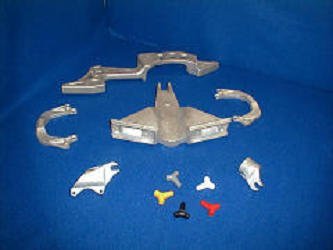
アルミダイカストと重力鋳造の違い アルミダイカストは、単に溶けた金属で遊ぶ口実というだけではありません。アルミダイカストは、溶けた金属で遊びながら、お金を節約できる素晴らしい方法なのです。アルミダイカストが時の試練に耐えてきた理由は、効率の問題です。最も古い鋳造例は、数千年前にさかのぼる中国で発見されています。実際、エジプト人からローマ人に至るまで、あらゆる主要文明がアルミニウム鋳造を実践していました。この技術はルネッサンス期に再び流行し、そこから進歩・進化を続けてきました。砂型鋳造は最もポピュラーな鋳造方法ですが、バックヤードの鋳物工場で利用できる鋳造方法は他にもたくさんあります。誰もがエンジン部品のような重い部品を鋳造したり、オートバイを鋳造したりするわけではありません。そのため、装飾品を作りたいだけの人にとっては、これらのヘビーデューティーキャスターと同じ鋳造プロセスを使用することはないでしょう。 小規模な彫像や装飾品を作る芸術家や、飛行機やボートの模型に装飾的なタッチを必要とする趣味の人たちは、重力鋳造の使用を検討することをお勧めします。重力鋳造とは 重力鋳造は、アルミニウムやその他の軽合金を扱う場合に特に有効なようです。この鋳造法の基本的な考え方は、その名前が示す通りです。金属は重力の力で鋳型に導入されます。他のほとんどの鋳造法では、砂型鋳造のように自然な圧力差を利用するか、遠心鋳造のように強制的に圧力をかけて溶融金属を鋳型に入れます。重力鋳造の最も一般的な用途のひとつは、永久鋳型を使用する場合です。金型とも呼ばれる永久鋳型は、同じ鋳型を何度も使用する予定があり、品質を一定に保つ必要がある場合にのみ経済的です。一時的な金型は繰り返し使用することができますが、完成品の品質は時間の経過とともに低下します。金型であれば、品質は変わりません。金型は投資と考えるべきです。はい、それらは他の型より高価である; 但し、型のためのより安い選択より長持ちする。永久的な型によって、それらは鋳鉄、鋼鉄および他の金属を使用して作成される。重力鋳造は好ましい結果の永久的な型のプロセスに使用される。重力鋳造は通常、完成品がより視覚的に基づいている場合に使用され、その後、この方法は、アーティストや一部の宝石商のお気に入りである理由である構造に基づいています。強度が落ちるのは、この工程で圧力をかけないためです。強度が必要でも重力鋳造を利用したい場合は、溶融金属をより多く使用する必要があるため、重量が増加します。重力鋳造について詳しく知りたい方は、https://www.aludiecasting.com/。重力に頼るには忍耐が必要ですが、大きな製品では必要になります。重力鋳造かアルミニウム ダイ カスト、マグネシウム ダイ カストまたは亜鉛があなたのビジネスのためのダイ カスト サービスを必要としたら。私達に引用語句のためのあなたの条件を送る歓迎されています、私達にあなたの 3D 部品の設計およびあなたの条件を送る必要があり、それから私達と働くためにあなたの側で市場の心配をする必要がある私達あなたのための残りをすることができ、私達はリードタイム、郵送物、質および技術の心配をするあなたのバックアップです。.

上部へスクロール

お見積もり