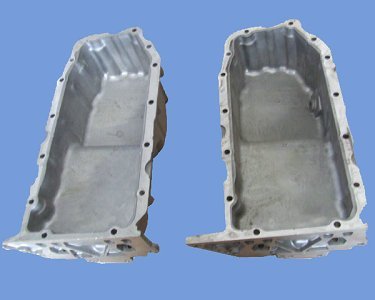
亜鉛ダイカスト

亜鉛ダイカスト部品

亜鉛合金ダイカスト ザマック3 ザマック5

アルミ鋳造, ザマック2 ダイカスト, ザマック3, ザマック 3 ダイカスト, ザマック5, ザマック5ダイカスト, ザマックダイカスト, 亜鉛合金ダイカスト, 亜鉛ダイカスト

亜鉛ダイカスト製品説明 : 当社は亜鉛ダイカスト部品に4種類の最高品質の亜鉛合金(ザマック3、ザマック5、ZA-8、ザマック2)を使用しています。ザマック3:最も一般的な亜鉛合金であるザマック3は、卓越した延性と衝撃強度を特徴としています。ザマック5:一般的に自動車や小型エンジン用途に使用され、優れた耐クリープ性、硬度、強度を示します。ザマック3または5ダイカスト部品?当社のすべての亜鉛ダイカストには、Zamak-3 または Zamak-5 亜鉛合金を使用しています。特別です。合金化は私達がダイ カストのためのいろいろな種類の亜鉛合金を製造する私達の完全自動社内亜鉛合金化セクションで行われます。亜鉛合金の生産能力は1日16トンです。すべての合金熱は、冶金組成のためにコンピュータ化された分光計によってテストされます。私たちは、0.25グラムから125グラムの範囲の重量を持つ、低コストで大量の小型精密亜鉛ダイカスト鋳造部品のお客様のご要望に喜んでお見積もりいたします。正確なサイズと装飾的な表面仕上げ ZA-8: Zamak 3と5よりもさらに強力なZA-zamak8は、ホットチャンバー鋳造プロジェクトに最適です。また、複数のメッキや仕上げオプションとの相性も抜群です。ザマック2: 他のザマック合金に比べ、クリープ性能が高く、長期的な強度と硬度を提供します。優れた軸受材料として機能し、ダイカスト部品のブッシュや摩耗インサートが不要になることで知られている。ザマック3、ザマック5、ZA-8、およびザマック2は、その能力からダイカストプロセスに適しています:- 非常に薄い壁およびほぼ網の形を作り出すこと-高水準の正確さを達成すること-150° Fまでの温度の柔軟性を提供すること-優秀な軸受け特性との信頼性を提供すること-高められた耐久性を表わすこと あなたのサンプル、デッサンおよび他の細部のどちらかを私達に送って下さい私達は私達の引用語句をすぐに送ります。.

亜鉛ダイカスト

亜鉛ダイカストプロセスにおける有利な製造方法

アルミダイキャスト, アルミダイカスト, ダイカスト会社, 亜鉛ダイカスト

加圧射出によるダイカストのプロセスは、1800年半ばまでたどることができる。使用された部品は錫と鉛だったが、亜鉛とアルミニウム合金の登場とともにその用途はなくなった。このプロセスは、低圧射出金型から最大4,500psiの圧力で鋳造する金型へと、長い年月をかけて進化してきました。このプロセスは、優れた端面を持つ高品質の製品を作り出すことができます。ダイカストは、様々な形状を作るための経済的で効率的なプロセスです。他の製造技術よりも優れていると考えられており、耐久性と美観に優れ、その一部である機械の他の部品と完璧に組み合わされます。ダイイングには多くの利点がある。なかでも主なものは、他の大量生産方法よりも高い公差レベルで複雑な形状を製造できることである。新しい金型ツールを追加する前に、何千もの同じプリントを生産することができます。ハイダイ加圧とは、作りたいモデルのデザインや細部のパーツを作るために、溶かしたアルミニウムを鋳造機で鉄や金型に極圧をかけて注入する製造方法です。トンの万能締めで鋳造する。この記録は、母型に与えられた圧力の大きさを反映している。エンジンの大きさは400トンから4000トンまで様々です。ダイキャストプロセスを使用することには、他と比べて多くの利点があります。ダイカスト鋳造では、肉厚が薄く、サイズ制限が狭い部品を製造でき、工程を短縮できます。人件費と仕上げはサイコロで最も低くなります。このプロセスは、より狭い公差で複雑な形状を得ることを容易にします。贋物プロセスとは異なり、このプロセスで作られた製品にカーネルを挿入することができます。棒や管では得られない形状が、鋳造では容易に得られる。作業工程が少ないため、廃棄物の削減につながります。ダイカストは、寸法が安定し、耐久性のある部品が必要な場合に使用されます。熱に耐え、優れた機械の各部品にとって重要な条件である公差を維持します。他の印刷法で作られた部品よりも丈夫で軽い。その部品は溶接やねじ止めされていないため、効率が大幅に向上する。もうひとつの利点は、立ち上げで得られる多くの回避策だ。表面は平滑にもテクスチャーにもできるため、アプリケーションとその使用が容易になる。うまくいけば、この情報はあなたを助けることができ、亜鉛ダイカストについての記事を読んでいただきありがとうございます。.

ザマック亜鉛ダイカスト部品とは

ダイカスト会社, ダイカストメーカー, ダイカスト部品, ダイカスト製品, 亜鉛ダイカスト

Zinc die casting Parts is referred to as the hot-chamber process. It is the method by which zinc (zamak) is heated under high temperatures and the molten material forced into a zinc die casting mold under high pressure to produce product with a similar shape as the die. As the metal moves through the die, air escapes through the vents. Once the die is full, the high pressure is maintained until it solidifies and the die is separated to release the finished zinc cast. After casting, no further modification is usually required. Use of Zinc Die Casting Zinc (zamak) is known for its high strength, accuracy, ductility, ease of casting, high thermal and electrical conductivity, and long life. As such, the zinc die casting is applied in the manufacture of high quality industrial and building materials. Die casting started in the automotive industry and it is still widely used in the manufacture of automotive components. The door locks casing, pulley, and the camshaft are some of the car parts that are made of zinc casting. In the construction industry, zinc die casting is utilized in the manufacture of components such as door knobs, faucets, and roofing. On the other hand, there are many zinc casting machine parts, such as electrical fittings. Zinc Die Casting Process Zinc is cast using the hot-chamber process due to its low melting temperatures. Cold chamber process is applied in the casting of metals with high melting temperatures such as the aluminium. The zinc die casting process involves the preparation of the metal, die preparation, and finishing. It commences with the preparation of the die followed by the metal. Notably, the die can be used once or severally depending on the component being manufactured. If it was used before, it should be lubricated to ease the removal of the cast metal. Afterwards, the ejector die half and the cover die half are screwed. The cover die half has a sprue through which the molten metal is injected while the ejector die has ejector pins for removing the castings. Preparation of the die is followed by melting of the ZA or the ZAMALAK alloy on a furnace. The physical properties of the product dictates the choice of the alloy. Due to metal hardness and strength, the furnace temperature is usually very high. The oxidized parts of the metal are removed at this stage to raise the purity of the finished product. Various chemicals can be added to improve physical properties of the finished alloy. Once the molten metal is prepared, it is injected into the feed system under high pressure. Most of the systems have several dies for efficiency and mass production. The raised pressure ensures that the molten zinc alloy gets into the mold as fast as possible, no air gets into the molten metal, and the expulsion of the air in the die through the vents. After filling the die, the pressure is raised further until the zinc alloy casting solidifies. The process also involves cooling using water. Then, the two dies are separated and the metal cast is removed. This is followed by the cleaning of the feed system to get rid of the flash. Further finishing can be carried out depending with the final use of the product. The runner that is removed from the final product and the flash are usually recycled.

アルミダイカスト

中国ダイカストサービス

アルミダイキャスト, ダイカスト会社, ダイカストメーカー, 亜鉛ダイカスト

Capacity To Meet Your Aluminum, Magnesium, Zinc and Vacuum Die Casting Needs. Aluminum Die Casting Providing high-quality Aluminum die casting parts at competitive prices requires modem die casting equipment. To reduce the effects that extreme cooling temperatures have on dies CNM TECH is converting its die cooling system from water to oil. Oil maintains a warmer die temperature that contributes to a more uniform casting and extends die life, an important factor in part costs. CNM TECH Die Casting company is adapting robotic controls to the operation of die casting machines. This permits a substantial increase in production rates, important in both controlling costs and meeting delivery requirements. It also allows us to use our people in ways which make better use of their skills and experience. To lower production costs, CNM TECH Die Casting manufacturer has developed and patented, new, low volume, energy efficient aluminum melting furnaces. Since aluminum can be melted efficiently in small quantities, it allows the company to supply casting machines with different alloys of aluminum simultaneously. Casting machines don’t have to stand to wait for a large furnace to supply the proper alloy. Schedules aren’t built around what alloy is in the furnace. Zinc Die Casting For applications where high impact strength, low cost and close dimensional limits are important design considerations, zinc die casting plays an important role. Zinc normally permits higher production rates than aluminum and parts can be designed with thinner cross-sections. The resulting parts are highly resistant to corrosion and receptive to a variety of beautiful finishes. High rates of production and uniform quality are maintained by die casting machines with automatic extractors. Vacuum Die Casting Vacuum die casting is preferred by many casting buyers because it results in a less porous part. CNM TECH’s Vert-a-Cast machines, with a clamping force of 400 tons, are capable of producing castings automatically at a much faster pace than manually-operated horizontal machines. Vacuum die casting, a CNM TECH capability for ten years, is often the only economical way to meet critical porosity specifications. Maintenance, repair, changes and corrections on dies are accomplished promptly in CNM TECH’s fully-equipped tool and die shop. Alloy materials are melted, fluxed and cleaned in the central furnace before being transferred to die casting equipment. If you have any die casting requirement, you are welcome to send us your requirement for a quotation.

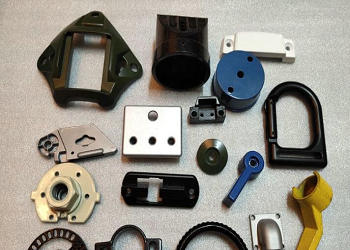
ダイカスト部品

高品質ダイカスト部品

ダイカスト会社, ダイカスト会社, ダイカストメーカー, ダイカスト部品, 亜鉛ダイカスト

Your High-Quality Source For Aluminum, Magnesium and Zinc Die Castings; Machined and Finished, Ready For Assembly. Setting product quality as the company goal, CNM Die Casting has risen to the top of its industry during the past ten years. Die casting buyers to look to CNM TECH to help reduce reject problems they have encountered with other component part suppliers. A manufacturer of natural gas valves experienced reject levels of up to 40% until they were cast by CNM TECH. Now, very few of their parts fail to meet a rigorous 100% testing level for pressure leaks. Quality based on engineering experience At CNM TECH Die Casting company, quality begins with experienced engineering assistance. Consultation on part design and aluminum alloy selection are part of the service. Sometimes minor changes in part design can increase production rates and eliminate potential quality problems. The end result is a better part at a lower unit cost. To be sure finished die casting parts to meet alloy specifications, both incoming materials and finished product samples are checked on the Jarrell-Ash spectrometer. Quality that moves with production instead of just a final part check Production starts after a final part design is accepted. Our quality control program then begins a series of checks to determine that the part has been produced within the specified tolerances. First, alloys are tested to make sure they meet our customer’s specifications. Then, statistical sampling during the casting and machining processes provides an early warning of manufacturing defects and helps to prevent the production of defective finished parts. Inspection frequencies can be predetermined by the job requirements to make certain that the parts you receive are parts you can use. A Three Coordinate Measuring Machine (CMM) allows completed part dimensions to be checked against computer-stored specifications to assure that accuracy has been maintained throughout the entire production run. Fatigue testing for completed parts can also be carried out under simulated operating conditions if required by the customer. Whether your specifications call for pressure tightness, critical dimensions and details, or freedom from subsurface discontinuities, CNM TECH quality assurance people have the equipment and training for the job. A regular inspection program on casting and machining equipment helps us maintain close tolerances. Equipment that’s in top operating condition benefits our customers in both reduced costs and shorter lead times. In-plant maintenance personnel can quickly correct machine problems and smooth production flow. This online catalogue will introduce you to our capabilities and give you a brief tour of our facility. Over 150 employees share our interest in providing on-time delivery of ready-for-assembly die casting parts and our objective of striving for the highest quality. CNM TECH engineers are available for consultation at early design stages to help assure finished parts meet tolerance and quality requirements while making economical use of die casting processes. The dimensional coordinate measuring machine is used to measure castings against specified tolerances. Proven, rigid quality assurance techniques applied at CNM TECH Die Casting manufacturer can meet the most demanding industrial standards.

金属鋳造サービスについて

アルミダイキャスト, ダイカスト会社, ダイカスト部品, 高圧ダイカスト, マグネシウム鋳造, マグネシウムダイカスト, 亜鉛ダイカスト

Metal casting services involve the shaping of free-flowing liquid metals through the use of dies, molds, or patterns.  Castings are generally roughly finished due to the nature of their production.  In many cases, additional finishing is required to remove burrs and other artefacts of the casting process.  Metal castings services are used to design a wide range of components and finished products.  Everything from simple nails and fasteners to engine blocks can be fabricated using metal casting services.  Common metal casting processes include sand casting, die casting, permanent mold casting, investment casting, centrifugal casting, and lost foam casting. Sand Casting Sand casting is used to make large parts (typically iron, but also bronze, brass, aluminum). Molten metal is poured into a mold cavity formed out of sand (natural or synthetic). Sand castings generally have a rough surface, sometimes with surface impurities and surface variations. Die-casting includes a number of processes in which reusable dies or molds are used to produce casting.  The die contains an impression of the finished product together with it’s running, feeding and venting systems.  The die is capable of a regular cycle and of (quickly) dissipating the heat of the metal poured into it.  Once the liquid metal has cooled sufficiently, the mold is opened and the casting can be removed and finished. Permanent Mold Casting In permanent mold casting, molten metal is poured into cast iron molds, coated with a ceramic mold wash. Cores can be a metal, sand, sand shell, or other materials. When completed, the molds are opened and the castings are ejected.   Investment casting services involve molding patterns by the injection of a special wax into a metal die.  The patterns are assembled into a cluster around a wax runner system. The ‘tree’ of patterns is then coated with 8-10 layers of refractory material. The assembly is heated to remove the wax.  The hot mold is cast, and when cool, the mold material is removed by impact, vibration, grit blasting, high-pressure water blasting or chemical dissolution leaving the castings, which are then removed from the runner system. Centrifugal casting Centrifugal casting services are used to produce castings that are cylindrical in shape.  In centrifugal casting, a permanent mold is rotated about its axis at high speeds as the molten metal is poured. The molten metal is centrifugally thrown towards the inside mold wall, where it solidifies. The casting is usually a fine grain casting with a very fine-grained outer diameter, which is resistant to atmospheric corrosion, a typical need with pipes. The inside diameter has more impurities and inclusions, which can be machined away. Lost foam casting Lost foam casting (LFC) is metal casting services that use foam filled patterns to produce castings.  Foam is injected into a pattern, filling all areas, leaving no cavities.  When molten metal is injected into the pattern, the foam is burned off allowing the casting to take shape. Die casting Die casting and metal casting includes a number of processes in which reusable dies or molds are used to produce casting. The die is capable of a regular cycle and of (quickly) dissipating the heat of the metal poured into it. Once the liquid metal has cooled sufficiently, the mold or is opened and the casting can be removed and finished.   In the die casting process, molten metal is injected under pressure into a reusable mold or die. The die contains an impression of the casting together with it’s running, feeding and venting systems. The die is capable of a regular cycle and of (quickly) dissipating the heat of the metal poured into them. Once the liquid metal has cooled sufficiently, the mold or is opened and the metal casting can be removed and finished. high pressure die casting The high pressure die casting process is the most widely used, representing about 50% of all light alloy casting production. Low pressure die casting currently accounts for about 20% of production and its use is increasing. Gravity die casting accounts for the rest, with the exception of a small but growing contribution from the recently introduced vacuum die casting and squeeze casting process. the design of low pressure and gravity die casting dies for improved die filling, optimized solidification pattern and maximum yield. Gravity die-casting is suitable for mass production and for fully mechanized casting. Low-pressure die casting is especially suited to the production of components that are symmetric about an axis of rotation. Light automotive wheels are normally manufactured by this technique. Die casting metals can vary widely, and different die casting companies may have the ability to work with anyone or number of them. Some of the most common metal casting types include aluminum die casting, brass die casting, lead die casting (the most popular for model die casting), magnesium die casting, and zinc die casting. Hope all of that information is enough for your reference, but if you want to know more information, you are welcome to contact us by phone or email.

上部へスクロール

お見積もり