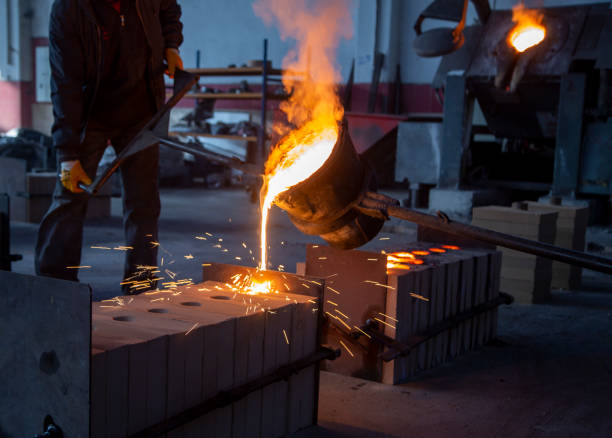
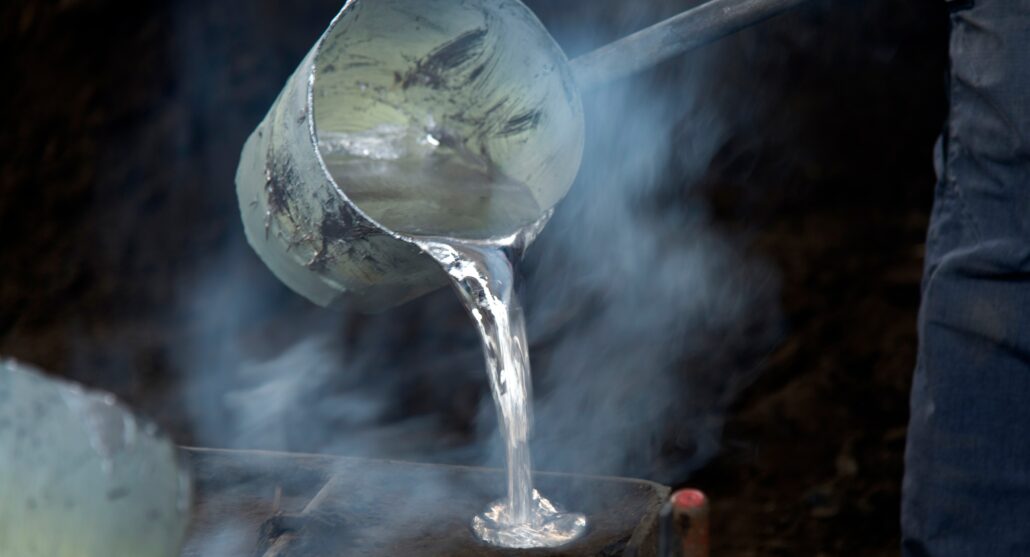
Casting is one of the oldest and most versatile metal working processes that allow manufacturers to produce complex shapes of the highest precision. Because of the excellent properties of aluminum for casting like its lightweight nature, corrosion resistance and high thermal conductivity, among the various metals used in casting, aluminum for casting is special. The article is on the use of aluminium for casting, its benefits, types, applications and techniques. Some of the most commonly used metals in casting are mainly due to Aluminum weight properties, excellent corrosion resistance and high thermal conductivity. To see the desired shape, aluminium is melted and poured or injected into a mould for casting. There are several leading methods of casting like sand casting, die casting, investment casting & permanent mould casting, depending on the requirements of the application. The decision of the method of casting shall be based on the size of components required precision required, mechanical properties and production volume. Aluminium casting alloy composition selection is one of the most critical decisions in the production of aluminium castings. Different common aluminium casting alloys include A356, 319 and 380 as well as 7075 which can provide different strength, ductility, and corrosion resistance for a variety of applications. Temperature control, pressure application, cooling rates and defect mitigation also greatly influence the production of high-quality aluminium castings with little porosity or shrinkage defects. Recent advances in casting technology, including vacuum-assisted casting, semi-solid metal processing and 3D printing of moulds have created great improvements in terms of precision, efficiency and sustainability of aluminium casting. In addition, industries are further focusing on recycling aluminium to reduce environmental impact while still maintaining the same levels of performance. The most comprehensive guide into aluminium for casting covering key factors such as temperature, pressure control, mechanical and chemical properties, defect prevention and alloy selection is explored. Knowledge of these aspects allows engineers and manufacturers to do a productive aluminium casting process, produce better product quality, and they can receive better production effectiveness. Why Use Aluminum for Casting? The excellent properties of aluminum justify its use in the casting industry and because of which it is an appropriate metal choice for manufacturers working in various sectors. There are some of the main reasons when opting for aluminum casting uses. 1. Lightweight Yet Strong: As you may expect, aluminum is very lightweight compared to other metals, and this makes it ideal for being used in industries where weight reduction is important when building vehicles or aircraft. 2. Aluminum offers Excellent Corrosion Resistance: The cast parts benefit from the natural oxide layer which is a barrier to rust and helps extend the life of the cast part. 3. High Thermal and Electrical Conductivity: This makes aluminium extremely suitable for use in heat exchangers, electronic enclosures and engine components. 4. Aluminum castings – Great Machinability: The cast Aluminum can be easily machined, polished, and finished for a high precision application. 5. Less Expensive: Aluminum is much less expensive than most other metals and its recyclability makes it environmentally friendly. Types of Aluminum Used in Casting Several different aluminium alloys are used for casting and have characteristics suitable for different applications. Which of the most commonly used aluminum alloys for casting are? 1. Aluminum-Silicon Alloys (Al-Si) 2. Aluminum-Copper Alloys (Al-Cu) 3. Aluminum-Magnesium Alloys (Al-Mg) 4. Aluminum-Zinc Alloys (Al-Zn) Aluminum Alloys for Die Casting The manufacturing process of die casting is very efficient in which a precision mold is used to inject molten aluminum under high pressure. This has become a well known route to manufacture durable, lightweight, and dimensionally accurate, complex metal components. The low density, good corrosion resistance and excellent thermal conductivity of the aluminum make it the preferred material for die casting. There are specifically several aluminum alloys which are specifically formulated for use in die casting to offer mechanical and physical properties for various applications. We described below the most consumed aluminum die casting alloys. 1. Aluminum Alloy 380 (A380) Aluminium alloy A380 is the most common aluminium alloy employed in die casting because of its versatility and superior casting characteristics. Key Properties Common Applications These properties make A380 extensively used in the automotive, aerospace, and consumer electronics applications, where strength to weight ratio, castability and cost efficiency are required. 2. Aluminum Alloy 383 (A383) A better corrosion resistance and performance in high-temperature conditions alternative to A380 is A383. Key Properties Common Applications Applicable in electrical housings, enclosures, as well as industrial machinery parts requiring dimensional stability and heat resistance. 3. Aluminum Alloy 360 (A360) However, A360 is known to have excellent mechanical properties, such as high strength and ductility. Key Properties Common Applications For example, in the automotive transmission cases, engine housings, aerospace, and parts that need high mechanical integrity A360 is often used. 4. Aluminum Alloy 413 (A413) A413 is a high-pressure material designed for high fluidity and tightness to pressure. Key Properties Common Applications Often used in hydraulic components, pump housings and heat exchangers, where it is used to make parts that are required to leak-proof and high strength. 5. Aluminum Alloy 390 (A390) A390 has been engineered for high load and extreme wear resistance. Key Properties Common Applications A390 is commonly used in automotive engine blocks, high performance pistons and mechanical gears where wear resistance and strength at service temperatures are important. 6. Aluminum Alloy 356 (A356) High-purity aluminium A356 possesses excellent castability as well as good mechanical strength. Key Properties Common Applications Automotive suspension and aerospace parts and high-strength industrial castings are made of A356. 7. Aluminum Alloy 319 (A319) A319 is a medium-strength alloy designed for good castability, corrosion resistance, and thermal conductivity. Key Properties Common Applications A319 is being used widely as automotive cylinder heads, transmission cases, and aircraft components where reliable thermal performance and moderate strength are required. The Right Aluminum Alloy to Select for Die Casting Depending on several factors, we need to choose the appropriate aluminium alloy for die casting. 1. Mechanical Requirements: Strength, hardness, ductility, and wear resistance. 2. Corrosion