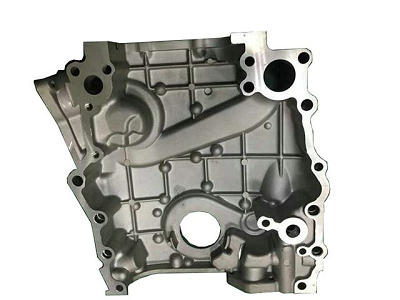
알루미늄 다이캐스팅

다이캐스팅 부품 벽 두께는 일정해야 합니다.

알루미늄 다이캐스팅

There are no hard and fast rules governing die casting parts wall thickness and consistency.  Inherent in the process is a wall section that possesses a dense fine-grained skin, 0.015-0.020 in. thick (0.4-0.5 mm).  The material between the surface skins tends to be less dense and large grained as a result of a longer solidification time.  This is where defects tend to congregate. Die casters have demonstrated the capability of casting 0.06-0.07 in. (1.5-1.8 mm) thick aluminum walls over large surface areas.  It is feasible to cast small areas as low as 0.04 in. (1 mm). Zinc alloys flow more readily, and can be cast to wall thickness as low as 0.03 in. (.75 mm) Magnesium alloys can be cast to wall thickness 0.035-0.045 in. (.89-1.14 mm) Wall sections should be as uniform as possible.  It is difficult to achieve uniform and rapid solidification of the alloy if the heat load varies from one location to another in the die.  Thinner walls contribute a lesser heat load than heavier walls and will have a longer die life. Intersections of walls, ribs and gussets should blend with transitions and generous radii Generous radii, outside corners, and transitions promote metal flow and internal integrity.  Radii and fillets also enhance structural integrity by reducing stress concentrations in the casting.  Additionally, fillets reduce heat concentration in both the die and castings.  Hot spots that result from sharp corners promote shrinkage voids in the casting. These hot spots also reduce die life at sharp corners in the die cavity steel. Standard draft should be specified Draft is highly desirable on surfaces parallel to the direction of die draw because it facilitates ejection by allowing the casting to release easily from the die surfaces.  The NADCA Product Standards recommendations for minimum draft should be specified. Sharp corners should be eliminated or minimized If sharp corners are required, they readily are accommodated at parting lines and at the junctions of die components.  Sharp corners should be broken with radii or chamfers. Undercuts should be avoided Undercuts should be avoided because they may require machining operations or additional die components, such as retractable core slides.  Slides increase the cost of die fabrication and maintenance.  They can also add to cycle time and manufacturing problems if they flash.  If possible, the component should be redesigned to eliminate undercuts.

알루미늄 항공우주 부품

알루미늄 다이캐스팅과 항공우주 산업에서의 중요성

알루미늄 주조, 알루미늄 주조 금형, 알루미늄 다이캐스팅, 다이캐스팅 알루미늄, 다이캐스팅 회사, 다이캐스팅 회사

알루미늄 다이캐스팅 품목은 다양한 산업 부문에서 현저하게 사용되며, 특히 정밀도와 최고 표준 품목이 가장 중요한 항공 우주 공학에서 더욱 그렇습니다. 이러한 품목은 항공 산업에서 소형 부품과 대형 부품을 모두 제작하는 데 사용됩니다. 또한 다이캐스팅 알루미늄은 중요한 군사 부문과 상업 부문 모두에서 사용됩니다. 그 이유는 간단합니다. 비용 친화적인 솔루션이며 놀라운 결과를 제공하기 때문입니다. 비용 효과 외에도 다이캐스팅 알루미늄으로 만든 부품은 극한의 기상 상황과 손상 증가를 견딜 수 있도록 추가적으로 준비되어 있습니다. 항공기에 알루미늄 제품을 사용하는 또 다른 중요한 이유는 다이캐스팅된 다른 금속에 비해 상대적으로 저렴하다는 점입니다. 또한 알루미늄은 다른 금속과 결합하여 내구성과 유연성을 높일 수 있는 잠재력을 가지고 있습니다. 알루미늄 주조 제품을 사용하면 표준에 타협하지 않으면서도 훨씬 저렴한 생산 비용으로 제품을 만들 수 있습니다. 또한 알루미늄은 금속 부품 사용에 대해 설정된 모든 표준을 최대한 완화합니다. 따라서 비행기에서 사용하기에 안전하다는 인증을 받았으며 가격이 저렴하고 비행 공예품에 필요한 모든 품질을 갖추고 있습니다. 따라서 알루미늄 주조는 그 어느 때보다 활성화되고 있습니다. 또한 알루미늄 다이캐스트 부품의 가장 큰 장점은 무게가 항공기 작업에 유리하다는 것입니다. 그렇다면 실제로 알루미늄 주조는 어떻게 이루어지며 어떤 공정이 포함될까요? 대답은 간단합니다. 먼저 알루미늄 합금을 고온에서 빠른 속도와 힘으로 최고급 강철에 강제로 주입합니다. 그 결과 항공기 부품으로 사용하기에 완벽한 매우 가볍고 얇은 벽을 가진 우수한 표준 제품이 탄생합니다. 알루미늄 다이어트 주조는 고난도 기술이라는 점을 언급할 필요가 있습니다. 경험이 풍부하고 최고 수준의 엔지니어 팀만이 부품의 부피가 크거나 공차 및 표면 마감이 우수한 제품을 만들 수 있습니다. 사실 이러한 유형의 포스 캐스팅은 중력 다이캐스팅이나 모래 주조보다 훨씬 더 유명합니다. 이는 아연 또는 알루미늄 주조의 경우 주조 공차가 매우 좁기 때문에 가공의 필요성이 매우 낮기 때문입니다. 알루미늄 또는 다른 금속 주조의 툴링 비용은 아직 다른 두 가지 유형보다 상당히 높지만 이렇게 달성한 기계적 특성은 기능면에서 훨씬 뛰어납니다.

다이캐스팅 클램핑 력이란?

A380 알루미늄 다이캐스팅, 알루미늄 주조 금형, 알루미늄 다이캐스팅, 다이캐스팅 회사

다이캐스팅 클램핑 력은 HPDC 다이캐스팅 기계의 클램핑 유닛이 금형에 가하는 힘입니다. 클램핑 력은 분리 력보다 강해야 합니다. 용융 금속을 금형에 주입하여 적용되는 클램핑 포어 > 분리력 분리력(개구력)을 계산하는 방법은 무엇입니까? 개방력은 다이캐스팅 부품을 생산하는 동안 다이가 확장되도록 캐비티에 작용하는 힘입니다. 개방력은 다음 공식으로 계산할 수 있습니다: F=PXA F: 개방력 P: 특정 사출 압력 A: 총 투영 면적 특정 사출 압력이란 무엇인가요? 용융 금속이 샷 구멍을 통해 콜드 챔버로 주입되고 샷 플런저가 금속을 다이 안으로 밀어 넣습니다. 플런저가 금속을 다이 안으로 밀어 넣을 때 가해지는 압력이 바로 비 사출 압력입니다. 주조 유형에 따라 사출 압력을 사용합니다: 표준 주조의 경우 = 600kg/cm2 기술 주조의 경우 = 600-800kg/cm2 압력 테스트 주조의 경우 = 800kg/cm2 예상 면적은 얼마입니까? 예상 영역은 3차원 물품의 평면상의 모양을 예상하여 추정하는 2차원 영역입니다. 총 예상 면적 = 캐스팅 예상 면적 + 슬라이드 예상 면적 + 러너 예상 면적 + 오버플로 예상 면적 예시 캐스팅 예상 면적 =56000mm2 오버플로 + 러너 예상 면적 =22400mm2 (총 캐스팅 예상 면적 40%의 면적) 슬라이드 투영 면적 = 투영 면적은 코어 이동 방향 x 탄ꬾ 웨지 각도 = 핑거 캠 각도 + 2도 힘 FY = F X 탄ꬾ ꬾ = 웨지 잠금 각도 예시: 슬라이드 코어 1 투영 면적 = 이동 방향에 대한 법선 면적 × 탄ꬾ =5000×탄20도 =5000× 0.36 =1800 m2 슬라이드 코어 2 투영 면적 = 4500×탄20도 = 1620mm2 따라서 총 투영 면적 = 56000+22400+1800+1620mm2 =81820 mm2 분리력(개방력)이란 무엇인가요? (기술 주조의 경우=600-800 kg/cm2) (800 kg/cm2 =8kg/mm2) 개방력 = 비압 × 총 투영 면적 =8 kg/mm2 × 81820mm2 =654560 kg/mm2 (1톤 = 1000kg) =654.56 T 다이 체결력 체결력은 분리력보다 더 세어야 합니다. 고정력 필요 =F×1.2 =654.56×1.2 =785.472톤 900T 기계 선택 충전 비율이란 무엇이며, 기계 톤수를 선택하는 데 어떻게 중요합니까? 바이러스 챔버의 절대 부피와 대비되는 액체 금속 취약 챔버의 비율입니다. 또 다른 방법은 가혹한 요소 챔버에 노출된 공기의 수준과 대비되는 금속의 수준입니다. 예: 50% 가득 찬 (금속) = 50% 남은 공기 충전 수준은 이상적인 중간 샷 속도를 확인하는 데 활용된다는 점에서 중요한 의미를 갖습니다. 이는 주조 품질에 영향을 미칠 수 있습니다. 자동차 다이캐스팅 부품 품질에는 30-40%의 충전 비율이 좋습니다.

다이캐스팅 제조 회사

단계별 다이 캐스팅 프로세스

알루미늄 주조 금형, 알루미늄 다이캐스팅, 다이 캐스팅, 다이캐스팅 알루미늄, 다이캐스팅 회사, 다이캐스팅 회사, 다이캐스팅 제조업체

The climbing phase: The 1st step is to prepare the die halves for casting by cleaning the faces of each die then applying lubrication or release agent. Once the die has been prepared, the die halves are closed and clamped together with pressure applied from the die-cast machine. The clamping force will depend upon the size of the machine but must be more than the opposing force trying to open the die during the casting process. The injection phase: The ingots are added to the furnace and kept molten at a set temperature according to the metal being used. The molten metal is transferred to an injection chamber and injected into the closed die pressure ranging from 1000 to 20,000 psi. The pressure is maintained while the metal solidifies. The amount is injected into the die is known as the ‘shot’ The injection of metal into the die is very short, this ensures the metals do not start to solidify before the die is completely filled. The cooling phase: After the injection is complete, the molten metal needs to solidify before the die is opened. The cooling time will depend upon the part geometry as well as the metal thermodynamic properties. The wall thickness of the parts plays a big factor in the cooling time, the thicker the wall section the longer the cooling time required. The ejection phase: After the cooling time has elapsed, the two die halves can be opened. An ejection mechanism then pushes the solidified casting out of the die. The force of the ejection will be determined by the size of the part, bearing in mind, the part shrink during the cooling process and tends to stick to the die surface. Once the part has been ejected, the die can be closed ready for the next injection cycle. The trimming phase During the cooling and solidification phase, the casting will solidify as a complete cast unit which includes the part, flash, and any runner system This excess material must be trimmed off to leave just the main cast product. Method of trimming includes trim tools, band saw are manually clipping. Any trimmed metal is either scrapped or recycled if permitted. Advantages of die casting: Die casting is fast Die casting can be produced in seconds each part and quantities of hundreds to thousands of metal parts each day. Near net shape Die casting are produced “near net shapes” no matter how complex the shape are how tight the tolerances are. Lighter weights Die casting are stronger because of the material surface skin not the thickness of materials so parts can weigh less with thinner casting wall thicknesses. Die casting is versatile Many more part shapes and sizes can be produced using the die casting manufacturing process. Die casting are durable Die castings parts are metal and have a long service life. Die castings are inexpensive Die castings are fast to produce and useless material. Die casting are typically less expensive than most other metal parts manufacturing processes.    

아연 다이캐스팅

아연 다이캐스팅 공정에 유리한 제조 방식

알루미늄 다이캐스팅, 다이캐스팅 알루미늄, 다이캐스팅 회사, 아연 다이캐스팅

The process of die casting with pressure injection can be followed until mid-1800. The components used were tin and lead, but the use has disappeared with the introduction of zinc and Aluminium alloys. This process has evolved over the years, from low-pressure injection molds to casting molds at pressures of up to 4,500 psi. The process can create high-quality products with excellent end surfaces. Die Casting is an economical and efficient process for making various shapes. Considered superior to other manufacturing techniques, it is durable and aesthetic and combines perfectly with other parts of the machine that are part thereof. Dying has many advantages. Among these, the main is its ability to produce complex forms with a higher tolerance level than other mass-production methods. Thousands of identical prints can be produced before you need to add new mold tools. High Die-pressure is a manufacturing process where aluminum that has been melted is injected by a casting machine under extreme pressure on steel or molds to make the design and detail parts of the model you want to make. Casting in tons of universal tightening. This record reflects the amount of pressure given on the matrix. The engine size varies from 400 to 4000 tons. There are many advantages to using the die casting process compared to others. Die casting produces parts with thinner walls, narrower size limits and processes can be accelerated. Labor costs and finishing are the lowest with the dice. This process facilitates to obtain intricate forms with narrower tolerances. Unlike the forgery process, you can insert the kernel into the product created by this process. Forms that cannot be obtained from rods or tubes can be easily achieved with casting. The number of operational processes is smaller, which leads to the reduction of waste materials. Die casting is used when you need a stable, dimensional and durable component. They withstand heat and maintain a good level of tolerance, an important condition for each part of a good machine. They are stronger and lighter than the part made by other printing methods. Its parts are not welded or screwed, which greatly increases its efficiency. Another advantage is the many workarounds that you can get with the launch. Surfaces can be smooth or textured, which facilitates the application and its use. Hopefully, this information can help you and thank you for reading the article about Zinc Die casting.

알루미늄 다이캐스팅

중국 다이캐스팅 서비스

알루미늄 다이캐스팅, 다이캐스팅 회사, 다이캐스팅 제조업체, 아연 다이캐스팅

Capacity To Meet Your Aluminum, Magnesium, Zinc and Vacuum Die Casting Needs. Aluminum Die Casting Providing high-quality Aluminum die casting parts at competitive prices requires modem die casting equipment. To reduce the effects that extreme cooling temperatures have on dies CNM TECH is converting its die cooling system from water to oil. Oil maintains a warmer die temperature that contributes to a more uniform casting and extends die life, an important factor in part costs. CNM TECH Die Casting company is adapting robotic controls to the operation of die casting machines. This permits a substantial increase in production rates, important in both controlling costs and meeting delivery requirements. It also allows us to use our people in ways which make better use of their skills and experience. To lower production costs, CNM TECH Die Casting manufacturer has developed and patented, new, low volume, energy efficient aluminum melting furnaces. Since aluminum can be melted efficiently in small quantities, it allows the company to supply casting machines with different alloys of aluminum simultaneously. Casting machines don’t have to stand to wait for a large furnace to supply the proper alloy. Schedules aren’t built around what alloy is in the furnace. Zinc Die Casting For applications where high impact strength, low cost and close dimensional limits are important design considerations, zinc die casting plays an important role. Zinc normally permits higher production rates than aluminum and parts can be designed with thinner cross-sections. The resulting parts are highly resistant to corrosion and receptive to a variety of beautiful finishes. High rates of production and uniform quality are maintained by die casting machines with automatic extractors. Vacuum Die Casting Vacuum die casting is preferred by many casting buyers because it results in a less porous part. CNM TECH’s Vert-a-Cast machines, with a clamping force of 400 tons, are capable of producing castings automatically at a much faster pace than manually-operated horizontal machines. Vacuum die casting, a CNM TECH capability for ten years, is often the only economical way to meet critical porosity specifications. Maintenance, repair, changes and corrections on dies are accomplished promptly in CNM TECH’s fully-equipped tool and die shop. Alloy materials are melted, fluxed and cleaned in the central furnace before being transferred to die casting equipment. If you have any die casting requirement, you are welcome to send us your requirement for a quotation.

다이 캐스팅 프로세스

알루미늄 다이캐스팅, 다이 캐스팅, 다이캐스팅 회사, 다이캐스팅 금형, 다이캐스팅 부품, 다이캐스팅 공정

CNM 다이캐스팅은 모든 다이캐스트 합금, 많은 영구 금형 합금 및 많은 마그네슘 합금을 포함한 광범위한 합금에 대해 다이캐스팅, 인베스트먼트 주조, 영구 금형 주조 및 모래 주조를 포함한 다양한 주조를 제공 할 수있는 능력을 갖추고 있습니다. 당사의 제조 공정은 세계 주조 시장에서 기존 다이캐스팅과 동등하거나 더 우수한 것으로 인정받고 있습니다. CNM 다이캐스팅 공정의 장점 치수 제어 개선 교차 파팅 라인 공차 개선 가스 다공성 감소 완성된 회전 부품의 균형 특성 개선 “제자리 주조” 인서트 사용 효과적인 합금 개질로 인한 기계적 특성 개선 입자 크기 미세 구조로 인한 마모 특성 개선 합금 및 주조 유형에 대한 유연성 향상 CNM 다이캐스팅의 가공 섹션은 워크 셀 개념과 고속 유연 가공 장비를 활용하여 CNM의 주물에 대한 2차 작업을 완료하여 부품 또는 하위 조립품이 우리 시설을 떠나면 설치할 준비가되도록합니다. CNM 다이캐스팅은 초기 자본 지출 없이 고속 가공 및 조립 서비스를 제공하고자 하는 고객의 요구에 적극적으로 대응하고 발전해 왔습니다. 기존 장비 비용의 일부를 각 부품에 반영함으로써 고객은 더 빠른 설정과 최소한의 초기 자본 지출의 이점을 누릴 수 있습니다. CNM 다이캐스팅은 중국 둥관에 위치한 20,000평방피트 이상의 시설에서 8대의 다이캐스팅 기계, 완벽한 자체 다이캐스팅 금형 제작 및 CNC 가공을 운영하고 있습니다. 100명이 넘는 직원과 함께 통합된 제조 역량을 통해 원스톱 풀 서비스 다이캐스팅을 제공하고 높은 수준의 품질을 유지하면서 지속적으로 가격 경쟁력을 확보할 수 있습니다. 다음은 다이캐스팅 공정의 비교입니다. 주조 가능한 금속 최소 및 최대 질량, kg 희미한 공차,% 표면 마감,µ m 최소 단면 크기,mm 구배도 생산 속도,pcs/hr 최소 코어 구멍,mm 다공성 모래 주조 알루미늄 강철 CI 및 기타 0.03, 100 0.10, 200, 000 0.03, 50, 000 0.09 ~ 0.03 4 8 8 3 6 3.5 4 ~ 7 10 ~ 15 6 5 영구 금형 주조 주철 Al 및 Mg 0.01, 50 0.01, 10 0.01 분 2 5 3 2 50 4.5 ~ 6 6 4 다이 주조 Al Mg Zn 0.015, 35 0.015, 35 0.05, 80 0.0015 0.0015 1 1 1 0.8 1.2 0.5 2 2 2 75 ~ 150 300 ~ 350 2.5 2.5 0.8 2 정밀주조강 알루미늄 0.005, 25 0.002, 10 0.003, ~ 0.005 1 1 1 0.8 1 ~ 3 N/A 0.5 ~ 1.25 1 쉘 몰딩강 주철 알루미늄 0.05, 120 0.03, 50 0.03, 15 0.01 ~ 0.003 6 6 2.5 3.5 3 1.5 2 ~ 3 30 ~ 80 3 ~ 6 1 원심 주조 알루미늄 강철 주철 최대 400 0.002 0.004 0.004 0.6 ~ 3.5 0.6 ~ 1.2 3 30 ~ 50 N/A 1 to

다이캐스팅 제조 회사

알루미늄 다이캐스팅, 다이캐스팅 부품

CNM Die Casting is your one-stop, complete service Die Caster for various die casting parts including aluminum die casting, investment casting, sand casting. We offer you a single source for engineered die castings, together with cutting-edge engineering resources, advanced production capabilities and complete secondary finishing. CNM Die Casting supplies high-quality aluminum, zinc, brass and magnesium die castings. We operate our casting factory in DongGuan, China for various castings, machining, assembly and die building, with over 20,000 square feet of total floor space. We are a leader in innovative quality control systems. Our quality manufacturing system includes a process failure detection system at every casting press. Rigorous 100% inspection is as much a production operation as any other manufacturing step and is woven into the sequential standardized work to assure manufacturing quality in finishing and machining. As one of the divisions of CNM Manufacturing Group, CNM Die Casting can be more responsive to its customers and, simultaneously, offer more competitive, “made in China” pricing on quality products.   CNM Die Casting’s tooling department builds dies with state-of-the-art equipment. Along with our experienced engineering and tooling department, we design tooling and assist customers with casting design issues. Excellent control of design and tool building allows us to produce high quality tools and parts at lower cost, and more quickly than anyone else in the industry. Our Engineering and Tooling Department offers: Tool Engineers to ensure specifications and dimensional criteria are met to the customer’s requirements Design Engineers with the latest CAD/CAM technologies to design both product and tooling for the customer’s specification. Technical on-site product design assistance for die castings Production tooling built with CNC machines by in-house full capability large tooling facility state-of-the-art EDM machines rapidly burn cavities to near-finished condition with oscillating feed. Prototyping in the same tooling intended for production Production tools are built with premium grade materials

금속 주조 서비스 정보

알루미늄 다이캐스팅, 다이캐스팅 회사, 다이캐스팅 부품, 고압 다이캐스팅, 마그네슘 주조, 마그네슘 다이 캐스팅, 아연 다이캐스팅

Metal casting services involve the shaping of free-flowing liquid metals through the use of dies, molds, or patterns.  Castings are generally roughly finished due to the nature of their production.  In many cases, additional finishing is required to remove burrs and other artefacts of the casting process.  Metal castings services are used to design a wide range of components and finished products.  Everything from simple nails and fasteners to engine blocks can be fabricated using metal casting services.  Common metal casting processes include sand casting, die casting, permanent mold casting, investment casting, centrifugal casting, and lost foam casting. Sand Casting Sand casting is used to make large parts (typically iron, but also bronze, brass, aluminum). Molten metal is poured into a mold cavity formed out of sand (natural or synthetic). Sand castings generally have a rough surface, sometimes with surface impurities and surface variations. Die-casting includes a number of processes in which reusable dies or molds are used to produce casting.  The die contains an impression of the finished product together with it’s running, feeding and venting systems.  The die is capable of a regular cycle and of (quickly) dissipating the heat of the metal poured into it.  Once the liquid metal has cooled sufficiently, the mold is opened and the casting can be removed and finished. Permanent Mold Casting In permanent mold casting, molten metal is poured into cast iron molds, coated with a ceramic mold wash. Cores can be a metal, sand, sand shell, or other materials. When completed, the molds are opened and the castings are ejected.   Investment casting services involve molding patterns by the injection of a special wax into a metal die.  The patterns are assembled into a cluster around a wax runner system. The ‘tree’ of patterns is then coated with 8-10 layers of refractory material. The assembly is heated to remove the wax.  The hot mold is cast, and when cool, the mold material is removed by impact, vibration, grit blasting, high-pressure water blasting or chemical dissolution leaving the castings, which are then removed from the runner system. Centrifugal casting Centrifugal casting services are used to produce castings that are cylindrical in shape.  In centrifugal casting, a permanent mold is rotated about its axis at high speeds as the molten metal is poured. The molten metal is centrifugally thrown towards the inside mold wall, where it solidifies. The casting is usually a fine grain casting with a very fine-grained outer diameter, which is resistant to atmospheric corrosion, a typical need with pipes. The inside diameter has more impurities and inclusions, which can be machined away. Lost foam casting Lost foam casting (LFC) is metal casting services that use foam filled patterns to produce castings.  Foam is injected into a pattern, filling all areas, leaving no cavities.  When molten metal is injected into the pattern, the foam is burned off allowing the casting to take shape. Die casting Die casting and metal casting includes a number of processes in which reusable dies or molds are used to produce casting. The die is capable of a regular cycle and of (quickly) dissipating the heat of the metal poured into it. Once the liquid metal has cooled sufficiently, the mold or is opened and the casting can be removed and finished.   In the die casting process, molten metal is injected under pressure into a reusable mold or die. The die contains an impression of the casting together with it’s running, feeding and venting systems. The die is capable of a regular cycle and of (quickly) dissipating the heat of the metal poured into them. Once the liquid metal has cooled sufficiently, the mold or is opened and the metal casting can be removed and finished. high pressure die casting The high pressure die casting process is the most widely used, representing about 50% of all light alloy casting production. Low pressure die casting currently accounts for about 20% of production and its use is increasing. Gravity die casting accounts for the rest, with the exception of a small but growing contribution from the recently introduced vacuum die casting and squeeze casting process. the design of low pressure and gravity die casting dies for improved die filling, optimized solidification pattern and maximum yield. Gravity die-casting is suitable for mass production and for fully mechanized casting. Low-pressure die casting is especially suited to the production of components that are symmetric about an axis of rotation. Light automotive wheels are normally manufactured by this technique. Die casting metals can vary widely, and different die casting companies may have the ability to work with anyone or number of them. Some of the most common metal casting types include aluminum die casting, brass die casting, lead die casting (the most popular for model die casting), magnesium die casting, and zinc die casting. Hope all of that information is enough for your reference, but if you want to know more information, you are welcome to contact us by phone or email.

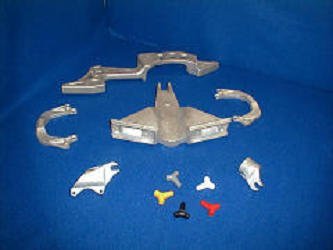
그래비티 캐스팅이란?

알루미늄 주조, 알루미늄 주조 금형, 알루미늄 다이캐스팅, 다이 캐스팅, 다이캐스팅 알루미늄, 다이캐스팅 회사, 다이캐스팅 금형, 다이캐스팅 부품, 중력 캐스팅, 사출 금형 중국, 사출 금형 제작

알루미늄 다이캐스팅과 중력 주조의 차이점 알루미늄 다이캐스팅은 단순히 용융 금속을 가지고 노는 것 이상의 의미로, 다른 방법으로는 거의 만들 수 없는 예술품과 복잡한 기계 또는 기타 품목을 만들 수 있는 훌륭한 방법입니다. 알루미늄 다이캐스팅은 용융 금속을 가지고 놀면서 돈을 절약할 수 있는 정말 좋은 방법입니다. 알루미늄 다이캐스팅이 오랜 시간 동안 살아남을 수 있었던 이유는 바로 효율성의 문제입니다. 가장 초기의 주조 사례 중 일부는 수천, 수만 년 전으로 거슬러 올라가는 중국에서 발견되었습니다. 사실 이집트부터 로마에 이르기까지 모든 주요 문명에서 알루미늄 주조를 사용했습니다. 이 기술은 르네상스 시대에 다시 유행하기 시작했고 그 이후에도 계속 발전하고 진화해 왔습니다. 샌드캐스팅이 가장 널리 사용되는 주조 공정이지만, 뒷마당 주조소에서는 훨씬 더 많은 공정을 사용할 수 있습니다. 모든 사람이 엔진 부품과 같은 무거운 부품을 주조하거나 직접 오토바이를 주조하지는 않을 것입니다. 따라서 장식용 부품만 만들고자 하는 경우에는 이러한 대형 주조 공정과 동일한 주조 공정을 사용하지 않을 것입니다. 작은 규모의 조각상이나 장식품을 만드는 예술가나 모형 비행기나 보트에 장식적인 터치가 필요한 애호가들은 필요에 따라 중력 주조를 사용하는 것을 고려할 수 있습니다. 중력 주조란 무엇인가 중력 주조는 알루미늄 및 기타 가벼운 합금을 다룰 때 특히 유용한 것으로 보입니다. 이 주조 공정의 기본 아이디어는 이름에서 알 수 있듯이 거의 정확히 일치합니다. 금속은 중력의 힘에 의해 금형에 도입됩니다. 대부분의 다른 주조 공정은 특정 모래 주조 공정에서와 같이 자연적인 압력 차이를 사용하거나 원심 주조와 같이 강제 압력을 사용하여 용융 금속을 금형에 넣습니다. 중력 주조의 가장 일반적인 용도 중 하나는 영구 금형을 사용할 때입니다. 금형이라고도 하는 영구 금형은 동일한 금형을 여러 번 사용할 계획이고 품질을 일정한 수준으로 유지해야 하는 경우에만 경제적으로 사용할 수 있습니다. 일부 임시 금형은 반복적으로 사용할 수 있지만 시간이 지남에 따라 완제품의 품질이 저하되기 시작합니다. 다이 몰드를 사용하면 품질이 동일하게 유지됩니다. 다이 몰드는 투자로 간주해야 합니다. 예, 다른 금형보다 비용이 많이 들지만 저렴한 금형 옵션보다 오래 사용할 수 있습니다. 영구 금형의 경우 주철, 강철 및 기타 금속을 사용하여 제작됩니다. 중력 주조는 영구 금형 공정에 사용되며 만족스러운 결과를 얻을 수 있습니다. 중력 주조는 일반적으로 완제품의 구조적 기반보다 시각적 기반이 더 중요할 때 사용되므로 이 방법은 예술가와 일부 보석상들이 선호하는 방법입니다. 강도의 손실은 이 과정에서 사용되는 압력이 부족하기 때문입니다. 강도가 필요하지만 여전히 중력 주조를 사용하려면 용융 금속을 더 많이 사용해야 하므로 무게가 증가합니다. 중력 주조에 대해 자세히 알아보려면 https://www.aludiecasting.com/ 로 이동하세요. 중력에 의존하는 것은 인내심이 필요하지만 더 큰 제품에는 필요할 것입니다. 비즈니스에 중력 주조 또는 알루미늄 다이캐스팅, 마그네슘 다이캐스팅 또는 아연 다이캐스팅 서비스가 필요한 경우. 견적에 대한 요구 사항을 보내 주시면 3D 부품 설계와 요구 사항 만 보내 주시면 나머지는 저희가 알아서 해드리겠습니다. 우리와 함께 일하려면 시장에서 시장 만 관리하면되며 리드 타임, 배송, 품질 및 기술을 처리 할 수있는 백업이 될 것입니다.

위로 스크롤

견적 받기