литьё под давлением магния

Топ-10 производителей пресс-форм для литья под давлением в Китае и мире

Топ-10 производителей пресс-форм для литья под давлением в Китае и мире

литейные предприятия

All modern industrial operations require precise manufacturing processes and high efficiency and product quality standards that become most relevant during die casting activities. Metal part formation during die casting predominantly depends on this vital element to create products with stronger performance features. The strategic choice of fitting die casting mold manufacturers by automotive, aerospace, electronics, and consumer goods industries leads to significant business advantages through improved product performance and production efficiency, and market launch programs. The market values aluminum die casting molds because these molds offer the production of lightweight, corrosion-resistant components at high tolerances with minimal post-production requirements. Chinese die casting mold suppliers gain business from numerous manufacturers because they offer reduced production costs and expanded industrial capabilities. Leading-edge die casting mold development occurs through Europeanand  North American industrial leaders and international corporations who work with automated and bespoke solutions to redefine die casting possibilities. The guideline performs a comprehensive assessment of primary die casting mold manufacturers operating across China and worldwide territories to aid in business partnership selection. We choose mold manufacturing companies that demonstrate top-quality aluminum die casting abilities combined with exceptional client support under international quality standards. What is Die Casting? Die casting is a manufacturing process to create metal parts with high precision, with a very smooth surface finish and high tolerance. Molten metal involves forcing the metal under high pressure into a mould cavity, which is typically called a die and ordinarily made of hardened (hard facing) tool steel. Key Features of Die Casting: High Pressure: Pressures in the die range from 1.5 to over 25.0k psi, and molten metal is injected. Reusable Moulds: The dies are strong, durable and used to print high-volume products. Fast Production: It can be completed in seconds, given its small production it, making it very efficient. Precision: Excellent dimensional accuracy and little manufacturing are noted as features of parts. Materials Commonly Used: Since aluminum is strong and lightweight, it is amply used by the industry in automotive parts like motor housings. Types of Die Casting: 1. Hot Chamber Die Casting: 2. Cold Chamber Die Casting: Advantages: Disadvantages: 1. Sincere Tech Year Established: 2005Employees: 200+Business Type: Sincere Tech specializes in mold manufacturing, die casting molds, and aluminum die casting to provide high-quality die casting products. Website and Contact Website: https://www.plasticmold.netEmail: info@plasticmold.netPhone: +86 135 30801277Address: Building 1, No. 30 Huan Zhen Rd, Shang Dong village, Qi Shi Town, Dongguan City, Guangdong province, China, 523000 Company Profile Sincere Tech operates as China’s top mold manufacturing company to create precise die casting molds dedicated to serving the automotive industry and electronics industry, alongside the consumer product sector. The company applies its twenty-year market knowledge to provide high-quality die casting products with advanced production systems. Sincere Tech provides customers with an entire service range that begins with mold design and extends to mold manufacturing services. The China die casting mold supplier, plasticmold.net, operates as Sincere Tech and provides reliable services to its clients. The company operates as an aluminum die casting mold specialist with magnesium and zinc die casting capabilities to provide mold making and CNC machining with complete manufacturing services. Their Quality Commitments For quality delivery at the company to succeed their products must pass verification by quality control systems that check for international standards compliance. The company uses organizational testing combined with inspection systems to confirm compliance of their die casting molds with quality standards across the globe. The organization benefits from both rapid development and high production speed for serving various industrial markets. The operational procedure at the company follows the fundamental requirements of ISO 9001 standards. Why Choose Sincere Tech? 2. GC Precision Mould Year of Establishment: 1999No of Employees: 150+Business Type: GC Mould provides die casting mold manufacturing services exclusively for aluminum die casting and high-pressure die casting. Website and Contact Website: https://www.aludiecasting.comEmail: info@aludiecasting.comPhone: +86 131 4886 5556Address: No. 30 Huan Zhen Rd, Qi Shi Town, Dongguan City, Guangdong province China, 523516 Company Profile GC Precision Mould operates as GC Mould to provide professional die casting mold manufacturing services exclusively for aluminum die casting molds of complex component shapes. The company serves its clients across the globe because of its superior tooling and high-pressure die casting expertise. GC Precision Mould provides die casting products manufactured from aluminum for the automotive sector and industrial market segments, alongside the electronics industry. The company implements complex solution techniques to design aluminum die casting molds that guarantee both high design detail precision and manufacturing productivity levels. Their Quality Commitments The company performs strict quality management checks concurrent with updating its equipment base and production materials. The company’s essential objective consists of manufacturing durable mold components that deliver accurate measurements. The production requirements at GC Precision Mould fulfil the standards of ISO 9001, resulting in sustained top-quality operational processes. Why Choose GC Precision Mould 3. CNM Tech Year of Establishment: 20+No of Employees: 100-400Business Type: CNM Tech is a manufacturer, supplier, and exporter specialized in manufacturing high-tolerance die casting molds while producing casts at a large scale. Website and Contact Website: https://www.diecastingschina.comEmail: info@diecastingschina.comPhone: +86 130 4589 8002Address: Rm 101, No.40, Donghu road, Jinglian, Qiaotou town, Dongguan city, Guangdong Province, China. 523520. Company Profile CNM Tech operates as an experienced China-based company specializing in manufacturing high-tolerance die casting molds while producing casts at a large scale. Through their years of manufacturing aluminum die casting molds, the company supports clients who work in aerospace and automotive, and medical sectors. CNM Tech, as a Chinese die casting mold manufacturer, leads the industry by supplying processing services through die casting molds for aluminum and zinc, and magnesium alloy materials. The company’s ten-year experience in mold making allows it to supply sturdy molds that serve the automotive, electrical, telecommunications, and home appliances markets. Their Quality Commitments The company follows rigorous quality requirements while dedicating itself to permanent improvement procedures. The company obtains ISO 9001 certification together with other worldwide certifications to supply products beyond rigorous requirements. Mold inspection platforms conduct a complete check of each mold before final delivery happens. Why Choose CNM Tech? 4. Bruschi S.p.A. Year of Establishment: 1948No of Employees: 720Business
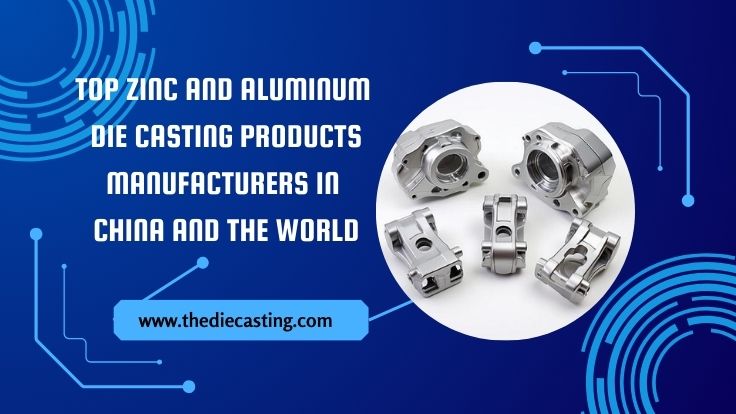
Лучшие производители изделий из цинка и алюминия для литья под давлением в Китае и мире

Лучшие производители изделий из цинка и алюминия для литья под давлением в Китае и мире

алюминиевое литьё

The die casting has now evolved into a crucial manufacturing step in today’s rapid, pre-precise computer controlled industrial environment. The die-cast parts can be from automobile components to home appliances, aerospace parts, and even consumer electronics etc., which helps rule out the requirement of heavy machining, making the production of complex metal parts at scale through die casting with consistent quality. As industries increase their demand for lightweight, durable, and complex design products, there is a constant demand for high-performance die casting produced from increasingly exotic alloys. Nowadays, industries require increased quality, cost-efficient, and lightweight components, and hence increasing demand on the zinc and aluminum die casting products manufacturers. Zinc and aluminum alloys are used to produce precision parts that are used in automotive engines, aerospace structures, and also as electronic devices. As businesses push towards sustainability, as well as increased performance, suppliers are becoming more and more sought after by businesses that are looking for the consistency of quality and quick turnaround times. With time, the industries grow and increase demand for die castings, the aforementioned technologies need to be exploited by manufacturers to produce more durable, functional, and aesthetically appealing die castings on a global scale. One of the types of die casting materials that you can opt for is zinc and aluminum metals. Among these two materials, they offer unique advantages: strong, cost-efficient, resistant to corrosion, and suitable for a high volume of production. Both zinc die casting products and aluminium die casting products are gaining more and more applications in the related industries all over the world, under the trend of energy efficiency, electric mobility, and sustainable manufacturing. In this article, we take a deep dive into the world of zinc and aluminum die casting, including manufacturers who are based in China, a global hub for manufacturing, and the top companies throughout the world. In this article, before digging into the most important players in the market, we will explore what die casting is and what roles zinc and aluminum play in the process. What is Die Casting? Die casting is a type of metal casting where molten metal is forced under high pressure at high velocity into a steel mold cavity (may be called ‘die’), known as a die, thus giving the name to this casting process. The two common types of these molds are usually made out of hardened tool steel and they are designed in such a way to produce complex high precision components which are otherwise impossible or would cost very high if produced through other means. Key Characteristics of Die Casting The process of die casting is very efficient and agile with large scale production and hence is widely popular in the automotive, aerospace and consumer electronics industries. Types of Die Casting Materials Die casting can be done with different materials, which have various attributes.  The most common metals include: In all of these, the most widely used are zinc and aluminum because of their superior properties, low cost, and versatility. Zinc Casting Products are created by an economical process The die-casting product is made of zinc or zinc-based alloys using the die-casting process. Zinc is easily cast and offers many desirable properties. Zinc has the following key benefits in the die casting process: The products made from zinc die casting are usually hardware components, automotive parts, connectors, locks and some consumer goods. Products Made From Aluminium Die Casting? Aluminium die casting products are those parts which are made by injecting molten aluminum into steel molds under high pressure. Because aluminum is light and does not corrosion, it is very useful for structural purposes when strength and weight matter. Aluminum is useful for die casting due to the following benefits. Amongst this, aluminium pressure die casting products are a subset of the foregoing, which specifically applies to aluminum cast by the high-pressure die casting (HPDC) method. HPDC is utilized widely for the production of engine blocks, transmission cases, electronic enclosures, and much more. What Are Cast Products? Cast products is a general term for any item formed by pouring molten metal into a mold allowing it to Solidified and then removing the formed objects from the mold. Although die casting is one type of casting method, there are certain other types of casting processes such as sand casting, gravity casting, and investment casting. Difference between General Cast Products and Die Casting Products Feature Die Casting General Cast Products Process High-pressure injection Often relies on gravity or manual pouring Precision Very high Moderate Surface Finish Smooth Usually rougher Production Volume High Medium to low Material Waste Low Higher Cycle Time Fast Slower Zinc die casting, however, is a method of creating zinc parts through high-pressure die casting for cases where the requirement of high precision is present, implying that they are not processed through simpler gravity-based casting methods. Why Are Zinc and Aluminium So Popular in Die Casting?  Here are some of the reasons why these two metals are the main contenders in the die casting industry. 1. Economy & Efficiency Zinc and aluminum are quite cheap, probably cheaper than they would be with other alloys used in casting. Moreover, they allow rapid cycle times and long mold life, which reduces manufacturing costs. 2. Versatility Such material can be used to manufacture micro components, large structural parts, or practically anything else that one might imagine. Zinc and aluminum are dependable choices for such things as making intricate gears or lightweight engine parts. 3. Sustainability Both metals are 100% recyclable. Mostly, it works with recycled aluminum and zinc and is called a greener process than casting. 4. Adaptability to Finishing Processes Zinc and aluminum parts can be finished with, among others, painting, powder coating, plating, and anodizing. That gives functional pluses such as corrosion resistance, together with the eye-pleasing qualities. How to Choose the Right Die Casting Manufacturer? The price discovery is less than finding the right supplier. To wrap up, let us first look at the following: 1. Material Expertise Manufacturers

Что такое гравитационное литье под давлением?

Что такое гравитационное литье под давлением?

алюминиевое литьё

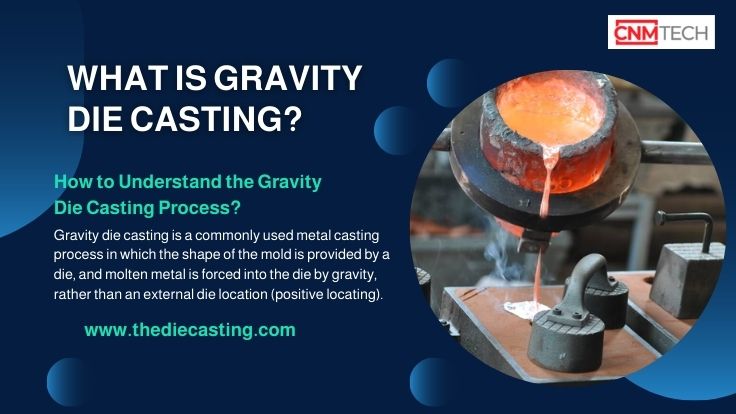
Gravity die casting is a commonly used metal casting process in which the shape of the mold is provided by a die, and molten metal is forced into the die by gravity, rather than an external die location (positive locating). This method differs from high-pressure die casting in that the molten metal is forced into the die under pressure, but using gravity is the only way to feed material into the die. The mold is usually made of durable metals such as steel or cast iron, reusable with high dimensional accuracy and a high surface finish. As well, this technique is very favored in the production of nonferrous metal parts like aluminum, zinc, magnesium, and their alloys. Heating the metal to the metal state and thereafter pouring it into a preheated permanent mold. The molten metal flows toward the gravity and down to the mold cavity, which causes it to fill. Afterwards, the mold is opened and the casting is ejected, which may need to be trimmed, machined, or otherwise treated to improve the surface. One of the most common applications of this process is in aluminum gravity die casting, because aluminum is lightweight, corrosion-resistant, and has good mechanical properties. The technique is extensively used in various industries, including automotive, aerospace, industrial machinery, and consumer goods, to make durable, complex parts, such as engine parts, housings, brackets, and the like. One of the reasons for respecting gravity casting is the ability to cast medium to high volumes of parts of high quality (low porosity) for good mechanical strength. While there are some limitations, such as higher initial tooling costs and less complex products than other casting systems, its advantages make this a suitable and low-cost method for many manufacturing needs. In essence, gravity die casting is a precision, repeatable, and rational material, which is important in modern metal working process. How to Understand the Gravity Die Casting Process? That was an easy, efficient technique at the core of gravity die casting. Preheated metal mold of steel or iron is coated with a release agent, ready to cast, the castings are easily removed. After the mold is ready, molten metal such as aluminum, magnesium or copper alloys, is poured into the mold. In order for the metal to fill the cavity, the mold simply cools and solidifies, with gravity alone. After that, the mold is opened, and the casting is removed. If not, the excess material remains, be it the gate or runner system or some other part, it is cut off, and the casting may be finished by machining or in other ways. Compared to sand casting, moulds in which casts are produced from sand are only used once. The component being cast in a gravity die is significantly improved in terms of production efficiency and product consistency because metal dies in gravity casting can be reused. Various surface finish options for gravity die casting Another of the advantages of gravity die casting is that it can enable parts with smooth, consistent surface finishes directly from the mold. However, other surface finishing techniques (s), depending upon the functional and aesthetic requirements of the final product, may be added to the finishing process to improve the appearance, durability, or prepare the part for further processes such as painting or plating. The most frequently used surface finishes on gravity die-cast parts are listed below: 1. As-Cast Finish It is the natural surface resulting directly from the casting process. If prepared properly, however, and process conditions are optimum, gravity casting can produce a rather smooth surface as compared to sand casting. Internal components or parts for which appearance is not critical usually accept as cast surfaces. 2. Shot Blasting / Grit Blasting This forms the Shot blasting, propelling of small steel or ceramic beads on the casting surface to remove the scale, flash, or any residues. This process makes a uniform matte texture of the surface, as well as cleans the surface better and much suitable for such parts that further go through finishing like powder coating or painting.  3. Polishing Mechanical removal of minor imperfections is used for polishing to improve the surface smoothness and shine. Particularly aesthetic parts and where lower friction is needed. Polishing can be basic buffing, manual or automated, or encompass a mirror finish. 4. Powder Coating In powder coating, powder is applied on the casting surface and cured under heat, forming a hard and protective layer. The excellent resistance to corrosion, impact, and UV has made it suitable for automotive components and outdoor components produced in aluminum gravity die casting. 5. Anodizing Aluminum gravity casting parts have many reasons of choice for choosing anodizing. The surface is thickened by a natural oxide layer electrochemically, which improves corrosion resistance and provides the ability to customize the color. Anodized surfaces are durable, the colors won’t tire, and they have a sleek, professional appearance. 6. Machining for Precision Surfaces In many instances, the gravity cast parts are at least partially machined post-casting casting particularly to exact tolerances or render critical surfaces smooth. CNC machining is utilized to refine flat faces and threads, along with sealing areas where the need for precision is beyond the ability of the die itself. 7. Painting and Coating Parts requiring branding, color coding, or protection can be done in any of the methods used in conventional wet painting. The application of paint coatings is usually done by either applying them manually or using automated spray lines, frequently after surface cleaning or priming. 8. Chromating / Chemical Treatments Chromating or chemical conversion coatings may be applied for enhanced corrosion protection as well as improved paint adhesion. The passive protective film produced by such treatments has little influence on dimensions, but does protect the aluminum surface. Advantages of Gravity Die Casting The superior mechanical properties are one of the main reasons of why manufacturers prefer gravity die casting. As a result, castings produced by this process tend to have fewer air pockets, or porosities, and therefore,

Топ 10 производителей алюминиевого литья в Китае и США

алюминиевое литьё

Because it is lightweight, strong, and durable, aluminum casting is widely used throughout different industries from automotive to aerospace, electronics to consumer goods. The manufacturing process calls for aluminum parts to be made by pouring molten metal into molds for the production of highly detailed and precise components. Aluminum is a very versatile metal as it is easily recyclable and corrosion resistant and hence provides an excellent option for many applications. China and the USA, in recent years, are the two major global hubs for aluminum casting production and they both have a wide manufacturer range in the various industries and sectors. Mass production is the hallmark of China, which can then deliver reasonable prices and a variety of casting solutions for large production. However, the USA boasts a great number of top-tier companies that specialize in high quality, precision casting, advanced technology, and ecofriendly approaches, working with those industries that require sophisticated and custom-made aluminum cast components. In this article, we will overview the top 10 aluminum casting companies in China and the USA describing their capabilities, experience in the industry, and something unique to help the companies choose the right aluminum casting manufacturing partner. 1.  GC Precision Mold Co., Ltd. Year of Establishment: 1999Number of Employees: 100-200Business Type: Serving industries such as the auto, aero, and electronics industries, the company has gained international market trust. Website and Contact: Website: https://aludiecasting.com/Contact: +86 131 4886 5556Email: info@aludiecasting.comAddress: Factory Address 1: No. 30 Huan Zhen Rd, Qi Shi Town, Dongguan City, Guangdong Province China, 523516 Company Profile Founded in 1999, GC Precision Mold Co., Ltd. is a global leader in high-quality aluminum die casting and nonferrous metal products. It has two special properties plants located in Dongguan, China, and offers services including high-pressure die casting, sand casting, and forging. As a result of over two decades of experience, the company delivers precision, consistent quality, and flexible material offerings to a variety of industries such as automotive, aerospace, and electronics. Both client satisfaction and GC Precision Mold commit to honorable words and behavior in providing the best product. Their Quality Commitments Its various certificates are proof that GC Precision Mold Co., Ltd. adheres to the highest standards of quality and operational excellence. The company possesses certificates from ISO 9001 on Quality Management Systems, which demonstrates the company’s ability to provide the product according to customer requirements at all stages and to enhance quality systematically. Why Choose GC Precision Mold Co., Ltd.? When you are choosing a company in pursuit of top-grade die casting and metal products, there are many benefits to choosing GC Precision Mold Co., Ltd. 2.  CNM Tech Co., Ltd. Year of Establishment: 20+Number of Employees: 100-200Business Type: CNM Tech is focused on aluminum, magnesium, and zinc die casting, CNC machining, surface finishing, and assembly. Website and Contact: Website: https://www.thediecasting.com/Contact: +86 13045898002Email: sales@thediecasting.comAddress: Factory Address: Rm 101, No.40, Donghu Road, Jinglian, Qiaotou town, Dongguan city, Guangdong Province, China. 523520. Company Profile Founded over 20 years ago, CNM Tech Co., Ltd., is one of the leading Chinese manufacturers of die-casting solutions. The company is based in Dongguan, China, where it provides a thorough assortment of services including aluminum, magnesium, and zinc die casting, precision CNC machining, surface finishing, and assembly. They have expertise in automobile, electronics, aerospace, and hospitality appliance markets, to name a few.  Their Quality Commitments CNM Tech is dedicated to providing high-quality, low-cost products while abiding by extremely tight quality control standards under the auspices of ISO 9001. They take a customer-centric approach, providing personalized services from the time of initial consultation and beyond, from availability to post-production support services to maintain long-term partnerships all over the world.  Why Choose CNM Casting? As a name known in the die-casting industry, CNM Tech specializes in providing high-quality manufacturing solutions with advanced technology, and a customer-oriented approach. These are reasons why CNM Tech is your number one reason. The choice of CNM Tech guarantees a reliable manufacturing partner that implements innovations and focuses on quality and customer success. 3. Delron Industrial Co., ltd Year of Establishment: 1990Number of Employees: 300+Business Type: Delron Industrial Co., Ltd. provides die casting, CNC machining, precision forging, assembly, and automotive, LED lighting solutions. Website and Contact: Website: https://www.delron.com.cn/Contact: +86-574-88106850Email: info@delron.com.cnAddress: South Building, No. 1299, East Yinxian Avenue, Ningbo, China, 315100. Company Profile Founded in 1990, Delron Industrial Co., Ltd. is recognized as one of the top die-casting and precision machining service providers in China (Ningbo). With subsidiary activities including CNC machining, die casting, turning, milling, forging, etc., the company serves diverse industries like automotive, LED lighting, aviation, etc. Delron emphasizes a high-quality product, and on-time delivery, at a competitive price. Using the most advanced technology to provide a variety of services such as heat treatment, chrome plating, and assembling.  Their Quality Commitments Delron Industrial Co., Ltd. strives to supply high-quality merchandise utilizing advanced manufacturing know-how while following rigorous standards. As the company is customer-oriented and as the company puts very much emphasis on precision and reliability, it has strict quality control procedures in place for all products. They aim to always keep and satisfy customer expectations, all in a cost-efficient and timely manner. Why Choose Delron industrial Co., ltd Casting? 4.  American Precision Die Casting Year of Establishment: 2006Number of Employees: 150-300Business Type: Suppliers of high-impact components for the automotive, military, industrial, and consumer business sectors. Website and Contact: Website: https://apdiecasting.com/Contact: (573) 885-0018Email: lhoffman@apdiecasting.comAddress: 100 American Way, Cuba, MO 65453 Company Profile American Precision Die Casting (APDC), started in 2006 in Cuba, Missouri (USA), is a leading aluminum die casting maker. APDC has over 200 years of combined expertise serving these industries, automotive, military, and consumer products. Precision Aluminum die-cast parts formed by the company are durable, lightweight, and precise components using tight tolerances. APDC carries out high-volume as well as low-quantity specialized projects using advanced technology which provides cost efficiency quality and customer satisfaction. Their Quality Commitments APDC strictly practices to guarantee that each product exceeds customer expectations and exceeds or matches standards.

Компания по литью под давлением цинка

Обзор индустрии компаний, занимающихся литьем под давлением цинка

алюминиевое литьё

Zinc die casting is a manufacturing process that involves the production of intricate and strong metal parts using molten zinc. This is one of the most economical and efficient ways of making high-quality components with high dimensional accuracy. It is a process of injecting molten zinc into a steel mold under high pressure to create parts that are strong, lightweight, and corrosion-resistant. The characteristics of zinc die casting make it suitable for use in industries like automotive, electronics, aerospace, consumer goods and industrial equipment. In today’s manufacturing world, zinc die casting companies are critical because they provide high-quality precision-engineered components specifically what industries need. The majority of these kinds of companies specialize in creating parts with sophisticated shapes, fine surfaces, and tight tolerances. Besides producing high-performance die-cast components, most zinc die casting manufacturers also provide value-added services like designing, tooling, machining and finishing to satisfy customer’s requirements. The zinc die-casting market is spread wide across the globe, from North America to Asia and Europe, and companies are bringing their expertise, technological advancements and manufacturing capabilities to the table. The companies in these regions are known for their innovation, quality and sustainability in the manufacturing process. Using state-of-the-art equipment and advanced technologies they guarantee that each product will be of the highest standard in terms of strength, durability and precision. Zinc die casting is of utmost importance as it is the central process of producing components that enable the functionality of many products we use daily. Zinc die casting companies are important suppliers for industries that need automotive parts such as gears and engine components, electronic housings and medical devices. The demand for high-quality, low-cost components is expected to continue to rise and these zinc die casting companies are expected to be the leaders in innovation, product development and sustainability practices of the die-casting industry. The following sections will cover some of the major players in the zinc die-casting industry, their capabilities and how they contribute to the zinc die-casting market. What is Zinc Die Casting? The manufacturing process of zinc die casting is to inject molten zinc or a zinc alloy under high pressure into pre pre-designed steel mold or die. It quickly solidifies into a metal part that is detailed and uniform without much post-processing. The process, which is very fast, precise, and able to produce lightweight metal parts that are strong enough, is called this. Because of zinc’s unusual properties, such as its low melting point and high fluidity, intricate designs that are difficult to produce with other metals can be made using zinc. Zinc Die Casting Key Characteristics: Because it is repeatable and can produce large amounts of identical parts with very little variation, the process is widely used in mass production. The History and Evolution of Zinc Die Casting The history of zinc die casting goes back to the early 19th century. With the evolution over time, the process has gone through a lot of evolution with the move of the advancement in the materials, machinery and the manufacturing techniques. Early Developments (19th Century) The first die-casting processes occurred in the 1830s and were used to make movable type for printing presses. Although an important printing industry has existed since ancient times, the introduction of die casting substantially changed the printing industry by making the manufacture of metal parts more rapid and more exact. Growth in the 20th Century By the early 1900s, die casting had grown beyond printing to other industries such as automotive and consumer goods. Stronger, more versatile die-cast products were invented in the 1920s when zinc and aluminium alloys were invented. Zinc die casting was all the more essential in World War II since manufacturers required lightweight, tough and high-precision components for military and aircraft production. After the war, the technologies of die casting grew with the expansion of post-war industrial growth. Modern Advancements (21st Century) Today, cutting-edge innovations like automated machines, computer-aided design (CAD) and 3D printing for mod development exist in the use of zinc die casting. The use of recycled zinc has also increased sustainability efforts, which has made die-casting more environmentally friendly. However, due to Industry 4.0, manufacturers are joining robotics, AI autonomous quality control and real-time data monitoring to boost the efficiency of production and decrease defects. This is what has made zinc die casting such an important part of modern manufacturing. Importance of Zinc Die Casting in Modern Manufacturing Zinc die casting is an important part of many industries as it offers manufacturers a dependable, efficient and cost-effective way of producing precision-engineered parts. As such, it becomes increasingly important as industries require lighter, stronger and more complex components for modern applications. 1. Automotive Industry In the automotive sector, zinc die casting is widely used to manufacture: Zinc’s durability, lightweight properties and corrosion resistance make these parts more efficient and more durable, which in turn makes vehicles more efficient and more durable. 2. Electronics and Telecommunications Zinc is a preferred material for electronic devices due to its excellent thermal and electrical conductivity. The following uses zinc die-cast parts: 3. Consumer Goods and Home Appliances Zinc die-cast components are used in many everyday household products such as: Manufacturers can produce durable and aesthetically pleasing components having smooth surface finish using zinc die casting. 4. Industrial and Aerospace Applications Zinc die casting also leads to the production of high precision, lightweight parts that can withstand harsh environments and extreme temperatures and find its use in industrial and aerospace applications. These parts are critical parts for safety and reliability in the critical area. 5. Environmental and Sustainability Benefits Zinc is a fully recyclable metal, so there is less waste produced and reduced manufacturing and sustainability costs. Zinc die casting requires lower energy consumption than other metals and is therefore an eco-friendly option for mass production. The Zinc Die Casting Process There are several critical steps in zinc die casting: 1. The steel mold is coated with a lubricant to ease the release of cast parts during mold preparation. 2. Molten zinc is injected into the

Поставщик литья под давлением: Процесс, области применения и основные соображения

Поставщик литья под давлением: Процесс, области применения и основные соображения

Производитель литья под давлением, процесс литья под давлением

It is one of the widely used metal manufacturing processes, and it is highly efficient: producing high precision, durable, and complex components for many Industries. It injects molten metal, like aluminium, Zinc, or magnesium, inside of a steel mold (die) at very high pressure. It provides uniformity, internal strength and smashing surface finishes making it the right choice for use in automotive, aerospace, electronics, medical equipment, as well as consumer goods. A die-casting supplier is a very important company for the manufacture of high-quality parts that satisfy the industry requirements. They are suppliers, who are especially involved in designing, manufacturing and finishing the components or parts utilizing metal with strict tolerances and intricate geometries. Choosing the right supplier matters a lot for the success of any die-casting project as a good supplier should possess adequate expertise, state-of-the-art technology, and a history of successfully delivering precise and low-cost parts.Die casting is efficient in mass production and produces lightweight, yet strong parts, and as a result, the demand for die casting is increasing worldwide. Examples include reducing the weight of a vehicle, and enhancing fuel efficiency, through the use of die-cast aluminum and magnesium components in the automotive industry. In the same way, the electronics industry employs die casting to make heat sinks, enclosures and structural parts that are prone to high durability and electrical conductivity. When looking for a die-casting supplier, one should consider not only manufacturing capabilities but, more importantly, their quality control process, material expertise, and anything that may be left up to the supplier, such as machining, coating, and finishing. This provides a well-established supplier, therefore, reducing lead times, minimal defects and cost-effective production.  In this article, the die-casting process, materials used, the applications, advantages and important considerations of choosing a die-casting supplier are covered. Metal parts required to meet industrial applications need high performance and a reliable supplier fulfils this criterion for both small-batch production and large-scale production. The Die Casting Process: Step-by-Step Guide 1. Mold Preparation Mold (die) preparation and design accompany the initial step of this process. The two-part steel dies consist of a stationary cover die section and the movable ejector die section. Applied lubrication helps the molded flow metallic material smoothly while stopping the material from clinging. 2. Molten Metal Injection The chosen metals aluminum and zinc along with magnesium undergo high-temperature melting. Due to high pressure between 1,500 to 25,000 psi the molten metal enters the mold cavity. High injection pressure produces both accurate and even parts with low levels of flaws. 3. Cooling and Solidification The molten metal quickly reaches solid form during this process when forming parts to their designated shape. The components achieve superior high-strength properties because of the fast cooling process. 4. Ejection of the Part After metal solidification, the mold opens while ejector pins extract the completed part from its chamber. One mold cycle ends when it closes before starting another round of production. 5. Trimming and Finishing Machinists remove all undesirable remnants including flash and both sprees and runners from the part. The component requires supplementary finishing actions which involve sandblasting together with powder coating and anodizing operations to develop superior looks alongside functionality. Differences between Hot Chamber and Cold Chamber die-casting The die-casting process operates in either hot chamber die-casting or cold chamber die-casting formats. The main difference exists in how molten metal receives treatment before mould injection during these two techniques. The two methods differ in specific strengths together with restrictions which make them suitable for particular materials and production needs. The following section provides an elaborate comparison between hot chamber die-casting systems along cold chamber die-casting systems. 1. Process Overview Hot Chamber Die Casting • It requires a built-in furnace, which keeps the metal in a molten state. • Injection system is immersed in the molten metal, sucking it through the injection of a center and supplying it to the mold cavity. • The process is faster since there is no need to convey the metal from an independent melting station as in other processes. Cold Chamber Die Casting • Utilizes an external furnace for heating the metal to produce the required change in its state. • The molten metal is either ladled manually or automatically into the injection system and then it is injected into the mold. • The process is slower than the hot chamber one because the extra step of transferring molten metal takes time. 2. Suitable Metals Hot Chamber Die Casting • Like metals that melt below this temperature such as those that are not suitable to erode the injection system. • Common raw materials include: zinc, magnesium, lead and tin. Cold Chamber Die Casting • Applied to work with metals that have high a melting point which tends to deform the hot chamber system. • Common materials: aluminum, brass, copper, and magnesium alloys. 3. Production Speed Hot Chamber Die Casting • Higher speed of operations normally ranging between 5 to 15 operation cycles per minute. • The direct metal feed helps in avoiding the use of the ladling process in the making of the product. Cold Chamber Die Casting • Some of the disadvantages are the slow cycle times because of manual or fully automated metal transfer. • Other factors may take longer in the cooling and solidification process in this case with some of the alloys. 4. Equipment Durability Hot Chamber Die Casting • The submerged injection system has short service life since it deals with low-melting-point metals. • Longer equipment lifespan with proper maintenance. Cold Chamber Die Casting • Wear and tear increases with the rise in high temperatures especially in the case of aluminum and copper alloys. • Furniture and equipment may last for a shorter time and, therefore, may need constant replacement and maintenance. 5. Cost and Efficiency Hot Chamber Die Casting • High production since the time taken to complete a production cycle is short. • Lower operational costs because of integrated metal handling. Cold Chamber Die Casting • Increased energy costs by

О службе литья металлов

литьё алюминия под давлением, литейные предприятия, литейные детали, литье под высоким давлением, Литье магния, Магниевое литье под давлением, Литье под давлением с цинком

Услуги по литью металлов подразумевают придание формы свободно текущим жидким металлам с помощью штампов, форм или шаблонов. Отливки, как правило, имеют грубую отделку из-за особенностей их производства. Во многих случаях требуется дополнительная отделка для удаления заусенцев и других артефактов процесса литья. Услуги по литью металлов используются для создания широкого спектра компонентов и готовых изделий. Все - от простых гвоздей и крепежа до блоков двигателей - может быть изготовлено с помощью литья металлов. Распространенные процессы литья металлов включают в себя литье в песчаные формы, литье под давлением, литье в постоянные формы, литье по выплавляемым моделям, центробежное литье и литье с потерей пены. Литье в песчаные формы Литье в песчаные формы используется для изготовления крупных деталей (обычно из чугуна, но также из бронзы, латуни, алюминия). Расплавленный металл заливается в полость формы, сформированной из песка (природного или синтетического). Отливки из песка обычно имеют шероховатую поверхность, иногда с поверхностными загрязнениями и отклонениями. Литье под давлением включает в себя ряд процессов, в которых для производства отливок используются многоразовые штампы или формы. Форма содержит оттиск готового изделия, а также системы подачи, питания и выпуска воздуха. Форма способна совершать регулярные циклы и (быстро) отводить тепло залитого в нее металла. После того как жидкий металл достаточно остынет, форму открывают, и отливку можно извлекать и доделывать. Литье в постоянные формы При литье в постоянные формы расплавленный металл заливается в чугунные формы, покрытые керамической смывкой. В качестве стержня может использоваться металл, песок, песчаная ракушка или другие материалы. По окончании литья формы открываются, и отливки извлекаются. Услуги литья по выплавляемым моделям подразумевают формовку деталей путем впрыска специального воска в металлическую форму. Шаблоны собираются в группу вокруг системы подачи воска. Затем ‘дерево’ деталей покрывается 8-10 слоями огнеупорного материала. Сборка нагревается для удаления воска. Горячая форма заливается, а после остывания материал формы удаляется ударом, вибрацией, пескоструйной обработкой, струей воды под высоким давлением или химическим растворением, оставляя отливки, которые затем удаляются из системы бегунов. Центробежное литье Услуги центробежного литья используются для получения отливок цилиндрической формы. При центробежном литье постоянная форма вращается вокруг своей оси с высокой скоростью по мере заливки расплавленного металла. Расплавленный металл под действием центробежной силы отбрасывается к внутренней стенке формы, где и застывает. Обычно отливка представляет собой мелкозернистое литье с очень тонким наружным диаметром, который устойчив к атмосферной коррозии, что обычно необходимо для труб. Внутренний диаметр имеет больше примесей и включений, которые могут быть удалены механической обработкой. Литье по выплавляемым моделям Литье по выплавляемым моделям (ЛВМ) - это услуги по литью металлов, при которых для получения отливок используются модели, заполненные пеной. Пена впрыскивается в деталь, заполняя все участки, не оставляя пустот. Когда расплавленный металл впрыскивается в шаблон, пена сгорает, позволяя отливке принять форму. Литье под давлением Литье под давлением и литье металлов включает в себя ряд процессов, в которых для производства отливок используются многоразовые штампы или формы. Форма способна совершать регулярные циклы и (быстро) рассеивать тепло залитого в нее металла. После того как жидкий металл достаточно остынет, форму открывают и отливку можно извлечь и закончить. В процессе литья под давлением расплавленный металл впрыскивается в форму или штамп многоразового использования. Форма содержит оттиск отливки, а также системы подачи, питания и выпуска воздуха. Литейная форма способна к регулярному циклу и к (быстрому) отводу тепла залитого в нее металла. После того как жидкий металл достаточно остынет, форма открывается, и отливка может быть извлечена и закончена. литье под высоким давлением Процесс литья под высоким давлением является наиболее широко используемым, на него приходится около 50% всего производства литья легких сплавов. На долю литья под низким давлением в настоящее время приходится около 20% продукции, и его использование растет. На долю гравитационного литья приходится остальная часть, за исключением небольшого, но растущего вклада недавно появившихся вакуумного литья и литья под давлением. Конструкция литейных форм для литья под низким давлением и гравитационного литья обеспечивает улучшенное заполнение формы, оптимизированную схему затвердевания и максимальный выход продукции. Гравитационное литье подходит для массового производства и полностью механизированного литья. Литье под низким давлением особенно подходит для производства деталей, симметричных относительно оси вращения. По этой технологии обычно изготавливаются легкие автомобильные колеса. Металлы для литья под давлением могут быть самыми разными, и разные компании, занимающиеся литьем под давлением, могут работать с любым или несколькими из них. Некоторые из наиболее распространенных видов литья металлов включают литье алюминия под давлением, литье латуни под давлением, литье свинца под давлением (наиболее популярное для литья моделей под давлением), литье магния под давлением и литье цинка под давлением. Надеюсь, всей этой информации достаточно для вашей справки, но если вы хотите узнать больше информации, вы можете связаться с нами по телефону или электронной почте.

Что такое гравитационное литье

алюминиевое литьё, алюминиевые литейные формы, литьё алюминия под давлением, литьё под давлением, литье алюминия под давлением, литейные предприятия, литейная форма, литейные детали, Гравитационное литье, литьевая форма Китай, изготовление пресс-форм для литья под давлением

Разница между литьем алюминия под давлением и гравитационным литьем Алюминиевое литье под давлением - это не просто повод поиграть с расплавленным металлом, это отличный способ создать произведения искусства, сложные механизмы или другие предметы, которые иначе было бы практически невозможно изготовить. Литье алюминия под давлением - это отличный способ сэкономить деньги... играя с расплавленным металлом. Причина, по которой литье алюминия под давлением выдержало испытание временем, заключается в эффективности. Одни из самых ранних образцов литья были найдены в Китае и датируются тысячами и тысячами лет. Фактически, каждая крупная цивилизация, от египтян до римлян, практиковала литье алюминия. Этот навык снова вошел в моду в эпоху Возрождения и с тех пор продолжает развиваться и совершенствоваться. Хотя литье в песок является наиболее популярным процессом литья, существует множество других процессов, доступных для литейщиков на заднем дворе. Не все собираются отливать тяжелые изделия, например, детали двигателей или собственные мотоциклы. Поэтому для тех, кто просто хочет сделать декоративные изделия, вы не будете использовать тот же процесс литья, что и для тяжелых литейщиков. Для художников, создающих небольшие статуи или украшения, а также для любителей, которым нужен декоративный штрих к их модели самолета или лодки, возможно, стоит рассмотреть возможность использования гравитационного литья для своих нужд. Что такое гравитационное литье Гравитационное литье кажется особенно полезным при работе с алюминием и другими легкими сплавами. Основная идея этого процесса заключается в том, что он практически полностью соответствует названию. Металл вводится в форму под действием силы тяжести. Большинство других способов литья либо используют естественную разницу давлений, как в некоторых способах литья в песчаные формы, либо принудительное давление, как в центробежном литье, чтобы заставить расплавленный металл попасть в форму. Одним из наиболее распространенных способов гравитационного литья является использование постоянных форм. Постоянная форма, называемая также штампом, действительно экономична только для тех, кто планирует использовать одну и ту же форму много раз и должен поддерживать качество на постоянном уровне. Хотя некоторые временные формы можно использовать многократно, качество готового продукта со временем начнет страдать. С пресс-формами качество остается неизменным. Штамповые формы следует рассматривать как инвестицию. Да, они будут стоить дороже, чем другие формы, однако они будут долговечнее более дешевых вариантов форм. Постоянные формы создаются с использованием чугуна, стали и других металлов. Для изготовления постоянных форм используется гравитационное литье, дающее приятные результаты. Гравитационное литье обычно используется, когда готовое изделие больше визуально, чем структурно, поэтому этот метод любят художники и даже некоторые ювелиры. Потеря прочности объясняется отсутствием давления, используемого в этом процессе. Для тех, кому нужна прочность, но кто все же хочет использовать гравитационное литье, потребуется большее количество расплавленного металла, что увеличит вес. перейдите на сайт https://www.aludiecasting.com/, чтобы узнать больше о гравитационном литье Использование гравитации требует терпения, хотя оно и необходимо для больших изделий. Если вам нужно гравитационное литье или литье алюминия под давлением, литье магния под давлением или литье цинка под давлением для вашего бизнеса. Вы можете отправить нам ваше требование для цитаты, вам нужно только отправить нам ваш 3D дизайн части и ваше требование, то вы можете сидеть сложа руки, и мы сделаем там остальное для вас, чтобы работать с нами вам нужно только заботиться о рынке на вашей стороне, и мы будем вашим резервом, чтобы заботиться о времени вывода, отгрузки, качества и технического.

Литье под давлением

алюминиевое литьё, алюминиевые литейные формы, литьё алюминия под давлением, литьё под давлением, литье алюминия под давлением, литейные предприятия, литейная форма, литейные детали

Поиск подходящих источников для литья алюминия под давлением Вы ищете высококачественные и лучшие услуги по литью под давлением для вашего бизнеса? Тогда вам лучше нанять правильного поставщика услуг, который должен быть опытным в этой области. Да, очень важно инвестировать некоторое время в тех, кто может предложить очень качественные результаты, заплатив при этом очень доступную сумму. Прежде чем мы поговорим о том, как найти подходящую компанию, необходимо узнать больше о литье под давлением. Это самая важная технология производства, которая используется во многих отраслях промышленности, где требуются всевозможные детали для начала работы, и для этого необходимо использовать процесс литья алюминия под давлением. С помощью формы для литья под давлением вы сможете отлить сложную металлическую деталь точно в таком же виде, как вы хотите. Да, конечный продукт может иметь практически любой размер в зависимости от пожеланий дизайнера, поэтому для лучших и замечательных поставщиков услуг нет ничего невозможного. Когда дело доходит до поиска правильного поставщика услуг для алюминиевого литья деталей, вам лучше потратить время в сети и найти наиболее опытного, надежного и дружелюбного поставщика услуг, чтобы удовлетворить точные требования без каких-либо сбоев. Кроме того, вам лучше найти того, кто может легко работать по любым индивидуальным требованиям клиентов, а также он должен обладать большой репутацией на рынке. Кроме того, вы можете изучить их предыдущие проекты и проверить, насколько хороши они в литье под давлением и как они помогли другим компаниям выполнить их требования. Не только это, но и то, что вам нужно раскрыть им полную информацию о требованиях вашего проекта и проверить, насколько хорошо они предлагают вам правильное руководство, а также какую цену они вам предлагают. Это можно сделать даже из разных источников и выбрать лучшего, который предлагает отличные услуги по самым выгодным ценам. Обращение к профессионалам означает, что они заранее учтут механические свойства, включая предел прочности, текучесть, ударную вязкость, твердость и другие различные характеристики, чтобы предложить вам лучшие решения. Кроме того, профессионалы помогут подобрать нужный металл, для чего проверят его физические свойства. Да, прежде чем приступить к литью алюминия под давлением, очень важно узнать о его электропроводности или о том, как он ведет себя при экстремальных нагрузках или нагреве. Профессионалы также определяют состав различных сплавов, проверяют, как часто используется первичный элемент, изучают полный список литейных сплавов, проверяют необходимые свойства, и все для того, чтобы предложить вам что-то лучшее, отвечающее вашим требованиям. Почему бы вам не обратиться к предложенному источнику? Здесь вам предложат лучшие услуги по литью металла в кратчайшие сроки, сделают все с нуля, и что самое приятное - все это будет сделано с минимальными затратами. Технологии совершенствуются с каждым днем, и мы наслаждаемся этим в полной мере. Сегодня у нас есть все, чтобы сделать нашу работу наилучшей, а также предложить нам полное удобство и душевное спокойствие. Кроме всего прочего, если говорить о литье под давлением, то это производственный процесс, который может производить геометрически уникальные и невозможные металлические детали с наилучшим использованием многоразовых форм, называемых штампами. Процесс литья под давлением очень важен, и профессионалы всегда следят за тем, чтобы использовать все необходимые вещи, называемые печью, металлом, машиной для литья под давлением, штампом и другими различными материалами. Металл, который здесь используется, всегда представляет собой сплав цветных металлов, таких как цинк и алюминий, затем он расплавляется в печи, а затем впрыскивается в матрицы литейной машины для производства очень сложных металлических деталей. Всегда лучше обращаться в правильную компанию для изготовления деталей из алюминиевого литья, так как они всегда используют лучшие и подлинные процедуры для того, чтобы произвести что-то лучшее. Они могут использовать различные типы машин для литья под давлением, называемые машинами с горячей камерой и машинами с холодной камерой, чтобы получить идеальное решение для литья под давлением. Машины с горячей камерой используются для тех сплавов, которые имеют низкую температуру плавления, например, цинка. А машины с холодной камерой используются для сплавов с высокой температурой плавления, таких как алюминий. Обе машины работают одинаково, и как только они заканчивают работу с расплавленным металлом, они впрыскивают его в матрицы, ждут охлаждения и застывают в конечной детали, называемой отливкой. Алюминиевая оснастка для литья под давлением, также известная как штампы, служит только для легирования стали. Штампы изготавливаются как минимум из двух секций, что позволяет исключить литье. Для этого необходим эффективный подход к литью под давлением, и некоторые идут с портативными горками, с определенными секциями, которые могут быть сделаны без труда, чтобы построить идеальную форму, как требуют клиенты от литейщиков. В процедуре, литья под давлением оснастки идет с простым производством отверстий через заранее определенную половину штампа. Как только мы имеем расплавленный металл, он затем выдается в отверстие, чтобы высохнуть в полости и это лучший способ получить конкретные размеры контурные в покрытие. Штампы также могут потребоваться для фиксации штифтов, которые используются для склеивания двух половин и извлечения литой детали. Всегда ищите лучшего и надежного поставщика услуг по литью алюминия под давлением, который может легко изготовить от миниатюрных до крупных прецизионных компонентов, используя широкий спектр сплавов для литья цинка под давлением, алюминия и магния под давлением. Важно знать, что каждый сплав обладает уникальными физическими характеристиками, чтобы соответствовать вашим конкретным задачам. Тем не менее, очень важно найти правильных специалистов, которые помогут вам удовлетворить ваши требования, подобрав идеальный материал для производства вашего прецизионного компонента.

Литье алюминия под давлением

Алюминиевое литье под давлением

алюминиевое литьё, алюминиевые литейные формы, литьё алюминия под давлением, литьё под давлением, литье алюминия под давлением, литейные предприятия, литейная форма, литейные детали, литье под высоким давлением, Магниевое литье под давлением, литьё под давлением

Что такое литье алюминия под давлением Литье алюминия под давлением - это литье жидкого штампа методом ковки. Процесс литья под давлением является своего рода специальная машина высокого давления литья под давлением для выполнения процесса. Его основной технологический процесс: первый металл или алюминиевый сплав жидкости в низкой или высокоскоростной заливки литья в полость формы, умирают с подвижным типом поверхности полости. Он с жидким алюминиевым сплавом охлаждения процесса давления ковки заготовки, как устранение дефектов усадки, а также сделать грубый внутренний Алюминиевая организация литья под давлением для ковки сломанной кристалла. Грубые комплексные механические свойства значительно улучшаются. Преимущества литья алюминия под давлением Металлы и меры предосторожности, связанные с литьем алюминия под давлением. Различные типы алюминиевых сплавов могут быть использованы в литье под давлением и алюминиевых форм, типы методов используются для алюминиевых форм литья, цинка литья под давлением, алюминия литья под давлением и многое другое Тип процесса литья Литье является процесс изготовления алюминия подходит для производства различных типов продуктов. Это простой и недорогой способ получения широкого ассортимента алюминиевых изделий. В качестве примера можно привести монумент Вашингтона, автомобильные двигатели, трансмиссии и т.д., которые были изготовлены с помощью процесса литья алюминиевых сплавов. Алюминиевое литье может быть выполнено тремя способами:- Литье алюминия под давлением Литье в пресс-формы Литье в песок Литье под давлением - это производственный процесс для изготовления металлических деталей. При литье под давлением полости формы создаются с помощью закаленной инструментальной стали, которая была предварительно обработана до определенной формы. При литье под давлением алюминий сначала расплавляется, а затем под высоким давлением заливается в стальную форму. Эта технология производства обычно используется для крупносерийного производства, процесс обычно называется литьем под высоким давлением или литьем под давлением Процесс литья по выплавляемым моделям ЛИТЬЕ ПО ЛИТЕЙНЫМ МЕТОДАМ Литье по выплавляемым моделям, формы и стержни могут быть либо из стали, либо из любого другого металла. Здесь также сначала расплавляется алюминий и заливается в форму. Иногда также применяется вакуум. В некоторых ситуациях литье в постоянные формы кажется более прочным, чем методы литья под давлением и литья в песчаные формы. Полупостоянная технология литья в форму используется, когда постоянные стержни невозможно удалить из готовой детали. ЛИТЬЕ В ПЕСЧАНЫЕ ФОРМЫ: Литье в песчаные формы - наиболее универсальный метод производства алюминиевых изделий. Обычно расплавленный алюминий заливается в форму, которая практически вдавливается в мелкозернистую песчаную смесь. Размер формы будет немного больше, чем требуется для усадки алюминия во время застывания и охлаждения. Литье в песчаные формы - это, как правило, более медленный процесс, чем литье под давлением и литье в формы. Обычно оно используется для изготовления небольших партий изделий. Сплавы для литья алюминия Наиболее важной системой сплавов для литья алюминия является Al-Si. Здесь высокое содержание кремния способствует хорошим литейным характеристикам. Алюминиевые литейные сплавы широко используются в инженерных конструкциях и компонентах, где требуется легкость или коррозионная стойкость. Методы и преимущества литья алюминия под давлением Металлы и меры предосторожности, связанные с литьем алюминия под давлением Различные типы алюминия могут быть использованы для литья под давлением, производитель алюминиевого литья и алюминиевого литья используется для того, чтобы покрыть различные типы металлов с помощью различных типов методов. Есть много методов, используемых для литья алюминия и различные типы выгоды получены. С помощью алюминиевого литья и алюминиевого литья под давлением можно увеличить срок службы металлов и они могут быть использованы в течение длительного периода времени с удивительным видом и очарованием металла. Методы Для литья алюминия под давлением используются различные методы. Главное - расплавить алюминий. Для плавления алюминия необходима высокая температура. Для плавления алюминия используются специальные конструкции. Когда алюминиевое литье расплавлено, его выливают на целевые металлы. Затем расплавленному алюминиевому литью дают застыть, и через некоторое время оно готово к использованию. Существуют специальные емкости, которые используются для плавки алюминия. Эти конструкции доступны на рынке в различных формах и размерах. Вы также можете изготовить эти конструкции в домашних условиях, используя необходимые ингредиенты. У вас есть множество вариантов изготовления этих конструкций. Если вы собираетесь купить эту конструкцию на рынке, то вам нужно сделать выбор размера и формы. Существует множество вариантов размеров и форм, и производители устанавливают различные цены. Работа этих конструкций также отличается: некоторые используют топливо, а некоторые - ручные усилия для получения тепла, чтобы алюминиевое литье могло эффективно нагреваться и плавиться. В этих структурах достигается высокая температура, после чего алюминиевое литье расплавляется и затем используется на целевых металлах для процесса литья. Преимущества литья алюминия под давлением Существует множество видов преимуществ литья алюминия под давлением. В основном этот тип литья выполняется для того, чтобы убедиться, что металл может оставаться в безопасности от коррозии. Атмосферные условия и влага вредны для железа, а литье может помочь защитить железо и увеличить срок его службы. Алюминиевое литье способно противостоять влаге и другим вредным воздействиям окружающей среды, благодаря чему оно может быть использовано на металлах посредством литья. Защитный экран делается на чугуне, чтобы убедиться, что он может быть использован в течение длительного периода времени. алюминиевые компании литья под давлением могут быть отлиты на чугуне и сделать защитный лист. Эта защита имеет вид блестящего слоя, который получается при использовании высоких температур. Этот слой является постоянным и хорошо выглядит, а также увеличивает прочность и срок службы металла. Чаще всего чугун отливают с помощью алюминия. Это дешевый процесс, и пользователь может получить преимущества, так как срок службы железа увеличивается. Заключение Алюминиевая литейная форма может быть использована для литья железа и других металлов. Существует множество методов, доступных для этого процесса. Используя любой надежный метод, пользователь может получить преимущества, поскольку металл сохраняется от коррозии и других воздействий.

Прокрутить вверх

Получить цитату