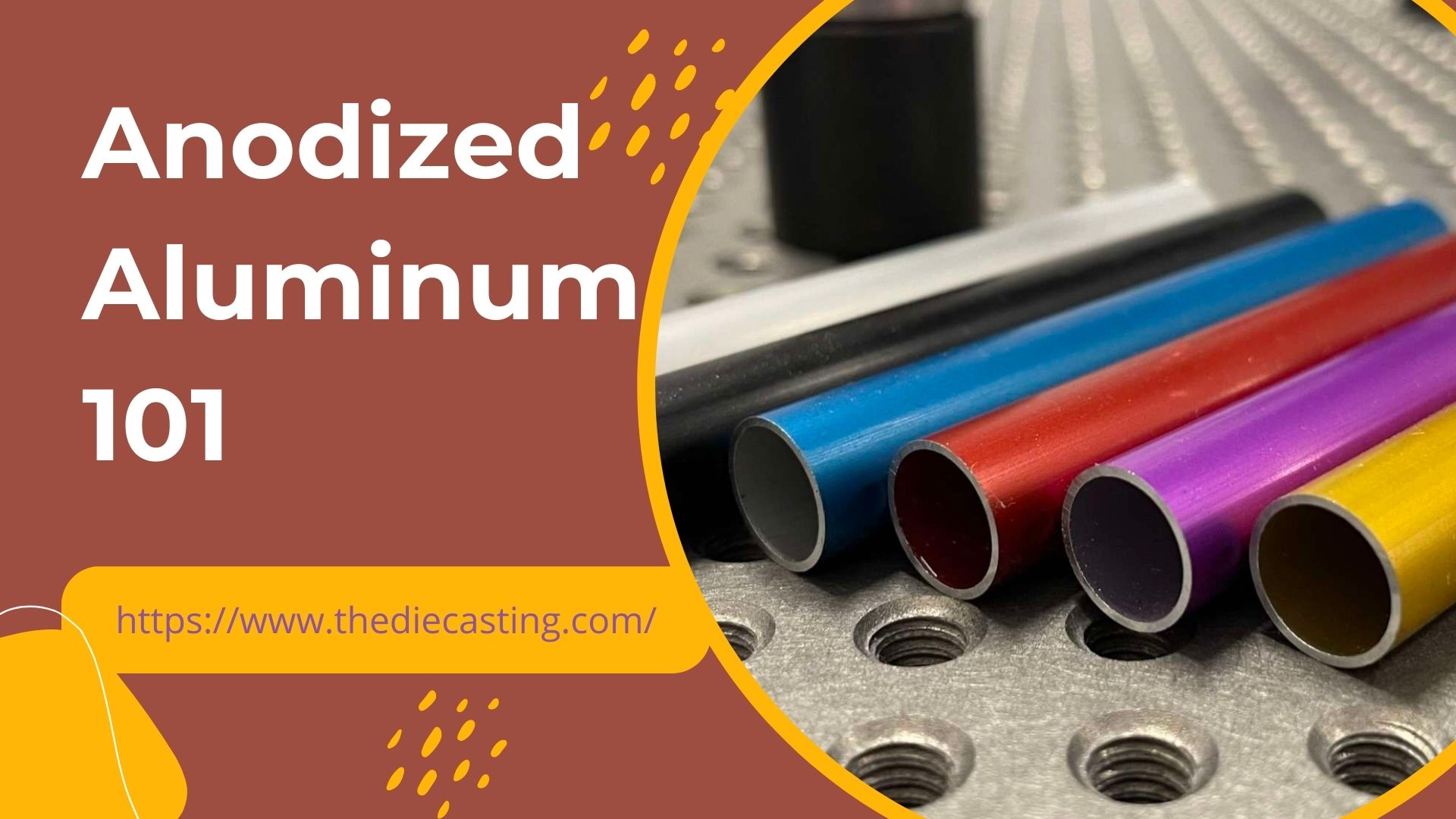
Eloxiertes Aluminium 101 refers to aluminum that has undergone a controlled electrochemical process to create a stable layer of oxide on its surface. This anodic oxide, as opposed to paint or plating, forms part of the metal and enhances aluminum’s resistance to corrosion, wear, and environmental exposure, thereby maintaining the usefulness of lightweight aluminum and its strength.
Surface hardness can also be increased, and a variety of decorative and functional finishes are possible through the process. Anodizing is essential in contemporary manufacturing and product design, as it enhances performance and appearance without compromising dimensional stability.
Eloxiertes Aluminium has been used as a material of choice due to its durability, cost-effectiveness, and sustainability. It has extensive applications in architecture, automotive, aerospace, consumer electronics, medical equipment, and industrial equipment.
Additionally, alongside wrought aluminum products, there is an increasing use of aluminum die-cast components to which anodized aluminum is applied. Anodizing can improve corrosion resistance, surface life, and service life for various functional applications, although die-cast alloys present challenges, particularly with silicon alloys.
This article will provide a detailed description of anodized aluminum 101, including the anodizing process, alloy considerations, design, advantages, and practical applications, to help readers determine when to use anodized aluminum in their projects.
What Is Anodizing?
The process of deliberately oxidizing aluminum to thicken the natural oxide on the material’s surface is called anodizing. In anodizing, the aluminum component is immersed in an acidic electrolyte and serves as the anode in an electrical circuit.
Oxygen ions reactive with the aluminum surface are generated when an electric current flows through the solution, thereby forming a controlled, uniform layer of aluminum oxide. This oxide is grown on the substrate rather than being applied as a surface coating, which is applied later.
This is the major difference between anodizing and painting or plating. Mechanical adhesion holds paints and plated finishes to the metal and relies on this mechanism to remain in place. With time, they may peel, crack, and chip. However, with anodizing, a finish is formed that is part of the metal and much more durable and reliable in harsh conditions.
The anodic oxide layer confers several important performance benefits on aluminum. To a great extent, it enhances corrosion resistance by forming a protective coating against moisture, chemicals, and atmospheric exposure.
Surface hardness is also increased by the process, which enhances abrasion and mechanical wear resistance. Moreover, the anodic layer is inherently porous, capturing dyes for coloration and serving as an important sealant that further enhances its durability.
Lastly, anodized aluminium provides electrical insulation because the oxide layer is non-conductive and is therefore used in electrical, electronic, and industrial applications.
The Aluminum Anodizing Process Explained
Vorbereitung der Oberfläche
One of the most important steps in the anodizing process is surface preparation, because the final surface appearance and performance of eloxiertes Aluminium require high surface uniformity and cleanliness. Any oil, grease, oxide, or surface flaw left on the part may cause uneven coating or visible flaws after anodizing.
Surface imperfections can be removed by mechanical finishing, or a desired texture can be imparted. Typical methods include buffing and polishing to achieve smooth or reflective finishes, sanding to produce directional finishes, and blasting to achieve uniform matte finishes. Anodic finishes are always present because they are transparent; therefore, they are visible after anodizing.
Chemical pretreatment is the next step in mechanical finishing and typically comprises several steps. The cleaning and degreasing processes remove oils, machining fluids, and contaminants. Deoxidizing removes the natural scale and oxide layer and then heat-treats, thereby exposing fresh aluminum.
Surfaces are then controlled in terms of appearance: etching produces a uniform matte finish by abrasion, whereas bright dipping uses chemicals to smooth the surface and create a high-luster, reflective appearance.
Anodizing Step
The aluminum components are prepared, then immersed in an electrolyte bath containing sulfuric acid, and the anode is connected to the electric circuit. The circuit is completed by a cathode typically made of lead or aluminum. Upon application of direct current, oxygen ions interact with the aluminum surface, forming an anodic oxide layer.
This oxide structure consists of two layers: a thin, dense barrier layer at the metal interface and a thicker, porous layer atop it. Adhesion and protection are achieved through the barrier layer, whereas coloring and sealing are performed through the porous layer.
Färbung (optional)
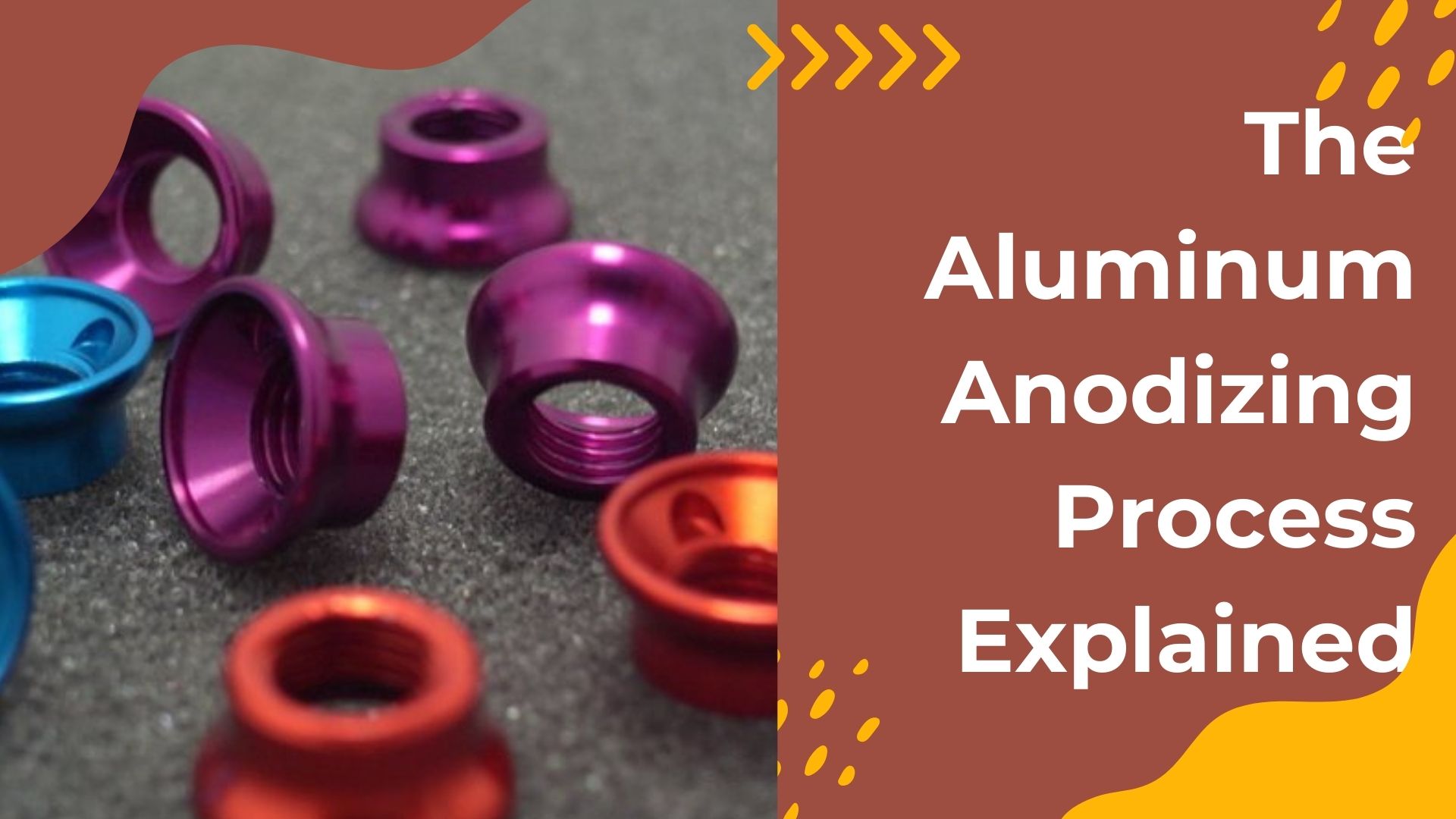
The porous nature of the anodic oxide is such that it can be coloured in different ways. A wider color palette can be achieved by absorbing organic or inorganic dyes into the pores. Metal salts are deposited into pores via an electrolytic process to produce bronze and black finishes that are highly durable.
Integral coloring is a method for producing color during anodizing using a specialized electrolyte. In contrast, interference coloring is a coloring method that produces unique colors by manipulating light reflection.
Versiegeln
It is necessary to seal the pores of the anodic coating to retain the color and increase corrosion resistance. Hot-water sealing, steam sealing, and nickel acetate sealing are common sealing techniques that provide extended service life and high finish stability.
Aluminum Alloy and Its Effects on Anodizing
Wrought Aluminum Alloys
A strong relationship exists between the anodizing behavior, appearance, and performance of aluminum and its alloy composition. Produced by rolling, extrusion, or forging, wrought aluminum alloys tend to anodize more evenly than cast alloys because their composition is more precisely controlled and their impurity content is lower.
Die 2xxx series alloys contain high copper content and exhibit high strength and machinability. Their high copper content, however, makes anodizing more difficult, and the finished products tend to have softer oxide layers that are less corrosion-resistant and exhibit darker, less uniform finishes.
Die 3xxx alloy family, which is primarily alloyed with manganese, offers moderate strength and formability. Such alloys are easy to anodize and typically yield silver, gray, or light brown finishes, depending on the anodizing conditions.
Die 5xxx series is magnesium-based and is known for producing aesthetically pleasing decorative finishes. Some low-iron-content alloys in this series are highly reflective and are commonly used in architectural and automotive trim applications.
Die 6xxx series is considered the most suitable alloy group for general-purpose anodizing. These heat-treatable alloys, 6063 and 6061, which are alloyed with magnesium and silicon, are suitable; they are responsive to anodizing, exhibit good corrosion resistance, and are aesthetically pleasing, and thus are used in architectural, structural, and consumer applications.
The high-zinc 7xxx series provides very high strength and is widely used in aerospace applications. These alloys anodize to darker gray or brownish colors and must be controlled to produce a high-quality coating.
Cast Aluminum Alloys
The difference between cast aluminum and wrought aluminum is that the former has a higher concentration of silicon and other impurities to enhance fluidity during casting. Silicon does not anodize; thus, cast aluminum is produced with a darker, mottled, and uneven finish. Alloys that contain less silicon and more magnesium or zinc are more likely to anodize, providing better coating uniformity and greater corrosion resistance.
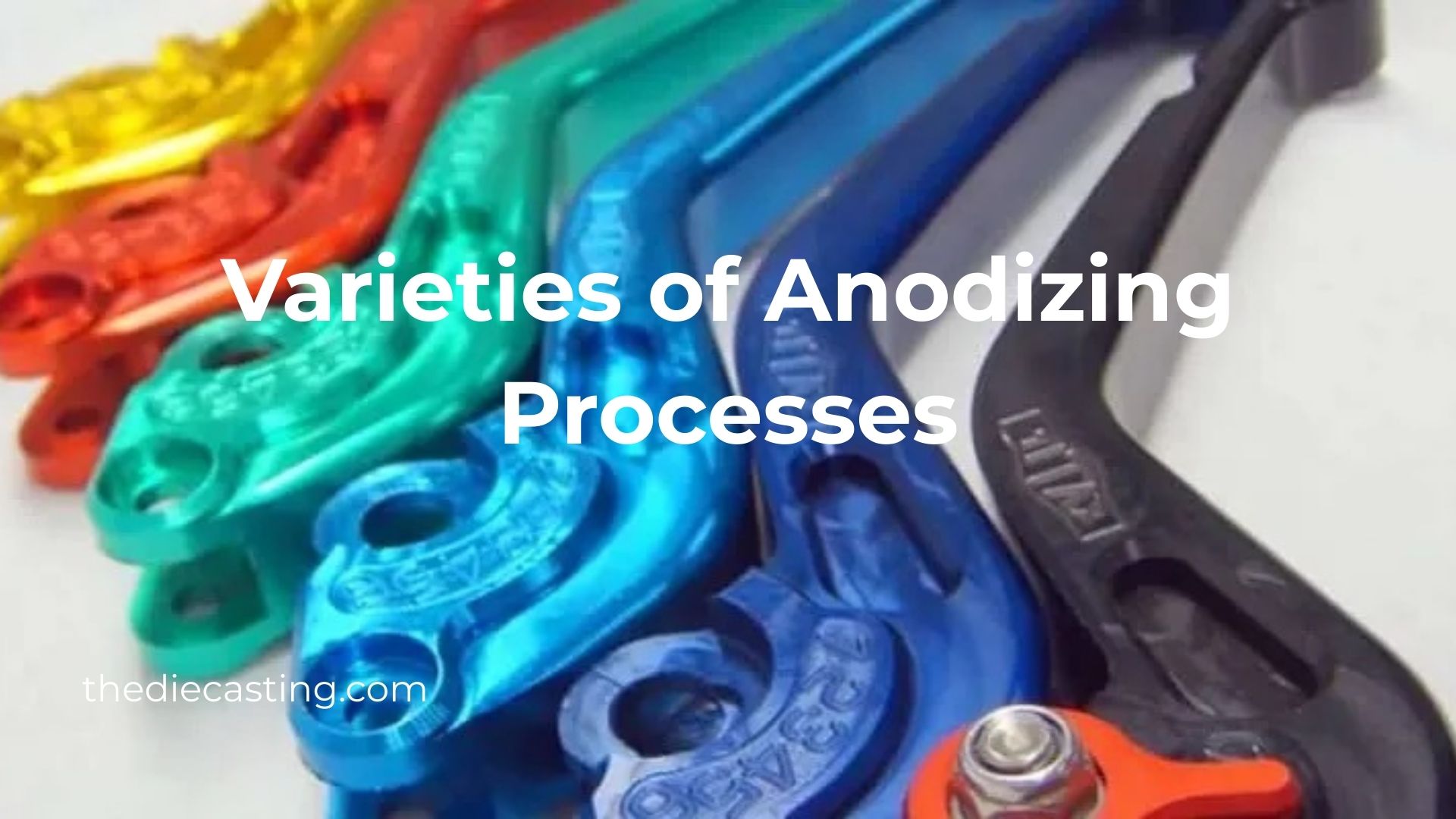
Varieties of Anodizing Processes
The processes of electrolysis include anodizing, which is generally classified by electrolyte, coating depth, and performance properties.
Chromic Acid Anodizing
Type I anodizing uses a chromic acid electrolyte to form extremely thin anodic layers, typically 0.5-2.5 microns. Type I provides excellent corrosion protection and close dimensional tolerances, although the coating thickness is low compared with other anodizing types.
It has little effect on fatigue strength, an important factor in structural applications, owing to its thin, comparatively flexible oxide layer. Because of these characteristics, chromic acid anodizing is widely used in aerospace and military applications, particularly for aircraft components, structural parts, and assemblies that require corrosion protection with minimal dimensional change. The resulting finish tends to appear gray and has poor color absorption; therefore, it cannot be used in decorative applications.
Sulfuric Acid Inhibited Agar Type II
The most common and universal anodizing is type II sulfuric acid anodizing. It yields coatings with an average thickness of 2.5-25 micrometers, depending on process conditions and application requirements. This will produce a porous anodic oxide layer that balances corrosion protection and aesthetic flexibility.
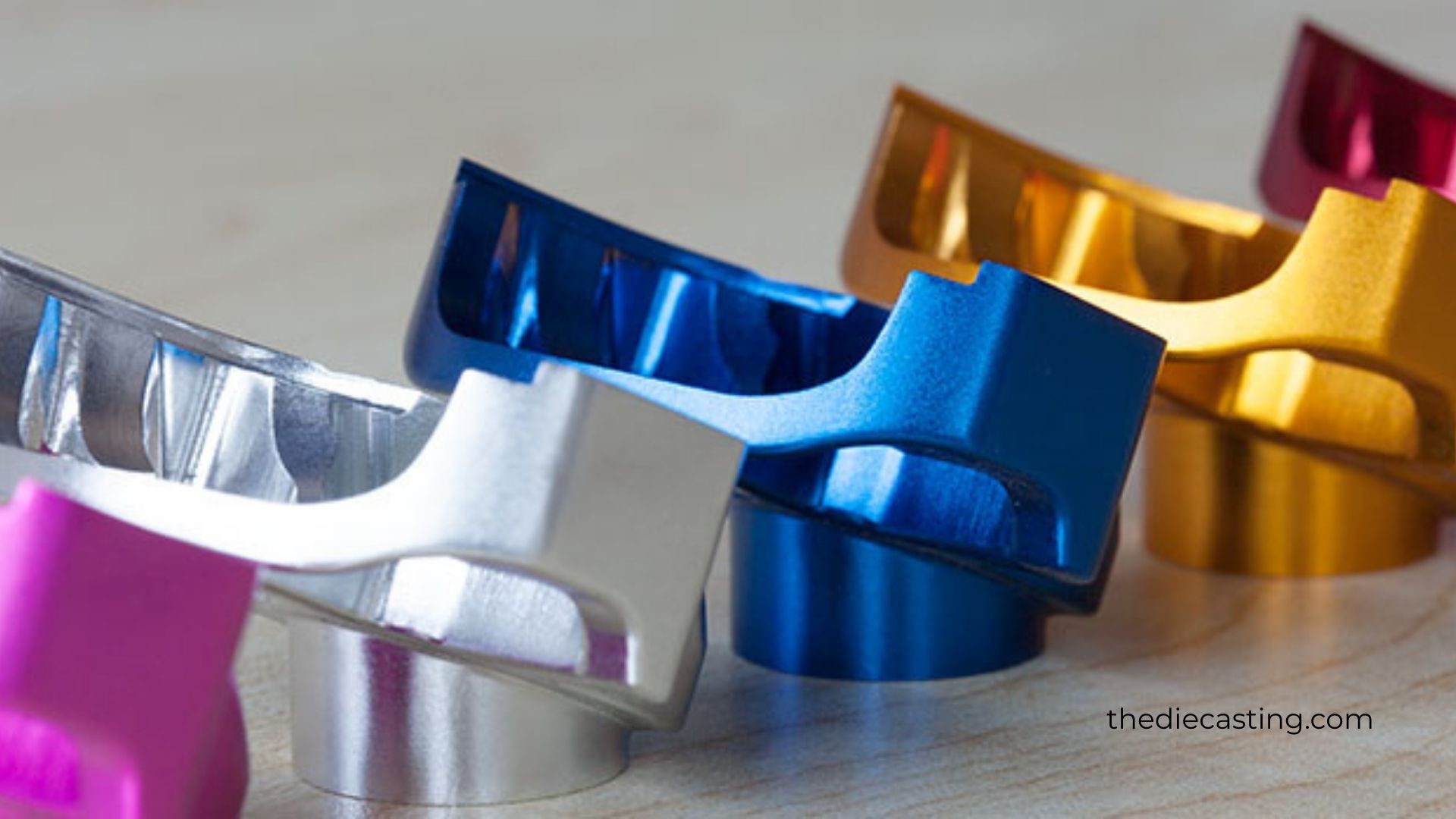
Type II anodizing is generally applied for a decorative and protective effect. The porous design readily absorbs dyes and, as a result, can be used to create a wide range of colors, including black, gold, blue, red, and natural clear finishes. This has led to its widespread utilization in building elements, car trim, consumer electronics, and household goods.
Type III – Hardcoat Anodizing
The Type III hardcoat anodizing is a very thick and dense oxide layer, and is generally 25-125 microns or more. This is achieved under stringent conditions, such as low temperatures and high current densities, and the coating exhibits extremely high surface hardness and wear resistance.
Industrial, medical, and aerospace products. Hardcoat anodizing is popular in components where abrasion resistance, corrosion resistance, and durability are important. Depending on the application’s functional requirements, the hard anodized coating can be unsealed to promote hardness and wear resistance or sealed to enhance corrosion resistance.
Thickness and Specification of Anodized Coating
The thickness of the coating is an important variable for durability, appearance, and electrical conductivity. Thickness is typically determined in microns, mils, or inches, and 1 mil is 25 microns. Protective and decorative finishes are generally thin and applied when the aesthetic value is more important than the practicality.
A few standards regulate the requirements of anodizing. The Aluminum Association (AA) name system is used to identify finishes based on their thickness and type. MIL-A-8625 is used to specify anodizing in the military and aerospace; AAC1119 is auto-oriented.
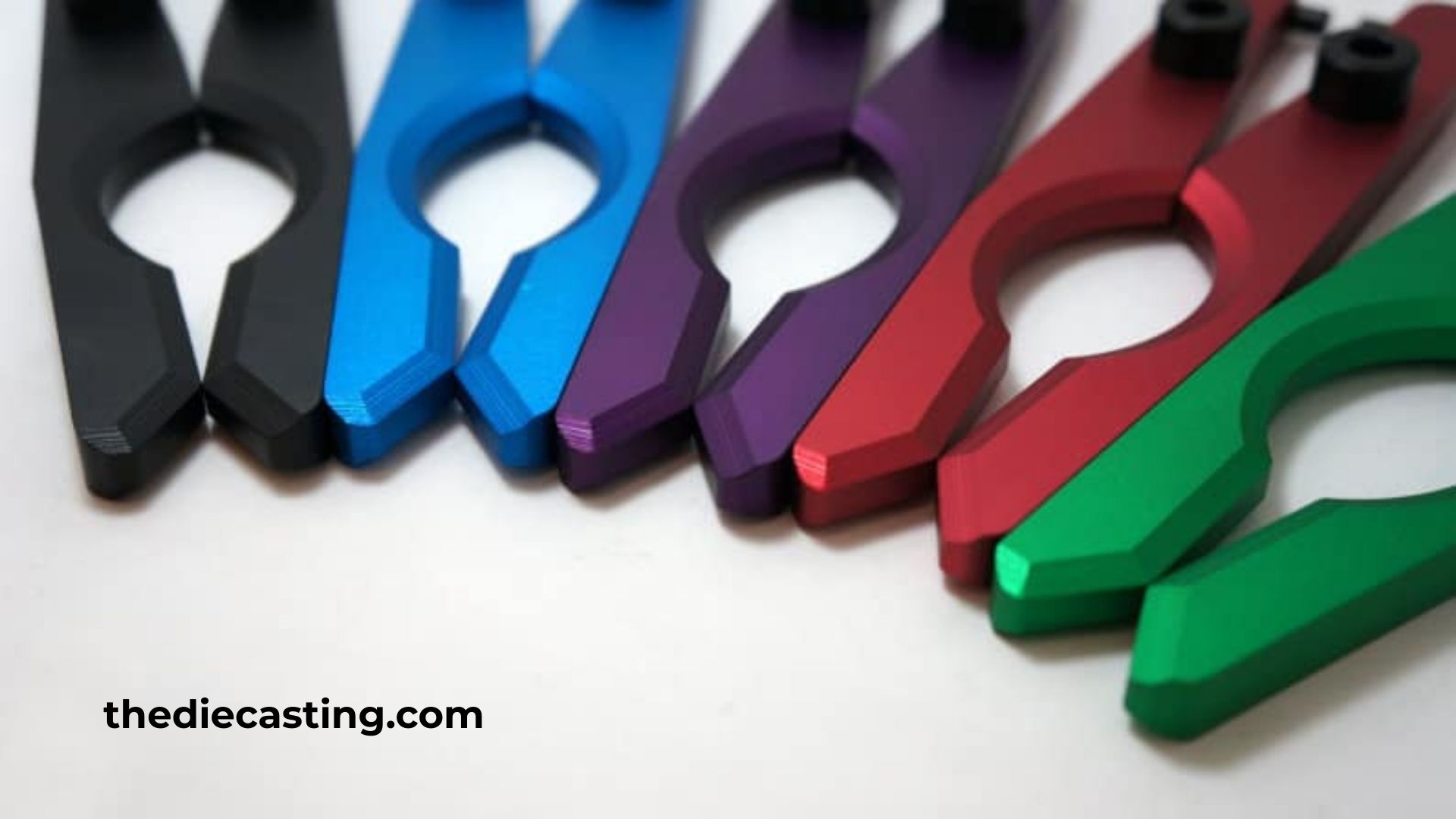
Techniques of Coloring Anodized Aluminum
Clear anodizing preserves the natural appearance of aluminum. Organic dyes offer a wide range of colors, but their light stability is low, whereas inorganic dyes have fewer color choices but are more UV-resistant. Colors that are electrolytically deposited using metals such as tin, nickel, or cobalt are very strong and are often used in architecture. The color strength depends on coating thickness and sealing quality, and color matching may always be problematic due to variations in alloy composition and process changes.
Advantages of Aluminum Anodized
Anodized aluminum 101 has the following advantages:
- It is highly corrosion-resistant.
- Harder to wear
- More resistant to hardening
- It exhibits long color stability.
- It is easy to maintain, does not pollute the environment, and is fully recyclable.
- Anodizing is typically less expensive than painting or plating over the product’s lifetime.
Design Considerations and Tips for Anodizing
- Designers must account for dimensional variations resulting from oxide growth, which typically necessitates tolerance adjustments.
- The choice of the alloy influences the performance and appearance.
- Surface damage is prevented before anodizing through proper handling and packaging.
Other coatings may be applied before anodizing, although conductivity requirements and masking must be considered.
Anwendungen
Anodized Aluminum 101 can be used in the following applications:
Anodized aluminum is widely used:
- Architecture
- Automobilindustrie
- Luft- und Raumfahrt
- Medizinische
- Unterhaltungselektronik
- Industrial machinery
Anodizing Cast Aluminum: What You Need to Know
Cast aluminum may be anodized; however, silicon content and porosity can lead to darker or discoloured finishes.
- Findings tend to be dull and not bright.
- Best practices involve selecting low-silicon alloys and accommodating appearance constraints.
- Other finishes may be preferable when cosmetics are vital.
Do It Yourself vs. Commercial Anodizing
Home anodizing can be done, but it is not very safe and has poor consistency. Anodized professional parts should be selected when quality and performance are essential for critical components.
Common Mistakes to Avoid
Common problems include:
- Improper surface preparation
- Incorrect current density
- Omission of sealing
- Incorrect appearance standards
- Improper alloy selection
Schlussfolgerung
Eloxiertes Aluminium 101 is among the most versatile materials, having proven effective in performance, durability, and aesthetics. Anodizing substantially improves the corrosion resistance and wear resistance of the aluminum surface, enhances environmental stability, and maximizes wear life, with no adverse effects on the metal’s lightweight or dimensional precision.
The efficiency of anodizing, as examined in the article, depends on proper management of surface preparation, alloy selection, process type, coloring, and sealing. Wrought alloys tend to provide more consistent outputs, whereas cast aluminum also presents special challenges that must be addressed through sound design and realistic expectations regarding appearance.
Available in several types of anodizing (including ornamental sulfuric acid finishes and hardcoat finishes that offer high performance), the material can be customized by an engineer or designer to meet functional and aesthetic needs.
Overall, anodized aluminum 101 is an inexpensive, durable, and sustainable material used in architectural, industrial, automotive, aerospace, and consumer product development and production, and is integral to contemporary product design and manufacturing.