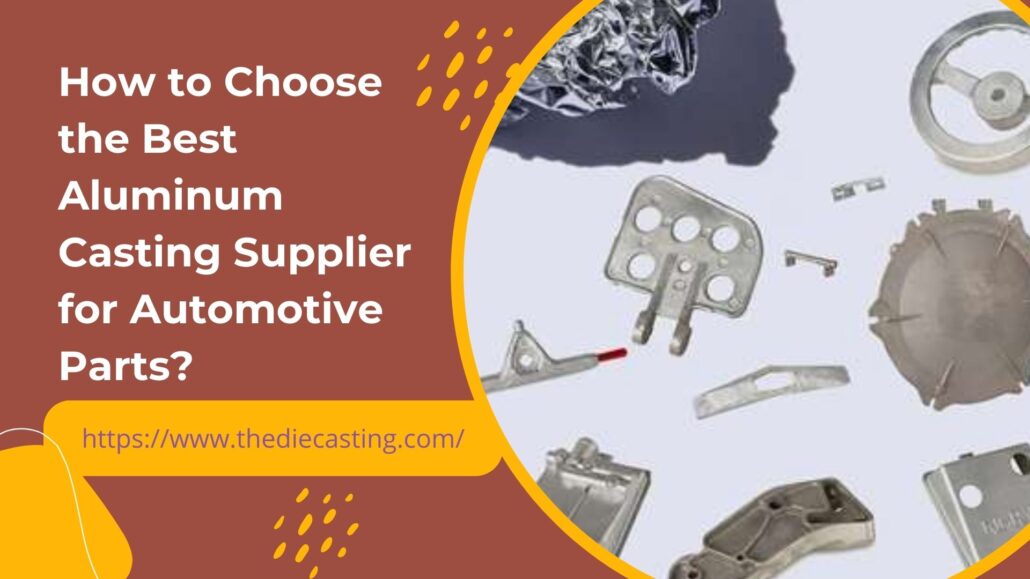
Wie wählt man den besten Aluminiumgusslieferanten für Automobilteile?
AluminiumgussDie Automobilindustrie entwickelt sich weltweit rasant, da der Bedarf an leichten Autos, besserem Kraftstoffverbrauch, geringeren Emissionen und Hochleistungsteilen steigt. Der Aluminiumdruckguss hat sich als eines der wichtigsten Fertigungsverfahren herauskristallisiert, das diesen Wandel in erstaunlicher Weise unterstützt. Bei der Konstruktion von Elektroautos sind Aluminium-Druckgussteile von entscheidender Bedeutung für das moderne Automobildesign, einschließlich Motor- und Getriebegehäuse sowie strukturelle Komponenten des Fahrzeugs. Die Auswahl eines geeigneten Zulieferers für Automobilteile aus Aluminiumdruckguss ist nicht länger eine einfache Kaufentscheidung. Es handelt sich um eine strategische Allianz, die die Qualität der Produkte, die Produktionseffizienz, die Kostenkontrolle und den langfristigen Geschäftserfolg beeinflusst. In diesem Beitrag werden die Schritte beschrieben, die zur Identifizierung des optimalen Aluminiumdruckguss-Lieferanten erforderlich sind, sowie einige der führenden Hersteller von Aluminiumdruckguss-Autoteilen in China und weltweit genannt. Warum der Automobilbau Aluminiumdruckguss benötigt Durch den Aluminiumdruckguss sind Hersteller in der Lage, komplizierte, hochpräzise Komponenten in großen Stückzahlen mit hoher Oberflächengüte und Maßgenauigkeit zu entwickeln. Da Aluminium ein besseres Verhältnis von Festigkeit zu Gewicht, Korrosionsbeständigkeit und Wärmeleitfähigkeit aufweist als herkömmliche Werkstoffe, ist es das perfekte Material für den Einsatz im Automobilbau. Der Aluminiumdruckguss gewinnt mit dem Aufkommen von Elektrofahrzeugen noch mehr an Bedeutung. Die Druckgusstechnologie ist wichtig für Batteriegehäuse, Motorrahmen, Wechselrichtergehäuse und massive Strukturteile. Angesichts der zunehmenden Komplexität der Automobilkonstruktionen müssen die Zulieferer neben den technischen Dienstleistungen, der maschinellen Bearbeitung, der Oberflächenveredelung und der Qualitätskontrolle auch Gussdienstleistungen anbieten. Wesentliche Faktoren, die bei der Auswahl eines Aluminiumgusslieferanten zu berücksichtigen sind Wissen und Erfahrung im Automobilbereich Die Erfahrung des Aluminiumdruckgusslieferanten im Automobildruckguss ist einer der ersten Faktoren, die berücksichtigt werden sollten. Autoteile müssen von hoher Sicherheit und Haltbarkeit sein und den Vorschriften entsprechen. Ein Lieferant, der über langjährige Erfahrung mit Automobilprojekten verfügt, kennt die Auswahl der Materialien, die Kontrolle der Toleranzen und die Prozessstabilität. Zulieferer, die eine Partnerschaft mit Automobilherstellern, Tier-1- oder Tier-2-Zulieferern eingegangen sind, neigen dazu, gleichbleibende Qualität zu produzieren und komplizierte Produktionsspezifikationen zu erfüllen. Produktionsanlagen und Ressourcen Ein vertrauenswürdiges Aluminium-Druckgussunternehmen muss über moderne Produktionsanlagen wie Druckgussmaschinen verschiedener Tonnagen, CNC-Bearbeitungszentren und Oberflächenbearbeitung verfügen. Es ist eine große Stärke, sowohl kleine Präzisionsgussteile als auch große Strukturgussteile bearbeiten zu können. Automatisierung, Robotik und digitale Überwachung sind weitere Technologien, die auch von fortschrittlichen Zulieferern häufig eingesetzt werden, um Wiederholbarkeit zu erreichen und Fehler in der Massenproduktion zu minimieren. Qualitätskontrolle und Zertifizierungen In der Automobilproduktion spielt die Qualitätskontrolle eine Schlüsselrolle. Die leistungsfähigsten Zulieferer haben sich an international anerkannten Qualitätssystemen wie ISO 9001, IATF 16949 (früher TS 16949) und ISO 14001 orientiert. Diese Zertifizierungen sind ein Indiz für Qualitätsmanagement, Prozesskontrolle und Umweltverantwortung. Die Prüfungen werden auch intern mit CMM-Maschinen, Röntgentests, Spektrometern und Druckdichtigkeitsprüfsystemen durchgeführt, die ebenfalls eine hohe Zuverlässigkeit des Produkts gewährleisten. Technische Anpassung und Unterstützung Projekte in der Automobilindustrie werden in der Regel kundenspezifisch angepasst, im Gegensatz zu Produkten von der Stange. Ein leistungsfähiger Anbieter von Aluminiumdruckguss muss in der Lage sein, technische Dienstleistungen für die anfängliche Entwurfsphase zu erbringen, z. B. die Konstruktion der Form, die Optimierung der Werkstoffe und die DFM-Analyse (Design-for-Manufacturing). Lieferanten von Aluminiumdruckguss sind diejenigen, bei denen die Kunden Prototyping, Rapid Tooling und Designvalidierung finden können, was die Entwicklungszeit verkürzen und teure Neukonstruktionen vermeiden würde. Internationale Lieferkette und Lieferleistung Weltweit und in China führend bei Zulieferern von Autoteilen: Aluminiumdruckguss CNM Tech Co., Ltd Unternehmensübersicht CNM Tech Co., Ltd ist ein erfahrener Hersteller von Aluminiumdruckguss-Autoteilen mit über 20 Jahren Erfahrung in der Branche mit Sitz in Dongguan, China. Das Unternehmen befasst sich mit Aluminium-, Magnesium- und Zinkdruckguss, CNC-Bearbeitung, Oberflächenbehandlung und Montage. CNM Tech stellt Bauteile aus Aluminium, Zink und einigen Magnesiumarten her, die nicht mehr als 12 kg, 2 kg und andere wiegen. Das vertikal integrierte Produktionssystem umfasst die Beschaffung von Rohstoffen, die Werkzeugherstellung, das Gießen, die Bearbeitung, die Endbearbeitung und die Endverpackung. Warum sollten Sie sich für CNM Tech entscheiden? CNM Tech hat den Vorteil einer durchgängigen Produktionskapazität. Das Unternehmen hat die Werkzeugherstellung, die maschinelle Bearbeitung und die Oberflächenveredelung übernommen, was zu einer vollständigen Kontrolle der Qualität und der Vorlaufzeiten führt. Das Unternehmen arbeitet auf der Grundlage der Qualitätssysteme ISO 9001, TS 16949 und ISO 14001, die eine qualitativ hochwertige Produktion nach Automobilstandards garantieren. CNM Tech bietet Aluminium-Druckgussteile für die Automobilindustrie zu wettbewerbsfähigen Preisen an und ist damit für seine Kunden ein zuverlässiger Partner bei der Lieferung von Hochpräzisionsteilen weltweit. Bediente Branchen CNM Tech ist auch in den Segmenten medizinische Geräte, Haushaltsgeräte, LED-Elektronik, Elektrowerkzeuge und mechanische Geräte in der Automobilindustrie tätig. Sincere Tech Unternehmensübersicht Sincere Tech ist ein Full-Service-Produktionsunternehmen mit Hauptsitz in Dongguan, China, und wurde 2005 gegründet. Das Unternehmen ist Spezialist für Aluminiumdruckguss, Kunststoffspritzguss, CNC-Bearbeitung, Silikonkautschukkomponenten und komplette Montagelösungen. Sincere Tech bietet Teile mit geringen Toleranzen für die Hochdruckindustrie und verfügt über hochmoderne Produktionsanlagen wie CNC-Maschinen, EDM-Systeme und CMM-Prüfgeräte. Warum sollten Sie sich für Sincere Tech entscheiden? Sincere Tech verfügt über einen echten One-Stop-Point of Manufacturing. Alle Prozesse werden an einem einzigen Standort abgewickelt, beginnend mit Produktdesign, Prototyping, Formenbau, Druckguss, Bearbeitung und Verpackung. Diese kombinierte Lösung minimiert das Koordinationsrisiko und erhöht die Effizienz der Produktion. Das Unternehmen verfügt über ein ausgezeichnetes Projektmanagement, englischsprachige Fähigkeiten und Erfahrung bei der Lieferung von Weltmarktführern, was es zu einem guten Partner für Automobilkunden macht, die eine konsistente und kosteneffiziente Produktion wünschen. Sincere Tech ist ein Hersteller von Druckgussteilen aus Aluminium, die an Automobilhersteller, Elektronikhersteller, Hersteller medizinischer Geräte, Haushaltsgerätehersteller und Hersteller von Industriemaschinen verkauft werden. GC Precision Mould Co., Ltd Unternehmensübersicht Aludiecasting, das chinesische Unternehmen heißt GC Precision Mould Co. Ltd. ist ein bedeutender Hersteller von Autoteilen im Aluminiumdruckgussverfahren mit Sitz in Dongguan, Guangdong, China. Das Unternehmen ist über 20 Jahre alt, ISO 9001