

Zinc die casting is a flexible production method which entails an injection of zinc alloy molten matter into a specially designed mold with high pressure in order to create complex and high-precision parts. Such an approach is especially appropriate for precision parts because zinc has high fluidity, a low melting point, and can be machined to tight tolerances without much post-processing.
Zamak-Druckguss is used in industries such as automotive, electronics, consumer goods, and medical devices for parts, including connectors, gears, housings, and complex mechanisms that require dimensional tolerances and longevity.
Most zinc alloys are processed using hot-chamber machines, which enable quick cycle times and a steady quality. Accurate parts benefit from zinc’s ability to produce thin walls, complex geometries, and net-shape parts, reducing material waste and assembly time.
Nevertheless, high success rates are achieved when specific design rules are followed, and material properties, shape, form, and processing parameters are considered. These rules help reduce defects, improve manufacturability, and enhance precision.
This article identifies major guidelines supported by industry standards set by organizations to help engineers design zinc die-cast precision parts.
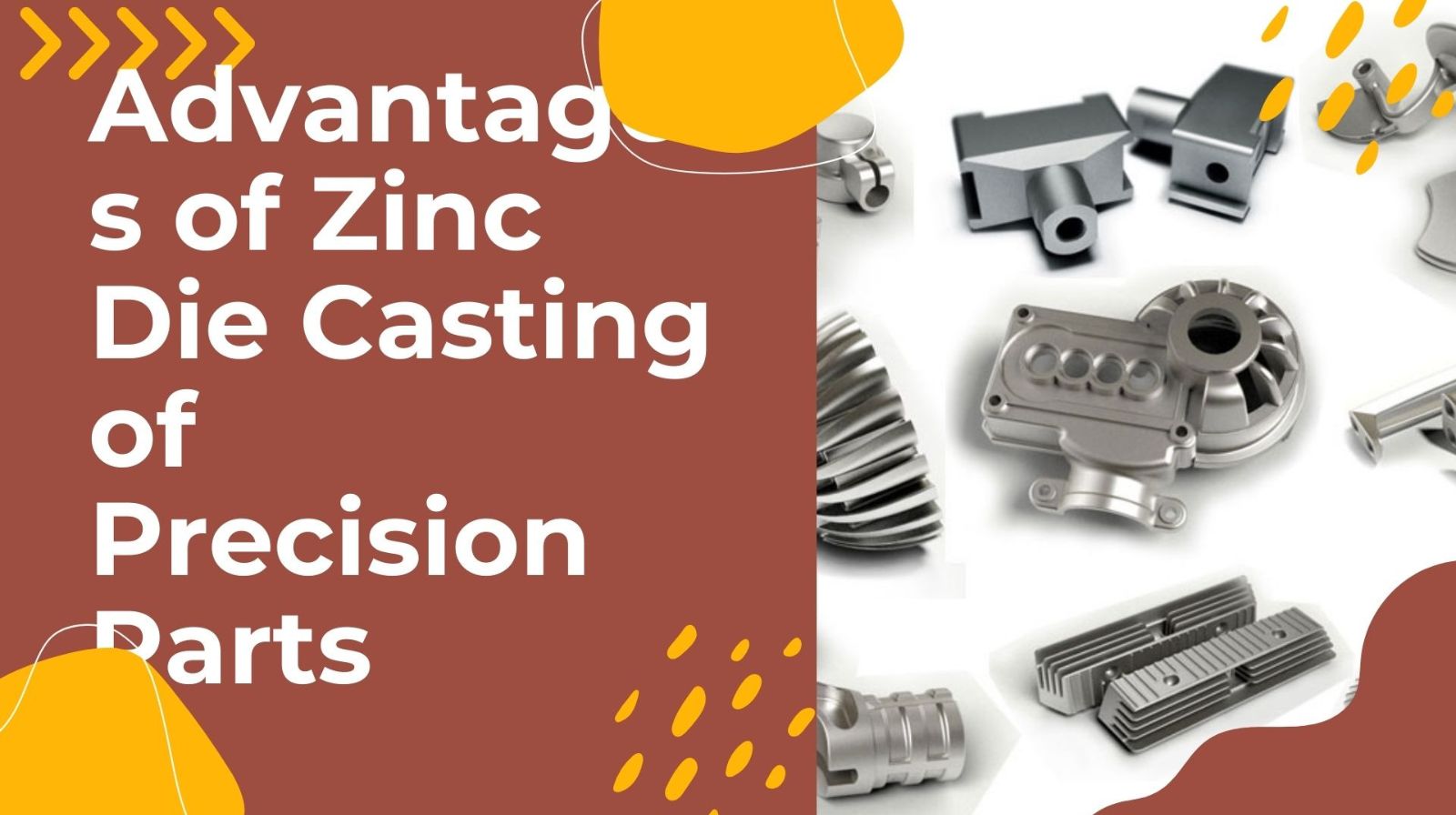
Advantages of Zinc Die Casting of Precision Parts
The use of Zinkdruckguss offers several benefits, making it one of the best materials for precision applications.
- First, it offers the best dimensional accuracy with tolerances as close as zero point one hundred and twenty five (0.025 mm) or -0.001 inches (0.025 mm) possible in optimized designs.
- This accuracy is due to the low shrinkage and high fluidity of zinc, such that molten metal can be poured in a complex mold cavity and fill without leaving the mold to solidify.
- Second, zinc permits thin-wall casting, with a minimum thickness of 0.025 inches (0.635 mm) in miniature and generally 0.040 inches (1.016 mm) for improved surface finishes.
- This saves on weight and material costs, yet it is strong enough for use in lightweight precision parts such as electronic enclosures and automotive sensors.
- Third, the process favors intricate geometries, as well as undercuts, threads and integrated features, which often do not need to be machined again.
- The ductility and impact resistance of zinc ensure that parts are not subjected to mechanical stresses, and its castability also reduces porosity and surface defects.
- Moreover, zinc components can be easily plated, painted, or finished to protect against corrosion and to look presentable.
- Zink has a lower melting point (circa 380-390 °C with Zamak alloys) than other metals, such as aluminium or magnesium. Thereby reducing die wear, enabling longer tool life and lower production costs for high-volume batches.
- In the case of precise parts, this translates into high-quality consistency over thousands of cycles. The environmental advantages include full recyclability, which aligns with eco-friendly manufacturing practices.
Selection Material: Zinc Alloys
Selecting the correct zinc alloy is important for precision parts because it affects mechanical properties, castability, and tolerances. The Zamak die-casting series (2, 3, 5, 7) and the ZA series (8, 12, 27) have specific compositions and performance properties.
- The most popular is Zamak 3, which offers a combination of strength, ductility, and dimensional stability.
- Zamak 5 has higher hardness and tensile strength, making it best suited for parts under load.
- ZA-8 offers better creep resistance and can be used in higher-temperature applications.
- Whereas ZA-27 is stronger but should be cast in cold chambers due to its high aluminium content.
The table below will summarize the kinds of zinc alloy used in the manufacture of precision parts:
| Types of Zinc Alloy | Tensile strength (ksi/MPa) | Dehnung % | Hardness (BHN) | Dichte g/cm³ | Yield strength (MPa) | Melting point °C |
| Zamak 2 | 52/359 | 7 | 100 | 6.6 | 283 | 379-390 |
| Zamak 3 | 41/283 | 10 | 82 | 6.6 | 269 | 381-387 |
| Zamak 5 | 48/328 | 7 | 91 | 6.6 | 283-269 | 380-386 |
| Zamak 7 | 41/283 | 13 | 80 | 6.6 | 310-331 | 381-387 |
| ZA 8 | 54/372 | 6-10 | 100-106 | 6.3 | 359-379 | 375-404 |
| ZA-12 | 59/400 | 4-7 | 95-105 | 6.03 | 145 | 377-432 |
| ZA-27 | 62/426 | 2.0-3.5 | 116-122 | 5.3 | K.A. | 372-484 |
These properties can be used to ensure that zinc alloys meet precision specifications and that complex parts have high fluidity scores (1-2 on a 1-4 scale; 1 best). To be more exact, manufacturers would want to choose alloys such as Zamak 3 or ZA-8 due to their stability and ability to withstand tight tolerances.

Key Design Guidelines
Gut Zinkdruckguss is designed to facilitate flow and ejection while maintaining strength at minimal cost.
Wanddicke
The wall thickness should be uniform to avoid porosity and distortion. For precision parts, keep it within +/-10% and use a minimum thickness of 0.040 inches (1 mm) for a good surface finish, and as fine as 0.020 inches (0.5 mm) in miniature models.
Ratios of thick to thin sections should be kept to less than 3:1 to minimize the chance of porosity; preferably the inscribed sphere diameter ratios should not exceed 6:1.
Thickening walls enhances flow but raises the cycle time and consumption. To distances away from the ingate, minimum thickness changes: below 0.5 mm in areas less than 50 mm, up to 2 mm at 200 mm.
Different simulations can be used to check designs. In zinc casting, specify a minimum of 0.025 inches (0.635 mm) in selected locations, but 0.040 inches (1.016 mm) in best-as-cast locations.
Entwurfswinkel
Draft angles help eject parts and prevent damage to the die. For zinc, the minimum drafts are 0.5 ° -1 on outside surfaces, 1- -1 on internal surfaces, and 0.1 ° -1 on round holes. Short features that use moving parts (die elements) can be printed in zero, but it is more expensive.
For ribs, a 5-10 taper is used when it is not parallel to the shrinkage. Different standards give draft calculations: standard tolerances are 50 (draft angle approximately 1.9 degrees at a 1-inch depth) for inside walls and 100 for outside walls. There are also precision tolerances that permit 60 and 120 constant drafts.
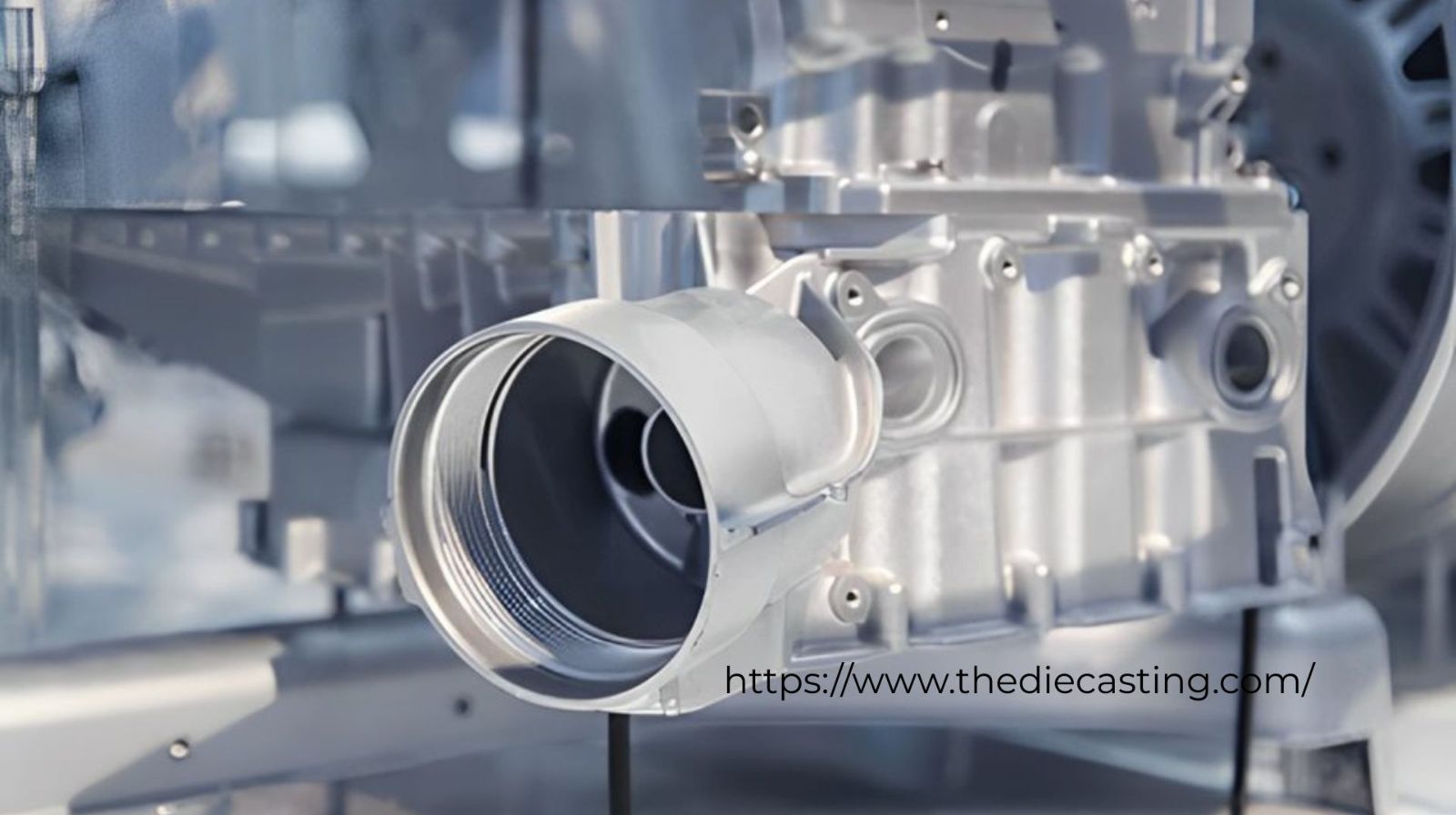
Fillets and Radii
Fillets and radii should always be added since sharp edges lead to stress concentrations and die erosion. Minimum radius of inside fillet is 0.016 inches (0.4 mm), and outside 0.031 inches (0.8 mm). Radii of larger size (up to 0.063 inches or 1.6 mm) enhance flow and strength.
Minimum radii should be used (0.060 inches (1.5 mm) for bosses and ribs). Radius at high stress should not be less than 1 mm; standards suggest ±0.08/±0.04 inches (±2/±1 mm) in fillets. This improves the part’s life and reduces cracking.
Ribs and Bosses
Ribs enhance reinforcement without adding bulk. Create shallow, rounded ribs (height-to-thickness ratio no more than 3:1) and evenly space them so they are not distorted. Adhesion ribs to walls with fillets to avoid porosity in the intersection.
The height of bosses used to mount or thread must be equal to their diameter, and when the diameter is large, they must have ribs. Keep 0.25 inches (6.5 mm) distance between bosses. Tolerances of critical heights can be contained in ribs, such as in the precision designs of ±0.001 inches (±0.025 mm) ribs.
Cored Holes and Threads
Holes made in the core make it lighter and allow elements such as threads. Maximum depths are around 3 mm diameter, 9 mm blind or 24 mm through; up to 12 mm diameter with larger openings. At least 0.25 inches (6 mm) in diameter, L/D ratio not more than 4:1 in small holes.
Parting Line Considerations
It is best to place the parting line in the largest section possible to produce the least amount of flash and to allow easy trimming. Vertical or complicated lines should be avoided; die motion plane right angles are best. Tolerances on parting lines are the sum of linear ones, by projected area.
| Projected area | Tolerance (+in) |
| Upto 10 | +0.0045 |
| 11-20 | +0.005 |
| 21-50 | +0.006 |
| 51-100 | +0.009 |
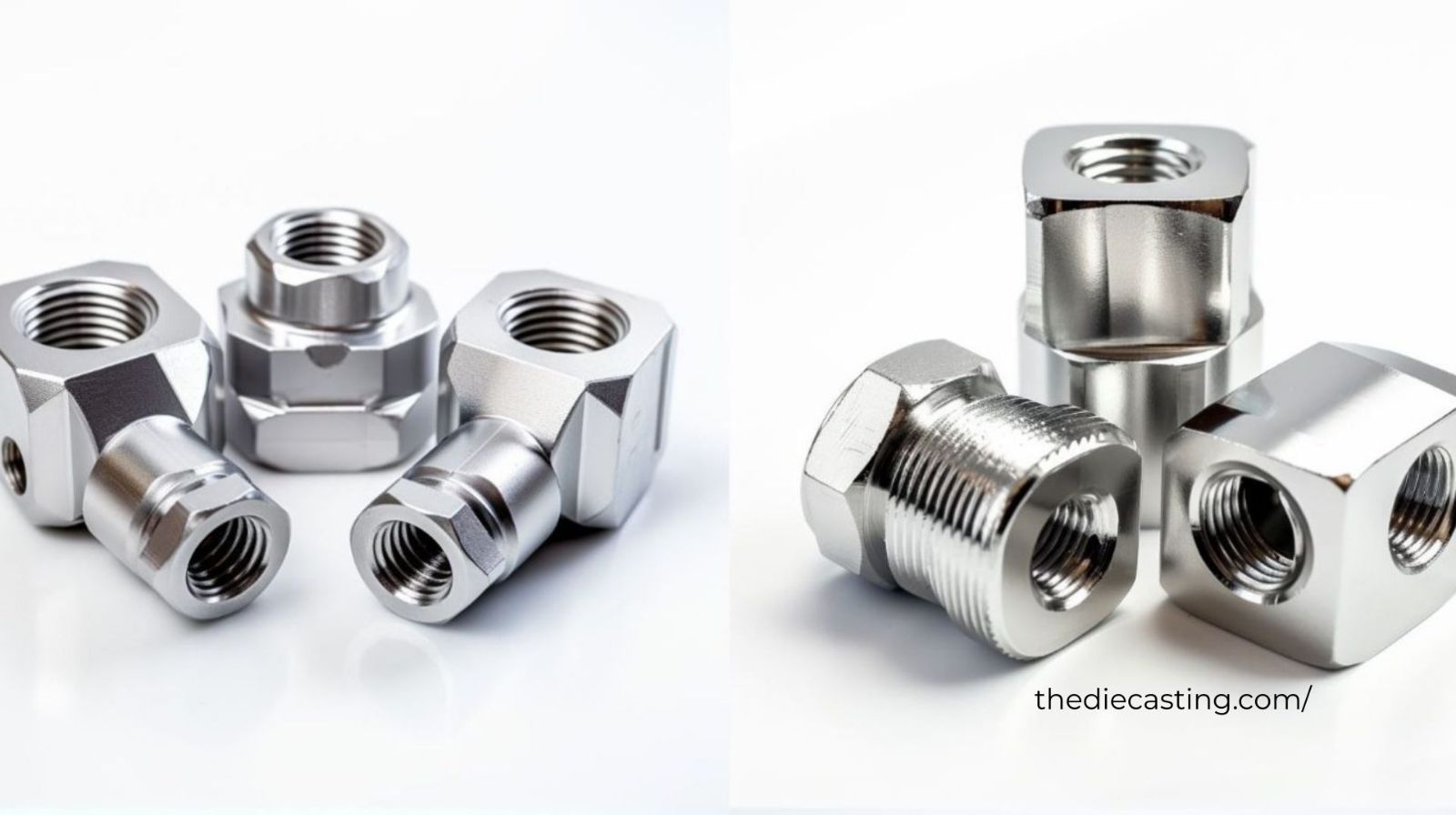
Tolerances of Precision Parts
Zinkdruckguss has even higher precision tolerances than standard, and sometimes 65% of those special controls are necessary. Linear tolerances: first inch precision is ±0.002 inches, extra is ±0.001.
| Dimension (mm) | Tolerance (mm) |
| 0-25 | 0.10 |
| 26-32 | 0.12 |
| 33-40 | 0.14 |
| 41-50 | 0.16 |
Geometrical tolerances consist of misalignment (0.1 mm TIR same half), flatness (0.005 inches 3 inches and less, precision), and angularity. Shifting of parting line: +0.004 inches to parting line within 50 in 2.
Avoiding Common Defects
Poorly selected thicknesses or misplaced gates cause porosity; reduce it with uniform walls and CAE-optimized ingates. Non-uniform cooling causes distortion, which is prevented in crowned surfaces and ribs. Proper draft and fillets eliminate surface defects such as cold shuts. Consult the die casters on simulations.
Secondary Finishes and Operations
Zinc is machinable and can be easily post-processed; however, it is designed to minimise post-processing. Add 0.010-0.030 in. machining stock. Finishes are either plating (cosmetic), painting or anodizing. Superior classes are 32 Ra obtained as-cast.
Applications of Zinc Die Castings
Zinc die castings have been very popular in industries due to their flexibility and high-quality work.
Autoindustrie
Zinc die casting components are dominant in vehicles, including door lock housings, seat belt components, brake systems, steering components, sensor housings, and decorative trims. These have high impact resistance and durability as compared to other materials.
Telekommunikation und Elektronik
Zinc is used in electronics in connectors, housings, heat sinks, and EMI/RFI shielding components. Its conductivity and ability to fabricate fine, thin-walled components enable the manufacture of small-scale components for computers, smartphones, and networking equipment. every electronic industry is using products made by zinc die casting.
Consumer Goods and Hardware
Usually used in locks, faucets, handles, plumbing fittings, toys and building hardware. Zinc can be finished with appealing finishes, requiring minimal secondary finishing. Other uses include medical equipment, industrial machine gears, and brackets.
Drawbacks of Zinc Die Casting
Zinc die casting offers numerous advantages; however, it also has certain limitations that manufacturers should consider before adopting this method.
Size Constraints
Zinc die casting can be used mostly for small to medium-sized parts. Large components are difficult to produce due to constraints on die-casting machines and the size of the moulds. In larger sections, alternative production processes can be more feasible and less expensive.
High Initial Cost
Precise tooling and special molds are needed in the process. This results in an expensive initial setup; thus, zinc die casting is not ideal for low-volume production. But it is cost-effective for bulk production.
Problems with Thermal Conductivity
Zinc alloys are highly thermally conductive, and hence, it is hard to control heat during the casting process. Due to bad thermal management, defects may occur, and therefore, good mold design and a cooling system are required.
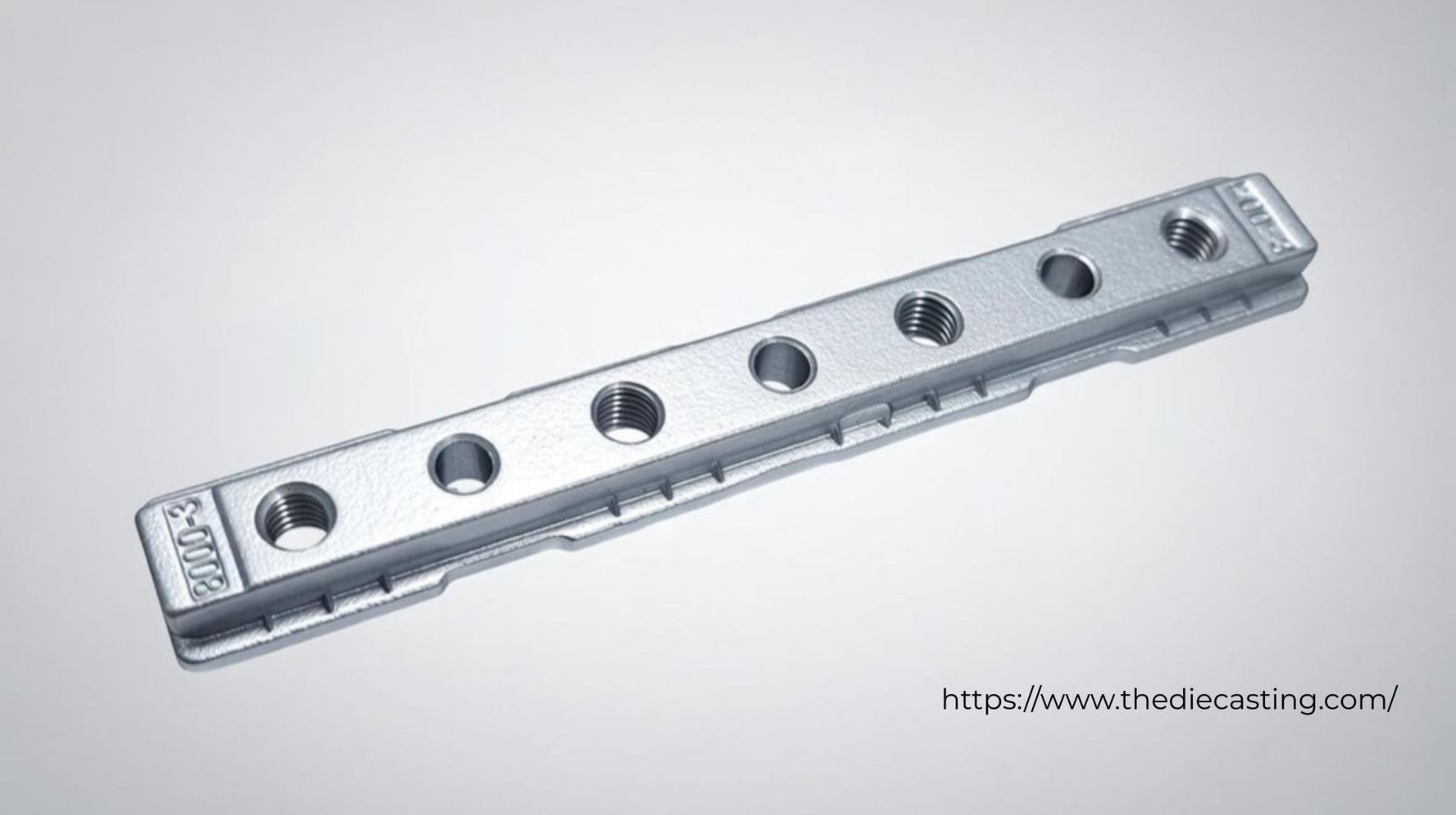
Schlussfolgerung
Zinkdruckguss has emerged as an effective manufacturing process for creating high-precision components with complex shapes and narrow tolerances. Its special material characteristics, including high fluidity, a low melting point, high dimensional stability, and good mechanical strength, make Zinc die casting is well-suited to industries where precision, longevity, and surface fineness are of great importance.
Using appropriate design principles, such as equal wall thickness, sufficient draft angle, rounded fillets, optimized ribs and bosses, and the position of the parting line, can greatly help manufacturers eliminate defects such as porosity, distortion, and flash.
This can be further improved by carefully selecting a zinc alloy, such as Zamak 3, Zamak 5, or ZA-8, that best suits the mechanical properties and requirements of the application.
Tolerances achievable with zinc die casting are precision tolerances that tend to reduce secondary machining, resulting in quicker production cycles and lower total expenditure. Zinc also has excellent finishability, enabling parts to be plated, painted, or coated easily, enhancing corrosion resistance and appearance.
On the whole, zinc die casting combines all these factors (precision, strength, efficiency, cost-effectiveness). With appropriate design methods and skilled die casters, it can provide consistent, high-quality parts for the automotive, electronic, consumer goods, medical equipment, and in-house industries.
FAQs
Why is zinc used in precision zinc die casting?
Zinc is a low-shrinkage, high-fluidity, tight-tolerance, and good-surface-finish material suitable for precision parts.
What is the minimum wall thickness of the zinc die casting?
Miniature components measuring 0.020 inches (0.5 mm) are commonly used, although 0.040 inches (1.0 mm) is also recommended.
What is the best zinc alloy to use on high-precision parts?
The most widely used is Zamak 3, which has dimensional stability and equal mechanical properties.
Are zinc die-cast components applicable to threads and fine details?
Yes, zinc readily accepts cored holes, threads, undercuts and complex designs with little machining.
Can zinc die casting be cost-effective to make in large numbers?
Yes, it is very cost-effective due to fast cycle time, long die life, reduced post-processing and recyclability.