Flexible Metal Fashioning the Modern World
One of the most important materials that contributes to modern civilization is aluminium. From high-tech aerospace and electric cars to simple things like food packaging and consumer electronics, this silvery-white metalloid is probably found in almost every sphere of modern life.
Aluminio is a chemical with the chemical symbol Al and atomic number 13. It is prized for its outstanding light weight, strength, corrosion resistance, electrical and thermal conductivity, and complete recyclability.
The only difference between Aluminum or aluminium is that it is able to respond to the increased world demand for materials that not only perform well but are also environmentally friendly. With industries shifting towards sustainability, lightweight design, and reduced energy consumption, aluminium has become one of the backbone metals of the 21st century.
This paper provides an in-depth description of the nomenclature of aluminum and aluminium, physical and chemical characteristics, history of aluminium, how it is made, its uses in industry, systems of alloys, its sustainability, and trends in its future in a fast-changing world.
The Lingistic Dilemma: Aluminum vs. Aluminium
Among the most widely observed peculiarities of this metal are the two spellings it has, i.e., aluminio o aluminio. Both terms mean the same thing, although regional language customs and the historical development of the scientific world explain their use.
| Aspect | Aluminio | Aluminio |
| Chemical symbol | Al | Al |
| Atomic number | 13 | 13 |
| Original term used | Aluminio | Aluminio |
| Regions using the term | United states | British |
| Dictionary Preference | American dictionaries | British dictionaries |
| Scientific use | U.S. publications | European publications |
| Industrial standards | ASTM Standards | ISO Standards |
| Language influences | American English | British English |
| Related Chemical Terms | Al₂O₃, Al₄C₃ | Al₂O₃, Al₄C₃ |
Naming Convention Originated with the Following
The name itself can be traced back to the early 19th century, and it is strongly linked to Sir Humphry Davy, a British chemist who helped identify and name several chemical elements. During one of his experiments with alumina (aluminium oxide), Davy first suggested the name alumium. Soon, he amended it to aluminium.
Nevertheless, certain contemporaries of Davy contended that the name ought to be stricter in accordance with the classical Latin style of naming as applied to other elements, e.g., sodium and potassium. Consequently, the name aluminum became common, especially in Britain and Europe.
Local Tastes and Unification
Regional tastes were, over time, entrenched in North America. The spelling aluminum was officially adopted and made uniform by the American Chemical Society (ACS) in 1925. In 1990, on the other hand, the International Union of Pure and Applied Chemistry (IUPAC) formally accepted the spelling aluminum as the standard international scientific spelling.
Even today, aluminum is more common in the United States and Canada, whereas in most other regions, including the United Kingdom, Europe, and Australia, aluminium is more common.
Implication on Global Communication
Although there are dual spellings, scientific, technical, or industrial communication is not ambiguous at all. The two terms are universally applicable, and the international standards, product specifications and trade documentation routinely consider this linguistic variation but do not have an operational effect.
Aluminium Physical and Chemical Properties
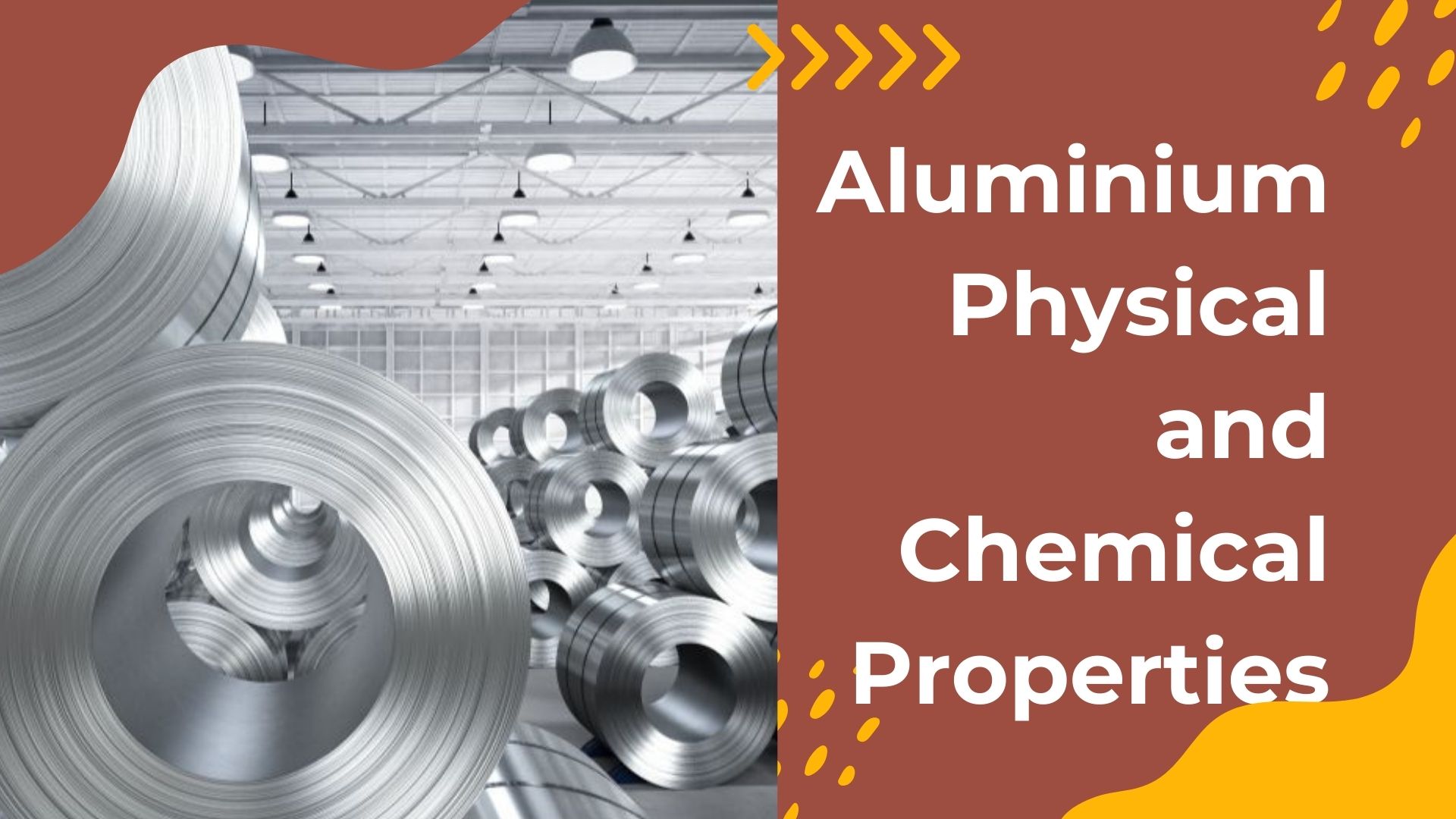
The popularity of aluminium or aluminum lies in its exceptional physical and chemical properties. It is the most common metallic element in the Earth’s crust, accounting for approximately 8.1%, but it is never found in pure metallic form.
Main Physical Characteristics
Aluminum has some of the most interesting physical properties, which include:
- Density: 2.70 g/cm³
- Aluminium is 1/3 the weight of steel, making it a perfect material for lightweight structural projects.
- Melting Point: 660.3°C (1,220.5°F)
- Low in comparison to steel, and this makes it possible to cast and form it efficiently.
- Thermal Conductivity: ~237 W/(m·K)
Aluminium is an excellent material for heat exchangers, radiators, and cooling electronic systems due to its excellent heat dissipation.
- Electrical Conductivity: approximately 61 per cent. copper (by volume).
- Conductivity-to-weight efficiency is better with aluminium than with other materials.
Ductility and Malleability
Aluminium can be beaten into foils less than 0.01 mm thick and pulled into very fine wires without breaking. This makes aluminium an ideal material for a wide range of frames and products acrossindustries.
Chemical Behaviour and Resistance to Corrosion
Corrosion resistance is also a natural characteristic of aluminium, which is very desirable. The presence of air leads to the immediate formation of a dense, adherent layer of aluminium oxide (Al2O3) on aluminium. This coated film prevents further oxidation and shields the underlying metal from environmental degradation.
Additionally, aluminium is:
- Non-toxic, meaning it can be used for food and pharmaceutical packaging.
- Magnetically non-active, which is beneficial in electrical and medical operations.
- Very reactive in a fine state, but very persistent in the bulk state.
History of the Discovery of Aluminum or Aluminium
Early Isolation Efforts
Although aluminium compounds have been in use since antiquity, isolating the pure metal was not an easy task. In 1825, Danish physicist Hans Christian Oersted was able to reduce small amounts of aluminium chloride, producing small amounts of aluminium. It was soon followed by an improvement by Friedrich Woehler in 1827, but production remained costly and low.
Aluminum was an expensive material at this time, more precious than gold, and was actually used to top the Washington Monument as a technological showcase.
Breakthrough in the Hall-Héroult
In 1886, breakthroughs were made when Charles Martin Hall, then in the United States, and Paul Heroult, then in France, independently developed the electrolytic reduction process for aluminium extraction.
The process is called the Hall-Héroult process, and it consists of dissolving alumina in a molten cryolite solution and passing an electric current through the solution to obtain molten aluminium.
This invention, added to the Bayer process (invented in 1887 to process bauxite into alumina), significantly reduced production costs and enabled large-scale industrialisation.

The Development into Mass Production
At the beginning of the 20th century, aluminium production increased rapidly. Its strategic significance was fully realised during World War I and World War II, especially in aircraft production. Since then, fundición de aluminio a presión has ceased to be a rare novelty and has become an essential part of industry.
Contemporary Processes of Production
Primary Production: Bauxite to Metal
Bauxite mining is the starting point of primary aluminium production, and the ores usually contain 30-60 per cent alumina  ). It consists of two major phases:
Bayer Process
Through this process, bauxite is purified into alumina using sodium hydroxide.
Hall-Héroult Process
Alumina undergoes electrolytic reduction to molten aluminium, which requires about 13-15 kWh of electricity per kilogram.
The World Production and Main manufacturers
By 2024, the world had a steady output of about 72 million metric tons of aluminum. Major producers include:
- China: More than 45 million tons (an estimated 60 per cent of the world production). CNM is contributing a great amount to this production.
- India: ~4.2 million tons
- Russia: ~3.8 million tons
- Canada and the Middle East: The leaders in low-carbon production of aluminum.
Secondary Production: The Recycling Revolution
The recycled aluminum or the secondary aluminium consumes less energy by 5 percent compared to the primary production. Amazingly, almost 75 per cent of all the aluminium that has ever been manufactured is still in use today, which speaks volumes about its permanence and recyclability.
Aluminum: Recycling one ton is equivalent to
- Saves up to 8 tons of bauxite
- Reduces CO₂ emissions by 9–10 tons
Criticisms in the Supply Chain
Although the use of aluminum has several benefits, its production is challenged by:
High energy costs
- Trade tensions at the geopolitical level.
- Volatility of prices on the London Metal Exchange (LME), at USD 2,200-2,500 per ton in 2025.
- Various Applications in different industries.
Aplicaciones
Sector del automóvil
Aluminium reduces vehicle weight, increases fuel efficiency, and reduces emissions by up to 10 per cent. By 2030, electric vehicles will consume as much as 292 kg (644 pounds) of aluminum per unit.
Aerospace Innovations
Modern aircraft structures contain aluminium alloys with 70-80 per cent content; this offers a high strength-to-weight ratio, which is needed for aircraft performance and fuel economy.
Packaging and Consumer Goods
The world has been dominated by aluminium cans and foils for their barrier properties and endless recyclability. The growth of packaging demand is still at 4-5 per cent per year.
Electricidad y electrónica
Aluminium is widely used in power transmission lines and to support renewable energy grids and intelligent infrastructure.
Infrastructure and Construction
Aluminium’s corrosion resistance makes it ideal for the construction of windows, facades, bridges, and solar mounting systems.
Aluminum Alloys: Performance Improvement
Classification Systems
Wrought aluminum alloys are categorized in the form of a four-digit system:
- 1xxx Series: Electrical grade aluminum alloys.
- 2xxx Series: 2xxx is aerospace strengthened copper-alloy.
- 6xxx Series: Magnesium and silicon structural versatility.
- 7xxx Series: ultra-high strength zinc-alloy.
Popular Alloys and Uses
6061 Aluminum
Tensile strength -310 Mpa; finds application in construction and transport.
7075 Aluminum
Up to tensile strength of 570 MPa; aerospace and military parts.
Cast Alloys of Multifaceted Forms
The A3xx series is mainly used in die casting, especially for automotive engine and transmission parts.

Challenges and Innovations of the Future
Urbanisation, electrification, and the development of renewable energy will increase global aluminum demand to 120 million tons in 2030. Key innovations include:
- Zero-CO 2 smelting inert anode technology.
- Advanced alloy development
- Greater production digitalization and automation.
Economic and Market Trends
Global Market Value
In 2025, the aluminum market is considered to be valued at USD 183 -190 billion, and in 2035 this figure is projected to be USD 330 billion, with the CAGR approximated at around 6%.
Trade and Regulations
International trade is affected by tariffs, sustainability regulations, and classifications, including HTS code 7601.10 for unwrought aluminium.
Conclusión
Aluminum, or aluminium, has not just been a laboratory wonder but also one of the key strategic materials in the contemporary world. Its unique lightweight strength, coupled with corrosion resistance, recyclability, and versatility, makes it unsurpassed and thus ensures its continued significance across various industries.
As the world becomes more sustainable and efficient, aluminium is a unique material that can help drive innovation, economic development, and environmental sustainability. From Sir Humphry Davy’s first experiments to the current low-carbon smelting technologies, the history of aluminium shows how human ingenuity can drive progress, and its future is even better than it used to be.

Preguntas frecuentes
What Spelling is preferred in the technical and industrial fields?
Both spellings are correct in technical and industrial contexts, but local standards apply. The standard form of the word is aluminum in the United States, and the American Chemical Society standardises the term.
Aluminium is used worldwide and is recommended by the International Union of Pure and Applied Chemistry (IUPAC), making it more widespread in technical documentation.
What are the Spelling variances and their impact on global market communication?
Accent variations usually have no impact on technical knowledge, although they may have an effect on professional presentation, regulatory documentation and international marketing. In a bid to be clear and believable, firms usually localise spelling, whereby they use aluminum to write to North American customers and use aluminium to write to the global customers, so the communication and consistency are seamless in the worldwide market.
Are there any legal regulations for the use of the term aluminum or aluminium?
Yes. There are legal and regulatory requirements of aluminum or aluminium in terms of patents, trade, and compliance. Alloy designations (e.g., 5052-H32, 6061-T6), processing methods and standards (e.g. ASTM, ISO, AMS) are mentioned in patent documents.
The trade policies demand proper HS/HTS codes (e.g., 7601.10, 7606.12), tariffs, certificates of origin, and labelling (heat/lot numbers). The import/export regulations require inspection, test reports, and compliance documents (MSDS, RoHS, ISO 9001), which guarantee the safety, quality, and regulatory compliance on the global level.
What is the impact of aluminium or aluminum support on sustainability and environmental objectives?
Aluminium or aluminum is one of the key determinants of sustainability because it is infinitely recyclable with minimal environmental impact on the lifecycle. Recycling aluminium uses approximately half the energy used in primary production, which helps cut down the number of greenhouse gases emitted.
Since the metal does not change its characteristics in the course of repeated reuse, it facilitates the models of the circular economy in the construction sector, transportation, and packaging.
What are some of the reasons why aluminium alloys are used in place of pure aluminum in the industry?
Whereas pure aluminum is an excellent conductor with great corrosion resistance, the aluminum alloys are stronger, corrosively resistant, and durable with better performance demanded in industrial application.
Manufacturers modify properties like tensile strength, fatigue resistance and machinability by introducing elements like copper, magnesium, silicon, or zinc. The alloys of the 2xxx, 6xxx, and 7xxx series find extensive applications in both aerospace and automotive applications and in structural applications, where high ratios of strength to weight and reliability of life are a key to safety and durability.