painevaluyritykset

alumiinin painevaluyritykset

Top 10 alumiini Die Casting yritykset Kiinassa ja Yhdysvalloissa

painevaluyritykset

Are you looking for Top Aluminum Die Casting Companies in the world’s industrial powerhouses? The USA and China have become significant participants in global aluminum die-casting services over decades by offering an array of services to fulfill precision-demanding sectors. Like in any business field, the project’s success usually depends on the partner you select. The most reputable, experienced die-cast companies always guarantee high-end products formulations, and satisfied outcomes. Due to diverse aluminum die-casting companies in the USA and China, it sometimes becomes challenging to figure out the right partner for your business. Don’t fret— We will compare the leading 10 Aluminum Die Casting Companies in China & USA in this article. 1. Sincere Tech Co., Ltd. Year Established: Over 15 years Core Business Capabilities: Plastic molding, aluminum, magnesium, and zinc die casting molds/tooling, machining, surface finishing, and Prodcut assembly services. Address: Building 1, No. 30 Huan Zhen Rd, Shang Dong Village, Qi Shi Town, Dongguan City, Guangdong Province, China, P.C.: 523000 Website: www.plasticmold.net Company Overview: Sincere Tech Co., Ltd. is a the leading aluminum die casting and mold facotry in China that is located in Dongguan, China. It mainly focuses on the highly precise plastic injection mold, aluminum die-casting mold, magnesium, and zinc die-casting, and plastic molding. Originally founded over 15 years ago, the company has grown to develop exceptional tooling and die-casting capabilities for a broad range of industries. Established with modern technology and experienced staff, Sincere Tech provides precise products that conform to modern industry standards. For clients in the computer peripheral industry that need die-cast parts and/or plastic injection parts, Sincere Tech can handle design, manufacturing, assembly, and other related services to provide the best quality and lowest cost through one-stop-shopping. Key Services Their Commitment to Quality: Sincere Tech’s team makes sure every product they develop conforms to the high-quality standards of the sphere. They entail sound quality control measures that encompass each stage of product development, including design and physical prototyping, assembly included. The firm employs an automated system and also incorporates manual checks on the products to notice any flaws during the production process. As highlighted, Sincere Tech is an ISO-certified company that helps validate the firm’s anvil on credible and long-lasting products. Industries Served: Sincere Tech serves a diverse range of industries, including: Why Choose Sincere Tech? Sincere Tech is your comprehensive solution provider for Aluminum die-cast part solutions. They have been in the business for over 15 years, and provide custom services such as design, prototyping, tooling, production, and assembly. The company presents its solutions at a lower price while preserving the highest quality level. It also provides good quotes and fast turnaround time for small and large complex projects whether you are planning for a few prototypes or 1000s of production parts. If you are looking for aluminum die casting companies in China that could offer you product design and development, product assembly, aluminum die casting and plastic injection molding, then they will be one of your best options. 2. GC Precision Mold – One of Aluminum Die Casting Companies in China Year Established: 2005Core Business Capabilities: Aluminum die casting (ADC12, A380, AL 6061, 6063 die casting), zinc die casting, precision CNC machining, and assembly.Address: Dongguan City Qiaotou Town, Jinglian No.40, Donghu Road, Guangdong Province, China.Website: www.thediecasting.com Company Introduction: GC Precision Mold is ranked among the large B2B Aluminum China Die Casting Companies. It was established in 1999. The company provides services such as aluminum, magnesium, and zinc-casting services to different industries across the globe. Besides general die casting, they also offer surpassed precision CNC machining, surface finishing as well and assembling services. By employing contemporary means and skilled professionals, GC Precision Mold offers its customers standard-quality products. They produce intricate engineering part and tolerance and with Six Sigma Surface Finish. The company ensures that its clients will obtain solutions including the design processes up to fabrication of the intended parts down to the final assembly of the particular molds, which fits the specific figures to the last detail. Their Commitment to Quality: GC Precision Mold manufactures products that always follow rigorous quality standards like ISO 9001:2015. It dictates high-quality products for its clientele. The company has a comprehensive quality control procedure which guarantees the products meet the set standard and are acceptable to the market. Industries Served: GC Precision Mold serves a wide range of industries, including: Why Choose GC Precision Mold? GC Precision Mold employs modern technology with skilled manpower to ensure a satisfied customer experience. Whether a client needs high-volume production or prototype service, GC Precision Mold provides the best on-demand high-quality service on a constrained budget. If you are looking for accurate aluminum die-casting solutions in China you can trust GC Precision mold. Feel free to request an instant online quote! If you are looking for aluminum die casting companies in China that could offer you 6061 and 6063 high pressure die casting, product assembly and plastic injection molding, then they will be one of your best options. 3. CNM Casting Year Established: Over 20 years Core Business Capabilities: Aluminum, magnesium, and zinc die casting, precision CNC machining, surface finishing, and assembly. Address: Room 101, No. 40, Donghu Road, Jinglian, Qiaotou Town, Dongguan City, Guangdong Province, China, P.C.: 523520 Website: www.thediecasting.com Company Introduction: CNM Tech Co., Ltd. was founded over 20 years ago. The company is located in Dongguan, China, and provides a wide set of die-casting services that involve aluminum, magnesium, as well as zinc alloys. They also make complicated castings and precise casting with the industrial application of automobile, electronics, aerospace, and home electric appliances. CNM Tech aims to deliver forth-durable, and highly complicated parts with fine features and spacial dimensions chiefly attributable to the ultra-modern equipment and human resource capital at its disposal. They serve customers who require modest quantities of prototypes as well as clients who require sizable production batches at inexpensive rates without compromising the quality. Another critical aspect of CNM Tech is close cooperation with the customer, as well as the
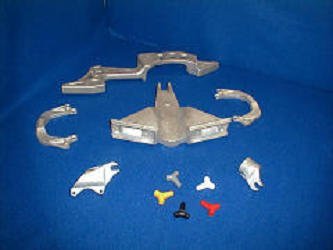
Alumiini ilmailu- ja avaruusalan osat

Alumiinin painevalu ja sen merkitys ilmailu- ja avaruusteollisuudessa

alumiinivalu, alumiinivalumuotit, alumiinin painevalu, alumiinin painevalu, painevaluyritykset, painevaluyritys

Aluminum die casting items are of remarkable use in different industry sectors and more so in the aerospace engineering where precision and top standard items is of greatest significance. These items are used in building both little as well as the big components in the aviation industry. Additional, die casting aluminum are used both in the pivotal military sector as well as commercial. The reason for this is easy – they are cost-friendly solutions and provide amazing outcomes. Apart from being cost effect, the parts made from die casting aluminum are additionally prepared to endure extreme weather situations and increased damages. Another vital reason for using aluminum products in aircraft is that the meal is comparatively affordable than other metals that are die casted. Additional,  aluminum has the potential to get with other metals in order to provide durability and much flexible. With aluminum casted products, you do not have to compromise on the standard yet can them at much affordable production cost. Further, all the standards that have been set for using of metal components, aluminum relax the need to the utmost. Hence, they are certified secure for use in planes, affordable and have all the qualities that are needed for flying crafts. So casting aluminum is on the boost like never before. Further, the top thing about an aluminum die cast part is that its weight is favorable for the aircraft works. So, how actually is casting Aluminum done and what are the processes involved? Well, the reply is simple. Aluminum alloy is first forced into a top-grade steel at high speed and force in a high temperature. This outcomes in superior standard products that are very light and thin walled perfect for use as aircraft components. It is to be mentioned here that Aluminum diet casting is a hard technique. Only a truly experienced and top standard team of engineers can make sure that the parts come with top volumes or with excellent tolerances and surface finish. Actually, this type of force casting is far more famous than gravity die casting or sand casting. This is because the need for machining is this type weather for Zinc or aluminum casting is extremely low due to the close casting tolerances. Though the tooling cost in casting Aluminum or rather any metal are considerably higher than the other 2 types yet, the mechanical properties achieved thus are far excellent in terms of functionality.

Mikä on painevalun puristusvoima

A380 Alumiini painevalu, alumiinivalumuotit, alumiinin painevalu, painevaluyritykset

Die Casting clamping force is the force applied to a mold by clamping unit of HPDC die casting machine. The clamping force must be grater their separating force. Which applied by the injection of molten metal into the mold The clamping fore > separating force How to calculate the separating force (opening force)? Opening force is the force acting on the cavity to make the die expand during the production of die casting part. The opening force can be calculated by the following formula: F=PXA F: opening force P: specific injection pressure A: Total projected area What is Specific injection pressure? Molten metal is ladled through the shot hole into the cold chamber and the shot plunger pushes the metal into the die. The pressure applied by plunger to push the metal into the die is specific injection pressure. Injection pressure use for different type of casting: For standard casting =600 kg/cm2 For technical casting =600−800 kg/cm2 For pressure testing casting =800 kg/cm2 What is projected area? The anticipated region is a two-dimensional zone estimation of a three-dimensional article by anticipating its shape on the plane. Total projected area =casting projected area + slide projected area + runner projected area + overflow projected area Example Casting projected areas =56000mm2 Overflow + runner projected area =22400mm2 (40% of total casting projected area ) Slide projected area=projected area must be selected in the plane that is normal to be direction of core travel x tanꬾ Angle of wedge = angle of finger cam angle + 2degree Force FY = F X Tan ꬾ ꬾ = angle of wedge lock Example: Slide core 1 projected area=area normal to direction of travel × tanꬾ =5000× tan20 degree =5000× 0.36 =1800 m2 Slide core 2 projected area=4500×tan 20degree= 1620mm2 so, Total projected area= 56000+22400+1800+1620mm2                                                                        =81820 mm2 What is separating force (Opening force)? (For technical casting=600−800 kg/cm2) (800 kg/cm2       =8kg/mm2) Opening force = specific pressure ×total projected area =8 kg/mm2 × 81820mm2 =654560 kg/mm2 (1 ton = 1000kg) =654.56 T Die clamping force The clamping force must be grater then the separating force. Locking force require =F×1.2 =654.56×1.2 =785.472 tons We select the 900T machine What is fill ratio, how it is important for selecting machine tonnage? It is the percent of liquid metal vulnerable chamber contrasted with the absolute volume of the virus chamber. Another method for saying it would be the level of metal contrasted with the level of air exposed to the harsh elements chamber For Example 50% full (of metal) = 50% air remaining The level of fill is significant in light of the fact that it is utilized to ascertain the ideal moderate shot speed. This can have a quality impact on the casting. Fill ratio (30-40%) is good for automobile die casting component quality.

Sinkkivalu

Sinkkivalun merkitys autoteollisuudessa

alumiinin painevalu, painevaluyritykset, painevaluyritys, Die Casting Valmistaja, painevalun osat, zamak 3 painevalu, Zamak 3 sinkkivalu, zamak 5, zamak 5 painevalu, zamak painevalu, sinkkiseos painevalu, Sinkkivalu

What is Die Casting? Die casting is a metal casting process which is characterized by pressing molten metal into the mold cavity. The mold cavity is made using two hardened tool steel molds that are worked on during processing and work similarly to injection molds. Most die-casting is made from non-ferrous metals, especially zinc, copper, aluminum, magnesium, tin, lead, and tin-based alloys. Depending on the type of metal being thrown, a thermal or cold engine is used. The zinc die casting process is very popular for making parts in building and industrial fields, but the most common application is in the automotive industry. In fact, cars have different parts that can be made through die casting, in such a way that the modern process of die casting was originally started for the automotive industry. With the casting process often no further machining is needed after casting: not only is the accuracy up to 99.8%, but the casted products can also be used raw because they have a pleasant finish. The use of zinc die casting is almost 28% in the automotive industry, followed by the building and hardware sector. Zinc has become one of the most important metals in the auto parts industry, especially for products such as door lock housing, pawl, gears and retractor pulleys in seat belt systems, but also for camshaft and sensor components. By using this metal and its alloys, it is possible to achieve strength, ductility, and flexibility that would not be possible with other materials. In addition, zinc can be the right choice to get high-quality aesthetic components, with tight tolerances that are not possible with other materials, and to get embossing and grooves for mechanical components or gears. Zinc Die Casting Mechanisms in Automotive As said before, the automotive industry is the most common die casting application: using zinc and its alloys makes it possible to produce components that are able to achieve high aesthetic quality, with tight and narrow tolerance for shape morphology. Zinc alloys are also used for coatings because of its many benefits, such as improving the anti-corrosion properties of zinc which are already impressive. Below you can find a number of possible examples of zinc plating: Interior aesthetic section Sunroofs Section Mechanical parts Engine and other underhood components Power steering system Parts and brake system Air conditioning components and systems Chassis hardware Parts in the seat belt system Components of climate control Fuel system Advantages for Zinc Die Casting: An efficient & economical process offering various forms & forms possible. High-Speed ​​Production Dimension Accuracy & Stability Strength & weight Several finishing techniques are available Simple Assembly The Die Casting process began with the use of lead and lead alloys, magnesium and copper alloys which were quickly followed, and in the 1930s, many modern alloys still in use today are available. This process evolved from casting low-pressure injection to modern high-pressure injection of 4,500 pounds per square inch. The modern process is capable of producing high integrity, clean casting forms with excellent surface finishes. Zinc casting alloy is a strong, durable and cost-effective engineering material. Their mechanical properties are competitive and are usually higher than cast aluminum, magnesium, bronze, plastic and most cast iron.

Die Casting valmistus yritys

Die Casting prosessi askel askeleelta

alumiinivalumuotit, alumiinin painevalu, painevalu, alumiinin painevalu, painevaluyritykset, painevaluyritys, Die Casting Valmistaja

The climbing phase: The 1st step is to prepare the die halves for casting by cleaning the faces of each die then applying lubrication or release agent. Once the die has been prepared, the die halves are closed and clamped together with pressure applied from the die-cast machine. The clamping force will depend upon the size of the machine but must be more than the opposing force trying to open the die during the casting process. The injection phase: The ingots are added to the furnace and kept molten at a set temperature according to the metal being used. The molten metal is transferred to an injection chamber and injected into the closed die pressure ranging from 1000 to 20,000 psi. The pressure is maintained while the metal solidifies. The amount is injected into the die is known as the ‘shot’ The injection of metal into the die is very short, this ensures the metals do not start to solidify before the die is completely filled. The cooling phase: After the injection is complete, the molten metal needs to solidify before the die is opened. The cooling time will depend upon the part geometry as well as the metal thermodynamic properties. The wall thickness of the parts plays a big factor in the cooling time, the thicker the wall section the longer the cooling time required. The ejection phase: After the cooling time has elapsed, the two die halves can be opened. An ejection mechanism then pushes the solidified casting out of the die. The force of the ejection will be determined by the size of the part, bearing in mind, the part shrink during the cooling process and tends to stick to the die surface. Once the part has been ejected, the die can be closed ready for the next injection cycle. The trimming phase During the cooling and solidification phase, the casting will solidify as a complete cast unit which includes the part, flash, and any runner system This excess material must be trimmed off to leave just the main cast product. Method of trimming includes trim tools, band saw are manually clipping. Any trimmed metal is either scrapped or recycled if permitted. Advantages of die casting: Die casting is fast Die casting can be produced in seconds each part and quantities of hundreds to thousands of metal parts each day. Near net shape Die casting are produced “near net shapes” no matter how complex the shape are how tight the tolerances are. Lighter weights Die casting are stronger because of the material surface skin not the thickness of materials so parts can weigh less with thinner casting wall thicknesses. Die casting is versatile Many more part shapes and sizes can be produced using the die casting manufacturing process. Die casting are durable Die castings parts are metal and have a long service life. Die castings are inexpensive Die castings are fast to produce and useless material. Die casting are typically less expensive than most other metal parts manufacturing processes.    

Sinkkivalu

Suotuisa valmistus sinkkivaluprosesseille

alumiinin painevalu, alumiinin painevalu, painevaluyritykset, Sinkkivalu

The process of die casting with pressure injection can be followed until mid-1800. The components used were tin and lead, but the use has disappeared with the introduction of zinc and Aluminium alloys. This process has evolved over the years, from low-pressure injection molds to casting molds at pressures of up to 4,500 psi. The process can create high-quality products with excellent end surfaces. Die Casting is an economical and efficient process for making various shapes. Considered superior to other manufacturing techniques, it is durable and aesthetic and combines perfectly with other parts of the machine that are part thereof. Dying has many advantages. Among these, the main is its ability to produce complex forms with a higher tolerance level than other mass-production methods. Thousands of identical prints can be produced before you need to add new mold tools. High Die-pressure is a manufacturing process where aluminum that has been melted is injected by a casting machine under extreme pressure on steel or molds to make the design and detail parts of the model you want to make. Casting in tons of universal tightening. This record reflects the amount of pressure given on the matrix. The engine size varies from 400 to 4000 tons. There are many advantages to using the die casting process compared to others. Die casting produces parts with thinner walls, narrower size limits and processes can be accelerated. Labor costs and finishing are the lowest with the dice. This process facilitates to obtain intricate forms with narrower tolerances. Unlike the forgery process, you can insert the kernel into the product created by this process. Forms that cannot be obtained from rods or tubes can be easily achieved with casting. The number of operational processes is smaller, which leads to the reduction of waste materials. Die casting is used when you need a stable, dimensional and durable component. They withstand heat and maintain a good level of tolerance, an important condition for each part of a good machine. They are stronger and lighter than the part made by other printing methods. Its parts are not welded or screwed, which greatly increases its efficiency. Another advantage is the many workarounds that you can get with the launch. Surfaces can be smooth or textured, which facilitates the application and its use. Hopefully, this information can help you and thank you for reading the article about Zinc Die casting.

Die Casting osat

Korkealaatuiset Die Casting osat

painevaluyritykset, painevaluyritys, Die Casting Valmistaja, painevalun osat, Sinkkivalu

Your High-Quality Source For Aluminum, Magnesium and Zinc Die Castings; Machined and Finished, Ready For Assembly. Setting product quality as the company goal, CNM Die Casting has risen to the top of its industry during the past ten years. Die casting buyers to look to CNM TECH to help reduce reject problems they have encountered with other component part suppliers. A manufacturer of natural gas valves experienced reject levels of up to 40% until they were cast by CNM TECH. Now, very few of their parts fail to meet a rigorous 100% testing level for pressure leaks. Quality based on engineering experience At CNM TECH Die Casting company, quality begins with experienced engineering assistance. Consultation on part design and aluminum alloy selection are part of the service. Sometimes minor changes in part design can increase production rates and eliminate potential quality problems. The end result is a better part at a lower unit cost. To be sure finished die casting parts to meet alloy specifications, both incoming materials and finished product samples are checked on the Jarrell-Ash spectrometer. Quality that moves with production instead of just a final part check Production starts after a final part design is accepted. Our quality control program then begins a series of checks to determine that the part has been produced within the specified tolerances. First, alloys are tested to make sure they meet our customer’s specifications. Then, statistical sampling during the casting and machining processes provides an early warning of manufacturing defects and helps to prevent the production of defective finished parts. Inspection frequencies can be predetermined by the job requirements to make certain that the parts you receive are parts you can use. A Three Coordinate Measuring Machine (CMM) allows completed part dimensions to be checked against computer-stored specifications to assure that accuracy has been maintained throughout the entire production run. Fatigue testing for completed parts can also be carried out under simulated operating conditions if required by the customer. Whether your specifications call for pressure tightness, critical dimensions and details, or freedom from subsurface discontinuities, CNM TECH quality assurance people have the equipment and training for the job. A regular inspection program on casting and machining equipment helps us maintain close tolerances. Equipment that’s in top operating condition benefits our customers in both reduced costs and shorter lead times. In-plant maintenance personnel can quickly correct machine problems and smooth production flow. This online catalogue will introduce you to our capabilities and give you a brief tour of our facility. Over 150 employees share our interest in providing on-time delivery of ready-for-assembly die casting parts and our objective of striving for the highest quality. CNM TECH engineers are available for consultation at early design stages to help assure finished parts meet tolerance and quality requirements while making economical use of die casting processes. The dimensional coordinate measuring machine is used to measure castings against specified tolerances. Proven, rigid quality assurance techniques applied at CNM TECH Die Casting manufacturer can meet the most demanding industrial standards.

Die Casting prosessi

alumiinin painevalu, painevalu, painevaluyritykset, painevalumuotti, painevalun osat, painevaluprosessi

CNM Die Casting pystyy tarjoamaan erilaisia valuja, mukaan lukien painevalu, investointivalu, kestomuottivalu ja hiekkavalu useille eri seoksille, mukaan lukien kaikki painevaluseokset, monet kestomuottiseokset ja monet magnesiumseokset. Maailman valumarkkinat ovat hyväksyneet valmistusprosessimme perinteistä painevalua vastaaviksi tai sitä paremmiksi. CNM:n painevaluprosessin edut Parempi mittojen hallinta Paremmat ristikkäiset jakolinjatoleranssit Kaasuhuokoisuuden vähentäminen Valmiiden pyörivien osien tasapaino-ominaisuuksien parantaminen Paikalleen valettujen inserttien käyttö Paremmat mekaaniset ominaisuudet tehokkaan seosmuunnoksen ansiosta Paremmat kulumisominaisuudet pienemmän raekoon mikrorakenteen ansiosta Parempi joustavuus valuseosten ja -tyyppien suhteen Koneistus CNM:n painevalun koneistusosastolla hyödynnetään työstösolukonseptia ja nopeaa ja joustavaa koneistuslaitteistoa, joilla CNM:n valukappaleiden jälkikäsittelyt suoritetaan niin, että osa tai osakokoonpano on asennusvalmis, kun se lähtee tuotantolaitokseltamme. CNM Die Casting on kehittynyt ja reagoinut aggressiivisesti asiakkaiden vaatimuksiin, jotka koskevat nopeiden koneistus- ja kokoonpanopalvelujen tarjoamista ilman alkupääomamenoja. Kun osa olemassa olevien laitteiden kustannuksista sisällytetään kuhunkin osaan, asiakas hyötyy nopeammista asennuksista ja minimaalisista alkupääomamenoista. CNM Die Castingilla on 8 painevalukonetta, täydellinen sisäinen painevalumuottien valmistus ja CNC-koneistus yli 20 000 neliömetrin tiloissa DONGGUANissa, Kiinassa. Integroidut tuotantovalmiuksemme ja yli 100 työntekijää antavat meille mahdollisuuden olla yhden luukun, täydellisen palvelun painevalu ja olla jatkuvasti kilpailukykyinen hinnoiltaan, säilyttäen samalla korkean laatustandardin. Alla on vertailua painevaluprosesseista Metallit, jotka voidaan valaa Min. ja Max massa, kg Toleranssi dim.,% Pintakäsittely,µ m Min. poikkileikkauskoko, mm Draft deg Tuotantonopeus,kpl/h Min. sisälmetty reikä,mm Huokoisuus Hiekkavalu Alumiini Teräs CI ja muut 0,03, 100 0,10, 200, 000 0,03, 50, 000 0,09 - 0,09.03 4 8 8 3 6 3,5 4 - 7 10 - 15 6 5 Kestomuottivalu Valurauta Al ja Mg 0,01, 50 0,01, 10 0,01 min. 2 5 3 2 50 4,5 - 6 6 6 4 Kokillavalu Al Mg Zn 0,015, 35 0,015, 35 0,05, 80 0,0015 0,0015 1 1 1 0,8 1.2 0,5 2 2 2 2 75-150 300-350 2,5 2,5 0,8 2 Tarkkuushiomavalu Teräs Alumiini 0,005, 25 0,002, 10 0,003, - 0,005 1 1 1 1 0,8 1-3 N/A 0,5-1,25 1 Kuorivalu Teräs Valurauta Alumiini 0.05, 120 0,03, 50 0,03, 15 0,01-0,003 6 6 2,5 3,5 3 1,5 2-3 30-80 3-6 1 Keskipakovalut Alumiini Teräs Valurauta enintään 400 0,002 0,004 0,004 0,6-3,5 0,6-1,2 3 30-50 K.A. 1-1,003

Tietoja metallivalupalveluista

alumiinin painevalu, painevaluyritykset, painevalun osat, korkeapainevalu, Magnesiumvalu, Magnesium Die Casting, Sinkkivalu

Metallivalupalveluihin kuuluu vapaasti virtaavien nestemäisten metallien muotoilu muottien, muottien tai mallien avulla. Valut ovat yleensä karkeasti viimeisteltyjä niiden valmistuksen luonteen vuoksi. Monissa tapauksissa tarvitaan lisäkäsittelyä purseiden ja muiden valuprosessista johtuvien artefaktien poistamiseksi. Metallivalupalveluja käytetään monenlaisten komponenttien ja lopputuotteiden suunnitteluun. Kaikkea yksinkertaisista nauloista ja kiinnikkeistä moottorilohkoihin voidaan valmistaa metallivalupalveluiden avulla. Yleisiä metallivaluprosesseja ovat muun muassa hiekkavalu, painevalu, kestomuotti- ja tarkkuusvalu, investointivalu, sentrifugivalu ja hukkavaahtovalu. Hiekkavalu Hiekkavalua käytetään suurten osien valmistukseen (tyypillisesti rauta, mutta myös pronssi, messinki ja alumiini). Sulaa metallia kaadetaan hiekasta (luonnon tai synteettisestä) muodostettuun muottipesään. Hiekkavalukappaleiden pinta on yleensä karkea, ja joskus niissä on pinnan epäpuhtauksia ja pinnan vaihteluita. Muottiinvalu sisältää useita prosesseja, joissa käytetään uudelleenkäytettäviä muotteja tai muotteja valun valmistamiseen. Muotti sisältää valmiin tuotteen jäljen sekä sen juoksu-, syöttö- ja tuuletusjärjestelmät. Muotti kykenee säännölliseen kiertoon ja (nopeaan) lämpöhäviämiseen siihen valetun metallin lämmöstä. Kun nestemäinen metalli on jäähtynyt riittävästi, muotti avataan ja valukappale voidaan poistaa ja viimeistellä. Kestomuottivalu Kestomuottivalussa sula metalli valetaan valurautamuottiin, jotka on päällystetty keraamisella muotinpesuaineella. Ytimet voivat olla metallia, hiekkaa, hiekkakuorta tai muita materiaaleja. Kun valu on valmis, muotit avataan ja valukappaleet poistetaan. Sijoitevalupalveluissa mallit muotoillaan ruiskuttamalla erikoisvahaa metallimuottiin. Mallit kootaan rykelmäksi vahan juoksutusjärjestelmän ympärille. Tämän jälkeen mallien ‘puu’ päällystetään 8-10 kerroksella tulenkestävää materiaalia. Kokoonpano kuumennetaan vahan poistamiseksi. Kuuma muotti valetaan, ja kun se on jäähtynyt, muottimateriaali poistetaan iskemällä, tärisyttämällä, hiekkapuhaltamalla, korkeapainevesipuhaltamalla tai kemiallisella liuottamisella, jolloin jäljelle jäävät valukappaleet, jotka sitten poistetaan juoksuputkijärjestelmästä. Keskipakovalut Keskipakovalupalveluja käytetään sylinterinmuotoisten valukappaleiden valmistukseen. Keskipakovalussa kestomuotti pyörii akselinsa ympäri suurella nopeudella, kun sulaa metallia valetaan. Sula metalli heitetään keskipakoisvoimalla kohti muotin sisäseinämää, jossa se jähmettyy. Valu on yleensä hienorakeista valua, jonka ulkohalkaisija on hyvin hienorakeinen ja joka kestää ilmakehän aiheuttamaa korroosiota, mikä on tyypillinen tarve putkien kohdalla. Sisähalkaisijassa on enemmän epäpuhtauksia ja sulkeumia, jotka voidaan työstää pois. Menetetty vaahtovalu Menetetty vaahtovalu (LFC) on metallivalupalvelu, jossa käytetään vaahtotäytteisiä malleja valukappaleiden valmistukseen. Vaahto ruiskutetaan malliin, jolloin kaikki alueet täyttyvät, eikä onteloita jää. Kun sulaa metallia ruiskutetaan malliin, vaahto palaa pois, jolloin valukappale pääsee muotoutumaan. Muotti- ja metallivalu Muotti- ja metallivalu käsittää useita prosesseja, joissa käytetään uudelleenkäytettäviä muotteja tai muotteja valukappaleiden valmistamiseen. Muotti kykenee säännölliseen sykliin ja (nopeasti) haihduttamaan siihen valetun metallin lämmön. Kun nestemäinen metalli on jäähtynyt riittävästi, muotti tai avataan ja valukappale voidaan poistaa ja viimeistellä. Muottiinvaluprosessissa sula metalli ruiskutetaan paineen alaisena uudelleenkäytettävään muottiin tai muottiin. Muotti sisältää valukappaleen jäljen sekä sen juoksu-, syöttö- ja tuuletusjärjestelmät. Muotti kykenee säännölliseen kiertoon ja (nopeaan) lämpöhäviöön, joka syntyy siihen valetusta metallista. Kun nestemäinen metalli on jäähtynyt riittävästi, muotti tai avataan ja metallivalu voidaan poistaa ja viimeistellä. korkeapainevalu Korkeapainevalu Korkeapainevaluprosessi on yleisimmin käytetty, ja sen osuus kaikesta kevytmetallivalutuotannosta on noin 50%. Matalapainevalun osuus tuotannosta on tällä hetkellä noin 20%, ja sen käyttö lisääntyy. Matalapaine- ja painovoimavalumuottien suunnittelu parantaa muotin täyttöä, optimoi jähmettymiskuvion ja tuottaa mahdollisimman suuren tuoton. Painovoimavalu soveltuu massatuotantoon ja täysin koneelliseen valuun. Matalapainevalu soveltuu erityisesti sellaisten komponenttien valmistukseen, jotka ovat symmetrisiä pyörimisakselin suhteen. Kevyet autojen pyörät valmistetaan yleensä tällä tekniikalla. Muotovalumetallit voivat vaihdella suuresti, ja eri painevaluyrityksillä voi olla kyky työskennellä minkä tahansa tai joidenkin metallien kanssa. Joitakin yleisimpiä metallien valutyyppejä ovat alumiinin painevalu, messingin painevalu, lyijyn painevalu (suosituin mallien painevalussa), magnesiumin painevalu ja sinkin painevalu. Toivottavasti kaikki nämä tiedot riittävät viitteeksi, mutta jos haluat lisätietoja, voit ottaa meihin yhteyttä puhelimitse tai sähköpostitse.

alumiinin valu ja työstö

Korkeapaineinen painevalu

alumiinin painevalu, painevaluyritykset, korkeapainevalu, painevalu

Metal casting is highly crucial in modern manufacturing. It is technically shaping the whole world. As you know, you can create a wide range of metal parts from this method. High Pressure Die Casting is one of the most popular metal casting methods here. A typical metal casting method pours molten metal into a mold to create complex and precise shapes. Every industry needs these casting parts for many applications. They may need them for structural support or in their main products. One popular way to shape metal is through die-casting, and high pressure die casting is one of the most common die-casting methods. This method is what this article is mostly about. You will learn about how they are made, their benefits, and how they can be used. You will also find out how HPDC and LPDC are different. Overview of High Pressure Die Casting (HPDC) HPDC stands for High-Pressure Die Casting. As the name suggests, this metal casting method needs high pressure. HPDC casting is suitable for making many metal parts with high tolerances. In HPDC die casting, molten metal is injected into a steel mold or die at high speeds and pressure. As a result, you can create hundreds of casting parts in less time. The pressure needed here is to ensure that the molten metal fills the detailed feature of the die. Because of this, high-pressure die casting is suitable for high-volume production. An high pressure die casting machine is made up of several primary components. All of them are very important to the system. You might also find other parts, though. However, these four parts are the most important things in high pressure die casting process. They usually decide how good the casting parts are in the end. Die Cast Molds Die-cast molds, or dies, are high pressure die casting machine parts that generally determine the final shape. They have two main halves: stationery and movable. They are usually made from high-strength steel. Making these HPDC die-cast molds is called high pressure die casting tooling. Note that HPDC tooling is crucial for the best quality of metal casting. Ejector Pins Ejector Pins are another important components in high pressure die casting mold. They facilitate the removal of the solidified cast from the die. You can find these pins within the movable die half. Once your metal casting is cooled and solidified, you can actuate these pins to remove it. It mainly plays a crucial role in the production cycle. Cold chamber die casting machine Cold chamber die casting machine is a most important machinie which has injection system, press system, ejection systems and so on. all of die casting process will be done by this cold chamber die casting machine. Heating Components Heating components may include furnaces and heating elements. They typically do not melt the metal but keep the temperature constant. The main goal of this high pressure die casting machine part is to ensure the metal is in liquid form. Note that consistent heating is crucial for the quality and consistency of the final castings. How DoesHigh Pressure Die Casting Work? Generally, high pressure die casting works in five steps. Each step is crucial for the final quality of the castings. Therefore, when starting a die-casting process, always inspect the device. Check for any defects or loose screws. Always tune your device to its optimal settings. Check whether the cooling system is properly working or not. Once you have checked your device correctly, you can proceed to the primary high pressure die casting process. Always wear safety gear, such as gloves, clothes, and glasses. Step #1 Preparing the Die Cast Mold You can prepare the high pressure die casting mold in two main steps. First, if it has already been made, check it for defects and contamination before using it. Second, designing the mold is necessary for customized products. Designing a die-cast mold has several stages. First, you can draw your design using 3D software like SolidWorks, AutoCAD, and more. Ensure you have properly organized the gate runner and mold base when designing it. The cooling system is also a crucial part of this design process. Finally, check the venting & ejection system. Once you are done with the design, proceed with the draft analysis. You can check its functionality on various simulation software. After testing and quality inspection, you can use the die casting tooling for your final production. Step #2 Molten Metal Injection In this HPDC casting process, the machine injects molten metal into the die cavity. Unlike other methods, high-pressure casting uses high pressure and speed for this job, which is why it is called high-pressure die casting. First, tightly connect the two halves of the die-casting mold. Then, with a button push, the HPDC machine forces the molten metal into the chamber. This pressure technically ensures that the molten metal fills the entire cavity. Once the injection is done, the molten metal is allowed to cool and solidify. Two primary injection methods are used in the HPDC die-casting system. You can choose the correct method for the job based on your project needs. Hot Chamber Injection When your injection mechanism is immersed in the molten metal reservoir, it is called hot chamber injection. When the plunger moves, it draws the molten metal into the chamber and injects it into the die cavity. This type of injection is suitable for metals with low melting points. You may often find this hot chamber die casting machine is used zinc and magnesium alloys. Cold Chamber Injection Cold chamber injection, on the other hand, uses a separate melting furnace. You can pour the molten metal using a manual or automated system. In manufacturing, the automatic system is generally operated by a hydraulic plunger. It forces the molten metal to insert into the mold cavity. Cold chamber injection is a common technique for aluminum HPDC casting. Step #3 Cooling & Solidification After injection, the molten metal quickly cools within the die cavity. Some

Selaa alkuun

Pyydä tarjous