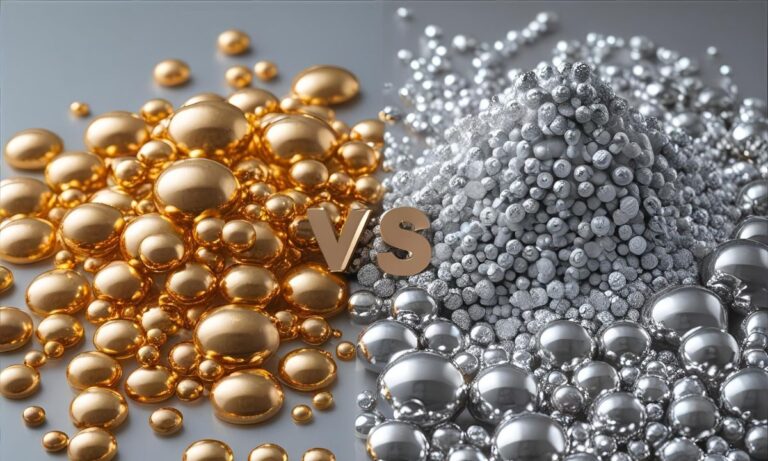
Today we are diving into the practical side of manufacturing technology to answer a critical question for any foundry: What is a refining agent or fused flux? When you look at the furnace, once the metal is melted, you’ll often see a lot of lumpy, dull-looking material on top of the molten bath. This is exactly where the application of a refining agent or fused flux becomes essential to prepare the metal for high-quality production.
If you push aside this dull, lumpy-looking skim, you can see shiny metal underneath, but simply mixing it up doesn’t do anything to get rid of that scum on top. To get the “most bang for your buck” in manufacturing, you have to understand the chemistry of the melt and why a refining agent or fused flux is non-negotiable for quality. In the high-stakes world of aluminium spuitgietwerk, we use specialized tools to ensure that the “meat” of the metal is pure by using a refining agent or fused flux.
This guide explores the secrets of the trade, explaining why a high-quality refining agent or fused flux, and a precise die casting release agent application are the invisible heroes of the shop floor. In this session, we will see how using a refining agent or fused flux can make that dull metal give up its oxygen and transform back into clean, usable alloy.
1. Defining the Basics: What is a Refining Agent or Fused Flux?
In its simplest terms, a refining agent or fused flux is a substance used to clean the molten metal. The idea of using a refining agent or fused flux in die casting is to make those metallic oxides give up their oxygen to the carbon in the chemistry. When that happens, the carbon goes into the air as carbon dioxide, and those metallic oxides then become metals again, which go back into the melt—which is exactly why you need a refining agent or fused flux.
Without a proper refining agent or fused flux, these oxides remain as “hard spots” that ruin your tools during the machining phase. Using a refining agent or fused flux ensures that this chemical reaction is stable and predictable, preventing the “lumpy” material from re-entering the alloy.
2. The Technical Science of Fused Flux in Die Casting Machining
While some old-timers might use oils and greases saved from the kitchen to flux a small pot, industrial production requires something much more stable: a professional refining agent or fused flux. A refining agent or fused flux is often a pre-melted, granulated mixture that is chemically consistent and anhydrous.
When you let the refining agent or fused flux melt in there and stir it up well, it does the work for you. You’ll see some pieces of black on the top—burnt remnants of the refining agent or fused flux and floating debris—which you then skim off and put in a dross can. What you’ve got left after using a refining agent or fused flux is the good stuff: no more dull material floating on top, just shiny metal alloy.
3. The Critical Role of Refining Agents in Die Casting
If you want to reach a high-level finish, you cannot have impurities trapped in the metal. Refining agents in die casting are used specifically to remove hydrogen gas and non-metallic inclusions that lead to porosity. If the designer has their thinking caps on, they know that the internal integrity of the part is just as important as the outside dimensions for later die casting machining operations.
If the metal isn’t refined with the right refining agent, you’ll run into “hard spots” during the die casting machining phase. These hard spots are often metallic oxides that didn’t give up their oxygen during the fluxing stage. If your CNC bit hits one of these inclusions during die casting machining, it’ll dull the tool or even break it, which drives up your total casting machining cost.
4. Why Refining Matters for China spuitgieten
At diecastingschina.com, we see that many automotive components require 100% leak-free performance. By using a proper refining agent, we ensure the metal is fluid and clean. This allows the melted aluminum to flow into a die assembly perfectly, filling every thin-walled section without leaving behind the “scum” that causes structural failure in die casting machining.
In our die casting machining centers, we have found that parts treated with a high-quality refining agent exhibit 30% less tool wear. This is a massive factor in keeping the casting machining cost competitive for our global clients who rely on us for precision die casting machining.
5. Protecting the Process: Die Casting Release Agent
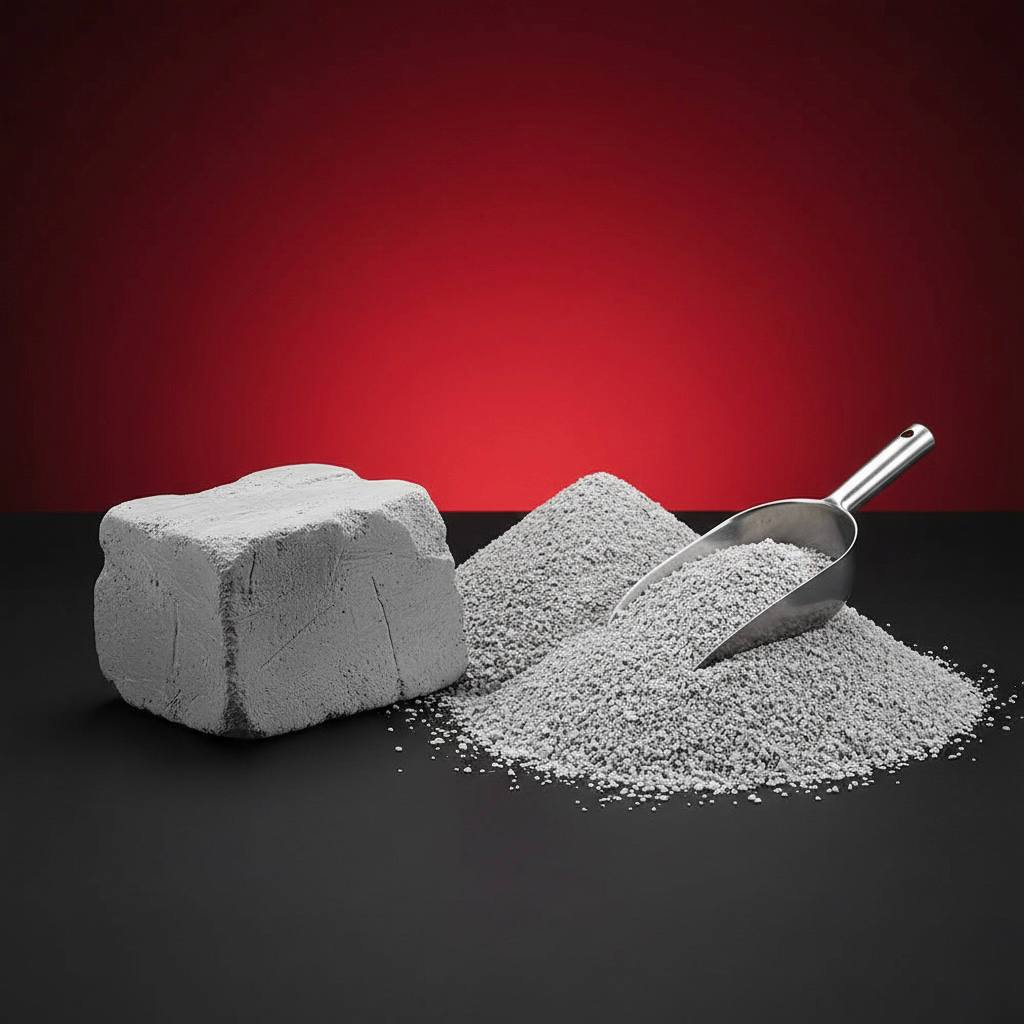
While the refining agent cleans the inside of the melt, the die casting release agent protects the outside of the part and the die itself. When we present a new solution for a plant, we look at specific criteria: soldering, staining, a better dilution ratio, and obviously the cost per kilo.
In our tests for a die casting release agent, we look for better thermodynamic stability at higher temperatures. You want a die casting release agent where the active contents are active at a higher temperature. This is much better for when you’ve got that molten material within the process and leads to a cleaner part for die casting machining. Modern formulations of die casting release agent ensure they meet the demands of high-cycle production and consistent die casting machining results.
6. Thermodynamic Stability and Die Casting Machining Efficiency
In our tests, we look for better thermodynamic stability at higher temperatures. You want a die casting release agent where the active contents are active at a higher temperature. This is much better for when you’ve got that molten material within the process.
A high-quality product doesn’t just run at a ratio of 100 to one; modern formulations can operate at 120 to one. That is a 20% benefit in terms of usage and cost. As the saying goes, “it’s what’s inside that counts,” but in the world of die casting machining, what you spray on the mold is just as vital as the refining agent used in the furnace. Ensuring a smooth surface finish through the right die casting release agent makes the subsequent die casting machining much more efficient.
7. Automation and Safety in Die Casting Machining Workflows
Hazardous emissions from die casting machines have long been a cause of problems in the aluminum casting process. Today, robotics offers a viable solution to these serious hazards. A robot sprays the mold with release lubricant prior to the start of the casting process.
- Accuracy: The robot effectively and completely sprays the entire surface with die casting release agent.
- Waste Reduction: This coating process accurately dispenses a proper amount of release fluid, ensuring it is applied evenly to only those areas that require lubricant.
- Cost Savings: This results in significant cost savings and a reduction in waste, directly impacting the final casting machining cost and the reliability of die casting machining.
8. Technical Challenges: Soldering and Ejection in Die Casting Machining
One of the biggest hurdles in die casting machining is “soldering”—where the aluminum actually sticks to the steel of the die. This is where the thermodynamic stability of your die casting release agent proves its worth.
In terms of extraction, robots are now equipped with sophisticated compensation software called “soft absorber.” This allows the robot to react to the external forces presented by the ejector pins of the machine. Even though the robot is in constant contact with a harsh die casting release agent, high-quality IP57-rated equipment handles the process without constant tooling changes, setting the stage for perfect die casting machining.
9. Controlling Your Total Casting Machining Cost
Every foundry wants to reduce their casting machining cost. If you have lumpy, dull material trapped in your part because you skipped the refining agent step, your scrap rate goes up. If your die casting release agent causes staining or soldering, you have to spend more time on secondary surface finishing and die casting machining.
| Materiaal | Doel | Impact on Casting Machining Cost |
| Refining Agent | Removes metallic oxides. | Extends CNC tool life by removing “hard spots.” |
| Fused Flux | Cleans the molten bath. | Reduces scrap rates due to internal porosity. |
| Release Agent | Prevents soldering/sticking. | Ensures smooth surfaces for final die casting machining. |
At diecastingschina.com, we perform visual comparisons and test for solids content and thermodynamic stability in our labs to ensure that the refining agents in die casting we use are helping, not hindering, the final die casting machining steps.
10. The Importance of Degassing and Fluxing for Die Casting Machining
When we have the metal melted in the furnace, we have to be ready to flux. You don’t want to see much of that dull material anymore floating on top; you want to see shiny metal underneath. This is achieved through a combination of refining agents in die casting and mechanical stirring.
By removing the floating debris, we ensure that the metal that flows into the die is a pure alloy. This is especially important for parts that require high-pressure seals and precision die casting machining. If you are performing die casting machining on a replacement casting for an automotive giant like BMW or Ford, the metal must be clean enough to hold a thread or a seal without leaking through micro-porosity.
Sourcing Quality Die Casting Machining in 2026
For manufacturers looking to source from die casting manufacturers in China, it is essential to ask about their fluxing and refining processes. Are they using fused flux? What is the dilution ratio of their die casting release agent?
The technical experience of the foundry matters. A plant that manufactures over five million components for the global automotive industry knows that switching between robot programs is as simple as selecting a new program from the teach pendant, but managing the chemistry of the melt with a refining agent is where the real skill lies. Proper melt management is what makes the difference between an average part and an ideal solution for die casting machining.
Environmental Responsibility and Efficiency in Die Casting Machining
Modern die casting machining isn’t just about the parts; it’s about the environment. By using a robot to handle the tapering process and accurately dispense release fluid, factories further reduce the risk of employee injury.
Furthermore, using refining agents in die casting that are more efficient means less waste and fewer emissions. When the fluxing has gotten rid of the dull metal, you are left with a shiny lead or aluminum alloy that is ready for a consistent, reliable automated process. This leads to a cleaner, safer, and more cost-effective die casting machining environment.
Conclusion: Achieving the Ideal Solution for Die Casting Machining
In this guide, we’ve taken you through the furnace and onto the shop floor to see how refining agents in die casting and fused flux work their magic. We’ve seen how robots use die casting release agent to protect both the machine and the worker, and how all of this leads to a lower casting machining cost.
At diecastingschina.com en aludiecasting.com, we take pride in the fact that we look at what’s inside. Whether you are manufacturing a complex structural part or a simple fixture, we provide the technical experience to ensure your metal is clean and your die casting machining process is efficient.