
Anodizing surface finishes services for all of aluminum die casting products in ADCC 12, A380, A356. and aluminum profile for 6061, 6063 and otehr aluminum alloys.


What is Anodizing ?
Anodizing is a simple electrochemical process that forms a protective coating of aluminum oxide on the surface of the aluminum die casting parts. The rusting of unprotected iron in the presence of air and ater is then inevitable because it is driven by an electrochemical process. The lifetime of the finish is proportional to the thickness of the anodic coating applied.
This process has been in vogue since fifty years. Aluminum oxide, as we all know, is a hard, durable and weather resistant substance that protects the base metal. The coating may be either colored by dyeing or it may exhibit bronze tones through diffraction phenomena produced by the coating. he coating is integral to the metal and will not peel or flake. In general anodizing is less expensive than painting with the exception of coil painted products.
Anodizing surface finish services in China
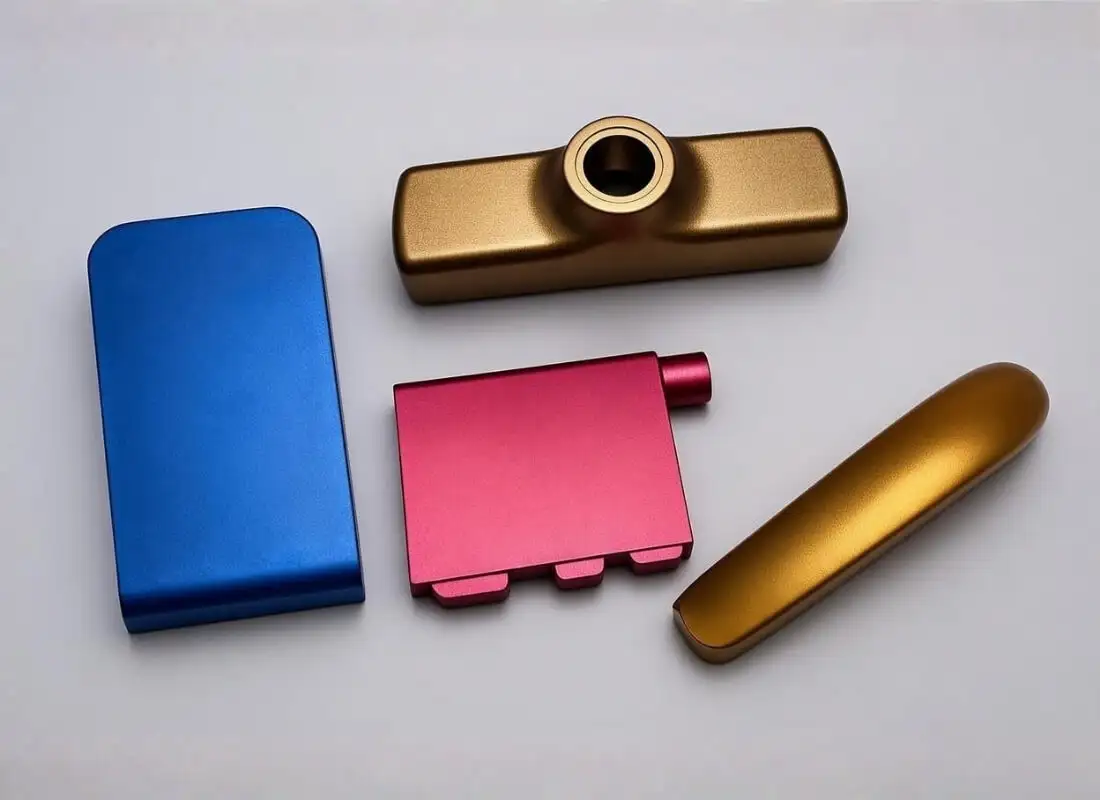
ADC 12, A 380 Die Casting anodizing surface finish services in any color
Anodizing surface finish for Aluminum profiles
Advantages of Anodizing:
- In general anodizing is less costly than painting with the exception of coil painted products.
- Anodizing is harder than PVDF. Anodizing is superior for aluminum in high traffic areas where the coating is subject to physical abuse and abrasive cleaners.
- Anodizing cannot peel off. The coating is really part of the aluminum casting or metal.
- Anodizing gives aluminum die casting a deeper, richer metallic appearance than is possible with organic coatings. This is because an anodized coating is translucent, and one can see the bottom metal underneath the coating. This translucence contributes to color variation problems, but anodizers are doing a much better job of controlling the amount of color variation than in the past. Computerized color matching with quantitative, objective color data is now possible.
- Anodizing is unchanged by sunlight. All organic coatings will eventually fail due to revelation to ultra-violet light.
Disadvantages of anodizing
While anodizing offers numerous advantages, it’s important to consider potential disadvantages and limitations associated with the process:
- Cost: Anodizing can be more expensive compared to other surface finishing techniques. The process requires specialized equipment, chemicals, and skilled labor, which can contribute to higher production costs.
- Limited Color Range: Although anodizing allows for a range of color options through dyeing, the color choices are generally limited compared to other coating methods such as powder coating or painting. Achieving certain shades or complex color patterns may be challenging.
- Surface Uniformity: Achieving a completely uniform anodized surface can be difficult, especially on complex or intricate die cast aluminum components. Variations in current density, surface geometry, or masking techniques may result in uneven coating thickness or color variation.
- Dimensional Changes: Anodizing involves the build-up of the anodized layer on the surface of the aluminum, which can result in dimensional changes. This increase in surface thickness needs to be carefully considered in applications where tight tolerances or precise fitment is critical.
- Substrate Limitations: Not all aluminum alloys are suitable for anodizing. Some alloys may have poor response to the anodizing process, leading to inconsistent or unsatisfactory results. It is essential to select the appropriate alloy with compatible anodizing characteristics.
Disadvantages of anodizing
- Brittle Coating: While anodizing increases the surface hardness of aluminum, the resulting anodized layer can be relatively brittle compared to the underlying metal. Excessive mechanical stress or impact on the coated surface may cause cracking or chipping of the anodized layer.
- Limited Repair Options: Unlike some other surface finishes, repairing damaged or scratched anodized surfaces can be challenging. It often requires stripping the entire anodized layer and redoing the anodizing process, which can be time-consuming and costly.
- Environmental Considerations: Anodizing involves the use of chemicals, such as acids and dyes, which require proper handling and disposal to minimize environmental impact. Adhering to environmental regulations and implementing appropriate waste management practices is crucial.
While these disadvantages exist, anodizing remains a widely utilized surface finishing process for die cast aluminum due to its overall benefits and versatility. Careful consideration of specific requirements and limitations can help manufacturers make informed decisions about incorporating anodizing into their production processes.
Anodizing
Here are the properties of Anodizing.
Design and Engineering
The process starts by undertaking consultations with our clients to understand them. There is professional software, which our design team utilizes to generate detailed sketches of the mold. Whether a complex high pressure die casting tooling design or a straightforward aluminum die casting mold, we ensure the design is optimized for efficiency and durability.
General Die Casting Tooling
General die casting tooling includes molds and related tools for applications that do not require the extreme pressures of high-pressure systems. These tools are mainly applied in small-scale machining or when dealing with part of simple shapes. As an experienced die casting tooling manufacturer, we understand the nuances of high-pressure and general tooling, ensuring our clients receive solutions that match their specific requirements.
The Process of Die Casting Mold Creation
The creation of a die casting mold is a highly technical process that involves several stages, each demanding meticulous attention to detail. At TheDieCasting.com, we follow a structured approach to ensure the highest quality molds:

Material Selection
Selecting an appropriate material is an important criterion for the container’s efficiency. We then precisely choose materials that can endure the intrinsic pressure and temperature of the operation stage without compromising the structure. This means that every mold that is produced here offers you enduring reliability.

Sustainability in Die Casting Mold Production
TheDieCasting.com follows sustainable business practices as a foundation for the company. We aim to reduce waste and energy use in making molds as much as is practically possible. For instance, our aluminum die-casting molds are designed for efficiency, ensuring optimal material usage and reducing environmental impact.
Applications of anodizing products
Anodizing products find wide-ranging applications across various industries due to their unique properties and advantages. Some of the key applications of anodizing products are:
- Architecture and Construction: Anodized aluminum is commonly used in architectural projects for applications such as window frames, doors, curtain walls, and exterior cladding. The corrosion resistance, durability, and ability to achieve custom colors and finishes make anodized aluminum an ideal choice for enhancing the aesthetics and longevity of buildings.
- Automotive and Transportation: Anodized aluminum components are extensively used in the automotive and transportation industry. These include parts such as trim, grilles, wheels, engine components, and interior accents. Anodizing provides corrosion resistance, wear resistance, and the ability to achieve decorative finishes, contributing to both the aesthetic appeal and durability of automotive products.
- Aerospace and Aviation: Anodizing plays a critical role in the aerospace and aviation industry. Anodized aluminum is used in various aircraft components, including structural elements, aircraft interiors, and aerospace equipment. The protective anodized layer enhances corrosion resistance, improves wear resistance, and contributes to weight reduction, making it suitable for aerospace applications.
Applications of anodizing products
4. Electronics and Electrical Industry: Anodized aluminum is widely used in the electronics and electrical industry due to its electrical insulation properties. It is utilized in components such as heat sinks, enclosures, connectors, and printed circuit boards (PCBs). The anodized layer provides protection against corrosion, enhances heat dissipation, and improves the overall performance and reliability of electronic and electrical devices.
5. Consumer Goods: Anodizing products find applications in a wide range of consumer goods, including smartphones, laptops, tablets, cameras, and household appliances. Anodized aluminum offers durability, scratch resistance, and the ability to achieve attractive colors and finishes, enhancing the aesthetic appeal and longevity of consumer products.
6. Medical Equipment: Anodized aluminum is commonly used in the manufacturing of medical equipment and devices. Its corrosion resistance, biocompatibility, and easy sterilization make it suitable for applications such as surgical instruments, implant components, diagnostic equipment, and hospital furniture.
Applications of anodizing products
7. Sporting Goods and Outdoor Equipment: Anodized cast aluminum is favored in the sporting goods industry for its lightweight, corrosion-resistant, and durable properties. It is used in the production of bicycles, golf clubs, fishing reels, camping equipment, and other outdoor gear, providing strength, aesthetics, and resistance to harsh environmental conditions.
8. Industrial and Machinery: Anodizing is widely utilized in industrial and machinery applications. Anodized aluminum components can be found in hydraulic systems, pumps, valves, machine frames, and various industrial equipment. The protective anodized layer enhances corrosion resistance, wear resistance, and overall durability in demanding industrial environments.
These are just a few examples of the diverse applications of anodizing products. The versatility, durability, corrosion resistance, and customizable aesthetic options offered by anodized aluminum make it a preferred choice in numerous industries where high-performance surface finishes are required.
FAQs
What is anodizing?
Anodizing is an electrochemical surface finishing process that forms a protective aluminum oxide layer on aluminum die-cast parts. This oxide layer enhances corrosion resistance and surface hardness, and can be colored or sealed for decorative and functional performance.
Can you anodize High-Pressure Die Casting (HPDC) products
Yes, ADC12 High-Pressure Die Casting (HPDC) products can be anodized, with our special die casting process and anodzing technology, we can anodize high qualiity surface finish with any color, normally, anodized ADC12, A380 die casting parts with significant limitations regarding aesthetic quality and corrosion resistance. Due to high silicon (9.6–12%) and copper (1.5–3.5%) content, ADC12 usually results in a dark grey, mottled, or non-uniform finish rather than a bright, decorative, or clear protective coating. But we have better solution to impove those issues, you are welcome to contact us about your anodizing die casting project.
Why is anodizing used on aluminum die-cast parts?
It improves durability, corrosion resistance, wear resistance, and appearance. An anodized layer is integral to the metal, won’t peel or flake, and can provide deeper, richer metallic finishes compared with organic coatings.
How does the anodizing process work?
During anodizing, the part is cleaned and then submerged in an electrolyte solution (typically sulfuric acid) with an electrical current applied. This grows a controlled aluminum-oxide layer on the surface.
Is the anodized surface finish durable?
Yes. Anodizing produces a hard, durable surface that performs well in high-traffic or harsh environments and resists fading from sunlight better than many organic coatings.
The reason is the anodized surface finish is part of the aluminum itself, so it won’t peel or flake like paint or powder coatings.
How do anodizing and other finishes (like powder coating) compare?
Anodizing offers better corrosion and wear resistance than many paints or coatings and can maintain a metallic look. Other finishes like powder coating may offer more color options but don’t integrate into the metal surface as anodizing does.