Was ist Druckguss? Alles, was Sie über Metallguss wissen müssen

Was ist Druckguss? Alles, was Sie über Metallguss wissen müssen

Druckguss

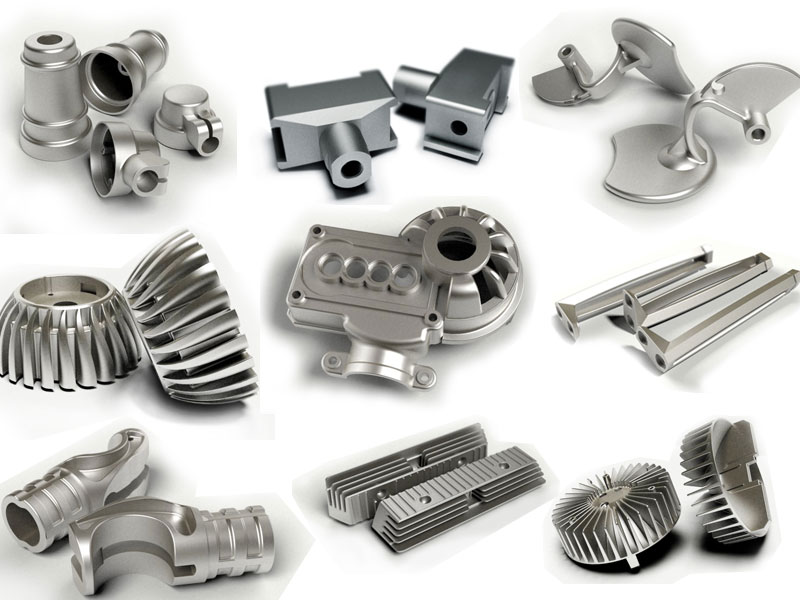
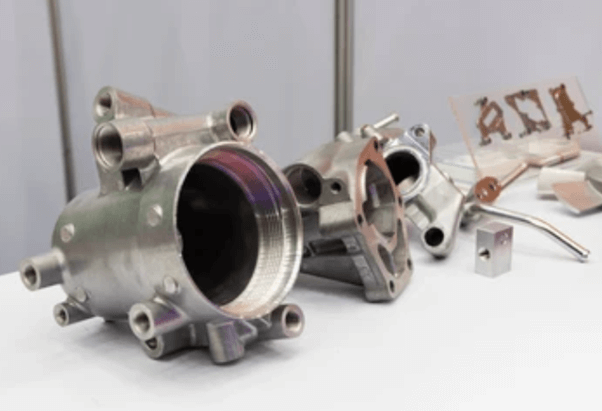
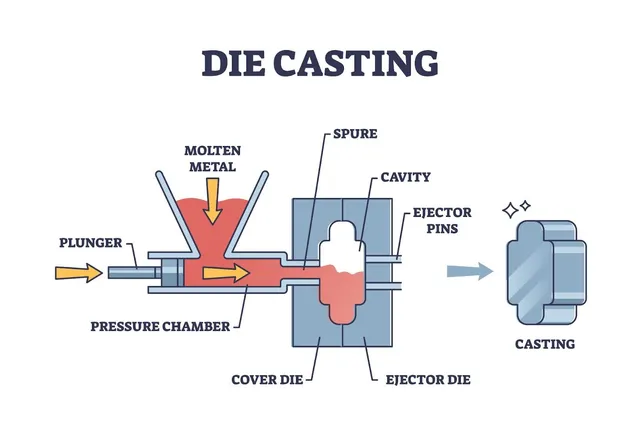
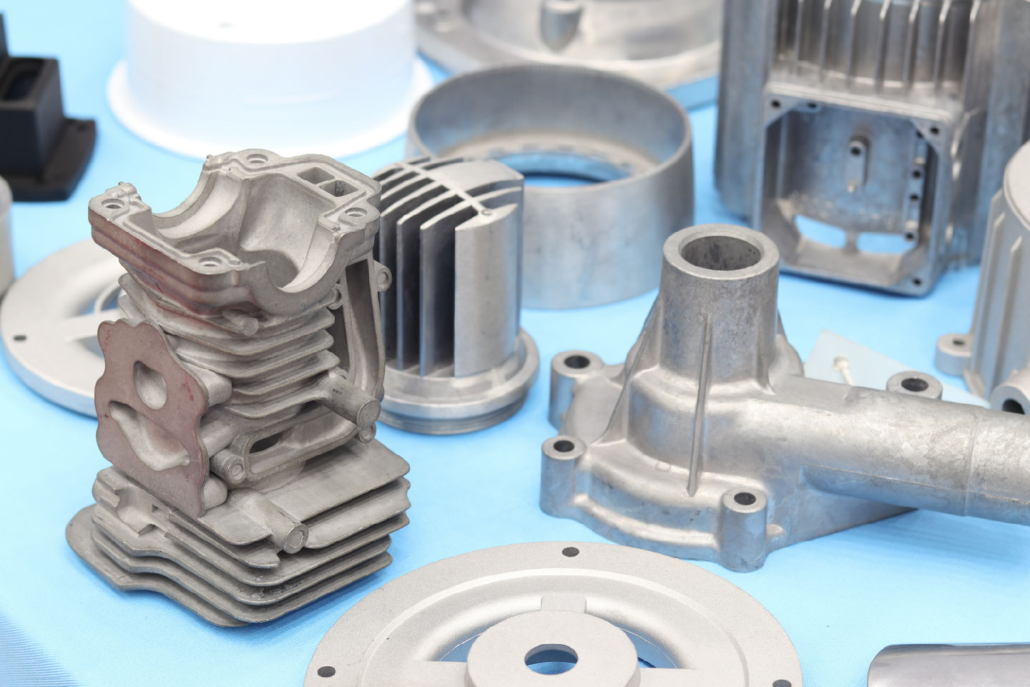
This is a manufacturing process in which molten metal is forced using pressure to fill a mold cavity also known as die casting. The mold is usually of high-quality steel and hence the part can be produced in large quantities the term is used to mean the manufacture of many parts. The finished part is then produced by opening the mold after the molten metal is cooled and forms a solid layer. This kind of use of the process is mostly applied in making intricate metal used in the production of different parts that require high accuracy in measurement and polished surfaces. Die casting can be done on aluminium, zinc, and magnesium but other metals can also be used on a case depending on application and other requirements. Die casting is considered to be one of the expert manufacturing techniques in the conception of mass production of small to medium-sized components out of metals. The popularity of the method has been spread across automotive, aerospace, electronics, and industrial machines due to its ability to produce durable lightweight intricately tailored parts. However, this process is widely recognized for its ability to manufacture products with complex geometry that would be very hard to make using conventional techniques. How Die Casting Works Molding is the first part of the die-casting process. On one side of the mold, there is a half, and it is a half of a particular design to make the mold shaped like the final product. Cavities and cores are designed for the molds that are usually custom-made so that the part can be replicated as closely as possible. 1. Molten Metal Injection: Then the molten metal is injected into the mold cavity under high pressure to form the desired shape. The metal is usually heated to one degree above the melting strain to make it fluid. In die casting, the pressure that the molten metal is pushed into the mold can be from several thousand to tens of thousands of psi (pounds per square inch), to be sure that the molten metal gets into every detail of the mold. 2. Solidification: This occurs when the metal is injected into the casing cavity whereby it cools and the metal hardens. The quality of the casting depends upon the cooling rate. Additional modes of failure (shear, climb, and glide) come into play in this case and result in faster cooling higher strength better surface finish, and slower cooling which could result in more internal defects and lower mechanical properties. Water-cooling systems built into the mold are usually used to assist the cooling process. 3. Ejection: Following this, the metal is allowed to cool and solidify and it is then easy to remove the mold from the larger casting and eject the part. Then most of the time is used in the pushing out part from the mold using a mechanical ejector system. This depends on the complexity of the part that requires other extra steps, namely trimming and machining to deliver the final shape and dimension. 4. Quality Control: A quality check is then performed on a part after ejection. It can involve dimensional verification, visual inspection, and mechanical testing to confirm that the part is equal to or better than the requirements. High precision and repeatability are theoretically achieved in die casting. Types of Die Casting There are two types of Die casting, they are hot chamber die casting and cold chamber die casting. These are all good and have their advantages, limitations and ideal applications. 1. Hot Chamber Die Casting The process most suitable for metals such as zinc, magnesium, and lead is a hot chamber die casting since the process is done at high temperatures, and melting points. The injection system is installed inside the melting furnace in this way, the metal is always in contact with the chamber. Advantages: Disadvantages: 2. Cold Chamber Die Casting The metals that have higher melting points like aluminium, brass and copper are cast in cold chamber die casting. In this case, the molten metal is tapped from a second furnace injected into the cold chamber then into the mold cavity. Advantages: Disadvantages: The Comparison of Die Casting Methods: Hot Chamber vs. Cold Chamber Here is a comparison of the most common types of two die-casting methods, Feature Hot Chamber Die Casting Cold Chamber Die Casting Metal Compatibility Best for low-melting-point metals (e.g., zinc, lead) Best for high-melting-point metals (e.g., aluminium, brass) Cycle Time Faster cycle times Slower cycle times Mold Wear Higher mold wear due to direct contact with molten metal Lower mold wear Cost Lower cost for high-volume production Higher initial cost, but better for high-strength metals Complexity of Parts Good for simpler parts Better for more complex, larger parts Advantages of Die Casting It is one of the largest advantages that die casting is one of the main preferred methods of large-scale production of products from metal alloys. 1. High Precision and Accuracy There are many advantages of die casting, which makes it convenient to offer high die precision. This method of production is also widely used for the production of parts, which requires good dimensional accuracy which is very crucial as it defines tolerance levels required in a specific job. One should note that die casting is the only manufacturing technique that can produce given parts with the utmost complexities such as the intricacies of its geometries.  2. High Production Rates In terms of large volumes, die casting is very efficient. Parts are quickly and cheaply produced once the first mold is created with very little labor involved. The demand for simulated powders is particularly high in industries like automotive and electronics where large volumes of the same parts are required. 3. Complex Designs and Thin Walls Complex design can be achieved by die casting, which would be difficult or impossible to achieve by traditional manufacturing methods. The process can make parts with thin walls, and complex internal structures, and can accommodate undercuts; thus making it the
Übliche Fertigungsfehler beim Druckguss: Ursachen, Prävention und Lösungen

Aluminiumguss, Druckguss, Druckguss

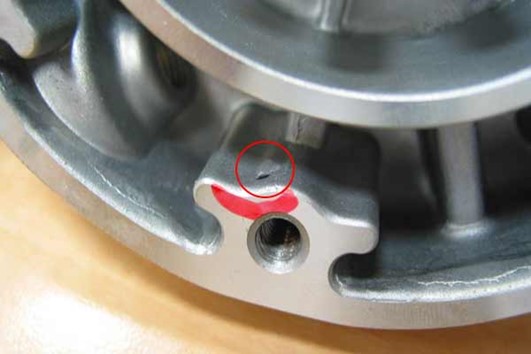
Das Druckgussverfahren (HPDC) ist eines der am häufigsten eingesetzten Metallgussverfahren in der heutigen Fertigung. Die Hersteller entscheiden sich für das HPDC-Verfahren, weil es die Herstellung komplexer Metallteile ermöglicht, die sowohl hohe Präzision und schnelle Produktionsraten als auch hervorragende Maßgenauigkeit und glatte Oberflächen aufweisen. HPDC ermöglicht es der Automobil- und Luftfahrtindustrie sowie der Herstellung von Elektronikkomponenten und Konsumgütern, leichte und langlebige Teile für Anwendungen wie Motoren und Gehäuse, Strukturelemente und mechanische Baugruppen herzustellen. Der Herstellungsprozess des Druckgusses birgt zahlreiche Risiken, die zu erheblichen Mängeln führen, die die Produktqualität mindern und gleichzeitig die Lebensdauer verkürzen und die Leistung beeinträchtigen. Verschiedene Defekte entstehen durch unsachgemäße Formgestaltung, turbulente Strömung der Metallschmelze, eingeschlossene Gase, uneinheitliche Abkühlungsraten und thermische Belastung während des Produktionsprozesses. Bei der HPDC-Technologie treten sieben Hauptdefekte auf, darunter Porosität, Kaltverschlüsse, Schrumpfungsdefekte, Gratbildung, Oberflächendefekte, Fehlläufe, Gesenkerosion und Löten. Diese Arten von Herstellungsfehlern führen zu einer Verschlechterung der Materialfestigkeit, unregelmäßigen Abmessungen und unerwünschten visuellen Effekten, die zu einem Ausfall der Komponenten führen können. Die Hersteller bekämpfen die Produktionsprobleme durch die Optimierung der Verarbeitungsparameter und bessere Untergrabungsmethoden zusammen mit kontrollierten Temperatursystemen und vakuumunterstützten Gießverfahren. Echtzeit-Überwachung und Simulationssoftware sind fortschrittliche Methoden der Qualitätskontrolle, die die Effizienz und Zuverlässigkeit des Druckgussverfahrens erhöhen. Dieser Artikel bietet eine umfassende Analyse von Standardherstellungsproblemen bei der Druckgusstechnik mit Erläuterungen zu den Ursachen und Lösungsstrategien zur Verringerung dieser Fehler. Nur wenn die Hersteller diese Herausforderungen verstehen und bewährte Verfahren anwenden, können sie die Qualität, Langlebigkeit und natürlich die Leistung ihrer Druckgussteile verbessern und gleichzeitig den Ausschuss und die Produktionskosten senken. Die Kenntnis dieser Herstellungsfehler hilft Druckgussingenieuren, Produktionsleitern und Qualitätssicherungsspezialisten, ihre Prozesse zu optimieren, um die besten Druckgußergebnisse zu erzielen. 1. Porosität Porosität ist definiert als kleine Löcher oder Gaseinschlüsse in der Metallmatrix. Sie beeinträchtigt die mechanischen Eigenschaften, verringert die Festigkeit, lässt Luft und Gase durch die Struktur dringen und führt zu sichtbaren Oberflächenfehlern in Druckgussprodukten. Ursachen: Prävention und Lösungen: 2. Kalte Schließung Eine kalte Schließung entsteht, wenn zwei Ströme geschmolzenen Metalls nicht richtig verschmelzen und schwache Verbindungsbereiche oder sichtbare Nähte im Gussteil bilden. Dieser Fehler vermindert nicht nur die mechanische Festigkeit, sondern erhöht auch das Risiko eines Bruchs und wirkt sich negativ auf die Haltbarkeit und das Aussehen des Bauteils aus. Ursachen: Prävention und Lösungen: 3. Schrumpfungsdefekte Schrumpfungsdefekte entstehen durch die Schrumpfung des Metalls während der Abkühlung, die zu inneren Hohlräumen oder Löchern führt, welche die strukturelle Integrität des Gussteils beeinträchtigen. Infolgedessen verringern diese Defekte die mechanische Festigkeit des Endprodukts, führen zu potenziellem Versagen unter Belastung und verursachen eine schlechte Oberflächenqualität, wodurch sowohl die Funktionalität als auch die Ästhetik des Endprodukts beeinträchtigt wird. Ursachen: Prävention und Lösungen: 4. Gratbildung Überschüssige dünne Metallschichten, die sich an der Trennebene oder im Formspalt aufgrund des Entweichens von Metall unter hohem Druck bilden, werden als Grat bezeichnet. Obwohl der Grat nach dem Gießen abgeschnitten werden kann, führt eine übermäßige Gratbildung zu erhöhtem Materialabfall, Werkzeugverschleiß und damit verbundenen Produktionskosten und verringert somit die Gesamteffizienz des Druckgießprozesses. Ursachen: Prävention und Lösungen: 5. Inspektion von Oberflächenfehlern (Blasen, Risse und Falten) Eine Vielzahl von Oberflächenfehlern, Blasen, Risse und Falten, beeinträchtigen das optische Erscheinungsbild und die mechanische Festigkeit des Gussteils und müssen verhindert und beseitigt werden. Sie verursachen Schweißfehler, die die Haltbarkeit des Produkts verringern, die Ausschussquote erhöhen und dafür sorgen, dass das Produkt nach dem Gießen schlecht haftet, z. B. beim Lackieren oder Beschichten. Ursachen: Vorbeugung und Lösungen: 6. Einschlüsse und Verunreinigungen Unerwünschte Fremdpartikel wie Schlacke, Oxidschichten, Schmutz oder andere Verunreinigungen, die in einem fertigen Gussteil eingeschlossen sind, führen zu schlechten mechanischen Eigenschaften, schwacher struktureller Integrität und Oberflächenfehlern und werden als Einschlüsse bezeichnet. Das Vorhandensein dieser Verunreinigungen kann die Leistung und Haltbarkeit von Druckgussteilen verringern, so dass sie für Hochpräzisionsanwendungen nicht geeignet sind. Ursachen: Prävention und Lösungen: 7. Fehlläufe und unvollständige Füllung Ein Fehllauf liegt vor, wenn der Formhohlraum nicht vollständig gefüllt ist, was zu fehlenden Abschnitten, dünnen Wänden und Schwachstellen im fertigen Bauteil führt. Dies wirkt sich negativ auf die strukturelle Integrität und Funktionalität des Teils aus und ist daher für Hochleistungsanwendungen ungeeignet. Ursachen: Prävention und Lösungen: 8. Matrizenerosion und -verschleiß Unter Matrizenverschleiß versteht man den Verlust von Formoberflächen, der dadurch entsteht, dass das Hochgeschwindigkeitsmetall die Oberflächen des Formteils kontinuierlich abnutzt, bis die erforderlichen Abmessungen erreicht sind. Dies führt zu einer schlechten Oberflächenqualität und einer kurzen Lebensdauer des Formwerkzeugs. Wenn dieser Fehler auftritt, muss die Form häufig ausgetauscht werden, wodurch die Produktionskosten steigen und die Gussqualität schwankt. Ursachen: Vorbeugung und Lösungen: 9. Heißrisse Risse, die während des halbfesten Zustands des Metalls aufgrund hoher thermischer Belastung und übermäßiger Schrumpfung auftreten, werden als Heißrisse bezeichnet. Diese Risse beeinträchtigen die mechanische Integrität des Gussstücks, d. h. sie erhöhen die Wahrscheinlichkeit eines Versagens des Gussstücks an der Stelle, an der die Risse unter Spannung oder Belastung auftreten. Ursachen: Prävention und Lösungen: 10. Löten Das geschmolzene Metall haftet an der Oberfläche der Gussform, was sich beim Gießen nur schwer entfernen lässt und zu Oberflächenfehlern, Formverschleiß und längeren Produktionsausfällen führt. Auch Maßungenauigkeiten und eine schlechte Oberflächengüte werden durch diesen Fehler verursacht, da er die Qualität des Endprodukts insgesamt beeinträchtigt. Ursachen: Prävention und Lösungen: Fazit Der Druckguss ist ein leistungsfähiges Fertigungsverfahren, das komplexe Metallteile mit hoher Genauigkeit und maximaler Effizienz herstellt. Es gibt jedoch verschiedene Arten von Fehlern, die durch unsachgemäße Prozessparameter, Materialprobleme und/oder Fehler in der Formkonstruktion entstehen. Hersteller können vorbeugende Maßnahmen ergreifen, z. B. eine optimale Prozesssteuerung der Form, die richtige Materialauswahl usw., wenn sie diese üblichen Herstellungsfehler verstehen. Ein Unternehmen kann die Produktqualität verbessern, die Produktionskosten senken und eine höhere Produktionseffizienz beim Druckguss erreichen, indem es den Schwerpunkt auf eine kontinuierliche Prozessverbesserung sowie auf Strategien zur Fehlervermeidung legt. Häufig gestellte Fragen (FAQs) 1. Was sind die Hauptgründe für Fehler beim Druckguss? Die Hauptursachen sind

Die Wahl des richtigen Unternehmens für Legierungsdruckguss: Ein vollständiger Leitfaden

Die Wahl des richtigen Unternehmens für Legierungsdruckguss: Ein vollständiger Leitfaden

Aluminiumdruckguss, Druckgussunternehmen

Der Legierungsdruckguss ist für die verarbeitende Industrie unverzichtbar, da sie in hohem Maße auf hochpräzise, langlebige und kostengünstige Metallteile angewiesen ist. Dieses Verfahren hat einen revolutionären Einfluss auf die moderne Fertigung und ermöglicht die Massenproduktion komplizierter Metallteile mit einem sehr hohen Standard an Genauigkeit und Konsistenz. Spezialisierte Unternehmen, wie z. B. Druckgießereien, stellen in Dienstleistungsbranchen wie der Automobilindustrie, der Luft- und Raumfahrt, der Elektronik, der Medizintechnik und dem Schwermaschinenbau maßgeschneiderte Metallkomponenten für ihre spezifischen Anforderungen her. Ein professionelles Druckgussunternehmen nutzt die neuesten Technologien und hochwertige Materialien in Verbindung mit einem strengen Qualitätskontrollverfahren, um Ihre Produkte zu liefern, die den Industriestandards entsprechen. Bei der Wahl des richtigen Unternehmens haben Sie so oder so die Wahl zwischen einem wirklich zuverlässigen Produkt, das jahrelang hält, und einem fehlerhaften Bauteil, das frühzeitig ausfällt. Der Artikel gibt Ihnen einen detaillierten Überblick über den Legierungsdruckguss und hebt seine Bedeutung, seine Vorteile und die wichtigsten Faktoren hervor, die Sie bei der Wahl des besten Legierungsdruckgussunternehmens berücksichtigen sollten. Das Wissen über Legierungsdruckguss ist unerlässlich, wenn Sie ein Hersteller sind, der präzise konstruierte Teile herstellen möchte, oder ein Unternehmen, das nach wirtschaftlichen Fertigungsmöglichkeiten sucht. Was ist Legierungsdruckguss? Das Metallherstellungsverfahren, bei dem geschmolzenes Metall unter hohem Druck in eine Form (Kokille) gespritzt wird, nennt man Legierungsdruckguss. Dieses Verfahren wird häufig für die Herstellung komplexer Formen mit engen Toleranzen eingesetzt. Verschiedene Metalllegierungen wie Aluminium, Zink und Magnesium werden wegen ihrer guten Festigkeitseigenschaften und Korrosionsbeständigkeit häufig für den Druckguss verwendet. Die beim Druckguss verwendeten Legierungen haben einen großen Einfluss auf die Auswahl der Gussteile im Druckgussverfahren und wirken sich direkt auf die Festigkeit und das Gewicht, die Korrosionsbeständigkeit und die Gesamtleistung des Endprodukts aus. Die Legierungen unterscheiden sich je nach Industriezweig in Bezug auf ihre mechanischen Eigenschaften, ihre Haltbarkeit und die erforderliche Endanwendung. Die am häufigsten verwendeten Legierungen für den Druckguss sind im Folgenden aufgeführt. 1. Aluminiumlegierungen Aufgrund der guten Wärmeleitfähigkeit in Verbindung mit Korrosionsbeständigkeit und geringem Gewicht wird Aluminiumdruckguss von Forschern und Herstellern auf der ganzen Welt bevorzugt. In Industrien, die langlebige und relativ leichte Komponenten benötigen, wird diese Legierung verwendet. Hauptmerkmale: Anwendungen: 2. Zinklegierungen Da Zink eine hohe Festigkeit, einen niedrigen Schmelzpunkt und eine ausgezeichnete Präzision aufweist, ist es eine weitere häufig verwendete Legierung für den Druckguss. Für die Herstellung kleiner, detaillierter Teile ist es ideal. Hauptmerkmale: Anwendungen: 3. Magnesiumlegierungen Aufgrund seines geringen Gewichts eignet es sich hervorragend für Industriezweige, die Gewicht einsparen wollen, ohne dabei Kompromisse bei der Festigkeit einzugehen; daher wird dieses Metall Magnesium genannt. Hauptmerkmale: Anwendungen: 4. Legierungen auf Kupferbasis Messing und Bronze sind Beispiele für Legierungen auf Kupferbasis, die hohe elektrische Leitfähigkeit, Korrosionsbeständigkeit und gute Verschleißfestigkeit aufweisen. Solche Legierungen werden für Anwendungen verwendet, bei denen die elektrische und thermische Leistung hervorragend sein muss. Hauptmerkmale: Anwendungen: Vorteile der Zusammenarbeit mit einem zuverlässigen Legierungsdruckgussunternehmen Mit dem richtigen Legierungsdruckgussunternehmen können Sie qualitativ hochwertige Produkte auswählen, die den Industriestandards entsprechen. Hier sind die wichtigsten Vorteile: 1. Hohe Präzision und Konsistenz Ein erstklassiges Druckgussunternehmen verfügt über einen guten Maschinenpark und strenge Qualitätskontrollmaßnahmen, um die Abmessungen mit sehr wenigen Fehlern zu produzieren. 2. Kosteneffizienz Druckguss ist ein sehr effizientes Verfahren, das die Material- und Energiekosten des Endprodukts im Vergleich zu anderen Metallumformungsverfahren erheblich reduziert. 3. Anpassungsfähigkeit und Vielseitigkeit Ein seriöses Unternehmen, das kundenspezifische Lösungen anbietet, die sich an den Bedürfnissen der Industrie orientieren, bietet verschiedene Legierungsoptionen an. 4. Schnellere Produktion und kurze Vorlaufzeiten In modernen Druckgießereien werden automatisierte Systeme eingesetzt, um die Produktionsgeschwindigkeit zu erhöhen und strenge Fristen einzuhalten. 5. Langlebigkeit und Festigkeit Legierte Druckgussteile sind bekanntermaßen sehr langlebig und daher für den Einsatz unter anspruchsvollen Bedingungen geeignet. Auswahl des besten Druckgussunternehmens Bei der Auswahl eines Druckgussunternehmens sollten Sie Folgendes beachten: 1. Erfahrung und Branchenkenntnis Überprüfen Sie die Erfolgsbilanz des Unternehmens, d. h. ob es über langjährige Erfahrung im Legierungsdruckguss verfügt und ob es sich in Ihrer Branche bewährt hat. 2. Qualitätszertifikate und -normen Vergewissern Sie sich, dass das Unternehmen die Vorschriften der Branche einhält: 3. Fortgeschrittene Technologie und Ausrüstung Um die Genauigkeit zu erhalten und den Bedarf an körperlicher Arbeit zu reduzieren, wird ein modernes Druckgussunternehmen Geräte wie CNC-Maschinen, Vakuumguss und Roboterautomation einsetzen. 4. Materialauswahl und -anpassung Wählen Sie ein Unternehmen mit mehreren Legierungsoptionen und Anpassungsmöglichkeiten, damit Sie das spezifische Design finden können, das Ihr Unternehmen anbietet. 5. Starke Lieferkette und pünktliche Lieferung Eine effiziente Logistik und eine schnelle Lieferung der Produkte werden durch zuverlässige Lieferanten gewährleistet. 6. Prototyping und Testkapazitäten Sehr wichtig sind Prototypen und strenge Qualitätstests (Röntgeninspektion und Zugfestigkeit) am Produkt. 7. Wettbewerbsfähige Preise Obwohl der Preis nicht das einzige Kriterium sein darf, kann ein gutes Druckgussunternehmen wettbewerbsfähige Preise anbieten, ohne Abstriche bei der Qualität zu machen. Branchen, die auf Legierungsdruckguss angewiesen sind 1. Automobilindustrie 2. Luft- und Raumfahrtindustrie 3. Elektronikindustrie 4. Medizinische Geräte 5. Konsumgüter Herausforderungen beim Legierungsdruckguss und wie Unternehmen sie überwinden Legierungsdruckguss ist ein bekanntes Herstellungsverfahren, das mit einigen Herausforderungen konfrontiert ist, die sich auf Qualität, Kosten und Nachhaltigkeit auswirken. Führende Druckgussunternehmen setzen innovative Lösungen ein, um diese Probleme zu überwinden, was zu einer qualitativ hochwertigen Produktion, optimierten Kosten und minimierten Auswirkungen auf die Umwelt führt. 1. Umgang mit Porosität und Defekten Porosität ist eines der häufigsten Probleme beim Druckguss, bei dem Gasblasen oder Lunker im Metall auftreten. Sie können auch die strukturelle Integrität des Teils beeinträchtigen und sich auf die Funktionalität auswirken. Diesem Problem können die Hersteller mit dem vakuumunterstützten Druckguss begegnen, bei dem eine minimale Luftmenge eingeschlossen wird und die Metalldichte verbessert wird. Darüber hinaus lässt sich die Porosität durch druckdichte Gießtechniken, die Konstruktion der Form und die richtige

Druckguss-Lieferant: Verfahren, Anwendungen und wichtige Überlegungen

Druckguss-Lieferant: Verfahren, Anwendungen und wichtige Überlegungen

Druckguss Hersteller, Druckgussverfahren

It is one of the widely used metal manufacturing processes, and it is highly efficient: producing high precision, durable, and complex components for many Industries. It injects molten metal, like aluminium, Zinc, or magnesium, inside of a steel mold (die) at very high pressure. It provides uniformity, internal strength and smashing surface finishes making it the right choice for use in automotive, aerospace, electronics, medical equipment, as well as consumer goods. A die-casting supplier is a very important company for the manufacture of high-quality parts that satisfy the industry requirements. They are suppliers, who are especially involved in designing, manufacturing and finishing the components or parts utilizing metal with strict tolerances and intricate geometries. Choosing the right supplier matters a lot for the success of any die-casting project as a good supplier should possess adequate expertise, state-of-the-art technology, and a history of successfully delivering precise and low-cost parts.Die casting is efficient in mass production and produces lightweight, yet strong parts, and as a result, the demand for die casting is increasing worldwide. Examples include reducing the weight of a vehicle, and enhancing fuel efficiency, through the use of die-cast aluminum and magnesium components in the automotive industry. In the same way, the electronics industry employs die casting to make heat sinks, enclosures and structural parts that are prone to high durability and electrical conductivity. When looking for a die-casting supplier, one should consider not only manufacturing capabilities but, more importantly, their quality control process, material expertise, and anything that may be left up to the supplier, such as machining, coating, and finishing. This provides a well-established supplier, therefore, reducing lead times, minimal defects and cost-effective production.  In this article, the die-casting process, materials used, the applications, advantages and important considerations of choosing a die-casting supplier are covered. Metal parts required to meet industrial applications need high performance and a reliable supplier fulfils this criterion for both small-batch production and large-scale production. The Die Casting Process: Step-by-Step Guide 1. Mold Preparation Mold (die) preparation and design accompany the initial step of this process. The two-part steel dies consist of a stationary cover die section and the movable ejector die section. Applied lubrication helps the molded flow metallic material smoothly while stopping the material from clinging. 2. Molten Metal Injection The chosen metals aluminum and zinc along with magnesium undergo high-temperature melting. Due to high pressure between 1,500 to 25,000 psi the molten metal enters the mold cavity. High injection pressure produces both accurate and even parts with low levels of flaws. 3. Cooling and Solidification The molten metal quickly reaches solid form during this process when forming parts to their designated shape. The components achieve superior high-strength properties because of the fast cooling process. 4. Ejection of the Part After metal solidification, the mold opens while ejector pins extract the completed part from its chamber. One mold cycle ends when it closes before starting another round of production. 5. Trimming and Finishing Machinists remove all undesirable remnants including flash and both sprees and runners from the part. The component requires supplementary finishing actions which involve sandblasting together with powder coating and anodizing operations to develop superior looks alongside functionality. Differences between Hot Chamber and Cold Chamber die-casting The die-casting process operates in either hot chamber die-casting or cold chamber die-casting formats. The main difference exists in how molten metal receives treatment before mould injection during these two techniques. The two methods differ in specific strengths together with restrictions which make them suitable for particular materials and production needs. The following section provides an elaborate comparison between hot chamber die-casting systems along cold chamber die-casting systems. 1. Process Overview Hot Chamber Die Casting • It requires a built-in furnace, which keeps the metal in a molten state. • Injection system is immersed in the molten metal, sucking it through the injection of a center and supplying it to the mold cavity. • The process is faster since there is no need to convey the metal from an independent melting station as in other processes. Cold Chamber Die Casting • Utilizes an external furnace for heating the metal to produce the required change in its state. • The molten metal is either ladled manually or automatically into the injection system and then it is injected into the mold. • The process is slower than the hot chamber one because the extra step of transferring molten metal takes time. 2. Suitable Metals Hot Chamber Die Casting • Like metals that melt below this temperature such as those that are not suitable to erode the injection system. • Common raw materials include: zinc, magnesium, lead and tin. Cold Chamber Die Casting • Applied to work with metals that have high a melting point which tends to deform the hot chamber system. • Common materials: aluminum, brass, copper, and magnesium alloys. 3. Production Speed Hot Chamber Die Casting • Higher speed of operations normally ranging between 5 to 15 operation cycles per minute. • The direct metal feed helps in avoiding the use of the ladling process in the making of the product. Cold Chamber Die Casting • Some of the disadvantages are the slow cycle times because of manual or fully automated metal transfer. • Other factors may take longer in the cooling and solidification process in this case with some of the alloys. 4. Equipment Durability Hot Chamber Die Casting • The submerged injection system has short service life since it deals with low-melting-point metals. • Longer equipment lifespan with proper maintenance. Cold Chamber Die Casting • Wear and tear increases with the rise in high temperatures especially in the case of aluminum and copper alloys. • Furniture and equipment may last for a shorter time and, therefore, may need constant replacement and maintenance. 5. Cost and Efficiency Hot Chamber Die Casting • High production since the time taken to complete a production cycle is short. • Lower operational costs because of integrated metal handling. Cold Chamber Die Casting • Increased energy costs by

Druckguss-Werkzeuge: Der Eckpfeiler der Präzisionsfertigung

Druckguss-Werkzeuge: Der Eckpfeiler der Präzisionsfertigung

Aluminiumguss

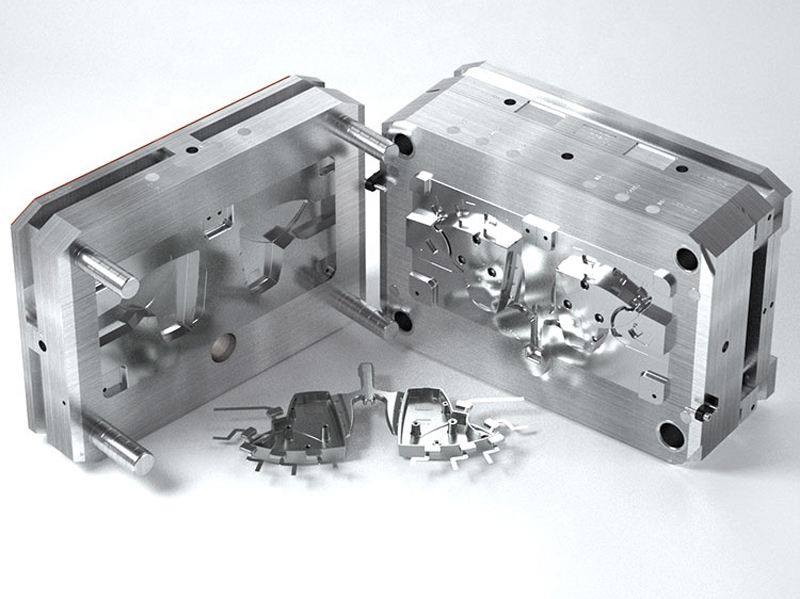
Since the modern manufacturing world is surrounded by die-cast tooling, it is no wonder that die-cast tooling has become a critical step in manufacturing precise and reliable metal components. Whether it be automotive parts or consumer electronics, the aim is that the products are of the highest quality standards as regards durability, function, and appearance. It is this comprehensive guide of every part of die-cast tooling from the types to its advantages and disadvantages to the applications that you will find extremely helpful if you are fully into manufacturing.Although the cost of producing parts out of die-cast tooling is higher initially, on the other hand, it provides you with reduced material waste, faster production cycle time, and being ability to make complex designs with very little post-processing if any at all. Not only did advances in cooling systems and more efficient substitution parts like replacement inserts, surface coatings, and the like increase efficiency and durability but also less worn grids and better purge for the electrical system helped. What is Die Cast Tooling? Die-casting tooling means the tools and processes for die-cast tooling. These dies (molds) also shape molten metal into complex and accurate components under high pressure. The engineering of advanced die-cast tooling requires materials and meticulous design practice, as well as advanced engineering skills to facilitate the production of consistently produced defect-free parts.First, metal (usually aluminium, zinc, or magnesium) is melted and passed under high pressure into the die. The quality of the final product is dependent on the precision of the tooling, and that is why die-cast tooling is vital to industrial manufacturing. Components of Die Cast Tooling The process of die casting is a precision manufacturing process that greatly relies on the array of tools needed to produce high-quality metal parts. The combination of these tools is such that they are accurate, durable and efficient. The most common tools used in die casting are listed below. 1. Dies (Molds) The most critical tool in the process is the die, also called the mold. It consists of two halves: •             The cover die; stays stationary and aligned to the injection system. •             If it is an ejector Die, it moves to release the solidified casting. Hardened steel is used to make dies to withstand extreme pressures and high temperatures. They set what dimensions they will build, the complexity the final product will have and how precise it will be.  2. Cavity Inserts The internal shape of the die is formed by cavity inserts to create the intricate ones. Because of this, these inserts are replaceable, facilitating changing the die for different components without having to fabricate a new tool. 3. Core Pins To manufacture internal holes, slots, or intricate recesses, an internal feature is created with a core pin. To get the finished product or product of the finest quality possible, they are necessary. 4. Ejector Pins The completed casting is removed from the die cavity without damaging it by ejector pins. These pins are used for the ejection system, given for smooth and easy part removal. 5. Cooling Channels The die includes cooling channels to allow for regulating the respective temperature during casting. Because uniform cooling avoids defects like warping, cracking, or shrinkage, it also provides for constant quality. 6. Vents and Overflow Wells Trapped air is released from vents when molten metal is injected into the die and overflow wells are used to collect excess material. The final product is free of voids or air pockets, and both tools lend to that. 7. Trim Dies Trim dies are specialized tools to remove excess material i.e. flash from castings. Clean edges and accurate dimensions for the final product are assured because they promise it. 8. Lubrication Systems The die is lubricated with some aqueous lubricants to minimize wear, reduce friction, and also facilitate the removal of the part. Lubrication in its proper form improves die lifespan, prevents die shutoff and ensures smooth casting operations. 9. Shot Sleeves  Guides to the injection system are shot sleeves that guide the molten metal to the die cavity. The way they are designed to handle extreme heat and pressure means they work to smooth metal flow. 10. Sprayers Release agents are coated in the die using sprayers to prevent the molten metal from sticking to the die and making part removal easier. In order words, these tools work together to deliver consistent parts, high quality and without defects – indispensable for industries such as automotive, aerospace, electronics, etc. Types of Die Cast Tooling From die-cast tooling, there is nothing one size fits all. Depending on production requirements, various types of tooling are designed. Single-Cavity Tooling: This type of tooling produces one part per cycle. A low-volume production or prototyping system will suit. Multi-Cavity Tooling: Multi-cavity tooling enables the simultaneous production of multiple identical parts improving production efficiency. For high volume manufacturing it is very commonly used. Family Tooling: The entire tooling method is innovative, it produces many different parts in one cycle. It is particularly appropriate when assembling components that are to be manufactured together. Unit Die Tooling: Modular unit dies can substitute insert types or portions of the dies without redrawing the entire die. This reduces costs and downtime. Trim Dies: They are used to get rid of excess material (flash) from the finished part, making sure that the finished part meets the exact specifications. Benefits of Die-Cast Tooling Nowadays, die-cast tooling is indispensable because of its many advantages: Precision and Accuracy: High dimensional accuracy is achieved of course with die casting, part production with relatively tight tolerances, and intricate designs. Durability: These tools are from hard steel and are well capable of withstanding the rigours of high-pressure casting and increased use. Efficiency: The process gives a quick, economical way to produce identical parts without much scrap and is thus economical for large-scale production. Design Flexibility: With die-cast tooling, there are complex shapes, thin walls, and intricate details that are not possible under other manufacturing methods. Material Savings:

Pulverbeschichtetes Aluminium: Alles, was Sie wissen müssen!

Aluminiumguss

Aluminum Powder Coating provides parts with strong protection against corrosion and durability. It is perfect for both residential and commercial-scale projects.  The coating process makes it possible for manufacturers to arrive at reliability and longevity results. Powder coating improves the look of the parts/products, as well as their performance in different situations. Further, it does not wear out easily, peel, or rust. This makes it appropriate for use in areas where it comes into contact with the elements. This is largely due to the flexibility that is associated with powder coated aluminum in different uses. In many potentials, it merges fashion and the necessity to serve as a utility object in various contexts. What is the Aluminium Powder Coating Process? Aluminum powder coating is a process of applying a smooth and tough layer. It is relatively effective and takes several important phases for surface preparation for implementing the coating and curing of the applied coating material for maximizing durability. In the subsequent sections, let’s discuss its detailed process in a few steps:  1. Surface preparation: To appropriately apply powder coat aluminum​, it’s crucial to clean the aluminum surface prior. You can use abrasive blasting and can go with chemical cleaning to rid the surface of oils, grease, dirt, or oxidation. The preparation is imperative. Because all the contaminants can benefit from the adhesive characteristic aluminum powder coated parts. 2. Electrostatic Powder Application: After cleaning, and drying the material, the appropriate powder coating is applied. Operators apply an electrostatic gun to create an electrical discharge using a fine and dry powder on the aluminum surface. The particles of the powder are charged to enable them to cling to the aluminum. So, that the even distribution will give a uniform end to the surface. 3. Final Curing in a High Temperature: After applying the powder the aluminum piece is taken to a curing oven. Here, the fine/accomplishment powder melts and goes into the surface to be coated. While it hardens to form a surface of the coat. Temperature and time are the two most important factors in deciding how hard the coating is and how smooth the surface is after the coating cures. 4. Cooling and Quality inspection: Imperfections that may have occurred after the process. The final product obtained after curing is required to be checked for high quality before it is brought to the market. So, overall from start to end, every stage in the process plays a vital role in establishing a long-lasting, eye-catching layer to the aluminum. In addition, it helps it fight corrosion, scratches, and degradation. Therefore,  powder coated aluminum is suitable for use in different fields, be it in households, outdoors such as in decks and patio sets, or marine industries. Powder Coat Aluminum: What Benefits It Brings For Manufacturers Aluminum powder coating has numerous advantages for manufacturers other than enhancing appearance and performance. It can be highlighted that this type of heating is effective, durable, and very flexible. Now let me highlight the major advantages of the aluminum coat process. 1. Durability and Corrosion Protection: The powder coat used is made of aluminum hence providing a hard-wearing surface layer. This layer is more scratch-resistant, chip-resistant, and abrasion-resistant than any other normal paint. But it does not last for decades! This material also has high performances under different climates and water which leads to corrosion and fading respectively. 2. Eco-Friendly and Safe:  As for the liquid coatings, they contain liquid, solvent, and volatile hazardous components while in the powder coating, there is no one of them. Second, it produces little pollution and does not emit/release toxic gases. Further, the process lessens the blow of harming the environment, thereby the process is relatively safe for the workers handling it. 3. Customizable Finishes: Being a good conductor of heat, powder coat aluminum allows for a wide variety of colors and textures for consumers. No matter whether you like shiny, satin, or perhaps even trowel finish, powder coating provides the latter. Additionally, the coating can be adjusted to meet specific design needs or brand specifications. 4. Cost-Effective Solution: Aluminum is a popular material that can be powder coated at a relatively low rate of cost for large-scale jobs. It is fast, needs less retouching, and has a longer life span compared to the general paints. All these features make it easy to maintain and long lasting for instance ideal for commercial and residential use. What Are The Drawbacks of Powder Coated Aluminum: Although powder coating aluminum has its benefits it also has some demerits. Both options should be considered before concluding. Here are some of the usual ones: 1. Restricted Repair Possibility: The first limitation that comes alongside powder coating is the number of ways to repair a coated surface is relatively small. In general, if the coating is damaged, or says scratched, it is difficult to repair it without making it quite noticeable. The problem with paint is that you cannot go and spot-paint a small area without the texture and color looking different. 2. Initial Cost and Equipment: Another disadvantage involves the major initial cost of powder coating equipment. High-speed electrostatic guns and curing ovens are necessary. However, these tend to incur costlier compared to simple painting methods, especially for moderate or small-scale painting. 3. Complexity Of Surface Preparation: Surface preparation is a critical factor in the application of powder coatings. If the aluminum surface is not well cleaned and prepared well the coating will not stick well to the aluminum surface. The preliminary make-ups took more, and therefore more tiresome and thus took a lot of time to complete the task. 4. Suitable for Some Uses: Aluminum powder coating is only suitable for use on aluminum alloys. However, it may not be beneficial for any other types of material, and complex pattern to be used in the construction of the screen. At very detailed or small parts, the process may not work as intended and often needs further steps. What Does Powder Coating Mean for

Druckgusserzeugnisse aus Aluminiumlegierung

Druckguss aus Aluminiumlegierungen 101

Aluminiumguss

Aluminum alloy die casting is a die casting process that is a widely used process in manufacturing that involves producing accurate and intricate parts of metal with efficiency. In this case, we can list metals that have a variety of applications due to their capacity to be very strong and light simultaneously. Besides this, we can list that practically corrosion-resistant, i.e., aluminum alloys are particularly popular with car manufacturing. This article also looks into such areas as processes, properties, challenges, and applications of aluminum alloy die casting. We will get deep insights into its complete process, types, and differences from other processes. What is Die Casting? It is a manufacturing process that utilizes high pressure to force a molten metal to fill a mold cavity. It also allows the generation of excellent models with near-net shaping, accurate dimensions surface finish, and complicated shapes. Different Types of Die Casting Die-casting has many types. Let’s discuss these types in detail; 1. Hot Chamber Die Casting It is mostly suitable for zinc and magnesium alloys. This process takes submergence of the injection system in the molten metal to facilitate rapid casting. It is ideal for use in a large production but unadapted for utilization in high-melting-point alloys. you can go to zinc die casting to know more detail 2. Cold Chamber Die Casting It is a best fit for metals such as aluminum and brass having high melting points. Here we transfer the molten into a cold chamber and then inject it into the mold. It saves on the heat hazard to the equipment but has longer operating cycles. Got aluminum die casting services page to know more about this process. 3. Low-Pressure Die Casting The low-pressure die casting use with Used with aluminum and magnesium alloys. It causes minimal porosity but good structural quality. Besides this, it is time-consuming but suitable for creating the stronger part of the product. 4. High-Pressure Die Casting (HPDC) Common in aluminum, zinc, and magnesium alloys. Here we inject the molten metal at very high pressure into complicated shapes and fine surface textures. So, it is highly suitable for applications that need parts with large production quantities, and areas with large cross-sections may be porous. Go to high pressure die casting page to know more detail. 5. Gravity Die Casting Standing pressure is used to cast molten metal into a mold thus yielding strong and low porosity objects. It is used in production lines where we need to produce less number of parts at a time but it is comparatively slower than pressure-based processes. 7. Squeeze Die Casting Here we make semi-finished products by the pressure forging method where molten metal is high pressure and can also prevent casting porosity. This is suitable for the structure of a part; however, it has a higher cost and slow cycle time. Define Aluminum Alloy die casting Aluminum alloy die casting is a process in which molten aluminum alloy materials are forced under pressure into molds or dies. So, it can form the desired shape and a very smooth surface finish. It is employed in component manufacturing with complicated shapes that require high strength, stiffness, and low density integrated with good surface finish and accurate dimensions. The aluminum alloy has all the favorable characteristics of high corrosion and heat transfer coefficients and hardness-to-weight ratio. One of the benefits of this process is that die casting is suitable for large-scale production processes. Selecting the Right Material for Aluminium alloy Die Casting Materials used are very vital in the aluminum alloy die-casting business since they determine the efficiency, quality, reliability, and cost of the final product. Properly chosen alloys ensure: Aluminum alloys in die casting Die-casting aluminum alloys are common to many industries because these materials possess qualities that are desirable in dies such as lightweight, high strength, and corrosion resistance. Alloy Key Properties Applications Values A380 Strong, corrosion-resistant Engine blocks, housings Strength: 320 MPa A383 Crack-resistant, castable Electronics, thin parts Strength: 290 MPa A360 Corrosion-resistant, durable Marine, aerospace Strength: 330 MPa ADC12 Castable, corrosion-resistant Automotive, machinery Strength: 310 MPa AlSi9Cu3 Strong, wear-resistant Structural components Strength: 250–280 MPa Complete Process for Aluminum Alloy Die Casting Aluminum die casting entails the formation of elaborate and accurate first parts by the application of pressure on molten aluminum alloys. Below are the key stages: 1. Mold Preparation 2. Melting and Alloy Selection The aluminum alloys are brazed at a temperature of about 660 centigrade (1220 Fahrenheit) in a furnace. This aluminum is then kept at a relatively constant temperature to retain the material properties of the metal. 3. Injection When high pressure is used, it ensures that the molten aluminum flows right to the small crevices resulting in excellent finishes. 4. Cooling and Solidification It is the process during which the obtained molten aluminum cools and solidifies inside the given mold. Cooling minimizes defects such as shrinkage or warping that are brought about by dryness in the cast iron. 5. Ejection Finally when the casting is fully formed its mold is ejected from the casting using the ejector pins. The mold is then ready for the next cycle of use with the Epicor software. 6. Trimming and Finishing If necessary, runners, gates, and flash are removed from the casting leaving only the necessary shape and form of the object. Some of the operations include giving the required surface finishes such as sandblasting, polishing, or coating. Die Casting Aluminum Alloy Properties So, let’s discuss some of the important mechanical, chemical, and thermal properties of Aluminum alloy Diecasting; I. Mechanical Properties These may include; II. Thermal Properties The following are some thermal properties of diecasting aluminum alloy; III. Chemical Resistance: These are generally; These characteristics make aluminum alloys a premium material for die casting whose products are effective in different sectors. Design Guide for Aluminum Alloy Die Casting Design guide and material selection, both features play an important role in aluminum diecasting. So, let’s discuss the design guide properly; Design Factor Guideline Reasoning Wall Thickness Keep

Aluminium-Druckgussunternehmen

Top 10 Aluminium-Druckgussunternehmen in China und den USA

Druckgussunternehmen

Sind Sie auf der Suche nach den besten Aluminium-Druckgießereien in den Industriestaaten der Welt? Die USA und China haben sich im Laufe der Jahrzehnte zu bedeutenden Akteuren im globalen Aluminiumdruckguss entwickelt, indem sie eine Reihe von Dienstleistungen zur Erfüllung von Präzisionsanforderungen anbieten. Wie in jedem anderen Geschäftsfeld hängt der Erfolg eines Projekts in der Regel von dem Partner ab, den Sie auswählen. Die seriösesten und erfahrensten Druckgussunternehmen garantieren stets hochwertige Produktformulierungen und zufriedene Ergebnisse. Aufgrund der Vielzahl von Aluminiumdruckgussunternehmen in den USA und China ist es manchmal schwierig, den richtigen Partner für Ihr Unternehmen zu finden. Keine Sorge - in diesem Artikel vergleichen wir die 10 führenden Aluminium-Druckgussunternehmen in China und den USA. 1. Sincere Tech Co. Ltd. Gründungsjahr: Über 15 Jahre Kernkompetenzen: Kunststoffspritzguss, Aluminium-, Magnesium- und Zinkdruckgussformen/Werkzeuge, maschinelle Bearbeitung, Oberflächenveredelung und Prodcut-Montageservice. Anschrift: Building 1, No. 30 Huan Zhen Rd, Shang Dong Village, Qi Shi Town, Dongguan City, Guangdong Province, China, P.C.: 523000 Website: www.plasticmold.net Unternehmensübersicht: Sincere Tech Co. Ltd. ist eine führende Aluminium-Druckguss- und Formenbau-Fabrik in China mit Sitz in Dongguan, China. Das Unternehmen konzentriert sich hauptsächlich auf hochpräzise Kunststoffspritzgussformen, Aluminiumdruckgussformen, Magnesium- und Zinkdruckguss sowie Kunststoffformenbau. Ursprünglich vor über 15 Jahren gegründet, hat sich das Unternehmen zu einem außergewöhnlichen Werkzeug- und Druckgussunternehmen für ein breites Spektrum von Branchen entwickelt. Ausgestattet mit moderner Technologie und erfahrenen Mitarbeitern bietet Sincere Tech präzise Produkte, die den modernen Industriestandards entsprechen. Für Kunden in der Computer-Peripherie-Industrie, die Druckgussteile und/oder Kunststoff-Spritzgussteile benötigen, kann Sincere Tech Design, Herstellung, Montage und andere damit verbundene Dienstleistungen übernehmen, um die beste Qualität und die niedrigsten Kosten durch One-Stop-Shopping zu bieten. Wichtige Dienstleistungen Ihr Engagement für Qualität: Das Team von Sincere Tech stellt sicher, dass jedes Produkt, das es entwickelt, den Qualitätsstandards der Branche entspricht. Dazu gehören solide Qualitätskontrollmaßnahmen, die jede Phase der Produktentwicklung umfassen, einschließlich des Entwurfs und des physischen Prototypings, einschließlich der Montage. Das Unternehmen setzt ein automatisiertes System ein und führt auch manuelle Kontrollen der Produkte durch, um eventuelle Fehler während des Produktionsprozesses zu erkennen. Wie bereits erwähnt, ist Sincere Tech ein ISO-zertifiziertes Unternehmen, was dazu beiträgt, den Anspruch des Unternehmens auf glaubwürdige und langlebige Produkte zu untermauern. Bediente Branchen: Sincere Tech beliefert ein breites Spektrum von Branchen: Warum Sincere Tech wählen? Sincere Tech ist Ihr umfassender Lösungsanbieter für Aluminium-Druckgussteile. Sincere Tech ist seit über 15 Jahren im Geschäft und bietet kundenspezifische Dienstleistungen wie Design, Prototyping, Werkzeugbau, Produktion und Montage an. Das Unternehmen präsentiert seine Lösungen zu einem niedrigeren Preis bei gleichzeitiger Wahrung des höchsten Qualitätsniveaus. Außerdem bietet es gute Angebote und schnelle Durchlaufzeiten für kleine und große komplexe Projekte, unabhängig davon, ob Sie ein paar Prototypen oder 1000e von Produktionsteilen planen. Wenn Sie auf der Suche nach Aluminiumdruckgussunternehmen in China sind, die Ihnen Produktdesign und -entwicklung, Produktmontage, Aluminiumdruckguss und Kunststoffspritzguss anbieten können, dann ist dies eine Ihrer besten Optionen. 2. GC Precision Mold - eines der Aluminiumdruckgussunternehmen in China Gründungsjahr: 2005Kerngeschäftsfähigkeiten: Aluminiumdruckguss (ADC12, A380, AL 6061, 6063 Druckguss), Zinkdruckguss, CNC-Präzisionsbearbeitung und Montage.Adresse: Dongguan City Qiaotou Town, Jinglian No.40, Donghu Road, Guangdong Province, China.Website: www.thediecasting.com Unternehmensvorstellung: GC Precision Mold gehört zu den großen B2B-Aluminium-Druckgussunternehmen in China. Es wurde 1999 gegründet. Das Unternehmen bietet Dienstleistungen wie Aluminium-, Magnesium- und Zinkguss für verschiedene Branchen in der ganzen Welt an. Neben allgemeinem Druckguss bietet das Unternehmen auch CNC-Präzisionsbearbeitung, Oberflächenveredelung und Montagedienstleistungen an. Durch den Einsatz moderner Mittel und qualifizierter Fachleute bietet GC Precision Mold seinen Kunden Produkte in Standardqualität. Sie produzieren komplizierte technische Teile und Toleranzen und mit Six Sigma Oberflächengüte. Das Unternehmen stellt sicher, dass seine Kunden Lösungen erhalten, die von den Designprozessen über die Herstellung der vorgesehenen Teile bis hin zur Endmontage der jeweiligen Formen reichen, die bis ins letzte Detail zu den spezifischen Figuren passen. Ihr Engagement für Qualität: GC Precision Mold stellt Produkte her, die stets strengen Qualitätsstandards wie ISO 9001:2015 folgen. Sie schreibt seinen Kunden hochwertige Produkte vor. Das Unternehmen verfügt über ein umfassendes Qualitätskontrollverfahren, das garantiert, dass die Produkte den festgelegten Standard erfüllen und für den Markt akzeptabel sind. Bediente Branchen: GC Precision Mold beliefert eine breite Palette von Branchen, darunter: Warum GC Precision Mold wählen? GC Precision Mold setzt moderne Technologie mit qualifizierten Mitarbeitern ein, um die Zufriedenheit der Kunden zu gewährleisten. Ganz gleich, ob ein Kunde eine Großserienproduktion oder einen Prototypenservice benötigt, GC Precision Mold bietet den besten Service auf Abruf in hoher Qualität und mit einem begrenzten Budget. Wenn Sie auf der Suche nach präzisen Aluminium-Druckguss-Lösungen in China sind, können Sie GC Precision Mold vertrauen. Fühlen Sie sich frei, ein sofortiges Online-Angebot anzufordern! Wenn Sie auf der Suche nach Aluminium-Druckguss-Unternehmen in China sind, die Ihnen 6061 und 6063 Druckguss, Produktmontage und Kunststoff-Spritzguss anbieten können, dann sind sie eine Ihrer besten Optionen. 3. CNM Casting Gründungsjahr: Über 20 Jahre Kerngeschäft Fähigkeiten: Aluminium-, Magnesium- und Zinkdruckguss, CNC-Präzisionsbearbeitung, Oberflächenbehandlung und Montage. Adresse: Raum 101, Nr. 40, Donghu Road, Jinglian, Qiaotou Town, Dongguan City, Guangdong Province, China, P.C.: 523520 Website: www.thediecasting.com Unternehmensvorstellung: CNM Tech Co. Ltd. wurde vor über 20 Jahren gegründet. Das Unternehmen hat seinen Sitz in Dongguan, China, und bietet eine breite Palette von Druckgussdienstleistungen an, die Aluminium-, Magnesium- und Zinklegierungen umfassen. Das Unternehmen fertigt auch komplizierte Gussteile und Präzisionsgussteile für die industrielle Anwendung in der Automobil-, Elektronik-, Luft- und Raumfahrtindustrie sowie für elektrische Haushaltsgeräte. CNM Tech ist bestrebt, langlebige und hochkomplizierte Teile mit feinen Merkmalen und räumlichen Abmessungen zu liefern, was vor allem auf die hochmoderne Ausrüstung und das zur Verfügung stehende Humankapital zurückzuführen ist. Das Unternehmen bedient sowohl Kunden, die kleine Mengen von Prototypen benötigen, als auch Kunden, die große Produktionsmengen zu günstigen Preisen benötigen, ohne dabei Kompromisse bei der Qualität einzugehen. Ein weiterer wichtiger Aspekt von CNM Tech ist die enge Zusammenarbeit mit dem Kunden sowie mit den

Druckgussteile

Unterschiede zwischen den Legierungen Zamak 3 und Zamak 5

zamak 3, zamak 5

Zamak alloys used commonly in die casting have attractive characteristics which include versatility, strength, and durability. Of all the Zinc die-casting alloys, Zamak3 and Zamak5 are the most prevalent due to their special characteristics and the versatility of the application areas. To avoid compromising its functions, it is important for manufacturers and engineers who make choices to learn and distinguish the various qualities of those alloys. This guide discusses all the differences and similarities between Zamak 3 and Zamak 5 as well as their use in multiple settings and their capabilities. What is Zamak? Zamak, a term that is an acronym for Zinc, Aluminum, Magnesium, and Kupfer, (original German for copper), denotes a group of zinc-based alloys widely used for die casting. Some of the properties that make these alloys desirable is; polished appearance, precise dimension, and high corrosion resistance. The Zamak type of alloy varies depending on the proportion of aluminum, magnesium, and copper it contains. The two common forms are Zamak 3 and Zamak 5, which have Different settings of parameters for different industries. Chemical Composition of Zamak 3 and Zamak 5 This is because the performance of Zamak 3 and Zamak 5 depends on the chemical composition. These two alloys contain major proportions of zinc but they differ in secondary elements which result in different properties. Element Zamak 3 Composition (%) Zamak 5 Composition (%)   Zinc (Zn) ~96 ~95.5 Aluminum (Al) ~3.9 ~3.9 Magnesium (Mg) ~0.04 ~0.04 Copper (Cu) 0 ~0.75 Key Differences Zamak 3 lacks copper, giving it slightly better corrosion resistance in specific environments. Zamak 5 contains about 0.75% copper, enhancing its strength and hardness. Mechanical Properties Comparison It is for this reason that Zamak 3 and Zamak 5 have some variations of the mechanical properties, which are a result of the differences in their formulation. This affects their usage as well as working efficiency under different circumstances. Table: Mechanical Properties of Zamak 3 vs. Zamak 5 Property Zamak 3 Zamak 5   Density (g/cm³) 6.6 6.7 Yield Strength (Mpa) 220 250 Elongation (%) 10 7 Hardness (Brinell) 82 90 Impact Strength (J) Higher than Zamak 5 Lower than Zamak 3 Analysis Strength: Zamak 5 has higher tensile and yield strength, making it more robust for demanding applications. Ductility: Zamak 3 exhibits better elongation and impact resistance, suitable for parts requiring flexibility. Hardness: Zamak 5’s higher hardness ensures better wear resistance. Applications of Zamak 3 and Zamak 5 die casting products Namely, the properties of Zamak 3 and Zamak 5 make them suitable for particular uses. Zamak 3 casting Applications Consumer Goods: Commonly seen on die-cast end products such as car door handles, zippers, and other small ornamental parts. Electronics: Zamak 3 die casting parts can also maintain a more stable dimension than other die-cast alloys, especially for housing or enclosure applications. Toys: Otherwise known for its good surface finish and easy-to-machine material, many die cast toys made with zamak 3 die casting process Zamak 5 die casting Applications Automotive Industry: Owing to high strength, Zamak 5 alloy die casting parts are used in the structural and functional parts of a variety of apparatus. Hardware: Writing instrument parts – zinc die casting hinges, brackets, locks, benefit from its increased hardness. Industrial Equipment: Zamak 5 die casting parts are the choice for all the zinc alloy parts experiencing high stresses. Table: Applications by Industry Industry Zamak 3 die casting   Zamak 5 die casting Consumer Goods Small decorative items Heavy-duty functional parts Automotive Low-stress interior parts High-stress structural parts Electronics Precision housings Heat-resistant components Advantages and Limitations Advantages of Zamak 3 die casting products Cost-Effective: Lower material cost compared to Zamak 5 alloys. Corrosion Resistance: Excellent in environments where copper would accelerate corrosion. Ease of Casting: Offers better fluidity during zinc die casting manufacturing process. Advantages of Zamak 5 die casting products Strength and Hardness: Higher mechanical strength and wear resistance. Durability: Better suited for high-stress applications. Surface Treatment: Enhanced suitability for plating and finishing. Limitations Zamak 3:      Maintenance of limited power when required to operate under high stress conditions. Zamak 5: This is another reason for a slightly lower corrosion resistance at higher concentrations of                                        copper present in the alloy. Die Casting Zamak 3 vs. Die Casting Zamak 5                Die casting is a process of forcing a metal at high pressure into a mold cavity. Both die-casting Zamak 3 and die-casting Zamak 5 excel in producing intricate shapes with tight tolerances, but there are notable differences: Parameter Die Casting Zamak 3 Die Casting Zamak 5 Fluidity Superior Slightly lower Shrinkage Minimal Slightly higher Casting Temperature Lower (~380°C) Slightly higher (~385°C) Machinability Excellent Good Die Casting Process Overview  Key Considerations: Ease of Use: Zamak 3 die casting also has drawing advantages over the other because of its comparatively lower casting temperature and better fluidity. Stress Tolerance: Therefore, Zamak 5 die casting can be used in an application with robust parts and components. Choosing the Right Alloy Factors to Consider Application Requirements: For applications that need high dimensional stability, corrosion resistance, and low-stress bearing: the Zamak 3 alloy material should be used. When selecting for strength and hardness choose Zamak 5 alloy for parts that require high levels of durability, and lower stress tolerance. Cost: It is observed that Zamak 3 alloy is slightly cheaper than Zamak 5 alloy. Environment: Zamak 3 may do better in corrosive circumstances because of a lack of copper in the alloy. Decision Table: Zamak 3 vs. Zamak 5 Requirement Recommended Alloy   High strength Zamak 5 alloy Cost efficiency Zamak 3 alloy Corrosion resistance Zamak 3 alloy Wear resistance Zamak 5 alloy Practical Use Cases for Zamak 3 and Zamak 5 Thus, we will investigate how adopted scenarios of Zamak 3 and Zamak 5 work in practice. This will also make clear to them the benefits and the nature of their applicability to certain functions. Zamak 3 in Practice  Electronics Industry: Zamak 3 die casting is used predominantly for applications in

Zinkdruckguss Hersteller in China

Die 11 besten Zinkdruckgussunternehmen in China und den USA

Druckgussteile, Zinkdruckguss

Wenn Sie Gussteile aus Metalllegierungen haben, die eine hochwertige Oberflächenbehandlung erfordern, wie z. B. Polieren, Plattieren oder elektronische Beschichtung, dann sollten Sie sich nach Zinkdruckgussteilen umsehen. Zink- oder Zamakdruckguss wird häufig für die Herstellung von dekorativen Teilen, Bauzubehör, Tür- und Fensterzubehör, Türscharnieren, Druckgussmodellen und anderen ähnlichen Legierungsprodukten verwendet. Dieser Artikel soll Ihnen eine kurze Einführung in die 11 besten Zinkdruckgussunternehmen in China und den Vereinigten Staaten von Amerika sowie deren Gießfähigkeiten und Wettbewerbsvorteile geben. Werfen wir also einen Blick auf einige der bekanntesten Unternehmen in diesem umfassenden Leitfaden. 1. Dongguan Sincere Tech Co., Ltd Dongguan Sincere Tech Co., Ltd ist ein Formenhersteller und Zinkdruckgussunternehmen mit Sitz in China. Hochwertige Spritzgussformen sind die Spezialität des Unternehmens. Das Unternehmen bietet Druckgussformen aus Aluminium, Zink und Magnesium an und verfügt über die nötige Genauigkeit bei der Kunststoffverarbeitung und beim Gießen. Die angebotenen Dienstleistungen sind für die Automobilindustrie, die Medizintechnik und andere Sektoren bestimmt. Die Kunden profitieren von der Zuverlässigkeit der Präzision und den wettbewerbsfähigen Preisen für alle angebotenen Projekte. Der Einsatz von hochwertigen Maschinen und Ausrüstungen sorgt für eine qualitativ hochwertige Produktion mit minimalen Abweichungen. Die Aufsicht über jedes Projekt liegt in den Händen erfahrener Fachleute, die sicherstellen, dass hohe Standards eingehalten werden. Das Unternehmen hat sich einen Ruf als eines der führenden Unternehmen erworben, weil internationale Kunden auf den Erfolg von Dongguan Sincere Tech vertrauen. Angebotene Dienstleistungen Dongguan Sincere Tech bietet seinen Kunden eine breite Palette von Produktentwicklungslösungen an. Es reicht vom Designprozess bis zur Erstellung von Prototypen, vom Produktionsdesign bis zur eigentlichen Serienfertigung. Aus diesem Grund werden der Formenbau und die Werkzeugherstellung als Dienstleistungen angesehen, die eine hohe Präzision bei der Montage, Prüfung und Verpackung des Ausgangsprodukts beinhalten. Das Unternehmen verfügt über immense Erfahrung in den Bereichen Druckguss und Kunststoffformenbau. Jeder Schritt wird mit Präzision und Klarheit ausgeführt. Das Unternehmen stellt sicher, dass seine Produkte den Industriestandards und -werten entsprechen. Schnelle Durchlaufzeiten und gute Ergebnisse sind garantiert. Warum Dongguan Sincere Tech wählen? Qualität, Präzision und Zuverlässigkeit sind die Kernwerte der Dongguan Sincere Tech Company. Qualitätssicherungsmaßnahmen auf höchstem Niveau sichern die hohe Qualität und den Standard des Produkts. Für die Herstellung der verschiedenen Produkte werden Rohstoffe von hoher Qualität verwendet. Ausgefeilte Fertigungsverfahren sorgen für eine bessere Stabilität. Jedem Kunden werden leistungsstarke und kostengünstige Dienstleistungen angeboten. Genauigkeit und Langlebigkeit sind die wichtigsten Aspekte bei der Gestaltung des Produkts. Die Fachleute sind sowohl mit den Dienstleistungen, die sie den Kunden anbieten, als auch mit den Produkten, die sie herstellen, sehr zufrieden. Wenn Sie auf der Suche nach zuverlässigen und erschwinglichen Formen sind, dann ist Sincere Tech ein Unternehmen, das Sie sich ansehen sollten. Wenn Sie auf der Suche nach Kunststoff-Spritzguss, Produktmontage Dienstleistungen China, und Zinkdruckguss Unternehmen in China, sind Sie herzlich eingeladen, mit ihnen für den Preis zu kontaktieren. 2. GC Precision Mold Co. Ltd. GC Precision Mold Co., Ltd. ist ein führendes Zinkdruckgussunternehmen in China, das auf eine langjährige Erfahrung von über zwei Jahrzehnten zurückblicken kann. Das Unternehmen wurde 1999 gegründet und beschäftigt sich hauptsächlich mit dem Druckguss von Aluminium, Zink und Magnesium. Darüber hinaus bietet das Unternehmen Dienstleistungen in den Bereichen Kunststoffspritzguss, CNC-Bearbeitung und Oberflächenveredelung an. GC Precision Mould arbeitet mit verschiedenen Wirtschaftszweigen wie der Automobil-, Elektronik- und Gesundheitsbranche zusammen. Das Unternehmen ist für seine effiziente Produktionslinie bekannt. Seine fortschrittlichen Maschinen reichen von 120 Tonnen bis 1650 Tonnen. Zu den von dem Unternehmen angebotenen Dienstleistungen gehören Kokillenguss, Druckguss und Sandguss. Das Unternehmen entwirft und entwickelt Gussformen von besonderem Interesse. Genauigkeit und Qualität werden bei jedem Projekt auf höchstem Niveau gewährleistet. GC Precision Mould vertreibt seine Produkte auf dem internationalen Markt, insbesondere in Nordamerika und Europa. Diese Unternehmen bieten effiziente und bequeme Lieferung und Versand für ihre Kunden in verschiedenen Teilen der Welt. Dies hat dazu geführt, dass sie nach der Internationalen Organisation für Normung (ISO) 9001 für Qualität zertifiziert sind. Das Unternehmen liefert maßgeschneiderte Lösungen entsprechend den Anforderungen der Kunden und schafft dadurch einen Mehrwert. Hauptdienstleistungen GC Precision Mould Co., Ltd. bietet eine breite Palette von Dienstleistungen an: Druckgießen: Die verwendeten Materialien sind Aluminium, Magnesium, Zink und andere kundenspezifische Legierungen. Kunststoff-Spritzgießen: Hohe Präzision beim Gießen mit einer Reihe von Oberflächenbehandlungen. CNC-Bearbeitung: CNC-Drehen und Komponentenfertigung mit hoher Genauigkeit. Oberflächenbehandlung: Eloxieren, Pulverbeschichten, Lackieren und Verchromen. Kundenspezifische Druckguss-Werkzeuge: Ausrüstung für schwierige Druckguss- und Formanwendungen. Die Druckgießdienste sind auf die Automobil-, Elektronik- und Konsumgüterindustrie ausgerichtet. Für jedes Projekt setzen sie moderne Werkzeuge und Techniken ein und erfüllen damit höchste Produktionsanforderungen. Sie erfüllen verschiedene Kundenbedürfnisse, da die bei der Herstellung verwendeten Maschinen Teile mit einem Gewicht von bis zu 50 kg fertigen können. Warum sollten Sie GC Precision Mould Co. Ltd? GC Precision Mould ist ein zuverlässiger Anbieter von Zinkdruckguss-Dienstleistungen. Sie bieten beständige und erschwingliche Dienstleistungen an, die auf ihrer langjährigen Erfahrung beruhen. Das Unternehmen legt Wert auf eine schnelle Reaktionszeit und arbeitet mit einem angemessenen Budget. GC Precision Mold bietet ein komplettes Spektrum an Kundenunterstützung ab dem Zeitpunkt, an dem das Projekt begonnen wird. Vom Druckguss über die CNC-Bearbeitung bis hin zum Kunststoffspritzguss garantiert das Unternehmen die Zufriedenheit seiner Kunden. G.C Precision Mold Co., Ltd. konzentriert sich auf ständige Innovation. Sie geben immer ihr Bestes, um ihre Produktionssysteme und -techniken zu verbessern. Das Unternehmen ist nach ISO 9001 zertifiziert und befolgt strenge internationale Normen für seine Produkte. Sie erfüllen sowohl kleine als auch große Produktionsanforderungen in Bezug auf die Lieferung von Dienstleistungen. Wenn Sie auf der Suche nach Kunststoffspritzguss, CNC-Bearbeitung, Oberflächenbehandlung wie Eloxieren, elektronisches Plastifizieren, 6063 oder 6061 Druckguss und Zinkdruckguss Hersteller in China sind, sind Sie herzlich eingeladen, mit ihnen für den Preis zu kontaktieren. 3. CNM Casting CNM TECH ist ein fortschrittliches industrielles Zinkdruckgussunternehmen mit Sitz in China, das CNM Casting Unternehmen ist hauptsächlich im Präzisionsdruckguss tätig

Nach oben scrollen

Angebot einholen