
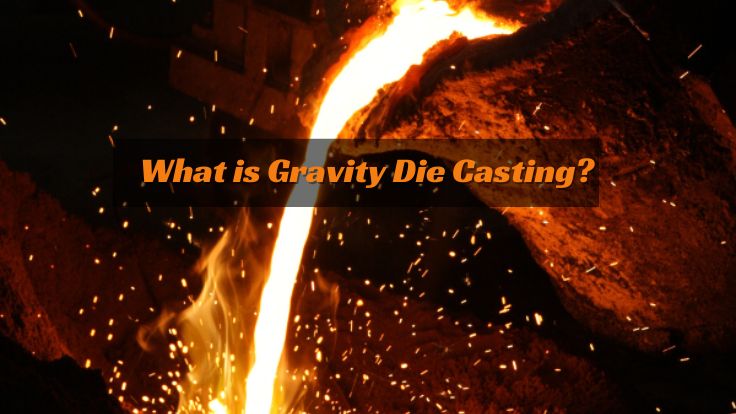
Mi az a gravitációs öntés? Kulcsfontosságú információk a gyártók számára
Gravitációs öntés, Die Casting gyártóIn the modern days of manufacturing, metal casting is very crucial when it comes to producing components with complex geometries of high quality. Among the most efficient ways of doing this is the gravity die casting. This process is a combination of precision, efficiency, and cost effectiveness; hence is a preferred solution to industries like automotive, aerospace, and industrial equipment. In essence, gravity die casting involves using the force of gravity to fill up a mold of metal without having to use high-pressure equipment, thus making the process not complex in its setup. If you are a student of engineering, a production manager, or just interested in casting technologies, then learning about gravity casting is crucial to adopt a general view of metal production. The basic principles of aluminum gravity die casting, how it is done, important factors like the temperature and time, the type of materials used, as well as its advantages and disadvantages, along with common applications, are covered in this article. How Aluminum Gravity Die Casting Works? Aluminum gravity die casting is a process of permanent mold casting that is commonly applied for manufacturing non-ferrous aluminum metal parts. The aluminum gravity die casting involves molten aluminum metal pouring into a reusable metal mold by the influence of gravity only. Doing away with high-pressure die casting that uses pressure of thousands of psi to squeeze metal in the mold, gravity casting uses natural gravitational forces alone, allowing molten metal alloy to flow into the cavities of the die without restriction. The following is the typical process involving this activity: Since the process involves the use of gravity and not mechanical pressure, the setup of equipment is simplifie,d and maintenance as well as tooling costs are usually lower. Step-by-Step Process of Gravity Die Casting Gravity die casting technique is popular for its ease of repeatability and is also able to produce high-quality metal with tight tolerances. Unlike high-pressure die casting, it applies the force of gravity alone and fills the mold cavity, thus making the whole process more cost-efficient and mechanically less cumbersome. Below is a step-by-step guide on how aluminum gravity die casting is done in an ordinary setup: 1. Mold Preparation The initial process in aluminum Gravity casting uses in preparing the mold, or otherwise known as die. Steel or cast iron is usually used in making these dies which are meant for repeated uses. The mold is cleaned properly after any metal can be poured so as to remove any residues left by previous castings. After cleaning, the mold is preheated at a temperature between 150°C and 300 300°C. Preheating means that the molten aluminum alloy does not get cooled too fast on contact, leading to such defects as cold shuts or inadequate filling. A release agent, usually a graphite or ceramic-based coating, is applied to the internal surface of the mold. This serves two functions: ensuring that the molten aluminum alloy does not stick on the die, and assisting in getting a smoother finish on the final product. 2. Aluminum alloy Melting The preparation of the mold is followed by melting the selected metal alloy. The amounts of metal alloys are placed in furnace and melted to the pouring temperature that depends on alloy. For instance, melting points of aluminum alloys are usually in the range of 650°C-750°C, while the copper-based alloys may require melting points between 900°C and 1100°С. It is of extreme importance to provide precise control over the melting temperature. Over heating could require increased oxidation or gas absorption, whereas under heating could result to incomplete filling of the molds or poor mechanical properties. 3. Pouring the Molten Metal alloy When the right melt temperature is reached, molten metal is poured into the preheated mould. In gravity die casting, there is no application of any mechanical force or even pressure. Gravity causes the aluminum alloys to flow by natural means into the mold cavity entrance through a set of sprues and gates. This step will need a slow, controlled pour so as not to create turbulence, which can trap gases and lead to porosity in the casting. In some advanced systems, there is the possibility of tilting the mold very slowly while pouring it – the tilting gravity die casting to create a smooth and even metal flow. 4. Filling the Mold Cavity Once the molten metal penetrates the mold, it fills all portions of the cavity under the shape of the die. Mold design is very important at this point. Properly designed gating systems will distribute the metal to avoid turbulence, cold spots, or areas with possible shrinkage. As the gravity alone is used for the metal flow, it is necessary that metal should be poured at the proper speed and temperature. Lack of flow control may cause such defects as incomplete fills or cold shuts – places where two metal fronts touch but do not melt together. 5. Solidification and Cooling After the cavity if filled, the molten metal alloy begins to cool and become solid. Cooling time is dependent on casting size and complexity as well as the kind of metal used. For instance, small aluminum parts can solidify as early as in 20–30 seconds, while large or thicker parts may take 60–90 seconds and more. The die is in most cases water-cooled in order to assist in controlling the rate of cooling. Controlled cooling enhances an improvement of grain structure and internal stresses, and reduces them thus making stronger and reliable castings. 6. Die Opening and Part Removal The die is opened after solidification of the aluminum alloy. Depending on the design, the casting can be manually removed or ejected through the pressure provided by the mechanical ejector pins incorporated into the mold. As grade casting utilizes a metallic die, the mold can be reused for thousands of cycles, and hence, the process is cost-effective for medium to high volume runs. As much as part removal has to be done, care should be taken to ensure that