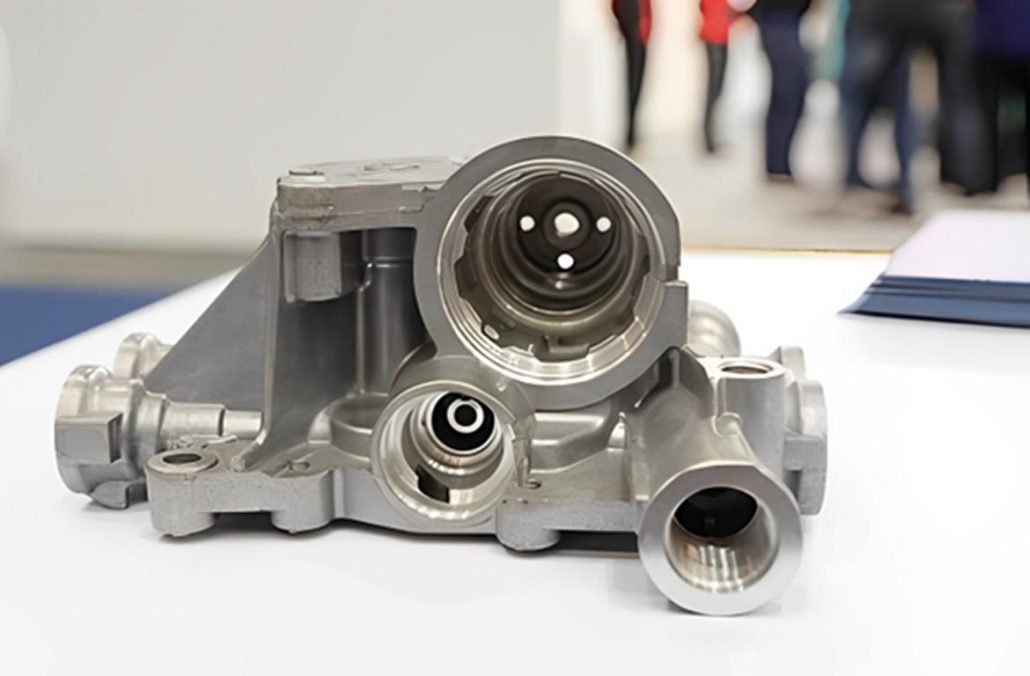
alumínium öntvény

Top 10 alumínium termékgyártó Kínában és az USA-ban

Top 10 alumínium termékgyártó Kínában és az USA-ban

alumínium öntvény

Aluminum Product Manufacturers are crucial in the industries of automotive, aerospace, electronics, packaging, etc. Therefore, many top-tier aluminum product manufacturers have risen in China and the USA due to the growing demand for lightweight, durable, and recyclable materials. Innovative, with high-quality standards, and dedicated to sustainability, these companies are known for their innovation.   Other leading metal manufacturing countries include China and the USA, where the most important players have been developing new methods of manufacturing aluminum. Some of the companies that have aluminum die casting, CNC machining, and precision molding’ are CNM Tech Co., Ltd., GC Precision Mold Co., Ltd., and Sincere Tech in China. With the industry demanding strict quality for high-performance aluminum components, these firms focus on various industries.Major manufacturers such as United Aluminum Corporation, Arconic Corporation, Kaiser Aluminum, and JW Aluminum have stood out as pioneers in aluminum rolling, extrusion, and fabrication in the USA. These companies operate in the field of cutting-edge aluminum solutions for aerospace, automotive, and industrial applications. This article presents 10 of the top aluminum product manufacturers based on innovation, sustainability, and excellent quality of their wares in different worlds 1.  CNM Tech Co., Ltd. Year of Establishment: 20+Number of Employees: 100-200Business Type: CNM Tech is focused on aluminum, magnesium, and zinc die casting, CNC machining, surface finishing, and assembly. Website and Contact Website: https://www.thediecasting.com/Contact: +86 13045898002Email: sales@thediecasting.comAddress: Factory Address: Rm 101, No.40, Donghu Road, Jinglian, Qiaotou town, Dongguan city, Guangdong Province, China. 523520. Company Profile Founded over 20 years ago, CNM Tech Co., Ltd., is one of the leading Chinese manufacturers of die-casting solutions. The company is based in Dongguan, China, where it provides a thorough assortment of services including aluminum, magnesium, and zinc die casting, precision CNC machining, surface finishing, and assembly. They have expertise in automobile, electronics, aerospace, and hospitality appliance markets, to name a few.  Their Quality Commitments CNM Tech is dedicated to providing high-quality, low-cost products while abiding by extremely tight quality control standards under the auspices of ISO 9001. They take a customer-centric approach, providing personalized services from the time of initial consultation and beyond, from availability to post-production support services to maintain long-term partnerships all over the world.  Why Choose CNM Casting? As a name known in the die-casting industry, CNM Tech specializes in providing high-quality manufacturing solutions with advanced technology, and a customer-oriented approach. These are reasons why CNM Tech is your number one reason. The choice of CNM Tech guarantees a reliable manufacturing partner that implements innovations and focuses on quality and customer success. 2.  GC Precision Mold Co., Ltd. Year of Establishment: 1999Number of Employees: 100-200Business Type: Serving industries such as the auto, aero, and electronics industries, the company has gained international market trust. Website and Contact: Website: https://aludiecasting.com/Contact: +86 131 4886 5556Email: info@aludiecasting.comAddress: Factory Address 1: No. 30 Huan Zhen Rd, Qi Shi Town, Dongguan City, Guangdong Province China, 523516 Company Profile Founded in 1999, GC Precision Mold Co., Ltd. is a global leader in high-quality aluminum die casting and nonferrous metal products. It has two special properties plants located in Dongguan, China, and offers services including high-pressure die casting, sand casting, and forging. As a result of over two decades of experience, the company delivers precision, consistent quality, and flexible material offerings to a variety of industries such as automotive, aerospace, and electronics. Both client satisfaction and GC Precision Mold commit to honorable words and behavior in providing the best product. Their Quality Commitments Its various certificates are proof that GC Precision Mold Co., Ltd. adheres to the highest standards of quality and operational excellence. The company possesses certificates from ISO 9001 on Quality Management Systems, which demonstrates the company’s ability to provide the product according to customer requirements at all stages and to enhance quality systematically. Why Choose GC Precision Mold Co., Ltd.? When you are choosing a company in pursuit of top-grade die casting and metal products, there are many benefits to choosing GC Precision Mold Co., Ltd. 3. Sincere Tech Year of Establishment: 2005Number of Employees: 100-200Business Type: Sincere Tech, is a leading Chinese manufacturer of custom plastic injection molds and aluminum product manufacturer. Website and Contact Website: https://plas.co/Phone: +86 135 30801277Email: steve@sincere-tech.comAddress: Rm101, N041, Donghu road, JingLian cun, qiaotou town, Donggguan City, Guangdong Province, China. 523000. Company Profile We are Sincere Tech, a world-renowned leading Chinese manufacturer of custom plastic injection molds and aluminum die-casting solution Injection Molding services. The company was founded in 2005 and has successfully established itself as a professional and highly reliable, high-precision, cost-effective, and high-quality production service provider to the world. From automotive, medical, electronics, home appliances, food packaging, cosmetics, etc. industries, Sincere Tech is equipped with state-of-the-art technology, expert engineering, and strict quality control. Their Quality Commitments ISO 9001:2015 and QS 9000:2015 standards are the only hallmarks we take seriously to maintain high-quality standards for our products and services since Sincere Tech. Their investment in advanced technologies, such as 5-axis CNC machines and FANUC systems, underscores their commitment to precision and efficiency. Confidentiality is also a company standard, promising Non-Disclosure Agreements (NDAs) for the protection of client projects. Why Choose Sincere Tech? 4. United Aluminum Corporation Year of Establishment: 1981Number of Employees: 1000+Business Type: Custom Rolled® Aluminum Coil Manufacturer and Supplier, Precision Slitting, Annealing, Surface Finishing. Website and Contact Website: https://unitedaluminum.com/Phone: 800-243-2515 / 203-239-5881Email: Sales@UnitedAluminum.comAddress: 100 United Drive, PO Box 215 North Haven, CT 06473 Company Profile United Aluminum (founded in 1891) is a leading supplier of Custom Rolled® Aluminum Coil to industries such as automotive, aerospace, medical, and packaging. These alloys are 3003, 2024, and 7075 and these guys offer precision slitting, annealing, and surface finishing. They have advanced facilities in which they produce high quality at very cheap rates. Additionally, United Aluminum supplies an Aluminum Coil Calculator resource to help its clients make educated choices. Their Quality Commitments Commitment to Quality and Customer Satisfaction a very high standard of quality is maintained by United Aluminum and the company is ISO 9001:2015 certified. Other than this, they concentrate

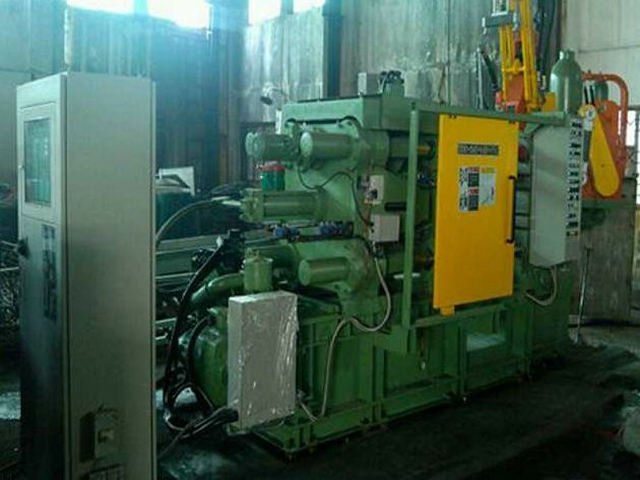
Top 10 alumínium öntvény gyártó Kínában és az USA-ban

alumínium öntvény

Because it is lightweight, strong, and durable, aluminum casting is widely used throughout different industries from automotive to aerospace, electronics to consumer goods. The manufacturing process calls for aluminum parts to be made by pouring molten metal into molds for the production of highly detailed and precise components. Aluminum is a very versatile metal as it is easily recyclable and corrosion resistant and hence provides an excellent option for many applications. China and the USA, in recent years, are the two major global hubs for aluminum casting production and they both have a wide manufacturer range in the various industries and sectors. Mass production is the hallmark of China, which can then deliver reasonable prices and a variety of casting solutions for large production. However, the USA boasts a great number of top-tier companies that specialize in high quality, precision casting, advanced technology, and ecofriendly approaches, working with those industries that require sophisticated and custom-made aluminum cast components. In this article, we will overview the top 10 aluminum casting companies in China and the USA describing their capabilities, experience in the industry, and something unique to help the companies choose the right aluminum casting manufacturing partner. 1.  GC Precision Mold Co., Ltd. Year of Establishment: 1999Number of Employees: 100-200Business Type: Serving industries such as the auto, aero, and electronics industries, the company has gained international market trust. Website and Contact: Website: https://aludiecasting.com/Contact: +86 131 4886 5556Email: info@aludiecasting.comAddress: Factory Address 1: No. 30 Huan Zhen Rd, Qi Shi Town, Dongguan City, Guangdong Province China, 523516 Company Profile Founded in 1999, GC Precision Mold Co., Ltd. is a global leader in high-quality aluminum die casting and nonferrous metal products. It has two special properties plants located in Dongguan, China, and offers services including high-pressure die casting, sand casting, and forging. As a result of over two decades of experience, the company delivers precision, consistent quality, and flexible material offerings to a variety of industries such as automotive, aerospace, and electronics. Both client satisfaction and GC Precision Mold commit to honorable words and behavior in providing the best product. Their Quality Commitments Its various certificates are proof that GC Precision Mold Co., Ltd. adheres to the highest standards of quality and operational excellence. The company possesses certificates from ISO 9001 on Quality Management Systems, which demonstrates the company’s ability to provide the product according to customer requirements at all stages and to enhance quality systematically. Why Choose GC Precision Mold Co., Ltd.? When you are choosing a company in pursuit of top-grade die casting and metal products, there are many benefits to choosing GC Precision Mold Co., Ltd. 2.  CNM Tech Co., Ltd. Year of Establishment: 20+Number of Employees: 100-200Business Type: CNM Tech is focused on aluminum, magnesium, and zinc die casting, CNC machining, surface finishing, and assembly. Website and Contact: Website: https://www.thediecasting.com/Contact: +86 13045898002Email: sales@thediecasting.comAddress: Factory Address: Rm 101, No.40, Donghu Road, Jinglian, Qiaotou town, Dongguan city, Guangdong Province, China. 523520. Company Profile Founded over 20 years ago, CNM Tech Co., Ltd., is one of the leading Chinese manufacturers of die-casting solutions. The company is based in Dongguan, China, where it provides a thorough assortment of services including aluminum, magnesium, and zinc die casting, precision CNC machining, surface finishing, and assembly. They have expertise in automobile, electronics, aerospace, and hospitality appliance markets, to name a few.  Their Quality Commitments CNM Tech is dedicated to providing high-quality, low-cost products while abiding by extremely tight quality control standards under the auspices of ISO 9001. They take a customer-centric approach, providing personalized services from the time of initial consultation and beyond, from availability to post-production support services to maintain long-term partnerships all over the world.  Why Choose CNM Casting? As a name known in the die-casting industry, CNM Tech specializes in providing high-quality manufacturing solutions with advanced technology, and a customer-oriented approach. These are reasons why CNM Tech is your number one reason. The choice of CNM Tech guarantees a reliable manufacturing partner that implements innovations and focuses on quality and customer success. 3. Delron Industrial Co., ltd Year of Establishment: 1990Number of Employees: 300+Business Type: Delron Industrial Co., Ltd. provides die casting, CNC machining, precision forging, assembly, and automotive, LED lighting solutions. Website and Contact: Website: https://www.delron.com.cn/Contact: +86-574-88106850Email: info@delron.com.cnAddress: South Building, No. 1299, East Yinxian Avenue, Ningbo, China, 315100. Company Profile Founded in 1990, Delron Industrial Co., Ltd. is recognized as one of the top die-casting and precision machining service providers in China (Ningbo). With subsidiary activities including CNC machining, die casting, turning, milling, forging, etc., the company serves diverse industries like automotive, LED lighting, aviation, etc. Delron emphasizes a high-quality product, and on-time delivery, at a competitive price. Using the most advanced technology to provide a variety of services such as heat treatment, chrome plating, and assembling.  Their Quality Commitments Delron Industrial Co., Ltd. strives to supply high-quality merchandise utilizing advanced manufacturing know-how while following rigorous standards. As the company is customer-oriented and as the company puts very much emphasis on precision and reliability, it has strict quality control procedures in place for all products. They aim to always keep and satisfy customer expectations, all in a cost-efficient and timely manner. Why Choose Delron industrial Co., ltd Casting? 4.  American Precision Die Casting Year of Establishment: 2006Number of Employees: 150-300Business Type: Suppliers of high-impact components for the automotive, military, industrial, and consumer business sectors. Website and Contact: Website: https://apdiecasting.com/Contact: (573) 885-0018Email: lhoffman@apdiecasting.comAddress: 100 American Way, Cuba, MO 65453 Company Profile American Precision Die Casting (APDC), started in 2006 in Cuba, Missouri (USA), is a leading aluminum die casting maker. APDC has over 200 years of combined expertise serving these industries, automotive, military, and consumer products. Precision Aluminum die-cast parts formed by the company are durable, lightweight, and precise components using tight tolerances. APDC carries out high-volume as well as low-quantity specialized projects using advanced technology which provides cost efficiency quality and customer satisfaction. Their Quality Commitments APDC strictly practices to guarantee that each product exceeds customer expectations and exceeds or matches standards.

Cink Die Casting Company

Áttekintés a Cink Die Casting vállalatok ipar

alumínium öntvény

Zinc die casting is a manufacturing process that involves the production of intricate and strong metal parts using molten zinc. This is one of the most economical and efficient ways of making high-quality components with high dimensional accuracy. It is a process of injecting molten zinc into a steel mold under high pressure to create parts that are strong, lightweight, and corrosion-resistant. The characteristics of zinc die casting make it suitable for use in industries like automotive, electronics, aerospace, consumer goods and industrial equipment. In today’s manufacturing world, zinc die casting companies are critical because they provide high-quality precision-engineered components specifically what industries need. The majority of these kinds of companies specialize in creating parts with sophisticated shapes, fine surfaces, and tight tolerances. Besides producing high-performance die-cast components, most zinc die casting manufacturers also provide value-added services like designing, tooling, machining and finishing to satisfy customer’s requirements. The zinc die-casting market is spread wide across the globe, from North America to Asia and Europe, and companies are bringing their expertise, technological advancements and manufacturing capabilities to the table. The companies in these regions are known for their innovation, quality and sustainability in the manufacturing process. Using state-of-the-art equipment and advanced technologies they guarantee that each product will be of the highest standard in terms of strength, durability and precision. Zinc die casting is of utmost importance as it is the central process of producing components that enable the functionality of many products we use daily. Zinc die casting companies are important suppliers for industries that need automotive parts such as gears and engine components, electronic housings and medical devices. The demand for high-quality, low-cost components is expected to continue to rise and these zinc die casting companies are expected to be the leaders in innovation, product development and sustainability practices of the die-casting industry. The following sections will cover some of the major players in the zinc die-casting industry, their capabilities and how they contribute to the zinc die-casting market. What is Zinc Die Casting? The manufacturing process of zinc die casting is to inject molten zinc or a zinc alloy under high pressure into pre pre-designed steel mold or die. It quickly solidifies into a metal part that is detailed and uniform without much post-processing. The process, which is very fast, precise, and able to produce lightweight metal parts that are strong enough, is called this. Because of zinc’s unusual properties, such as its low melting point and high fluidity, intricate designs that are difficult to produce with other metals can be made using zinc. Zinc Die Casting Key Characteristics: Because it is repeatable and can produce large amounts of identical parts with very little variation, the process is widely used in mass production. The History and Evolution of Zinc Die Casting The history of zinc die casting goes back to the early 19th century. With the evolution over time, the process has gone through a lot of evolution with the move of the advancement in the materials, machinery and the manufacturing techniques. Early Developments (19th Century) The first die-casting processes occurred in the 1830s and were used to make movable type for printing presses. Although an important printing industry has existed since ancient times, the introduction of die casting substantially changed the printing industry by making the manufacture of metal parts more rapid and more exact. Growth in the 20th Century By the early 1900s, die casting had grown beyond printing to other industries such as automotive and consumer goods. Stronger, more versatile die-cast products were invented in the 1920s when zinc and aluminium alloys were invented. Zinc die casting was all the more essential in World War II since manufacturers required lightweight, tough and high-precision components for military and aircraft production. After the war, the technologies of die casting grew with the expansion of post-war industrial growth. Modern Advancements (21st Century) Today, cutting-edge innovations like automated machines, computer-aided design (CAD) and 3D printing for mod development exist in the use of zinc die casting. The use of recycled zinc has also increased sustainability efforts, which has made die-casting more environmentally friendly. However, due to Industry 4.0, manufacturers are joining robotics, AI autonomous quality control and real-time data monitoring to boost the efficiency of production and decrease defects. This is what has made zinc die casting such an important part of modern manufacturing. Importance of Zinc Die Casting in Modern Manufacturing Zinc die casting is an important part of many industries as it offers manufacturers a dependable, efficient and cost-effective way of producing precision-engineered parts. As such, it becomes increasingly important as industries require lighter, stronger and more complex components for modern applications. 1. Automotive Industry In the automotive sector, zinc die casting is widely used to manufacture: Zinc’s durability, lightweight properties and corrosion resistance make these parts more efficient and more durable, which in turn makes vehicles more efficient and more durable. 2. Electronics and Telecommunications Zinc is a preferred material for electronic devices due to its excellent thermal and electrical conductivity. The following uses zinc die-cast parts: 3. Consumer Goods and Home Appliances Zinc die-cast components are used in many everyday household products such as: Manufacturers can produce durable and aesthetically pleasing components having smooth surface finish using zinc die casting. 4. Industrial and Aerospace Applications Zinc die casting also leads to the production of high precision, lightweight parts that can withstand harsh environments and extreme temperatures and find its use in industrial and aerospace applications. These parts are critical parts for safety and reliability in the critical area. 5. Environmental and Sustainability Benefits Zinc is a fully recyclable metal, so there is less waste produced and reduced manufacturing and sustainability costs. Zinc die casting requires lower energy consumption than other metals and is therefore an eco-friendly option for mass production. The Zinc Die Casting Process There are several critical steps in zinc die casting: 1. The steel mold is coated with a lubricant to ease the release of cast parts during mold preparation. 2. Molten zinc is injected into the

Mi az öntés? Minden, amit a fémöntésről tudni kell

Mi az öntés? Minden, amit a fémöntésről tudni kell

öntvényöntés

This is a manufacturing process in which molten metal is forced using pressure to fill a mold cavity also known as die casting. The mold is usually of high-quality steel and hence the part can be produced in large quantities the term is used to mean the manufacture of many parts. The finished part is then produced by opening the mold after the molten metal is cooled and forms a solid layer. This kind of use of the process is mostly applied in making intricate metal used in the production of different parts that require high accuracy in measurement and polished surfaces. Die casting can be done on aluminium, zinc, and magnesium but other metals can also be used on a case depending on application and other requirements. Die casting is considered to be one of the expert manufacturing techniques in the conception of mass production of small to medium-sized components out of metals. The popularity of the method has been spread across automotive, aerospace, electronics, and industrial machines due to its ability to produce durable lightweight intricately tailored parts. However, this process is widely recognized for its ability to manufacture products with complex geometry that would be very hard to make using conventional techniques. How Die Casting Works Molding is the first part of the die-casting process. On one side of the mold, there is a half, and it is a half of a particular design to make the mold shaped like the final product. Cavities and cores are designed for the molds that are usually custom-made so that the part can be replicated as closely as possible. 1. Molten Metal Injection: Then the molten metal is injected into the mold cavity under high pressure to form the desired shape. The metal is usually heated to one degree above the melting strain to make it fluid. In die casting, the pressure that the molten metal is pushed into the mold can be from several thousand to tens of thousands of psi (pounds per square inch), to be sure that the molten metal gets into every detail of the mold. 2. Solidification: This occurs when the metal is injected into the casing cavity whereby it cools and the metal hardens. The quality of the casting depends upon the cooling rate. Additional modes of failure (shear, climb, and glide) come into play in this case and result in faster cooling higher strength better surface finish, and slower cooling which could result in more internal defects and lower mechanical properties. Water-cooling systems built into the mold are usually used to assist the cooling process. 3. Ejection: Following this, the metal is allowed to cool and solidify and it is then easy to remove the mold from the larger casting and eject the part. Then most of the time is used in the pushing out part from the mold using a mechanical ejector system. This depends on the complexity of the part that requires other extra steps, namely trimming and machining to deliver the final shape and dimension. 4. Quality Control: A quality check is then performed on a part after ejection. It can involve dimensional verification, visual inspection, and mechanical testing to confirm that the part is equal to or better than the requirements. High precision and repeatability are theoretically achieved in die casting. Types of Die Casting There are two types of Die casting, they are hot chamber die casting and cold chamber die casting. These are all good and have their advantages, limitations and ideal applications. 1. Hot Chamber Die Casting The process most suitable for metals such as zinc, magnesium, and lead is a hot chamber die casting since the process is done at high temperatures, and melting points. The injection system is installed inside the melting furnace in this way, the metal is always in contact with the chamber. Advantages: Disadvantages: 2. Cold Chamber Die Casting The metals that have higher melting points like aluminium, brass and copper are cast in cold chamber die casting. In this case, the molten metal is tapped from a second furnace injected into the cold chamber then into the mold cavity. Advantages: Disadvantages: The Comparison of Die Casting Methods: Hot Chamber vs. Cold Chamber Here is a comparison of the most common types of two die-casting methods, Feature Hot Chamber Die Casting Cold Chamber Die Casting Metal Compatibility Best for low-melting-point metals (e.g., zinc, lead) Best for high-melting-point metals (e.g., aluminium, brass) Cycle Time Faster cycle times Slower cycle times Mold Wear Higher mold wear due to direct contact with molten metal Lower mold wear Cost Lower cost for high-volume production Higher initial cost, but better for high-strength metals Complexity of Parts Good for simpler parts Better for more complex, larger parts Advantages of Die Casting It is one of the largest advantages that die casting is one of the main preferred methods of large-scale production of products from metal alloys. 1. High Precision and Accuracy There are many advantages of die casting, which makes it convenient to offer high die precision. This method of production is also widely used for the production of parts, which requires good dimensional accuracy which is very crucial as it defines tolerance levels required in a specific job. One should note that die casting is the only manufacturing technique that can produce given parts with the utmost complexities such as the intricacies of its geometries.  2. High Production Rates In terms of large volumes, die casting is very efficient. Parts are quickly and cheaply produced once the first mold is created with very little labor involved. The demand for simulated powders is particularly high in industries like automotive and electronics where large volumes of the same parts are required. 3. Complex Designs and Thin Walls Complex design can be achieved by die casting, which would be difficult or impossible to achieve by traditional manufacturing methods. The process can make parts with thin walls, and complex internal structures, and can accommodate undercuts; thus making it the

A nagynyomású öntvények szokásos gyártási hibái: Megoldások: okok, megelőzés és megoldások

alumínium öntvény, öntvényöntés, nagynyomású öntés

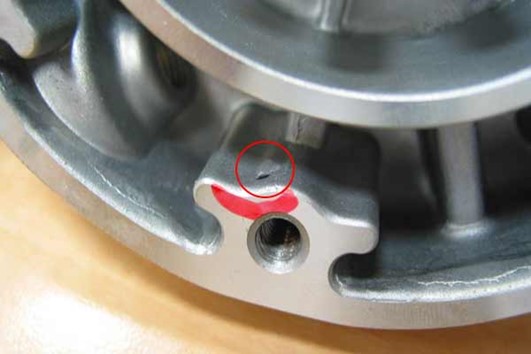
High-pressure die Casting (HPDC) is one of the most frequently utilized metal casting processes in current manufacturing. Manufacturers choose HPDC because it enables the production of complex metal parts that achieve both high precision and rapid production rates superior dimensional accuracy and smooth finishes. HPDC enables automotive and aerospace industries and the production of electronics components and consumer goods to manufacture lightweight durable parts for applications like engines and housings, structural elements, and mechanical assemblies. The manufacturing process of high-pressure die casting faces numerous risks that create substantial defects that decrease product quality while shortening the lifespan and compromising performance. Various defects form from improper mold design, turbulent molten metal flow, trapped gases, inconsistent cooling rates, and thermal stress during the production process. HPDC technology encounters seven primary defects which include porosity, cold shuts, shrinkage defects, flash formation, surface defects, misruns, die erosion, and soldering. These types of manufacturing defects cause deterioration of material strength while producing irregular dimensions and undesirable visual effects which can instigate component breakdown. Manufacturers combat production problems through the optimization of processing parameters and better-undermining methods along with controlled temperature systems and vacuum-assisted casting procedures. Real-time monitoring and simulation software are advanced quality control methods with further efficiency and reliability in the die-casting process. This article provides a comprehensive analysis of standard manufacturing issues during high-pressure die-casting technology with explanations of root causes and solution strategies to decrease these defects. It is only by understanding these challenges and applying best practices that manufacturers can improve the quality, longevity, and, of course, the performance of their die-cast components and simultaneously cut down on waste, and production costs. Proficiency in these manufacturing defects will assist die-casting engineers, production managers, and quality control specialists to optimize their processes for the best die-casting outcomes. 1. Porosity Porosity is defined by small holes or gas inclusions found within the metal matrix, and as a result, affects the mechanical properties, decreasing the strength, including allowing for air and gasses to pass through the structure, and leading to visible surface defects in die-casted products. Causes: Prevention & Solutions: 2. Cold Shut A cold shut is created when two streams of molten metal do not fuse properly and form weak bonding areas or visible seams in the casting. This defect not only decreases the mechanical strength but also increases the risk of a fracture, as well as negatively affects the component’s durability and appearance. Causes: Prevention & Solutions: 3. Shrinkage Defects Shrinkage defects occur due to shrinkage of metal during cooling which leads to internal voids or cavities, which deteriorate the structural integrity of casting. As a result, these defects reduce the mechanical strength of the final product, cause potential failure under stress, and cause poor surface quality, thus affecting both the functionality and aesthetics of the final products. Causes: Prevention & Solutions: 4. Flash Formation Excess thin metal layers formed at the parting line or die gap due to high-pressure metal escape are referred to as flash. Although flash can be trimmed off post-casting, over-flash leads to increased material waste, tool wear, and associated production costs and thus reduces the overall efficiency of the die-casting process. Causes: Prevention & Solutions: 5. Inspection of Surface Defects (Blisters, Crack and Wrinkles) A variety of surface defects, blisters, cracks, and wrinkles, degrade the visual appearance and mechanical strength of the casting and need to be prevented and eliminated. It causes weld defects that reduce the durability of the product, increase the rejection rate, and make the product stick poorly after post-casting treatments such as painting or coating. Causes: Prevention & Solutions: 6. Inclusions and Contamination Unwanted foreign particles, such as slag, oxide films, dirt, or other impurities, which are trapped in a final casting, create poor mechanical properties, weak structural integrity, and surface defects and are called inclusions. The presence of these contaminants can reduce die-cast component performance and durability so that they are not suitable for high-precision applications. Causes: Prevention & Solutions: 7. Misruns and Incomplete Fill A misrun occurs where there is a short filling of the mold cavity, which causes missing sections, thin walls, and weak points in the final component. Negative effects on the structural integrity and functionality of the part and in this way unsuitable for performance applications. Causes: Prevention & Solutions: 8. Die Erosion and Wear Molten erosion dies wear is the loss of the mold surfaces due to the high-speed metal continuously wearing the mold part surfaces until the required dimensions are achieved, which results in poor surface finish and short mold tool life. If this defect occurs, die replacement is common and consequently, production costs increase while casting quality varies. Causes: Prevention & Solutions: 9. Hot Cracking Cracks that occur during the semi-solid state of the metal, is due to high thermal stress and excessive shrinkage are known as hot cracking. These cracks degrade the mechanical integrity of the casting that is increase the chance of failure of the casting at the place where the cracks are present under stress or load. Causes: Prevention & Solutions: 10. Soldering The molten metal adheres to the die surface, which is difficult to remove with casting, causing surface defects, die wear as well as prolonged production downtime. Dimensional inaccuracies and poor surface finish are also caused by this defect, as it results in the overall compromised quality of the final product. Causes: Prevention & Solutions: Conclusion The high-pressure die casting is a powerful manufacturing process that creates complex metal parts at high accuracy at maximum efficiency. However, different kinds of defects arise using improper process parameters, material issues, and/or mold design flaws. Manufacturers can take preventive measures, e.g. optimal process control mold, properly selected material, etc., after understanding these usual manufacturing defects. A company can improve product quality, lower production costs, and achieve higher production efficiency in die-casting operations by emphasizing continuous process improvement as well as defect prevention strategies. Frequently Asked Questions (FAQs) 1. What are the major reasons for defects in high-pressure die casting? The main causes

A megfelelő ötvözött öntvénygyártó cég kiválasztása: A Complete Guide

A megfelelő ötvözött öntvénygyártó cég kiválasztása: A Complete Guide

alumínium öntvény, öntvénygyártó cégek

Alloy die casting is essential to the manufacturing industry because it relies heavily on high precision, durable, and cost-effective metal components. In a revolutionary impact on modern manufacturing, this process has made possible the mass production of intricate metal parts to a very high standard of accuracy and consistency. By specialized companies which as alloy die casting companies, in service industries which as automotive, aerospace, electronics, medical, and heavy machines for building tailor resultant metal components in their specific areas of needs. A professional alloy die casting company makes use of the latest technologies and high-quality materials coupled with a strict quality control process to deliver your products that suit industry standards. If choosing the right company matters, you may choose, one way or another, between a truly reliable product that will last for years and a faulty component that will fail early. The article gives you a detailed overview of Alloy die casting, emphasizing its importance, benefits and the most essential factors to consider when choosing the best Alloy die casting company. Alloy die casting knowledge is essential if you’re a manufacturer seeking the manufacture of precisely engineered parts or a business in search of economic manufacturing options. What is Alloy Die Casting? The metal manufacturing process in which molten metal is injected into a mold (die) under high pressure is called alloy die casting. Implementation of this method is widely used for the production of complex shapes with tight tolerances. The common use of various metal alloys, such as aluminium, zinc, and magnesium, in die casting is because of their good strength properties and corrosion resistance. Types of Alloys Used in Die Casting Alloys used in die casting have a great effect on the selections in the process of die casting, it leads directly to the strength and weight, corrosion resistance and overall performance of the final product. Alloys that differ vary by different industries based on their mechanical properties, durability, and the end use necessary to them. The most commonly used alloys in die casting are mentioned below. 1. Aluminum Alloys A good thermal conductivity, combined with corrosion resistance and lightweight strength, means aluminium die casting is preferred by researchers and manufacturers the world over. In industries that require durable and relatively light components, this alloy type is used. Key Features: Applications: 2. Zinc Alloys Since it has high strength, low melting point and excellent precision, zinc is another commonly used alloy in die casting. For manufacturing small, detailed parts it is ideal. Key Features: Applications: 3. Magnesium Alloys Its lightness makes it extremely suitable to be used for industries seeking to cut weight without compromising on strength, hence this metal is named magnesium. Key Features: Applications: 4. Copper-Based Alloys Brass and bronze are examples of copper-based alloys which are high electrical conductors, corrosion resistant, and good wear resistors. Such alloys are used for applications where the electrical and thermal performance have to be superb. Key Features: Applications: Benefits of Working with a Reliable Alloy Die Casting Company The right alloy die company allows you to select high-quality products that follow industry standards. Here are the key benefits: 1. High Precision and Consistency A top die-casting company has good machinery and rigorous quality control measures to produce the dimensions with very few defects. 2. Cost-Effectiveness Die casting is a very efficient process that also reduces the material and energy costs of the final product significantly compared to other metal-forming processes. 3. Customization and Versatility A custom solution-based casting company is a reputable company that provides custom solutions that are based on particular industry necessities and provides different alloy options. 4. Faster Production and Short Lead Times Automated systems are used in modern die-casting companies to increase their speed of production and meet strict deadlines. 5. Durability and Strength Alloy die-cast parts are well known to be very durable, and thus suitable for use under demanding conditions. How to Choose the Best Alloy Die Casting Company When you select a die-casting manufacturer, you should consider the following: 1. Experience and Industry Expertise Check with the company’s track record, if it had experienced years doing alloy die casting, if its attempt in your industry was proven. 2. Quality Certifications and Standards Make sure the business follows the codec of the industry which might be: 3. Advanced Technology and Equipment To maintain accuracy and reduce the need for physical labor, a modern die-casting company will employ such equipment as a CNC machine, vacuum cast, and robotic automation. 4. Material Selection and Customization Have a company with multiple alloy options and customization so you can find the specific design that your company offers. 5. Strong Supply Chain and On-Time Delivery Efficient logistics and speedy delivery of products are brought about by reliable suppliers. 6. Prototyping and Testing Capabilities Very critical is to prototype and with rigorous quality testing (X-ray inspection and tensile strength) on the product. 7. Competitive Pricing Although price must not be the only consideration, a good die-casting firm can offer competitive prices without sacrificing quality. Industries That Rely on Alloy Die Casting 1. Automotive Industry 2. Aerospace Industry 3. Electronics Industry 4. Medical Equipment 5. Consumer Products Challenges in Alloy Die Casting and How Companies Overcome Them Alloy die casting is a well-known manufacturing process, which faces some challenges and that have an impact on quality, cost and sustainability. Innovative solutions are also implemented by leading alloy die-casting companies to overcome these problems resulting in high-quality production, optimized costs as well and minimized impact on the environment. 1. Managing Porosity and Defects Porosity is one of the most common problems encountered in die casting where gas bubbles or shrinkage cavities occur inside the metal. It can also reduce the structural integrity of the part and impact functionality. This would be addressed by manufacturers using the use of vacuum-assisted die casting, entrapping a minimum amount of air and improved metal density. Moreover, the porosity can be reduced by using pressure-tight casting techniques, design of the mold and proper

Die Casting szállító: Folyamat, alkalmazások és legfontosabb szempontok

Die Casting szállító: Folyamat, alkalmazások és legfontosabb szempontok

Die Casting gyártó, öntési eljárás

Ez az egyik legelterjedtebb fémgyártási eljárás, és rendkívül hatékony: nagy pontosságú, tartós és összetett alkatrészek előállítása számos iparág számára. Az olvadt fémet, például alumíniumot, cinket vagy magnéziumot egy acél szerszám (szerszám) belsejébe fecskendezik be nagyon nagy nyomáson. Egyenletességet, belső szilárdságot és zúzós felületi felületet biztosít, így megfelelő választás az autóiparban, a repülőgépiparban, az elektronikában, az orvosi berendezésekben, valamint a fogyasztási cikkekben való felhasználásra. A fröccsöntés beszállítója nagyon fontos vállalat az ipari követelményeknek megfelelő, kiváló minőségű alkatrészek gyártásában. Olyan beszállítók, akik különösen részt vesznek a szigorú tűréshatárokkal és bonyolult geometriával rendelkező fémet használó alkatrészek vagy alkatrészek tervezésében, gyártásában és befejezésében. A megfelelő beszállító kiválasztása nagyon sokat számít bármely nyomásos öntési projekt sikere szempontjából, mivel egy jó beszállítónak megfelelő szakértelemmel, korszerű technológiával és a precíz és olcsó alkatrészek sikeres szállítása terén szerzett tapasztalattal kell rendelkeznie.A nyomásos öntés hatékony a tömeggyártásban, és könnyű, mégis erős alkatrészeket állít elő, és ennek eredményeképpen a nyomásos öntés iránti kereslet világszerte növekszik. Példaként említhetjük a jármű súlyának csökkentését és az üzemanyag-hatékonyság növelését az autóiparban használt alumínium- és magnéziumöntvény alkatrészek révén. Ugyanígy az elektronikai ipar is alkalmazza a nyomásos öntést a nagy tartósságra és elektromos vezetőképességre hajlamos hűtőbordák, burkolatok és szerkezeti elemek gyártására. Nyomóöntéses beszállító keresésekor nemcsak a gyártási képességeket kell figyelembe venni, hanem - ami még fontosabb - a minőségellenőrzési folyamatot, az anyagismeretet és mindent, ami a beszállítóra maradhat, mint például a megmunkálás, a bevonatolás és a befejezés. Ez egy jól bejáratott beszállítót biztosít, ezért csökkenti az átfutási időt, minimális hibákat és költséghatékony gyártást biztosít. Ebben a cikkben szó lesz a nyomásos öntési eljárásról, a felhasznált anyagokról, az alkalmazásokról, az előnyökről és a nyomásos öntés beszállítójának kiválasztásával kapcsolatos fontos szempontokról. Az ipari alkalmazásokhoz szükséges fémalkatrészek nagy teljesítményt igényelnek, és egy megbízható beszállító mind a kisszériás, mind a nagyüzemi gyártás esetében megfelel ennek a kritériumnak. A nyomásos öntési folyamat: Az öntvénygyártás: lépésről lépésre útmutató 1. A szerszám előkészítése A szerszám (szerszám) előkészítése és tervezése a folyamat kezdeti lépését kíséri. A kétrészes acélszerszámok egy álló fedőszerszámrészből és a mozgatható kilökőszerszámrészből állnak. Az alkalmazott kenés segíti a formába öntött fémanyag egyenletes áramlását, miközben megakadályozza az anyag megtapadását. 2. Olvadt fém fröccsöntése A kiválasztott fémek, az alumínium és a cink, valamint a magnézium magas hőmérsékleten történő megolvasztása. Az 1500 és 25 000 psi közötti magas nyomásnak köszönhetően az olvadt fém a formaüregbe kerül. A magas fröccsöntési nyomás egyszerre pontos és egyenletes, kevés hibával rendelkező alkatrészeket eredményez. 3. Hűtés és megszilárdulás Az olvadt fém gyorsan szilárd formát ér el ebben a folyamatban, amikor az alkatrészeket a kijelölt alakra alakítják. Az alkatrészek a gyors hűtési folyamatnak köszönhetően kiváló, nagy szilárdságú tulajdonságokat érnek el. 4. Az alkatrész kidobása A fém megszilárdulása után a szerszám kinyílik, miközben a kidobócsapok kihúzzák az elkészült alkatrészt a kamrából. Egy szerszámciklus véget ér, amikor a szerszám bezárul, mielőtt egy újabb gyártási kör kezdődne. 5. Vágás és befejezés A gépészek eltávolítják az alkatrészből az összes nemkívánatos maradványt, beleértve a peremvillantást, valamint a fúvókákat és a futókat is. Az alkatrész kiegészítő befejező műveleteket igényel, amelyek a homokfúvással együtt porfestési és eloxálási műveletekkel együtt a funkcionalitás mellett a kiváló megjelenés kialakításához szükségesek. A melegkamrás és a hidegkamrás nyomóöntés közötti különbségek A nyomóöntési eljárás vagy melegkamrás, vagy hidegkamrás nyomóöntési formátumban működik. A fő különbség abban áll fenn, hogy e két technika során az olvadt fém hogyan kap kezelést a szerszámbefröccsöntés előtt. A két módszer sajátos erősségekben és korlátozásokban különbözik, amelyek alkalmassá teszik őket bizonyos anyagok és gyártási igények számára. A következő fejezetben részletesen összehasonlítjuk a melegkamrás öntési rendszereket a hidegkamrás öntési rendszerekkel. 1. A folyamat áttekintése Forró kamrás öntés - Beépített kemencét igényel, amely a fémet olvadt állapotban tartja. - A befecskendező rendszer az olvadt fémbe merül, azt egy központ befecskendezésén keresztül beszívja és a szerszámüregbe juttatja. - A folyamat gyorsabb, mivel nem kell a fémet egy független olvasztóállomásról szállítani, mint más eljárásoknál. Hidegkamrás öntés - Egy külső kemencét használ a fém melegítésére, hogy a kívánt állapotváltozást előidézze. - Az olvadt fémet vagy kézzel vagy automatikusan kanalazzák a fröccsöntő rendszerbe, majd a szerszámba fröccsöntik. - A folyamat lassabb, mint a melegkamrás, mivel az olvadt fém átadásának extra lépése időt vesz igénybe. 2. Alkalmas fémek Forró kamrás öntés - Mint a fémek, amelyek ezen hőmérséklet alatt olvadnak meg, mint például azok, amelyek nem alkalmasak arra, hogy erodálják a befecskendező rendszert. - A gyakori alapanyagok közé tartoznak: Cink, magnézium, ólom és ón. Hidegkamrás szerszámöntés - Olyan fémekkel való munkához alkalmazzák, amelyeknek magas az olvadáspontjuk, ami hajlamos deformálni a forró kamrás rendszert. - Gyakori anyagok: alumínium, sárgaréz, réz és magnézium ötvözetek. 3. Gyártási sebesség Forró kamrás öntés - Nagyobb sebességű műveletek, amelyek általában percenként 5 és 15 műveleti ciklus között mozognak. - A közvetlen fémtáplálás segít elkerülni a merőkanalas eljárás alkalmazását a termék előállítása során. Hidegkamrás öntés - Néhány hátránya a kézi vagy teljesen automatizált fémátadás miatti lassú ciklusidő. - Más tényezők hosszabb időt vehetnek igénybe a hűtési és megszilárdulási folyamat során ebben az esetben egyes ötvözeteknél. 4. Berendezés tartóssága Forró kamrás öntés - A merülő befecskendező rendszer rövid élettartammal rendelkezik, mivel alacsony olvadáspontú fémekkel foglalkozik. - Megfelelő karbantartás mellett hosszabb a berendezés élettartama. Hidegkamrás fröccsöntés - Az elhasználódás a magas hőmérséklet emelkedésével nő, különösen az alumínium- és rézötvözetek esetében. - A bútorok és berendezések rövidebb ideig tarthatnak, ezért folyamatos cserére és karbantartásra lehet szükség. 5. Költség és hatékonyság Forró kamrás öntés - Magas termelés, mivel egy gyártási ciklus befejezéséhez szükséges idő rövid. - Alacsonyabb működési költségek az integrált fémkezelés miatt. Hidegkamrás öntés - Megnövekedett energiaköltségek az alábbiak miatt.

A fémöntési szolgáltatásokról

alumínium öntvény, öntvénygyártó cégek, öntvény alkatrészek, nagynyomású öntés, Magnézium öntés, Magnézium Die Casting, Cink öntés

A fémöntési szolgáltatások a szabadon áramló folyékony fémek formázását foglalják magukban szerszámok, formák vagy minták segítségével. Az öntvények előállításuk jellegéből adódóan általában durván megmunkáltak. Sok esetben az öntési folyamat során keletkezett görcsök és egyéb maradványok eltávolításához további utómunkára van szükség. A fémöntési szolgáltatásokat alkatrészek és késztermékek széles skálájának kialakítására használják. Az egyszerű szögektől és kötőelemektől kezdve a motorblokkokig minden gyártható fémöntési szolgáltatások segítségével. A gyakori fémöntési eljárások közé tartozik a homoköntés, a szerszámöntés, a tartós formaöntés, a beruházási öntés, a centrifugális öntés és az elveszett haböntés. Homoköntés A homoköntést nagyméretű alkatrészek (jellemzően vas, de bronz, sárgaréz, alumínium is) előállítására használják. Az olvadt fémet egy homokból (természetes vagy szintetikus) kialakított formaüregbe öntik. A homoköntvények általában érdes felületűek, néha felületi szennyeződésekkel és felületi eltérésekkel. A szerszámöntés számos olyan eljárást foglal magában, amelyekben újrafelhasználható szerszámokat vagy öntőformákat használnak az öntvények előállításához. A szerszám tartalmazza a késztermék lenyomatát a futó-, adagoló- és szellőzőrendszerrel együtt. A szerszám képes a rendszeres ciklusra és a beleöntött fém hőjének (gyors) elvezetésére. Amint a folyékony fém kellőképpen lehűlt, a formát kinyitják, és az öntvény kivehető és befejezhető. Állandó formaöntés Az állandó formaöntés során az olvadt fémet öntöttvas formákba öntik, amelyeket kerámia formamosószerrel vonnak be. A magok lehetnek fém, homok, homokhéj vagy más anyagok. Amikor elkészült, az öntőformákat kinyitják, és az öntvényeket kilökik. A beruházási öntési szolgáltatások során a mintákat egy speciális viasznak egy fémszerszámba történő befecskendezésével öntik. A mintákat egy viaszcsatornarendszer köré csoportosítják. A minták ‘fáját’ ezután 8-10 réteg tűzálló anyaggal vonják be. Az összeszerelést a viasz eltávolítása érdekében felmelegítik. A forró formát kiöntik, és amikor kihűlt, a formaanyagot ütéssel, vibrációval, szemcseszórással, nagynyomású vízfúvással vagy kémiai oldással eltávolítják, így maradnak az öntvények, amelyeket aztán eltávolítanak a futórendszerből. Centrifugális öntés A centrifugális öntési szolgáltatásokat hengeres alakú öntvények előállítására használják. A centrifugális öntés során egy állandó öntőformát nagy sebességgel forgatnak a tengelye körül, miközben az olvadt fémet kiöntik. Az olvadt fémet centrifugálisan a belső formafal felé dobják, ahol az megszilárdul. Az öntvény általában finomszemcsés, nagyon finom szemcsés külső átmérőjű öntvény, amely ellenáll a légköri korróziónak, ami tipikus igény a csöveknél. A belső átmérő több szennyeződést és zárványt tartalmaz, amelyek megmunkálással eltávolíthatók. Elveszett haböntés Az elveszett haböntés (LFC) olyan fémöntési szolgáltatás, amely habgal töltött mintákat használ az öntvények előállításához. A habot egy mintába fecskendezik, kitöltve minden területet, nem hagyva üregeket. Amikor az olvadt fémet a mintába fecskendezik, a hab kiég, így az öntvény formát ölthet. Szerszámöntés A szerszámöntés és a fémöntés számos olyan eljárást foglal magában, amelyekben újrafelhasználható szerszámokat vagy formákat használnak az öntvények előállításához. A szerszám rendszeres ciklusra képes, és képes (gyorsan) elvezetni a beleöntött fém hőjét. Amint a folyékony fém kellőképpen lehűlt, a szerszámot vagy kinyitják, és az öntvény eltávolítható és befejezhető. A szerszámöntési eljárás során az olvadt fémet nyomás alatt egy újrafelhasználható formába vagy szerszámba fecskendezik. A szerszám tartalmazza az öntvény lenyomatát a futó-, adagoló- és szellőzőrendszerrel együtt. A szerszám képes a rendszeres ciklusra és a beléjük öntött fém hőjének (gyors) elvezetésére. Amint a folyékony fém kellőképpen lehűlt, a szerszámot vagy a formát kinyitják, és a fémöntvény eltávolítható és befejezhető. nagynyomású öntés A nagynyomású öntési eljárás a legszélesebb körben alkalmazott, az összes könnyűfém öntvénygyártás mintegy 50%-jét teszi ki. Az alacsony nyomású nyomásos öntés jelenleg a termelés mintegy 20%-jét teszi ki, és használata egyre növekszik. A többi a gravitációs öntés, kivéve a nemrégiben bevezetett vákuum- és présöntési eljárás csekély, de növekvő hozzájárulását. az alacsony nyomású és gravitációs öntőszerszámok kialakítása a jobb szerszámkitöltés, az optimalizált megszilárdulási minta és a maximális hozam érdekében. A gravitációs öntés alkalmas tömeggyártásra és teljesen gépesített öntésre. Az alacsonynyomású öntés különösen alkalmas a forgástengely körül szimmetrikus alkatrészek gyártására. A könnyű gépjárművek kerekeit általában ezzel a technikával gyártják. A szerszámöntéses fémek széles skálán mozoghatnak, és a különböző szerszámöntő cégek képesek lehetnek bárkivel vagy bármennyi fémmel dolgozni. A leggyakoribb fémöntési típusok közé tartozik az alumínium szerszámöntés, a sárgaréz szerszámöntés, az ólom szerszámöntés (a legnépszerűbb modell szerszámöntés), a magnézium szerszámöntés és a cink szerszámöntés. Remélem, hogy az összes információ elegendő az Ön számára, de ha további információkat szeretne megtudni, akkor szívesen vesszük, ha telefonon vagy e-mailben kapcsolatba lép velünk.

nagynyomású öntvény alkatrész

Mi a Die Casting

öntvényöntés

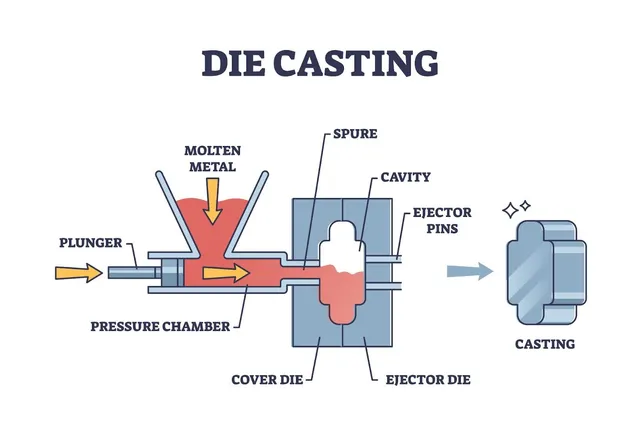
What is die casting Die casting is a manufacturing process for producing accurately dimension, sharply defined, smooth or textured-surface metal parts. It is accomplished by forcing molten metal under high pressure into reusable metal dies. The process is often described as the shortest distance between raw material and finished product. The term, “die casting,” is also used to describe the finished part. The term “gravity die casting” refers to castings made in metal molds under a gravity head. It is known as permanent mold casting in the U.S.A. and Canada. What we call “die casting” here is known as “high pressure die casting” in Europe. How are die castings produced First, a steel mold capable of producing tens of thousands of castings in rapid succession must be made in at least two sections to permit removal of castings. These sections are mounted securely in a machine and are arranged so that one is stationary (fixed die half) while the other is moveable (injector die half). To begin the casting cycle, the two die halves are clamped tightly together by the die casting machine. Molten metal is injected into the die cavity where it solidifies quickly. The die halves are drawn apart and the casting is ejected. Die casting dies can be simple or complex, having moveable slides, cores, or other sections depending on the complexity of the casting. The complete cycle of the die casting process is by far the fastest known for producing precise non-ferrous metal parts. This is in marked contrast to sand casting which requires a new sand mold for each casting. While the permanent mold process uses iron or steel molds instead of sand, it is considerably slower, and not as precise as die casting. Types of machines for die casting Regardless of the type of machine used, it is essential that die halves, cores and/or other moveable sections be securely locked in place during the casting cycle. Generally, the clamping force of the machine is governed by (a) the projected surface area of the casting (measured at the die parting line) and (b) the pressure used to inject metal into the die. Most machines use toggle type mechanisms actuated by hydraulic cylinders (sometimes air pressure) to achieve locking. Others use direct acting hydraulic pressure. Safety interlock systems are used to prevent the die from opening during the casting cycles. Die casting machines, large or small, very fundamentally only in the method used to inject molten metal into the die. These are classified and described as either hot or cold chamber die casting machines. Hot Chamber die casting machines Hot chamber machines (Fig.1) are used primarily for zinc, and low melting point alloys which do not readily attack and erode metal pots, cylinders and plungers. Advanced technology and development of new, higher temperature materials have extended the use of this equipment for magnesium alloy die casting. Figure 1: Hot Chamber Machine. Diagram illustrates the plunger mechanism which is submerged in molten metal. Modern machines are hydraulically operated and equipped with automatic cycling controls and safety devices. In the hot chamber machine, the injection mechanism is immersed in molten metal in a furnace attached to the machine. As the plunger is raised, a port opens allowing molten metal to fill the cylinder. As the plunger moves downward sealing the port, it forces molten metal through the gooseneck and nozzle into the die. After the metal has solidified, the plunger is withdrawn, the die opens, and the resulting casting is ejected. Hot chamber machines are rapid in operation. Cycle times vary from less than one second for small components weighing less than one ounce to thirty seconds for a casting of several pounds. Dies are filled quickly (normally between five and forty milliseconds) and metal is injected at high pressures (1,500 to over 4,500 psi). Nevertheless, modern technology gives close control over these values, thus producing castings with fine detail, close tolerances and high strength. Cold Chamber die casting machines Cold chamber machines (Fig. 2) differ from hot chamber machines primarily in one respect; the injection plunger and cylinder are not submerged in molten metal. The molten metal is poured into a “cold chamber” through a port or pouring slot by a hand or automatic ladle. A hydraulically operated plunger, advancing forward, seals the port forcing the metal into the locked die at high pressures. Injection pressures range from 3,000 to over 10,000 psi for both aluminum and magnesium alloys, and from 6,000 to over 15,000 psi for copper base alloys. Figure 2: Cold Chamber Machine. Diagram illustrates die, cold chamber and horizontal ram or plunger (in charging position). Die casting provides complex shapes within closer tolerances than many other mass production processes. In a cold chamber machine, more molten metal is poured into the chamber that is needed to fill the die cavity. This helps sustain sufficient pressure to pack the cavity solidly with casting alloy. Excess metal is ejected along with the casting and is part of the complete shot. Operation of a “cold chamber” machine is a little slower than a “hot chamber” machine because of the ladling operation. A cold chamber machine is used for high melting point die casting alloys because plunger and cylinder assemblies are less subject to attack since they are not submerged in molten metal. Die casting and their construction Die casting dies (Fig. 3) are made of alloy tool steels in at least two sections called fixed die half and ejector die half. The fixed die half is mounted on the side toward the molten metal injection system. The ejector die half, to which the die casting adheres, and from which it is ejected when the die is opened, is mounted on the moveable platen of the machine. The fixed die half of the die is designed to contain the sprue hole through which molten metal enters the die. The ejector half usually contains the runners (passageways) and gates (inlets) which route molten metal to the cavity (or cavities) of the die. The ejector

Mi a gravitációs öntés

alumínium öntvény, alumínium öntőformák, alumínium öntvény, öntvényöntés, alumínium öntvény, öntvénygyártó cégek, öntőforma, öntvény alkatrészek, Gravitációs öntés, porcelán fröccsöntő szerszám, fröccsöntőforma-készítés

Különbség az alumínium öntés és a gravitációs öntés között Az alumínium öntés több, mint egy ürügy arra, hogy az olvadt fémmel játsszon, valójában egy nagyszerű módja annak, hogy művészeti és bonyolult gépeket vagy más olyan tárgyakat hozzon létre, amelyek egyébként szinte lehetetlenek lennének. Az alumínium szerszámöntés valóban nagyszerű módja annak, hogy pénzt takarítson meg... miközben az olvadt fémmel játszik. Az ok, amiért az alumínium szerszámöntés túlélte az idők próbáját, a hatékonyság kérdése. A legkorábbi öntési példák közül néhányat Kínában találtak több ezer és ezer éves múltra visszamenőleg. Valójában az egyiptomiaktól a rómaiakig minden nagyobb civilizáció gyakorolt alumíniumöntést. Ez a készség a reneszánsz idején jött újra divatba, és onnantól kezdve folyamatosan fejlődött és fejlődik. Bár a homoköntés a legnépszerűbb öntési eljárás, sok-sok további eljárás áll a háztáji öntödék rendelkezésére. Nem mindenki fog nehéz darabokat, például motoralkatrészeket önteni, vagy saját motorkerékpárokat önteni. Tehát azok számára, akik csak dekoratív darabokat szeretnének készíteni, nem ugyanazt az öntési eljárást fogják használni, mint ezek a nagy teherbírású öntők. A művészek számára, akik kis méretű szobrokat vagy díszítéseket készítenek, és a hobbisták számára, akiknek szükségük van egy dekoratív érintésre a modell repülőgépükhöz vagy hajójukhoz, érdemes megfontolniuk a gravitációs öntést az igényeikhez. Mi a gravitációs öntés A gravitációs öntés különösen hasznosnak tűnik, ha alumíniummal és más könnyű ötvözetekkel foglalkozik. Ennek az öntési eljárásnak az alapötlete nagyjából pontosan az, amit a neve sugall. A fémet a gravitáció ereje juttatja a formába. A legtöbb más öntési eljárás vagy természetes nyomáskülönbséget használ, mint például bizonyos homoköntési eljárásokban, vagy kényszerített nyomást alkalmaz, mint a centrifugális öntésnél, hogy az olvadt fémet a formába juttassa. A gravitációs öntés egyik leggyakoribb felhasználási módja, amikor állandó öntőformákat használnak. Az állandó öntőforma, amelyet szerszámnak is neveznek, valóban csak azok számára gazdaságos, akik ugyanazt a szerszámot számos alkalommal tervezik használni, és állandó szinten kell tartaniuk a minőséget. Míg egyes ideiglenes öntőformák többször is használhatók, a késztermék minősége idővel szenvedni kezd. A szerszámformák esetében a minőség változatlan marad. A szerszámokat befektetésnek kell tekinteni. Igen, drágábbak, mint más öntőformák, azonban túlélnek az olcsóbb öntőformáknál. Az állandó öntőformák öntöttvas, acél és más fémek felhasználásával készülnek. Az állandó öntési folyamathoz a gravitációs öntést használják, kellemes eredménnyel. A gravitációs öntést általában akkor használják, ha a késztermék inkább vizuális alapú, mint szerkezeti alapú, ezért ez a módszer a művészek és még néhány ékszerész kedvence. A szilárdságvesztés az ebben az eljárásban alkalmazott nyomás hiánya miatt következik be. Azok számára, akiknek szükségük van az erőre, de mégis a gravitációs öntést szeretnék használni, több olvadt fémet kell felhasználni, ami növeli a súlyt. go to https://www.aludiecasting.com/ to know more about gravity casting A gravitációs öntésre való támaszkodás türelmet igényel, bár nagyobb termékeknél szükség lesz rá. Ha szüksége van gravitációs öntésre vagy alumínium öntésre, magnézium öntésre vagy cink öntési szolgáltatásra az Ön vállalkozása számára. Üdvözöljük, hogy küldje el nekünk a követelményeket árajánlatért, csak el kell küldenie nekünk a 3D-s résztervezést és a követelményeket, majd hátradőlhet, és mi megtesszük a többit az Ön számára, hogy velünk dolgozzon, csak a piacról kell gondoskodnia az Ön oldalán, és mi leszünk a háttértámogatás, hogy gondoskodjon az átfutási időről, a szállításról, a minőségről és a technikai.

Görgessen a tetejére

Kérjen árajánlatot