Fundição sob pressão de zinco

fundição sob pressão de zinco

Empresas de moldagem por injeção de zinco personalizadas próximas a mim

Fundição sob pressão de liga de zinco, Fundição sob pressão de zinco

Introduction The worldwide manufacturing sector is increasingly relying on custom zinc die-casting firms to produce cost-effective, durable, and precision metal parts. Zinc die casting is also well known due to its capability to produce complex geometries, close tolerances, smooth surface finishes, and high mechanical strength, at a rather low cost of production. These benefits make zinc die casting a favorable manufacturing technique across sectors such as automobiles, electronics, medical devices, industrial equipment, consumer products, and telecommunications. When individuals enter the query “custom zinc die casting molding companies near me,” they may refer to manufacturers close to where they live. China is known as the largest die-casting center in the world, a trusted supplier to the international market that can effectively meet those markets’ demands. China’s manufacturing base remains a leading one, with well-developed production facilities, a highly skilled labor force, complete supply chains, and low prices. Meanwhile, there are some world-renowned zinc die-casting firms in the USA, Europe, and other markets that provide high-technology, automation, and stringent quality standards in high-end, controlled industries. This is a complete guide that is concerned with mentioning the largest and most efficient suppliers and manufacturers of zinc die casting products. Three Major Chinese Die-Casting Firms of Zinc Near China Nevertheless, it can be argued that the process is complex and expensive, requiring both machinery and labor costs to build a new brand. However, one can say that this is not an easy and cheap process, as it requires both equipment and labor expenditures when establishing a new brand. There are at least five major global manufacturers of zinc die-cast products. These companies are delivering high-end services to international markets. Every company will see the same organization, appropriate technical specifications, and useful data to help OEMs, product developers, and procurement professionals select the right long-term manufacturing partner. What is the Reason behind the Popularity of Custom Zinc Die Casting? The zinc die casting can be customized, which has several benefits that make it suitable for modern manufacturing: Dimensional stability Zinc alloys offer excellent dimensional stability, enabling manufacturers to produce parts with tight tolerances and high repeatability. The process aids in the production of thin-wall, intricate shapes and precise surface attributes, and minimizes secondary machining. Physical Properties High strength-to-weight ratio, corrosion resistance, and thermal/ electrical conductivity are also features of zinc that make it an appropriate material for both applied and decorative purposes. Cost and benefits Economically, zinc die casting facilitates high-volume production, low scrap rates, long mold life, and shorter cycle times compared to other casting methods. This combination of quality, efficiency, and lower cost is what makes industries worldwide use zinc die casting when they need precision components. Custom Zinc Die-Casting Companies Near China Sincere Tech (China) -Very close to China Website: https://plas.co Company Overview Sincere Tech is among the most stable custom zinc die-casting mold firms in the vicinity of China, known for its integrated manufacturing and engineering services. The company deals with zinc die castings, aluminum die castings, mold making, plastic injection molding, CNC machining, and full assembly services. Sincere Tech provides customers with technical assistance and mass-production equipment, supported by innovative production systems and professional teams. The manufacturing model of Sincere Tech is centered on precision tooling, efficient production workflows, and stringent quality control to maintain the consistency of part accuracy and surface quality. The company caters to car manufacturers, medical devices, electronics, industrial equipment, and consumer products industries. Capabilities and Services Sincere Tech also offers all-inclusive project services, including mold design, die-making, prototyping, high-volume die-casting, post-machinery, surface finishing, and product assembly. Their zinc die casting is streamlined for tight-tolerance parts, complex geometries, and volume production, thus meeting the requirements of OEMs seeking long-term production alliances. Why Choose Sincere Tech Sincere Tech would be best suited to companies looking for a Chinese zinc die-casting supplier that is economically viable, close to China, and offers strong technical support, quick lead times, and high-quality export services. They can accommodate various manufacturing processes within a single roof, which minimizes the project risk, cost, and production schedule. GC Precision (China) Website: https://www.aludiecasting.com Company Overview GC MOULD is one of the most reputable manufacturers of custom zinc die casting in the region near China, with a focus on precision engineering, sophisticated mould design, and multi-material die casting. The company supplies zinc, aluminum, and magnesium alloys to customers in the automotive, electronics, lighting, industrial machinery, and medical devices sectors. GC MOULD has built a reputation for high reproducibility, dimensional accuracy, and stable production quality over decades of experience. Their facilities accommodate both small-scale and mass production, making them applicable to start-ups and other international brands. Capabilities and Services GC MOULD is a full-cycle manufacturing company that provides services including mould design, high-pressure die casting, gravity casting, CNC machining, surface finishing, and assembly. Their operations in zinc die casting emphasize precision parts and high structural integrity as well as high surface finishes, which lowers the secondary processing. Why Choose GC MOULD GC MOULD is a good option for any company seeking a bespoke zinc die-casting moulding firm close to China with engineering expertise, as well as being cost-effective. They are a reliable long-term partner because of their ability to handle complex projects, maintain a consistent level of quality, and operate worldwide. CNM CASTING (China) Website: Company Overview CNM CASTING The company is among the oldest custom zinc die-casting firms located in China and provides comprehensive manufacturing services in zinc, aluminum, and magnesium die casting. The company has been noted for its good mold design, combined production systems, and consumer-oriented manufacturing strategy. CNM CASTING serves a range of industries, including automotive, electronics, telecommunications, home appliances, and industrial equipment. Their model of production focuses on durable tooling, large-volume efficiency, and uniform quality output. Capabilities and Services CNM CASTING offers mold design, die castings, zinc die castings, CNC machining, surface finishing, quality inspection, and final assembly. Their zinc casting is suitable for both functional and structural decorative components, and it is flexible across various product types. Why Choose CNM CASTING

fundição sob pressão de zinco

Solução de problemas de defeitos de fundição sob pressão de zinco e dicas de garantia de qualidade

fundição sob pressão zamak, Fundição sob pressão de zinco

Zinc die casting is a very efficient process of manufacturing, which is widely used in automobile parts, electronic housing, fittings, hardware, medical equipment, and consumer goods. It is appreciated for its ability to create complex geometries with high-quality dimensional accuracy, clean surface finishes, and high production rates. Despite these benefits, zinc die casting is not a technology immune to quality issues. The defects may occur due to irregularities in the materials used, tool capacity, lack of process control, or design. Good defect prevention, problem shooting, and quality control are critical to ensuring uniform quality in production, reducing scrap rates, and enhancing the overall efficiency of the manufacturing process. This paper will provide an in-depth discussion of the most common defects in zinc die casting, their causes, effective corrective actions, and profile best practices to ensure quality in each production cycle. Quality Problems in Zinc Die Casting The process of zinc die casting involves injecting molten zinc alloy under high pressure into a highly machined steel die. The metal’s solidification rate is fast, resulting in short cycle times and high repeatability. Nevertheless, the high pressure and high speed at which the process operates are the same factors that contribute to both its effectiveness and its susceptibility to defects when the parameters are not monitored. Quality control issues in zinc die casting are often associated with mechanical performance, dimensional quality, surface appearance, corrosion resistance, or assembly fit. Most defects are interconnected, as a single root cause can lead to multiple quality issues. It is important to understand the relationships among material behavior, die design, and processing parameters to enable efficient troubleshooting. Zinc Die Casting Defects Most common defects in zinc die casting can be classified by appearance and their effect on part performance. An overview of common defects and their overall effect is given in the following table. Defect type Appearance Impact Porosity Voids or pinhole internally It will reduce the strength It may cause leakage Cold shuts Visible lines and seams This will result in weak bonding between the flow. Shrinkage Cavities and sink marks The dimensions of the parts change. This will lead to measurement inaccuracies. Incomplete filling Missing or thin sections This will cause the functional failure. Soldering Metal adhering to the die This will cause tool damage Cracks Internal or surface fractures This appearance indicates structural damage or failure. Blistering Bubble-like appearance on the surface Poor surface finish Flash Excess of metal at parting lines The aesthetic appearance will be damaged Porosity in Die Castings Zinc Porosity refers to the presence of empty spaces or gas bubbles in the casting. These cavities can be located on the surface or within the body; they are very difficult to detect without sophisticated inspection techniques. Porosity breaks the mechanical integrity of the casting and may result in leakage in pressure-containing components. Porosity type Description Origin Gas Porosity Smooth rounded voids Gas or air gets trapped Shrinkage Porosity Irregular cavities Inadequate feeding Micro Porosity Very fine void Rapid solidification Etiology and Prophylaxis The porosity may result from trapped air during injection, high turbulence in the molten metal flow, or poor die-cavity venting. Gas formation may also be due to high moisture content on die surfaces or due to inappropriate melt temperature. The porosity reduction is achieved by closely controlling injection speed and pressure, venting the dies, and efficiently utilizing vacuum systems where necessary. Maintaining an optimal melt temperature and keeping die surfaces clean and dry will also reduce gas entrapment. In most cases, reconstructing the gating system to facilitate smooth metal flow can go a long way toward minimizing porosity. Cold Shuts and Flow Line Defects Description and Impact Cold shut: This happens when two molten zinc streams meet and do not fuse correctly, leaving a visible seam or line on the casting surface. Such flaws reduce structural integrity and can cause early collapse under mechanical pressure. Root Causes and Solutions Low melt temperature, inadequate injection speed, or long flow paths can lead to premature solidification and cold shuts. Poor positioning of gates and thin wall sections also worsens the matter. To prevent cold shuts, it is necessary to improve the metal’s flow characteristics. These may be accomplished by raising the melt and die temperatures within reasonable ranges, optimizing injection velocity, and redesigning the gates to allow balanced filling. Flow continuity is also enhanced by changing part geometry to eradicate thin sections and acute angles. Zinc Die Casting Defects of Shrinkage Knowledge about Shrinkage Behavior When molten zinc solidifies, it contracts, causing shrinkage. Unless more molten metal is added to offset this contraction, internal cavities or surface sink marks can form. The zinc defects in the form of shrinkage usually arise in the areas of casting that are thick and can be ascertained to have solidified last. Reasons and Remedial Measures Insufficient holding pressure, inadequate feeding system design, or sudden changes in wall thickness are often the causes of shrinkage defects. Uneven cooling rates can also cause localized shrinkage. To prevent it, it is important to design the runners and gates to maintain a constant metal feed throughout the solidification process. By applying higher holding pressure and increasing the time under pressure, molten metal can compensate for shrinkage. Maintaining uniform wall thickness and enhancing thermal balance in the die also minimizes the risk of shrinkage-related defects. Flash Formation and Its Control Description of Flash Flash is in the form of thin layers of excess metal along the die parting line, ejector pin, or in the form of vents. Even though the flash does not necessarily compromise the part’s functionality, it often requires secondary trimming processes and can affect the appearance. Causes and Prevention Flash formation has often been linked to high injection pressure, die component wear, or even die misalignment. Die surfaces can also not seal properly due to foreign material on them. To avoid flash, it is necessary to maintain the correct amount of injection pressure, adequate clamping force, and routine die maintenance. Wearing and damage checking of dies, and

fundição sob pressão de zinco

Melhores produtos de fundição sob pressão de zinco para ferragens decorativas

Fundição sob pressão de zinco

Zinc die casting is considered one of the preferred production processes for decorative hardware because it can produce complex, high-quality finishes at a cost-effective rate. This is done by forcing molten zinc alloy under high pressure into a precision steel mould to produce parts with superior surface finish, tight tolerances, and intricate geometries. Decorative hardware comprises door handles, cabinet knobs, pulls, hinges, scutcheons, and decorative accents for residential, commercial, and architectural applications. The low melting point (380-390 °C) and high fluidity of zinc allow for finely detailed thin walls (down to 0.5 mm), extended tool life (typically over 1 million shots), and large dimensions. These features make it suitable for decorative works that need to be both appealing and functional in the long term. Finishes such as chrome, nickel, brass imitation, or antique bronze enhance visual luxury and offer corrosion resistance. Ordinary Zinc Die Casting Decorative Hardware Alloys The choice of the right zinc alloy in the production of decorative hardware is critical to the performance, stability, appearance, and overall cost-effectiveness of the products. Zinc alloys are popular because they offer a good compromise between castability, strength, and finish. Alloy Composition Hardness Tensile strength (Mpa) Elongation % Applications Zamak 3 Zn 96% Al 4% Mg 0.03% 82   283   10   Doorknobs, escutcheons, ornamental plates Zamak 5 Zn 95% Al 4% Cu 1% 91   331   7   Cabinet pulls, hinges, locksets. Zamak 7 Zn 95.9% Al 4% Ni 0.02% 80   285   13   Intricate finials, decorative brackets ZA-8 Zn 91% Al 8.4% Cu 1% 103   372   6-10   Heavy-duty hardware like gate latches Zamak 3 The most common decorative hardware application is Zamak 3. It offers great castability, dimensional stability and a smooth as-cast surface. These characteristics make it suitable for door handles, cabinet knobs, rosettes, and other parts exposed to view. Zamak 3 also offers good compatibility with plating, painting, and powder coating, enabling manufacturers to achieve high-quality decorative finishes with minimal surface preparation. Zamak 5 Zamak 5 is enhanced with a small amount of copper, which enhances hardness and creep resistance. The alloy is typically used to make load-bearing decorative hardware, including hinges, locks, latches, and structural fittings. The increased mechanical strength enables the parts to withstand repeated stress and prolonged use, maintain good surface condition, and maintain good dimensions. Zamak 7 Zamak 7 is appreciated for its purity and fluidity. These features make it particularly appropriate for intricate, thin-walled, and ornate designs. It is frequently employed with complex hardware components that require sharp edges, fine finishes, and a high-quality surface appearance. ZA-8 ZA-8 has greater wear resistance and strength than standard Zamak alloys. Its application is commonly referred to as decorative hardware that is higher stress or mechanical load, and both durability and appearance are needed. Best Zinc Die Casting Products of Decorative Hardware Zinc die casting is critical in the manufacture of decorative hardware, as it provides a perfect blend of strength, accuracy, surface quality, and cost-effectiveness. Ornamental hardware accents are not merely useful; they also play a major role in the appearance of doors, furniture, and architectural interiors. Zinc die casting enables manufacturers to form complex shapes with tight tolerances and surface features, making it the choice for both high-end and mass-market decorative hardware. Zinc die-cast products, whether door handles and cabinet pulls, hinges, or ornamental accessories, are designed to withstand heavy use while retaining their beauty. Door Handles and Levers Decorative hardware products, such as zinc die-cast door handles and levers, are widely used for their flexibility in design, mechanical performance, and ergonomic comfort. These parts are typically designed with wall thicknesses of 1 to 2mm, making them very lightweight yet structurally sound. Draft angles of 1 to 2 degrees are commonly used to ensure easy ejection and maintain fine surface detailing. In fact, modern zinc die-cast lever designs are frequently designed with internal springs and mounting provisions. This integration reduces assembly complexity and enhances its smooth operation. These handles are made from high-quality zinc alloys to ensure tensile strengths up to 300 MPa and long-term resistance to bending and deformation. Well-designed zinc levers can withstand 500,000 or more cycles and are therefore used in entry doors, interior passages, and busy commercial settings. Cabinet Knobs and Pulls One of the most economical uses of zinc die casting is for cabinet knobs and pulls, as well as small, very delicate parts. Zinc also has great fluidity, which enables the manufacture of small designs with fine textures, impressed logos, and fine threading. Common cabinet knobs are about 1-1.5 inches in diameter, and common pulls have a 3-12-inch centre-to-centre spacing, all with high dimensional accuracy. Zinc die-cast cabinet hardware is so lightweight (typically 50-150 grams) that it is simple to install and use daily. The texture of the grips and the contour design promote comfortable handling, whereas the inner hardness of the zinc alloys provides resistance to scratches, fingerprints, and wear. Popular finishes include brushed antique brass, satin nickel, and oil-rubbed bronze, which are timeless and will fit both modern and antique furniture designs. Furniture and Door Hinges Hinges made by zinc die casting are appreciated for their smooth operation, consistent dimensions, and ability to incorporate functional features. The typical hinge types are hinges, concealed hinges, and pie-cut corner hinges. These hinges usually have loads of 20-50 kg, depending on the use. Zinc die casting enables the addition of self-lubricating properties, built-in stops, and accurate pivot points, thereby enabling smooth, quiet operation. Close dimensional tolerances of 0.05 mm ensure a tight fit between the doors and frames. Zinc hinges can be used in both the residential and light commercial markets, with nickel plating and other protective coatings providing up to 500 hours of corrosion protection. Keyhole Covers and Escutcheons Escutcheons and keyhole covers can be used to protect as well as be decorative. Zinc die casting allows making thin sections as small as 1 mm, while also enabling high-resolution details of 0.1 mm. Such accuracy enables manufacturers to create

fundição sob pressão de zinco

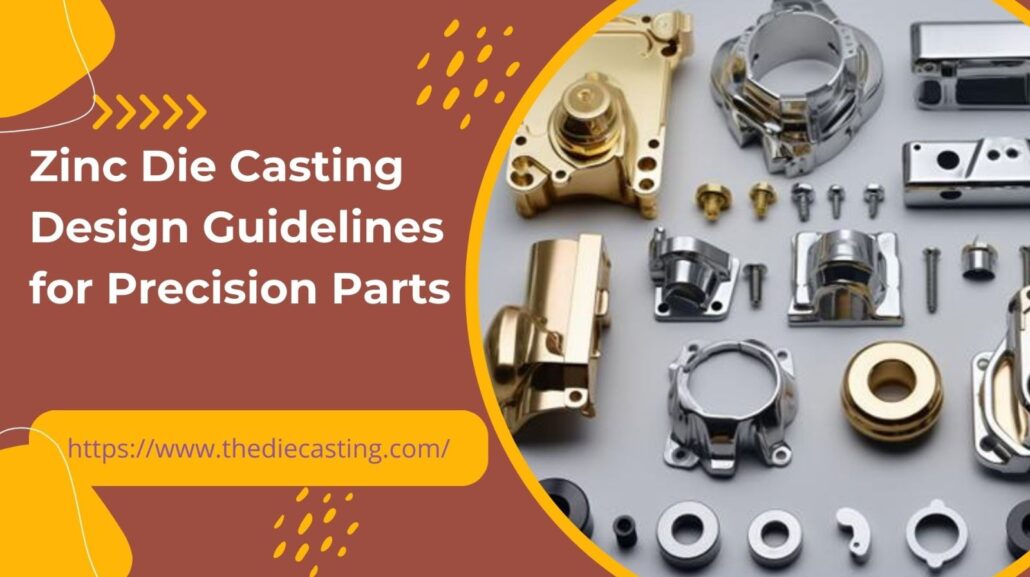
Diretrizes de projeto de fundição sob pressão de zinco para peças de precisão

zamak 5, Fundição sob pressão de zinco

Zinc die casting is a flexible production method which entails an injection of zinc alloy molten matter into a specially designed mold with high pressure in order to create complex and high-precision parts. Such an approach is especially appropriate for precision parts because zinc has high fluidity, a low melting point, and can be machined to tight tolerances without much post-processing. Zamak die casting is used in industries such as automotive, electronics, consumer goods, and medical devices for parts, including connectors, gears, housings, and complex mechanisms that require dimensional tolerances and longevity. Most zinc alloys are processed using hot-chamber machines, which enable quick cycle times and a steady quality. Accurate parts benefit from zinc’s ability to produce thin walls, complex geometries, and net-shape parts, reducing material waste and assembly time. Nevertheless, high success rates are achieved when specific design rules are followed, and material properties, shape, form, and processing parameters are considered. These rules help reduce defects, improve manufacturability, and enhance precision. This article identifies major guidelines supported by industry standards set by organizations to help engineers design zinc die-cast precision parts. Advantages of Zinc Die Casting of Precision Parts The use of zinc die casting offers several benefits, making it one of the best materials for precision applications. Selection Material: Zinc Alloys Selecting the correct zinc alloy is important for precision parts because it affects mechanical properties, castability, and tolerances. The Zamak die-casting series (2, 3, 5, 7) and the ZA series (8, 12, 27) have specific compositions and performance properties. The table below will summarize the kinds of zinc alloy used in the manufacture of precision parts: Types of Zinc Alloy Tensile strength (ksi/MPa) Elongation % Hardness (BHN)   Density g/cm³   Yield strength (MPa) Melting point °C Zamak 2 52/359 7 100 6.6 283 379-390 Zamak 3 41/283 10 82 6.6 269 381-387 Zamak 5 48/328 7 91 6.6 283-269 380-386 Zamak 7 41/283 13 80 6.6 310-331 381-387 ZA 8 54/372 6-10 100-106 6.3 359-379 375-404 ZA-12 59/400 4-7 95-105 6.03 145 377-432 ZA-27 62/426 2.0-3.5 116-122 5.3 N/A 372-484 These properties can be used to ensure that zinc alloys meet precision specifications and that complex parts have high fluidity scores (1-2 on a 1-4 scale; 1 best). To be more exact, manufacturers would want to choose alloys such as Zamak 3 or ZA-8 due to their stability and ability to withstand tight tolerances. Key Design Guidelines Good zinc die casting is designed to facilitate flow and ejection while maintaining strength at minimal cost. Wall Thickness The wall thickness should be uniform to avoid porosity and distortion. For precision parts, keep it within +/-10% and use a minimum thickness of 0.040 inches (1 mm) for a good surface finish, and as fine as 0.020 inches (0.5 mm) in miniature models. Ratios of thick to thin sections should be kept to less than 3:1 to minimize the chance of porosity; preferably the inscribed sphere diameter ratios should not exceed 6:1. Thickening walls enhances flow but raises the cycle time and consumption. To distances away from the ingate, minimum thickness changes: below 0.5 mm in areas less than 50 mm, up to 2 mm at 200 mm. Different simulations can be used to check designs. In zinc casting, specify a minimum of 0.025 inches (0.635 mm) in selected locations, but 0.040 inches (1.016 mm) in best-as-cast locations. Draft Angles Draft angles help eject parts and prevent damage to the die. For zinc, the minimum drafts are 0.5 ° -1 on outside surfaces, 1- -1 on internal surfaces, and 0.1 ° -1 on round holes. Short features that use moving parts (die elements) can be printed in zero, but it is more expensive. For ribs, a 5-10 taper is used when it is not parallel to the shrinkage. Different standards give draft calculations: standard tolerances are 50 (draft angle approximately 1.9 degrees at a 1-inch depth) for inside walls and 100 for outside walls. There are also precision tolerances that permit 60 and 120 constant drafts. Fillets and Radii Fillets and radii should always be added since sharp edges lead to stress concentrations and die erosion. Minimum radius of inside fillet is 0.016 inches (0.4 mm), and outside 0.031 inches (0.8 mm). Radii of larger size (up to 0.063 inches or 1.6 mm) enhance flow and strength. Minimum radii should be used (0.060 inches (1.5 mm) for bosses and ribs). Radius at high stress should not be less than 1 mm; standards suggest ±0.08/±0.04 inches (±2/±1 mm) in fillets. This improves the part’s life and reduces cracking. Ribs and Bosses Ribs enhance reinforcement without adding bulk. Create shallow, rounded ribs (height-to-thickness ratio no more than 3:1) and evenly space them so they are not distorted. Adhesion ribs to walls with fillets to avoid porosity in the intersection. The height of bosses used to mount or thread must be equal to their diameter, and when the diameter is large, they must have ribs. Keep 0.25 inches (6.5 mm) distance between bosses. Tolerances of critical heights can be contained in ribs, such as in the precision designs of ±0.001 inches (±0.025 mm) ribs. Cored Holes and Threads Holes made in the core make it lighter and allow elements such as threads. Maximum depths are around 3 mm diameter, 9 mm blind or 24 mm through; up to 12 mm diameter with larger openings. At least 0.25 inches (6 mm) in diameter, L/D ratio not more than 4:1 in small holes. Parting Line Considerations It is best to place the parting line in the largest section possible to produce the least amount of flash and to allow easy trimming. Vertical or complicated lines should be avoided; die motion plane right angles are best. Tolerances on parting lines are the sum of linear ones, by projected area. Projected area Tolerance (+in) Upto 10 +0.0045 11-20 +0.005 21-50 +0.006 51-100 +0.009 Tolerances of Precision Parts Zinc die casting has even higher precision tolerances than standard, and sometimes 65% of those special controls are

fundição sob pressão de zinco

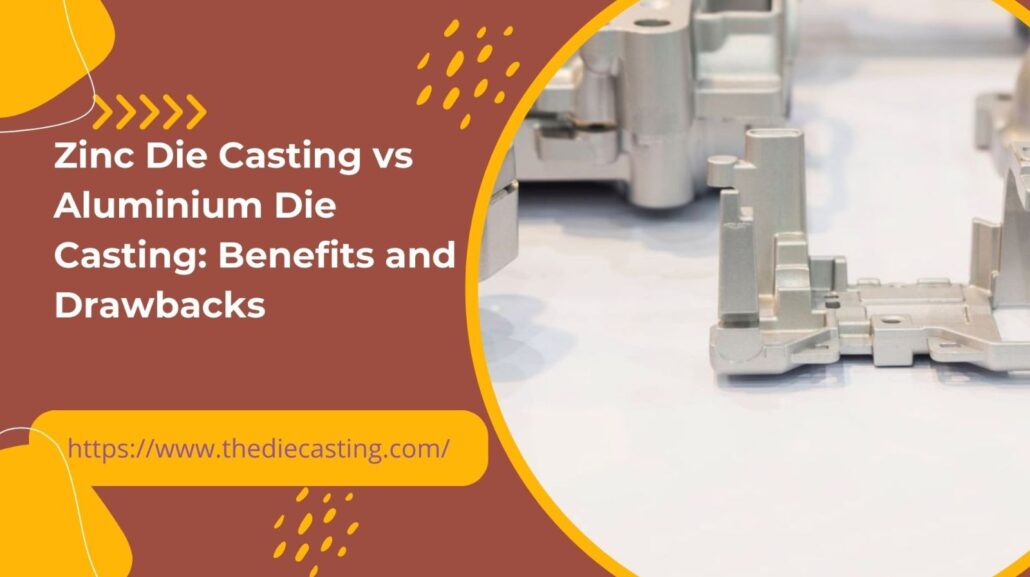
Fundição sob pressão de zinco versus fundição sob pressão de alumínio: Vantagens e desvantagens

fundição de alumínio, Fundição sob pressão de zinco

A fundição sob pressão também tem sido um processo viável e versátil no setor de manufatura para a produção de produtos metálicos de alta precisão. O alumínio e o zinco estão entre as ligas de fundição sob pressão mais comuns. Supondo que você esteja envolvido na produção de um produto, na engenharia ou na localização dos ingredientes, é preciso saber a diferença entre fundição sob pressão de zinco e fundição sob pressão de alumínio. O guia ajudará os fabricantes a escolher a liga mais adequada para seu projeto, seja ele de peças automotivas, eletrônicos ou bens de consumo. A fundição sob pressão é um processo de derramamento de metal fundido quente em um molde sob alta pressão para produzir formas complexas com um alto nível de acabamento de superfície. Tanto a fundição sob pressão de zinco quanto a de alumínio têm seus próprios méritos e deméritos. Também forneceremos comparações detalhadas, uma visão tabular e rápida e comentários profissionais para ajudá-lo a tomar uma decisão informada. Ao final, você entenderá claramente a diferença entre a fundição de zinco e a fundição de alumínio e quando usar cada uma delas. Vamos explorar os principais fatores. O que é fundição sob pressão? Uma visão geral rápida É fundamental entender o processo de fundição sob pressão antes de comparar a fundição de zinco e a fundição de alumínio sob pressão. A fundição sob pressão é um processo de forçar o metal fundido em uma cavidade do molde sob alta pressão (1.000 a 20.000 psi). O molde ou matriz de aço endurecido normalmente pode produzir milhares de peças semelhantes com tolerâncias rígidas. Tipos de fundição sob pressão Fundição sob pressão com câmara quente É aplicada em metais de baixo ponto de fusão, como o zinco. O sistema de injeção é mergulhado no metal fundido. Fundição sob pressão com câmara fria É melhor quando o metal tem uma temperatura de fusão mais alta, como o alumínio. O carregamento do metal fundido na câmara é feito para evitar danos à máquina. É preferida por sua velocidade, precisão e capacidade de criar projetos complexos sem um pós-processamento extenso. Neste ponto, compararemos as duas principais ligas: zinco e alumínio. Propriedades primárias da fundição sob pressão de zinco e alumínio A decisão entre fundição sob pressão de zinco e alumínio geralmente se resume às características do material. O zinco (e é comumente ligado como Zamak) e o alumínio (como ADC12 ou A380) não compartilham as mesmas forças, peso, resistência à corrosão, etc. Resistência e durabilidade As ligas de zinco possuem grande resistência ao impacto e ductilidade. Elas podem suportar tensões significativas sem quebrar, o que as torna adequadas para componentes que devem ser dobrados ou moldados após a fundição. As ligas de alumínio, por outro lado, são superiores em resistência à tração e dureza, especialmente em estruturas. Peso e densidade Em comparação com o zinco, que tem uma densidade de 6,6 g/cm 3, o alumínio é mais leve (d = 2,7 g/cm 3). Isso contribui para o uso do alumínio em setores que exigem baixo peso, como o setor aeroespacial. Ponto de fusão e capacidade de fundição O zinco funde a aproximadamente 380-390 °C, permitindo que as máquinas de câmara quente funcionem mais rapidamente. O alumínio derrete somente a 660 °C, o que significa que os processos de câmara fria podem retardar a produção, mas permitem que paredes mais finas sejam produzidas. Resistência à corrosão Ambos têm boa resistência; entretanto, o alumínio tem melhor desempenho em condições adversas porque forma naturalmente um revestimento protetor de óxido. O uso do zinco em ambientes externos exige revestimento. Características Fundição sob pressão de zinco Fundição sob pressão de alumínio Ponto de fusão 380-390 graus 660 graus Resistência à tração 280-400 200-300 Densidade 6,6 2,7 Condutividade térmica 109 100-140 Condutividade elétrica Alta Muito alta Resistência ao impacto Dúctil Frágil Resistência à corrosão Boa Melhores benefícios da fundição sob pressão de zinco A versatilidade da fundição sob pressão de zinco a tornou uma opção confiável por mais de cem anos. É por isso que os fabricantes gostam dela: Excelente precisão dimensional O zinco permanece intacto até 0,05 mm ou menos, eliminando a necessidade de usinagem secundária. O fabricante pode obter extrema precisão dimensional com os moldes de fundição de zinco. Alto acabamento A matéria-prima em si tem um acabamento de alta qualidade. As peças saem limpas e frequentemente não precisam de polimento adicional antes de serem revestidas ou pintadas. Vida útil prolongada da ferramenta O zinco derrete facilmente, portanto, as matrizes se desgastam menos, resultando em custos menores de ferramental a longo prazo. Os produtos são resistentes à corrosão e ao desgaste, o que resulta em uma vida útil mais longa. Velocidade rápida de produção O material fundido se solidifica em 15 a 30 segundos. Isso torna a fundição sob pressão de zinco adequada para a produção de grandes volumes. A indústria de larga escala a utiliza para melhorar e aumentar a produção. Acessível para componentes pequenos O zinco é ideal para peças pequenas e complexas, como fechaduras, engrenagens e ferragens. Mas as aplicações sensíveis ao peso podem tornar o zinco menos desejável devido à sua maior densidade. Exemplos de ligas padrão incluem Zamak 3 (uso geral) e Zamak 5 (maior resistência). Aplicações Em outros setores, como o automotivo, o zinco é utilizado em maçanetas e suportes de portas. No caso dos eletrônicos, ele é preferido em conexões porque pode proteger contra EMI. Benefícios da fundição sob pressão de alumínio Em componentes maiores e estruturais, a fundição sob pressão de alumínio é líder. Seus benefícios incluem: Leve e resistente Os componentes de alumínio podem reduzir o peso total do produto em 50% em comparação com o aço ou o zinco. O alumínio é leve, mas forte. Isso torna a fundição sob pressão de alumínio ideal para a produção de produtos adequados para aplicações de alta resistência. Excelente resistência à corrosão Não precisa de revestimento adicional na maioria dos casos, o que economiza tempo e dinheiro. Os produtos feitos de alumínio fundido têm uma vida útil mais longa e permanecem intactos. Boa condutividade térmica e elétrica A capacidade do alumínio de conduzir eletricidade e calor o torna ideal para uma ampla gama de aplicações. Ele é perfeito para uso em dissipadores de calor, blocos de motor e carcaças elétricas. Reciclabilidade O processo de fundição sob pressão de alumínio é melhor devido à sua alta reciclabilidade - 100% de reciclagem de alumínio, em linha com as tendências de fabricação sustentável. Capacidade de paredes finas A fundição sob pressão de alumínio pode produzir paredes tão finas quanto 0,5 mm, permitindo projetos complexos. Desvantagens Contradições e desvantagens Nem todo material é perfeito. No caso da fundição sob pressão de zinco em comparação com a fundição sob pressão de alumínio, esses são os contras: Limitações da fundição sob pressão de zinco Restrições da fundição sob pressão de alumínio Comparação de custos: Fundição sob pressão de zinco versus fundição sob pressão de alumínio Um fator importante na fundição sob pressão de zinco versus fundição sob pressão de alumínio é o custo. As matérias-primas geralmente são mais baratas, como o zinco (2-3/kg) em comparação com o alumínio (2-4/kg), mas as ferramentas e a fabricação

fundição sob pressão de zinco

Avaliações de prestadores de serviços de fundição sob pressão de zinco para peças automotivas

Fundição sob pressão de zinco

Introduction In the automotive industry, zinc has been a pillar raw material for die casting because it has a remarkable mixture of precision, strength, durability and cost-effectiveness. Automakers are also turning to the use of zinc alloys in those parts that demand tight tolerances, thin walls, high surface finishes, wear and corrosion resistance. This is used in common applications such as door handles, lock housings, seat belt mechanisms, gears, brackets, sensor housings and inner trim pieces. The technology is to inject high-pressure molten zinc into steel moulds, which can be of complex geometry and volumes with limited secondary machining. Chinese Mold Manufacturer has already dominated the world of zinc die casting by being able to offer tailor-made prices, facilities and the necessary certification, such as the IATF 16949, that is required by automobile suppliers. This paper summarizes the top zinc die casting service companies focusing on automotive parts, based on the capabilities of the companies, customer reviews and industry reputation. We are targeting the Chinese manufacturers, who are the major source of worldwide provision of low-priced yet high-quality motor parts. Key Advantages of Zinc Die Casting With the latest development of vehicles towards electrification and lightweighting, zinc die casting services are important to making dependable, high-performance components. The Zinc Die Casting Process Zinc die casting is a very efficient production process that is accurate in making complex metal parts that have superior surface finishes. It is especially well used in the auto industry with parts that have thin wall requirements, are high strength and have better plating compatibility. Just like aluminum die casting, zinc employs the hot-chamber process because it melts at a lower temperature (approximately 420 °C), providing it with short cycle times and extended tool life. Principles of the Zinc Die Casting Process Mold Preparation To ease ejection and temperature control, the steel die (mold) is sprayed with lubricant. The mold is made from strengthen material like steel that contains all the details of the automotive parts. Melting and Injection Zinc alloy (usually Zamak 3, 5 or ZA-8) is melted in a furnace that is connected to the machine. A gooseneck plunger is inserted into the molten metal and forces the final under high pressure (as much as 30 MPa) into the die cavity. Solidification The metal solidifies (a few seconds) in the water-cooled die, and the metal is solidified in its form of choice. Ejection The die is cast, and ejector pins push out the casting. The final shape of the product is solidified. Trimming and Finishing Flash (runners) is removed. The secondary processes, such as machining, plating or powder coating, are included. Trimming the unwanted part of the zinc automotive product is the final step. Why Zinc Die Casting is Superior in Automotive Applications Zinc alloys (i.e., Zamak 3, 5, and ZA-8) have distinct advantages compared to such alternatives as aluminum: High Quality Finish and Surface Finish Zinc fluidity allows adding thinner walls (down to 0.5mm) and finer details to minimize the post-processing. The automotive parts made from zinc have thinner walls and greater strength. Increased Strength and Impact Resistance Suited to components with safety-critical functions such as seat belt retractors and locks. The automakers preferred using these products. Extended Tool Life Due to the low melting point, zinc die casting products’ life is increased, and high-volume runs have reduced costs. Outstanding Plating Compatibility The process of zinc die casting is ideal for exterior or interior parts, as these are chrome-plated. Economical with Medium Volumes The automotive parts made by zinc diecasting use hot-chamber processes and have faster cycle times than aluminum. Zinc vs. Aluminum Die Casting Comparison for Automotive Parts Automotive parts could be made from zinc or aluminum. Here is the comparison table for the users to make the best decision according to their need of product. Features Zinc die casting Aluminum die casting Wall thickness Thinner (0.5-1.5mm) Thicker (2-5mm) Weight Higher High Melting point Low High Thermal conductivity High Low Corrosion resistance Higher Low Impact/strength High impact resistance Greater ductility Tool life Longer Shorter Cost Better for smaller parts Better for larger parts Applications Auto marine Power steering system Fuel system Engine system Automotive components Aerospace House appliances Medical automotive Best Die Casting Providers of Zinc                                                                                      Die Castings China (CNM Tech) This is a company that deals with zinc die casting and aluminum in the automotive parts industry in Dongguan, which is a die-casting hub. They have machines ranging from 120 to 1600 tons and in-house machining, deburring, plating, and powder coating. Strengths full service (one-stop), IATF 16949-certified, high concentration on automotive (e.g., brackets, housings). High-quality deburring provides parts without an accent. Customer Reviews Compliments on consistency, speedy delivery and competitive prices. Plated finishes are ideal for OEMs. Rating 4.8/5 -Dependable when using on mid-to-high volume automotive runs. GC Precision Mold Co., Ltd. GC, a zinc die casting manufacturer, was founded in 1999 in Dongguan, and it provides IATF 16949 certified zinc, aluminum and magnesium die cast. They cover the automotive, electronics and hardware industries. Strengths Large assortment of alloys, integration of CNC machining, and extreme care to tight tolerances. Verified in automotive components such as gears and housings. Customer Reviews Customer satisfaction rating (transparency, responsiveness, and consistency of quality) was high. Customers report about superior English communication. Rating 4.9/5 -Best selection of precision automotive parts. Sincere Tech (Dongguan Sincere Tech Co., Ltd.) Although its major operations are plastic injection and general die casting, Sincere Tech also offers zinc die casting services, together with machining and assembly. They refer to die cast of metal components, including the automobile. Strengths All-in-one services (design to assembly), ISO 9001:2015, 18 plus years of experience. DFM and fluent English assistance. Customer Reviews Favorable response towards project management and problem-solving. Excellent in problem-solving according to foreign clients. Rating 4.7/5: Strong on combined projects of zinc and plastic parts. PHB Inc. PHB is a hundred-year-old American company that deals with aluminum and zinc die casting. They work with large car manufacturers, making components such as drilling, milling

Fundição sob pressão de zinco:

Revestimento de fundição sob pressão de zinco: Técnicas, benefícios e aplicações industriais

Fundição sob pressão de zinco

Zinc die casting is a common method of production commonly applied in industries where speed, accuracy, strength, and affordability really matter. Zinc alloys are used in automotive, aerospace, consumer electronics applications and more because of their high casting properties, dimensional control, strength and versatility. They can be used to make complicated shapes with smooth surfaces, and it makes they highly demanded to be used in mass production. Bare zinc surfaces tend to be easily corroded, tarnished and generally worn with exposure to adverse environments, necessitating the need to apply a protective finish. It is here that plating becomes one of the most important steps, both in the usability and the lifetime of the products, as well as in the attractiveness and professional appearance of the products in the market. When addressing such as surface finishing, plating zinc die cast parts guarantees enhanced resistance to ageing environments, appearance and durability. The more common processes in the manufacturing industry across the world are chrome plating, zinc die casting, and nickel plating on zinc die cast. Besides lifespan, plating also creates commercial value because customers always want products that are strong yet possess a lustrous, high-quality finish. This renders plating to be a fundamental activity in the current industries. In this article, I will give a detailed extrapolation of arguments as to why plating is necessary, how the technical process works, challenges, and the industrial benefits attached to the process. What is Zinc Plating Die Casting? Zinc die casting is the process used to evenly coat a protective and decorative metal coating on components that were cast using zinc die casting. Given that zinc alloys are strong and cost-effective, but corrosive and wear-dependent, plating extends the durability, appearance and operation. Put simply, zinc die casting is the process that produces the real part or component, whereas plating applies an extra layer, which places a protective coating on the surface and provides the needed finishing. Plating and plating zinc die cast products to achieve a mirror finish through chrome plating zinc die casting, or a protective, up-market finish through nickel plating, zinc die cast. This composite leads to the plated zinc die casting finding a wide range of applications in automotive trim, electronic housings, household and industrial equipment, where good appearance and strength are potential requirements. What is plating? Plating is the addition of a thin layer of metal over the surface of another material, either by electroplating (use of electric current) or by chemical plating (not using electric current). Plating is done to enhance the aesthetic, abrasion resistance, corrosion resistance, conductivity and wear resistance of the substrate. An example is when we use nickel or chrome over zinc die cast parts to add protection and lustre to the base zinc, which offers the strength and shape. The glossy surface of a car’s shiny chrome handle or a bathroom feature is a direct result of plating. In brief, plating is a similar process of providing a product with a shield and a beautiful finish to make things appear more lasting and attractive. The Reason Why Zinc Die Casting need Plating Despite the strengths of zinc alloys that may be used in a variety of applications, there are some limitations when they are raw. Uncoated zinc is subject to tarnishing or corrosive attack by moisture, chemicals and thermal change. The plain, uncoated part is not sufficient in many industries to use long-term reliability. Surface finishes by plating not only serve the cosmetic purpose they also bring about various advantages in engineering. Manufacturers increase the precautionary measures against corrosion, abrasion, and oxidation by the use of the so-called plating zinc die cast techniques. This guarantees the durability of the product in terms of both the integrity of its structure and its aesthetic appeal in the long run. Besides, special coatings such as chrome plating, zinc die casting, which provides a high gloss finish best suited to consumer product components, as well as nickel plating on zinc die cast, which is both protective as well as a decorative coating, are possible. The Process of Plating on Zinc Die Castings Plating is a complicated process that takes delicate preparation and implementation. Unlike aluminium and steel, zinc alloys pose unusual challenges because of the reactivity of zinc. As such, plating on zinc presupposes special treatment in order to guarantee a good adhesion. Surfacing 1: Surface Preparation The initial process is degreasing, where oil, lubricant and impurities are removed from the casting. Without strict cleansing, peeling or flaking would occur, which means a poor adhesion on the use of zinc die cast parts. Step 2: Selecting The castings are deoxidised and cleaned off by immersion in acid. This makes the surface clean, active and capable of accepting plating layers. Step 3: Apply Strike Layer The zinc alloys are very reactive; thus, a thin strike coat of copper or nickel is normally used to enhance the adhesion before finishing. This is a crucial step to both the chrome plating, zinc die casting, and nickel plating on zinc die cast. Step 4, final plating layer Non-resistant metals, chrome, nickel or other alloys are electroplated to cover the surface. Durability and appearance of the finished product are dependent on this layer and its thickness and quality. Chrome Plating of Zinc Die Castings The most appreciated finishing technique applied to zinc die casting is called chrome plating; this type of finishing is used in order to increase the durability of the zinc part, its functionality, as well as its beauty. Chrome plating refers to the adherence of a very thin film of chromium metal on the surface of zinc die-cast objects through an electroplating process. The outcome is a shiny, mirror-like coating that can enhance the aesthetics of it but also reinforces the part against corrosion, scratches, and day-in, day-out wear. Origins have been found that chrome-plated objects will protect a raw zinc surface that has the propensity to tarnish quickly in more difficult conditions, and the products are durable. Important Advantages of

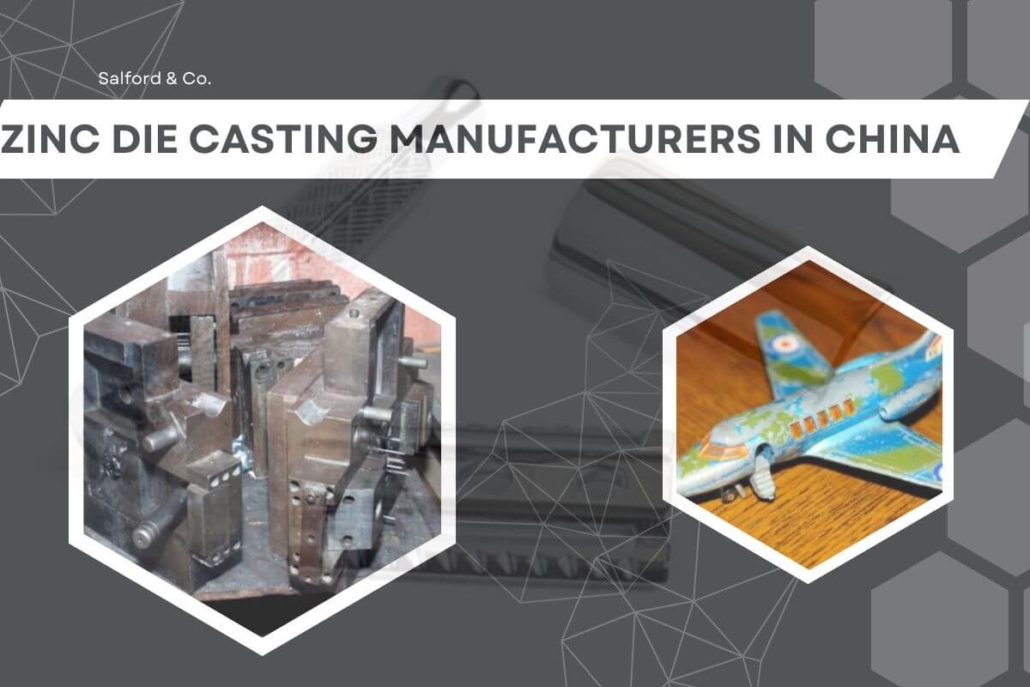
Fabricante de fundição de zinco na China

As 11 melhores empresas de fundição sob pressão de zinco na China e nos EUA

peças de fundição sob pressão, Fundição sob pressão de zinco

Se você tiver peças de fundição de liga metálica que exijam um acabamento de superfície de alta qualidade, como polimento, revestimento ou revestimento eletrônico, procure peças de fundição sob pressão de zinco. A fundição sob pressão de zinco ou zamak é frequentemente usada na produção de peças decorativas precisas, acessórios de construção, acessórios para portas e janelas, dobradiças de portas, modelos fundidos sob pressão e outros produtos de ligas semelhantes. O objetivo deste artigo é fornecer uma introdução concisa às 11 melhores empresas de fundição de zinco na China e nos Estados Unidos, bem como seus recursos de fundição e vantagens competitivas. Com isso em mente, vamos dar uma olhada em algumas das empresas mais conhecidas neste guia abrangente. 1. Dongguan Sincere Tech Co., Ltd A Dongguan Sincere Tech Co., Ltd é uma fabricante de moldes e empresa de fundição de zinco com sede na China. Os moldes de injeção de alta qualidade são a especialidade da empresa. Ela fornece moldes de fundição sob pressão de alumínio, zinco e magnésio, além da precisão na moldagem de plástico e na moldagem. Os serviços oferecidos são para os setores automotivo, médico e outros. Os clientes obtêm confiabilidade na precisão e preços competitivos para todos os projetos oferecidos. O uso de máquinas e equipamentos de alta qualidade significa que há uma produção de qualidade com desvios mínimos. A supervisão de cada projeto é deixada nas mãos de profissionais qualificados para garantir que os altos padrões sejam seguidos. A empresa estabeleceu uma reputação como uma das principais empresas porque os clientes internacionais confiam no sucesso da Dongguan Sincere Tech. Serviços oferecidos A Dongguan Sincere Tech oferece aos clientes uma ampla gama de soluções de desenvolvimento de produtos. Ela abrange desde o processo de design até a criação de protótipos, desde o design de produção até a fabricação em massa real. É por isso que os serviços de criação de moldes e ferramentas são considerados como incorporando alta precisão de montagem, teste e embalagem de produtos de saída. A empresa tem imensa experiência em fundição sob pressão e moldagem de plástico. Cada movimento é realizado com precisão e clareza. A empresa garante que seus produtos estejam de acordo com os padrões e valores do setor. Tempos de resposta rápidos e bons resultados são garantidos. Por que escolher a Dongguan Sincere Tech? Qualidade, precisão e confiabilidade são os principais valores da Dongguan Sincere Tech Company. As medidas de garantia de qualidade aplicadas ao mais alto nível asseguram a alta qualidade e os padrões do produto. Matérias-primas de alta qualidade são usadas na produção de vários produtos. A sofisticação dos processos de fabricação é usada para aumentar a robustez. Todos os clientes recebem serviços de alto desempenho e baixo custo. A precisão e a durabilidade são os aspectos mais importantes do design do produto. Os profissionais obtêm ótimos níveis de satisfação nos serviços que oferecem aos clientes, bem como nos produtos que fabricam. Se estiver procurando moldes confiáveis e acessíveis, a Sincere Tech é a empresa que você deve procurar. Se estiver procurando moldagem por injeção de plástico, serviços de montagem de produtos na China e empresas de fundição de zinco na China, entre em contato com eles para obter preços. 2. GC Precision Mold Co., Ltd. A GC Precision Mold Co., Ltd. é uma empresa líder em fundição sob pressão de zinco na China, com vasta experiência de mais de duas décadas. Fundada em 1999, ela se dedica principalmente ao negócio de fundição sob pressão de alumínio, zinco e magnésio. Além disso, a empresa presta serviços de moldagem de plástico, usinagem CNC e acabamento de superfície. A GC Precision Mould trabalha com diferentes setores da economia, como o automobilístico, o eletrônico e o de saúde. A empresa é conhecida por sua linha de produção eficiente. Suas máquinas avançadas variam de 120 toneladas a 1650 toneladas. Os serviços oferecidos pela empresa incluem fundição por gravidade, fundição de alta pressão e fundição em areia. Eles projetam e desenvolvem moldes de interesse específico. A precisão e a qualidade são garantidas em todos os projetos no nível máximo. A GC Precision Mould vende seus produtos no mercado internacional, especificamente na América do Norte e na Europa. Essas empresas oferecem entrega e envio eficientes e convenientes para seus clientes em diferentes partes do mundo. Isso as tornou certificadas pela International Organization for Standardization (ISO) 9001 em termos de qualidade. A empresa oferece soluções personalizadas de acordo com a demanda do cliente, agregando valor. Principais serviços prestados A GC Precision Mold Co., Ltd. oferece uma ampla gama de serviços: Fundição sob pressão: Os materiais usados são alumínio, magnésio, zinco e outras ligas personalizadas. Moldagem por injeção de plástico: Alta precisão na moldagem com uma variedade de acabamentos de superfície. Usinagem CNC: Torneamento em torno CNC e fabricação de componentes com altos níveis de precisão. Acabamento de superfície: Anodização, revestimento em pó, pintura e revestimento com cromo. Ferramentas de fundição sob pressão personalizadas: Equipamentos para aplicações difíceis de fundição sob pressão e moldagem. Seus serviços de fundição sob pressão são voltados para os setores automotivo, eletrônico e de produtos de consumo. Para cada projeto, eles empregam ferramentas e técnicas modernas, atendendo, assim, aos mais altos níveis de produção. Eles satisfazem várias necessidades dos clientes, pois as máquinas usadas na fabricação têm capacidade de produção de peças de até 50 kg de peso. Por que escolher a GC Precision Mould Co. Ltd? A GC Precision Mould é um fornecedor confiável de serviços de fundição sob pressão de zinco. A empresa oferece serviços estáveis e acessíveis com base em seus muitos anos de experiência. A empresa enfatiza e garante um tempo de resposta rápido e trabalha com um orçamento razoável. A GC Precision Mold oferece uma gama completa de suporte ao cliente, desde o início do projeto. Desde a fundição sob pressão e a usinagem CNC até a moldagem de plástico, a empresa garante a satisfação de seus clientes. A G.C Precision Mold Co., Ltd. se concentra na inovação constante. A empresa está sempre dando o melhor de si para aprimorar seus sistemas e técnicas de produção. A empresa tem certificação ISO 9001 e segue rigorosos padrões internacionais para seus produtos. A empresa atende às necessidades de pequenas e grandes produções em termos de prestação de serviços. Se estiver procurando por moldagem por injeção de plástico, usinagem CNC, acabamento de superfície como anodização, fundição eletrônica, fundição sob pressão de alta pressão 6063 ou 6061 e fabricantes de fundição de zinco na China, entre em contato com eles para obter preços. 3. CNM Casting CNM TECH é uma empresa avançada de fundição de zinco industrial com sede na China, a empresa de fundição CNM está envolvida principalmente em fundição de precisão

Fundição sob pressão de zinco

A importância da fundição sob pressão de zinco no setor automotivo

alumínio fundido sob pressão, empresas de fundição sob pressão, empresa de fundição sob pressão, Fabricante de fundição sob pressão, peças de fundição sob pressão, Fundição sob pressão zamak 3, Fundição de zinco Zamak 3, zamak 5, Fundição sob pressão de zamak 5, fundição sob pressão zamak, Fundição sob pressão de liga de zinco, Fundição sob pressão de zinco

O que é fundição sob pressão? A fundição sob pressão é um processo de fundição de metal que se caracteriza pela pressão do metal fundido na cavidade do molde. A cavidade do molde é feita com dois moldes de aço-ferramenta endurecidos que são trabalhados durante o processamento e funcionam de forma semelhante aos moldes de injeção. A maior parte da fundição sob pressão é feita de metais não ferrosos, especialmente zinco, cobre, alumínio, magnésio, estanho, chumbo e ligas à base de estanho. Dependendo do tipo de metal que está sendo fundido, é usado um motor térmico ou frio. O processo de fundição sob pressão de zinco é muito popular para a fabricação de peças nas áreas de construção e industrial, mas a aplicação mais comum é no setor automotivo. De fato, os carros têm diferentes peças que podem ser fabricadas por meio de fundição sob pressão, de modo que o processo moderno de fundição sob pressão foi originalmente iniciado para o setor automotivo. Com o processo de fundição, muitas vezes não é necessária nenhuma usinagem adicional após a fundição: não apenas a precisão é de até 99,8%, mas os produtos fundidos também podem ser usados crus porque têm um acabamento agradável. O uso da fundição sob pressão de zinco é quase 28% na indústria automotiva, seguida pelo setor de construção e ferragens. O zinco se tornou um dos metais mais importantes no setor de autopeças, especialmente para produtos como carcaça de fechadura de porta, lingueta, engrenagens e polias retratoras em sistemas de cinto de segurança, mas também para componentes de eixo de comando de válvulas e sensores. Com o uso desse metal e de suas ligas, é possível obter resistência, ductilidade e flexibilidade que não seriam possíveis com outros materiais. Além disso, o zinco pode ser a escolha certa para obter componentes estéticos de alta qualidade, com tolerâncias apertadas que não são possíveis com outros materiais, e para obter relevo e ranhuras para componentes mecânicos ou engrenagens. Como já foi dito, a indústria automotiva é a aplicação mais comum de fundição sob pressão: o uso do zinco e de suas ligas possibilita a produção de componentes capazes de alcançar alta qualidade estética, com tolerância estreita e apertada para a morfologia da forma. As ligas de zinco também são usadas para revestimentos devido aos seus muitos benefícios, como o aprimoramento das propriedades anticorrosivas do zinco, que já são impressionantes. Abaixo, você encontrará vários exemplos possíveis de revestimento de zinco: Seção de estética interna Seção de tetos solares Peças mecânicas Motor e outros componentes sob o capô Sistema de direção hidráulica Peças e sistema de freio Componentes e sistemas de ar-condicionado Hardware do chassi Peças do sistema de cinto de segurança Componentes de controle climático Sistema de combustível Vantagens da fundição sob pressão de zinco: Um processo eficiente e econômico que oferece vários formatos e formas possíveis. Produção em alta velocidade Precisão e estabilidade de dimensões Resistência e peso Várias técnicas de acabamento estão disponíveis Montagem simples O processo de fundição sob pressão começou com o uso de chumbo e ligas de chumbo, ligas de magnésio e cobre, que foram rapidamente seguidas e, na década de 1930, muitas ligas modernas ainda em uso hoje estão disponíveis. Esse processo evoluiu da fundição por injeção de baixa pressão para a moderna injeção de alta pressão de 4.500 libras por polegada quadrada. O processo moderno é capaz de produzir formas de fundição limpas e de alta integridade, com excelentes acabamentos de superfície. A liga de fundição de zinco é um material de engenharia forte, durável e econômico. Suas propriedades mecânicas são competitivas e geralmente superiores às do alumínio fundido, magnésio, bronze, plástico e da maioria dos ferros fundidos.

Fundição de zinco Zamak 3

Zamak 3 Fundição sob pressão

fundição de alumínio, zamak 3, Fundição sob pressão zamak 3, Fundição de zinco Zamak 3, zamak 5, fundição sob pressão zamak, Fundição sob pressão de liga de zinco, Fundição sob pressão de zinco

Oferecemos a fundição sob pressão ZAMAK 3 para a fabricação de produtos ZAMAK 3. Nossos produtos ZAMAK 3, capacidades de produção e instalações de armazenamento lhe proporcionarão peças de qualidade a preços competitivos. O ZAMAK 3 é a mais popular das ligas da série ZAMAK para fundição sob pressão de zinco devido à sua capacidade de fundição e estabilidade dimensional. Propriedades da ZAMAK 3: Resistência à tração máxima: psi x 103 (MPa) 41 (283) Resistência ao escoamento - 0,2% Offset: psi x 103 (MPa) 32 (221) Alongamento: % em 2″ 10 Resistência ao cisalhamento: psi x 103 (MPa) 31 (214) Dureza: Brinell 82 Resistência ao impacto: ft-lb (J) 432 (58) Resistência à fadiga em curva rotativa - 5×10⁸ ciclos: psi x 103 (MPa) 6,9 (48) Resistência à compressão 0,1% Offset: psi x 103 (MPa) 604 (414) Módulo de elasticidade - psi x 106 (MPa x 103) 12.46 (85,5) Índice de Poisson¡¯s 0,27 Densidade: lb/cu in (g/cm3) .24 (6,6) Faixa de fusão: ¡ãF (¡ãC) 718-728 (381-387) Condutividade elétrica: %IACS 27 Condutividade térmica: BTU/ft/hr/¡ãF (W/m/hr/¡ãC) 65,3 (113,0) Coeficiente de expansão térmica: 68-212¡ãF µin/in/¡ãF (100-200¡ãC µm/mm/¡ãC) 15,2 (27,4) Calor específico: BTU/lb/¡ãF (J/kg/¡ãC) .10 (419) Padrão de contração do molde: in/in .007 Fundição sob pressão de zinco Aplicações Artigos esportivos - Abordagens de economia de custos para componentes usinados; - Revestimentos para combinar com peças de zinco; - Resistência para aplicações difíceis; Medicina - Capacidades inovadoras; - Projetos de precisão como fundidos; - Para uso em muitas aplicações difíceis; Interruptores - Múltiplas cavidades para economia de custos; - Multislide; Fixadores - Muitos tamanhos de porcas de painel já usinados; - Capacidades de rosqueamento de alta velocidade; Conector - Tecnologia de quatro deslizamentos para eliminar secundários dispendiosos; - O revestimento do barril para níquel sem eletrólito oferece proteção e estética econômicas; - Ligas condutoras excelentes; Fibra óptica - Capacidade de fundir projetos complexos; - Tolerância estreita, como componentes fundidos; - Equipamento e experiência para fornecer componentes pequenos; Aparelhos - Fundições de paredes finas com força para resistir às aplicações; - Acabamentos de superfície oferecem resistência ao desgaste; - Ligas projetadas para aplicações específicas; Automotivo - Capacidade de incorporar vários componentes em uma única fundição de zinco; - Fundições e chapas resistentes à corrosão; - Recursos de rosqueamento secundário; - O zinco é um excelente material de amortecimento; O detalhe da fundição de zinco Zamak 3 Modelo No: Fundição de zinco Zamak 3 Nome do produto: Zamak 3 ou 5 die casting Origem do produto: China Nome da marca: CNM TECH Condições de preço: FOB SZ Condições de pagamento: T/T CIF L/C Capacidade de fornecimento: 300.000-400.000 conjuntos/mês Prazo de entrega: cerca de 30 dias Se você deseja comprar ou obter mais informações sobre a fundição de zinco Zamak 3,

Rolar para cima

Obter uma cotação