

Today we are rolling up our sleeves and heading into the heart of the foundry to tackle one of the most expensive headaches in the industry: aluminum melting dross. If you have ever looked into a typical reverberatory furnace for melting solid aluminum, you know that what happens on the surface of that melt can make or break your profit margins. To stay competitive, every foundry manager needs to know exactly how to reduce molten aluminum dross before it eats away at their bottom line.
When we talk about aluminum recovery, we are really talking about a war against oxidation. Every piece of aluminum scrap fed to a furnace has a very thin skin of aluminum oxide. It doesn’t matter if it’s a heavy ingot or a light turning; that skin is there. When the scrap is heated in a furnace, the higher temperatures cause the skin to grow more rapidly, especially if the scrap is heated in air or an oxidizing environment. If left unchecked, this oxidation leads to massive waste, making it critical to implement strategies that reduce molten aluminum dross during the melting cycle.
This guide is designed to help you reduce molten aluminum dross and maximize your aluminum recovery using both common-sense maintenance and advanced chemical strategies.
Understanding Aluminum Melting Dross
To effectively reduce molten aluminum dross, you first have to understand exactly what it is. When the aluminum melts, the aluminum oxide floats to the surface, forming a second phase known as dross. But it’s not just “trash.” Because of the surface tension of the oxide skin, metallic aluminum is also trapped in the dross from 15% to 80%.
Think about that for a second: the primary goal of any foundry is to reduce molten aluminum dross because up to 80% of that “scum” you are skimming off might actually be good, usable metal. Large, heavy-section melt stocks have the largest ratio of mass to surface area and sustain minimal melt loss. However, in-house remelting of clean scrap will increase the melt loss because of the increased surface area, making it even harder to reduce molten aluminum dross. If you want to dive deeper into the basics of melt quality, check out our guide on refining agents.
The High Cost of Contamination and Surface Area
One of the quickest ways to lose money is by charging “dirty” material, which makes it nearly impossible to reduce molten aluminum dross. For every 1% organics and moisture, 2% melt loss will result. This is why using clean, dry charge materials is rule number one if you want to reduce molten aluminum dross and improve aluminum recovery.
Furthermore, the shape of your scrap matters. Charging turnings, borings, and machining chips results in as much as 10% to 15% dross formation. This is due to the massive surface area exposed to the furnace atmosphere. If you are struggling with high scrap rates during die casting machining, the problem likely started right here in the furnace because you didn’t have a plan to reduce molten aluminum dross.
The Impact of Temperature on Dross Formation
An important factor in your quest to reduce molten aluminum dross is the holding temperature of the melt. You might think a few degrees don’t matter, but the impact of temperature increases of only 25 to 55°C can be quite significant. High temperatures accelerate the oxidation reaction, so keeping a cool melt is the easiest way to reduce molten aluminum dross.
Moreover, the thickness of the layer of dross over the melt gives an insulating effect and requires an increase in the firing rate of the burner system. It’s a vicious cycle: the more dross you have, the harder you have to fire the burners, which in turn creates more dross. Therefore, to reduce molten aluminum dross, the thickness of the layer on melter surfaces is most commonly maintained at less than 40 mm to keep the furnace efficient.
How to Remove Dross from Aluminum Correctly
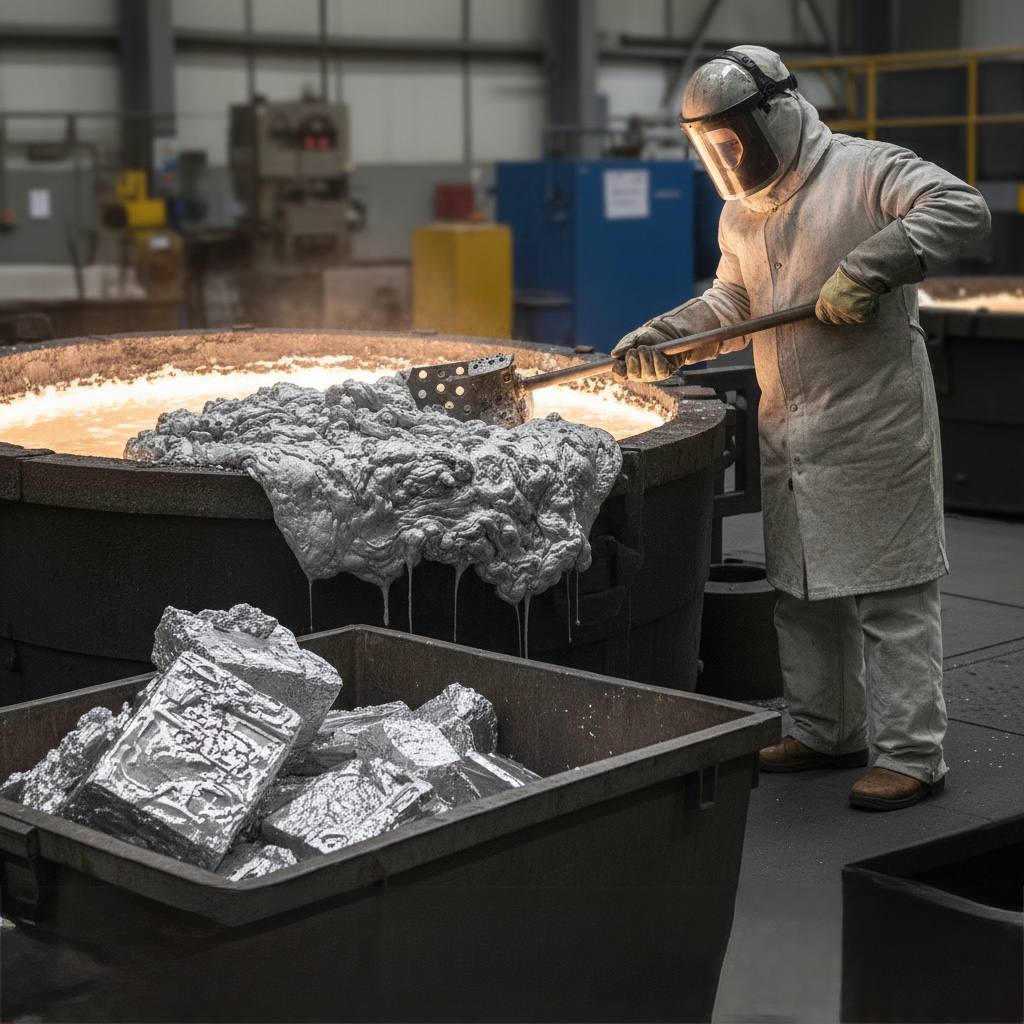
When it comes time to remove dross from aluminum, you shouldn’t just scrape it out while it’s “wet.” If you do, you are throwing away your profits. Correct application of the proper flux composition results in the physical breaking of a weakly bound oxide layer, which helps reduce molten aluminum dross by entrapping fresh aluminum and returning it to the bath. This allows the metallic liquid alloy droplets to coalesce, which is the “secret sauce” for successful aluminum recovery.
You can tell if you are successfully using flux to reduce molten aluminum dross by the look of the material. Metal-rich dross appears bright and shiny, certainly laden with metallic aluminum, whereas treated dross will appear duller and powdery. To remove dross from aluminum effectively, you want that powdery finish. The aluminum content of untreated dross averages 85 to 90%, but furnace treatment can recover approximately half of this amount, significantly boosting your aluminum recovery rates.
Ten Common Sense Procedures to Reduce Aluminum Dross
The best way to initially deal with dross formation is to minimize it. This can be accomplished by a number of common sense and conscientious maintenance procedures:
- Use clean dry charge materials: Moisture is the enemy of aluminum recovery.
- High mass to surface area: Whenever possible, use charge materials with high mass to surface area ratios.
- Use fluxes: Employ the best flux for melting aluminum to cover the melt and reduce oxidation.
- Minimize melt cycles: Use stirring and pumping to keep the melt uniform without over-exposing the surface.
- Keep furnaces covered: Keep furnaces covered as much as possible to maintain a stable atmosphere.
- Control burner flames: Keep burner flames from direct impingement on the molten metal.
- Fuel-air ratios: Ensure proper fuel-air ratios in burners to minimize oxidizing conditions.
- Hold at low temperatures: Hold molten alloy at as low a temperature as possible for the required process.
- Minimize turbulence: Minimize turbulence or cascading during metal transfers to prevent “folding” oxides into the melt.
- Maintain the furnace: Keep furnace doors in good condition and maintain positive pressure in melting furnaces.
Advanced Aluminum Recovery Systems
Beyond manual skimming, employing a professional dross reclamation system is a total game-changer for high-volume foundries looking to reduce molten aluminum dross. These advanced systems use mechanical action and precise temperature control to “squeeze” the remaining metallic aluminum out of the aluminum melting dross before it has a chance to cool and solidify. By processing the material while it is still hot, you can achieve a much higher level of aluminum recovery than manual methods alone.
Additionally, to consistently reduce molten aluminum dross, you must ensure that all thermocouples are in good working order. If your sensors are off, your holding temperature will be inaccurate, and your aluminum melting dross production will skyrocket due to excessive heat. Precise thermal monitoring is the backbone of any strategy to reduce molten aluminum dross. For more information on professional equipment and specialized sourcing, visit China Die Casting Manufacturers.
Tool Maintenance and Non-Wetting Washes
Even the tools you use to remove dross from aluminum matter. If aluminum sticks to your skimmers and shovels, you are losing metal. You should coat tools with an appropriate non-wetting wash. This prevents the “bright and shiny” metal from clinging to the tools, ensuring it stays in the bath where it belongs.
Summary Table: Maximizing Aluminum Recovery
| Factor | Action to Reduce Aluminum Dross | Impact on Aluminum Recovery |
| Temperature | Lower by 25-50°C | Significant reduction in oxidation rates. |
| Fluxing | Use proper chemical compositions | Breaks surface tension to return metal to the bath. |
| Charge Quality | Clean, dry, heavy sections | Reduces melt loss by up to 15%. |
| Atmosphere | Positive pressure & burner tuning | Minimizes the oxidizing environment. |
The Hidden Cost of the “Insulating Effect”
When we talk about the aluminum melting dross layer, we often focus on the lost metal, but we forget the energy bill. As the transcript mentioned, the thickness of the dross layer gives an insulating effect. While you might think a blanket on top of the metal keeps it warm, it actually acts as a barrier between the burner’s heat and the molten bath. This requires an increase in the firing rate of the burner system just to maintain your target temperature.
If you don’t remove dross from aluminum regularly, you aren’t just losing metal; you are burning through natural gas or electricity at an alarming rate. By maintaining that dross thickness at less than 40 mm, you allow the heat to penetrate the melt efficiently. This reduces the time the metal spends at high temperatures, which is the most effective way to reduce aluminum dross formation over a long production shift.
Mechanical Agitation and Its Double-Edged Sword
In many modern die casting service facilities, we use pumps and stirrers to keep the melt homogenous. This is great for alloying, but it is a double-edged sword for aluminum melting dross. You must minimize melt cycles by stirring and pumping only when necessary.
Every time you break the surface of the melt, you expose fresh, unoxidized aluminum to the air. If your stirring is too turbulent, you begin “folding” the surface oxides into the “meat” of the metal. This makes it much harder to remove dross from aluminum later because the impurities are now suspended deep in the bath rather than floating on top. Precision pumping systems that move metal beneath the surface are the gold standard for high-level aluminum recovery.
Thermocouple Accuracy: The Silent Dross Creator
You might have the best furnace in the world, but if your sensors are lying to you, you’re in trouble. Ensure that thermocouples are in good working order at all times. If a thermocouple is “drifting” and reporting a temperature that is 30°C lower than the actual melt, your burners will stay on longer than they should.
As we learned, even a 25°C increase in temperature can significantly boost dross production. A faulty sensor is often the “silent killer” of aluminum recovery rates. Regular calibration of your sensors ensures you are holding the molten alloy at as low a temperature as possible, keeping your metal shiny and your dross powdery and dry. This is a critical step in our quality control protocol.
The Role of Positive Pressure in the Furnace
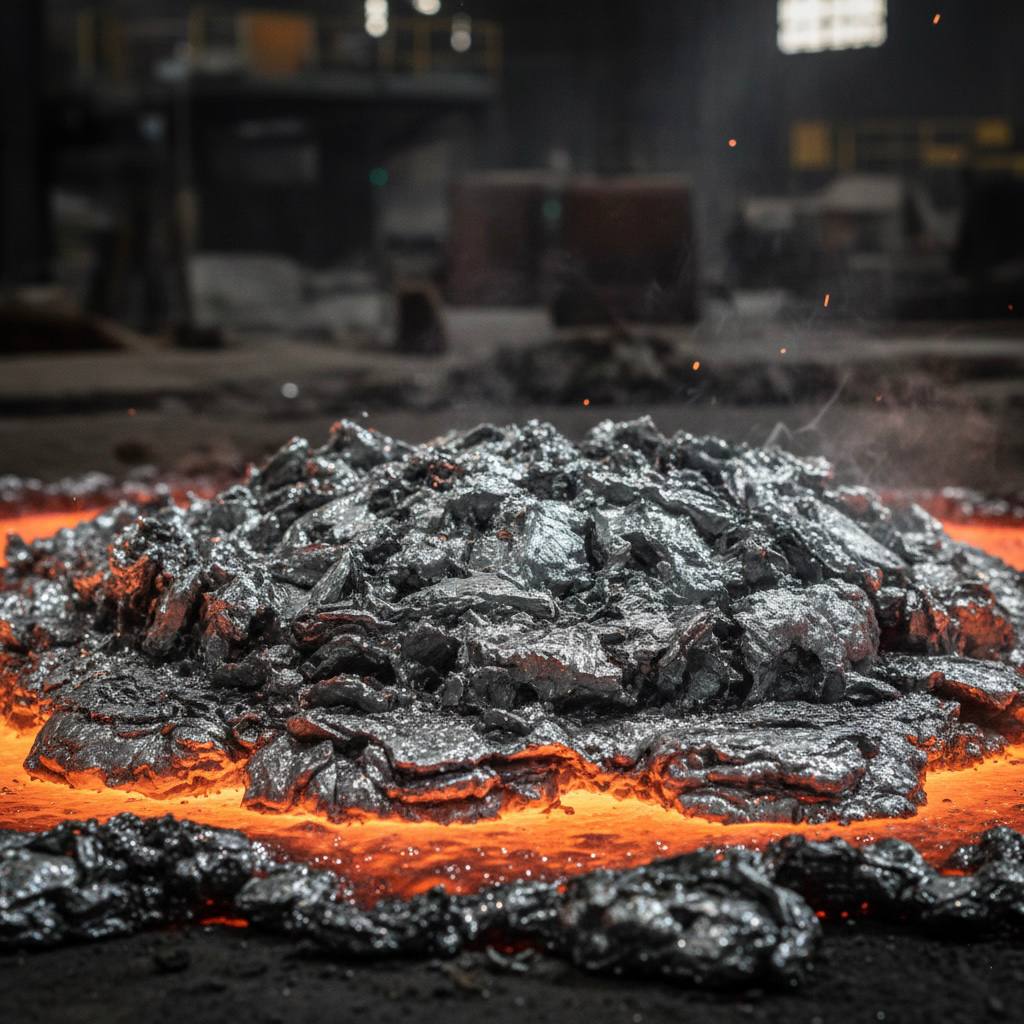
Maintaining positive pressure in melting furnaces is a technical step that many smaller shops overlook. If your furnace has negative pressure, it “sucks in” cold, oxygen-rich air through every crack in the doors or seals. This fresh oxygen immediately reacts with the molten bath to create aluminum melting dross.
By maintaining a slight positive pressure, the furnace actually pushes warm exhaust gases out of the cracks, preventing outside air from entering. This creates a more “reducing” or neutral environment inside the chamber. When combined with ensuring furnace doors are in good condition, this atmospheric control is one of the most sophisticated ways to reduce aluminum dross without adding expensive chemicals.
Dross Reclamation: Moving Beyond the Skimmer
Finally, we have to look at what happens after the dross is pulled from the furnace. Treated dross will appear duller and powdery because the flux has done its job of “squeezing” the metal back into the furnace. However, even this powdery dross contains value.
Employing a dross reclamation system like a rotary salt furnace or a mechanical press can push your aluminum recovery to the absolute limit. Outside dross processing can reduce the metallic content in treated dross to as low as 25%. When you consider that untreated dross is nearly 90% aluminum, the financial incentive to invest in a reclamation cycle is undeniable. It turns a waste product into a secondary source of raw material.
Conclusion: A Conscientious Approach
At the end of the day, maximizing your aluminum recovery is about being proactive rather than reactive. If you wait until you have a thick, metal-laden crust on your furnace, you’ve already lost the battle. By following these conscientious maintenance procedures, keeping your furnace covered, controlling your temperatures, and using the right fluxes, you can dramatically reduce aluminum dross.
At diecastingschina.com and aludiecasting.com, we implement these exact standards every day. We know that the better you reduce molten aluminum dross in the furnace, the better the final part performs under the CNC bit during the die casting machining phase.
Would you like us to review your current furnace settings to see if we can help you recover an extra 5% of your metallic aluminum?