zinc die casting

zinc die casting

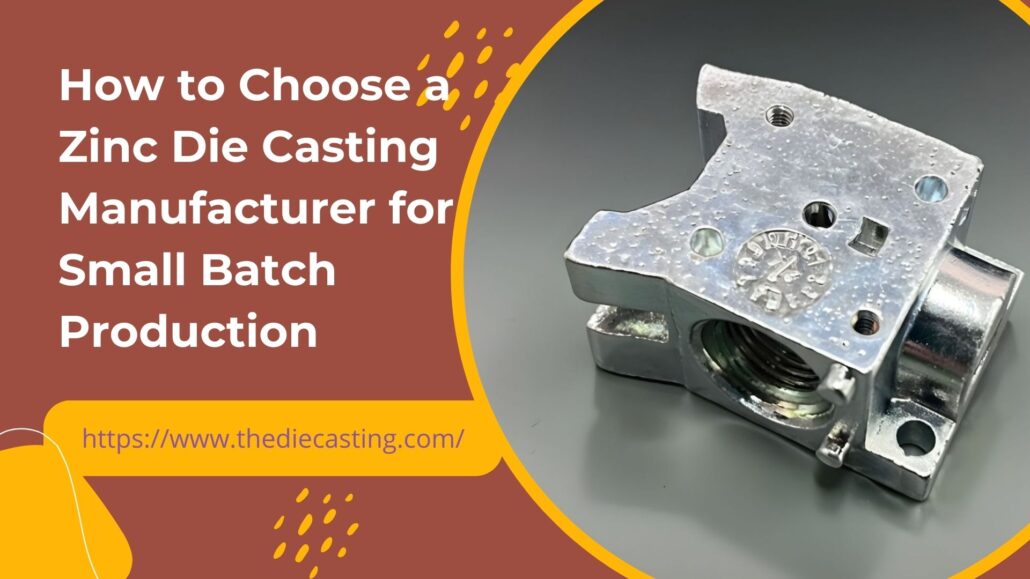
How to Choose a Zinc Die Casting Manufacturer for Small Batch Production

aluminum casting

Zinc die casting has emerged as one of the most popular manufacturing processes used to generate the precision metal parts, which require high quality on the surfaces, tight tolerances and geometric shapes. The automotive industry, electronic industry, construction hardware, consumer goods and decorative fittings industry are some of the industries that are highly dependent on zinc or ZAMAK die casting since they possess excellent mechanical properties and finishing capabilities. In cases where the volumes of production are low, the choice of the appropriate zinc die casting manufacturer is even more valuable. Low batch production needs flexibility, control of cost, reduced lead time and engineering skills, which many manufacturers may lack due to the need to deal with mass production. The instructional manual describes the method of selecting an appropriate zinc die casting vendor that handles small orders and names seven reputable Chinese manufacturers, plus six reputable international companies. The Knowledge of Zinc Die Casting Small Batch Manufacturing Zinc die casting is one of the metal casting technologies in which the molten zinc alloy is injected into a steel mold under high pressure.  Zinc alloys have a lower melting point, higher fluidity and longer tool life compared to the aluminum or magnesium which is particularly well suited to low to medium volume production. In the case of small batch projects, zinc die casting has enormous benefits. The tooling costs are usually cheaper, the cycle time is shorter, and parts can be near net shape in nature, hence do not require much machining. Zinc can also be used as decorative and functional components to be polished, electroplated, chrome plated, powder coated or painted. Small batch manufacturing frequently includes prototype testing, small market rollouts or specialised industry use. Thus, the manufacturers have to offer flexibility in the tooling, responsiveness in communication, and maintain uniformity even at reduced volumes. The Special Consideration of Small-Batch Zinc Die Casting Small batch zinc die casting is not just a smaller variant of mass production. Manufacturers have to change their operations to make sure they are efficient without adding unnecessarily high costs. The tooling plan is paramount. Although the tooling of zinc will outlive that of aluminum, the initial cost may still be a burden in small amounts. A company that sells simplified molds, modular tooling or even rapid tooling would be more adaptable to a small batch. The flexibility of production is also significant. Small quantity orders can be characterized with design modification, numerous revisions, or bespoke finishing. An efficient supplier has to be in a position to handle such changes without causing any delays. The other determinant is surface finishing capability. Zinc elements are usually employed in the visible or ornamental industry, and in such cases, the look of the surface is equally crucial as the dimensional precision. In-house finishing enables manufacturers to have more quality control and delivery schedules. Some of the considerations that are important to make when selecting a manufacturer of zinc die castings include; Experience and Technical Knowledge in Manufacturing The experience of a manufacturer in zinc alloys has a direct influence on the quality and consistency of parts. Alloy casting suppliers Zinc die casting companies know more about the choice of alloys, mold design, the positioning of gates and the control of processes than general metal casting suppliers. In small-scale projects, the engineering experience becomes even more helpful. Experienced manufacturers have the capability to propose design refinements which would have lower tooling complexity, fewer defects, and yield. Mold Design Capabilities and Tooling One of the most expensive aspects of die casting is tooling. In small batches, manufacturers with in-house design and fabrication of molds are cheaper to deal with and can deliver faster. Die casting moulds of Zinc can have thin walls and fine details. Nevertheless, these mold designs should be done correctly to prevent porosity, sink marks, or surface defects. Suppliers that have simulation software and mold flow analysis are in a better position to provide consistent results. Surface Finishing and Secondary Operations Zinc alloys have a high preference due to their outstanding surface finishing properties. Manufacturers are supposed to provide secondary services like polishing, electroplating, chrome plating, nickel plating, powder coating and painting. When working with small batch production, the outsourcing of finishing may worsen the lead time and quality risks. One vendor who finishes in-house gives a homogenous effect and expedited delivery. Quality Management and Certifications Even when making a small order, quality assurance must not be compromised. The manufacturers who have received the ISO-certified quality management systems show devotion to consistency and traceability. Such inspection devices as CMM machines, roughness testers, and material testing facilities are signs of a good supplier. Responsiveness and Communication Close cooperation is frequently needed on small-scale projects. There should be effective communication, quick quotation turnover and a proactive solution to problems. Companies that offer project managers tend to perform well when it comes to low-volume production. Best Chinese Zinc Die Casting Maker for a Minimum Batch GC MOLD (aludiecasting.com) GC MOLD is a Chinese manufacturer of zinc die cast that has a good reputation due to its tooling accuracy and versatility. The company deals in die casting of zinc, aluminum, and magnesium and assists small to medium batch production for the global clients. GC MOLD is a company that provides all the services such as designing of molds, die casting, CNC machining and surface finishing. Their engineering team collaborates intimately with customers to ensure an optimization of part design, which makes them a good option for start-ups and OEMs that demand small volumes of production with high accuracy. This is because the company can process decorative zinc parts, functional industrial components, as well as automotive applications, which makes it one of the surest bets in China in terms of small batch zinc die casting. CNM CASTING (diecasting.com / diecastingschina.com) CNM CASTING is a special-purpose manufacturer of zinc alloy die castings with one-stop manufacturing solutions. The company has experience in manufacturing high cosmetic geometries and precision zinc components with complex geometries. CNM
zinc die casting

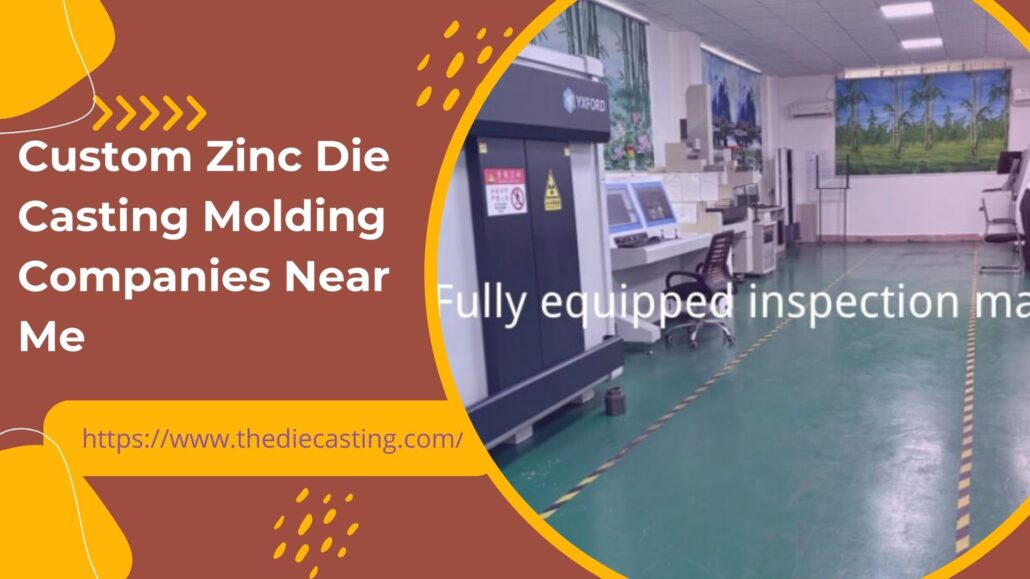
Custom Zinc Die Casting Molding Companies Near Me

zinc alloy die casting, Zinc die casting

Introduction The worldwide manufacturing sector is increasingly relying on custom zinc die-casting firms to produce cost-effective, durable, and precision metal parts. Zinc die casting is also well known due to its capability to produce complex geometries, close tolerances, smooth surface finishes, and high mechanical strength, at a rather low cost of production. These benefits make zinc die casting a favorable manufacturing technique across sectors such as automobiles, electronics, medical devices, industrial equipment, consumer products, and telecommunications. When individuals enter the query “custom zinc die casting molding companies near me,” they may refer to manufacturers close to where they live. China is known as the largest die-casting center in the world, a trusted supplier to the international market that can effectively meet those markets’ demands. China’s manufacturing base remains a leading one, with well-developed production facilities, a highly skilled labor force, complete supply chains, and low prices. Meanwhile, there are some world-renowned zinc die-casting firms in the USA, Europe, and other markets that provide high-technology, automation, and stringent quality standards in high-end, controlled industries. This is a complete guide that is concerned with mentioning the largest and most efficient suppliers and manufacturers of zinc die casting products. Three Major Chinese Die-Casting Firms of Zinc Near China Nevertheless, it can be argued that the process is complex and expensive, requiring both machinery and labor costs to build a new brand. However, one can say that this is not an easy and cheap process, as it requires both equipment and labor expenditures when establishing a new brand. There are at least five major global manufacturers of zinc die-cast products. These companies are delivering high-end services to international markets. Every company will see the same organization, appropriate technical specifications, and useful data to help OEMs, product developers, and procurement professionals select the right long-term manufacturing partner. What is the Reason behind the Popularity of Custom Zinc Die Casting? The zinc die casting can be customized, which has several benefits that make it suitable for modern manufacturing: Dimensional stability Zinc alloys offer excellent dimensional stability, enabling manufacturers to produce parts with tight tolerances and high repeatability. The process aids in the production of thin-wall, intricate shapes and precise surface attributes, and minimizes secondary machining. Physical Properties High strength-to-weight ratio, corrosion resistance, and thermal/ electrical conductivity are also features of zinc that make it an appropriate material for both applied and decorative purposes. Cost and benefits Economically, zinc die casting facilitates high-volume production, low scrap rates, long mold life, and shorter cycle times compared to other casting methods. This combination of quality, efficiency, and lower cost is what makes industries worldwide use zinc die casting when they need precision components. Custom Zinc Die-Casting Companies Near China Sincere Tech (China) -Very close to China Website: https://plas.co Company Overview Sincere Tech is among the most stable custom zinc die-casting mold firms in the vicinity of China, known for its integrated manufacturing and engineering services. The company deals with zinc die castings, aluminum die castings, mold making, plastic injection molding, CNC machining, and full assembly services. Sincere Tech provides customers with technical assistance and mass-production equipment, supported by innovative production systems and professional teams. The manufacturing model of Sincere Tech is centered on precision tooling, efficient production workflows, and stringent quality control to maintain the consistency of part accuracy and surface quality. The company caters to car manufacturers, medical devices, electronics, industrial equipment, and consumer products industries. Capabilities and Services Sincere Tech also offers all-inclusive project services, including mold design, die-making, prototyping, high-volume die-casting, post-machinery, surface finishing, and product assembly. Their zinc die casting is streamlined for tight-tolerance parts, complex geometries, and volume production, thus meeting the requirements of OEMs seeking long-term production alliances. Why Choose Sincere Tech Sincere Tech would be best suited to companies looking for a Chinese zinc die-casting supplier that is economically viable, close to China, and offers strong technical support, quick lead times, and high-quality export services. They can accommodate various manufacturing processes within a single roof, which minimizes the project risk, cost, and production schedule. GC Precision (China) Website: https://www.aludiecasting.com Company Overview GC MOULD is one of the most reputable manufacturers of custom zinc die casting in the region near China, with a focus on precision engineering, sophisticated mould design, and multi-material die casting. The company supplies zinc, aluminum, and magnesium alloys to customers in the automotive, electronics, lighting, industrial machinery, and medical devices sectors. GC MOULD has built a reputation for high reproducibility, dimensional accuracy, and stable production quality over decades of experience. Their facilities accommodate both small-scale and mass production, making them applicable to start-ups and other international brands. Capabilities and Services GC MOULD is a full-cycle manufacturing company that provides services including mould design, high-pressure die casting, gravity casting, CNC machining, surface finishing, and assembly. Their operations in zinc die casting emphasize precision parts and high structural integrity as well as high surface finishes, which lowers the secondary processing. Why Choose GC MOULD GC MOULD is a good option for any company seeking a bespoke zinc die-casting moulding firm close to China with engineering expertise, as well as being cost-effective. They are a reliable long-term partner because of their ability to handle complex projects, maintain a consistent level of quality, and operate worldwide. CNM CASTING (China) Website: Company Overview CNM CASTING The company is among the oldest custom zinc die-casting firms located in China and provides comprehensive manufacturing services in zinc, aluminum, and magnesium die casting. The company has been noted for its good mold design, combined production systems, and consumer-oriented manufacturing strategy. CNM CASTING serves a range of industries, including automotive, electronics, telecommunications, home appliances, and industrial equipment. Their model of production focuses on durable tooling, large-volume efficiency, and uniform quality output. Capabilities and Services CNM CASTING offers mold design, die castings, zinc die castings, CNC machining, surface finishing, quality inspection, and final assembly. Their zinc casting is suitable for both functional and structural decorative components, and it is flexible across various product types. Why Choose CNM CASTING

zinc die casting

Zinc Die Casting Defect Troubleshooting and Quality Assurance Tips

zamak die casting, Zinc die casting

Zinc die casting is a very efficient process of manufacturing, which is widely used in automobile parts, electronic housing, fittings, hardware, medical equipment, and consumer goods. It is appreciated for its ability to create complex geometries with high-quality dimensional accuracy, clean surface finishes, and high production rates. Despite these benefits, zinc die casting is not a technology immune to quality issues. The defects may occur due to irregularities in the materials used, tool capacity, lack of process control, or design. Good defect prevention, problem shooting, and quality control are critical to ensuring uniform quality in production, reducing scrap rates, and enhancing the overall efficiency of the manufacturing process. This paper will provide an in-depth discussion of the most common defects in zinc die casting, their causes, effective corrective actions, and profile best practices to ensure quality in each production cycle. Quality Problems in Zinc Die Casting The process of zinc die casting involves injecting molten zinc alloy under high pressure into a highly machined steel die. The metal’s solidification rate is fast, resulting in short cycle times and high repeatability. Nevertheless, the high pressure and high speed at which the process operates are the same factors that contribute to both its effectiveness and its susceptibility to defects when the parameters are not monitored. Quality control issues in zinc die casting are often associated with mechanical performance, dimensional quality, surface appearance, corrosion resistance, or assembly fit. Most defects are interconnected, as a single root cause can lead to multiple quality issues. It is important to understand the relationships among material behavior, die design, and processing parameters to enable efficient troubleshooting. Zinc Die Casting Defects Most common defects in zinc die casting can be classified by appearance and their effect on part performance. An overview of common defects and their overall effect is given in the following table. Defect type Appearance Impact Porosity Voids or pinhole internally It will reduce the strength It may cause leakage Cold shuts Visible lines and seams This will result in weak bonding between the flow. Shrinkage Cavities and sink marks The dimensions of the parts change. This will lead to measurement inaccuracies. Incomplete filling Missing or thin sections This will cause the functional failure. Soldering Metal adhering to the die This will cause tool damage Cracks Internal or surface fractures This appearance indicates structural damage or failure. Blistering Bubble-like appearance on the surface Poor surface finish Flash Excess of metal at parting lines The aesthetic appearance will be damaged Porosity in Die Castings Zinc Porosity refers to the presence of empty spaces or gas bubbles in the casting. These cavities can be located on the surface or within the body; they are very difficult to detect without sophisticated inspection techniques. Porosity breaks the mechanical integrity of the casting and may result in leakage in pressure-containing components. Porosity type Description Origin Gas Porosity Smooth rounded voids Gas or air gets trapped Shrinkage Porosity Irregular cavities Inadequate feeding Micro Porosity Very fine void Rapid solidification Etiology and Prophylaxis The porosity may result from trapped air during injection, high turbulence in the molten metal flow, or poor die-cavity venting. Gas formation may also be due to high moisture content on die surfaces or due to inappropriate melt temperature. The porosity reduction is achieved by closely controlling injection speed and pressure, venting the dies, and efficiently utilizing vacuum systems where necessary. Maintaining an optimal melt temperature and keeping die surfaces clean and dry will also reduce gas entrapment. In most cases, reconstructing the gating system to facilitate smooth metal flow can go a long way toward minimizing porosity. Cold Shuts and Flow Line Defects Description and Impact Cold shut: This happens when two molten zinc streams meet and do not fuse correctly, leaving a visible seam or line on the casting surface. Such flaws reduce structural integrity and can cause early collapse under mechanical pressure. Root Causes and Solutions Low melt temperature, inadequate injection speed, or long flow paths can lead to premature solidification and cold shuts. Poor positioning of gates and thin wall sections also worsens the matter. To prevent cold shuts, it is necessary to improve the metal’s flow characteristics. These may be accomplished by raising the melt and die temperatures within reasonable ranges, optimizing injection velocity, and redesigning the gates to allow balanced filling. Flow continuity is also enhanced by changing part geometry to eradicate thin sections and acute angles. Zinc Die Casting Defects of Shrinkage Knowledge about Shrinkage Behavior When molten zinc solidifies, it contracts, causing shrinkage. Unless more molten metal is added to offset this contraction, internal cavities or surface sink marks can form. The zinc defects in the form of shrinkage usually arise in the areas of casting that are thick and can be ascertained to have solidified last. Reasons and Remedial Measures Insufficient holding pressure, inadequate feeding system design, or sudden changes in wall thickness are often the causes of shrinkage defects. Uneven cooling rates can also cause localized shrinkage. To prevent it, it is important to design the runners and gates to maintain a constant metal feed throughout the solidification process. By applying higher holding pressure and increasing the time under pressure, molten metal can compensate for shrinkage. Maintaining uniform wall thickness and enhancing thermal balance in the die also minimizes the risk of shrinkage-related defects. Flash Formation and Its Control Description of Flash Flash is in the form of thin layers of excess metal along the die parting line, ejector pin, or in the form of vents. Even though the flash does not necessarily compromise the part’s functionality, it often requires secondary trimming processes and can affect the appearance. Causes and Prevention Flash formation has often been linked to high injection pressure, die component wear, or even die misalignment. Die surfaces can also not seal properly due to foreign material on them. To avoid flash, it is necessary to maintain the correct amount of injection pressure, adequate clamping force, and routine die maintenance. Wearing and damage checking of dies, and

zinc die casting

Best Zinc Die Casting Products for Decorative Hardware

Zinc die casting

Zinc die casting is considered one of the preferred production processes for decorative hardware because it can produce complex, high-quality finishes at a cost-effective rate. This is done by forcing molten zinc alloy under high pressure into a precision steel mould to produce parts with superior surface finish, tight tolerances, and intricate geometries. Decorative hardware comprises door handles, cabinet knobs, pulls, hinges, scutcheons, and decorative accents for residential, commercial, and architectural applications. The low melting point (380-390 °C) and high fluidity of zinc allow for finely detailed thin walls (down to 0.5 mm), extended tool life (typically over 1 million shots), and large dimensions. These features make it suitable for decorative works that need to be both appealing and functional in the long term. Finishes such as chrome, nickel, brass imitation, or antique bronze enhance visual luxury and offer corrosion resistance. Ordinary Zinc Die Casting Decorative Hardware Alloys The choice of the right zinc alloy in the production of decorative hardware is critical to the performance, stability, appearance, and overall cost-effectiveness of the products. Zinc alloys are popular because they offer a good compromise between castability, strength, and finish. Alloy Composition Hardness Tensile strength (Mpa) Elongation % Applications Zamak 3 Zn 96% Al 4% Mg 0.03% 82   283   10   Doorknobs, escutcheons, ornamental plates Zamak 5 Zn 95% Al 4% Cu 1% 91   331   7   Cabinet pulls, hinges, locksets. Zamak 7 Zn 95.9% Al 4% Ni 0.02% 80   285   13   Intricate finials, decorative brackets ZA-8 Zn 91% Al 8.4% Cu 1% 103   372   6-10   Heavy-duty hardware like gate latches Zamak 3 The most common decorative hardware application is Zamak 3. It offers great castability, dimensional stability and a smooth as-cast surface. These characteristics make it suitable for door handles, cabinet knobs, rosettes, and other parts exposed to view. Zamak 3 also offers good compatibility with plating, painting, and powder coating, enabling manufacturers to achieve high-quality decorative finishes with minimal surface preparation. Zamak 5 Zamak 5 is enhanced with a small amount of copper, which enhances hardness and creep resistance. The alloy is typically used to make load-bearing decorative hardware, including hinges, locks, latches, and structural fittings. The increased mechanical strength enables the parts to withstand repeated stress and prolonged use, maintain good surface condition, and maintain good dimensions. Zamak 7 Zamak 7 is appreciated for its purity and fluidity. These features make it particularly appropriate for intricate, thin-walled, and ornate designs. It is frequently employed with complex hardware components that require sharp edges, fine finishes, and a high-quality surface appearance. ZA-8 ZA-8 has greater wear resistance and strength than standard Zamak alloys. Its application is commonly referred to as decorative hardware that is higher stress or mechanical load, and both durability and appearance are needed. Best Zinc Die Casting Products of Decorative Hardware Zinc die casting is critical in the manufacture of decorative hardware, as it provides a perfect blend of strength, accuracy, surface quality, and cost-effectiveness. Ornamental hardware accents are not merely useful; they also play a major role in the appearance of doors, furniture, and architectural interiors. Zinc die casting enables manufacturers to form complex shapes with tight tolerances and surface features, making it the choice for both high-end and mass-market decorative hardware. Zinc die-cast products, whether door handles and cabinet pulls, hinges, or ornamental accessories, are designed to withstand heavy use while retaining their beauty. Door Handles and Levers Decorative hardware products, such as zinc die-cast door handles and levers, are widely used for their flexibility in design, mechanical performance, and ergonomic comfort. These parts are typically designed with wall thicknesses of 1 to 2mm, making them very lightweight yet structurally sound. Draft angles of 1 to 2 degrees are commonly used to ensure easy ejection and maintain fine surface detailing. In fact, modern zinc die-cast lever designs are frequently designed with internal springs and mounting provisions. This integration reduces assembly complexity and enhances its smooth operation. These handles are made from high-quality zinc alloys to ensure tensile strengths up to 300 MPa and long-term resistance to bending and deformation. Well-designed zinc levers can withstand 500,000 or more cycles and are therefore used in entry doors, interior passages, and busy commercial settings. Cabinet Knobs and Pulls One of the most economical uses of zinc die casting is for cabinet knobs and pulls, as well as small, very delicate parts. Zinc also has great fluidity, which enables the manufacture of small designs with fine textures, impressed logos, and fine threading. Common cabinet knobs are about 1-1.5 inches in diameter, and common pulls have a 3-12-inch centre-to-centre spacing, all with high dimensional accuracy. Zinc die-cast cabinet hardware is so lightweight (typically 50-150 grams) that it is simple to install and use daily. The texture of the grips and the contour design promote comfortable handling, whereas the inner hardness of the zinc alloys provides resistance to scratches, fingerprints, and wear. Popular finishes include brushed antique brass, satin nickel, and oil-rubbed bronze, which are timeless and will fit both modern and antique furniture designs. Furniture and Door Hinges Hinges made by zinc die casting are appreciated for their smooth operation, consistent dimensions, and ability to incorporate functional features. The typical hinge types are hinges, concealed hinges, and pie-cut corner hinges. These hinges usually have loads of 20-50 kg, depending on the use. Zinc die casting enables the addition of self-lubricating properties, built-in stops, and accurate pivot points, thereby enabling smooth, quiet operation. Close dimensional tolerances of 0.05 mm ensure a tight fit between the doors and frames. Zinc hinges can be used in both the residential and light commercial markets, with nickel plating and other protective coatings providing up to 500 hours of corrosion protection. Keyhole Covers and Escutcheons Escutcheons and keyhole covers can be used to protect as well as be decorative. Zinc die casting allows making thin sections as small as 1 mm, while also enabling high-resolution details of 0.1 mm. Such accuracy enables manufacturers to create

zinc die casting

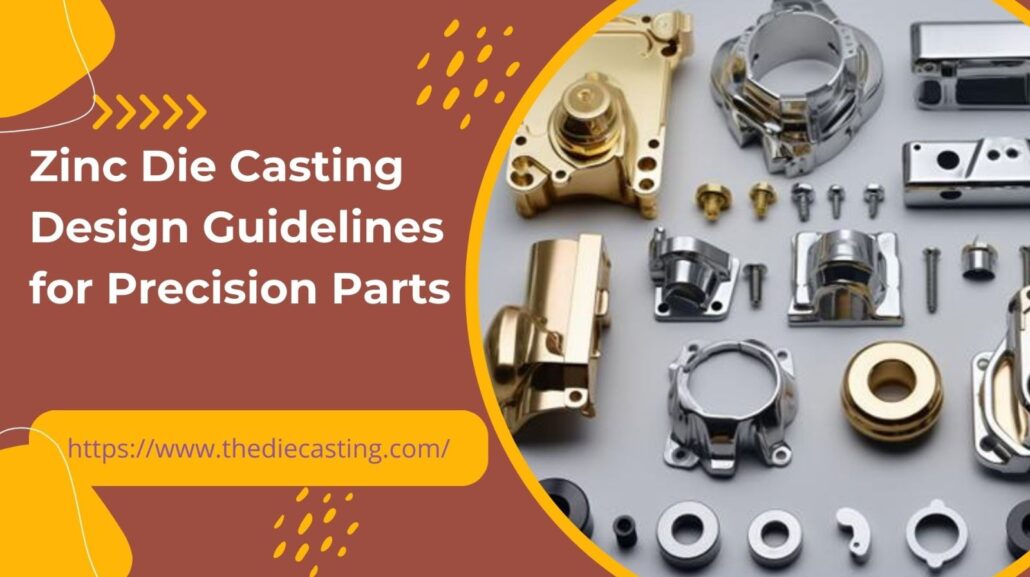
Zinc Die Casting Design Guidelines for Precision Parts

zamak 5, Zinc die casting

Zinc die casting is a flexible production method which entails an injection of zinc alloy molten matter into a specially designed mold with high pressure in order to create complex and high-precision parts. Such an approach is especially appropriate for precision parts because zinc has high fluidity, a low melting point, and can be machined to tight tolerances without much post-processing. Zamak die casting is used in industries such as automotive, electronics, consumer goods, and medical devices for parts, including connectors, gears, housings, and complex mechanisms that require dimensional tolerances and longevity. Most zinc alloys are processed using hot-chamber machines, which enable quick cycle times and a steady quality. Accurate parts benefit from zinc’s ability to produce thin walls, complex geometries, and net-shape parts, reducing material waste and assembly time. Nevertheless, high success rates are achieved when specific design rules are followed, and material properties, shape, form, and processing parameters are considered. These rules help reduce defects, improve manufacturability, and enhance precision. This article identifies major guidelines supported by industry standards set by organizations to help engineers design zinc die-cast precision parts. Advantages of Zinc Die Casting of Precision Parts The use of zinc die casting offers several benefits, making it one of the best materials for precision applications. Selection Material: Zinc Alloys Selecting the correct zinc alloy is important for precision parts because it affects mechanical properties, castability, and tolerances. The Zamak die-casting series (2, 3, 5, 7) and the ZA series (8, 12, 27) have specific compositions and performance properties. The table below will summarize the kinds of zinc alloy used in the manufacture of precision parts: Types of Zinc Alloy Tensile strength (ksi/MPa) Elongation % Hardness (BHN)   Density g/cm³   Yield strength (MPa) Melting point °C Zamak 2 52/359 7 100 6.6 283 379-390 Zamak 3 41/283 10 82 6.6 269 381-387 Zamak 5 48/328 7 91 6.6 283-269 380-386 Zamak 7 41/283 13 80 6.6 310-331 381-387 ZA 8 54/372 6-10 100-106 6.3 359-379 375-404 ZA-12 59/400 4-7 95-105 6.03 145 377-432 ZA-27 62/426 2.0-3.5 116-122 5.3 N/A 372-484 These properties can be used to ensure that zinc alloys meet precision specifications and that complex parts have high fluidity scores (1-2 on a 1-4 scale; 1 best). To be more exact, manufacturers would want to choose alloys such as Zamak 3 or ZA-8 due to their stability and ability to withstand tight tolerances. Key Design Guidelines Good zinc die casting is designed to facilitate flow and ejection while maintaining strength at minimal cost. Wall Thickness The wall thickness should be uniform to avoid porosity and distortion. For precision parts, keep it within +/-10% and use a minimum thickness of 0.040 inches (1 mm) for a good surface finish, and as fine as 0.020 inches (0.5 mm) in miniature models. Ratios of thick to thin sections should be kept to less than 3:1 to minimize the chance of porosity; preferably the inscribed sphere diameter ratios should not exceed 6:1. Thickening walls enhances flow but raises the cycle time and consumption. To distances away from the ingate, minimum thickness changes: below 0.5 mm in areas less than 50 mm, up to 2 mm at 200 mm. Different simulations can be used to check designs. In zinc casting, specify a minimum of 0.025 inches (0.635 mm) in selected locations, but 0.040 inches (1.016 mm) in best-as-cast locations. Draft Angles Draft angles help eject parts and prevent damage to the die. For zinc, the minimum drafts are 0.5 ° -1 on outside surfaces, 1- -1 on internal surfaces, and 0.1 ° -1 on round holes. Short features that use moving parts (die elements) can be printed in zero, but it is more expensive. For ribs, a 5-10 taper is used when it is not parallel to the shrinkage. Different standards give draft calculations: standard tolerances are 50 (draft angle approximately 1.9 degrees at a 1-inch depth) for inside walls and 100 for outside walls. There are also precision tolerances that permit 60 and 120 constant drafts. Fillets and Radii Fillets and radii should always be added since sharp edges lead to stress concentrations and die erosion. Minimum radius of inside fillet is 0.016 inches (0.4 mm), and outside 0.031 inches (0.8 mm). Radii of larger size (up to 0.063 inches or 1.6 mm) enhance flow and strength. Minimum radii should be used (0.060 inches (1.5 mm) for bosses and ribs). Radius at high stress should not be less than 1 mm; standards suggest ±0.08/±0.04 inches (±2/±1 mm) in fillets. This improves the part’s life and reduces cracking. Ribs and Bosses Ribs enhance reinforcement without adding bulk. Create shallow, rounded ribs (height-to-thickness ratio no more than 3:1) and evenly space them so they are not distorted. Adhesion ribs to walls with fillets to avoid porosity in the intersection. The height of bosses used to mount or thread must be equal to their diameter, and when the diameter is large, they must have ribs. Keep 0.25 inches (6.5 mm) distance between bosses. Tolerances of critical heights can be contained in ribs, such as in the precision designs of ±0.001 inches (±0.025 mm) ribs. Cored Holes and Threads Holes made in the core make it lighter and allow elements such as threads. Maximum depths are around 3 mm diameter, 9 mm blind or 24 mm through; up to 12 mm diameter with larger openings. At least 0.25 inches (6 mm) in diameter, L/D ratio not more than 4:1 in small holes. Parting Line Considerations It is best to place the parting line in the largest section possible to produce the least amount of flash and to allow easy trimming. Vertical or complicated lines should be avoided; die motion plane right angles are best. Tolerances on parting lines are the sum of linear ones, by projected area. Projected area Tolerance (+in) Upto 10 +0.0045 11-20 +0.005 21-50 +0.006 51-100 +0.009 Tolerances of Precision Parts Zinc die casting has even higher precision tolerances than standard, and sometimes 65% of those special controls are

zinc die casting

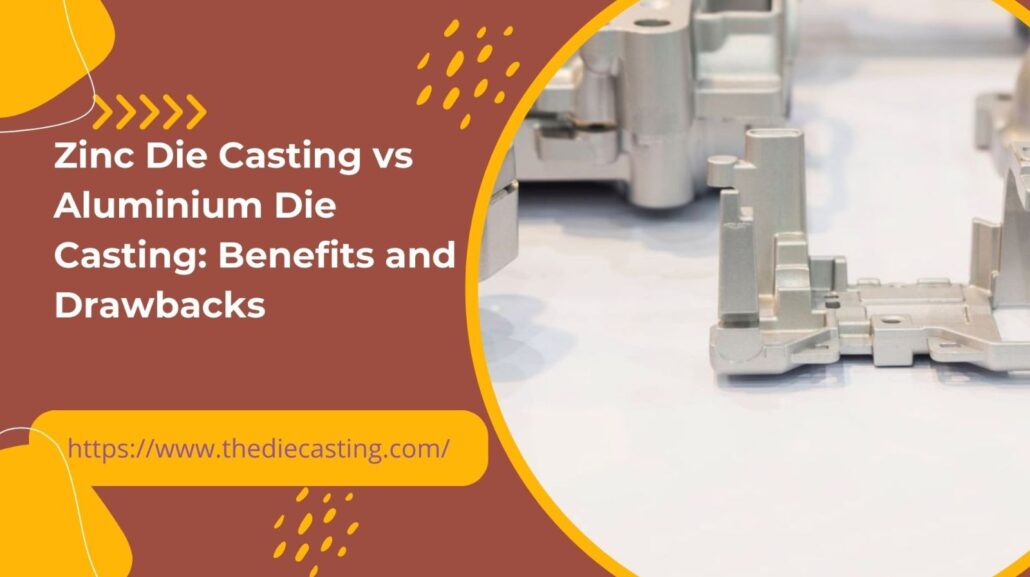
Zinc Die Casting vs Aluminium Die Casting: Benefits and Drawbacks

aluminum casting, Zinc die casting

Die casting has also been a viable and versatile process in the manufacturing sector for producing high-precision metal products. Aluminum and zinc are among the most common die-casting alloys. Supposing that you are engaged in the production of a product, engineering, or locating the ingredients, you have to realize the difference between zinc die casting and aluminum die casting. The guide will help manufacturers to choose the most appropriate alloy for their project, whether it’s automotive parts, electronics, or consumer goods. Die casting is a process of pouring hot molten metal into a mold under high pressure to produce intricate shapes with a high level of surface finishes. Both Zinc and aluminum die casting have their own merits and demerits. We will also provide in-depth comparisons, a tabular, fast-tracked view, and professional commentary to help you make an informed decision. At the end, you will clearly understand the difference between zinc die casting and aluminum die casting, and when to use either of them. Let’s explore the key factors. What is Die Casting? A Quick Overview It is vital to understand the die casting process before comparing zinc die casting and aluminum die casting. Die casting is a process of forcing molten metal into a mold cavity under high pressure (1,000 to 20,000 psi). The hardened steel mold or die can typically produce thousands of similar parts with tight tolerances. Die Casting Types Hot Chamber Die Casting  It is applied in low-melting-point metals such as zinc. The injection system is dipped in molten metal. Cold Chamber Die Casting It is best when the metal has a higher melting temperature, such as aluminum. Lading of molten metal into the chamber is done to prevent damage to the machine. It is preferred for its speed, accuracy, and ability to create complex designs without extensive post-processing. At this point, we will compare the two star alloys: zinc and aluminum. Primary Properties of Zinc and Aluminum Die Casting The decision between zinc and aluminum die casting is often reduced to material characteristics. Zinc (and is commonly alloyed as Zamak) and aluminum (such as ADC12 or A380) do not share the same strengths, weight, corrosion resistance, etc. Strength and Durability Zinc alloys are reported to possess great impact strength and ductility. They can withstand significant stress without breaking, making them suitable for components that should be bent or shaped after casting. Aluminum alloys, on the other hand, are superior in tensile strength and hardness, particularly in structures. Weight and Density Compared to zinc, which has a density of 6.6 g/cm 3, aluminum is lighter (d = 2.7 g/cm 3). This contributes to the use of aluminum in industries that require low weight, such as the aerospace industry. Melting Point and Castability Zinc melts at approximately 380-390 °C, allowing hot-chamber machines to run faster. Aluminum-only melts at 660 °C, which means cold-chamber processes that may slow production but enable thinner walls to. Corrosion Resistance Both have good resistance; however, aluminium performs better under harsh conditions because it naturally forms a protective oxide coating. Outdoor use of zinc demands coating. Features Zinc die casting Aluminum die casting Melting point 380-390 degrees 660 degrees Tensile strength 280-400 200-300 Density 6.6 2.7 Thermal conductivity 109 100-140 Electrical conductivity High Very high Impact strength Ductile Brittle Corrosion resistance Good Best Benefits of Zinc Die Casting The versatility of zinc die casting has made it a reliable option for more than a hundred years. That is why manufacturers are fond of it: Outstanding Dimensional Accuracy Zinc remains intact to 0.05mm or less, eliminating the need for secondary machining. The manufacturer can achieve extreme dimensional accuracy with zinc die casting moulds. High Finish The raw material itself has a high-quality finish. Parts emerge clean and frequently do not require additional polishing before being plated or painted. Prolonged Tool Life Zinc melts easily, so the dies wear out less, resulting in lower long-term tooling costs. The products are corrosion- and wear-resistant, resulting in a longer lifespan. Fast Speed of Production The molten material solidifies within 15-30 seconds. It makes zinc die casting suitable for high-volume production. Large-scale industry uses it to improve and increase production. Affordable for Small Components Zinc is ideal for complex, small parts such as locks, gears, and hardware. But weight-sensitive applications may make zinc less desirable due to its greater density. Examples of standard alloys include Zamak 3 (general-purpose) and Zamak 5 (higher strength). Applications In other industries, such as the automotive sector, zinc is utilized in door handles and brackets. In the case of electronics, it is preferred in connection because it can shield against EMI. Benefits of Aluminum Die Casting In larger and structural components, aluminum die casting is leading. Its benefits include: Lightweight and Strong Aluminum components can reduce the product’s total weight by 50 percent compared to steel or zinc. Aluminum is light but strong. That makes aluminum die casting ideal for producing products suited to high-strength applications.   Excellent Corrosion Resistance It does not need further coating in most instances, which is time- and money-saving. The products made from aluminum die casting have a longer lifespan and remain intact. Good Thermal and Electrical Conductivity Aluminum’s ability to conduct electricity and heat makes it ideal for a wide range of applications. It is perfect for use in heat sinks, engine blocks, and electrical housings. Recyclability The aluminum die-casting process is best because of its high recyclability—100 percent aluminum recycling, in line with sustainable manufacturing trends. Thin-Wall Capability Aluminum die casting can produce walls as thin as 0.5mm, enabling complex designs. Drawbacks Contradictions and Disadvantages Not any material is perfect. In the case of zinc die casting as compared to aluminum die casting, these are the cons: Zinc Die Casting Limitations Aluminum Die Casting Restrictions Comparison of Costs: Zinc Die Casting vs Aluminum Die Casting A significant factor in the zinc die versus aluminum die casting is cost. Raw materials are usually cheaper, getting Zinc (2-3/kg) as compared to aluminum (2-4/kg), yet tooling and manufacturing

zinc die casting

Reviews of Zinc Die Casting Service Providers for Automotive Parts

Zinc die casting

Introduction In the automotive industry, zinc has been a pillar raw material for die casting because it has a remarkable mixture of precision, strength, durability and cost-effectiveness. Automakers are also turning to the use of zinc alloys in those parts that demand tight tolerances, thin walls, high surface finishes, wear and corrosion resistance. This is used in common applications such as door handles, lock housings, seat belt mechanisms, gears, brackets, sensor housings and inner trim pieces. The technology is to inject high-pressure molten zinc into steel moulds, which can be of complex geometry and volumes with limited secondary machining. Chinese Mold Manufacturer has already dominated the world of zinc die casting by being able to offer tailor-made prices, facilities and the necessary certification, such as the IATF 16949, that is required by automobile suppliers. This paper summarizes the top zinc die casting service companies focusing on automotive parts, based on the capabilities of the companies, customer reviews and industry reputation. We are targeting the Chinese manufacturers, who are the major source of worldwide provision of low-priced yet high-quality motor parts. Key Advantages of Zinc Die Casting With the latest development of vehicles towards electrification and lightweighting, zinc die casting services are important to making dependable, high-performance components. The Zinc Die Casting Process Zinc die casting is a very efficient production process that is accurate in making complex metal parts that have superior surface finishes. It is especially well used in the auto industry with parts that have thin wall requirements, are high strength and have better plating compatibility. Just like aluminum die casting, zinc employs the hot-chamber process because it melts at a lower temperature (approximately 420 °C), providing it with short cycle times and extended tool life. Principles of the Zinc Die Casting Process Mold Preparation To ease ejection and temperature control, the steel die (mold) is sprayed with lubricant. The mold is made from strengthen material like steel that contains all the details of the automotive parts. Melting and Injection Zinc alloy (usually Zamak 3, 5 or ZA-8) is melted in a furnace that is connected to the machine. A gooseneck plunger is inserted into the molten metal and forces the final under high pressure (as much as 30 MPa) into the die cavity. Solidification The metal solidifies (a few seconds) in the water-cooled die, and the metal is solidified in its form of choice. Ejection The die is cast, and ejector pins push out the casting. The final shape of the product is solidified. Trimming and Finishing Flash (runners) is removed. The secondary processes, such as machining, plating or powder coating, are included. Trimming the unwanted part of the zinc automotive product is the final step. Why Zinc Die Casting is Superior in Automotive Applications Zinc alloys (i.e., Zamak 3, 5, and ZA-8) have distinct advantages compared to such alternatives as aluminum: High Quality Finish and Surface Finish Zinc fluidity allows adding thinner walls (down to 0.5mm) and finer details to minimize the post-processing. The automotive parts made from zinc have thinner walls and greater strength. Increased Strength and Impact Resistance Suited to components with safety-critical functions such as seat belt retractors and locks. The automakers preferred using these products. Extended Tool Life Due to the low melting point, zinc die casting products’ life is increased, and high-volume runs have reduced costs. Outstanding Plating Compatibility The process of zinc die casting is ideal for exterior or interior parts, as these are chrome-plated. Economical with Medium Volumes The automotive parts made by zinc diecasting use hot-chamber processes and have faster cycle times than aluminum. Zinc vs. Aluminum Die Casting Comparison for Automotive Parts Automotive parts could be made from zinc or aluminum. Here is the comparison table for the users to make the best decision according to their need of product. Features Zinc die casting Aluminum die casting Wall thickness Thinner (0.5-1.5mm) Thicker (2-5mm) Weight Higher High Melting point Low High Thermal conductivity High Low Corrosion resistance Higher Low Impact/strength High impact resistance Greater ductility Tool life Longer Shorter Cost Better for smaller parts Better for larger parts Applications Auto marine Power steering system Fuel system Engine system Automotive components Aerospace House appliances Medical automotive Best Die Casting Providers of Zinc                                                                                      Die Castings China (CNM Tech) This is a company that deals with zinc die casting and aluminum in the automotive parts industry in Dongguan, which is a die-casting hub. They have machines ranging from 120 to 1600 tons and in-house machining, deburring, plating, and powder coating. Strengths full service (one-stop), IATF 16949-certified, high concentration on automotive (e.g., brackets, housings). High-quality deburring provides parts without an accent. Customer Reviews Compliments on consistency, speedy delivery and competitive prices. Plated finishes are ideal for OEMs. Rating 4.8/5 -Dependable when using on mid-to-high volume automotive runs. GC Precision Mold Co., Ltd. GC, a zinc die casting manufacturer, was founded in 1999 in Dongguan, and it provides IATF 16949 certified zinc, aluminum and magnesium die cast. They cover the automotive, electronics and hardware industries. Strengths Large assortment of alloys, integration of CNC machining, and extreme care to tight tolerances. Verified in automotive components such as gears and housings. Customer Reviews Customer satisfaction rating (transparency, responsiveness, and consistency of quality) was high. Customers report about superior English communication. Rating 4.9/5 -Best selection of precision automotive parts. Sincere Tech (Dongguan Sincere Tech Co., Ltd.) Although its major operations are plastic injection and general die casting, Sincere Tech also offers zinc die casting services, together with machining and assembly. They refer to die cast of metal components, including the automobile. Strengths All-in-one services (design to assembly), ISO 9001:2015, 18 plus years of experience. DFM and fluent English assistance. Customer Reviews Favorable response towards project management and problem-solving. Excellent in problem-solving according to foreign clients. Rating 4.7/5: Strong on combined projects of zinc and plastic parts. PHB Inc. PHB is a hundred-year-old American company that deals with aluminum and zinc die casting. They work with large car manufacturers, making components such as drilling, milling

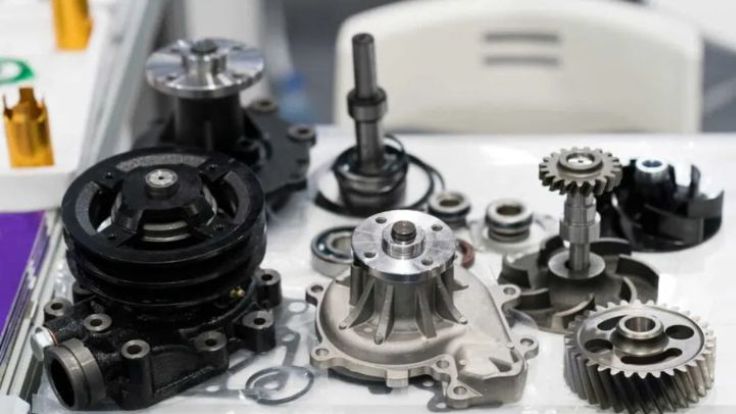
Top Automotive die casting companies in China and the world 

aluminum die casting, die casting companies, die casting company, Die Casting Manufacturer

Aluminum die casting is one of the most dependable and cost effective manufacturing processes in the contemporary industry. It is the process of high pressure injection of high temperature melted aluminum into an accurate mold to create powerful, lightweight as well as dimensionally precise parts. It is particularly useful in the production of highly complex shapes with high surface finishes, and thus it is a favored process in the automotive, aerospace, electronics, consumer products, and industrial machinery industries. The aluminum die casting has been on a high demand in the past years. The tendency of the world towards electric cars, lightweight constructions, and energy efficiency has put the aluminum alloys on the frontline of innovation. Manufacturers have now developed high-tech components like engine blocks, transmission houses, battery enclosures and heat sinks that are both durable and lightweight. Recyclability and resistance to corrosion make aluminum also helpful in the world-wide tendencies to produce sustainable and ecologically friendly. Two of the major aluminum die casting hubs are the United States of America and China. Campanies in the United States are known to be innovative, have high standards in quality, and use high levels of automation and can be considered as a good investment in high precision industries. Conversely, Chinese manufacturers have gained a lot of competitiveness over the world market, have provided a cost effective solution, high production capacity and more advanced technologies. This paper will discuss some of the most successful aluminum die casting industries in the USA and China, their strengths, abilities and the factors that make them the most reliable partners that businesses across the world as their preferred suppliers in the manufacturing industry. What is Automotive Die Casting? Die casting is a production process whereby molten metal, usually aluminum, magnesium, or zinc, is forced under great pressure into a mold that has an open space. This enables mass production of high-strength components of complex functions and with good surface finish and dimensional accuracy. Die casting in the automotive industry allows the production of components which are: The use of die casting has revolutionized the construction of contemporary vehicles whereby one can save weight and still manage to perform at the same time. The demand has contributed to the high rate of development of the major Automotive die casting firms in China, Europe, America and Japan. Why China is the leader in Automotive Die Casting China has some of the largest in the world of manufacturers of Automotive die castings because of its: Such a set of strengths has enabled Chinese auto-motive die casting firms to be the powerhouses not only in the local market but also internationally in the supply chain. CNM Tech Diecasting Company is a leading producer of superior aluminum die-cast products. They offer several sectors such as automotive, electronics and telecommunication with precision-engineered components that are aimed at maintaining the highest quality standards. They can produce light and strong parts utilizing their advanced production processes such as high-pressure die casting and CNC machining. The Diecasting Company believes in the power of constant innovation and therefore, it invests in modern machinery, automated production lines and more importantly quality control systems that help to deliver the same results at all times. Both OEMs and Tier-1 suppliers are also in their global client base, and therefore, they are a reliable partner in meet complex and large-volume production needs.  Website: https://www.thediecasting.com/ Why Choose Them  The Diecasting Company is preferred by businesses because it is focused on quality, precision, and innovation. Their application of state-of-the-art die casting technologies, strong quality control, and delivery on time makes sure that their clients get the components that could meet international standards and make them their favorite choice when it comes to automotive OEMs and manufacturers that want to find a reliable die-cast solutions provider. Industries Served  Sincere Tech  Sincere Tech is one of the producers of high-precise molds in plastic injection and die casts. They have a background in designing mold, prototyping, and manufacturing of the final product which provides a one-stop solution to their customers all over the world. They use computerized CAD/CAM software and automated machining so that all the molds manufactured are very accurate. Plastic Mold can be credited with years of experience in serving the needs of automotive, consumer electronics and medical device industries with the capacity of delivering complex molds with efficiency. They stand out in their innovation, quality control, and speed in delivery, thus making them a trusted supplier of companies that would like to have a personalized mold solution. Website: https://www.plasticmold.net/ Why Choose Them Plastic Mold is selected due to their complete mould making systems, technical skills and capability to fit into constrained production time. Their superior quality molds minimize errors, enhance productivity and aids clients to have accurate and dependable die-cast or injection-molded products. Industries Served  GC Precision Mould  GC Precision Mould is a producer of die casting in China which provides aluminum, zinc, and magnesium die casts. They have reputations of manufacturing high quality, cost effective, and lightweight parts in the automotive, electronic and lighting sectors. They have the abilities of high-pressure die casting, CNC machining and secondary finishing operations. Alu Diecasting is focused on accuracy, longevity and productivity. They are always up to the international standards with the use of modern facilities, automated lines, and skilled engineers. They cater to customers both locally as well as internationally such as OEMs and Tier-1 suppliers, and are positioned as a top Chinese manufacturer of die castings as an automotive industry. Website: https://aludiecasting.com/ Why Choose Them  They are using Alu Diecasting as they offer a combination of competitive prices, high-quality standards, and technology. They have a track record of various alloys, precision machining and on time production which maintains dependable, long life, and lightweight parts that satisfy the demands of the world automotive industry. Industries Served  Get It Made Get It Made is a producer of CNC machining, 3D printing, die casting, and metal forming based in UK. They support both prototyping and low-volume production,

What is Cast Aluminum Cookware?

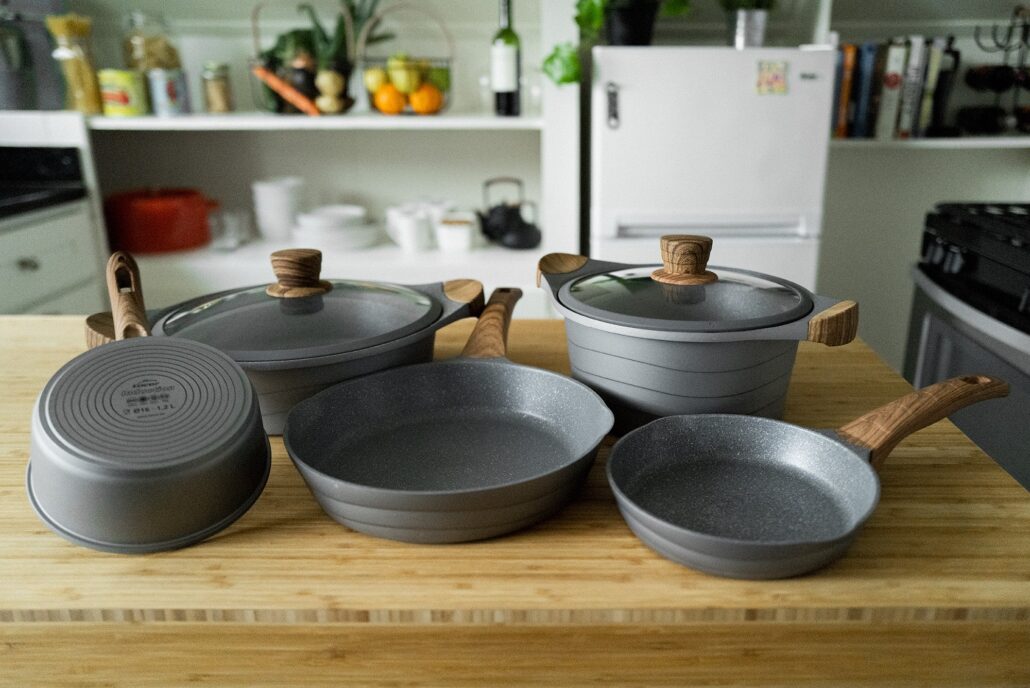
What is Cast Aluminum Cookware? A Complete Guide

Aluminium, aluminum casting

Cast aluminum cookware is becoming popular in kitchens worldwide. It is lightweight, inexpensive, and easy to use. The food can have a different taste depending on the cookware that is used, including the easy cooking process. Cookware is also time-saving and long-lasting. The cast aluminum is made by pouring molten aluminum into a mold. The method gives the cookware both a concrete structure and consistency in the thickness. It allows the pan or the pot to warm up quickly and evenly spread the heat. This simplifies and reduces the time spent preparing day-to-day meals. Cast aluminum is another relatively lightweight material that many people have been using since it is relatively inexpensive when compared to stainless steel. It may also be prepared in different shapes and sizes; therefore, it may be fried, baked, and boiled. However, cast aluminum has its negative sides. It is not as tough as stainless steel nor as tough as cast iron. There are also some types of cooking utensils that need a non-stick or anodized coating so that the food does not stick or is not in contact with acidic foods. In this article, all of these will be expounded using simple language. You will be introduced to the advantages, disadvantages, security, and treatment of cast aluminum cookware. How Cast Aluminum Cookware is Made? Cast aluminum cooking utensils are produced as a result of pouring the melted aluminum into a mold. The metal (aluminum) will then be in the shape of a pan, pot, or baking dish after cooling down. The process makes the cookware tougher and heavier than the traditional pressed or rolled aluminum. The two big stages of the process are: Such casting makes the coocooklightlightut strong enough that it can be used daily. Others are non-stick envelopings on them to prevent the sticking of food, and to facilitate their cleaning. Cast Aluminum Process of Cookware Preparing the Aluminum The initial step entails the selection of aluminum. Pure aluminum or recycled aluminum can be used by manufacturers. This is put into large furnaces where it is heated to over 660 °Cuntil it melts to form a liquid. This stage is where purification of the aluminum is done to determine that it will be strong and safe in the final product. Creating the Mold Once the aluminum is on hand, the mold is created. The form is determined by the mould, and it may be a frying pan, a pot, or a baking pan. These moulds are mostly sandy or steely. The thinness, balance, and durability of the copopotterarere dare be determined by the type of mold and the level of exquisiteness. Pouring the Molten Aluminum The mold is then filled with liquid aluminum. It is filled to the very brim in every crevice of design. It is the process that also causes cast aluminum cookware to be heavier and stronger than pressed aluminum cookware. Cooling and Solidifying After being poured, the aluminum is expected to cool down. It is stiffening and depressing when it comes to cooling and acquires the shape of the mold. The cooling is required as it removes cracks, air bubbles, or weak areas that can jeopardize the quality of the cookware. Trimming and Finishing Once hardened, cookware is removed from the mold. Such is where a crude surface gets cut and polished. Other features are also incorporated, such as handles and bases. This is to ensure that the cook’s uniform is smooth, safe, and ready to be coated. Surface Coating and Finishing Most cast aluminum cooking utensils are surface-treated. They have most of them supplied with non-sticky surfaces, such that the food does not stick on the surfaces,, and the cleaning does not take much time. They can be anodized by others, and this increases their resistance to corrosion and scratches. These finishes are also resistant to the reactivity with acidic food. Quality Testing The quality control is the last one. All of the works are inspected on balance, durability, and coating safety. Cookware that has been carefully checked is packed and only sent into the market. It will ensure the customers receive durable, quality, and safe cookware. Cast Aluminum Cookware advantages What is the reason not to use other materials, to use cast aluminum? Here are the key benefits: Lightweight In comparison to cast iron, it is very light in cast aluminum. It does not take much time tocleanna, and it is more so when one has a cook who prepares meals regularly for the elderly. Superb Heat Distribution Aluminium is a thermal conductor. Cast aluminum utensils are quick to cook and evenly cook. This means that there would be fewer hot spots and even cooking. Affordable It is normally cheaper than stainless steel or copper cookware. It has decent performance at an affordable price. Versatile Cast aluminum may be fried, baked, boiled, or simmered. Some are even oven-safe. Quick Heating The aluminum makes food cook more quickly since it reacts to heat faster. This saves time and energy. Disadvantages of Cast Aluminum Cookware Despite several advantages of cast aluminum cookware, it also possesses several limitations: Durability Issues The cast aluminum is softer than the cast iron or stainless steel. Eventually,, it is likely to be dented or scratched, especially when it is not handled properly. Reactivity with Food The uncoated aluminium can react with acids such as tomatoes or vinegar. This may either render it metallic or discoloured. The majority of modern cast aluminium pans are coated to such effects. Coating Problems The non-stick film on the pan may be of poor quality, and thus, it may wear away with time. It can be scrubbed with hard sponges or metal utensils, and this decreases its life span. Aluminum Cast And Other Cookware The choice of cookware is more of a choice. The cast Aluminum performance when compared with the popular substitutes stands as follows: Cast Aluminum and Stainless steel The first distinguishable difference in the case of the cast aluminum and stainless steel is the heat

Brass Cabinet Hardware: A Complete Guide to Style, Function, and Durability

Brass Cabinet Hardware: A Complete Guide to Style, Function, and Durability

Brass Cabinet Hardware

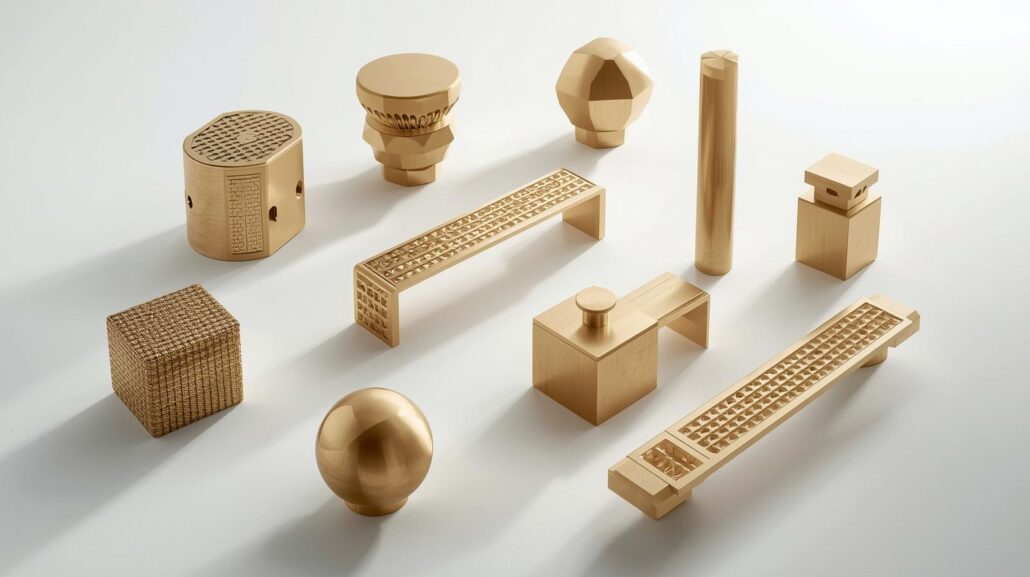
Cabinet hardware can be viewed as minor detail, yet it can change the appearance and functionality of a room. Of the numerous finishes that can be used, the brass cabinet hardware is a test of time in terms of beauty, strength, and versatility. Considering remodeling the kitchen, upgrading the bathroom vanity, or even refreshing the storage furniture, the brass finish is the one that will be durable and, at the same time, very stylish. Both designers and homeowners still prefer the useof brass hardware as it has added significance to modern and traditional interiors. Its warm tones, which are of gold, also match well with wood, stone, or painted cabinets, making it one of the most adaptive finishes. As simple, modern pulls as fancy, vintage knobs, brass cabinet hardware is a feature that gives the whole design of a space an upscale look. Brass, unlike other metals, is a good-looking item, but it provides long-lasting value. The quality of brass kitchen hardware and brushed brass hardware resists corrosion, can be used in everyday life, and acquiress the status of timeless. Such a blend of style and performance makes brass an investment that enhances the appearance and functionality of the cabinets so that they are refined over the years to come. History and popularity of Brass in Design Brass is a copper-zinc alloy and has been applied in various structures, furniture, and ornaments forcenturies. Brass used to be a common decorative fitting and fixtureas it was deemed highly beautiful and elegant once. The brass hardware is also still used in the present daydue to its appearance and its durability and strength, and it is also used in the current-day interiors due to the practicality in its usage and its appearance,, which is more than impressive. The timeless quality of the brass cabinet hardware is its flexibility. It may be shined brightly and reflective like a mirror, or it may have a more subdued look and be finished in muted colors. Since the shift of interior decor towards warmer metallics, brass remains one of the finishes that can be mixed with light and dark cabinets. What does Brass Cabinet Hardware mean? Brass cabinet hardware is knobs, pulls, hinges, handles, and other fittings manufactured out of the alloy of copper and zinc, known as brass. Such hardware is very common in the kitchen, bathroom, and furniture since it is strong, durable, and not out of fashion. Compared to cheaper metals, brass does not corrode and will naturally age with a patina, and it can be polished, left in a satin finish, or antique, or left in the so-called brushed brass hardware. The designers and owners of homes prefer the use of brass hardware due to its diversity. Specifically, brass kitchen hardware is functional and stylish, and it has become one of the most popular options to upgrade the cabinets. Types of Brass Hardware Cabinet accessories come in an array of different forms made out of brass, with each being used in a different way. The most popular ones are: In any design project, brass cabinet hardware, regardless of its type, is a useful addition in terms of decorative and functional purposes. The manufacturing of Brass Cabinet Hardware The production of so-called brass cabinet hardware is a long-stage product manufacturing process based on the requirements of durability, usefulness, and beauty. It is a process that uses a mixture of both traditional and modern metal finishing techniques. Alloy Preparation It starts with the melting of a mixture of copper and zinc to form brass. Additional elements can be added depending on what finish is desired. This makes the brass hardware with the correct strength, machinability, and color. Casting or Forging After preparation of the brass alloy, it is then cast (molten brass poured into castings) or forged (pressed and heated brass compressed into castings). Copies of brass kitchen hardware are more powerful and sturdier. Machining and Shaping These are then turned into accurate shapes, knobs, pulls, handles, or hinges. CNC machines and old-fashioned lathes tend to build uniformity in the so-called brass cabinet hardware. Surface Finishing When the pieces have been shaped, they are automatically ground and polished to a smooth finish. Finishes applied at this stage include polished, antique, satin, or brushed brass hardware to give it the desired appearance. Plating or Coating (Optional) In other instances, a protective coating of lacquer or further plating is made to increase resistance to corrosion. It is common to leave solid brass unlacquered in the natural patina style. Mechanical Assembly and Quality Control Lastly, the quality, fit, and finish of every item of the brass cabinet hardware are checked. Assembling screws and fittings and packaging them are done before distributing. Advantages of Brass Cabinet Hardware Durability Brass is a material that has been known to have strength and endurance. Solid brass, unlike cheaper alloys does not bend, bend, and break, meaning your cabinets will be useful over time. It is particularly significant that brass kitchen hardware has to stand up to daily wear. Timeless Aesthetics Interiors are made warm and rich with the golden hues of brass. It has smooth finishes and polishing that is elegant, and the hardware is brushed brass, giving it a modern, subtle look. Corrosion Resistance The inherent nature of brass is such that it is resistant to tarnish and corrosion and should therefore be used in the kitchen and bathroom where moisture is abundant. Versatility Ranging from coarse farmhouse kitchens to polished modern bathrooms, brass cabinet hardware goes well with all kinds of styles. It has been flexible, which is why it is still used in various projects of brass hardware by designers. Usage in Bathrooms and in Kitchens One of the most noticeable details in the kitchens and bathrooms is cabinet hardware, where functionality and design should be in harmony. Brass cabinet hardware offers the strength needed in busy areas, as well as serving as a decorative center stage. Kitchens The contemporary kitchen styles are more than pleased with the

Scroll to Top

Get a quote