
Zinc die casting is considered one of the preferred production processes for decorative hardware because it can produce complex, high-quality finishes at a cost-effective rate. This is done by forcing molten zinc alloy under high pressure into a precision steel mould to produce parts with superior surface finish, tight tolerances, and intricate geometries.

Decorative hardware comprises door handles, cabinet knobs, pulls, hinges, scutcheons, and decorative accents for residential, commercial, and architectural applications. The low melting point (380-390 °C) and high fluidity of zinc allow for finely detailed thin walls (down to 0.5 mm), extended tool life (typically over 1 million shots), and large dimensions.
These features make it suitable for decorative works that need to be both appealing and functional in the long term. Finishes such as chrome, nickel, brass imitation, or antique bronze enhance visual luxury and offer corrosion resistance.
Ordinary Zinc Die Casting Decorative Hardware Alloys
The choice of the right zinc alloy in the production of decorative hardware is critical to the performance, stability, appearance, and overall cost-effectiveness of the products. Zinc alloys are popular because they offer a good compromise between castability, strength, and finish.
| Alloy | Composition | Hardness | Tensile strength (Mpa) | Elongation % | Applications |
| Zamak 3 | Zn 96% Al 4% Mg 0.03% | 82 | 283 | 10 | Doorknobs, escutcheons, ornamental plates |
| Zamak 5 | Zn 95% Al 4% Cu 1% | 91 | 331 | 7 | Cabinet pulls, hinges, locksets. |
| Zamak 7 | Zn 95.9% Al 4% Ni 0.02% | 80 | 285 | 13 | Intricate finials, decorative brackets |
| ZA-8 | Zn 91% Al 8.4% Cu 1% | 103 | 372 | 6-10 | Heavy-duty hardware like gate latches |
Zamak 3
The most common decorative hardware application is Zamak 3. It offers great castability, dimensional stability and a smooth as-cast surface. These characteristics make it suitable for door handles, cabinet knobs, rosettes, and other parts exposed to view. Zamak 3 also offers good compatibility with plating, painting, and powder coating, enabling manufacturers to achieve high-quality decorative finishes with minimal surface preparation.
Zamak 5
Zamak 5 is enhanced with a small amount of copper, which enhances hardness and creep resistance. The alloy is typically used to make load-bearing decorative hardware, including hinges, locks, latches, and structural fittings. The increased mechanical strength enables the parts to withstand repeated stress and prolonged use, maintain good surface condition, and maintain good dimensions.
Zamak 7
Zamak 7 is appreciated for its purity and fluidity. These features make it particularly appropriate for intricate, thin-walled, and ornate designs. It is frequently employed with complex hardware components that require sharp edges, fine finishes, and a high-quality surface appearance.
ZA-8
ZA-8 has greater wear resistance and strength than standard Zamak alloys. Its application is commonly referred to as decorative hardware that is higher stress or mechanical load, and both durability and appearance are needed.

Best Zinc Die Casting Products of Decorative Hardware
Zinc die casting is critical in the manufacture of decorative hardware, as it provides a perfect blend of strength, accuracy, surface quality, and cost-effectiveness. Ornamental hardware accents are not merely useful; they also play a major role in the appearance of doors, furniture, and architectural interiors.
Zinc die casting enables manufacturers to form complex shapes with tight tolerances and surface features, making it the choice for both high-end and mass-market decorative hardware. Zinc die-cast products, whether door handles and cabinet pulls, hinges, or ornamental accessories, are designed to withstand heavy use while retaining their beauty.
Door Handles and Levers
Decorative hardware products, such as zinc die-cast door handles and levers, are widely used for their flexibility in design, mechanical performance, and ergonomic comfort. These parts are typically designed with wall thicknesses of 1 to 2mm, making them very lightweight yet structurally sound.
Draft angles of 1 to 2 degrees are commonly used to ensure easy ejection and maintain fine surface detailing. In fact, modern zinc die-cast lever designs are frequently designed with internal springs and mounting provisions. This integration reduces assembly complexity and enhances its smooth operation.
These handles are made from high-quality zinc alloys to ensure tensile strengths up to 300 MPa and long-term resistance to bending and deformation. Well-designed zinc levers can withstand 500,000 or more cycles and are therefore used in entry doors, interior passages, and busy commercial settings.
Cabinet Knobs and Pulls
One of the most economical uses of zinc die casting is for cabinet knobs and pulls, as well as small, very delicate parts. Zinc also has great fluidity, which enables the manufacture of small designs with fine textures, impressed logos, and fine threading.
Common cabinet knobs are about 1-1.5 inches in diameter, and common pulls have a 3-12-inch centre-to-centre spacing, all with high dimensional accuracy. Zinc die-cast cabinet hardware is so lightweight (typically 50-150 grams) that it is simple to install and use daily.
The texture of the grips and the contour design promote comfortable handling, whereas the inner hardness of the zinc alloys provides resistance to scratches, fingerprints, and wear. Popular finishes include brushed antique brass, satin nickel, and oil-rubbed bronze, which are timeless and will fit both modern and antique furniture designs.
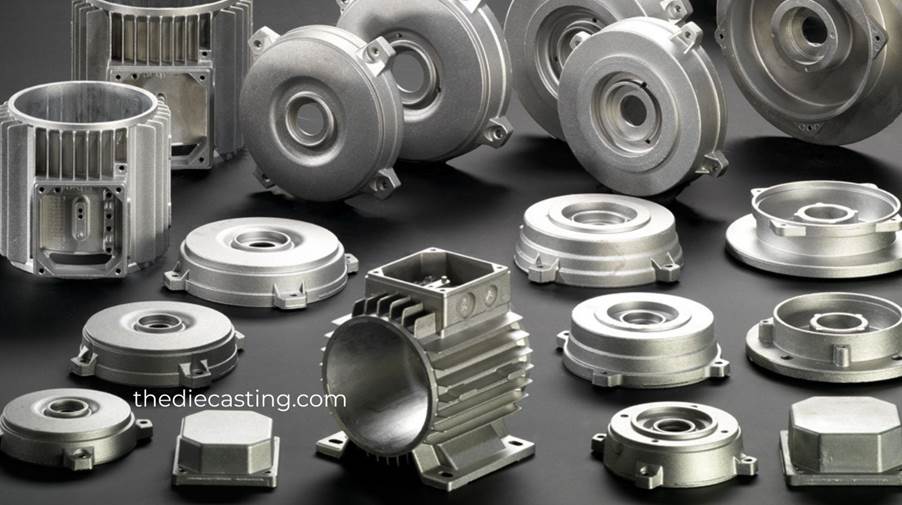
Furniture and Door Hinges
Hinges made by zinc die casting are appreciated for their smooth operation, consistent dimensions, and ability to incorporate functional features. The typical hinge types are hinges, concealed hinges, and pie-cut corner hinges. These hinges usually have loads of 20-50 kg, depending on the use.
Zinc die casting enables the addition of self-lubricating properties, built-in stops, and accurate pivot points, thereby enabling smooth, quiet operation. Close dimensional tolerances of 0.05 mm ensure a tight fit between the doors and frames.
Zinc hinges can be used in both the residential and light commercial markets, with nickel plating and other protective coatings providing up to 500 hours of corrosion protection.
Keyhole Covers and Escutcheons
Escutcheons and keyhole covers can be used to protect as well as be decorative. Zinc die casting allows making thin sections as small as 1 mm, while also enabling high-resolution details of 0.1 mm. Such accuracy enables manufacturers to create embossed designs, ornamental borders, and personalised designs that match door locks and handles.
These pieces are usually finished in chrome, satin nickel, or antique finishes to coordinate with the hardware. The smooth surface of zinc die castings is related to the good adhesion of the plating layers, which creates a polished, long-lasting finish.
Ornamental Features
In addition to typical hardware items, zinc die casting is also common for ornamental details such as hooks, brackets, finials, appliance pulls, and decorative trims. The process assists in the manufacture of entire pieces of hardware for coordinated interior design themes.
The versatility of Zinc enables designers to use the same style, finish, and performance throughout an entire room or building, and it is a choice material for comprehensive decorative hardware systems.
Technical Properties of Zinc Decorative Hardware
One of its biggest strengths is the technical performance of the zinc die-cast decorative hardware. Zinc alloys offer an optimum combination of tensile strength, hardness, and impact resistance. It guarantees long service life even in high-use environments.
Zinc is also a good surface corrosion-resistant material; it has excellent corrosion resistance, particularly when used with suitable surface treatment. This makes it appropriate for indoor and controlled outdoor environments.
The summary of the technical properties of zinc are as follows:
| Design | Value | Purpose | Impact |
| Wall thickness | 0.8-3 mm | Uniform cooling | Prevents warping in knobs/handles |
| Draft angle | 1-3° | Easy ejection | Smooth release for intricate plates |
| Tolerance | ±0.05 mm | Precision fit | Ensures alignment in escutcheons |
| Rig height | 2-4x wall thick | Reinforcement | Strengthens pulls without weight |
| Fillet radius | ≥0.5 mm | Stress reduction | Enhances durability in hinges |
Main Benefits of Zinc Die Casting in Decorative Use
Zinc die casting is commonly used for decorative purposes, as it effectively blends technical capability with high aesthetic value. Zinc alloys offer a consistent solution for products that need to appear sophisticated.
It can serve as furniture fittings and cabinet hardware, bathroom accessories, and architectural decorations and fixtures. The procedure enables manufacturers to produce complex decorative parts effectively without compromising quality, durability, or design flexibility.
Great Bearing and Great Detail
Zinc die casting has the potential to produce high precision and fine detail, a feature that makes it one of the technique’s most significant advantages. Zinc alloys flow readily in the liquid state and can thus fill complex mould cavities.
Tolerances up to ±0.05 mm can be held, and sharp edges, crisp logos, embossed patterns and textured surfaces can be produced. This accuracy can sometimes eliminate the need for secondary machining, enabling manufacturers to maintain high-quality consistency across large production volumes.
Excellent Finish of the Surface and Plating
Zinc die casting provides a good cast surface finish, typically ranging from 1.6 to 3.2 μm. This flat surface is perfect for decorative finishes, including electroplating, powder coating, painting, and PVD coating.
The Nickel and chrome plating layers 5 to 25,000m with high adhesion are supported using zinc parts. These finishes can withstand 96 to 500 hours of salt spray testing per ASTM B117, making zinc die-cast components suitable for areas with moisture, use, and daily use.
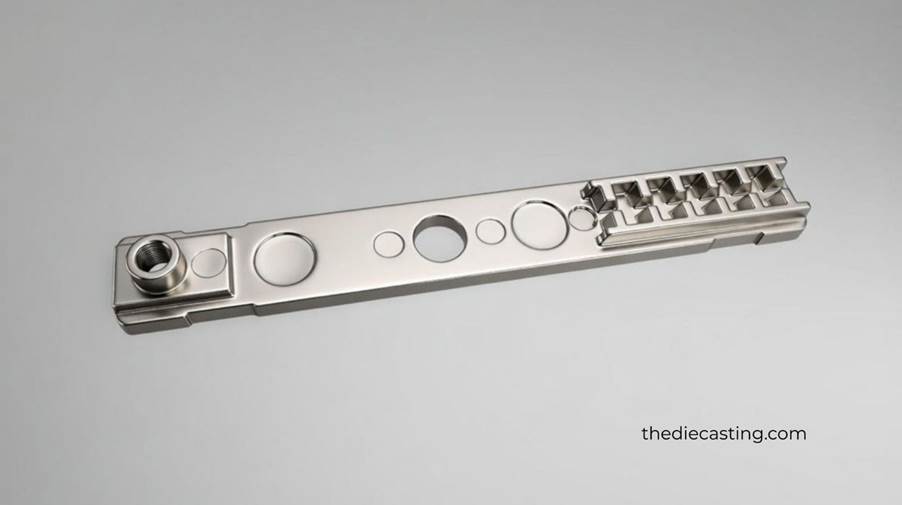
Power and High Endurance
Zinc die-cast parts offer exceptional mechanical strength despite their decorative use. Zinc parts are impact-resistant, deformable, and do not form a surface due to tensile strengths of 280-370MPa and hardness of 80-100 Brinell.
This permanence is necessary for ornamental hardware, such as handles, knobs, and fittings, which are often touched or subjected to mechanical force, to ensure they last a long time without losing their appearance.
Mass Production Cost Efficiency
Zinc die casting is very economical when used in mass production. Zinc has a low melting point, which minimizes energy use, and its high production output is enabled by short cycle times of less than 15 seconds.
The small amount of scrap also reduces material waste, and any surplus zinc can be recycled and reused. All this contributes to why zinc die casting is a cost-effective option for creating high-quality, decorative components in large quantities.
Flexibility of Aesthetic Design
Zinc die casting offers high aesthetic versatility and can thus facilitate a multitude of design styles. From minimalist shapes of modernity to elaborate, traditional, or vintage-style designs, zinc enables designers to create accurate forms and smooth finishes. It allows for strong matching with other surface treatments to achieve a similar colour, texture, or visual appeal across product lines.
Sustainability and Environment Pros
Another major merit of zinc die casting is sustainability. Zinc is highly recyclable, with recovery rates above 90%. Recycled zinc does not lose its mechanical and surface properties, thus lessening the extraction of new raw materials. This results in a zinc die-cast green solution that aligns with updated sustainability, manufacturing, and design trends.
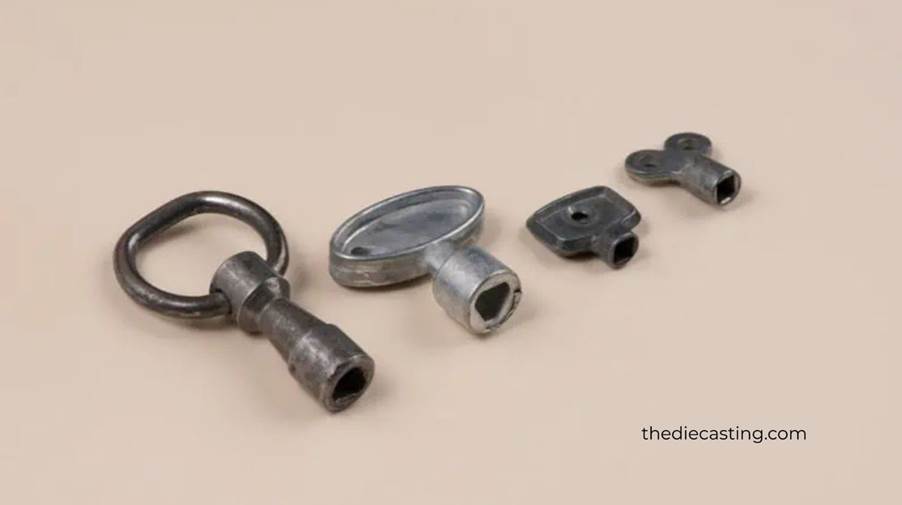
Critical Design Principles
The design of decorative hardware for zinc die casting requires applying established engineering principles to achieve the right balance of aesthetics, strength, and manufacturability. The focus on technicalities at the design stage will help minimize defects, improve surface quality, and ensure uniform production outcomes.
Wall Thickness Control
The thickness of the walls directly affects the cooling behaviour, strength and dimensional stability. For zinc die casting, a constant wall thickness of 0.8-3 mm is desirable. Regular thickness enhances uniform cooling and eliminates chances of shrinkage, porosity, and warping.
Simple Easy Ejection Angles Drafting
The draft angles are necessary to enable easy ejection of the casting from the die. Most decorative hardware parts require a draft of 1 -3 degrees. An optimal draft will reduce friction between the die wall and the part, thereby minimizing surface damage and tool wear.
Meet Strength Fillets and Ribs
Fillets and ribs improve the structural performance and quality of casting. Fillets with a radius of at least 0.5 mm minimize the stress concentration and enhance the flow of molten metal.
The ribs at a ratio of 2–4 of the wall thickness provide rigidity without adding weight. The right use of ribs enhances decorative hardware and gives a sophisticated look.
Tolerance and Parting Line Placement
Dimensional accuracy is of utmost importance to decorative hardware assembly. The standard critical tolerances to be observed during parting are usually 0.05 mm, within which the parting lines are established, so they will not be seen or cause any impact, minimizing flash and subsequent processing. Aesthetics and functional fit are also enhanced by strategic positioning.
Surface Texturizing and Finishing Quality
Grip and visual attractiveness are promoted by surface texturing. The texture in the range of Ra 0.832 3.2 is usually adopted to balance aesthetics, comfort and adhesion of the coating. Good textures also help cover up minor product surface flaws and enhance a product’s overall quality.
Conclusion
Finally, zinc die casting has proven to be the most desirable process for decorative hardware applications, offering precision, durability, and an appealing appearance. Its ability to create complex designs with tight tolerances, clean surfaces, and repeatable finishes makes it suitable for door handles, cabinet pulls, hinges, and decorative fringe.
Zinc alloys offer long-lasting performance and environmental sustainability thanks to their technical qualities, such as strength, corrosion resistance, and recyclability. Zinc die casting enables the production of decorative hardware in large quantities at low cost, without sacrificing quality.