Aluminiumdruckguss

Druckgussteile Wanddicke sollte so gleichmäßig sein

Aluminiumdruckguss

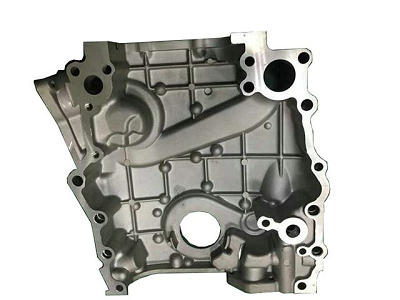
There are no hard and fast rules governing die casting parts wall thickness and consistency.  Inherent in the process is a wall section that possesses a dense fine-grained skin, 0.015-0.020 in. thick (0.4-0.5 mm).  The material between the surface skins tends to be less dense and large grained as a result of a longer solidification time.  This is where defects tend to congregate. Die casters have demonstrated the capability of casting 0.06-0.07 in. (1.5-1.8 mm) thick aluminum walls over large surface areas.  It is feasible to cast small areas as low as 0.04 in. (1 mm). Zinc alloys flow more readily, and can be cast to wall thickness as low as 0.03 in. (.75 mm) Magnesium alloys can be cast to wall thickness 0.035-0.045 in. (.89-1.14 mm) Wall sections should be as uniform as possible.  It is difficult to achieve uniform and rapid solidification of the alloy if the heat load varies from one location to another in the die.  Thinner walls contribute a lesser heat load than heavier walls and will have a longer die life. Intersections of walls, ribs and gussets should blend with transitions and generous radii Generous radii, outside corners, and transitions promote metal flow and internal integrity.  Radii and fillets also enhance structural integrity by reducing stress concentrations in the casting.  Additionally, fillets reduce heat concentration in both the die and castings.  Hot spots that result from sharp corners promote shrinkage voids in the casting. These hot spots also reduce die life at sharp corners in the die cavity steel. Standard draft should be specified Draft is highly desirable on surfaces parallel to the direction of die draw because it facilitates ejection by allowing the casting to release easily from the die surfaces.  The NADCA Product Standards recommendations for minimum draft should be specified. Sharp corners should be eliminated or minimized If sharp corners are required, they readily are accommodated at parting lines and at the junctions of die components.  Sharp corners should be broken with radii or chamfers. Undercuts should be avoided Undercuts should be avoided because they may require machining operations or additional die components, such as retractable core slides.  Slides increase the cost of die fabrication and maintenance.  They can also add to cycle time and manufacturing problems if they flash.  If possible, the component should be redesigned to eliminate undercuts.
Aluminiumteile für die Luft- und Raumfahrt

Aluminiumdruckguss und seine Bedeutung in der Luft- und Raumfahrtindustrie

Aluminiumguss, Aluminiumgussformen, Aluminiumdruckguss, Aluminium-Druckguss, Druckgussunternehmen, Druckgussunternehmen

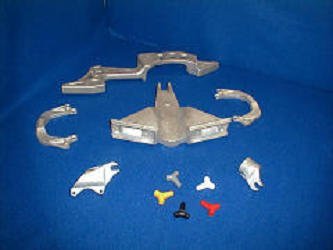
Aluminum die casting items are of remarkable use in different industry sectors and more so in the aerospace engineering where precision and top standard items is of greatest significance. These items are used in building both little as well as the big components in the aviation industry. Additional, die casting aluminum are used both in the pivotal military sector as well as commercial. The reason for this is easy – they are cost-friendly solutions and provide amazing outcomes. Apart from being cost effect, the parts made from die casting aluminum are additionally prepared to endure extreme weather situations and increased damages. Another vital reason for using aluminum products in aircraft is that the meal is comparatively affordable than other metals that are die casted. Additional,  aluminum has the potential to get with other metals in order to provide durability and much flexible. With aluminum casted products, you do not have to compromise on the standard yet can them at much affordable production cost. Further, all the standards that have been set for using of metal components, aluminum relax the need to the utmost. Hence, they are certified secure for use in planes, affordable and have all the qualities that are needed for flying crafts. So casting aluminum is on the boost like never before. Further, the top thing about an aluminum die cast part is that its weight is favorable for the aircraft works. So, how actually is casting Aluminum done and what are the processes involved? Well, the reply is simple. Aluminum alloy is first forced into a top-grade steel at high speed and force in a high temperature. This outcomes in superior standard products that are very light and thin walled perfect for use as aircraft components. It is to be mentioned here that Aluminum diet casting is a hard technique. Only a truly experienced and top standard team of engineers can make sure that the parts come with top volumes or with excellent tolerances and surface finish. Actually, this type of force casting is far more famous than gravity die casting or sand casting. This is because the need for machining is this type weather for Zinc or aluminum casting is extremely low due to the close casting tolerances. Though the tooling cost in casting Aluminum or rather any metal are considerably higher than the other 2 types yet, the mechanical properties achieved thus are far excellent in terms of functionality.

Was ist die Schließkraft beim Druckguss?

A380 Aluminium-Druckguss, Aluminiumgussformen, Aluminiumdruckguss, Druckgussunternehmen

Die Casting clamping force is the force applied to a mold by clamping unit of HPDC die casting machine. The clamping force must be grater their separating force. Which applied by the injection of molten metal into the mold The clamping fore > separating force How to calculate the separating force (opening force)? Opening force is the force acting on the cavity to make the die expand during the production of die casting part. The opening force can be calculated by the following formula: F=PXA F: opening force P: specific injection pressure A: Total projected area What is Specific injection pressure? Molten metal is ladled through the shot hole into the cold chamber and the shot plunger pushes the metal into the die. The pressure applied by plunger to push the metal into the die is specific injection pressure. Injection pressure use for different type of casting: For standard casting =600 kg/cm2 For technical casting =600−800 kg/cm2 For pressure testing casting =800 kg/cm2 What is projected area? The anticipated region is a two-dimensional zone estimation of a three-dimensional article by anticipating its shape on the plane. Total projected area =casting projected area + slide projected area + runner projected area + overflow projected area Example Casting projected areas =56000mm2 Overflow + runner projected area =22400mm2 (40% of total casting projected area ) Slide projected area=projected area must be selected in the plane that is normal to be direction of core travel x tanꬾ Angle of wedge = angle of finger cam angle + 2degree Force FY = F X Tan ꬾ ꬾ = angle of wedge lock Example: Slide core 1 projected area=area normal to direction of travel × tanꬾ =5000× tan20 degree =5000× 0.36 =1800 m2 Slide core 2 projected area=4500×tan 20degree= 1620mm2 so, Total projected area= 56000+22400+1800+1620mm2                                                                        =81820 mm2 What is separating force (Opening force)? (For technical casting=600−800 kg/cm2) (800 kg/cm2       =8kg/mm2) Opening force = specific pressure ×total projected area =8 kg/mm2 × 81820mm2 =654560 kg/mm2 (1 ton = 1000kg) =654.56 T Die clamping force The clamping force must be grater then the separating force. Locking force require =F×1.2 =654.56×1.2 =785.472 tons We select the 900T machine What is fill ratio, how it is important for selecting machine tonnage? It is the percent of liquid metal vulnerable chamber contrasted with the absolute volume of the virus chamber. Another method for saying it would be the level of metal contrasted with the level of air exposed to the harsh elements chamber For Example 50% full (of metal) = 50% air remaining The level of fill is significant in light of the fact that it is utilized to ascertain the ideal moderate shot speed. This can have a quality impact on the casting. Fill ratio (30-40%) is good for automobile die casting component quality.

Druckguss-Herstellungsunternehmen

Der Druckgussprozess Schritt für Schritt

Aluminiumgussformen, Aluminiumdruckguss, Druckguss, Aluminium-Druckguss, Druckgussunternehmen, Druckgussunternehmen, Druckguss Hersteller

The climbing phase: The 1st step is to prepare the die halves for casting by cleaning the faces of each die then applying lubrication or release agent. Once the die has been prepared, the die halves are closed and clamped together with pressure applied from the die-cast machine. The clamping force will depend upon the size of the machine but must be more than the opposing force trying to open the die during the casting process. The injection phase: The ingots are added to the furnace and kept molten at a set temperature according to the metal being used. The molten metal is transferred to an injection chamber and injected into the closed die pressure ranging from 1000 to 20,000 psi. The pressure is maintained while the metal solidifies. The amount is injected into the die is known as the ‘shot’ The injection of metal into the die is very short, this ensures the metals do not start to solidify before the die is completely filled. The cooling phase: After the injection is complete, the molten metal needs to solidify before the die is opened. The cooling time will depend upon the part geometry as well as the metal thermodynamic properties. The wall thickness of the parts plays a big factor in the cooling time, the thicker the wall section the longer the cooling time required. The ejection phase: After the cooling time has elapsed, the two die halves can be opened. An ejection mechanism then pushes the solidified casting out of the die. The force of the ejection will be determined by the size of the part, bearing in mind, the part shrink during the cooling process and tends to stick to the die surface. Once the part has been ejected, the die can be closed ready for the next injection cycle. The trimming phase During the cooling and solidification phase, the casting will solidify as a complete cast unit which includes the part, flash, and any runner system This excess material must be trimmed off to leave just the main cast product. Method of trimming includes trim tools, band saw are manually clipping. Any trimmed metal is either scrapped or recycled if permitted. Advantages of die casting: Die casting is fast Die casting can be produced in seconds each part and quantities of hundreds to thousands of metal parts each day. Near net shape Die casting are produced “near net shapes” no matter how complex the shape are how tight the tolerances are. Lighter weights Die casting are stronger because of the material surface skin not the thickness of materials so parts can weigh less with thinner casting wall thicknesses. Die casting is versatile Many more part shapes and sizes can be produced using the die casting manufacturing process. Die casting are durable Die castings parts are metal and have a long service life. Die castings are inexpensive Die castings are fast to produce and useless material. Die casting are typically less expensive than most other metal parts manufacturing processes.    

Zinkdruckguss

Günstige Fertigung für Zinkdruckguss-Verfahren

Aluminiumdruckguss, Aluminium-Druckguss, Druckgussunternehmen, Zinkdruckguss

The process of die casting with pressure injection can be followed until mid-1800. The components used were tin and lead, but the use has disappeared with the introduction of zinc and Aluminium alloys. This process has evolved over the years, from low-pressure injection molds to casting molds at pressures of up to 4,500 psi. The process can create high-quality products with excellent end surfaces. Die Casting is an economical and efficient process for making various shapes. Considered superior to other manufacturing techniques, it is durable and aesthetic and combines perfectly with other parts of the machine that are part thereof. Dying has many advantages. Among these, the main is its ability to produce complex forms with a higher tolerance level than other mass-production methods. Thousands of identical prints can be produced before you need to add new mold tools. High Die-pressure is a manufacturing process where aluminum that has been melted is injected by a casting machine under extreme pressure on steel or molds to make the design and detail parts of the model you want to make. Casting in tons of universal tightening. This record reflects the amount of pressure given on the matrix. The engine size varies from 400 to 4000 tons. There are many advantages to using the die casting process compared to others. Die casting produces parts with thinner walls, narrower size limits and processes can be accelerated. Labor costs and finishing are the lowest with the dice. This process facilitates to obtain intricate forms with narrower tolerances. Unlike the forgery process, you can insert the kernel into the product created by this process. Forms that cannot be obtained from rods or tubes can be easily achieved with casting. The number of operational processes is smaller, which leads to the reduction of waste materials. Die casting is used when you need a stable, dimensional and durable component. They withstand heat and maintain a good level of tolerance, an important condition for each part of a good machine. They are stronger and lighter than the part made by other printing methods. Its parts are not welded or screwed, which greatly increases its efficiency. Another advantage is the many workarounds that you can get with the launch. Surfaces can be smooth or textured, which facilitates the application and its use. Hopefully, this information can help you and thank you for reading the article about Zinc Die casting.

Aluminium-Druckguss

China Druckguss-Service

Aluminiumdruckguss, Druckgussunternehmen, Druckguss Hersteller, Zinkdruckguss

Capacity To Meet Your Aluminum, Magnesium, Zinc and Vacuum Die Casting Needs. Aluminum Die Casting Providing high-quality Aluminum die casting parts at competitive prices requires modem die casting equipment. To reduce the effects that extreme cooling temperatures have on dies CNM TECH is converting its die cooling system from water to oil. Oil maintains a warmer die temperature that contributes to a more uniform casting and extends die life, an important factor in part costs. CNM TECH Die Casting company is adapting robotic controls to the operation of die casting machines. This permits a substantial increase in production rates, important in both controlling costs and meeting delivery requirements. It also allows us to use our people in ways which make better use of their skills and experience. To lower production costs, CNM TECH Die Casting manufacturer has developed and patented, new, low volume, energy efficient aluminum melting furnaces. Since aluminum can be melted efficiently in small quantities, it allows the company to supply casting machines with different alloys of aluminum simultaneously. Casting machines don’t have to stand to wait for a large furnace to supply the proper alloy. Schedules aren’t built around what alloy is in the furnace. Zinc Die Casting For applications where high impact strength, low cost and close dimensional limits are important design considerations, zinc die casting plays an important role. Zinc normally permits higher production rates than aluminum and parts can be designed with thinner cross-sections. The resulting parts are highly resistant to corrosion and receptive to a variety of beautiful finishes. High rates of production and uniform quality are maintained by die casting machines with automatic extractors. Vacuum Die Casting Vacuum die casting is preferred by many casting buyers because it results in a less porous part. CNM TECH’s Vert-a-Cast machines, with a clamping force of 400 tons, are capable of producing castings automatically at a much faster pace than manually-operated horizontal machines. Vacuum die casting, a CNM TECH capability for ten years, is often the only economical way to meet critical porosity specifications. Maintenance, repair, changes and corrections on dies are accomplished promptly in CNM TECH’s fully-equipped tool and die shop. Alloy materials are melted, fluxed and cleaned in the central furnace before being transferred to die casting equipment. If you have any die casting requirement, you are welcome to send us your requirement for a quotation.

Druckgussverfahren

Aluminiumdruckguss, Druckguss, Druckgussunternehmen, Druckgussform, Druckgussteile, Druckgussverfahren

CNM Die Casting ist in der Lage, verschiedene Gussarten anzubieten, darunter Druckguss, Feinguss, Kokillenguss und Sandguss für eine breite Palette von Legierungen, darunter alle Druckgusslegierungen, viele Kokillenlegierungen und viele Magnesiumlegierungen. Unsere Herstellungsverfahren sind auf dem Weltmarkt für Gusserzeugnisse als gleichwertig oder überlegen gegenüber dem herkömmlichen Druckguss anerkannt. Vorteile des CNM-Druckgussverfahrens Bessere Maßkontrolle Verbesserte Quertrennlinien-Toleranzen Verringerung der Gasporosität Verbesserte Auswuchteigenschaften der fertigen rotierenden Teile Einsatz von “Cast-in-Place”-Einsätzen Verbesserte mechanische Eigenschaften durch effektive Legierungsmodifikation Bessere Verschleißeigenschaften durch Mikrostruktur mit geringerer Korngröße Verbesserte Flexibilität hinsichtlich Legierungen und Gussarten Bearbeitung Die Bearbeitungsabteilung von CNM Druckguss nutzt das Arbeitszellenkonzept und flexible Hochgeschwindigkeits-Bearbeitungsanlagen, um sekundäre Operationen an den Gussteilen von CNM durchzuführen, so dass ein Teil oder eine Unterbaugruppe einbaufertig ist, wenn es unser Werk verlässt. CNM Die Casting hat sich weiterentwickelt und aggressiv auf die Nachfrage der Kunden nach Hochgeschwindigkeitsbearbeitung und Montagedienstleistungen ohne anfängliche Kapitalausgaben reagiert. Indem ein Teil der Kosten für die vorhandene Ausrüstung in jedes Teil eingerechnet wird, profitiert der Kunde von einer schnelleren Einrichtung und minimalen Anfangsinvestitionen. CNM Die Casting betreibt 8 Druckgussmaschinen, einen kompletten internen Druckgussformenbau und CNC-Bearbeitung in einer über 20.000 Quadratmeter großen Anlage in DONGGUAN, China. Unsere integrierten Fertigungskapazitäten und mehr als 100 Mitarbeiter ermöglichen es uns, Ihnen einen kompletten Service aus einer Hand zu bieten. Wir sind preislich wettbewerbsfähig und halten gleichzeitig einen hohen Qualitätsstandard aufrecht. Nachfolgend finden Sie einen Vergleich der Druckgussverfahren Metalle, die gegossen werden können Min. und Max.TP5T Oberflächengüte,µ m Min. Querschnittsgröße, mm Tiefgang Produktionsrate,Stück/Std. Min. Kernbohrung,mm Porosität Sandguss Aluminium Stahl CI und andere 0,03, 100 0,10, 200, 000 0,03, 50, 000 0,09 bis 0.03 4 8 8 3 6 3,5 4 bis 7 10 bis 15 6 5 Kokillenguss Gusseisen Al und Mg 0,01, 50 0,01, 10 0,01 min 2 5 3 2 50 4,5 bis 6 6 4 Druckguss Al Mg Zn 0,015, 35 0,015, 35 0,05, 80 0,0015 0,0015 1 1 1 0,8 1.2 0,5 2 2 2 75 bis 150 300 bis 350 2,5 2,5 0,8 2 Präzisions-Feinguss Stahl Aluminium 0,005, 25 0,002, 10 0,003, bis 0,005 1 1 1 0,8 1 bis 3 N/A 0,5 bis 1,25 1 Schalenguss Stahl Gusseisen Aluminium 0.05, 120 0,03, 50 0,03, 15 0,01 bis 0,003 6 6 2,5 3,5 3 1,5 2 bis 3 30 bis 80 3 bis 6 1 Schleuderguss Aluminium Stahl Gusseisen bis 400 0,002 0,004 0,004 0,6 bis 3,5 0,6 bis 1,2 3 30 bis 50 N/A 1 bis

Druckguss-Herstellungsunternehmen

Aluminiumdruckguss, Druckgussteile

CNM Die Casting ist Ihr One-Stop-Komplettservice für verschiedene Druckgussteile, einschließlich Aluminiumdruckguss, Feinguss und Sandguss. Wir bieten Ihnen eine einzige Quelle für technische Druckgussteile, zusammen mit modernsten technischen Ressourcen, fortschrittlichen Produktionsmöglichkeiten und einer kompletten Nachbearbeitung. CNM Die Casting liefert hochwertige Druckgussteile aus Aluminium, Zink, Messing und Magnesium. Wir betreiben unsere Gießerei in DongGuan, China, für verschiedene Gussteile, Bearbeitung, Montage und Formenbau mit einer Gesamtfläche von über 20.000 Quadratmetern. Wir sind führend bei innovativen Qualitätskontrollsystemen. Unser Qualitätssicherungssystem umfasst ein System zur Erkennung von Prozessfehlern an jeder Gusspresse. Die strenge 100%-Inspektion ist ebenso ein Produktionsvorgang wie jeder andere Fertigungsschritt und ist in die sequentielle, standardisierte Arbeit eingebunden, um die Fertigungsqualität bei der Endbearbeitung und Bearbeitung zu gewährleisten. Als eine der Abteilungen der CNM Manufacturing Group kann CNM Die Casting besser auf seine Kunden eingehen und gleichzeitig wettbewerbsfähigere Preise für Qualitätsprodukte “made in China” anbieten. Die Werkzeugbauabteilung von CNM Die Casting fertigt Formen mit modernster Ausrüstung. Zusammen mit unserer erfahrenen Konstruktions- und Werkzeugabteilung entwerfen wir Werkzeuge und unterstützen unsere Kunden bei Fragen zum Gussdesign. Dank der ausgezeichneten Kontrolle von Konstruktion und Werkzeugbau können wir qualitativ hochwertige Werkzeuge und Teile kostengünstiger und schneller als jeder andere in der Branche herstellen. Unsere Abteilung für Konstruktion und Werkzeugbau bietet: Werkzeugingenieure, die sicherstellen, dass die Spezifikationen und Abmessungskriterien gemäß den Anforderungen des Kunden erfüllt werden Konstruktionsingenieure mit den neuesten CAD/CAM-Technologien, die sowohl das Produkt als auch die Werkzeuge nach den Spezifikationen des Kunden entwerfen. Technische Vor-Ort-Unterstützung bei der Produktgestaltung für Druckgussteile Herstellung von Werkzeugen mit CNC-Maschinen in der hauseigenen, hochmodernen Erodieranlage, die mit oszillierendem Vorschub Kavitäten schnell in einen nahezu fertigen Zustand brennt. Prototyping mit denselben Werkzeugen, die für die Produktion vorgesehen sind Produktionswerkzeuge werden aus erstklassigen Materialien hergestellt

Über Metallgießereidienstleistungen

Aluminiumdruckguss, Druckgussunternehmen, Druckgussteile, Druckguss, Magnesium-Guss, Magnesium-Druckguss, Zinkdruckguss

Metal casting services involve the shaping of free-flowing liquid metals through the use of dies, molds, or patterns.  Castings are generally roughly finished due to the nature of their production.  In many cases, additional finishing is required to remove burrs and other artefacts of the casting process.  Metal castings services are used to design a wide range of components and finished products.  Everything from simple nails and fasteners to engine blocks can be fabricated using metal casting services.  Common metal casting processes include sand casting, die casting, permanent mold casting, investment casting, centrifugal casting, and lost foam casting. Sand Casting Sand casting is used to make large parts (typically iron, but also bronze, brass, aluminum). Molten metal is poured into a mold cavity formed out of sand (natural or synthetic). Sand castings generally have a rough surface, sometimes with surface impurities and surface variations. Die-casting includes a number of processes in which reusable dies or molds are used to produce casting.  The die contains an impression of the finished product together with it’s running, feeding and venting systems.  The die is capable of a regular cycle and of (quickly) dissipating the heat of the metal poured into it.  Once the liquid metal has cooled sufficiently, the mold is opened and the casting can be removed and finished. Permanent Mold Casting In permanent mold casting, molten metal is poured into cast iron molds, coated with a ceramic mold wash. Cores can be a metal, sand, sand shell, or other materials. When completed, the molds are opened and the castings are ejected.   Investment casting services involve molding patterns by the injection of a special wax into a metal die.  The patterns are assembled into a cluster around a wax runner system. The ‘tree’ of patterns is then coated with 8-10 layers of refractory material. The assembly is heated to remove the wax.  The hot mold is cast, and when cool, the mold material is removed by impact, vibration, grit blasting, high-pressure water blasting or chemical dissolution leaving the castings, which are then removed from the runner system. Centrifugal casting Centrifugal casting services are used to produce castings that are cylindrical in shape.  In centrifugal casting, a permanent mold is rotated about its axis at high speeds as the molten metal is poured. The molten metal is centrifugally thrown towards the inside mold wall, where it solidifies. The casting is usually a fine grain casting with a very fine-grained outer diameter, which is resistant to atmospheric corrosion, a typical need with pipes. The inside diameter has more impurities and inclusions, which can be machined away. Lost foam casting Lost foam casting (LFC) is metal casting services that use foam filled patterns to produce castings.  Foam is injected into a pattern, filling all areas, leaving no cavities.  When molten metal is injected into the pattern, the foam is burned off allowing the casting to take shape. Die casting Die casting and metal casting includes a number of processes in which reusable dies or molds are used to produce casting. The die is capable of a regular cycle and of (quickly) dissipating the heat of the metal poured into it. Once the liquid metal has cooled sufficiently, the mold or is opened and the casting can be removed and finished.   In the die casting process, molten metal is injected under pressure into a reusable mold or die. The die contains an impression of the casting together with it’s running, feeding and venting systems. The die is capable of a regular cycle and of (quickly) dissipating the heat of the metal poured into them. Once the liquid metal has cooled sufficiently, the mold or is opened and the metal casting can be removed and finished. high pressure die casting The high pressure die casting process is the most widely used, representing about 50% of all light alloy casting production. Low pressure die casting currently accounts for about 20% of production and its use is increasing. Gravity die casting accounts for the rest, with the exception of a small but growing contribution from the recently introduced vacuum die casting and squeeze casting process. the design of low pressure and gravity die casting dies for improved die filling, optimized solidification pattern and maximum yield. Gravity die-casting is suitable for mass production and for fully mechanized casting. Low-pressure die casting is especially suited to the production of components that are symmetric about an axis of rotation. Light automotive wheels are normally manufactured by this technique. Die casting metals can vary widely, and different die casting companies may have the ability to work with anyone or number of them. Some of the most common metal casting types include aluminum die casting, brass die casting, lead die casting (the most popular for model die casting), magnesium die casting, and zinc die casting. Hope all of that information is enough for your reference, but if you want to know more information, you are welcome to contact us by phone or email.

Was ist Schwerkraftgießen?

Aluminiumguss, Aluminiumgussformen, Aluminiumdruckguss, Druckguss, Aluminium-Druckguss, Druckgussunternehmen, Druckgussform, Druckgussteile, Schwerkraftgießen, spritzgussform china, Spritzgussformenbau

Der Unterschied zwischen Aluminiumdruckguss und Schwerkraftguss Aluminiumdruckguss ist mehr als nur eine Ausrede, um mit geschmolzenem Metall zu spielen, es ist tatsächlich eine großartige Möglichkeit, Kunst und komplizierte Teile von Maschinen oder anderen Gegenständen zu schaffen, die sonst fast unmöglich zu machen wären. Aluminiumdruckguss ist wirklich eine großartige Möglichkeit, Geld zu sparen... während man mit geschmolzenem Metall spielt. Der Grund dafür, dass Aluminiumdruckguss den Test der Zeit überlebt hat, ist eine Frage der Effizienz. Einige der frühesten Gussbeispiele wurden in China gefunden und reichen Tausende und Abertausende von Jahren zurück. Tatsächlich haben alle großen Zivilisationen, von den Ägyptern bis zu den Römern, Aluminiumguss praktiziert. Diese Kunst kam in der Renaissance wieder in Mode und hat sich seither ständig weiterentwickelt. Sandguss ist zwar das beliebteste Gussverfahren, aber es gibt noch viele weitere Verfahren, die den Hinterhofgießern zur Verfügung stehen. Nicht jeder wird schwere Teile wie Motorenteile gießen oder seine eigenen Motorräder gießen. Wer also nur dekorative Stücke gießen möchte, wird nicht dasselbe Gießverfahren wie bei diesen Schwerlastgießern anwenden. Für Künstler, die kleine Statuen oder Verzierungen anfertigen, und für Bastler, die ihr Modellflugzeug oder -boot dekorativ gestalten wollen, könnte das Schwerkraftgießen eine gute Wahl sein. Was ist Schwerkraftgießen Schwerkraftgießen scheint besonders nützlich zu sein, wenn man mit Aluminium und anderen Leichtmetalllegierungen arbeitet. Die Grundidee hinter diesem Gießverfahren ist ziemlich genau das, was der Name vermuten lässt. Das Metall wird durch die Schwerkraft in die Form eingebracht. Bei den meisten anderen Gießverfahren wird entweder ein natürlicher Druckunterschied wie bei bestimmten Sandgussverfahren oder ein erzwungener Druck wie beim Schleuderguss verwendet, um das geschmolzene Metall in die Form zu bringen. Eine der häufigsten Anwendungen für das Schwerkraftgießen ist die Verwendung von Dauerformen. Eine Dauerform, auch Kokille genannt, ist nur dann wirtschaftlich, wenn die gleiche Form mehrmals verwendet werden soll und die Qualität konstant bleiben muss. Während einige temporäre Formen wiederholt verwendet werden können, leidet die Qualität des Endprodukts mit der Zeit. Bei Matrizenformen bleibt die Qualität gleich. Gussformen sollten als eine Investition betrachtet werden. Ja, sie sind teurer als andere Formen, aber sie überdauern billigere Optionen für Formen. Bei Dauerformen werden sie aus Gusseisen, Stahl und anderen Metallen hergestellt. Das Schwerkraftgießen wird für das Dauerformverfahren mit erfreulichen Ergebnissen verwendet. Das Schwerkraftgießen wird in der Regel verwendet, wenn das fertige Produkt mehr auf das Aussehen als auf die Struktur abzielt, weshalb diese Methode bei Künstlern und sogar bei einigen Juwelieren beliebt ist. Der Verlust an Festigkeit ist darauf zurückzuführen, dass bei diesem Verfahren kein Druck ausgeübt wird. Wer die Festigkeit benötigt, aber dennoch das Schwerkraftgießverfahren anwenden möchte, muss mehr geschmolzenes Metall verwenden, was das Gewicht erhöht. Mehr über das Schwerkraftgießverfahren erfahren Sie unter https://www.aludiecasting.com/. Wer sich auf das Schwerkraftgießverfahren verlässt, braucht Geduld, auch wenn diese für größere Produkte erforderlich ist. Wenn Sie Schwerkraftguss oder Aluminiumdruckguss, Magnesiumdruckguss oder Zinkdruckguss für Ihr Unternehmen benötigen. Sie sind herzlich eingeladen, uns Ihre Anforderungen für ein Angebot zu schicken, Sie müssen uns nur Ihren 3D-Teileentwurf und Ihre Anforderungen schicken, dann können Sie sich zurücklehnen und wir werden den Rest für Sie erledigen, um mit uns zu arbeiten, müssen Sie sich nur um den Markt auf Ihrer Seite kümmern, und wir werden Ihre Unterstützung sein, um sich um Vorlaufzeit, Versand, Qualität und Technik zu kümmern.

Nach oben scrollen

Angebot einholen