Druckguss Hersteller

Druckguss-Lieferant: Verfahren, Anwendungen und wichtige Überlegungen

Druckguss-Lieferant: Verfahren, Anwendungen und wichtige Überlegungen

Druckguss Hersteller, Druckgussverfahren

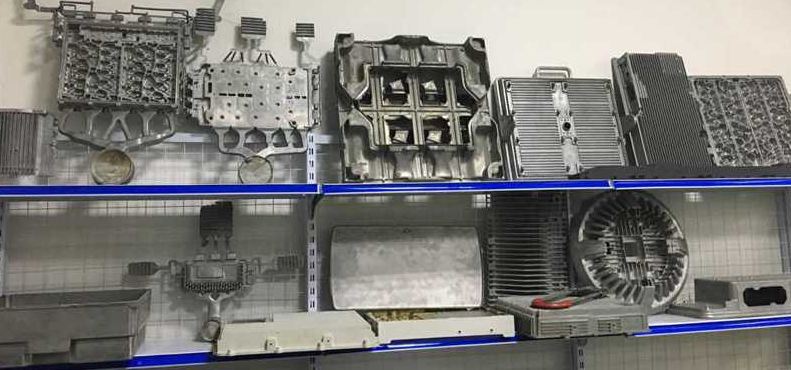
It is one of the widely used metal manufacturing processes, and it is highly efficient: producing high precision, durable, and complex components for many Industries. It injects molten metal, like aluminium, Zinc, or magnesium, inside of a steel mold (die) at very high pressure. It provides uniformity, internal strength and smashing surface finishes making it the right choice for use in automotive, aerospace, electronics, medical equipment, as well as consumer goods. A die-casting supplier is a very important company for the manufacture of high-quality parts that satisfy the industry requirements. They are suppliers, who are especially involved in designing, manufacturing and finishing the components or parts utilizing metal with strict tolerances and intricate geometries. Choosing the right supplier matters a lot for the success of any die-casting project as a good supplier should possess adequate expertise, state-of-the-art technology, and a history of successfully delivering precise and low-cost parts.Die casting is efficient in mass production and produces lightweight, yet strong parts, and as a result, the demand for die casting is increasing worldwide. Examples include reducing the weight of a vehicle, and enhancing fuel efficiency, through the use of die-cast aluminum and magnesium components in the automotive industry. In the same way, the electronics industry employs die casting to make heat sinks, enclosures and structural parts that are prone to high durability and electrical conductivity. When looking for a die-casting supplier, one should consider not only manufacturing capabilities but, more importantly, their quality control process, material expertise, and anything that may be left up to the supplier, such as machining, coating, and finishing. This provides a well-established supplier, therefore, reducing lead times, minimal defects and cost-effective production.  In this article, the die-casting process, materials used, the applications, advantages and important considerations of choosing a die-casting supplier are covered. Metal parts required to meet industrial applications need high performance and a reliable supplier fulfils this criterion for both small-batch production and large-scale production. The Die Casting Process: Step-by-Step Guide 1. Mold Preparation Mold (die) preparation and design accompany the initial step of this process. The two-part steel dies consist of a stationary cover die section and the movable ejector die section. Applied lubrication helps the molded flow metallic material smoothly while stopping the material from clinging. 2. Molten Metal Injection The chosen metals aluminum and zinc along with magnesium undergo high-temperature melting. Due to high pressure between 1,500 to 25,000 psi the molten metal enters the mold cavity. High injection pressure produces both accurate and even parts with low levels of flaws. 3. Cooling and Solidification The molten metal quickly reaches solid form during this process when forming parts to their designated shape. The components achieve superior high-strength properties because of the fast cooling process. 4. Ejection of the Part After metal solidification, the mold opens while ejector pins extract the completed part from its chamber. One mold cycle ends when it closes before starting another round of production. 5. Trimming and Finishing Machinists remove all undesirable remnants including flash and both sprees and runners from the part. The component requires supplementary finishing actions which involve sandblasting together with powder coating and anodizing operations to develop superior looks alongside functionality. Differences between Hot Chamber and Cold Chamber die-casting The die-casting process operates in either hot chamber die-casting or cold chamber die-casting formats. The main difference exists in how molten metal receives treatment before mould injection during these two techniques. The two methods differ in specific strengths together with restrictions which make them suitable for particular materials and production needs. The following section provides an elaborate comparison between hot chamber die-casting systems along cold chamber die-casting systems. 1. Process Overview Hot Chamber Die Casting • It requires a built-in furnace, which keeps the metal in a molten state. • Injection system is immersed in the molten metal, sucking it through the injection of a center and supplying it to the mold cavity. • The process is faster since there is no need to convey the metal from an independent melting station as in other processes. Cold Chamber Die Casting • Utilizes an external furnace for heating the metal to produce the required change in its state. • The molten metal is either ladled manually or automatically into the injection system and then it is injected into the mold. • The process is slower than the hot chamber one because the extra step of transferring molten metal takes time. 2. Suitable Metals Hot Chamber Die Casting • Like metals that melt below this temperature such as those that are not suitable to erode the injection system. • Common raw materials include: zinc, magnesium, lead and tin. Cold Chamber Die Casting • Applied to work with metals that have high a melting point which tends to deform the hot chamber system. • Common materials: aluminum, brass, copper, and magnesium alloys. 3. Production Speed Hot Chamber Die Casting • Higher speed of operations normally ranging between 5 to 15 operation cycles per minute. • The direct metal feed helps in avoiding the use of the ladling process in the making of the product. Cold Chamber Die Casting • Some of the disadvantages are the slow cycle times because of manual or fully automated metal transfer. • Other factors may take longer in the cooling and solidification process in this case with some of the alloys. 4. Equipment Durability Hot Chamber Die Casting • The submerged injection system has short service life since it deals with low-melting-point metals. • Longer equipment lifespan with proper maintenance. Cold Chamber Die Casting • Wear and tear increases with the rise in high temperatures especially in the case of aluminum and copper alloys. • Furniture and equipment may last for a shorter time and, therefore, may need constant replacement and maintenance. 5. Cost and Efficiency Hot Chamber Die Casting • High production since the time taken to complete a production cycle is short. • Lower operational costs because of integrated metal handling. Cold Chamber Die Casting • Increased energy costs by

Zinkdruckguss

Die Bedeutung des Zinkdruckgusses in der Automobilindustrie

Aluminium-Druckguss, Druckgussunternehmen, Druckgussunternehmen, Druckguss Hersteller, Druckgussteile, zamak 3 druckguss, Zamak 3 Zinkguss, zamak 5, zamak 5 druckguss, Zamak-Druckguss, Druckguss aus Zinklegierung, Zinkdruckguss

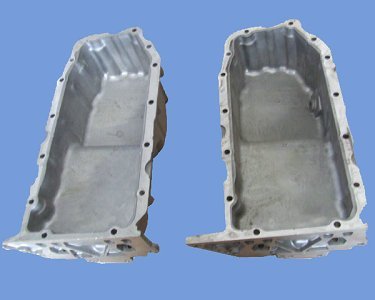
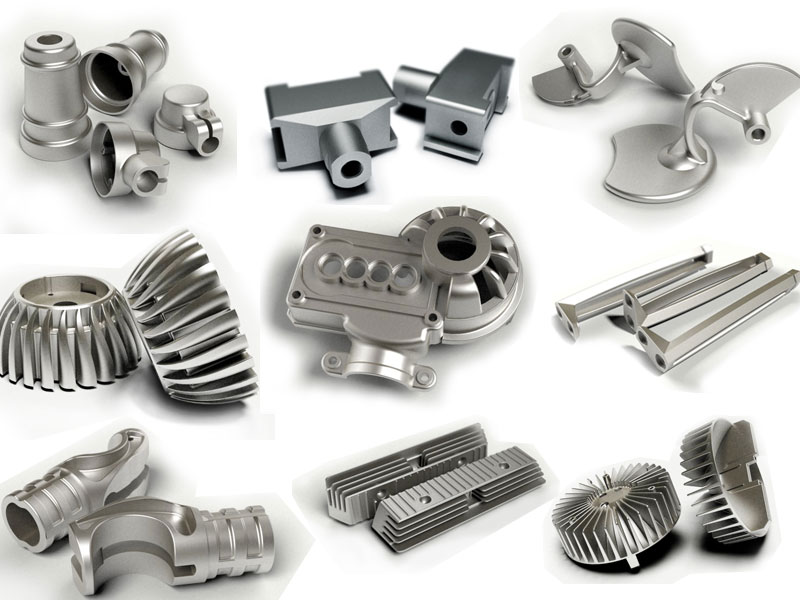
Was ist Druckgießen? Druckguss ist ein Metallgussverfahren, bei dem geschmolzenes Metall in den Formhohlraum gepresst wird. Der Formhohlraum wird mit zwei gehärteten Werkzeugstahlformen hergestellt, die während der Verarbeitung bearbeitet werden und ähnlich wie Spritzgussformen funktionieren. Die meisten Druckgussteile werden aus Nichteisenmetallen hergestellt, insbesondere aus Zink, Kupfer, Aluminium, Magnesium, Zinn, Blei und Zinnbasislegierungen. Je nach Art des zu gießenden Metalls wird ein thermischer oder kalter Motor verwendet. Das Zinkdruckgussverfahren ist sehr beliebt für die Herstellung von Teilen im Bauwesen und in der Industrie, aber die häufigste Anwendung ist die Automobilindustrie. In der Tat gibt es für Autos verschiedene Teile, die im Druckgussverfahren hergestellt werden können, so dass das moderne Druckgussverfahren ursprünglich für die Automobilindustrie entwickelt wurde. Beim Druckgussverfahren ist nach dem Gießen oft keine weitere Bearbeitung erforderlich: Die Genauigkeit beträgt nicht nur bis zu 99,8%, sondern die gegossenen Produkte können auch roh verwendet werden, da sie eine angenehme Oberfläche aufweisen. Die Verwendung von Zinkdruckguss ist fast 28% in der Automobilindustrie, gefolgt von der Bau- und Eisenwarenbranche. Zink ist zu einem der wichtigsten Metalle in der Automobilzulieferindustrie geworden, insbesondere für Produkte wie Türschlossgehäuse, Sperrklinken, Zahnräder und Aufrollrollen in Sicherheitsgurtsystemen, aber auch für Nockenwellen und Sensorkomponenten. Durch die Verwendung dieses Metalls und seiner Legierungen lassen sich Festigkeit, Dehnbarkeit und Flexibilität erreichen, die mit anderen Werkstoffen nicht möglich wären. Darüber hinaus kann Zink die richtige Wahl sein, um hochwertige ästhetische Komponenten mit engen Toleranzen zu erhalten, die mit anderen Materialien nicht möglich sind, und um Prägungen und Rillen für mechanische Komponenten oder Zahnräder zu erhalten. Zinkdruckgussmechanismen in der Automobilindustrie Wie bereits erwähnt, ist die Automobilindustrie die häufigste Druckgussanwendung: Die Verwendung von Zink und seinen Legierungen ermöglicht die Herstellung von Bauteilen, die eine hohe ästhetische Qualität mit engen Toleranzen für die Formmorphologie erreichen können. Zinklegierungen werden auch für Beschichtungen verwendet, da sie viele Vorteile bieten, wie z. B. die Verbesserung der bereits beeindruckenden Korrosionsschutzeigenschaften von Zink. Nachfolgend finden Sie eine Reihe von möglichen Beispielen für die Verzinkung: Innenraum ästhetischer Bereich Schiebedächer Bereich Mechanische Teile Motor und andere Komponenten unter der Motorhaube Servolenkung Teile und Bremssystem Klimakomponenten und -systeme Fahrwerksbeschläge Teile im Sicherheitsgurtsystem Komponenten der Klimakontrolle Kraftstoffsystem Vorteile für Zinkdruckguss: Ein effizientes & wirtschaftliches Verfahren, das verschiedene Formen und Ausprägungen ermöglicht. Hochgeschwindigkeitsproduktion Maßgenauigkeit & Stabilität Festigkeit & Gewicht Verschiedene Nachbearbeitungstechniken sind möglich Einfache Montage Das Druckgussverfahren begann mit der Verwendung von Blei und Bleilegierungen, Magnesium- und Kupferlegierungen, die schnell folgten, und in den 1930er Jahren sind viele moderne Legierungen verfügbar, die heute noch verwendet werden. Dieses Verfahren entwickelte sich vom Gießen mit Niederdruckinjektion bis zur modernen Hochdruckinjektion mit 4.500 Pfund pro Quadratzoll. Das moderne Verfahren ist in der Lage, hochintegrierte, saubere Gussformen mit hervorragender Oberflächenbeschaffenheit herzustellen. Zinkgusslegierungen sind ein starkes, haltbares und kostengünstiges technisches Material. Ihre mechanischen Eigenschaften sind wettbewerbsfähig und liegen in der Regel über denen von Aluminium, Magnesium, Bronze, Kunststoff und den meisten Gusseisen.

Druckguss-Herstellungsunternehmen

Der Druckgussprozess Schritt für Schritt

Aluminiumgussformen, Aluminiumdruckguss, Druckguss, Aluminium-Druckguss, Druckgussunternehmen, Druckgussunternehmen, Druckguss Hersteller

The climbing phase: The 1st step is to prepare the die halves for casting by cleaning the faces of each die then applying lubrication or release agent. Once the die has been prepared, the die halves are closed and clamped together with pressure applied from the die-cast machine. The clamping force will depend upon the size of the machine but must be more than the opposing force trying to open the die during the casting process. The injection phase: The ingots are added to the furnace and kept molten at a set temperature according to the metal being used. The molten metal is transferred to an injection chamber and injected into the closed die pressure ranging from 1000 to 20,000 psi. The pressure is maintained while the metal solidifies. The amount is injected into the die is known as the ‘shot’ The injection of metal into the die is very short, this ensures the metals do not start to solidify before the die is completely filled. The cooling phase: After the injection is complete, the molten metal needs to solidify before the die is opened. The cooling time will depend upon the part geometry as well as the metal thermodynamic properties. The wall thickness of the parts plays a big factor in the cooling time, the thicker the wall section the longer the cooling time required. The ejection phase: After the cooling time has elapsed, the two die halves can be opened. An ejection mechanism then pushes the solidified casting out of the die. The force of the ejection will be determined by the size of the part, bearing in mind, the part shrink during the cooling process and tends to stick to the die surface. Once the part has been ejected, the die can be closed ready for the next injection cycle. The trimming phase During the cooling and solidification phase, the casting will solidify as a complete cast unit which includes the part, flash, and any runner system This excess material must be trimmed off to leave just the main cast product. Method of trimming includes trim tools, band saw are manually clipping. Any trimmed metal is either scrapped or recycled if permitted. Advantages of die casting: Die casting is fast Die casting can be produced in seconds each part and quantities of hundreds to thousands of metal parts each day. Near net shape Die casting are produced “near net shapes” no matter how complex the shape are how tight the tolerances are. Lighter weights Die casting are stronger because of the material surface skin not the thickness of materials so parts can weigh less with thinner casting wall thicknesses. Die casting is versatile Many more part shapes and sizes can be produced using the die casting manufacturing process. Die casting are durable Die castings parts are metal and have a long service life. Die castings are inexpensive Die castings are fast to produce and useless material. Die casting are typically less expensive than most other metal parts manufacturing processes.    

Was sind Zamak-Zinkdruckgussteile

Druckgussunternehmen, Druckguss Hersteller, Druckgussteile, Druckgussprodukte, Zinkdruckguss

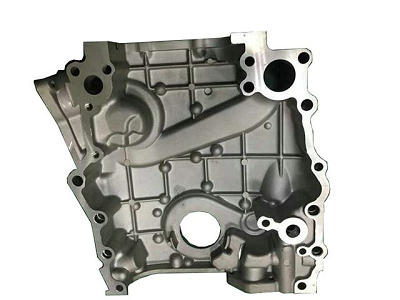
Zinc die casting Parts is referred to as the hot-chamber process. It is the method by which zinc (zamak) is heated under high temperatures and the molten material forced into a zinc die casting mold under high pressure to produce product with a similar shape as the die. As the metal moves through the die, air escapes through the vents. Once the die is full, the high pressure is maintained until it solidifies and the die is separated to release the finished zinc cast. After casting, no further modification is usually required. Use of Zinc Die Casting Zinc (zamak) is known for its high strength, accuracy, ductility, ease of casting, high thermal and electrical conductivity, and long life. As such, the zinc die casting is applied in the manufacture of high quality industrial and building materials. Die casting started in the automotive industry and it is still widely used in the manufacture of automotive components. The door locks casing, pulley, and the camshaft are some of the car parts that are made of zinc casting. In the construction industry, zinc die casting is utilized in the manufacture of components such as door knobs, faucets, and roofing. On the other hand, there are many zinc casting machine parts, such as electrical fittings. Zinc Die Casting Process Zinc is cast using the hot-chamber process due to its low melting temperatures. Cold chamber process is applied in the casting of metals with high melting temperatures such as the aluminium. The zinc die casting process involves the preparation of the metal, die preparation, and finishing. It commences with the preparation of the die followed by the metal. Notably, the die can be used once or severally depending on the component being manufactured. If it was used before, it should be lubricated to ease the removal of the cast metal. Afterwards, the ejector die half and the cover die half are screwed. The cover die half has a sprue through which the molten metal is injected while the ejector die has ejector pins for removing the castings. Preparation of the die is followed by melting of the ZA or the ZAMALAK alloy on a furnace. The physical properties of the product dictates the choice of the alloy. Due to metal hardness and strength, the furnace temperature is usually very high. The oxidized parts of the metal are removed at this stage to raise the purity of the finished product. Various chemicals can be added to improve physical properties of the finished alloy. Once the molten metal is prepared, it is injected into the feed system under high pressure. Most of the systems have several dies for efficiency and mass production. The raised pressure ensures that the molten zinc alloy gets into the mold as fast as possible, no air gets into the molten metal, and the expulsion of the air in the die through the vents. After filling the die, the pressure is raised further until the zinc alloy casting solidifies. The process also involves cooling using water. Then, the two dies are separated and the metal cast is removed. This is followed by the cleaning of the feed system to get rid of the flash. Further finishing can be carried out depending with the final use of the product. The runner that is removed from the final product and the flash are usually recycled.

Großhandel Aluminium Druckguss Hersteller

Druckgussteile

Druckguss Hersteller, Druckgussteile

Machining and Finishing Operations For Ready-To-Assemble Die Casting Parts. Over 20 years, CNM die casting company, Incorporated has provided high-quality aluminum, magnesium, and zinc die casting parts and services. CNM TECH specializes in the design, engineering, and production of complex die-cast parts in a broad range of sizes. Our experienced team of engineers, technicians, designers, machinists, finishers, and production staff excel at producing precision castings that are meticulously machined to tight tolerances, finished to customer specifications, and delivered ready for assembly. Regardless of quantity, part type, alloy, cast-and-trim to cosmetic finish, CNM TECH is a solution driven die-casting partner that works with you to produce the best possible products cost-effectively and efficiently. In order to supply ready-to-assemble component die casting parts, CNM TECH Die Casting manufacturer maintains a fully-equipped production machine shop. It’s staffed with machinists experienced in working with aluminum and zinc. Here, modern machine tools, supported by regular maintenance and a statistical process control program, can turn out production quantities of high-quality parts to meet your manufacturing schedules. CNM TECH has the capability of handling machining requirements where tolerances must be held to a few ten-thousandths of an inch and where production quality control records must be provided. CNM TECH also maintains close working relationships with local suppliers of a variety of finishing services such as plating, anodizing and painting. This assures you of a smooth flow of work through a single, responsible source and, at the same time, provides access to a wide variety of finishing options. Inventory capabilities to meet your just-in-time production needs. CNM TECH warehouses parts inventories for customers with just-in-time production schedules. Once a predetermined inventory level has been established, we can set manufacturing schedules to maintain the stock you require. Actual parts delivery is aided by our central location and easy access to interstate highways. Let’s talk about the difference that quality can make in your die casting parts. If you’re interested in lowering your current casting reject rate or if you feel your part quantities are reaching a volume that can justify die casting, please give us a call. We’ve invested a lot of ourselves in maintaining tight quality control standards and we’d like to put that investment to work for you. Finished parts can be packed to any specification for timely delivery anywhere in the country. CNM TECH’s location puts the entire upper Midwest within the overnight delivery time.  

Aluminium-Druckguss

China Druckguss-Service

Aluminiumdruckguss, Druckgussunternehmen, Druckguss Hersteller, Zinkdruckguss

Capacity To Meet Your Aluminum, Magnesium, Zinc and Vacuum Die Casting Needs. Aluminum Die Casting Providing high-quality Aluminum die casting parts at competitive prices requires modem die casting equipment. To reduce the effects that extreme cooling temperatures have on dies CNM TECH is converting its die cooling system from water to oil. Oil maintains a warmer die temperature that contributes to a more uniform casting and extends die life, an important factor in part costs. CNM TECH Die Casting company is adapting robotic controls to the operation of die casting machines. This permits a substantial increase in production rates, important in both controlling costs and meeting delivery requirements. It also allows us to use our people in ways which make better use of their skills and experience. To lower production costs, CNM TECH Die Casting manufacturer has developed and patented, new, low volume, energy efficient aluminum melting furnaces. Since aluminum can be melted efficiently in small quantities, it allows the company to supply casting machines with different alloys of aluminum simultaneously. Casting machines don’t have to stand to wait for a large furnace to supply the proper alloy. Schedules aren’t built around what alloy is in the furnace. Zinc Die Casting For applications where high impact strength, low cost and close dimensional limits are important design considerations, zinc die casting plays an important role. Zinc normally permits higher production rates than aluminum and parts can be designed with thinner cross-sections. The resulting parts are highly resistant to corrosion and receptive to a variety of beautiful finishes. High rates of production and uniform quality are maintained by die casting machines with automatic extractors. Vacuum Die Casting Vacuum die casting is preferred by many casting buyers because it results in a less porous part. CNM TECH’s Vert-a-Cast machines, with a clamping force of 400 tons, are capable of producing castings automatically at a much faster pace than manually-operated horizontal machines. Vacuum die casting, a CNM TECH capability for ten years, is often the only economical way to meet critical porosity specifications. Maintenance, repair, changes and corrections on dies are accomplished promptly in CNM TECH’s fully-equipped tool and die shop. Alloy materials are melted, fluxed and cleaned in the central furnace before being transferred to die casting equipment. If you have any die casting requirement, you are welcome to send us your requirement for a quotation.

Druckgussteile

Hochwertige Druckgussteile

Druckgussunternehmen, Druckgussunternehmen, Druckguss Hersteller, Druckgussteile, Zinkdruckguss

Your High-Quality Source For Aluminum, Magnesium and Zinc Die Castings; Machined and Finished, Ready For Assembly. Setting product quality as the company goal, CNM Die Casting has risen to the top of its industry during the past ten years. Die casting buyers to look to CNM TECH to help reduce reject problems they have encountered with other component part suppliers. A manufacturer of natural gas valves experienced reject levels of up to 40% until they were cast by CNM TECH. Now, very few of their parts fail to meet a rigorous 100% testing level for pressure leaks. Quality based on engineering experience At CNM TECH Die Casting company, quality begins with experienced engineering assistance. Consultation on part design and aluminum alloy selection are part of the service. Sometimes minor changes in part design can increase production rates and eliminate potential quality problems. The end result is a better part at a lower unit cost. To be sure finished die casting parts to meet alloy specifications, both incoming materials and finished product samples are checked on the Jarrell-Ash spectrometer. Quality that moves with production instead of just a final part check Production starts after a final part design is accepted. Our quality control program then begins a series of checks to determine that the part has been produced within the specified tolerances. First, alloys are tested to make sure they meet our customer’s specifications. Then, statistical sampling during the casting and machining processes provides an early warning of manufacturing defects and helps to prevent the production of defective finished parts. Inspection frequencies can be predetermined by the job requirements to make certain that the parts you receive are parts you can use. A Three Coordinate Measuring Machine (CMM) allows completed part dimensions to be checked against computer-stored specifications to assure that accuracy has been maintained throughout the entire production run. Fatigue testing for completed parts can also be carried out under simulated operating conditions if required by the customer. Whether your specifications call for pressure tightness, critical dimensions and details, or freedom from subsurface discontinuities, CNM TECH quality assurance people have the equipment and training for the job. A regular inspection program on casting and machining equipment helps us maintain close tolerances. Equipment that’s in top operating condition benefits our customers in both reduced costs and shorter lead times. In-plant maintenance personnel can quickly correct machine problems and smooth production flow. This online catalogue will introduce you to our capabilities and give you a brief tour of our facility. Over 150 employees share our interest in providing on-time delivery of ready-for-assembly die casting parts and our objective of striving for the highest quality. CNM TECH engineers are available for consultation at early design stages to help assure finished parts meet tolerance and quality requirements while making economical use of die casting processes. The dimensional coordinate measuring machine is used to measure castings against specified tolerances. Proven, rigid quality assurance techniques applied at CNM TECH Die Casting manufacturer can meet the most demanding industrial standards.

Nach oben scrollen

Angebot einholen