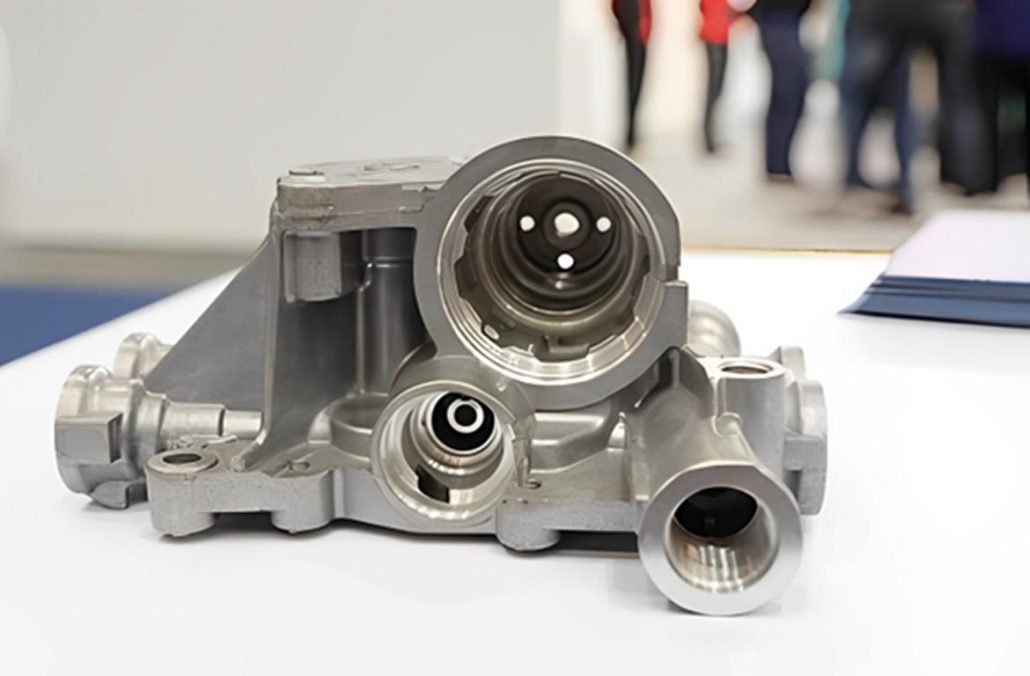
fundición a presión

Proceso de fundición a presión

fundición de aluminio a presión, fundición a presión, empresas de fundición a presión, molde de fundición a presión, piezas de fundición a presión, proceso de fundición a presión

CNM Die Casting has the ability to offer various castings including die casting, investment casting, permanent mould casting, and sand casting for a wide range of alloys, including all die-cast alloys, many permanent mold alloys, and many magnesium alloys. Our manufacturing processes have been accepted by the world casting market as equal or superior to conventional die casting. Benefits of the CNM Die Casting Process Better dimensional control Improved cross parting line tolerances Reduction in gas porosity Improved balance properties of finished rotating parts Use of “cast-in-place” inserts Improved mechanical properties due to effective alloy modification Better wear properties due to smaller grain size microstructure Improved flexibility regarding alloys and types of castings Machining CNM Die Casting’s Machining Section utilizes the work cell concept and high-speed flexible machining equipment to complete secondary operations to CNM’s castings so that a part or subassembly is ready to install when it leaves our facility. CNM Die Casting has evolved and responded aggressively to customer demands for providing high-speed machining and assembly services without initial capital expenditures. By factoring a portion of the cost of the existing equipment into each part, the customer benefits from faster set-ups and minimal initial capital outlays. CNM Die Casting operates 8 die cast machines, complete in-house die casting mold making and CNC machining in an over 20,000-square-foot facility in DONGGUAN, China. Our integrated manufacturing capabilities, together with over 100 employees, allow us to be your One-Stop, complete service die caster, and be consistently price competitive, while also maintaining a high standard of quality.   Below are Comparison of die casting processes Metals that can be cast Min.and Max mass, kg Tolerance on dim.,% Surface finish,µ m Min. section size, mm Draft deg Production rate,pcs/hr Min. cored hole,mm Porosity Sand Casting Aluminium Steel CI and others 0.03, 100 0.10, 200, 000 0.03, 50, 000 0.09 to 0.03 4 8 8 3 6 3.5 4 to 7 10 to 15 6 5 Permanent Mould Casting Cast iron Al and Mg 0.01, 50 0.01, 10 0.01 min 2 5 3 2 50 4.5 to 6 6 4 Die Casting Al Mg Zn 0.015, 35 0.015, 35 0.05, 80 0.0015 0.0015 1 1 1 0.8 1.2 0.5 2 2 2 75 to 150 300 to 350 2.5 2.5 0.8 2 Precision Investment Casting Steel Aluminium 0.005, 25 0.002, 10 0.003, to 0.005 1 1 1 0.8 1 to 3   N/A 0.5 to 1.25 1 Shell moulding Steel Cast iron Aluminium 0.05, 120 0.03, 50 0.03, 15 0.01 to 0.003 6 6 2.5 3.5 3 1.5 2 to 3 30 to 80 3 to 6 1 Centrifugal casting Aluminium Steel Cast iron up to 400 0.002 0.004 0.004 0.6 to 3.5 0.6 to 1.2 3 30 to 50  N/A 1 to

pieza de fundición a alta presión

Qué es la fundición a presión

fundición a presión

What is die casting Die casting is a manufacturing process for producing accurately dimension, sharply defined, smooth or textured-surface metal parts. It is accomplished by forcing molten metal under high pressure into reusable metal dies. The process is often described as the shortest distance between raw material and finished product. The term, “die casting,” is also used to describe the finished part. The term “gravity die casting” refers to castings made in metal molds under a gravity head. It is known as permanent mold casting in the U.S.A. and Canada. What we call “die casting” here is known as “high pressure die casting” in Europe. How are die castings produced First, a steel mold capable of producing tens of thousands of castings in rapid succession must be made in at least two sections to permit removal of castings. These sections are mounted securely in a machine and are arranged so that one is stationary (fixed die half) while the other is moveable (injector die half). To begin the casting cycle, the two die halves are clamped tightly together by the die casting machine. Molten metal is injected into the die cavity where it solidifies quickly. The die halves are drawn apart and the casting is ejected. Die casting dies can be simple or complex, having moveable slides, cores, or other sections depending on the complexity of the casting. The complete cycle of the die casting process is by far the fastest known for producing precise non-ferrous metal parts. This is in marked contrast to sand casting which requires a new sand mold for each casting. While the permanent mold process uses iron or steel molds instead of sand, it is considerably slower, and not as precise as die casting. Types of machines for die casting Regardless of the type of machine used, it is essential that die halves, cores and/or other moveable sections be securely locked in place during the casting cycle. Generally, the clamping force of the machine is governed by (a) the projected surface area of the casting (measured at the die parting line) and (b) the pressure used to inject metal into the die. Most machines use toggle type mechanisms actuated by hydraulic cylinders (sometimes air pressure) to achieve locking. Others use direct acting hydraulic pressure. Safety interlock systems are used to prevent the die from opening during the casting cycles. Die casting machines, large or small, very fundamentally only in the method used to inject molten metal into the die. These are classified and described as either hot or cold chamber die casting machines. Hot Chamber die casting machines Hot chamber machines (Fig.1) are used primarily for zinc, and low melting point alloys which do not readily attack and erode metal pots, cylinders and plungers. Advanced technology and development of new, higher temperature materials have extended the use of this equipment for magnesium alloy die casting. Figure 1: Hot Chamber Machine. Diagram illustrates the plunger mechanism which is submerged in molten metal. Modern machines are hydraulically operated and equipped with automatic cycling controls and safety devices. In the hot chamber machine, the injection mechanism is immersed in molten metal in a furnace attached to the machine. As the plunger is raised, a port opens allowing molten metal to fill the cylinder. As the plunger moves downward sealing the port, it forces molten metal through the gooseneck and nozzle into the die. After the metal has solidified, the plunger is withdrawn, the die opens, and the resulting casting is ejected. Hot chamber machines are rapid in operation. Cycle times vary from less than one second for small components weighing less than one ounce to thirty seconds for a casting of several pounds. Dies are filled quickly (normally between five and forty milliseconds) and metal is injected at high pressures (1,500 to over 4,500 psi). Nevertheless, modern technology gives close control over these values, thus producing castings with fine detail, close tolerances and high strength. Cold Chamber die casting machines Cold chamber machines (Fig. 2) differ from hot chamber machines primarily in one respect; the injection plunger and cylinder are not submerged in molten metal. The molten metal is poured into a “cold chamber” through a port or pouring slot by a hand or automatic ladle. A hydraulically operated plunger, advancing forward, seals the port forcing the metal into the locked die at high pressures. Injection pressures range from 3,000 to over 10,000 psi for both aluminum and magnesium alloys, and from 6,000 to over 15,000 psi for copper base alloys. Figure 2: Cold Chamber Machine. Diagram illustrates die, cold chamber and horizontal ram or plunger (in charging position). Die casting provides complex shapes within closer tolerances than many other mass production processes. In a cold chamber machine, more molten metal is poured into the chamber that is needed to fill the die cavity. This helps sustain sufficient pressure to pack the cavity solidly with casting alloy. Excess metal is ejected along with the casting and is part of the complete shot. Operation of a “cold chamber” machine is a little slower than a “hot chamber” machine because of the ladling operation. A cold chamber machine is used for high melting point die casting alloys because plunger and cylinder assemblies are less subject to attack since they are not submerged in molten metal. Die casting and their construction Die casting dies (Fig. 3) are made of alloy tool steels in at least two sections called fixed die half and ejector die half. The fixed die half is mounted on the side toward the molten metal injection system. The ejector die half, to which the die casting adheres, and from which it is ejected when the die is opened, is mounted on the moveable platen of the machine. The fixed die half of the die is designed to contain the sprue hole through which molten metal enters the die. The ejector half usually contains the runners (passageways) and gates (inlets) which route molten metal to the cavity (or cavities) of the die. The ejector

¿Qué es la fundición por gravedad?

fundición de aluminio, moldes de fundición de aluminio, fundición de aluminio a presión, fundición a presión, fundición de aluminio, empresas de fundición a presión, molde de fundición a presión, piezas de fundición a presión, Fundición por gravedad, molde de inyección china, fabricación de moldes de inyección

Different Between Aluminum Die Casting and Gravity Casting Aluminium Die Casting is more than just an excuse to play with the molten metal it is actually a great way to create art and complicated pieces of machinery or other items that would otherwise be nearly impossible to make. Aluminum die Casting is really a great way to save money…while playing with molten metal. The reason that aluminum die Casting has survived the test of time is a matter of efficiency. Some of the earliest casting examples have been found in China dating back thousands and thousands of years. In fact, every major civilization from the Egyptians to the Romans practised aluminum casting. This skill came back into vogue during the Renaissance and has continued to advance and evolve from there. While Sand Casting is the most popular casting process there are many, many more processes available to the backyard foundries. Not everyone is going to be casting heavy pieces like engine parts or cast their own motorcycles. So for those that just want to make decorative pieces, you will not be using the same casting process as these heavy duty casters.  For artists creating small scale statues or embellishes and for hobbyists that need a decorative touch to their model plane or boat might want to consider using gravity casting for their needs. What is Gravity Casting Gravity Casting seems to be especially useful when dealing with aluminum and other light alloys. The basic idea behind this casting process is pretty much exactly what the name suggests. The metal is introduced into the mold by the force of gravity. Most other casting process either use natural pressure difference like the kind in certain sand casting procedures or they use forced pressure like in centrifugal casting to get the molten metal into the mold. One of the most common uses for gravity casting is when permanent molds are going to be used. Also called a die, the permanent mold is really only economical for those planning on using the same mold numerous times and will need to keep the quality at a constant level. While some temporary molds can be repeatedly used the quality of the finished product will begin to suffer over time. With die molds the quality will remain the same. Die molds should be seen as an investment. Yes, they will be more costly than other molds; however, they will outlast cheaper options for molds. With Permanent molds, they are created using cast iron, steel, and other metals. Gravity casting is used for the permanent mold process with pleasing results. Gravity casting is usually used when the finished product is more visually based then structurally based which is why this method is a favourite of artists and even some jewellers. The loss of strength is due to the lack of pressure used in this process. For those that need the strength but still want to use gravity casting, more of the molten metal will need to be used which will increase the weight. go to https://www.aludiecasting.com/ to know more about gravity casting Relying on gravity will take patience, although it will be needed for larger products. If you need gravity casting or aluminum die casting, magnesium die casting or zinc die casting service for your business. You are welcome to send us your requirement for quote, you only need to send us your 3D part design and your requirement, then you can sit back and we will do there rest for you, to work with us you only need to take care of the market at your side, and we will be your back up to take care of lead time, shipment, quality and technical.

Fundición a presión

fundición de aluminio, moldes de fundición de aluminio, fundición de aluminio a presión, fundición a presión, fundición de aluminio, empresas de fundición a presión, molde de fundición a presión, piezas de fundición a presión

Find Right Aluminum Die Casting Sources Are you looking for the high quality and ultimate die casting services for your business? Well, you better need to hire the right service provider who must be experienced in the very same domain. Yes, it is highly necessary to invest some time who can offer very high-quality results and that is by paying the very affordable amount. Before we talk about how to find the right company, it is highly necessary to know more about Die casting. Well, this is the most important manufacturing technology which is used by many industries which are looking for all sorts of parts to commence the work and for that it is necessary to go with the aluminum die casting process. With the help of die casting mold, it will help in molding the complexity of the metal substance exactly in the same manner as you are looking to have. Yes, the final product can have virtually any size depending on what designer desires, thus there is nothing impossible for the best and great service providers at all. When it comes to finding a right service provider for aluminum casting parts, you better invest time over the net and find out the most experienced, reliable and friendly service provider to meet the exact requirements without any fail. Also, you better find out someone who can easily work on any customized requirements of the clients as well as they must possess great goodwill in the market. Also, you can investigate their previous projects and check how best they are in the die casting and how they have helped other companies to complete their requirements. Not only this, even, you need to disclose them the complete information about your project requirements and check how well they are in offering you the correct guidance as well as what price they are quoting you up. Even, you can do this with different sources and go up with the best one who offers great services at the best prices. Moving up with the pro means they will consider mechanical properties, including tensile strength, yield, impact, hardness, and other various specifications in advance to offer you the best solutions. Not only this, pros will help in picking up the right metal which they perform by checking out the physical properties of the metal. Yes, before going up with the aluminum die casting, it is very important to know more about its conductivity or how it behaves under extreme stress or heat. Pros also determine the composition of different alloys, check what are the common uses for the primary element, they also check out a complete list of die-cast alloys, check out the needed properties, and everything to offer you something the best to meet your exact requirements. Why don’t you check out to go to the suggested source? Well, it will offer you the best services by offering you the casting of metal in the shortest possible of time, will make everything from the scratch and the best part is everything will be done in a budget-friendly manner.   Technology is improving day by day and we are the one enjoying it up fully. Today, we can have every possible thing to make our work the best as well as offer us full convenience and complete peace of mind. Apart from others, talking about Die casting, it is a manufacturing process that can produce geometrically unique and impossible metal parts with the best use of reusable molds, called dies. The die casting process is very important and pros always make sure to use all the necessary things, called- furnace, metal, die casting machine, die and other various materials. The metal which is used here is always non-ferrous alloy, like- Zinc and aluminum, later it is melted in the furnace and then injected into the dies in the die casting machine for producing very complex metal parts. It is always better to approach the right company for aluminum casting parts as they always go with the best and authentic procedures in order to produce something the best. They may use different types of die casting machines, called – hot chamber machines and cold chamber machines for a perfect die casting solution. Hot chamber machines are used for those alloys which have low melting temperatures, such as zinc. And Cold chamber machines are used for those alloys with high melting temperatures, such as aluminum. Both machines work the same and once they are done with the molten metal, they inject the same into the dies, wait for cooling it down and solidify into the final part, called the casting. Aluminum die casting tooling is also known as dies, is here just for alloying the steel. The dies are finished from at least two sections to allow casting elimination. To do so, there is a special need of the efficient approach of die casting and some go with the portable slides, with certain sections that can be done without difficulty to build the ideal shape as demanded by clients from die casters. In the procedure, die casting tooling goes with the simple production of the holes through the predetermined die half. Once we have the molten metal, it is then dispensed into the hole in order to dry in the cavity and this is the best way to get the specific dimensions contoured in the plating. Dies may also have to lock pins, which are utilized in order to stick together two halves and to take away the cast part. Always find the best and reliable service provider for aluminum die casting as well as who can easily manufacture miniature to large precision components using the broad range of zinc die casting, aluminum and magnesium die casting alloys. It is important to know that each and every alloy has unique physical characteristics to match your specific application. However, it is highly necessary to find out the right experts who can help you to meet your requirements by picking up the ideal material to manufacture your precision component.

Fundición a presión de aluminio

Fundición inyectada de aluminio

fundición de aluminio, moldes de fundición de aluminio, fundición de aluminio a presión, fundición a presión, fundición de aluminio, empresas de fundición a presión, molde de fundición a presión, piezas de fundición a presión, fundición a alta presión, Fundición inyectada de magnesio, fundición a presión

What is Aluminum die Casting Aluminum die casting is a casting liquid die forging method. Die casting process is a kind of special high pressure die casting machine to accomplish the process. Its basic technological process is: first metal or aluminium alloy liquid in low or high-speed casting filling into the die mold cavity, die with a moveable type cavity surface. It with the liquid aluminum alloy cooling process pressure forging blank, both the elimination of shrinkage defects, also make the rough internal Aluminum Die Casting organization to forge the broken crystal. Rough comprehensive mechanical properties are improved significantly. Benefits of aluminum die casting Metals and precautions related to aluminium die casting. Different types of aluminium alloys can be used in die Casting and aluminium molds,  types of methods are used for aluminum casting molds, zinc die casting, aluminum die casting and many more  Type of Casting process Casting is the process of making Aluminium suitable for producing different types of products. It is a simple and inexpensive way to provide a wide variety of aluminium products. Some of the examples are Washington Monument, car engines, and power transmissions, etc, which were all produced through aluminum casting alloys process. Aluminium casting can be done in 3 ways:- Auminum die casting Mold Casting Sand Casting DIE CASTING Die casting is a manufacturing process for producing metal parts.  In die casting, die or mold cavities are created with hardened tool steel that has been previously machined to a particular shape. Here in die casting, Aluminium is melted first and is poured into a steel die under high pressure forcefully. This manufacturing technique is normally used for high volume production, the process we normally called high pressure die casting or pressure die casting process MOLD CASTING About mold casting, mold and cores can be of either steel or any other metal. Here also the aluminium is melted first and is poured in the mold provided. Sometimes vacuum is also applied. In some situations, Permanent mold casting is seemed to be stronger than both die casting and sand casting methods. Semi-permanent mold casting techniques are used when permanent cores are impossible to remove from the finished part. SAND CASTING: Sand casting is the most versatile method of producing aluminium products. Usually, the molted aluminium is poured into a mold which is virtually pressed into a fine sand mixture. The pattern will be little larger than which needed for the aluminium shrinkage during solidification and cooling. Sand Casting is usually a slow process than both die casting and mold casting. Usually, it is used for small quantity products. Aluminum Casting Alloys The most important cast aluminum casting alloys system is Al-Si. Here high levels of Silicon contribute to give good casting characteristics. aluminum casting alloys are widely used in engineering structures and components where lightweight or corrosion-resistant is required. Methods and benefits of Aluminium die casting Metals and precautions related with aluminium die casting Different types of aluminium can be used for die Casting, Aluminum casting manufacturer & aluminum casting is used in order to cover different types of metals by using different types of methods. There are many methods used for aluminum casting and different types of benefits are obtained. With the help of aluminum casting and aluminum die casting it is possible to increase the life of metals and these can be used for a long time period with an amazing look and charm of metal. Methods Different types of methods are used for aluminium die casting. The main thing is to melt aluminum. High temperature is needed for melting aluminum. Special structures are used for the melting of aluminum. When aluminum casting is melted then it is poured on the target metals. Then the melted aluminum casting is allowed to get hard and it is ready to be used after some time period. There are special containers that are made to be used for the melting of aluminum. These structures are available in the market in different shapes and sizes. You are also able to make these structures at home by using the desired ingredients. You have many options in making these structures. If you are going to buy this structure from the market then you have to make a selection of the size and shapes. There are many options in terms of sizes and shapes and different types of prices are charged by makers. Working of these structures is also different as some use fuels and some use manual efforts for getting heat to make sure that aluminum casting could be heated and melted effectively. High temperatures are obtained in these structures and then aluminum casting is melted and then used on the target metals for the casting process. Benefits Aluminium Die Casting There are many types of benefits of aluminum die casting. Mainly this type of casting is done to make sure that the metal can remain safe from corrosion. Atmosphere conditions and moisture is bad for iron and casting can help to protect iron and increase its useful life. aluminium die casting is able to resist moisture and other harmful effects of the environment due to which it can be used on metals through casting. The protective shield is made on iron to make sure that it can be used for a long time period. aluminium die casting companies can be cast on iron and make a protective sheet. This protection is in the form of a shining layer which is obtained by using high temperatures. This layer is permanent and good looking along with increasing strength and useful life of metal. Mostly iron is cast with the help of aluminum. This is a cheap process and the user is able to get benefits as the life of iron is increased. Conclusion aluminium die casting mold can be used for casting of iron and other metals. There are many methods available for this process. With the help of any reliable method, the user is able to get benefits as the metal is saved from corrosion and other

Scroll al inicio

Solicitar presupuesto