fundición a alta presión

Hot Chamber Die Casting and Cold Chamber Die Casting

Difference Between Hot Chamber Die Casting and Cold Chamber Die Casting

fundición de aluminio

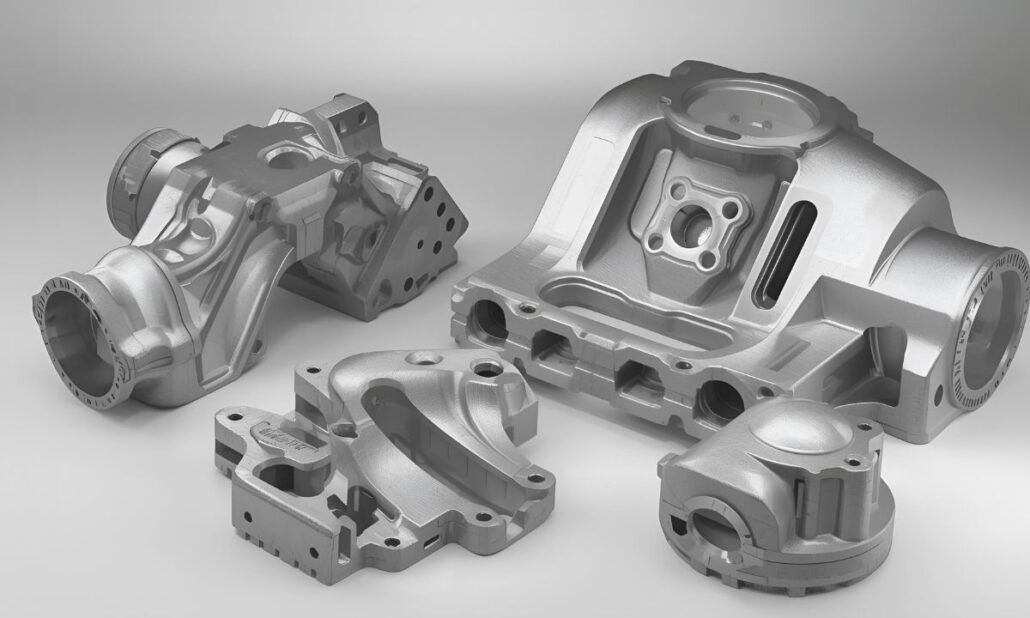
Die casting is a metal casting process that uses high pressure to produce complex, high-volume, precise metal components with superior surface finish and dimensional accuracy. This is achieved by high-speed, high-pressure injection of molten metal into a hardened steel mold, known as a die. After the metal solidifies, the die is opened, and the completed component is ejected, trimmed, or lightly secondary processed. Due to its speed, reproducibility, and ability to produce thin-walled, detailed casts, die casting is widely used across the automotive, electronics, aerospace, appliance, and consumer products sectors. High-pressure die casting processes fall into two major types: hot-chamber and cold-chamber die casting. Although both processes use pressure to force molten metal into a die, the ways the metal is melted, manipulated, and injected differ markedly. The differences influence the type of metals used, cycle time, production cost, tooling life, and part size. Hot-chamber die casting integrates the melting furnace with the casting machine, enabling faster processing and improved suitability for low-melting-point alloys. In cold-chamber die casting, however, a separate furnace is used, and molten metal is poured into the machine each time. This arrangement is preferable when the alloy has a higher melting point, e.g., aluminum and copper. Knowledge of the differences between these two processes helps Die Castings China select the most effective, cost-effective, and technically viable method for the company’s application. Hot Chamber Die Casting: Process and Technical Knowledge Hot-chamber die casting is a high-pressure metal casting process primarily used for low-melting-point alloys. It has extensive applications in the automotive hardware, electronics, telecommunications, and consumer goods industries, as well as in sectors that require high production speeds, tight dimensional tolerances, and good surface finish. The key feature of this process is that the melting furnace is integrated into the casting machine. In this type of design, the molten metal is kept in a continuously ready-to-inject state, reducing handling time and resulting in production that is much more efficient than in other casting methods. Summary of the Process Process Explanation Melting Metal is maintained in a furnace inbuilt as molten at about 400 -450 °C in the case of zinc alloys and 600 °C in the case of some magnesium alloys. Filling the Gooseneck In this setup, a hydraulic plunger is used to withdraw until molten metal fills the gooseneck chamber. Injection The plunger moves forward and injects metal into the die cavity at rates up to 3060 m/s. Solidification The metal’s cooling and solidification take 2-10 seconds, depending on the part’s thickness. Ejection This is where the die opens, and the casting is removed by die ejection pins. Repeat The total cycle time is 3 to 15 seconds, enabling high production volumes. The Process of the Hot Chamber Die Casting In hot-chamber die casting, the molten metal is retained in an in-built furnace mounted on the machine. The molten metal submerges a component called a gooseneck. When the plunger is retracted, an intake port supplies molten metal to the injection chamber. The plunger is then hydraulically actuated, driving the metal through the gooseneck and into the die cavity at high velocity. The injection rates may reach 30-60 meters per second, filling the cavity before the metal solidifies. After being cast, the molten metal is pressurized and cooled. Solidification typically takes 2-10 seconds, depending on wall thickness and alloy. With the part already solid, the die is opened, and the ejector pins force the casting out. The machine thereafter shuts and initiates the subsequent cycle. Technical Parameters and the Operating Conditions The process is carried out within well-controlled temperature and high-pressure ranges to ensure tooling quality and safety. Zinc alloys can be cast at temperatures between 400 and 450 °C. In contrast, magnesium alloys can be cast at temperatures closer to 600 °C. The injection pressure is typically 7-35 MPa (approximately 1,000-5,000 psi). The die temperature is maintained between 150 and 250 °C to ensure consistent metal flow and controlled cooling. Due to the wide range of machine sizes, the clamping force typically ranges from 20 to 500 tons. Shot weights are usually less than 1 kilogram, but machines can handle up to 5 kilograms. This is one of the fastest metal-forming methods, with production rates often reaching 300-700 parts per hour due to its high cycle rate. Applicable Material Limits and Alloys Hot-chamber die casting applies only to alloys that do not attack iron at high temperatures. The most common are zinc alloys, including Zamak 3 and Zamak 5, which have melting points near 385 °C. It is also commonly used with magnesium alloys such as AZ91D, which melts at about 595 °C. It is also possible to process lead-tin alloys, but their industrial applications are more limited. This process cannot be applied to aluminum, which has a melting point of approximately 660 degrees Celsius, which can destroy the submerged injection elements. Performance Benefits and Practices Limitations Parameter Typical Range Metal Temperature 400–450°C (Zinc), up to 600°C (Magnesium) Injection Pressure 7–35 MPa (1,000–5,000 psi) Cycle Time 3–15 seconds Machine Tonnage 20–500 tons Production Rate 300–700 parts/hour Die Temperature 150–250°C Typical Part Weight 0.02–5 kg Cold Chamber Die Casting: Process and Technical Observations Cold-chamber die casting is a high-pressure metal casting process suitable for alloys with medium- to high-melting points. It is commonly used in industries such as automotive, aerospace, industrial machinery, and electronics that require strong, lightweight components with precise dimensions. This process uses a separate furnace to melt the metal, rather than a hot-chamber die casting. Each shot is moved into the casting machine with the molten metal, making the system suitable for materials that would harm a permanently submerged injection process. This geometric distinction characterizes the operating mode, production speed, and material range of the cold-chamber process. Process Overview During cold-chamber die casting, the metal is melted in an external furnace at the appropriate alloy-specific temperature. The melting temperature of aluminum alloys is generally in the range of 660- 700 °C, and copper-based alloys might be melted at temperatures exceeding 1,000 °C. After melting,
Principales empresas de fundición a presión de China y del mundo 

fundición de aluminio a presión, empresas de fundición a presión, empresa de fundición a presión, Fabricante de fundición a presión

La fundición de aluminio a presión es uno de los procesos de fabricación más fiables y rentables de la industria contemporánea. Se trata del proceso de inyección a alta presión de aluminio fundido a alta temperatura en un molde preciso para crear piezas potentes, ligeras y dimensionalmente precisas. Es especialmente útil en la producción de formas muy complejas con acabados superficiales de gran calidad, por lo que es un proceso muy utilizado en la industria automovilística, aeroespacial, electrónica, de productos de consumo y de maquinaria industrial. La fundición a presión de aluminio ha tenido una gran demanda en los últimos años. La tendencia mundial hacia los coches eléctricos, las construcciones ligeras y la eficiencia energética ha situado a las aleaciones de aluminio en primera línea de la innovación. Los fabricantes han desarrollado componentes de alta tecnología como bloques de motor, cajas de transmisión, carcasas de baterías y disipadores térmicos que son duraderos y ligeros. La reciclabilidad y la resistencia a la corrosión hacen que el aluminio también sea útil en las tendencias mundiales de producción sostenible y respetuosa con el medio ambiente. Dos de los principales centros de fundición a presión de aluminio son Estados Unidos y China. Las empresas de Estados Unidos son conocidas por ser innovadoras, tener altos estándares de calidad y utilizar altos niveles de automatización, por lo que pueden considerarse una buena inversión en industrias de alta precisión. Por el contrario, los fabricantes chinos han ganado mucha competitividad en el mercado mundial, han aportado una solución rentable, una gran capacidad de producción y tecnologías más avanzadas. En este artículo se analizarán algunas de las industrias de fundición a presión de aluminio con más éxito en EE.UU. y China, sus puntos fuertes, sus capacidades y los factores que las convierten en los socios más fiables que las empresas de todo el mundo como sus proveedores preferidos en la industria manufacturera. ¿Qué es la fundición a presión para automoción? La fundición a presión es un proceso de producción en el que el metal fundido, normalmente aluminio, magnesio o zinc, se introduce a gran presión en un molde que tiene un espacio abierto. Esto permite la producción en serie de componentes de alta resistencia, de funciones complejas y con un buen acabado superficial y precisión dimensional. La fundición a presión en la industria del automóvil permite la producción de componentes: El uso de la fundición a presión ha revolucionado la construcción de los vehículos contemporáneos, ya que permite ahorrar peso y, al mismo tiempo, mantener las prestaciones. La demanda ha contribuido al elevado índice de desarrollo de las principales empresas de fundición a presión para automoción en China, Europa, América y Japón. Por qué China es líder en fundición a presión para automoción China es uno de los mayores fabricantes de fundición a presión para automoción del mundo: Este conjunto de puntos fuertes ha permitido a las empresas chinas de fundición a presión para automoción ser las potencias no sólo en el mercado local, sino también a nivel internacional en la cadena de suministro. CNM Tech Diecasting Company es uno de los principales productores de productos de fundición a presión de aluminio de calidad superior. Ofrecen a varios sectores, como el de la automoción, la electrónica y las telecomunicaciones, componentes de ingeniería de precisión destinados a mantener los más altos niveles de calidad. Pueden producir piezas ligeras y resistentes utilizando sus avanzados procesos de producción, como la fundición a alta presión y el mecanizado CNC. The Diecasting Company cree en el poder de la innovación constante y, por ello, invierte en maquinaria moderna, líneas de producción automatizadas y, lo que es más importante, sistemas de control de calidad que ayudan a ofrecer siempre los mismos resultados. Tanto los fabricantes de equipos originales como los proveedores de primer nivel forman parte de su base de clientes global, por lo que son un socio fiable a la hora de satisfacer necesidades de producción complejas y de gran volumen. Sitio web: https://www.thediecasting.com/ Por qué elegirlos The Diecasting Company es la empresa preferida por las empresas porque se centra en la calidad, la precisión y la innovación. Su aplicación de las tecnologías de fundición a presión más avanzadas, su estricto control de calidad y su puntualidad en las entregas garantizan que sus clientes obtengan componentes que cumplen las normas internacionales y los convierten en la opción preferida de los fabricantes y fabricantes de equipos originales de automoción que desean encontrar un proveedor fiable de soluciones de fundición a presión. Industrias atendidas Sincere Tech Sincere Tech es uno de los productores de moldes de alta precisión en inyección de plástico y fundición a presión. Tienen experiencia en el diseño de moldes, la creación de prototipos y la fabricación del producto final, lo que proporciona una solución integral a sus clientes de todo el mundo. Utilizan software CAD/CAM informatizado y mecanizado automatizado para que todos los moldes fabricados sean muy precisos. Plastic Mold puede acreditarse con años de experiencia en atender las necesidades de las industrias de automoción, electrónica de consumo y dispositivos médicos con la capacidad de entregar moldes complejos con eficiencia. Destacan por su innovación, control de calidad y rapidez de entrega, lo que les convierte en un proveedor de confianza para las empresas que desean una solución de moldes personalizada. Sitio web: https://www.plasticmold.net/ Por qué elegirlos Plastic Mold es seleccionada por sus completos sistemas de fabricación de moldes, sus conocimientos técnicos y su capacidad para ajustarse a tiempos de producción limitados. Sus moldes de calidad superior minimizan los errores, mejoran la productividad y ayudan a los clientes a obtener productos de fundición a presión o moldeados por inyección precisos y fiables. Industrias atendidas GC Precision Mould GC Precision Mould es un fabricante de moldes de fundición a presión en China que suministra moldes de fundición a presión de aluminio, zinc y magnesio. Tienen fama de fabricar piezas de alta calidad, rentables y ligeras en los sectores de la automoción, la electrónica y la iluminación. Disponen de las capacidades de fundición a presión de alta presión, mecanizado CNC y operaciones de acabado secundarias. Alu Diecasting se centra en la precisión, la longevidad y la productividad. Siempre están a la altura de las normas internacionales con el uso de modernas instalaciones, líneas automatizadas e ingenieros cualificados. Atienden a clientes tanto locales como internacionales, como fabricantes de equipos originales y proveedores de primer nivel, y están posicionados como uno de los principales fabricantes chinos de piezas de fundición a presión de la industria automovilística. Sitio web: https://aludiecasting.com/ Por qué elegirlos Utilizan Alu Diecasting porque ofrecen una combinación de precios competitivos, normas de alta calidad y tecnología. Tienen un historial de varias aleaciones, mecanizado de precisión y producción a tiempo que mantiene piezas fiables, de larga duración y ligeras que satisfacen las demandas de la industria automovilística mundial. Industrias atendidas Get It Made Get It Made es un productor de mecanizado CNC, impresión 3D, fundición a presión y conformado de metales con sede en el Reino Unido. Apoyan tanto la creación de prototipos como la producción de bajo volumen,

¿Qué es la fundición a alta presión?

fundición de aluminio

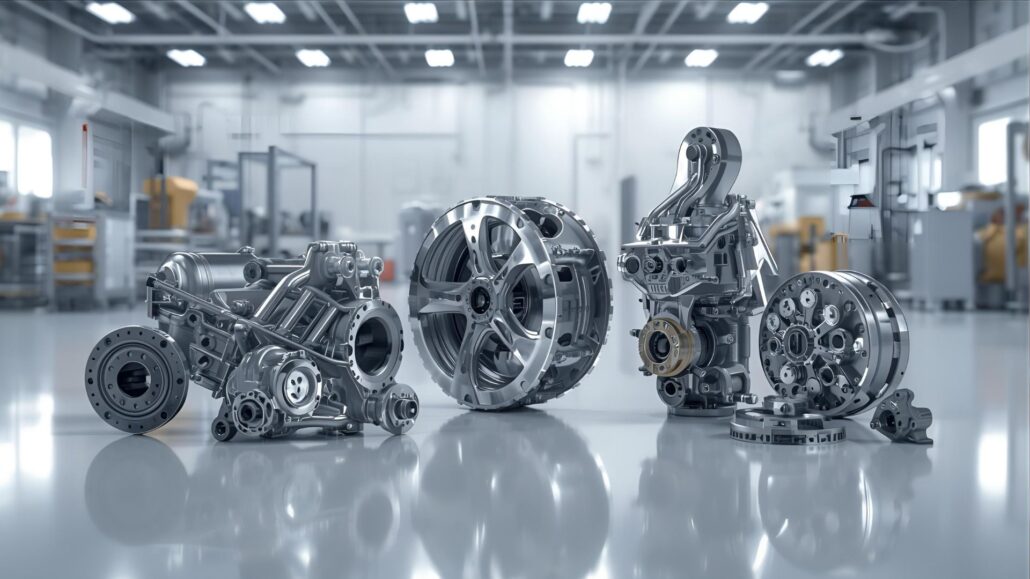
One of the most important metal processes, which is used today, is high pressure die casting. It is characterized by the capability to manufacture high-precision components. It is a process that manufacturers resort to when they require quality parts in large quantities. The process is achieved by placing a lot of pressure on molten metal and forcing it into a steel mold, referred to as a die. The pressure is used to maintain the flow of the metal to all corners of the mold. It produces components of small details, narrow walls and smooth surfaces. Because of this, the high pressure die casting would be a convenient choice in the case of an industry that has to be precise and uniform. Examples of the metals that are usually utilized during the process are aluminum, zinc, and magnesium. The materials have their own advantages. Die casting Aluminum is light and undergoes no corrosion. The reason is that Zinc die casting can be cast in thin and intricate designs. The strength of magnesium die casting is very light. High pressure die casting serves most industries. It provides vital parts in automotive, aerospace, electronic and consumer goods manufacturing industries.  This process provides durability and performance in engine housings, and in electronics cases, among other things. This article will discuss the functionality of high-pressure die casting, the material used, its advantages, constraints and its numerous applications. High Pressure Die Casting Die casting under high pressure has a history of over 100 years. Its creation dates back to the 19th century when it was used to create printing type. With time, technology was enhanced and became an essential procedure in the automotive and aerospace industries. One of the most effective methods of producing composite metal parts nowadays is high pressure die casting. It can be employed in cases where accuracy, durability, and speed are needed. This process has been adopted by manufacturers because it provides substantial production which is regular in quality, smooth, and detailed shapes which are in line with the requirements of modern engineering. The Die Casting Process of High Pressure High-pressure die casting is a rapid process that is accurate and applicable in mass production. It is a combination of high machines with molten metal that makes accurate and detailed parts. This is made efficient as the whole process enables the manufacturers to produce thousands of components of similar quality. Die Preparation It starts with the preparation of the die. The steel mold or die is meticulously washed and sprayed with a lubricant. This is to regulate the temperature and ensure that the metal does not adhere to the die surface. It should be properly prepared since it is the way to a smooth ejection of the final casting. Metal Melting After reading a die, the preferred material- aluminum, zinc or magnesium is molten down in a furnace. The metal should be heated to the right degree of temperature to attain a complete liquid state. The strength and the finish of the final casting largely depend on the quality of the melting. Metal Injection The molten metal is then forced into the die under a very high pressure. This pressure presses the metal in all corners of the mold cavity. It enables the process to make thin walls, sharp edges and complex shapes which are hard to make in other casting processes. Cooling and Solidification The metal freezes quickly within the steel mold after injection. Cooling periods are also extremely short; they may take only a few seconds. Quick cooling provides the part with its strength and assists in keeping the part at the proper size. Ejection from the Die When the solidification of the metal is done, the die is opened. The casting is forced out of the mold by ejector pins. The part is shaped at this phase except that it still contains additional material that must be eliminated. Trimming and Finishing The last phase is finishing and preparing. The metal that is kept in excess is removed, known as flash. Depending on the needs, the part can then be machined, polished, painted or coated. This will guarantee that the component is prepared to be used. Automation in Modern Factories The high pressure die casting is completely automated in modern factories. The steps of injection, cooling and ejection are performed with accuracy by robots. Automation enhances consistency, lowers labour expenses, and makes it an ideal way of undertaking mass production. Raw Materials of High Pressure Die Casting High pressure die casting is ideal for non-ferrous metals that have relatively low melting points. The most frequent are: Aluminum The most popular one is aluminum die casting. It is a low-weight, high-strength combination. Aluminum products are also resistant to corrosion, thus suitable for cars, aeroplanes and electronics. Zinc Small parts that are fine and precise are best cast with zinc. Zinc is of good toughness and strength. Thin walls and fine details are also enabled. That is why it is suitable for connectors, housings and decorative parts. Magnesium Magnesium is the lightest structural die cast metal. It possesses a good strength-to-weight ratio. It is commonly applied in aerospace, automobile, and consumer electronics in areas where a lightweight is a factor. Copper Alloys Alloys can also be made of copper, but this is not common. They are very hard, have high wear resistance and high electrical conductivity. All the materials possess their strengths depending on the usage. Aluminum is selected as a strong and corrosion-resistant material, zinc as an accurate one, and magnesium as a lightweight component. High Pressure Die Casting Tooling and Dies The most important aspect of the process is the die, or the mold. Hardened tool steel is used in making dies, and it is constructed to resist excessive heat and pressure. Dies are of two major types: It is also possible to design a die that will transfer the creation of a variety of parts in a single cycle, a combination die. The tooling costs are also expensive,

¿Qué son los utensilios de cocina de aluminio fundido?

¿Qué son los utensilios de cocina de aluminio fundido? Guía completa

Aluminio, fundición de aluminio

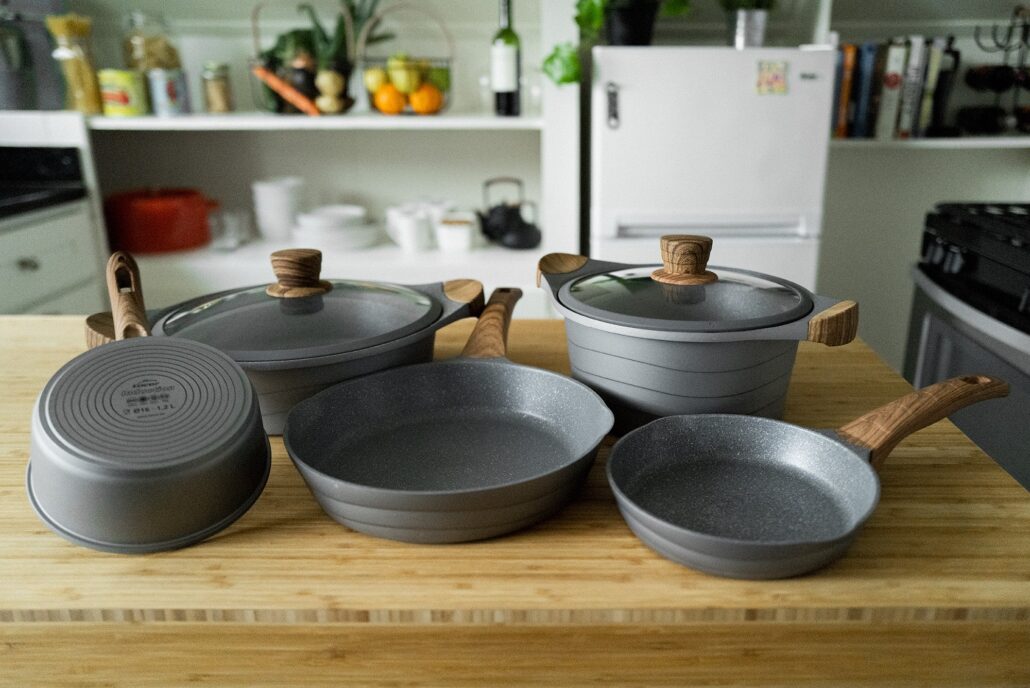
Cast aluminum cookware is becoming popular in kitchens worldwide. It is lightweight, inexpensive, and easy to use. The food can have a different taste depending on the cookware that is used, including the easy cooking process. Cookware is also time-saving and long-lasting. The cast aluminum is made by pouring molten aluminum into a mold. The method gives the cookware both a concrete structure and consistency in the thickness. It allows the pan or the pot to warm up quickly and evenly spread the heat. This simplifies and reduces the time spent preparing day-to-day meals. Cast aluminum is another relatively lightweight material that many people have been using since it is relatively inexpensive when compared to stainless steel. It may also be prepared in different shapes and sizes; therefore, it may be fried, baked, and boiled. However, cast aluminum has its negative sides. It is not as tough as stainless steel nor as tough as cast iron. There are also some types of cooking utensils that need a non-stick or anodized coating so that the food does not stick or is not in contact with acidic foods. In this article, all of these will be expounded using simple language. You will be introduced to the advantages, disadvantages, security, and treatment of cast aluminum cookware. How Cast Aluminum Cookware is Made? Cast aluminum cooking utensils are produced as a result of pouring the melted aluminum into a mold. The metal (aluminum) will then be in the shape of a pan, pot, or baking dish after cooling down. The process makes the cookware tougher and heavier than the traditional pressed or rolled aluminum. The two big stages of the process are: Such casting makes the coocooklightlightut strong enough that it can be used daily. Others are non-stick envelopings on them to prevent the sticking of food, and to facilitate their cleaning. Cast Aluminum Process of Cookware Preparing the Aluminum The initial step entails the selection of aluminum. Pure aluminum or recycled aluminum can be used by manufacturers. This is put into large furnaces where it is heated to over 660 °Cuntil it melts to form a liquid. This stage is where purification of the aluminum is done to determine that it will be strong and safe in the final product. Creating the Mold Once the aluminum is on hand, the mold is created. The form is determined by the mould, and it may be a frying pan, a pot, or a baking pan. These moulds are mostly sandy or steely. The thinness, balance, and durability of the copopotterarere dare be determined by the type of mold and the level of exquisiteness. Pouring the Molten Aluminum The mold is then filled with liquid aluminum. It is filled to the very brim in every crevice of design. It is the process that also causes cast aluminum cookware to be heavier and stronger than pressed aluminum cookware. Cooling and Solidifying After being poured, the aluminum is expected to cool down. It is stiffening and depressing when it comes to cooling and acquires the shape of the mold. The cooling is required as it removes cracks, air bubbles, or weak areas that can jeopardize the quality of the cookware. Trimming and Finishing Once hardened, cookware is removed from the mold. Such is where a crude surface gets cut and polished. Other features are also incorporated, such as handles and bases. This is to ensure that the cook’s uniform is smooth, safe, and ready to be coated. Surface Coating and Finishing Most cast aluminum cooking utensils are surface-treated. They have most of them supplied with non-sticky surfaces, such that the food does not stick on the surfaces,, and the cleaning does not take much time. They can be anodized by others, and this increases their resistance to corrosion and scratches. These finishes are also resistant to the reactivity with acidic food. Quality Testing The quality control is the last one. All of the works are inspected on balance, durability, and coating safety. Cookware that has been carefully checked is packed and only sent into the market. It will ensure the customers receive durable, quality, and safe cookware. Cast Aluminum Cookware advantages What is the reason not to use other materials, to use cast aluminum? Here are the key benefits: Lightweight In comparison to cast iron, it is very light in cast aluminum. It does not take much time tocleanna, and it is more so when one has a cook who prepares meals regularly for the elderly. Superb Heat Distribution Aluminium is a thermal conductor. Cast aluminum utensils are quick to cook and evenly cook. This means that there would be fewer hot spots and even cooking. Affordable It is normally cheaper than stainless steel or copper cookware. It has decent performance at an affordable price. Versatile Cast aluminum may be fried, baked, boiled, or simmered. Some are even oven-safe. Quick Heating The aluminum makes food cook more quickly since it reacts to heat faster. This saves time and energy. Disadvantages of Cast Aluminum Cookware Despite several advantages of cast aluminum cookware, it also possesses several limitations: Durability Issues The cast aluminum is softer than the cast iron or stainless steel. Eventually,, it is likely to be dented or scratched, especially when it is not handled properly. Reactivity with Food The uncoated aluminium can react with acids such as tomatoes or vinegar. This may either render it metallic or discoloured. The majority of modern cast aluminium pans are coated to such effects. Coating Problems The non-stick film on the pan may be of poor quality, and thus, it may wear away with time. It can be scrubbed with hard sponges or metal utensils, and this decreases its life span. Aluminum Cast And Other Cookware The choice of cookware is more of a choice. The cast Aluminum performance when compared with the popular substitutes stands as follows: Cast Aluminum and Stainless steel The first distinguishable difference in the case of the cast aluminum and stainless steel is the heat

Empresas de fundición de aluminio en EE.UU.

Empresas de fundición de aluminio en EE.UU.

fundición de aluminio a presión, empresas de fundición a presión, empresa de fundición a presión

La fundición de aluminio a presión es actualmente uno de los procedimientos de producción más seguros y económicos en los Estados Unidos de América, sobre todo para los fabricantes que exigen robustez, longevidad y precisión. Se realiza mediante la inyección a alta presión de aluminio fundido en piezas de fundición de acero, con lo que se obtienen piezas no sólo ligeras, sino también dimensionalmente precisas y duraderas. Esta resistencia y bajo peso hacen de la fundición a presión de aluminio el material preferido en la industria automovilística y aeroespacial, la electrónica, la maquinaria industrial y los bienes de consumo. El mercado estadounidense cuenta con algunas de las industrias de fundición a presión de aluminio más consolidadas del mundo, desde grandes fabricantes con presencia mundial hasta pequeñas empresas especializadas en piezas a medida y aplicaciones especializadas. Estas empresas son cruciales para el mantenimiento de la industria, ya que suministran a segmentos como bloques de motor, carcasas de transmisión, cajas electrónicas y piezas estructurales. Los fabricantes con sede en EE.UU. se han ganado su reputación de fiabilidad y productos innovadores en el mundo gracias a sus tecnologías de alta calidad, certificación y enfoque en productos de calidad. En los últimos años se ha producido un enorme aumento de la demanda de piezas de aluminio fundido a presión debido a los recientes avances en el aligeramiento de los vehículos, la producción de vehículos eléctricos y el impulso a la fabricación eficiente de energía. Las empresas estadounidenses están apostando por la automatización, las piezas de fundición sostenibles y las aleaciones superiores con el fin de obtener resultados elevados para satisfacer estos requisitos. Este artículo enumera algunos de los mejores fabricantes de fundición a presión de aluminio de EE.UU. y sus logros, potencial y contribuciones a la industria contemporánea. No importa si se trata de obtener piezas para realizar un proceso de fabricación a gran escala o una aplicación altamente técnica, estos fabricantes son la encarnación de la mejor tecnología estadounidense en fundición a presión de aluminio. ¿Qué es la fundición de aluminio a presión? La fundición a presión de aluminio es una técnica de producción en la que se aplica alta presión a un aluminio fundido que se introduce a la fuerza en un molde de acero también denominado matriz. Cuando el metal se enfría y solidifica, se abre el molde y se expulsa la pieza terminada. Este es el proceso con el que los fabricantes pueden crear componentes resistentes, ligeros y muy detallados con un alto nivel de precisión dimensional y acabados superficiales lisos. La principal ventaja de la fundición a presión de aluminio es que puede producir formas complejas que, de otro modo, serían difíciles o costosas de fabricar mediante otros procesos. Tiene una amplia aplicación en la fabricación de piezas como bloques de motor, carcasas de transmisión, cajas electrónicas, disipadores térmicos y componentes estructurales. La fundición a presión de aluminio tiene varias ventajas importantes: Gracias a estos puntos fuertes, la fundición a presión de aluminio se ha convertido en la mejor alternativa en industrias que requieren componentes fiables y eficientes de alta calidad para satisfacer sus necesidades técnicas y económicas. Principales empresas de fundición a presión de aluminio de EE.UU. 1. Dynacast International Dynacast International Dynacast International ha sido una de las empresas más conocidas en el ámbito de la fundición a presión de precisión a nivel mundial. La empresa tiene décadas de experiencia en la producción de componentes pequeños y complejos con el uso de aleaciones de aluminio, zinc y magnesio. Son buenos en la producción de componentes con tolerancias estrictas y características complejas, necesarios para los sectores de la automoción, la electrónica de consumo, las telecomunicaciones y los dispositivos médicos. Ser global también significa que Dynacast puede servir a pequeñas empresas y multinacionales con la flexibilidad, las innovaciones y la calidad que no varían entre proyectos. 2. Pace Industries Convertida en la mayor empresa de fundición a presión de Norteamérica, Pace industries se ha labrado una buena reputación por ofrecer soluciones integrales. Sus gamas de servicios incluyen diseños y soporte de ingeniería, fundición a presión, mecanizado, acabado de superficies y montaje final; llevan años ofreciendo una solución integral a clientes de los sectores de la automoción, la industria y el consumo. Gracias a la envergadura de sus operaciones, pueden abordar proyectos de gran volumen y proyectos personalizados. Pace también sigue la cultura de invertir dinero en tecnología moderna y prácticas sostenibles para poder seguir siendo competitivos en una industria que cambia rápidamente. 3. Ryobi Die Casting (USA), Inc. Ryobi es una marca de renombre en el segmento mundial de la fundición a presión, y tiene una presencia importante en Estados Unidos. Sus operaciones en EE.UU. se centran en componentes de fundición a presión de aluminio a mediana y gran escala, principalmente para el sector del automóvil. Ryobi fabrica bloques de motor, cajas de transmisión y piezas estructurales que necesitan ser duraderas y precisas. La empresa ha utilizado tecnología punta y una gestión de calidad que la han convertido en proveedor preferente de los principales fabricantes de automóviles del mundo. 4. Gibbs Die Casting Gibbs Die Casting, el otro líder del mercado estadounidense, tiene su sede en Henderson, Kentucky. La empresa está especializada en la fundición a presión de aluminio y magnesio para la industria de la automoción, especialmente las carcasas de transmisión y las piezas del tren de potencia. Gibbs hace especial hincapié en la innovación, donde la automatización y las sofisticadas técnicas de fabricación se utilizan para garantizar altos niveles de eficiencia y calidad del trabajo. La empresa también incorpora el concepto de sostenibilidad en su actividad frenando el despilfarro y fomentando prácticas empresariales respetuosas con el medio ambiente. 5. Apex Aluminum Die Casting Co. Apex Aluminum Die Casting está situada en Ohio y se utiliza en los sectores de automoción, electrónica y electrodomésticos. La empresa es reputada por trabajar con lotes de producción de volumen medio, lo que la convierte en la opción perfecta con empresas que requieren una calidad de producción constante pero que no necesitan los enormes poderes de importadores más grandes. El equipo de Apex se preocupa por la satisfacción del cliente, la fiabilidad del servicio, la ingeniería y la precisión en la fabricación. Se han consolidado como un socio fiable para varias empresas estadounidenses gracias a su buena reputación para ofrecer resultados constantes. 6. KenWalt Die Casting Company KenWalt Die Casting tiene su sede en California y cuenta con más de varias décadas de experiencia en la producción de piezas de fundición a presión; aluminio y zinc. La empresa también se centra en trabajos a medida y presta servicio a las industrias de equipos industriales y bienes de consumo. KenWalt destaca por ser una empresa que colabora estrechamente con el cliente durante el

Autopartes de fundición de aluminio a alta presión

Piezas de fundición de aluminio de alta presión para automóviles: Duraderas y eficientes

fundición de aluminio a presión, fundición a alta presión

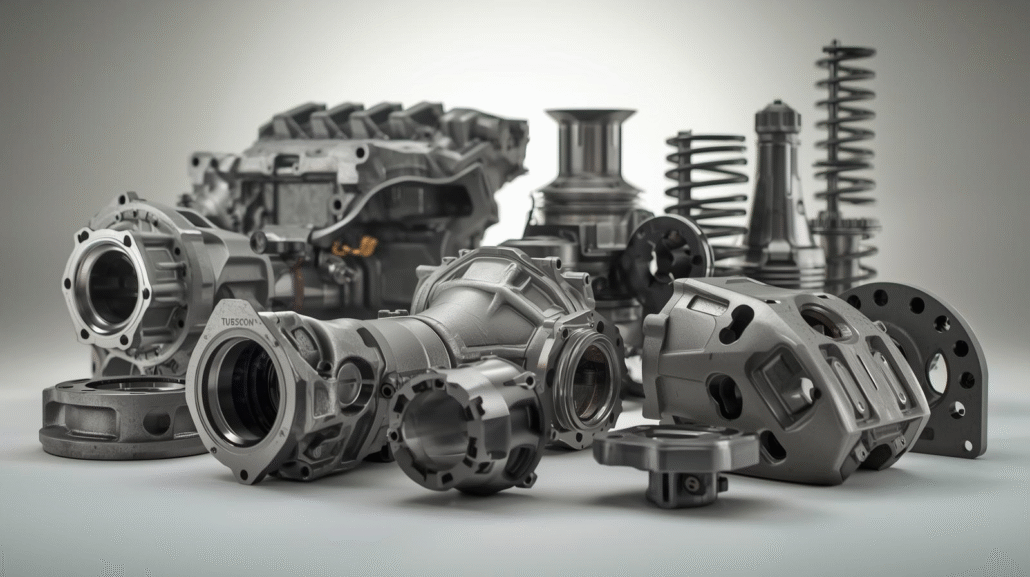
The automotive industry is changing due to the use of aluminum high pressure die-casting auto parts. They provide manufacturers with the power to design lighter, stronger and more efficient cars. With this technology, the car manufacturers can save on weight, become fuel efficient and have green mobility without compromising on the durability of the car. Auto parts die casting is the process whereby molten aluminum is injected into a steel mold at a very high pressure. This produces a strong shape that is smooth and sharp. The method allows faster production, reduced machining and consistent quality. In die casting auto parts, the companies are able to design complex components in a single step, which saves them time and money. Auto parts made in aluminium die casting are now much needed in modern vehicles. This is a frequent method of producing engine blocks, transmission housings, brake parts, and battery casings in electric cars. Lightweight, but tough, corrosion-resistant, and designed to meet tough conditions on the road, these parts are made. Auto parts made with aluminum die casting are increasing in demand rapidly, particularly as we move to electric and hybrid cars. Loss of total weight of cars increases battery life, performance and reduces emissions. This makes aluminum die casting a major component of green production. In brief, the use of aluminum high pressure die-casting auto parts in car manufacturing is no longer a choice. They have played a key role in creating the modern vehicles, which will not only be up to the present performance standards, but also be green. Powerful, effective, and stable, they will also be at the very centre of automotive design in the future. What Is Aluminum High Pressure Die-Casting? Die casting is a process of molding metal. In this, molten aluminum is forced under a very high pressure into a cavity in a steel mold. When cooled, the metal hardens in the same shape as the mold. The outcome is smooth, accurate and long-lasting. That is why die casting became one of the most popular ways of producing modern car parts. In comparison with the traditional technique, high pressure die casting can make complicated parts in one time. This saves time, machining requirements and costs to manufacturers. Why Aluminum for Auto Parts? The reason why aluminum high pressure die-casting auto parts are so popular is that there is no other material that has a combination of qualities as much as aluminum. It is green and rough; therefore, it is light and, therefore, can be used in the automobile industry. Increasing efficiency and environmental requirements have made aluminum the die casting of choice in auto parts. Weight loss is one of the largest benefits. Steel is a lot heavier than aluminum. Carmakers can lighten an overall vehicle by incorporating die casting auto parts produced using aluminum. The lighter a car is, the better its fuel economy, emissions, and performance. This would be important in both a conventional and an electric vehicle. Meanwhile, aluminum does not lose strength. It has a good strength-to-weight ratio, and this is good because even when the part is strained, it does not become soft. This is what renders aluminium die cast auto parts so useful in engines, transmission and chassis parts. The other important advantage is corrosion resistance. Aluminum does not rust and wear out like other metals. This provides increased life to aluminum die casting auto parts and decreased maintenance expenses to vehicle owners. Major Auto Parts are produced using Die Casting Automobile manufacturers cast most of their components using aluminum die casting. These are lightweight yet powerful parts that can be used in conventional as well as electric cars. Engine Blocks Engine blocks have to deal with heat, vibration and pressure. When it comes to auto parts die casting, aluminum blocks weigh less but are firm enough to work in very harsh conditions. This will conserve the overall weight of the engine and fuel consumption. Transmission Housings The transmission housings have to be precise and durable. Die casting auto parts are used in order to achieve the accuracy of smooth-running gears. This guarantees high reliability over time, and minimal machining is required. Brake Components Brakes face constant stress. Manufacturers produce strong components that are not heavy since they use aluminum die casting auto parts. This balance is applied to increase the braking force and to decrease the vehicle’s weight. Chassis Parts The chassis parts are used to provide safety and stability. They are strong but not bulky when made using aluminium die casting auto parts. This increases the management and productivity. EV Electric Housing’s motor and battery The auto parts that shield the motors and batteries are constructed using aluminum high pressure die-casting in electric vehicles. The housings protect delicate systems and still provide a lightweight frame, increasing the distance covered during driving. Collectively, these elements bring out the role of auto parts die casting in helping to design new cars. Aluminum die casting has made engines, EV batteries, and more perform efficiently, last longer, and be durable. Process of Aluminum High Pressure Die Casting 1. Mold Preparation Preparation of the moulds starts. The die of steel is thoroughly washed in order to eliminate all materials that are impurities and heated to the appropriate temperature. A protective coating is applied to the surface that prevents the sticking of the molten aluminum to the surface, and helps in controlling the cooling rate. This is done to ensure enhanced circulation of metals and longer life of moulds and consistency of parts per production cycle. 2. Melting the Aluminum These aluminum alloys are melted in a furnace with specific controlled temperatures. But sufficient temperature is also required, as that prevents oxidation, and the molten metal will flow easily into the mold cavity. Any impurities are removed by refining the agents or filters. This ensures that aluminum die cast auto parts contain no defects and are of good and consistent properties. 3. Under high pressure injection. Then the molten aluminum is forced into

Piezas de automóvil fabricadas por fundición:

Piezas de automóvil fabricadas por fundición: Selección de materiales y procesos

piezas de fundición a presión

The modern automobile is a sophisticated machine that consists of thousands of separate parts with their own purpose to provide safety, performance, and reliability. Casting is one of the various manufacturing processes that are employed in the automotive industry. Casting is now an irreversible procedure where major parts of a vehicle are formed by shaping molten metal into extremely detailed and strong parts. The engines, transmissions, and braking systems of most vehicles are among the most significant systems that require parts made by casting. Indeed, when designers and builders discuss efficiency, durability, and cost-effectiveness in the production, casting of automobile parts are often at the centre stage of the debate. The art of casting is not new; it was invented thousands of years ago. However, its application in the motor industry has undergone a revolutionary shift to harness hi-tech technologies and the most recent alloys that can fit the high demands of the modern car. Casting has been instrumental in enabling cars to maintain high-performance standards at a relatively low cost through lightweight aluminum engine blocks that are tough and, resilient cast-iron brake components. The article will review the history of the automobile casting parts, processes, advantages, and future trends of automobile casting parts and reveal the reasons why the automobile casting parts continue to be a pillar in the automotive manufacturing industry. History  of Casting It was actually the aluminum casting process that penetrated the sphere in the middle of the 20th century. Casting has been in use in vehicles since the late 19th and early 20th centuries, when the automobile was first developed to replace the horse-drawn carriage. Early engines demanded powerful but inexpensive parts, and casting was the right way to go. One of the first methods to make engine blocks, crankshafts, and housings was iron casting. With the increase in the automobile industry, casting techniques increased and became advanced. The automobile manufacturers learned that they could increase fuel efficiency without reducing the lifetime of the vehicles due to lighter engines and structural parts. Casting is applied to different systems of vehicles in accordance with their application and importance. Finally, the automobile casting parts have the important role of giving strength, accuracy, and cost-effectiveness to reduce the cost, which is why automobile parts are the giants of the automotive industry. What are Automobile Casting Parts? Automobile Casting Parts can be defined as parts of a vehicle that are produced through pouring molten metal into a mold, and the resulting molten metal hardens into a desired shape. This has enabled the manufacture of robust, sturdy, and intricate components that are utilized in automobiles, including engine blocks, cylinder heads, transmission housings, brake drums, and wheels. They are very popular since casting offers: Taking the case of an engine block, the block has various chambers and coolant passages with threaded openings that can be cast correctly. What is Casting? The process of casting is a type of manufacturing where molten metal is poured into a mold and allowed to cool in the shape of the mold. After cooling, the casting is removed, machined (where needed),, and fitted into the finished product. It is an operation in which it is possible to produce both strong and geometrically complex parts. The reason why automobile manufacturers like to use casting is that they can produce large quantities of complicated parts of uniform quality. The proper melting temperature should also be maintained to remove defects such as porosity or underfill We are discussing not only structurally significant parts of automobiles, but also those that must be precise and durable under severe conditions of high temperatures, pressures, and constant wear. Process of Casting in Automobile Parts High-volume production also automates machines or high-pressure systems to ensure a high level of accuracy and consistency. 1. Pattern Making It starts with the production of a pattern, an imitation of the finished part. Patterns tend to be made of wood, metal, or plastic. They also determine the accurate shape and size of the mold cavity into which the molten metal will be poured. 2. Mold Preparation Sand, metal, or ceramic materials are used to form a mold. The two halves of the mold make the cavity to shape the part. Hollows can also be introduced within the mold,, such as internal passages within an engine block. 3. Melting the Metal In a furnace, a controlled temperature is used to melt the selected metal or alloy (cast iron, aluminum, or magnesium). This is to bring mechanical properties to high-performance applications such as engines or gearboxes. 4. Pouring When the metal is melted, it is filled into the mold. The proper sizes and finishes are ensured during drilling, milling, and turning. 5. Solidification and Cooling The heated material is left to cool and harden within the mold, assuming the shape of the mold. The part should avoid a shrinkage defect or crack due to uncontrolled cooling rates. 6. Mold Removal When solidifying, the mold is broken (in sand casting) or the mold is opened (in permanent and die casting). A raw casting is then removed and processed further as a casting blank. 7. Fettling and Cleaning Unneeded material, including sprues, risers, or flash, is eliminated. The casting could be shot blasted or ground to clean up the surface to make it easy to machine. 8. Heat Treatment (if required) Cast parts can be heat-treated to enhance their strength, hardness, or toughness. Sand Casting – Sand casting is one of the oldest and most common ways in which a mold of sand is molded into a more complicated shape. 9. Machining and Finishing Despite the fact that casting generates near-net shapes, a lot of automobile parts have to be machined to be precise. It is used with the engine block, cylinder head, and manifold. 10. Inspection and Testing Lastly, quality checks are done on the cast part. Non-destructive testing (NDT), dimensional testing, and material inspection are conducted to ensure that the part is up to industry standards before assembly into

¿Por qué el aluminio forjado es mejor que el metal fundido?

¿Por qué el aluminio forjado es mejor que el metal fundido?

Aluminio forjado

Forged aluminum is among the most trusted materials in contemporary engineering practice. It is formed by pressing solid aluminum with a high amount of heat and pressure. It alters the internal structure of the metal and makes it stronger and tougher than cast aluminum. Due to this, industries that require safety and durability use forged aluminum. Aluminum in itself is already rated as lightweight, resistant to corrosion and versatile. It is present in vehicles, aircraft, buildings, electronics and even in common tools. Not everything that is made of aluminum is the same, though. The performance of the metal is directly affected by how the metal is formed. Aluminium is melted and poured into molds when it is cast. This may cause flaws such as air bubbles and holes. Forging eliminates those issues. Rather than melting, the aluminum is pressed into form so that the grain is forced to conform to the design of the part. This yields a very powerful and homogeneous material. Forged aluminum has become popular now that industries are shifting to lighter, safer and more efficient solutions. This paper tells us why it is better than cast metal, the process involved in forging metals, where it is applied and the future of forging of aluminum. What Is Forged Aluminum? Forged aluminum is done by pressing solid aluminum under high pressure. The metal is not melted all the way as in casting. Rather, it is heated till it turns soft and malleable. After being softened, the aluminum is stamped or beaten into the required shape by means of heavy forging machines. This stress flattens the metal and also perfects its internal grains. The grain is oriented in the shape direction, and it contributes to the part’s better strength and toughness. Such a fine structure also removes numerous defects present in cast aluminum, including pores or cracks. Consequently, forged aluminum is safer, more durable and stronger. How an Aluminum Forge Works? Forging is done in an aluminum forge. There are a few steps involved in the process: This process ends up with a thick, solid, and homogeneous portion. It does not have weak spots or air bubbles like casting. Benefits of Forged Aluminum Cast metal and other materials cannot do what forged aluminum can do. It has become the tool of preference in industries where we cannot afford to compromise on performance and safety. Superior Strength Forged aluminum is very strong, and this is one of the key benefits of forged aluminum. The grain structure of the metal is refined through the forging process. The tensile and fatigue strength are enhanced by this alignment. False components can bear heavy loads as well as stresses and strains repeatedly without failure. This also positions them very well in high-performance activities like plane landing gear, suspension systems, and industrial machinery. Lightweight but Tough Aluminum is inherently lighter than steel, and forging goes even deeper with it. Forged aluminum is very strong for its weight. This enables engineers to ensure that they make lighter machines and vehicles that are still safe and strong. The weight loss makes cars and aeroplanes more fuel efficient, but also gives them durability. Increased Resistance to Fatigue Cast parts wear out much more than forged aluminum. Fatigue is a condition in which a part has worn out due to multiple stress cycles. Due to weak grain structure, cast parts tend to crack. Aluminum that has been forged does not crack easily, and thus parts made with this material will survive long in the hands of those who use them. Uniform Grain Structure The forging process is used to match the part shape with the grain in the metal. Such homogeneous graining makes it harder and harder to strike. Quite the contrary, casting gives arbitrary grain structures that create weak positions. Safety and Reliability Safety is the first priority in high-pressure industries like aerospace, automotive and defense. Forged aluminum is reliable as it provides power, hardness and steadiness over time, even in extreme circumstances. Aluminum Forging uses Aluminum forging has made an impression in the world where weightless, powerful and enduring parts are required. Forged aluminum parts are believed to be safe and, therefore, are commonly trusted in critical applications related to safety. Automotive Industry Modern automobiles are involved in fraudulent aluminum. A very common application is in wheels. Compared to cast wheels, forged wheels are lighter, more durable and safer. This type of weight loss improves manoeuvrability and fuel efficiency. Suspension parts are another significant use that should resist heavy loads, impact, and vibration on the road. The aluminum used is forged, so they are not stressed. Moreover, most engine parts, including connecting rods and pistons, are forged. These sections can withstand high pressure and hot temperatures with long durability. Concisely, forged aluminum improves the automobile’s performance and safety. Aerospace Industry Aircraft require components that are lightweight in nature and strong. Forged aluminum fits this specification. It applies to landing gears, which are supposed to withstand high levels of impact during landing and takeoff. It also occurs in wing structures where efficiency depends on lightness. Forged aluminum parts deal with pressure, heat and vibration in aircraft engines. Failure is not an option in flight; this is why the aerospace industry relies on forging. Military and Defense Defense applications require forged aluminum. Forged parts of tanks, aircraft, and naval ships have to endure the extreme conditions of combat. Forging guarantees maximum toughness, strength and reliability even in the most strenuous conditions. Industrial Machinery Major equipment is usually operated at full load. Forged aluminum products are wear-resistant and minimize downtime. This makes them cost-effective and long-term solutions for manufacturers. Sports and Lifestyle The sports and lifestyle items also use forged aluminum. Forged components are used to manufacture high-end bicycles, climbing gear and sports equipment. Such objects need to be lightweight and durable over a long period of time, which is why forging is the best method. The Reason Why Industries use forging rather than casting? Forging is the option

Zincado vs. Niquelado: ¿Cuál elegir?

Zincado vs. Niquelado: ¿Cuál elegir?

moldes de fundición de aluminio, fundición de aluminio a presión, Acabado de la superficie de aluminio

Zinc Plating vs Nickel plating is a frequent point of reference in terms of metal finishing. These two methods are applied to safeguard the metals, enhance their performance, and cause their products to last longer. The differences between these two types depend on cost, durability, and appearance. Surface finishing is not all about appearances. It is concerned with the accuracy with which a product can counter rust, wear, and damage. Even strong metals can be defeated where there is no appropriate coating. This is the reason why plating has been an important process in the automotive, aerospace, construction, and electronic industries. Zinc plating is well known to be cheap and effective. It forms a thin and workable protective coating that resists rust damage on the metal underneath. This gives it preference in fasteners, nuts, bolts, and many other small product elements used in day-to-day items. Nickel plating is stronger and durable, on the other hand. It cannot be worn out easily, and it resists acid. Nickel plating is also a bright, attractive finish, so it is ideal when it is needed on decorative or visible parts such as car trims and appliance fittings or on electronic casings. And when considering Zinc Plating vs Nickel Plating, it becomes the question: which works better in your situation? Depending on the location where the part will find application, how much safeguarding it needs, and how much you are ready to part with, determines the answer. In the current blog, we will unravel both the processes, their advantages, limitations, and major areas where they can be best used to help you make the most appropriate decision. What is Zinc Plating? Zinc plating is a widely used and cost-efficient technique of coating. It is done by depositing a thin coat of zinc on the surface of metal, most commonly steel or iron, by a process known as electroplating. In the process, a zinc salt solution is used to immerse the base metal, and an electrical current is passed. Zinc solutions travel to the surface of the piece leaving an even and thin coating. Benefits of Zinc Plating Limitations of Zinc Plating What is Nickel Plating? Nickel plating is also a common finishing technique, but compared with zinc, it offers a harder, more durable, and aesthetically pleasing surface. The process is achieved in either of two major ways: Electrolytic Nickel Plating (Electroplating) – Much like the zinc plating process, the raw metal is placed into a nickel salt solution, and the nickel is deposited on the surface by applying an electric current to the metal. Electroless Nickel Plating is a method that does not need electricity. Rather, it uses a chemical process to capably deposit nickel to cover the surface evenly, including in complex structures or otherwise inaccessible places. Benefits of Nickel Plating Limitations of Nickel Plating The Plating Process Zinc Plating Process Surface preparation is very meticulous in the case of zinc plating. Before a plate can be done, the surface, which is in most cases metal, normally steel or iron, must be cleaned of oil, dirt, rust, and oxides. To accomplish this, components are either cleaned in acid or alkaline fluids and then rinsed so that no residues remain. After cleaning, the component is inserted into an electrolytic bath that has a zinc salt solution, mostly zinc sulfate or zinc chloride. Electricity is then charged through the bath.. This movement results in zinc ions in the medium to move and being deposited on the surface of the base metal. The effect is a very thin, even coating of zinc covering the zinc below it. A post-step processing of the plated component is often carried out, which can give a more corrosion-resistant effect, also able to change the appearance of the coating, providing a yellow, black, or clear finish. Zinc plating is comparatively quick, price low, and highly applicable in the mass production of hardware and vehicle parts. Nickel Plating Process Nickel plating is prepared in almost a similar manner, with the initial step being cleaning. Part surfaces are well-treated and made clean to ensure adhesion is not compromised by residues. Electrolytic nickel plating: The part enters a bath of solutions of nickel salts, e.g., nickel sulfate, and an electric current is applied. This makes the nickel ions deposit on the surface, forming a hard and protective layer. Another approach, which is nickel plating and does not require power, is electroless nickel plating. Rather, the part is immersed in some chemicals under nickel salts and a reducing solution such as sodium hypophosphite. A plated chemical reaction also occurs, the nickel being deposited uniformly onto the part. This process has an advantage over electrolytic plating in that it will cover with uniformity even in recesses, grooves, and other complex geometries. Electroless nickel deposits are noted to be highly hard and resistant to corrosion, but this process is costlier than the electroplating method and demands much more care over the bath chemistry, pH level, and temperature. Zinc Plating vs Nickel Plating: Key Differences With the choice between zinc plating and nickel plating, cost, durability, appearance, corrosion resistance, and the appropriateness of application are all aspects that may come into consideration. Let us look at them one by one. 1.     Corrosion Resistance Winner: Nickel Plating to serve long-term corrosion protection. 2. Endurance / Wearability Winner: Nickel Plating; Hardness, wear resistance. 3. Cost  Winner: Zinc Plating to cost-effective solutions. 4. Appearance  Winner: Nickel Plating- to look good. 5. Environmental Impact  Winner: Zinc Plating on its greenness. Quick Comparison Table Feature Zinc Plating Nickel Plating Corrosion Resistance Good, but limited in harsh conditions Excellent, especially electroless nickel Durability Moderate – wears faster High – scratch & wear-resistant Cost Low (budget-friendly) Higher (premium option) Appearance Shiny, but basic finish Smooth, mirror-like decorative finish Environmental Impact Easier waste treatment Stricter environmental controls are needed Best For Fasteners, bolts, general hardware Aerospace, electronics, decorative uses Industry Applications of Zinc and Nickel Plating Both plating techniques are very common in industries;

Fundición inyectada de zinc:

Fundición inyectada de zinc: Técnicas, ventajas y aplicaciones industriales

Fundición a presión de cinc

Zinc die casting is a common method of production commonly applied in industries where speed, accuracy, strength, and affordability really matter. Zinc alloys are used in automotive, aerospace, consumer electronics applications and more because of their high casting properties, dimensional control, strength and versatility. They can be used to make complicated shapes with smooth surfaces, and it makes they highly demanded to be used in mass production. Bare zinc surfaces tend to be easily corroded, tarnished and generally worn with exposure to adverse environments, necessitating the need to apply a protective finish. It is here that plating becomes one of the most important steps, both in the usability and the lifetime of the products, as well as in the attractiveness and professional appearance of the products in the market. When addressing such as surface finishing, plating zinc die cast parts guarantees enhanced resistance to ageing environments, appearance and durability. The more common processes in the manufacturing industry across the world are chrome plating, zinc die casting, and nickel plating on zinc die cast. Besides lifespan, plating also creates commercial value because customers always want products that are strong yet possess a lustrous, high-quality finish. This renders plating to be a fundamental activity in the current industries. In this article, I will give a detailed extrapolation of arguments as to why plating is necessary, how the technical process works, challenges, and the industrial benefits attached to the process. What is Zinc Plating Die Casting? Zinc die casting is the process used to evenly coat a protective and decorative metal coating on components that were cast using zinc die casting. Given that zinc alloys are strong and cost-effective, but corrosive and wear-dependent, plating extends the durability, appearance and operation. Put simply, zinc die casting is the process that produces the real part or component, whereas plating applies an extra layer, which places a protective coating on the surface and provides the needed finishing. Plating and plating zinc die cast products to achieve a mirror finish through chrome plating zinc die casting, or a protective, up-market finish through nickel plating, zinc die cast. This composite leads to the plated zinc die casting finding a wide range of applications in automotive trim, electronic housings, household and industrial equipment, where good appearance and strength are potential requirements. What is plating? Plating is the addition of a thin layer of metal over the surface of another material, either by electroplating (use of electric current) or by chemical plating (not using electric current). Plating is done to enhance the aesthetic, abrasion resistance, corrosion resistance, conductivity and wear resistance of the substrate. An example is when we use nickel or chrome over zinc die cast parts to add protection and lustre to the base zinc, which offers the strength and shape. The glossy surface of a car’s shiny chrome handle or a bathroom feature is a direct result of plating. In brief, plating is a similar process of providing a product with a shield and a beautiful finish to make things appear more lasting and attractive. The Reason Why Zinc Die Casting need Plating Despite the strengths of zinc alloys that may be used in a variety of applications, there are some limitations when they are raw. Uncoated zinc is subject to tarnishing or corrosive attack by moisture, chemicals and thermal change. The plain, uncoated part is not sufficient in many industries to use long-term reliability. Surface finishes by plating not only serve the cosmetic purpose they also bring about various advantages in engineering. Manufacturers increase the precautionary measures against corrosion, abrasion, and oxidation by the use of the so-called plating zinc die cast techniques. This guarantees the durability of the product in terms of both the integrity of its structure and its aesthetic appeal in the long run. Besides, special coatings such as chrome plating, zinc die casting, which provides a high gloss finish best suited to consumer product components, as well as nickel plating on zinc die cast, which is both protective as well as a decorative coating, are possible. The Process of Plating on Zinc Die Castings Plating is a complicated process that takes delicate preparation and implementation. Unlike aluminium and steel, zinc alloys pose unusual challenges because of the reactivity of zinc. As such, plating on zinc presupposes special treatment in order to guarantee a good adhesion. Surfacing 1: Surface Preparation The initial process is degreasing, where oil, lubricant and impurities are removed from the casting. Without strict cleansing, peeling or flaking would occur, which means a poor adhesion on the use of zinc die cast parts. Step 2: Selecting The castings are deoxidised and cleaned off by immersion in acid. This makes the surface clean, active and capable of accepting plating layers. Step 3: Apply Strike Layer The zinc alloys are very reactive; thus, a thin strike coat of copper or nickel is normally used to enhance the adhesion before finishing. This is a crucial step to both the chrome plating, zinc die casting, and nickel plating on zinc die cast. Step 4, final plating layer Non-resistant metals, chrome, nickel or other alloys are electroplated to cover the surface. Durability and appearance of the finished product are dependent on this layer and its thickness and quality. Chrome Plating of Zinc Die Castings The most appreciated finishing technique applied to zinc die casting is called chrome plating; this type of finishing is used in order to increase the durability of the zinc part, its functionality, as well as its beauty. Chrome plating refers to the adherence of a very thin film of chromium metal on the surface of zinc die-cast objects through an electroplating process. The outcome is a shiny, mirror-like coating that can enhance the aesthetics of it but also reinforces the part against corrosion, scratches, and day-in, day-out wear. Origins have been found that chrome-plated objects will protect a raw zinc surface that has the propensity to tarnish quickly in more difficult conditions, and the products are durable. Important Advantages of

Scroll al inicio

Solicitar presupuesto