fundición de aluminio a presión

Empresas de fundición de aluminio en EE.UU.

Empresas de fundición de aluminio en EE.UU.

fundición de aluminio a presión, empresas de fundición a presión, empresa de fundición a presión

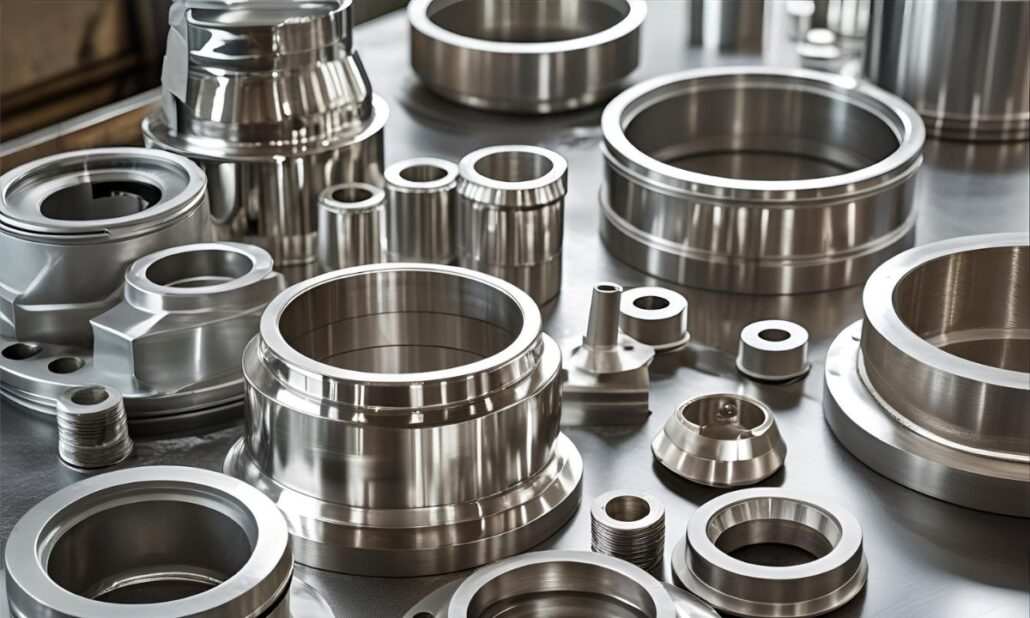
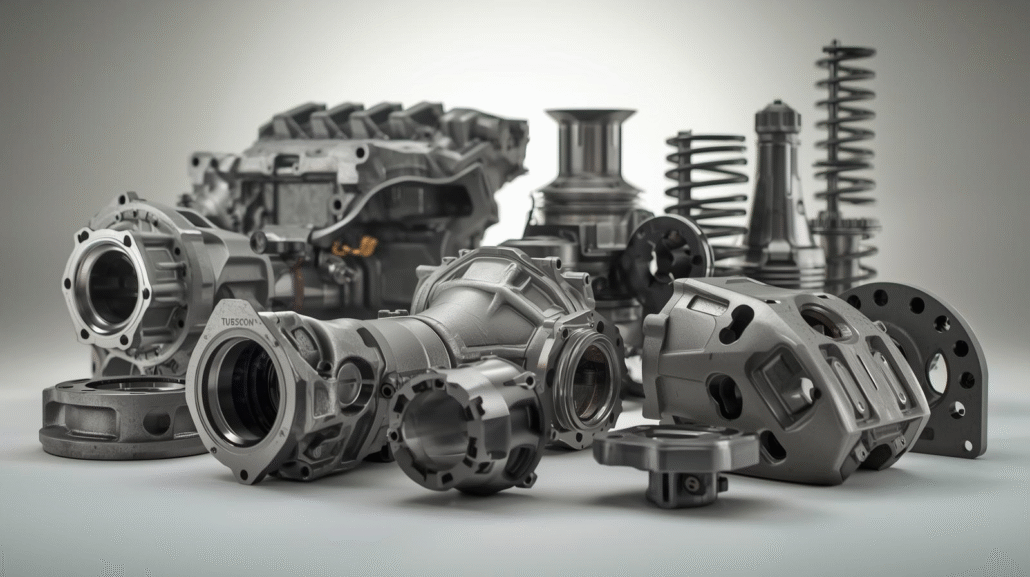
La fundición de aluminio a presión es actualmente uno de los procedimientos de producción más seguros y económicos en los Estados Unidos de América, sobre todo para los fabricantes que exigen robustez, longevidad y precisión. Se realiza mediante la inyección a alta presión de aluminio fundido en piezas de fundición de acero, con lo que se obtienen piezas no sólo ligeras, sino también dimensionalmente precisas y duraderas. Esta resistencia y bajo peso hacen de la fundición a presión de aluminio el material preferido en la industria automovilística y aeroespacial, la electrónica, la maquinaria industrial y los bienes de consumo. El mercado estadounidense cuenta con algunas de las industrias de fundición a presión de aluminio más consolidadas del mundo, desde grandes fabricantes con presencia mundial hasta pequeñas empresas especializadas en piezas a medida y aplicaciones especializadas. Estas empresas son cruciales para el mantenimiento de la industria, ya que suministran a segmentos como bloques de motor, carcasas de transmisión, cajas electrónicas y piezas estructurales. Los fabricantes con sede en EE.UU. se han ganado su reputación de fiabilidad y productos innovadores en el mundo gracias a sus tecnologías de alta calidad, certificación y enfoque en productos de calidad. En los últimos años se ha producido un enorme aumento de la demanda de piezas de aluminio fundido a presión debido a los recientes avances en el aligeramiento de los vehículos, la producción de vehículos eléctricos y el impulso a la fabricación eficiente de energía. Las empresas estadounidenses están apostando por la automatización, las piezas de fundición sostenibles y las aleaciones superiores con el fin de obtener resultados elevados para satisfacer estos requisitos. Este artículo enumera algunos de los mejores fabricantes de fundición a presión de aluminio de EE.UU. y sus logros, potencial y contribuciones a la industria contemporánea. No importa si se trata de obtener piezas para realizar un proceso de fabricación a gran escala o una aplicación altamente técnica, estos fabricantes son la encarnación de la mejor tecnología estadounidense en fundición a presión de aluminio. ¿Qué es la fundición de aluminio a presión? La fundición a presión de aluminio es una técnica de producción en la que se aplica alta presión a un aluminio fundido que se introduce a la fuerza en un molde de acero también denominado matriz. Cuando el metal se enfría y solidifica, se abre el molde y se expulsa la pieza terminada. Este es el proceso con el que los fabricantes pueden crear componentes resistentes, ligeros y muy detallados con un alto nivel de precisión dimensional y acabados superficiales lisos. La principal ventaja de la fundición a presión de aluminio es que puede producir formas complejas que, de otro modo, serían difíciles o costosas de fabricar mediante otros procesos. Tiene una amplia aplicación en la fabricación de piezas como bloques de motor, carcasas de transmisión, cajas electrónicas, disipadores térmicos y componentes estructurales. La fundición a presión de aluminio tiene varias ventajas importantes: Gracias a estos puntos fuertes, la fundición a presión de aluminio se ha convertido en la mejor alternativa en industrias que requieren componentes fiables y eficientes de alta calidad para satisfacer sus necesidades técnicas y económicas. Principales empresas de fundición a presión de aluminio de EE.UU. 1. Dynacast International Dynacast International Dynacast International ha sido una de las empresas más conocidas en el ámbito de la fundición a presión de precisión a nivel mundial. La empresa tiene décadas de experiencia en la producción de componentes pequeños y complejos con el uso de aleaciones de aluminio, zinc y magnesio. Son buenos en la producción de componentes con tolerancias estrictas y características complejas, necesarios para los sectores de la automoción, la electrónica de consumo, las telecomunicaciones y los dispositivos médicos. Ser global también significa que Dynacast puede servir a pequeñas empresas y multinacionales con la flexibilidad, las innovaciones y la calidad que no varían entre proyectos. 2. Pace Industries Convertida en la mayor empresa de fundición a presión de Norteamérica, Pace industries se ha labrado una buena reputación por ofrecer soluciones integrales. Sus gamas de servicios incluyen diseños y soporte de ingeniería, fundición a presión, mecanizado, acabado de superficies y montaje final; llevan años ofreciendo una solución integral a clientes de los sectores de la automoción, la industria y el consumo. Gracias a la envergadura de sus operaciones, pueden abordar proyectos de gran volumen y proyectos personalizados. Pace también sigue la cultura de invertir dinero en tecnología moderna y prácticas sostenibles para poder seguir siendo competitivos en una industria que cambia rápidamente. 3. Ryobi Die Casting (USA), Inc. Ryobi es una marca de renombre en el segmento mundial de la fundición a presión, y tiene una presencia importante en Estados Unidos. Sus operaciones en EE.UU. se centran en componentes de fundición a presión de aluminio a mediana y gran escala, principalmente para el sector del automóvil. Ryobi fabrica bloques de motor, cajas de transmisión y piezas estructurales que necesitan ser duraderas y precisas. La empresa ha utilizado tecnología punta y una gestión de calidad que la han convertido en proveedor preferente de los principales fabricantes de automóviles del mundo. 4. Gibbs Die Casting Gibbs Die Casting, el otro líder del mercado estadounidense, tiene su sede en Henderson, Kentucky. La empresa está especializada en la fundición a presión de aluminio y magnesio para la industria de la automoción, especialmente las carcasas de transmisión y las piezas del tren de potencia. Gibbs hace especial hincapié en la innovación, donde la automatización y las sofisticadas técnicas de fabricación se utilizan para garantizar altos niveles de eficiencia y calidad del trabajo. La empresa también incorpora el concepto de sostenibilidad en su actividad frenando el despilfarro y fomentando prácticas empresariales respetuosas con el medio ambiente. 5. Apex Aluminum Die Casting Co. Apex Aluminum Die Casting está situada en Ohio y se utiliza en los sectores de automoción, electrónica y electrodomésticos. La empresa es reputada por trabajar con lotes de producción de volumen medio, lo que la convierte en la opción perfecta con empresas que requieren una calidad de producción constante pero que no necesitan los enormes poderes de importadores más grandes. El equipo de Apex se preocupa por la satisfacción del cliente, la fiabilidad del servicio, la ingeniería y la precisión en la fabricación. Se han consolidado como un socio fiable para varias empresas estadounidenses gracias a su buena reputación para ofrecer resultados constantes. 6. KenWalt Die Casting Company KenWalt Die Casting tiene su sede en California y cuenta con más de varias décadas de experiencia en la producción de piezas de fundición a presión; aluminio y zinc. La empresa también se centra en trabajos a medida y presta servicio a las industrias de equipos industriales y bienes de consumo. KenWalt destaca por ser una empresa que colabora estrechamente con el cliente durante el
Autopartes de fundición de aluminio a alta presión

Piezas de fundición de aluminio de alta presión para automóviles: Duraderas y eficientes

fundición de aluminio a presión, fundición a alta presión

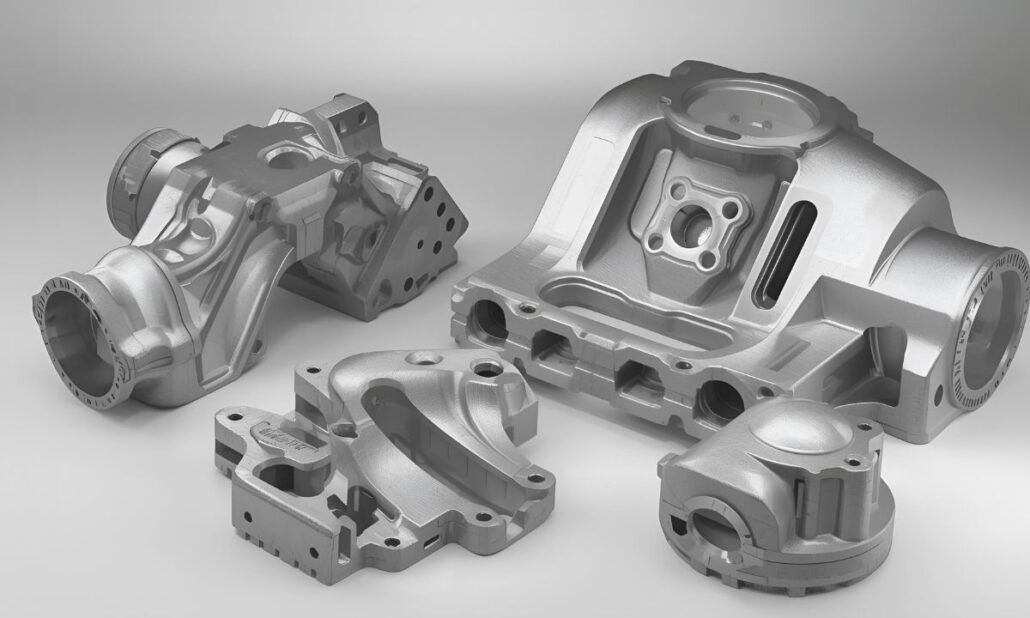
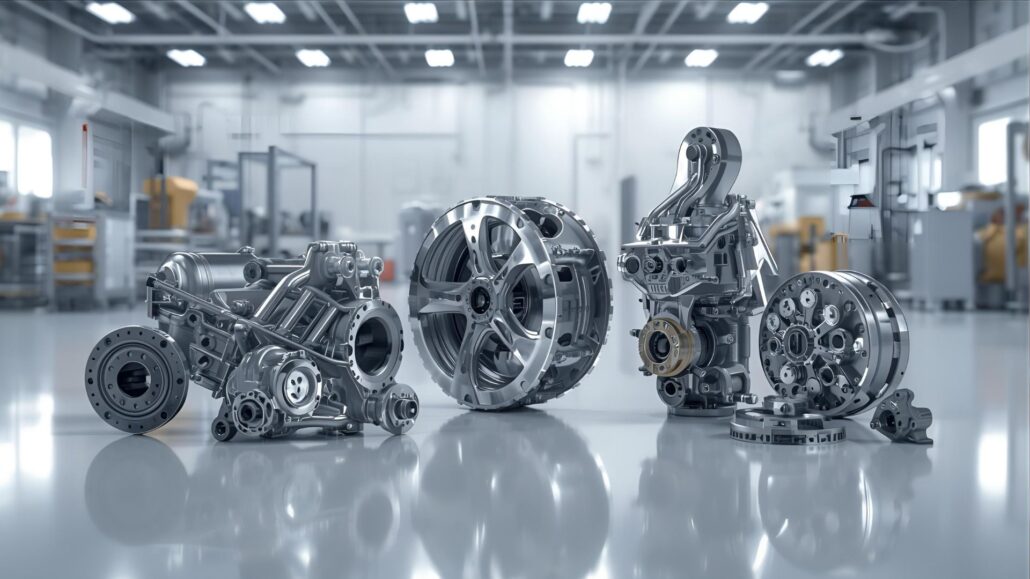
The automotive industry is changing due to the use of aluminum high pressure die-casting auto parts. They provide manufacturers with the power to design lighter, stronger and more efficient cars. With this technology, the car manufacturers can save on weight, become fuel efficient and have green mobility without compromising on the durability of the car. Auto parts die casting is the process whereby molten aluminum is injected into a steel mold at a very high pressure. This produces a strong shape that is smooth and sharp. The method allows faster production, reduced machining and consistent quality. In die casting auto parts, the companies are able to design complex components in a single step, which saves them time and money. Auto parts made in aluminium die casting are now much needed in modern vehicles. This is a frequent method of producing engine blocks, transmission housings, brake parts, and battery casings in electric cars. Lightweight, but tough, corrosion-resistant, and designed to meet tough conditions on the road, these parts are made. Auto parts made with aluminum die casting are increasing in demand rapidly, particularly as we move to electric and hybrid cars. Loss of total weight of cars increases battery life, performance and reduces emissions. This makes aluminum die casting a major component of green production. In brief, the use of aluminum high pressure die-casting auto parts in car manufacturing is no longer a choice. They have played a key role in creating the modern vehicles, which will not only be up to the present performance standards, but also be green. Powerful, effective, and stable, they will also be at the very centre of automotive design in the future. What Is Aluminum High Pressure Die-Casting? Die casting is a process of molding metal. In this, molten aluminum is forced under a very high pressure into a cavity in a steel mold. When cooled, the metal hardens in the same shape as the mold. The outcome is smooth, accurate and long-lasting. That is why die casting became one of the most popular ways of producing modern car parts. In comparison with the traditional technique, high pressure die casting can make complicated parts in one time. This saves time, machining requirements and costs to manufacturers. Why Aluminum for Auto Parts? The reason why aluminum high pressure die-casting auto parts are so popular is that there is no other material that has a combination of qualities as much as aluminum. It is green and rough; therefore, it is light and, therefore, can be used in the automobile industry. Increasing efficiency and environmental requirements have made aluminum the die casting of choice in auto parts. Weight loss is one of the largest benefits. Steel is a lot heavier than aluminum. Carmakers can lighten an overall vehicle by incorporating die casting auto parts produced using aluminum. The lighter a car is, the better its fuel economy, emissions, and performance. This would be important in both a conventional and an electric vehicle. Meanwhile, aluminum does not lose strength. It has a good strength-to-weight ratio, and this is good because even when the part is strained, it does not become soft. This is what renders aluminium die cast auto parts so useful in engines, transmission and chassis parts. The other important advantage is corrosion resistance. Aluminum does not rust and wear out like other metals. This provides increased life to aluminum die casting auto parts and decreased maintenance expenses to vehicle owners. Major Auto Parts are produced using Die Casting Automobile manufacturers cast most of their components using aluminum die casting. These are lightweight yet powerful parts that can be used in conventional as well as electric cars. Engine Blocks Engine blocks have to deal with heat, vibration and pressure. When it comes to auto parts die casting, aluminum blocks weigh less but are firm enough to work in very harsh conditions. This will conserve the overall weight of the engine and fuel consumption. Transmission Housings The transmission housings have to be precise and durable. Die casting auto parts are used in order to achieve the accuracy of smooth-running gears. This guarantees high reliability over time, and minimal machining is required. Brake Components Brakes face constant stress. Manufacturers produce strong components that are not heavy since they use aluminum die casting auto parts. This balance is applied to increase the braking force and to decrease the vehicle’s weight. Chassis Parts The chassis parts are used to provide safety and stability. They are strong but not bulky when made using aluminium die casting auto parts. This increases the management and productivity. EV Electric Housing’s motor and battery The auto parts that shield the motors and batteries are constructed using aluminum high pressure die-casting in electric vehicles. The housings protect delicate systems and still provide a lightweight frame, increasing the distance covered during driving. Collectively, these elements bring out the role of auto parts die casting in helping to design new cars. Aluminum die casting has made engines, EV batteries, and more perform efficiently, last longer, and be durable. Process of Aluminum High Pressure Die Casting 1. Mold Preparation Preparation of the moulds starts. The die of steel is thoroughly washed in order to eliminate all materials that are impurities and heated to the appropriate temperature. A protective coating is applied to the surface that prevents the sticking of the molten aluminum to the surface, and helps in controlling the cooling rate. This is done to ensure enhanced circulation of metals and longer life of moulds and consistency of parts per production cycle. 2. Melting the Aluminum These aluminum alloys are melted in a furnace with specific controlled temperatures. But sufficient temperature is also required, as that prevents oxidation, and the molten metal will flow easily into the mold cavity. Any impurities are removed by refining the agents or filters. This ensures that aluminum die cast auto parts contain no defects and are of good and consistent properties. 3. Under high pressure injection. Then the molten aluminum is forced into

Piezas de automóvil fabricadas por fundición:

Piezas de automóvil fabricadas por fundición: Selección de materiales y procesos

piezas de fundición a presión

The modern automobile is a sophisticated machine that consists of thousands of separate parts with their own purpose to provide safety, performance, and reliability. Casting is one of the various manufacturing processes that are employed in the automotive industry. Casting is now an irreversible procedure where major parts of a vehicle are formed by shaping molten metal into extremely detailed and strong parts. The engines, transmissions, and braking systems of most vehicles are among the most significant systems that require parts made by casting. Indeed, when designers and builders discuss efficiency, durability, and cost-effectiveness in the production, casting of automobile parts are often at the centre stage of the debate. The art of casting is not new; it was invented thousands of years ago. However, its application in the motor industry has undergone a revolutionary shift to harness hi-tech technologies and the most recent alloys that can fit the high demands of the modern car. Casting has been instrumental in enabling cars to maintain high-performance standards at a relatively low cost through lightweight aluminum engine blocks that are tough and, resilient cast-iron brake components. The article will review the history of the automobile casting parts, processes, advantages, and future trends of automobile casting parts and reveal the reasons why the automobile casting parts continue to be a pillar in the automotive manufacturing industry. History  of Casting It was actually the aluminum casting process that penetrated the sphere in the middle of the 20th century. Casting has been in use in vehicles since the late 19th and early 20th centuries, when the automobile was first developed to replace the horse-drawn carriage. Early engines demanded powerful but inexpensive parts, and casting was the right way to go. One of the first methods to make engine blocks, crankshafts, and housings was iron casting. With the increase in the automobile industry, casting techniques increased and became advanced. The automobile manufacturers learned that they could increase fuel efficiency without reducing the lifetime of the vehicles due to lighter engines and structural parts. Casting is applied to different systems of vehicles in accordance with their application and importance. Finally, the automobile casting parts have the important role of giving strength, accuracy, and cost-effectiveness to reduce the cost, which is why automobile parts are the giants of the automotive industry. What are Automobile Casting Parts? Automobile Casting Parts can be defined as parts of a vehicle that are produced through pouring molten metal into a mold, and the resulting molten metal hardens into a desired shape. This has enabled the manufacture of robust, sturdy, and intricate components that are utilized in automobiles, including engine blocks, cylinder heads, transmission housings, brake drums, and wheels. They are very popular since casting offers: Taking the case of an engine block, the block has various chambers and coolant passages with threaded openings that can be cast correctly. What is Casting? The process of casting is a type of manufacturing where molten metal is poured into a mold and allowed to cool in the shape of the mold. After cooling, the casting is removed, machined (where needed),, and fitted into the finished product. It is an operation in which it is possible to produce both strong and geometrically complex parts. The reason why automobile manufacturers like to use casting is that they can produce large quantities of complicated parts of uniform quality. The proper melting temperature should also be maintained to remove defects such as porosity or underfill We are discussing not only structurally significant parts of automobiles, but also those that must be precise and durable under severe conditions of high temperatures, pressures, and constant wear. Process of Casting in Automobile Parts High-volume production also automates machines or high-pressure systems to ensure a high level of accuracy and consistency. 1. Pattern Making It starts with the production of a pattern, an imitation of the finished part. Patterns tend to be made of wood, metal, or plastic. They also determine the accurate shape and size of the mold cavity into which the molten metal will be poured. 2. Mold Preparation Sand, metal, or ceramic materials are used to form a mold. The two halves of the mold make the cavity to shape the part. Hollows can also be introduced within the mold,, such as internal passages within an engine block. 3. Melting the Metal In a furnace, a controlled temperature is used to melt the selected metal or alloy (cast iron, aluminum, or magnesium). This is to bring mechanical properties to high-performance applications such as engines or gearboxes. 4. Pouring When the metal is melted, it is filled into the mold. The proper sizes and finishes are ensured during drilling, milling, and turning. 5. Solidification and Cooling The heated material is left to cool and harden within the mold, assuming the shape of the mold. The part should avoid a shrinkage defect or crack due to uncontrolled cooling rates. 6. Mold Removal When solidifying, the mold is broken (in sand casting) or the mold is opened (in permanent and die casting). A raw casting is then removed and processed further as a casting blank. 7. Fettling and Cleaning Unneeded material, including sprues, risers, or flash, is eliminated. The casting could be shot blasted or ground to clean up the surface to make it easy to machine. 8. Heat Treatment (if required) Cast parts can be heat-treated to enhance their strength, hardness, or toughness. Sand Casting – Sand casting is one of the oldest and most common ways in which a mold of sand is molded into a more complicated shape. 9. Machining and Finishing Despite the fact that casting generates near-net shapes, a lot of automobile parts have to be machined to be precise. It is used with the engine block, cylinder head, and manifold. 10. Inspection and Testing Lastly, quality checks are done on the cast part. Non-destructive testing (NDT), dimensional testing, and material inspection are conducted to ensure that the part is up to industry standards before assembly into

¿Por qué el aluminio forjado es mejor que el metal fundido?

¿Por qué el aluminio forjado es mejor que el metal fundido?

Aluminio forjado

Forged aluminum is among the most trusted materials in contemporary engineering practice. It is formed by pressing solid aluminum with a high amount of heat and pressure. It alters the internal structure of the metal and makes it stronger and tougher than cast aluminum. Due to this, industries that require safety and durability use forged aluminum. Aluminum in itself is already rated as lightweight, resistant to corrosion and versatile. It is present in vehicles, aircraft, buildings, electronics and even in common tools. Not everything that is made of aluminum is the same, though. The performance of the metal is directly affected by how the metal is formed. Aluminium is melted and poured into molds when it is cast. This may cause flaws such as air bubbles and holes. Forging eliminates those issues. Rather than melting, the aluminum is pressed into form so that the grain is forced to conform to the design of the part. This yields a very powerful and homogeneous material. Forged aluminum has become popular now that industries are shifting to lighter, safer and more efficient solutions. This paper tells us why it is better than cast metal, the process involved in forging metals, where it is applied and the future of forging of aluminum. What Is Forged Aluminum? Forged aluminum is done by pressing solid aluminum under high pressure. The metal is not melted all the way as in casting. Rather, it is heated till it turns soft and malleable. After being softened, the aluminum is stamped or beaten into the required shape by means of heavy forging machines. This stress flattens the metal and also perfects its internal grains. The grain is oriented in the shape direction, and it contributes to the part’s better strength and toughness. Such a fine structure also removes numerous defects present in cast aluminum, including pores or cracks. Consequently, forged aluminum is safer, more durable and stronger. How an Aluminum Forge Works? Forging is done in an aluminum forge. There are a few steps involved in the process: This process ends up with a thick, solid, and homogeneous portion. It does not have weak spots or air bubbles like casting. Benefits of Forged Aluminum Cast metal and other materials cannot do what forged aluminum can do. It has become the tool of preference in industries where we cannot afford to compromise on performance and safety. Superior Strength Forged aluminum is very strong, and this is one of the key benefits of forged aluminum. The grain structure of the metal is refined through the forging process. The tensile and fatigue strength are enhanced by this alignment. False components can bear heavy loads as well as stresses and strains repeatedly without failure. This also positions them very well in high-performance activities like plane landing gear, suspension systems, and industrial machinery. Lightweight but Tough Aluminum is inherently lighter than steel, and forging goes even deeper with it. Forged aluminum is very strong for its weight. This enables engineers to ensure that they make lighter machines and vehicles that are still safe and strong. The weight loss makes cars and aeroplanes more fuel efficient, but also gives them durability. Increased Resistance to Fatigue Cast parts wear out much more than forged aluminum. Fatigue is a condition in which a part has worn out due to multiple stress cycles. Due to weak grain structure, cast parts tend to crack. Aluminum that has been forged does not crack easily, and thus parts made with this material will survive long in the hands of those who use them. Uniform Grain Structure The forging process is used to match the part shape with the grain in the metal. Such homogeneous graining makes it harder and harder to strike. Quite the contrary, casting gives arbitrary grain structures that create weak positions. Safety and Reliability Safety is the first priority in high-pressure industries like aerospace, automotive and defense. Forged aluminum is reliable as it provides power, hardness and steadiness over time, even in extreme circumstances. Aluminum Forging uses Aluminum forging has made an impression in the world where weightless, powerful and enduring parts are required. Forged aluminum parts are believed to be safe and, therefore, are commonly trusted in critical applications related to safety. Automotive Industry Modern automobiles are involved in fraudulent aluminum. A very common application is in wheels. Compared to cast wheels, forged wheels are lighter, more durable and safer. This type of weight loss improves manoeuvrability and fuel efficiency. Suspension parts are another significant use that should resist heavy loads, impact, and vibration on the road. The aluminum used is forged, so they are not stressed. Moreover, most engine parts, including connecting rods and pistons, are forged. These sections can withstand high pressure and hot temperatures with long durability. Concisely, forged aluminum improves the automobile’s performance and safety. Aerospace Industry Aircraft require components that are lightweight in nature and strong. Forged aluminum fits this specification. It applies to landing gears, which are supposed to withstand high levels of impact during landing and takeoff. It also occurs in wing structures where efficiency depends on lightness. Forged aluminum parts deal with pressure, heat and vibration in aircraft engines. Failure is not an option in flight; this is why the aerospace industry relies on forging. Military and Defense Defense applications require forged aluminum. Forged parts of tanks, aircraft, and naval ships have to endure the extreme conditions of combat. Forging guarantees maximum toughness, strength and reliability even in the most strenuous conditions. Industrial Machinery Major equipment is usually operated at full load. Forged aluminum products are wear-resistant and minimize downtime. This makes them cost-effective and long-term solutions for manufacturers. Sports and Lifestyle The sports and lifestyle items also use forged aluminum. Forged components are used to manufacture high-end bicycles, climbing gear and sports equipment. Such objects need to be lightweight and durable over a long period of time, which is why forging is the best method. The Reason Why Industries use forging rather than casting? Forging is the option

El futuro de la fundición de automóviles

El futuro de las piezas fundidas para automoción: Innovación, eficiencia y rendimiento

Fabricante de fundición a presión, fundición a presión

Los automóviles nunca se han quedado atrás en desarrollo tecnológico. Desde los primeros armazones de acero en la fabricación de automóviles hasta las últimas aleaciones ligeras, cada pieza de un coche se ha mejorado mediante la innovación para aumentar la seguridad, la durabilidad y el rendimiento. Una de las áreas más significativas del progreso se encuentra en el mundo de las piezas de fundición para automóviles. Esto ha ayudado al diseño, la producción y la optimización de los vehículos. En términos sencillos, el término fundición de automóviles puede definirse como el proceso mediante el cual se mide el metal fundido y se vierte en los moldes para dar forma a piezas intrincadas del vehículo. El método es preciso, rentable y puede escalarse hasta la producción en serie. Estos procesos son importantes en la industria porque casi todos los vehículos que circulan hoy en día tienen varias piezas fundidas. Este artículo examina la historia, la fabricación, las ventajas y el futuro de las llamadas piezas de automoción de fundición, y también echa un vistazo a cómo las llamadas piezas de automoción de fundición, piezas de automoción de fundición a presión y piezas de automoción de fundición contribuyeron a dar forma al automóvil moderno. Historia de las piezas de fundición para automóviles Los métodos de fundición se remontan a varios miles de años, aunque no fue hasta finales del siglo XIX y principios del XX cuando se utilizaron en la industria del automóvil. Los primeros automóviles eran ineficaces y pesaban mucho, con componentes de acero forjado en su mayoría. Con la creciente necesidad de producir en grandes cantidades, los fabricantes se vieron obligados a encontrar una solución más barata y rápida. Fue entonces cuando las técnicas de fundición de automóviles empezaron a sustituir a las tradicionales. Gracias a la fundición, los fabricantes de automóviles podían crear numerosas piezas iguales en grandes cantidades con menos desperdicio de materiales. Esto propició la producción en serie, una de las razones por las que los automóviles se hicieron asequibles al ciudadano de a pie en el boom industrial. Hoy en día, las fundiciones modernas de automóviles utilizan aleaciones de última generación, moldes precisos y automatización para satisfacer los altos estándares de las normas internacionales de automoción. ¿Qué es la fundición de automóviles? La fundición automotriz es un proceso de fabricación que se aplica en la fabricación de automóviles para hacer piezas de sus vehículos mediante el vertido de metal fundido en los moldes, donde se solidifica y endurece en la forma deseada. Se trata de una técnica que permite a los fabricantes fabricar piezas complejas, duraderas y precisas de forma rentable y con menos esfuerzo en comparación con el mecanizado o la forja tradicionales. Tiene aplicación en piezas de bloques de motor, culatas, cajas de transmisión, frenos y suspensión. Mediante diversas aleaciones como aluminio, hierro fundido, acero y magnesio, la fundición para automoción ofrece la resistencia, el diseño ligero y la durabilidad necesarios en los automóviles modernos. Esta técnica es popular porque: Piezas comunes de automoción fabricadas por fundición: Tipos de fundición para automóviles En resumen, la fundición para automóviles es necesaria porque ayuda a los fabricantes de automóviles a desarrollar componentes fiables, ligeros y rentables en masa. Los automóviles modernos no pueden fabricarse en masa sin ella. Materiales en la fundición de automóviles Aluminio El aluminio, un vidrio ligero y resistente a la corrosión, es uno de los materiales más favorecidos en el campo de la fundición de automóviles. Supone un gran ahorro en el peso total de los coches, mejorando la eficiencia del combustible y la maniobrabilidad. El aluminio también es un buen conductor térmico, por lo que es bueno en bloques de motor, culatas y carcasas de transmisión. El aluminio se utiliza para crear muchas piezas de automoción fundidas a presión, ya que permite a los fabricantes crear componentes de alta precisión y ligeros sin perder resistencia. Por su flexibilidad y estabilidad, el aluminio es uno de los mejores materiales en la fabricación contemporánea de automóviles. Hierro fundido Otro de los materiales más populares en las piezas de fundición para automóviles es el hierro fundido, ya que el material tiene una gran resistencia, resistencia al calor y propiedades de desgaste. El hierro fundido es más pesado que el aluminio, y es adecuado para aplicaciones estructurales y pesadas como bloques de motor, tambores de freno y otras piezas de la suspensión. La estructura es muy duradera, lo que significa que estas piezas pueden resistir las presiones del servicio a largo plazo y las condiciones de alta temperatura, por lo que es vital para los vehículos que necesitan un rendimiento fuerte y fiable. Acero En la fundición de automóviles se ha preferido el acero por su gran resistencia y flexibilidad. El tratamiento térmico de las piezas de acero aumenta su tenacidad, por lo que son ideales en piezas de chasis, soportes y marcos estructurales. Aunque el acero pesa más que el aluminio, ofrece resistencia y capacidad de carga a algunas de las piezas críticas para la seguridad del automóvil. Es flexible, y los ingenieros pueden idear componentes que satisfagan tanto las prestaciones como los requisitos normativos. Aleaciones de magnesio Las aleaciones de magnesio están encontrando cada vez más aplicaciones en las llamadas piezas de fundición para automóviles, donde la pérdida de peso es una prioridad. Estas aleaciones son muy ligeras, pero ofrecen suficiente resistencia a las piezas no estructurales. Las piezas de magnesio pueden utilizarse en accesorios interiores, cubiertas de motor y ciertas piezas estructurales, especialmente en vehículos de alto rendimiento y vehículos eléctricos, donde minimizar el peso total es importante para el rendimiento y la maniobrabilidad. Aleaciones de cobre Las aleaciones de cobre se utilizan a veces en las llamadas piezas de fundición para automóviles debido a su alta conductividad eléctrica y térmica. Son materiales resistentes a la corrosión y fuertes que pueden aplicarse a determinados componentes eléctricos o piezas sensibles al calor del vehículo moderno. Las aleaciones de cobre no se utilizan tanto como el aluminio o el acero, pero tienen usos especializados, por ejemplo cuando el rendimiento y la conductividad son importantes. Materiales compuestos Algunos fabricantes están experimentando con materiales compuestos en piezas de fundición para automóviles con el desarrollo de la tecnología automovilística. Estos materiales se desarrollan para ahorrar peso y seguir ofreciendo resistencia, y pueden ser muy útiles en vehículos eléctricos e híbridos. Los materiales compuestos también tienen una mejor regulación térmica y resistencia a la corrosión, y son una nueva tecnología en la próxima generación de piezas de automóvil. Tipos de procesos de fundición para automóviles La industria del automóvil emplea varias técnicas de fundición, cada una con sus propias piezas y materiales. Consideraremos las más populares: Fundición en arena Una de las técnicas más antiguas es la fundición en arena, en la que se fabrican componentes grandes e intrincados mediante moldes de arena. Es la más adecuada para prototipos y piezas pesadas, como bloques de motor. Fundición a presión La fundición a presión es el proceso que requiere la inyección a alta presión de metal fundido en moldes de acero reutilizables. Es una técnica especialmente pertinente para fabricar piezas ligeras pero

Zincado vs. Niquelado: ¿Cuál elegir?

Zincado vs. Niquelado: ¿Cuál elegir?

moldes de fundición de aluminio, fundición de aluminio a presión, Acabado de la superficie de aluminio

Zinc Plating vs Nickel plating is a frequent point of reference in terms of metal finishing. These two methods are applied to safeguard the metals, enhance their performance, and cause their products to last longer. The differences between these two types depend on cost, durability, and appearance. Surface finishing is not all about appearances. It is concerned with the accuracy with which a product can counter rust, wear, and damage. Even strong metals can be defeated where there is no appropriate coating. This is the reason why plating has been an important process in the automotive, aerospace, construction, and electronic industries. Zinc plating is well known to be cheap and effective. It forms a thin and workable protective coating that resists rust damage on the metal underneath. This gives it preference in fasteners, nuts, bolts, and many other small product elements used in day-to-day items. Nickel plating is stronger and durable, on the other hand. It cannot be worn out easily, and it resists acid. Nickel plating is also a bright, attractive finish, so it is ideal when it is needed on decorative or visible parts such as car trims and appliance fittings or on electronic casings. And when considering Zinc Plating vs Nickel Plating, it becomes the question: which works better in your situation? Depending on the location where the part will find application, how much safeguarding it needs, and how much you are ready to part with, determines the answer. In the current blog, we will unravel both the processes, their advantages, limitations, and major areas where they can be best used to help you make the most appropriate decision. What is Zinc Plating? Zinc plating is a widely used and cost-efficient technique of coating. It is done by depositing a thin coat of zinc on the surface of metal, most commonly steel or iron, by a process known as electroplating. In the process, a zinc salt solution is used to immerse the base metal, and an electrical current is passed. Zinc solutions travel to the surface of the piece leaving an even and thin coating. Benefits of Zinc Plating Limitations of Zinc Plating What is Nickel Plating? Nickel plating is also a common finishing technique, but compared with zinc, it offers a harder, more durable, and aesthetically pleasing surface. The process is achieved in either of two major ways: Electrolytic Nickel Plating (Electroplating) – Much like the zinc plating process, the raw metal is placed into a nickel salt solution, and the nickel is deposited on the surface by applying an electric current to the metal. Electroless Nickel Plating is a method that does not need electricity. Rather, it uses a chemical process to capably deposit nickel to cover the surface evenly, including in complex structures or otherwise inaccessible places. Benefits of Nickel Plating Limitations of Nickel Plating The Plating Process Zinc Plating Process Surface preparation is very meticulous in the case of zinc plating. Before a plate can be done, the surface, which is in most cases metal, normally steel or iron, must be cleaned of oil, dirt, rust, and oxides. To accomplish this, components are either cleaned in acid or alkaline fluids and then rinsed so that no residues remain. After cleaning, the component is inserted into an electrolytic bath that has a zinc salt solution, mostly zinc sulfate or zinc chloride. Electricity is then charged through the bath.. This movement results in zinc ions in the medium to move and being deposited on the surface of the base metal. The effect is a very thin, even coating of zinc covering the zinc below it. A post-step processing of the plated component is often carried out, which can give a more corrosion-resistant effect, also able to change the appearance of the coating, providing a yellow, black, or clear finish. Zinc plating is comparatively quick, price low, and highly applicable in the mass production of hardware and vehicle parts. Nickel Plating Process Nickel plating is prepared in almost a similar manner, with the initial step being cleaning. Part surfaces are well-treated and made clean to ensure adhesion is not compromised by residues. Electrolytic nickel plating: The part enters a bath of solutions of nickel salts, e.g., nickel sulfate, and an electric current is applied. This makes the nickel ions deposit on the surface, forming a hard and protective layer. Another approach, which is nickel plating and does not require power, is electroless nickel plating. Rather, the part is immersed in some chemicals under nickel salts and a reducing solution such as sodium hypophosphite. A plated chemical reaction also occurs, the nickel being deposited uniformly onto the part. This process has an advantage over electrolytic plating in that it will cover with uniformity even in recesses, grooves, and other complex geometries. Electroless nickel deposits are noted to be highly hard and resistant to corrosion, but this process is costlier than the electroplating method and demands much more care over the bath chemistry, pH level, and temperature. Zinc Plating vs Nickel Plating: Key Differences With the choice between zinc plating and nickel plating, cost, durability, appearance, corrosion resistance, and the appropriateness of application are all aspects that may come into consideration. Let us look at them one by one. 1.     Corrosion Resistance Winner: Nickel Plating to serve long-term corrosion protection. 2. Endurance / Wearability Winner: Nickel Plating; Hardness, wear resistance. 3. Cost  Winner: Zinc Plating to cost-effective solutions. 4. Appearance  Winner: Nickel Plating- to look good. 5. Environmental Impact  Winner: Zinc Plating on its greenness. Quick Comparison Table Feature Zinc Plating Nickel Plating Corrosion Resistance Good, but limited in harsh conditions Excellent, especially electroless nickel Durability Moderate – wears faster High – scratch & wear-resistant Cost Low (budget-friendly) Higher (premium option) Appearance Shiny, but basic finish Smooth, mirror-like decorative finish Environmental Impact Easier waste treatment Stricter environmental controls are needed Best For Fasteners, bolts, general hardware Aerospace, electronics, decorative uses Industry Applications of Zinc and Nickel Plating Both plating techniques are very common in industries;

¿Qué es el proceso de extrusión del aluminio? 

fundición de aluminio, fundición de aluminio a presión

Aluminum extrusion has not only been appreciated in the respect that it makes a strong, yet lightweight part, but also its flexible and cost-effective designs are a factor. It is used in construction, aerospace, automotive and electronic industries, and nearly everywhere in between. Aluminium extrusion is among the processes that indicate an equalization between innovative designs and effective production, which is just about to become one of the dominating procedures of the manufacturing industry. Aluminum is one of the most popular metals in the modern industries, being appreciated because of its light weight, strength, durability and also its capacity to resist corrosion. Aluminum is more conspicuous in our lives; in the construction of skyscrapers in our cities, the cars we drive and other gadgets that we use in our daily lives. One of the most vital processes of manufacturing that has ensured the versatility is the aluminum extrusion process. Extrusion refers broadly to methods of metal deformation whereby metal is pushed or squeezed through a die in a similar fashion to toothpaste. In aluminum, longer continuous sections of final, predetermined cross-sectional shapes are formed by ramming solid block-like objects (known as billets) through an already heated die. These profiles may be plain rods, tubes or highly complex and specially made to the extent that they will meet the demands of a given industry. In this article, we will learn everything about the aluminium extrusion process; its history, the extrusion process, types, applications, advantages and limitations and its rising capabilities in future of manufacturing. Historical Background The idea of extrusion as a manufacturing process has been traced back to the late 18th century. The first well-known extrusion was that of the British inventor Joseph Bramah, who patented his exactly in 1797. Instead, he used a process that involved pushing pliable metals such as lead through a die to shape long, identical-looking pieces and primarily pipes. The preconditioning of the process of extrusion was an invention. Until much of the 19th century, the extrusion of softer metals had been inhibited by technology. The real breakthrough came about in the early 220thcenturies when economical ways of producing aluminium were discovered. The acquisition of aluminium was brought to lower prices and large-scale production by the invention in 1886 by Charles Martin Hall in the United States and separately by Paul H. Roult in France of the Hall-Heroult process. After the invention of aluminum, it did not take long before scientists and manufacturers saw the potential extrusion had to offer. The use of aluminum extrusion technology began gaining steam in the 20s, especially coming into force in Europe and North America. It was on a large scale utilized in the Second World War when the industries required a lightweight but durable material in aircraft, vehicles used by the military, and buildings. Since then, the line-casting technology has been invented and has been extended far farther than the aluminum extrusion that first emerged in the military sectors. What is Aluminum extruded? Aluminum extrusion is the commercial physical method that is used in plasticizing solid aluminum into shapes that are long with specific cross-sections. The idea is simple: a block of aluminum (a billet) is heated to a malleable stage and forced under intense pressure of a die made of steel. In pressing through the die, the aluminum takes on the shape of the opening, either straight, hollow, or solid, or in a highly complicated profile. The analogy that is best applied in extrusion is the extrusion of a toothpaste tube. Same as the toothpaste- it takes the shape of the nozzle, and similarly, the extruded aluminum takes the shape of the die. The advantage of aluminium extrusion is the ability to manufacture lightweight yet strong components of the exact shape. The resultant extruded profiles can be strippable to various lengths and are also subjected to further finishing, including anodising, powder coating, and finishing. All these upgrades raise performance, wear and look. Due to its flexibility, it has become one of the extrusion processes whose scope has been resorted to within different discourses like the construction industry, the aviation industry, the electronic industry, the transport and even the consumer products industry. It is not just the process but a vital bridge between the native stainless steel and absorbed functionality that defines the current engineering and high-construction. Aluminium Extrusion Process in Steps Characterise the Profile & Select the Alloy Cast and Christen the Billet Scalp or Saw Inspect Billet Heat the Billet Make the Die & Tooling Lubricate and Prepare the Press Load the Billet and QC Start the Press Breakthrough Extrusion, Steady Chinking on the Table Fast Cooling (Immediate Quenching) Handling temperature for cooling Profiles cool on the table after quenching until they are able to be handled without imprint or warping. Soft, controlled cooling minimises residual stress. Stretching / Straightening Cutting Back to Length Heat Treatment (Where Necessary) Surface Finish (Optional) Machining & Fabrication (As required) Profiles are CNC-machined, punched, drilled, tapped or bent. Jigs/ fixtures provide repeatability of tolerance control on thin or complex sections. Test and On-Quality Control Die Tuning & Maintenance When dimension control or surface finish is out of control, the length of the bearings and flow balance can be modified; dies may be polished and, when absolutely not required, nitrided; dies are polished and cleaned. Packing & Logistics Why every step counts The Components Used in Aluminum Extrusion Aluminum extrusion draws on choosing the correct aluminum alloy to suit the mechanical, thermal, and corrosion requirements. The properties required by different industries differ, thus selection of alloys is determined by strength, ductility, corrosion resistance and heat-treatability. 1000 Series (Practically Pure Aluminum) 3000 Series (Al-Mn Alloys) 5000 Series (Al-Mg Alloys) 6000 Series (Al-Mg-Si Alloys) 7000 Series (Al-Zn-Mg-Cu Alloys) Allothers Speciality Alloys To keep composition similarity, recyclable aluminum scrap containing the same alloy is frequently reused. Aluminum Extrusion Materials Quick Reference Table A technical table of probable common aluminum alloys used in extrusions, major properties and established extrusion parameters as follows: Alloy Series

Fundición inyectada de zinc:

Fundición inyectada de zinc: Técnicas, ventajas y aplicaciones industriales

Fundición a presión de cinc

Zinc die casting is a common method of production commonly applied in industries where speed, accuracy, strength, and affordability really matter. Zinc alloys are used in automotive, aerospace, consumer electronics applications and more because of their high casting properties, dimensional control, strength and versatility. They can be used to make complicated shapes with smooth surfaces, and it makes they highly demanded to be used in mass production. Bare zinc surfaces tend to be easily corroded, tarnished and generally worn with exposure to adverse environments, necessitating the need to apply a protective finish. It is here that plating becomes one of the most important steps, both in the usability and the lifetime of the products, as well as in the attractiveness and professional appearance of the products in the market. When addressing such as surface finishing, plating zinc die cast parts guarantees enhanced resistance to ageing environments, appearance and durability. The more common processes in the manufacturing industry across the world are chrome plating, zinc die casting, and nickel plating on zinc die cast. Besides lifespan, plating also creates commercial value because customers always want products that are strong yet possess a lustrous, high-quality finish. This renders plating to be a fundamental activity in the current industries. In this article, I will give a detailed extrapolation of arguments as to why plating is necessary, how the technical process works, challenges, and the industrial benefits attached to the process. What is Zinc Plating Die Casting? Zinc die casting is the process used to evenly coat a protective and decorative metal coating on components that were cast using zinc die casting. Given that zinc alloys are strong and cost-effective, but corrosive and wear-dependent, plating extends the durability, appearance and operation. Put simply, zinc die casting is the process that produces the real part or component, whereas plating applies an extra layer, which places a protective coating on the surface and provides the needed finishing. Plating and plating zinc die cast products to achieve a mirror finish through chrome plating zinc die casting, or a protective, up-market finish through nickel plating, zinc die cast. This composite leads to the plated zinc die casting finding a wide range of applications in automotive trim, electronic housings, household and industrial equipment, where good appearance and strength are potential requirements. What is plating? Plating is the addition of a thin layer of metal over the surface of another material, either by electroplating (use of electric current) or by chemical plating (not using electric current). Plating is done to enhance the aesthetic, abrasion resistance, corrosion resistance, conductivity and wear resistance of the substrate. An example is when we use nickel or chrome over zinc die cast parts to add protection and lustre to the base zinc, which offers the strength and shape. The glossy surface of a car’s shiny chrome handle or a bathroom feature is a direct result of plating. In brief, plating is a similar process of providing a product with a shield and a beautiful finish to make things appear more lasting and attractive. The Reason Why Zinc Die Casting need Plating Despite the strengths of zinc alloys that may be used in a variety of applications, there are some limitations when they are raw. Uncoated zinc is subject to tarnishing or corrosive attack by moisture, chemicals and thermal change. The plain, uncoated part is not sufficient in many industries to use long-term reliability. Surface finishes by plating not only serve the cosmetic purpose they also bring about various advantages in engineering. Manufacturers increase the precautionary measures against corrosion, abrasion, and oxidation by the use of the so-called plating zinc die cast techniques. This guarantees the durability of the product in terms of both the integrity of its structure and its aesthetic appeal in the long run. Besides, special coatings such as chrome plating, zinc die casting, which provides a high gloss finish best suited to consumer product components, as well as nickel plating on zinc die cast, which is both protective as well as a decorative coating, are possible. The Process of Plating on Zinc Die Castings Plating is a complicated process that takes delicate preparation and implementation. Unlike aluminium and steel, zinc alloys pose unusual challenges because of the reactivity of zinc. As such, plating on zinc presupposes special treatment in order to guarantee a good adhesion. Surfacing 1: Surface Preparation The initial process is degreasing, where oil, lubricant and impurities are removed from the casting. Without strict cleansing, peeling or flaking would occur, which means a poor adhesion on the use of zinc die cast parts. Step 2: Selecting The castings are deoxidised and cleaned off by immersion in acid. This makes the surface clean, active and capable of accepting plating layers. Step 3: Apply Strike Layer The zinc alloys are very reactive; thus, a thin strike coat of copper or nickel is normally used to enhance the adhesion before finishing. This is a crucial step to both the chrome plating, zinc die casting, and nickel plating on zinc die cast. Step 4, final plating layer Non-resistant metals, chrome, nickel or other alloys are electroplated to cover the surface. Durability and appearance of the finished product are dependent on this layer and its thickness and quality. Chrome Plating of Zinc Die Castings The most appreciated finishing technique applied to zinc die casting is called chrome plating; this type of finishing is used in order to increase the durability of the zinc part, its functionality, as well as its beauty. Chrome plating refers to the adherence of a very thin film of chromium metal on the surface of zinc die-cast objects through an electroplating process. The outcome is a shiny, mirror-like coating that can enhance the aesthetics of it but also reinforces the part against corrosion, scratches, and day-in, day-out wear. Origins have been found that chrome-plated objects will protect a raw zinc surface that has the propensity to tarnish quickly in more difficult conditions, and the products are durable. Important Advantages of

¿Se puede aplicar pintura en polvo al aluminio?

¿Se puede aplicar pintura en polvo al aluminio?

Aluminio

Aluminum is one of the most significant materials in the industry. It has become essential in everything from construction to the automotive industry, aerospace to consumer goods, because of the combination of its light weight, its resistance to corrosion, and its strength. However, in cases where the customers desire a more stable, colored, and protective finish, one single question is always raised: Can you powder coat aluminum? The brief response is: yes. There is no doubt that to increase the durability, corrosion resistance, as well as overall appearance, one may powder coat aluminum. Aluminum, however, has a natural layer of oxide that causes proper preparation to be important, as sufficient adhesion is concerned. Otherwise, without going through the correct steps, your finish can peel off or rather come out early. Here we go in depth on what exactly powder coating is, why it works so well on aluminum, the process, advantages, uses, and maintenance advice, including that of the differences between powder coating and anodizing. At the end, you will already know about the effective powder coating of aluminum. What is Powder Coating? Powder coating is a finishing procedure that entails the use of a dry powder (derived from finely ground resin, pigments, and additives) on a metal surface with the help of electrostatic attraction. One then heats the coated section in an oven where the melted powder flows and cures into a solid, hard protective material. Powder coating is devoid of solvents and emits few volatile organic compounds (VOCs) as compared to liquid paint. In the case of aluminum, a more wear-resistant, UV-resistant and decorative option is known as powder coated aluminum. Why Powder Coated Aluminium? Manufacturers decide to undergo the process of coating called powder coating aluminum for several reasons: As compared with the traditional painting, powder coating aluminum has the advantage of being able to provide a more uniform coverage and generally thicker, more reliable and durable coating. Learning about Aluminum as a Coating Surface Talking about coating, but first, we should know about the physical and chemical properties of aluminum: Though this oxide coating acts as a defensive mechanism, it may impose difficulties on coating procedures. The key point of great aluminum powder coating is to prepare the surface well to make the powder stick well to the surface. The Step by Step Procedure of Powder Coating Aluminum 1. Surface Preparation Powder coating of aluminum starts with surface preparation, which is the most important step. Relevant cleaning will guarantee that the powder sticks well and gives a lasting finish. Dirt and grease, oils, and oxidations must not be present on the aluminum surface. This is normally attained through detergents, solvents, or alkaline cleaners. In certain situations, there is chemical and ultrasonic cleaning done in order to remove any microscopic residues. It is also possible to perform surface etching to roughen the aluminum a bit, to increase adhesion. Once the cleaning has been done, the aluminum is then rinsed and dried to eliminate any defects on the coating. 2. Pretreatment Metallic pretreatment: Chemical Aluminum may be chemically pretreated to increase its resistance to corrosion and to provide appropriate bonding of powders. One of the common techniques is conversion coating that provides a thin protective film on the surface of the aluminum. This can be carried out with chromate or non-chromate treatments. Besides enhancing adhesion, these pretreatments will prolong the lifetime of the coating since aluminum will not be exposed to the elements. Phosphate coating is also an option on some applications, but less so than on steel since at least chromium would have to be used in a multi-coat procedure. 3. Powder Application The powder coating is then applied after the aluminum has been made ready and treated. The most common method is electrostatic spraying. In this technique, aluminum components are grounded and dust particles become charged due to electrodynamics with the help of a spray gun. The positively charged particles are drawn towards the aluminum surface resulting in a level and smooth coating. Another technique is known as the fluidized bed method: here the parts can be aluminum, heated and placed into a bath of powder, which melts when contacted and forms a coating. This provides one hundred percent coverage even on complicated shapes and corners. 4. Curing Coating formed by using the powder needs to be cured after which a durable finish is obtained. Aluminum components are then placed in a curing oven and baked between 180200 o C in 1020 minutes, depending on the powder employed. The powder particles melt, flow and chemically cross link into a uniform and hard coating due to the heat. When the cure is complete, the parts are cooled slowly down to room temperature, hence the coating is even and without defects. 5. Quality Inspection Every aluminum part is then tested to make sure the coating is of a quality nature after curing. Eye examination is done to verify consistency of color and smoothness free of sags, runs, and uncovered spots. This coating thickness is checked, which is between 50 and 150 microns generally. Examination of durability of the coating is done through adhesion and hardness tests like tape test or impact test. Corrosion resistance tests will also be conducted where tests like salt spray tests will be conducted, in critical applications in order to ascertain long-term protection. 6. Optional Final Finishing Sometimes further finishing is done to the coated parts of aluminum. This could be in the form of polishing, embossing or laser marking to either enhance decorative or practical purposes. Lastly, the parts are packed and cushioned well to store or ship and the finish is not damaged until the end user receives the product. Benefits of Aluminum Powder Coated There are numerous advantages of using powder coated aluminum that would make it very attractive to most industries. Its major plus is superb corrosion resistance. It offers protection in that the coating is done in the powder form, and it becomes a shield, and this protects

Niquelado químico

Niquelado químico: Guía técnica completa

Niquelado

Electroless nickel plating can be considered one of the most accurate, versatile, and reliable processes in the field of surface engineering and metal finishing, which allows improving the surface properties of numerous materials. This, contrary to ordinary electroplating, does not need an outside electric current. It depends instead on a controlled chemical reaction that deposits a uniform film of nickel-phosphorus or nickel-boron by alloying them evenly on a surface. This process provides the best corrosion resistance, wear factor, and consistent thickness, even on intricate shapes. Electroless coating has often been selected by manufacturers, engineers, and designers instead of other coating procedures due to its performance and cosmetic benefits. Regardless, whether they are aerospace, automotive parts, molds, or industrial machinery, the process provides repeatable results capable of prolonging the life of a component and cutting down on the expenses of its maintenance. In this tutorial, we shall delve into the ins and outs of the Electroless nickel plating, its positive attributes, uses, the steps involved, and how it compares with other processes such as the nickel plating, the hard anodizing of die cast aluminum, and nickel chrome plating used in contemporary production. What is Electroless Nickel Plating? Electroless nickel plating refers to the deposition of a nickel alloy onto a metallic or non-metallic surface, since an autocatalytic reaction takes place. The chemical bath includes nickel salts and a reducing agent, usually sodium hypophosphite, which converts the nickel ions to metal, and they are able to adhere to the substrate. In contrast to the electroplating process of deposition called nickel plating, where nickel has to be deposited through the use of electric current, in electroless nickel, the process does not need any outside power supply. This results in uniformity of the thickness of the coating in even recessed sections, threads, or internal cavities. The outcome is a non-porous, hard finish and corrosion-resistant resistant applies to challenging industrial conditions. Major Advantages of Nickel Plating without Electroless 1. Even Coating Thickness The deposition is the same regardless of the part shape or the complexity. 2. Better Corrosion Property The layer of nickel-phosphorus alloy offers superior protection against oxidation and attack by chemicals. 3. Better Hardness and Wear Upon heat-treatment, electroless nickel can hit a hardness very similar to that of hard chrome. 4. Dimensional Precision The uniformity in thickness is small, hence usable in precision engineering applications. 5. Ability to be Compatible with Other Materials It can be used on steel, copper, aluminum, brass, and must be used on some plastics with only a minor surface preparation.  Electroless Nickel Plating Types Electroless nickel plating is commonly classified by the amount of phosphorus in the alloy of nickel and phosphorus. Every type has varied requirements in the case of hardness, corrosion resistance, and wear, hence apt usage in individual applications. 1. Low-phosphorus electroless nickel plating (2 to 5 per cent phosphorus) 2. Med-Phos Electroless Nickel Plating (6-9 percent phosphorus ) 3. High-Phosphorus Electroless Nickel Plating (10 13-per cent phosphorus) Uses Of Electroless Nickel Plating Electroless nickel plating is popular throughout industries because it gives a thick, uniform coating, corrosion resistance, and wear protection. It is all versatile and can serve in numerous engineering and painting needs. 1. Aerospace Industry 2. Automotive Industry 3. Electronics Industry 4. Oil and gas sector 5. Mold & Tooling Industry 6. Marine Applications Electroless Nickel Plating Process Step by Step Comparisons to Nickel chrome plating Nickel chrome plating is effectively a step electroplating, i.e., first depositing a nickel layer and then chromium on top. This forms a great mirror-like finish and is very good in resistance to corrosion. Electroless nickel plating, in contrast, lays down a uniform nickel-phosphorus layer by a non-electric process. This enables the metallization of intricate structures, recessed areas, and fine tolerance and may not be covered uniformly when using nickel chrome plating. Though nickel chrome plating offers better aesthetics, electroless nickel plating has better thickness uniformity, superior wear resistance, and wider substrate compatibility. Electroless nickel plating is widely used in so many industries on those pieces that are critical to performance, but nickel chrome plating is used on decorative items. Electroless Nickel Plating vs Electrolytic Nickel Plating Although both of these processes are categorized to coat a surface using nickel, their working principles exhibit a big difference: Feature Electroless Nickel Plating Electrolytic “nickel plating” Power Source None (autocatalytic) External electric current Coating Uniformity Excellent Less uniform on complex shapes Cost Higher chemical cost Lower chemical cost Precision High Moderate Table of Comparisons Hard Anodizing As has been stated about aluminum parts, in particular, nickel plating is frequently viewed as a substitute for the hard anodizing die cast aluminum. Nevertheless, anodizing forms an oxide layer instead of a deposit. Feature Electroless Nickel Plating “hard anodizing die cast aluminum” Material Compatibility Multiple metals & plastics Only aluminum & titanium Corrosion Resistance Excellent Excellent, but specific to aluminum Wear Resistance High (after heat treatment) High Coating Type Nickel alloy layer Aluminum oxide layer Comparison against Nickel Chrome Plating The process of nickel chrome plating is a two-step electroplating treatment, where the first layer is nickel to prevent corrosion, and a secondary protective finish is a thin layer of chrome. Feature Electroless Nickel Plating Nickel chrome plating Appearance Satin to bright finish Bright, mirror-like finish Corrosion Resistance Excellent Very high Thickness Uniformity Perfect Moderate Durability High High Influences on Plating Quality There are a number of factors that will have an immediate impact on the quality of the performance, appearance, and durability of an electroless nickel coating. Regulation of such parameters will lead to steady results and a lower number of defects. Electroless Nickel Plating Materials Nickel Source A nickel salt, either nickel sulfate or nickel chloride, is present in the plating bath. These give the nickel Ions, which will compose the coating in the reaction. Reducing Agent The most popular reducing agent is the hypophosphite. It also reduces nickel ions to metallic nickel chemically, but does not require electricity. Stabilizers Very little of metallic salts or organic stabilizers

Scroll al inicio

Solicitar presupuesto