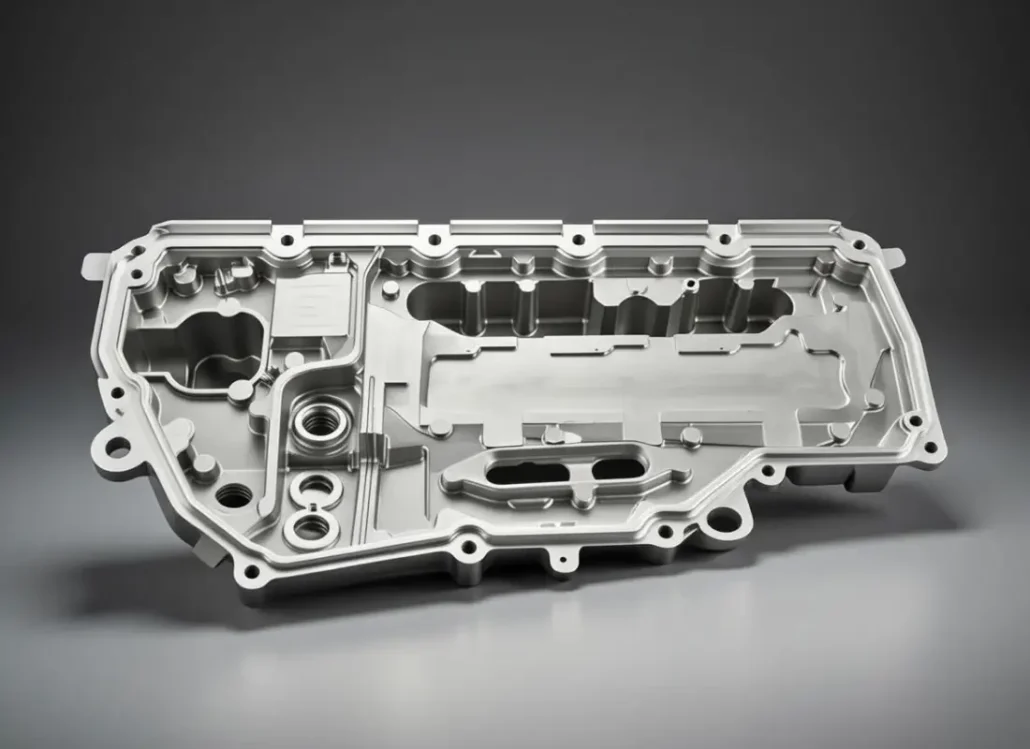
pressofusione

Processo di pressofusione

pressofusione di alluminio, pressofusione, aziende di pressofusione, stampo per pressofusione, parti in pressofusione, processo di pressofusione

CNM Die Casting è in grado di offrire vari tipi di colata, tra cui la pressofusione, la microfusione, la colata in stampo permanente e la colata in sabbia per un'ampia gamma di leghe, tra cui tutte le leghe pressofuse, molte leghe in stampo permanente e molte leghe di magnesio. I nostri processi di produzione sono stati accettati dal mercato mondiale della fusione come uguali o superiori alla pressofusione convenzionale. Vantaggi del processo di pressofusione CNM Migliore controllo dimensionale Migliori tolleranze della linea di separazione trasversale Riduzione della porosità dei gas Migliori proprietà di bilanciamento dei pezzi rotanti finiti Utilizzo di inserti “cast-in-place” Migliori proprietà meccaniche grazie all'efficace modifica della lega Migliori proprietà di usura grazie alla microstruttura a granulometria ridotta Migliore flessibilità per quanto riguarda le leghe e i tipi di getti Lavorazione La sezione di lavorazione della pressofusione CNM utilizza il concetto di cella di lavoro e attrezzature di lavorazione flessibili ad alta velocità per completare le operazioni secondarie alle fusioni di CNM, in modo che un pezzo o un sottogruppo sia pronto per l'installazione quando lascia il nostro stabilimento. CNM Die Casting si è evoluta e ha risposto in modo aggressivo alle richieste dei clienti di fornire servizi di lavorazione e assemblaggio ad alta velocità senza spese di capitale iniziali. Includendo una parte del costo dell'attrezzatura esistente in ogni pezzo, il cliente beneficia di allestimenti più rapidi e di un esborso minimo di capitale iniziale. CNM Die Casting gestisce 8 macchine per la pressofusione, la produzione interna di stampi per la pressofusione e la lavorazione CNC in uno stabilimento di oltre 20.000 metri quadrati a DONGGUAN, in Cina. Le nostre capacità produttive integrate, insieme a oltre 100 dipendenti, ci consentono di essere il vostro fornitore unico di servizi completi di pressofusione e di essere costantemente competitivi sul piano dei prezzi, mantenendo al contempo un elevato standard di qualità. Di seguito sono riportati i processi di pressofusione a confronto Metalli che possono essere fusi Massa minima e massima, kg Tolleranza sulla dimensione,% Finitura superficiale,µ m Dimensione minima della sezione, mm Bozza deg Velocità di produzione,pz/ora Foro minimo carotato,mm Porosità Colata in sabbia Alluminio Acciaio CI e altri 0,03, 100 0,10, 200, 000 0,03, 50, 000 0,09 a 0. 0303 4 8 8 3 6 3,5 da 4 a 7 da 10 a 15 6 5 Colata in stampo permanente Ghisa Al e Mg 0,01, 50 0,01, 10 0,01 min 2 5 3 2 50 da 4,5 a 6 6 4 Colata in stampo Al Mg Zn 0,015, 35 0,015, 35 0,05, 80 0,0015 0,0015 1 1 1 0,8 1.2 0,5 2 2 2 da 75 a 150 da 300 a 350 2,5 2,5 0,8 2 Colata di precisione in acciaio Alluminio 0,005, 25 0,002, 10 0,003, a 0,005 1 1 1 0,8 da 1 a 3 N/A da 0,5 a 1,25 1 Stampaggio in conchiglia Acciaio Ghisa Alluminio 0. 05, 120 0,03, 50 0,0015 0,0015.05, 120 0,03, 50 0,03, 15 0,01 a 0,003 6 6 2,5 3,5 3 1,5 2 a 3 30 a 80 3 a 6 1 Colata centrifuga Alluminio Acciaio Ghisa fino a 400 0,002 0,004 0,004 0,6 a 3,5 0,6 a 1,2 3 30 a 50 N/A 1 a
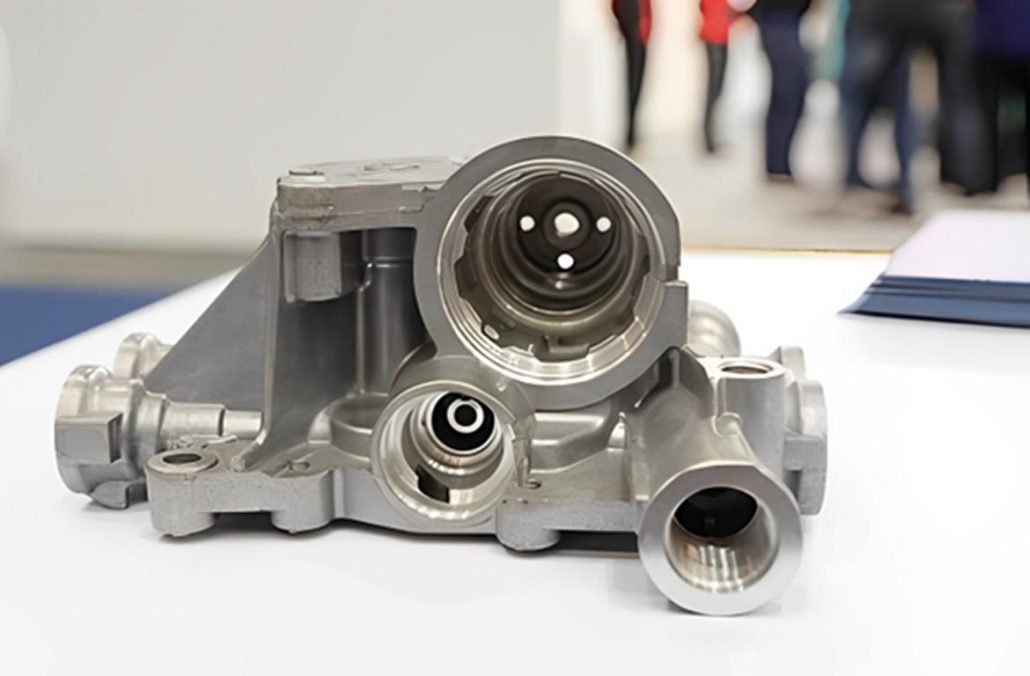
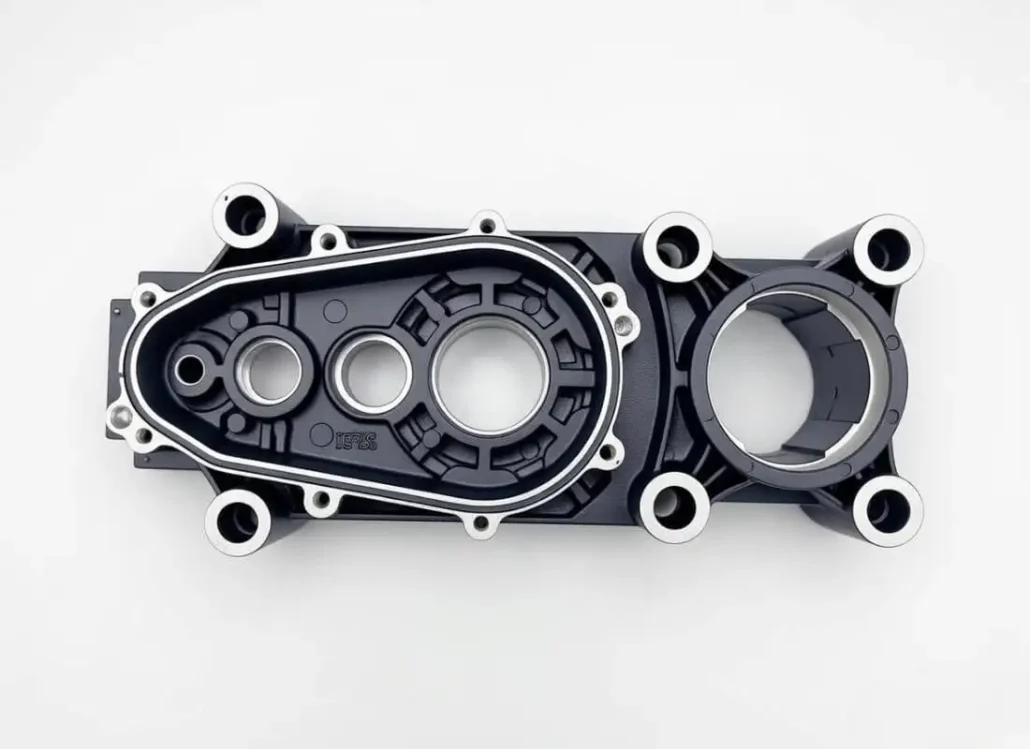
parte in pressofusione ad alta pressione

Che cos'è la pressofusione

pressofusione

What is die casting Die casting is a manufacturing process for producing accurately dimension, sharply defined, smooth or textured-surface metal parts. It is accomplished by forcing molten metal under high pressure into reusable metal dies. The process is often described as the shortest distance between raw material and finished product. The term, “die casting,” is also used to describe the finished part. The term “gravity die casting” refers to castings made in metal molds under a gravity head. It is known as permanent mold casting in the U.S.A. and Canada. What we call “die casting” here is known as “high pressure die casting” in Europe. How are die castings produced First, a steel mold capable of producing tens of thousands of castings in rapid succession must be made in at least two sections to permit removal of castings. These sections are mounted securely in a machine and are arranged so that one is stationary (fixed die half) while the other is moveable (injector die half). To begin the casting cycle, the two die halves are clamped tightly together by the die casting machine. Molten metal is injected into the die cavity where it solidifies quickly. The die halves are drawn apart and the casting is ejected. Die casting dies can be simple or complex, having moveable slides, cores, or other sections depending on the complexity of the casting. The complete cycle of the die casting process is by far the fastest known for producing precise non-ferrous metal parts. This is in marked contrast to sand casting which requires a new sand mold for each casting. While the permanent mold process uses iron or steel molds instead of sand, it is considerably slower, and not as precise as die casting. Types of machines for die casting Regardless of the type of machine used, it is essential that die halves, cores and/or other moveable sections be securely locked in place during the casting cycle. Generally, the clamping force of the machine is governed by (a) the projected surface area of the casting (measured at the die parting line) and (b) the pressure used to inject metal into the die. Most machines use toggle type mechanisms actuated by hydraulic cylinders (sometimes air pressure) to achieve locking. Others use direct acting hydraulic pressure. Safety interlock systems are used to prevent the die from opening during the casting cycles. Die casting machines, large or small, very fundamentally only in the method used to inject molten metal into the die. These are classified and described as either hot or cold chamber die casting machines. Hot Chamber die casting machines Hot chamber machines (Fig.1) are used primarily for zinc, and low melting point alloys which do not readily attack and erode metal pots, cylinders and plungers. Advanced technology and development of new, higher temperature materials have extended the use of this equipment for magnesium alloy die casting. Figure 1: Hot Chamber Machine. Diagram illustrates the plunger mechanism which is submerged in molten metal. Modern machines are hydraulically operated and equipped with automatic cycling controls and safety devices. In the hot chamber machine, the injection mechanism is immersed in molten metal in a furnace attached to the machine. As the plunger is raised, a port opens allowing molten metal to fill the cylinder. As the plunger moves downward sealing the port, it forces molten metal through the gooseneck and nozzle into the die. After the metal has solidified, the plunger is withdrawn, the die opens, and the resulting casting is ejected. Hot chamber machines are rapid in operation. Cycle times vary from less than one second for small components weighing less than one ounce to thirty seconds for a casting of several pounds. Dies are filled quickly (normally between five and forty milliseconds) and metal is injected at high pressures (1,500 to over 4,500 psi). Nevertheless, modern technology gives close control over these values, thus producing castings with fine detail, close tolerances and high strength. Cold Chamber die casting machines Cold chamber machines (Fig. 2) differ from hot chamber machines primarily in one respect; the injection plunger and cylinder are not submerged in molten metal. The molten metal is poured into a “cold chamber” through a port or pouring slot by a hand or automatic ladle. A hydraulically operated plunger, advancing forward, seals the port forcing the metal into the locked die at high pressures. Injection pressures range from 3,000 to over 10,000 psi for both aluminum and magnesium alloys, and from 6,000 to over 15,000 psi for copper base alloys. Figure 2: Cold Chamber Machine. Diagram illustrates die, cold chamber and horizontal ram or plunger (in charging position). Die casting provides complex shapes within closer tolerances than many other mass production processes. In a cold chamber machine, more molten metal is poured into the chamber that is needed to fill the die cavity. This helps sustain sufficient pressure to pack the cavity solidly with casting alloy. Excess metal is ejected along with the casting and is part of the complete shot. Operation of a “cold chamber” machine is a little slower than a “hot chamber” machine because of the ladling operation. A cold chamber machine is used for high melting point die casting alloys because plunger and cylinder assemblies are less subject to attack since they are not submerged in molten metal. Die casting and their construction Die casting dies (Fig. 3) are made of alloy tool steels in at least two sections called fixed die half and ejector die half. The fixed die half is mounted on the side toward the molten metal injection system. The ejector die half, to which the die casting adheres, and from which it is ejected when the die is opened, is mounted on the moveable platen of the machine. The fixed die half of the die is designed to contain the sprue hole through which molten metal enters the die. The ejector half usually contains the runners (passageways) and gates (inlets) which route molten metal to the cavity (or cavities) of the die. The ejector

Che cos'è la fusione per gravità

colata di alluminio, stampi per colata di alluminio, pressofusione di alluminio, pressofusione, alluminio pressofuso, aziende di pressofusione, stampo per pressofusione, parti in pressofusione, Colata a gravità, stampo ad iniezione Cina, costruzione di stampi a iniezione

Differenze tra la pressofusione di alluminio e la colata a gravità La pressofusione di alluminio non è solo una scusa per giocare con il metallo fuso, ma è in realtà un ottimo modo per creare arte e pezzi complicati di macchinari o altri oggetti che altrimenti sarebbero quasi impossibili da realizzare. La pressofusione di alluminio è davvero un ottimo modo per risparmiare denaro... giocando con il metallo fuso. Il motivo per cui la pressofusione di alluminio è sopravvissuta alla prova del tempo è una questione di efficienza. Alcuni dei primi esempi di fusione sono stati trovati in Cina e risalgono a migliaia di anni fa. In realtà, tutte le principali civiltà, dagli Egizi ai Romani, hanno praticato la fusione dell'alluminio. Questa abilità è tornata in auge durante il Rinascimento e da lì ha continuato a progredire ed evolversi. Sebbene la colata in sabbia sia il processo di fusione più diffuso, esistono molti altri processi a disposizione dei fonditori privati. Non tutti hanno intenzione di fondere pezzi pesanti come parti di motore o di fondere le proprie motociclette. Quindi, per coloro che desiderano realizzare solo pezzi decorativi, non utilizzeranno lo stesso processo di fusione di questi fonditori per impieghi gravosi. Per gli artisti che creano statue o abbellimenti in scala ridotta e per gli hobbisti che hanno bisogno di un tocco decorativo per il loro modello di aereo o di barca, potrebbero prendere in considerazione l'uso della colata per gravità per le loro esigenze. Che cos'è la colata per gravità La colata per gravità sembra essere particolarmente utile quando si ha a che fare con l'alluminio e altre leghe leggere. L'idea di base di questo processo di fusione è più o meno quella che suggerisce il nome. Il metallo viene introdotto nello stampo grazie alla forza di gravità. La maggior parte degli altri processi di colata utilizza una differenza di pressione naturale, come in alcune procedure di colata in sabbia, oppure una pressione forzata, come nella colata centrifuga, per introdurre il metallo fuso nello stampo. Uno degli usi più comuni della colata per gravità è quello di utilizzare stampi permanenti. Chiamato anche stampo, lo stampo permanente è davvero economico solo per coloro che prevedono di utilizzare lo stesso stampo numerose volte e devono mantenere la qualità a un livello costante. Sebbene alcuni stampi temporanei possano essere utilizzati ripetutamente, la qualità del prodotto finito inizierà a risentirne nel tempo. Con gli stampi la qualità rimarrà invariata. Gli stampi devono essere visti come un investimento. Certo, sono più costosi di altri stampi, ma dureranno più a lungo di altri stampi più economici. Gli stampi permanenti vengono creati utilizzando ghisa, acciaio e altri metalli. La colata per gravità viene utilizzata per il processo di stampaggio permanente con risultati piacevoli. La colata a gravità viene solitamente utilizzata quando il prodotto finito è più basato sull'aspetto visivo che su quello strutturale, motivo per cui questo metodo è il preferito dagli artisti e anche da alcuni gioiellieri. La perdita di resistenza è dovuta alla mancanza di pressione utilizzata in questo processo. Per coloro che hanno bisogno di forza ma vogliono comunque utilizzare la colata a gravità, sarà necessario utilizzare una quantità maggiore di metallo fuso, con conseguente aumento del peso. https://www.aludiecasting.com/ per saperne di più sulla colata a gravità Affidarsi alla gravità richiede pazienza, anche se sarà necessaria per i prodotti più grandi. Se avete bisogno di un servizio di colata a gravità o di pressofusione di alluminio, magnesio o zinco per la vostra azienda. Siete invitati a inviarci il vostro requisito per un preventivo, dovete solo inviarci il vostro disegno 3D della parte e il vostro requisito, quindi potete sedervi e noi faremo il resto per voi, per lavorare con noi dovete solo occuparvi del mercato al vostro fianco, e noi saremo il vostro supporto per occuparci di tempi di consegna, spedizione, qualità e tecnica.

lavorazione in pressofusione

Pressofusione

colata di alluminio, stampi per colata di alluminio, pressofusione di alluminio, pressofusione, alluminio pressofuso, aziende di pressofusione, stampo per pressofusione, parti in pressofusione

What is die casting? Die casting, from a mold shop perspective, is less about simply shaping molten metal and more about repeatedly “copying” a part using a hardened steel tool. In daily production, molten alloy is injected into the die cavity under high pressure, filling the geometry in a fraction of a second. Once the metal solidifies, the mold opens and the part is ejected, ready for the next cycle. The whole process runs fast, but the real work is in the tooling and process setup rather than the machine alone. On the die casting shop floor, what matters most is consistency. After the die is properly tuned, the process can deliver thousands of identical parts with stable dimensions and surface quality. However, this reliability depends heavily on early-stage mold design—issues like venting, shrinkage, and flow balance must be solved upfront, because they are difficult to fix later in production. What is Aluminum die casting? Aluminum die casting is a casting liquid die forging method. Die casting process is a kind of special high pressure die casting machine to accomplish the process. Its basic technological process is: first metal or aluminium alloy liquid in low or high-speed casting filling into the die mold cavity, die with a moveable type cavity surface. It with the liquid aluminum alloy cooling process pressure forging blank, both the elimination of shrinkage defects, also make the rough internal Aluminum Die Casting organization to forge the broken crystal. Rough comprehensive mechanical properties are improved significantly. How To Find Right Aluminum Die Casting Sources Are you looking for the high quality and ultimate die casting services for your business? Well, you better need to hire the right service provider who must be experienced in the very same domain. Yes, it is highly necessary to invest some time who can offer very high-quality results and that is by paying the very affordable amount. Before we talk about how to find the right company, it is highly necessary to know more about Die casting. Well, this is the most important manufacturing technology which is used by many industries which are looking for all sorts of parts to commence the work and for that it is necessary to go with the aluminum die casting process. With the help of die casting mold, it will help in molding the complexity of the metal substance exactly in the same manner as you are looking to have. Yes, the final product can have virtually any size depending on what designer desires, thus there is nothing impossible for the best and great service providers at all. When it comes to finding a right service provider for aluminum casting parts, you better invest time over the net and find out the most experienced, reliable and friendly service provider to meet the exact requirements without any fail. Also, you better find out someone who can easily work on any customized requirements of the clients as well as they must possess great goodwill in the market. Also, you can investigate their previous projects and check how best they are in the die casting and how they have helped other companies to complete their requirements. Not only this, even, you need to disclose them the complete information about your project requirements and check how well they are in offering you the correct guidance as well as what price they are quoting you up. Even, you can do this with different sources and go up with the best one who offers great services at the best prices. Moving up with the pro means they will consider mechanical properties, including tensile strength, yield, impact, hardness, and other various specifications in advance to offer you the best solutions. Not only this, pros will help in picking up the right metal which they perform by checking out the physical properties of the metal. Yes, before going up with the aluminum die casting, it is very important to know more about its conductivity or how it behaves under extreme stress or heat. Pros also determine the composition of different alloys, check what are the common uses for the primary element, they also check out a complete list of die-cast alloys, check out the needed properties, and everything to offer you something the best to meet your exact requirements. Why don’t you check out to go to the suggested source? Well, it will offer you the best services by offering you the casting of metal in the shortest possible of time, will make everything from the scratch and the best part is everything will be done in a budget-friendly manner. Technology is improving day by day and we are the one enjoying it up fully. Today, we can have every possible thing to make our work the best as well as offer us full convenience and complete peace of mind. Apart from others, talking about Die casting, it is a manufacturing process that can produce geometrically unique and impossible metal parts with the best use of reusable molds, called dies. The die casting process is very important and pros always make sure to use all the necessary things, called- furnace, metal, die casting machine, die and other various materials. The metal which is used here is always non-ferrous alloy, like- Zinc and aluminum, later it is melted in the furnace and then injected into the dies in the die casting machine for producing very complex metal parts. It is always better to approach the right company for aluminum casting parts as they always go with the best and authentic procedures in order to produce something the best. They may use different types of die casting machines, called – hot chamber machines and cold chamber machines for a perfect die casting solution. Hot chamber machines are used for those alloys which have low melting temperatures, such as zinc. And Cold chamber machines are used for those alloys with high melting temperatures, such as aluminum. Both machines work the same and once they are done with the molten metal, they inject the same

alluminio pressofuso

Pressofusione di alluminio

colata di alluminio, stampi per colata di alluminio, pressofusione di alluminio, pressofusione, alluminio pressofuso, aziende di pressofusione, stampo per pressofusione, parti in pressofusione, pressofusione ad alta pressione, Pressofusione di magnesio, pressofusione

What is Aluminum die Casting Aluminum die casting can be understood as a highly controlled metal “injection” process rather than a simple pouring method. In a typical aluminum die casting manufacturing company, molten aluminum is forced into a hardened steel die under high pressure, allowing the metal alloys to fill even very thin sections and complex geometries within milliseconds. What makes this process valuable is not just speed, but repeatability—once the mold is tuned, thousands of parts can be produced with consistent dimensions and surface quality. From a practical manufacturing perspective, die casting is often chosen when a part demands tight tolerances, good surface finish, and minimal secondary machining. The upfront investment in tooling is relatively high, but it is offset by lower per-unit cost in volume production. Engineers also favor aluminum die casting because it combines lightweight properties with decent strength, corrosion resistance, and thermal conductivity. Benefits of aluminum die casting Metals and precautions related to aluminium die casting. Different types of aluminium alloys can be used in die Casting and aluminium molds, types of casting methods are used for making aluminum die casting, zinc die casting, magnesium die casting and many more. Type of Die Casting process Die Casting is the process of making Aluminium suitable for producing different types of products. It is a simple and inexpensive way to provide a wide variety of aluminium products. Some of the examples are Washington Monument, car engines, and power transmissions, etc, which were all produced through aluminum casting alloys process. Aluminium casting can be done in 3 ways:- Auminum die casting Mold Casting Sand Casting DIE CASTING Die casting is a manufacturing process for producing metal parts.  In die casting, die or mold cavities are created with hardened tool steel that has been previously machined to a particular shape. Here in die casting, Aluminium is melted first and is poured into a steel die under high pressure forcefully. This manufacturing technique is normally used for high volume production, the process we normally called high pressure die casting or pressure die casting process MOLD CASTING About mold casting, mold and cores can be of either steel or any other metal. Here also the aluminium is melted first and is poured in the mold provided. Sometimes vacuum is also applied. In some situations, Permanent mold casting is seemed to be stronger than both die casting and sand casting methods. Semi-permanent mold casting techniques are used when permanent cores are impossible to remove from the finished part. SAND CASTING: Sand casting is the most versatile method of producing aluminium products. Usually, the molted aluminium is poured into a mold which is virtually pressed into a fine sand mixture. The pattern will be little larger than which needed for the aluminium shrinkage during solidification and cooling. Sand Casting is usually a slow process than both die casting and mold casting. Usually, it is used for small quantity products. Aluminum Casting Alloys The most important cast aluminum casting alloys system is Al-Si. Here high levels of Silicon contribute to give good casting characteristics. aluminum casting alloys are widely used in engineering structures and components where lightweight or corrosion-resistant is required. Methods and benefits of Aluminium die casting Metals and precautions related with aluminium die casting Different types of aluminium can be used for die Casting, Aluminum casting manufacturer & aluminum casting is used in order to cover different types of metals by using different types of methods. There are many methods used for aluminum casting and different types of benefits are obtained. With the help of aluminum casting and aluminum die casting it is possible to increase the life of metals and these can be used for a long time period with an amazing look and charm of metal. Methods Different types of methods are used for aluminium die casting. The main thing is to melt aluminum. High temperature is needed for melting aluminum. Special structures are used for the melting of aluminum. When aluminum casting is melted then it is poured on the target metals. Then the melted aluminum casting is allowed to get hard and it is ready to be used after some time period. There are special containers that are made to be used for the melting of aluminum. These structures are available in the market in different shapes and sizes. You are also able to make these structures at home by using the desired ingredients. You have many options in making these structures. If you are going to buy this structure from the market then you have to make a selection of the size and shapes. There are many options in terms of sizes and shapes and different types of prices are charged by makers. Working of these structures is also different as some use fuels and some use manual efforts for getting heat to make sure that aluminum casting could be heated and melted effectively. High temperatures are obtained in these structures and then aluminum casting is melted and then used on the target metals for the casting process. Benefits Aluminium Die Casting There are many types of benefits of aluminum die casting. Mainly this type of casting is done to make sure that the metal can remain safe from corrosion. Atmosphere conditions and moisture is bad for iron and casting can help to protect iron and increase its useful life. aluminium die casting is able to resist moisture and other harmful effects of the environment due to which it can be used on metals through casting. The protective shield is made on iron to make sure that it can be used for a long time period. aluminium die casting companies can be cast on iron and make a protective sheet. This protection is in the form of a shining layer which is obtained by using high temperatures. This layer is permanent and good looking along with increasing strength and useful life of metal. Mostly iron is cast with the help of aluminum. This is a cheap process and the user is able

Torna in alto

Richiedi un preventivo