
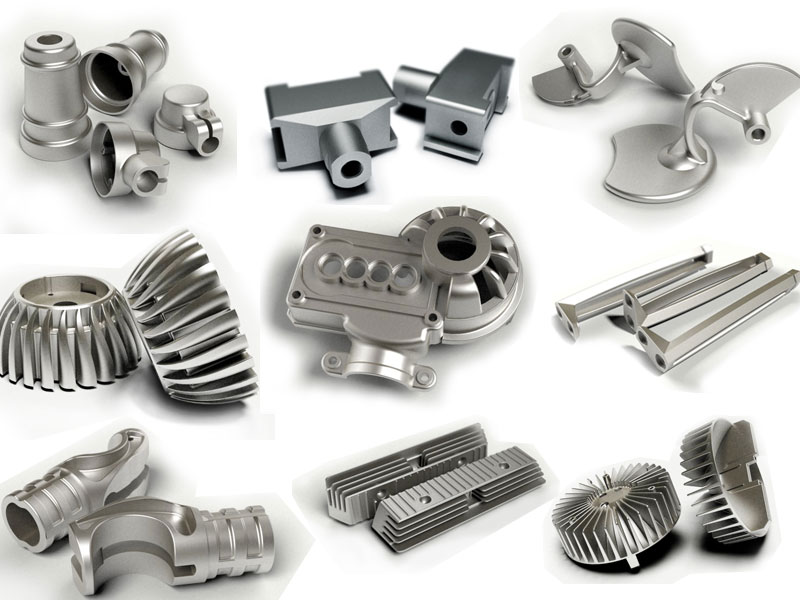
Furnizor de turnare sub presiune: Proces, aplicații și considerații cheie
Die Casting Producător, procesul de turnare sub presiuneIt is one of the widely used metal manufacturing processes, and it is highly efficient: producing high precision, durable, and complex components for many Industries. It injects molten metal, like aluminium, Zinc, or magnesium, inside of a steel mold (die) at very high pressure. It provides uniformity, internal strength and smashing surface finishes making it the right choice for use in automotive, aerospace, electronics, medical equipment, as well as consumer goods. A die-casting supplier is a very important company for the manufacture of high-quality parts that satisfy the industry requirements. They are suppliers, who are especially involved in designing, manufacturing and finishing the components or parts utilizing metal with strict tolerances and intricate geometries. Choosing the right supplier matters a lot for the success of any die-casting project as a good supplier should possess adequate expertise, state-of-the-art technology, and a history of successfully delivering precise and low-cost parts.Die casting is efficient in mass production and produces lightweight, yet strong parts, and as a result, the demand for die casting is increasing worldwide. Examples include reducing the weight of a vehicle, and enhancing fuel efficiency, through the use of die-cast aluminum and magnesium components in the automotive industry. In the same way, the electronics industry employs die casting to make heat sinks, enclosures and structural parts that are prone to high durability and electrical conductivity. When looking for a die-casting supplier, one should consider not only manufacturing capabilities but, more importantly, their quality control process, material expertise, and anything that may be left up to the supplier, such as machining, coating, and finishing. This provides a well-established supplier, therefore, reducing lead times, minimal defects and cost-effective production. In this article, the die-casting process, materials used, the applications, advantages and important considerations of choosing a die-casting supplier are covered. Metal parts required to meet industrial applications need high performance and a reliable supplier fulfils this criterion for both small-batch production and large-scale production. The Die Casting Process: Step-by-Step Guide 1. Mold Preparation Mold (die) preparation and design accompany the initial step of this process. The two-part steel dies consist of a stationary cover die section and the movable ejector die section. Applied lubrication helps the molded flow metallic material smoothly while stopping the material from clinging. 2. Molten Metal Injection The chosen metals aluminum and zinc along with magnesium undergo high-temperature melting. Due to high pressure between 1,500 to 25,000 psi the molten metal enters the mold cavity. High injection pressure produces both accurate and even parts with low levels of flaws. 3. Cooling and Solidification The molten metal quickly reaches solid form during this process when forming parts to their designated shape. The components achieve superior high-strength properties because of the fast cooling process. 4. Ejection of the Part After metal solidification, the mold opens while ejector pins extract the completed part from its chamber. One mold cycle ends when it closes before starting another round of production. 5. Trimming and Finishing Machinists remove all undesirable remnants including flash and both sprees and runners from the part. The component requires supplementary finishing actions which involve sandblasting together with powder coating and anodizing operations to develop superior looks alongside functionality. Differences between Hot Chamber and Cold Chamber die-casting The die-casting process operates in either hot chamber die-casting or cold chamber die-casting formats. The main difference exists in how molten metal receives treatment before mould injection during these two techniques. The two methods differ in specific strengths together with restrictions which make them suitable for particular materials and production needs. The following section provides an elaborate comparison between hot chamber die-casting systems along cold chamber die-casting systems. 1. Process Overview Hot Chamber Die Casting • It requires a built-in furnace, which keeps the metal in a molten state. • Injection system is immersed in the molten metal, sucking it through the injection of a center and supplying it to the mold cavity. • The process is faster since there is no need to convey the metal from an independent melting station as in other processes. Cold Chamber Die Casting • Utilizes an external furnace for heating the metal to produce the required change in its state. • The molten metal is either ladled manually or automatically into the injection system and then it is injected into the mold. • The process is slower than the hot chamber one because the extra step of transferring molten metal takes time. 2. Suitable Metals Hot Chamber Die Casting • Like metals that melt below this temperature such as those that are not suitable to erode the injection system. • Common raw materials include: zinc, magnesium, lead and tin. Cold Chamber Die Casting • Applied to work with metals that have high a melting point which tends to deform the hot chamber system. • Common materials: aluminum, brass, copper, and magnesium alloys. 3. Production Speed Hot Chamber Die Casting • Higher speed of operations normally ranging between 5 to 15 operation cycles per minute. • The direct metal feed helps in avoiding the use of the ladling process in the making of the product. Cold Chamber Die Casting • Some of the disadvantages are the slow cycle times because of manual or fully automated metal transfer. • Other factors may take longer in the cooling and solidification process in this case with some of the alloys. 4. Equipment Durability Hot Chamber Die Casting • The submerged injection system has short service life since it deals with low-melting-point metals. • Longer equipment lifespan with proper maintenance. Cold Chamber Die Casting • Wear and tear increases with the rise in high temperatures especially in the case of aluminum and copper alloys. • Furniture and equipment may last for a shorter time and, therefore, may need constant replacement and maintenance. 5. Cost and Efficiency Hot Chamber Die Casting • High production since the time taken to complete a production cycle is short. • Lower operational costs because of integrated metal handling. Cold Chamber Die Casting • Increased energy costs by