التصنيع الآلي باستخدام الحاسب الآلي

الدليل الأساسي لورش الماكينات بنظام التحكم الرقمي

الدليل الأساسي لورش الماكينات بنظام التحكم الرقمي

التصنيع الآلي باستخدام الحاسب الآلي

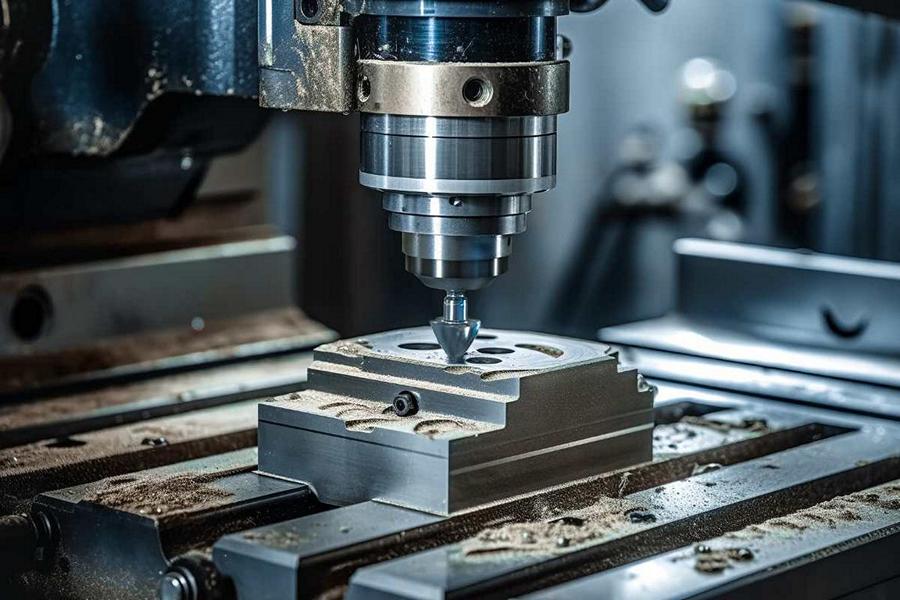
In the fast pace of manufacturing, CNC machine shops are the backbone of precision engineering, efficient machine shops, and technological advancement. The advanced facilities use Computer Numerical Control (CNC) technology to produce highly precise components for aerospace, automotive medical, and other industries. Traditional machining using manual labor and operator knowledge requires constant quality, slower production, less cost-effective. In contrast, CNC machining automates the whole process and has reliable consistency, fast production, and cost efficiency. A CNC machine shop is powered by a variety of super cool high-tech machines including CNC mills, lathes, routers, plasma cutters, and EDM machines that run on a computer with precise, auto-guided functions. The process starts by using computer-aided design (CAD) software and engineers making detailed 3D models of the particular component required in the system.  Using these designs, they are then converted into machine-readable G code that specifies the exact movements of cutting tools to create and shape raw materials products. Each material possessed specific mechanical and physical properties which made them suitable for a particular CNC machine shop. Without CNC machining, it would be difficult to work with such diverse materials and people would require durable, lightweight, heat-resistant, and even corrosion-proof parts when they need them. CNC machine shops have high precision and can be done with high efficiency, besides this, they provide scalability, repeatability and flexibility, enabling businesses to create from prototypes to mass production runs with little human involvement. CNC machining is at the forefront for industries that are actively trying to build more advanced and more complicated designs. This article details the how CNC machine shops operate, what type of machines they use, what materials they work with, and the industries they service. Knowing their role, capabilities, and the advantages the businesses can see who CNC machining service is best for. What is a CNC Machine Shop?  A CNC (Computer Numerical Control) machine shop is a place equipped with modern machine tools controlled by computer programs. They make shop with the sole purpose of producing high precision, complex parts for aerospace, automotive, medical, electronics and industrial manufacturing industries. Unlike traditional machining, which is done with the aid of hands-on operation, CNC machining makes the process automatic and facilitates higher accuracy, efficiency and consistency in production. How CNC Machine Shops Work In CNC machine shops, a computer aided design (CAD) software creates the digital model of the part. The G-code is then generated of this design which the CNC machine reads and uses to make the operations and movements. It precisely cuts, drills, shapes, or mills the material according to programmed instructions thus making the automation repeatable and free of errors. Types of CNC Machines in a CNC Shop There is usually a wide variety of CNC automated machining tools housed in CNC machine shops such as: CNC Milling Machines: are rotary-type cutting tool machines that use them to remove material from the workpiece and create shapes, holes and surface finishes.   CNC Lathes: these machines are meant to make cylindrical parts, by turning the workpiece while cutting tools perform its predefine shaping with high accuracy.  CNC Routers: The CNC router has long been in use for cutting wood, plastic and composites by carving intricate designs and patterns.  CNC Plasma Cutters: They use a high-temperature plasma torch to cut through metal sheets and the most readily useable metal in bulk quantities, depending on their size, is perfect for things like sheet metal fabrication. Electrical Discharge Machines (EDM): EDM uses electric discharges (sparks) to cut away material; thus without using cutting tools, it is ideal for detailing or fine cuts in hardened metals. Materials Used in CNC Machine Shops A huge variety of materials are used in CNC machine shops to produce high precision components for the aerospace, automotive, medical or manufacturing industries. But it is important to select the right material since it determines the durability, functionality and in general, the extent of the performance of the final product. Some of the most commonly used CNC machining materials are mentioned below. Metals  Aluminum:  Aluminum is famous for its lightweight properties, and corrosion resistance features which make the way to aerospace, automotive and consumer electronics. It also has good thermal and electrical conductivity and is therefore useful in heat exchangers and electronic components. Steel & Stainless Steel: It is a very durable metal that does not rust, does not wear out and does not get damaged in heat; hence used for medical tools, food processing machines, structural parts. It is very strong as well as durable. Titanium:  is a strong material with high strength and excellent corrosion resistance, which makes it a top choice for aerospace, medical implant, automotive etc. Extremely high temperature and extremely harsh conditions cause no problem to it. Brass & Copper: A metal commodity that is prized for its outstanding machinability, anti-corrosion and electric conductivity. Electrical fittings, plumbing fixtures and decorative hardware commonly use it. Plastics  Acetal (Branded Delrin): Strong and rigid, with good moisture resistance, acetal is a used in gears, bushings, and similar mechanical components that require low friction and high wear resistance. Polyethylene:  is a lightweight, chemically resistant material that is well suited for piping, containers and insulating parts. Food processing additionally makes use of it and so does medical application. Nylon:  It is known for its toughness and wear resistance and is often used in gears, bearings and automotive parts. It is also used for more industrial machinery components. Acrylic:  This has very good optical properties along with weather resistance. You will commonly find it used in signage, display cases and optical lenses. Composites  Carbon fibre reinforced plastic (CFRP):  material with a very strong and lightweight material, and it is widely used in the aerospace industry, sports equipment, automotive industries, etc. High rigidity and durability are provided. Fiberglass: One of the popular composite materials that’s well known for its strength, low weight and corrosion resistance. It is widely employed in automotive bodies, boat hulls and in industrial applications. Ceramics  Zirconia: the excellent hardness, and wear-resistance

الشركة المصنعة للمكونات المقلوبة للقطاع الطبي

الشركة المصنعة للمكونات المخروطة

التصنيع الآلي باستخدام الحاسب الآلي

Turning parts are products made through CNC turning, a process in which lathes or turning-milling centers shape workpieces using turning tools. These chisels revolve at a speed higher than 1,000 rpm and shave the workpiece to remove the unwanted material. The speed of turning and the feed rate depends on the material to be machined, the type of cutting tool, and the diameter of the workpiece. It is vital in forming rotationally symmetrical parts with high accuracy and productivity. In this article, you will find information about CNC manufacturer of turned components. in the medical, aerospace, connectors, and defense industries and the peculiarities of their production. Specialist in the Supply of Turned Parts for Medical Applications CNM focuses on cnc machining tight tolerance medical components for surgical tools, apparatuses, and equipment use. CNM has over thirty years of experience in manufacturing and can ensure that the tolerance of each part is precise and very, very tight. Our specialties include Ventricle Assist Devices (VADs), Lasik eye surgery equipment, CT & MRI scanner equipment, and surgical equipment, including Trocar/Cannula systems and biopsy cutters. Our core competencies include 5-axis milling and electrical discharge machining (EDM) services, and thus we are the preferred partner for cardiovascular devices, orthopedic implants, and dental equipment. Our metals and alloys are Titanium, Stainless Steel, Invar, Kovar, and Inconel; thus, all our parts, such as medical screws, implant prototypes, and custom molds, are precise. Our clean, temperature- and dust-controlled environment ensures we can achieve the closest tolerances required for medical use. The precision machining services offered by the company also include manufacturing surgical scissors, cannulas, biopsy tubes, and saw guides for bone surgery that require compliance with medical standards. Whether the application is micromachining or manufacturing of surgical instruments, CNM offers reliable and quality medical machining services for your needs worldwide. CNC Turning Aerospace Parts Manufacturer CNM specializes in manufacturing CNC-turned parts for aerospace, automobile, electronics, mechanical, medical, and dental instruments, military and defense, hunting, and fishing. We deal with materials like brass, stainless steel, plastic, aluminum alloy, steel, and titanium and manufacture items like pipe joints, connector joints, servo motor shafts, and anodized aluminum tubes. In aerospace cnc machining, CNM can manufacture parts used in different kinds of aircraft; military, commercial, and glider. We pay great attention to such issues as durability, compliance with the declared characteristics, and batch marking to obtain the high rates of performance and protection that are typical for aviation. Backed by advanced technology and a stringent machining system, CNM maintains precision with tight tolerances and offers comprehensive services under ISO9001:Certification in 2015. This involves the type of material to be used, the quality of the material, the labeling of all the materials used in the production, and the delivery time as per the client’s request. CNM has a good record and credible partners across the globe; America, Europe, the Middle East, Southeast Asia, Japan, and many more. The company takes pride in quality and reliability in all its activities to satisfy customers and achieve high performance in aerospace parts. Manufacturer of Turned Components For the Connector Industry CNM is a precision-turned components manufacturer particularly suited to the connector industry. Being a quality-conscious company focusing on cost and time, we use our vast experience in the industry and sophisticated machining technology to produce parts to your requirements. We have CNC sliding headstock machines for the connector dimensions from Ø5 mm up to Ø36 mm, and for some particular types of connectors, we have fixed headstock machines. However, for the dimensions up to Ø80 mm are also possible. Machining complex geometries is one of our strengths, as we use machines with up to 10 numerical axes, including B axes. CNM has the flexibility of batch sizes ranging from 500 to 20,000 and above, thus making it possible to meet the needs of small and large-scale projects. Our materials include aluminum, copper alloys, copper, brass, and ceiling, therefore affording flexibility and satisfying the requirements of the connector component industry. Some of the precision parts we offer are terminal blocks, connectors, adapters, sensor bodies, connection plugs, and sockets, all made to precise industry standards. In addition to machining, CNM provides a wide range of additional services with the help of reliable subcontractors: silvering, gilding, annealing, laser engraving, tribofinishing, and deburring. Also, we offer kit assembly services, strengthening our capacity to offer bundled services. Suppose you are in the connector industry and you need superior turned components for your turned parts. In that case, CNM is ready to serve you. Get in touch with us today to understand how we can help you with your manufacturing projects and improve them. Manufacturer of Turned Components For the Defense Industry CNM TECH.CO.,LTD is one of top 10 CNC machining services in the world, we specialize in CNC machining for accurate and high-quality defense parts and components. The authors are proud of the team of professional employees and the effective system of controls in the company. CNM is equipped with modern technology tools, CNM is ISO 9001, AS 9100D, and ITAR registered to supply aerospace and defense parts. Comprehensive Program Management Services  CNM offers numerous services in program management apart from CNC machining. We have a well-trained staff that can meet the rugged demands of the supply chain partners. Therefore, customer relations and their feedback are underlined as significant in developing sound program management systems. Our ISO 9001:The 2000, AS9100D, and ITAR certifications demonstrate the company’s commitment to timely, professional, and focused work. We very closely control our production process with the help of Epicor ERP/MRP system software. This means we can schedule and track parts in this integrated system from the shop floor, as shown below. It effectively manages various aspects, including It helps manage several aspects such as: Engineering support Kanban Pull Systems The first article inspections, or FAI for short. AOGs (Aircraft on the Ground) DX/DO requirements Forecasting is related to supplier portals Raw material sourcing Part machining Special process management Quality assurance Documentation Packaging & Shipment

التصنيع الآلي باستخدام الحاسب الآلي للمغنيسيوم

تصنيع المغنيسيوم بالماكينات

التصنيع الآلي باستخدام الحاسب الآلي

Magnesium has exceptional characteristics, notably low density, and good machinability, for creating corrosion resistance in high-strength parts through CNC machining. However, the process of machining magnesium is quite a challenge because of the flammability of the material. When dealing with magnesium, safety measures are taken to reduce any risks likely associated with it. The machining of magnesium generates shavings and dust, which can easily be ignited, which is a great danger to CNC machinists. If not well controlled, the machining process will likely cause fires or explosions in the workshop. This article describes the main safety measures for working correctly with magnesium and other flammable metals. It focuses on proper methods of chip clearance and measures and precautionary measures to avoid fire in a machine shop. Challenges in Magnesium Machining Working with magnesium alloys is always accompanied by risks that must be managed adequately. These are some of the risks that should be understood when involved in the CNC machining of magnesium. Fire Hazard One of the significant problems in machining magnesium alloys is the flammability of the fine chips and dust produced during the process. These particles are highly inflammable, and even tiny sparks or excessive heat can easily cause them to catch fire, which is a big danger in the workshop. Tool Wear Due to its soft and abrasive nature, the magnesium material can wear out the cutting tool during CNC machining. This results in a lower machining rate and more tools that must be changed more often than not. Heat Generation It is also clear that magnesium alloys have low thermal conductivity, and therefore, heat is localized to the cutting zone. This high cutting temperature also negatively affects the tool’s life. Also, it increases the possibility of warping the workpiece and accelerates the tool wear rate. Surface Finish Challenges Achieving a high surface finish on magnesium alloys is challenging due to the presence of burr and machining deformation. All these issues must be addressed by applying the correct machining methods and selecting the right tools to achieve the desired high-quality surface finish. To address these issues, it is required to adhere to all the safety measures, correct use of tools, and information on the characteristics of magnesium and its machining for safety and effectiveness. Enormous Benefits CNC Magnesium Machining However, there are some advantages of using CNC machining magnesium despite the above risks. This is why magnesium is appropriate for use in industries that require light, such as the aerospace and automobile industries, whereby it enhances efficiency and fuel usage. It is a very lightweight material, but at the same time it has high strength. Thus, structures can be solid and slim, requiring less material. Magnesium is easily machined and thus can be produced in large quantities. The tools used are not easily damaged, cutting the cost. Because of its good thermal conductivity, it is suitable for applications where heat is to be conducted away from the product, such as the casing of electronic equipment. Also, magnesium has inherent EMI gasketing characteristics that shield sensitive electronics from interference. From the environmental point of view, magnesium is in abundance. It can be recycled, and in the machining processes, the amount of emission is negligible. Additionally, the energy used is less than that of other metals. This sustainability, coupled with flexibility in the type of surface finish that can be applied, such as painting or anodizing, makes magnesium a preferred material by manufacturers who desire high performance and, simultaneously want to reduce the impacts of their CNC machining on the environment. Safety Measures to be Adopted in CNC Machining of Magnesium Alloys CNC machining of magnesium alloys can be safe if the following measures for machining magnesium safety are observed: Here are vital tips to ensure the safe machining of magnesium. Keep Tools Sharp: One of the challenges that are associated with the machining of magnesium is heat production—using sharp tools when cutting is also essential to avoid heat accumulation. Blunt tools are likely to create a lot of friction and may cause sparks that lead to the ignition of magnesium chips. Carbide-tipped tools are preferred because they are hard and do not spark quickly at high temperatures. Avoid Tight Clearance Angles: One of the crucial things to consider when machining magnesium alloys is to avoid close tolerance angles. High cutting angles result in massive and consecutive chips that increase heat and the possibility of a fire outbreak due to the nature of the element magnesium. Produce Broken Chips: Set up your CNC machine to produce small and intermittent chips. This assists in removing heat from the cutting tool and the workpiece so that there are minimal chances of the material catching an open flame. This should be done by employing small back rake angles, low feed rates, and moderate to high cutting speeds. Use Mineral Oil-Based Coolants: When machining magnesium, it is recommended to use mineral oil coolants instead of water. Mineral oil reduces fire and explosion risks and enhances the surface finish. Aqueous solutions of coolants may corrode magnesium and cause the formation of flammable hydrogen gas. Employ Explosion-Proof Vacuum Systems: Employ explosion-proof vacuum systems to help extract magnesium chips and dust from the CNC machines. Discontinuous magnesium chips are also flammable; removing them in the workshop is crucial without causing a fire outbreak. Avoid Water in Case of Fire: Do not attempt to put the fire out with water during a magnesium fire, as this will only worsen it. Magnesium fires should be fought with dry Class-D fire extinguishers or dry sand. Thus, following the above measures, magnesium cnc machining can be done safely with less risk in the workplace. Choosing the Right Cutting Tool in CNC Machining of Magnesium Alloy Selecting the appropriate cutting tools is crucial to achieve the best results and safety when using CNC machining on magnesium alloys. Below is the categorization of the tools that are frequently utilized: High-Speed Steel (HSS) Tools: High-speed steel tools are easy to use and

تصنيع نحاس البريليوم آلياً

تصنيع النحاس بالقطع

التصنيع الآلي باستخدام الحاسب الآلي

Copper metals are highly valued for their appearance. Primarily, it is used in everyday art and on utensils. Copper has better material and electrical characteristics as compared to aluminum or aluminium. This makes it essential to produce complex parts. These parts are used in applications such as EDM electrodes. However, copper is typically challenging to machine. This hardness poses several problems as follows. The additives include aluminum, zinc, silicon, and tin. These combinations result in the formation of alloys such as brass and bronze. Nickel-silver alloys are also produced to meet specific requirements. Every one of the alloys is thus designed for exact machining applications. Therefore, they play a significant role in many fields. The machining of copper alloy parts becomes more accessible, allowing for more efficient production. This, in turn, enables production to be done more efficiently. Copper is still valuable for all areas because of its versatility. It is even more helpful when combined with other metals. Nevertheless, copper is irreplaceable, and the industry will continue to encounter it in the future. This article will focus on copper cnc machining methods, essential factors to consider, various uses of copper, and necessary machining services. So, let us help you decode the information you need to make the most of this instrumental metal. Copper CNC Machining: When it comes to CNC machining copper, there are two critical factors to keep in mind for optimal results: Optimal Tool Material Selection: Dealing with raw copper is problematic because the material is very soft, making tools wear out very fast and challenging to remove chips. One of the problems often faced is the creation of a built-up edge, which is a condition where copper particles cling to the tool and produce uneven surfaces. To eliminate these problems, it is necessary to employ cutting tools manufactured from materials like high-speed steel (HSS). HSS tools are specifically famous for cutting copper since it is a soft metal and do not blunt HSS tools quickly while using CNC machines. Setting the Ideal Feed Rate: The feed rate determines the speed at which the CNC cutting tool travels on the copper workpiece. When it comes to copper machining, it is advised that one should keep the feed rate between moderate and low. High feed rates can produce much heat, which is not preferred in precision machining applications. One of the critical aspects of controlling the feed rate is that it is vital for precision and surface finish during machining. If higher feed rates are required in your project, then it becomes mandatory to use cutting fluids or coolants because heat has to be taken out for better precision in the machining process. Selecting the Correct Grade of Material Choosing the correct grade of copper is one of the most critical decisions made during the design of any project. Electrolytic rigid pitch copper (ETPC), also known as pure copper (C101), has a purity of 99%. 99% reliability can be a problem and expensive, particularly regarding mechanical components. When comparing the two materials, C110 is more conductive than C101, more accessible to machines than C101, and sometimes cheaper. Selecting the correct material grade is crucial to achieving the design necessities in the proper manner. Manufacturability should be deemed regardless of the type of material incorporated in developing a product. One has to follow the principles of DFM to the letter to get the best outcome. Some recommendations include closely controlling the performance tolerance and dimensional checks. Do not make thin walls with small radii for improved machining. Wall thicknesses should be kept to a minimum of 0.5 mm for structural strength. For CNC milling, the size limit is 1200mm x 500mm x 152mm, while for CNC turning, it is 152mm x 394mm. Design undercuts with square profiles, full radii, or dovetails to reduce the machining operations. These guidelines are specific to copper components and are essential in enhancing on productivity and quality of the components. The Copper Alloys For Machining Copper materials include various commercial metals used in different industries depending on the required properties for a specific application. Pure Copper: Copper is known to be in the purest form, soft, and can be easily molded. It may contain a small percentage of alloying additions to improve its characteristics, such as improved strength. High-purity copper is used in electrical applications, including wiring, motors, other equipment, and industrial applications such as heat exchangers. The commercial grades of pure copper are classified by the UNS numbers C10100 to C13000. For applications requiring higher strength and hardness, such as machining beryllium copper, alloying pure copper with beryllium is a common practice. Electrolytic Copper: Electrolytic tough-pitch copper is obtained from cathode copper, refined by electrolysis, and contains deficient impurities. The most widely used grade is C11000, which offers electrical conductivity of up to 100% IACS and high flexibility, which makes it suitable for electrical applications such as windings, cables, and bus bars. Oxygen-Free Copper: Due to its shallow oxygen content, oxygen-free copper grades such as C10100 (Oxygen-free electronic) and C10200 (Oxygen-free) are characterized by shallow oxygen content and high electrical conductivity. These coppers are made under non-oxidizing conditions and are used in high vacuum electronics such as transmitter tubes and glass-to-metal seals. Free-Machining Coppers: These copper base alloys contain nickel, tin, phosphorus, and zinc additions, which aim to improve the machinability. Some well-known alloys include bronze, copper-tin-phosphorus, brass, and copper-zinc, characterized by high hardness, impact strength, workability, and corrosion resistance. It has uses in various machining operations, such as in machining coins, machined electrical parts, gears, bearings, and automotive hydraulic parts. Techniques of Machining Copper The following are some of the most efficient ways of machining copper: Machining copper as a material is a process that is associated with some difficulties due to the material’s flexibility, pliability, and durability. Nevertheless, copper can be alloyed with other elements such as zinc, tin, aluminum, silicon, and nickel, improving the possibility of machining copper. Such alloys are usually easier to cut than materials of similar

مكونات التصنيع باستخدام الحاسب الآلي باستخدام الحاسب الآلي

المكونات المُصنَّعة آلياً باستخدام الحاسب الآلي

التصنيع الآلي باستخدام الحاسب الآلي

Numerous engineers in various branches value the role of metal parts that are expected to have certain levels of precision and efficiency. This is especially the case in industries such as aerospace and transportation, where the components’ quality, safety, and functionality are paramount. In such circumstances, CNC-machined components are unavoidable. These are the reasons why CNC machining is widespread; it is fast, accurate, and precise, and this has made it famous all over the world. Below are some factors that you should put into consideration when selecting cnc machined parts for delicate operations. Use of CNC Machining in the Development of Complicated Parts CNC (Computer Numerical Control) machines operate with the help of instructions from a computer that controls the position of the cutting tools. The two most common categories of CNC machines are 3-axis and 5-axis machines, but contemporary CNC systems can have up to 12 axes. These multiple axes make it possible to create complex metal parts. For instance, a 3-axis CNC machine moves the cutting tool along three primary directions: The first one is the X-axis which is also known as the lengthwise movement; the second one is the Y-axis which is also known as the widthwise movement and the third one is the Z-axis which is used for the depth control. With these axes, cutting the required parts at a high speed and with precision of form is possible. In addition, several operations can be done in one setup because of the characteristics like the automatic tool change. This capability allows the company to produce cnc precision machined components faster and cheaper. Moreover, the company has always been able to create complex parts with tight tolerance. Tolerances for CNC Machined Parts However, there are several other factors that engineers have to consider concerning CNC machined parts other than their functionality and durability. When designing for the manufacturing process, the following factors should be taken into consideration: Cost Efficiency: Several factors that affect the cost of the CNC machined parts include setup cost, programming cost, cost of material, complexity of the part design, and the number of parts to be manufactured. These aspects should be controlled during a product’s design phase because this is when the best production methods at the least cost are defined. Lead Time: Based on the tolerance, complexity of the part, time taken to set up the CNC machine, and whether standard or special tools are used, the time taken to complete the machining process will vary. It is also important to realize that detailed design planning reduces lead time and overall productivity. Design Feasibility: Make sure your part is ready for CNC machining. For instance, making the cavities to be less than 2. It is important to point out that if one is making a hole of 5mm diameter and below, it may be considered micro-machining and may need some special tools. One has to consider the design option within the CNC machining process to shape cnc machined components. Tolerances: Tolerances depend on the construction material, the tools to produce the particular part in question, and the specific part being produced. Therefore, CNC machining can be precise to tiny tolerances, which, in turn, cost more than parts with less tolerance. Pros and Cons of CNC Machined Parts CNC-machined parts are ideal under certain conditions: However, CNC-machined parts are suitable under the following circumstances: Low to Medium Volume Production: CNC is most suitable for low to medium-volume production since the cost of setting up and the cost of the tools is recovered by the time it takes to produce each part. Complex Geometries: Due to the kind of technology that is applied in CNC machining, it is ideal for use in making parts that have complex shapes. Prioritizing Short Lead Times: This implies that in one cycle of the CNC machining process, several operations can be performed, which can be very beneficial in terms of the time taken to manufacture compared to other methods. Hence, if the above-mentioned design and tolerance factors are considered, coupled with the circumstances under which CNC machining should be applied, engineers can be assured that they will produce accurate, high-quality, and relatively cheaper cnc machining components.     CNC machining and its Alternatives CNC machining is a very efficient and accurate method of manufacturing however it is not always applicable for all projects. Even though using techniques like metal stamping for significant production needs, such as mass production, is more appropriate and cost-effective. If cost is a problem, you may have to opt for manufacturing processes that do not necessarily need a lot of capital, such as stamping or sheet metal forming. These methods can be very cheap while at the same time yielding good results. It is also important to note that CNC machining is not rigid on the type of material that can be processed, but some of the materials may not be very suitable since heat is used. Evaluating the appropriateness of the material is very crucial when it comes to manufacturing to produce the best results and, at the same time, minimize the costs. Machining Industries and Their Function CNC machining companies do not only provide precision parts but also manufacturing tools and devices that are needed by other industries of precision manufacturing. The following is a breakdown of CNC machined parts: This manufacturing process involves the removal of material from the raw material to give highly accurate parts. CNC Drill CNC drills are used for dulling, milling, and any other required shape on the workpiece. They cut through materials to the depth that was set earlier. This makes it possible to accurately position and dimension the holes, especially for assembly and fit in large structures. CNC drills are flexible since they can drill on various materials based on the required job. They are essential in developing the precision and accuracy of the produced parts. CNC drills are precise and ensure the holes are drilled to the standard. This method is appropriate for

صب القوالب الدقيقة

التصنيع باستخدام الحاسب الآلي للألومنيوم

صب الألومنيوم, التصنيع الآلي باستخدام الحاسب الآلي

Aluminum is widely used in CNC machining because of the advantages of machined parts in different industries. This article is devoted to cnc aluminum parts machining and its characteristics, types of alloys, machining methods, tools, and uses. Aluminum in CNC Machining Machining aluminum through CNC is preferred because aluminum is highly machinable; it is among the most machined materials in the world after steel. Some properties include soft, ductile, and non-magnetic, and its pure form is silvery white in color. However, the real beauty of aluminum is that it can be alloyed with other elements like manganese, copper, and magnesium to create a series of aluminum alloys with improved characteristics. Aluminum CNC Machining: Getting the Most The benefits include; 1. Machinability: Aluminum is relatively easy to machine because it is soft and can be made to chip easily therefore, it can be machined faster and with less power than steel at a cheaper price. It also makes it easier to deform during the machining process, making it easier for CNC machines to produce highly accurate parts with closer tolerances. 2. Strength-to-Weight Ratio: Aluminum is lighter than steel by one-third and has a strength of one-tenth of steel. Thus, it is suitable for use in parts that need a high strength-to-weight ratio. Some of the industries that benefit a lot from aluminum are by producing cnc machined aluminum parts for the automotive and aerospace industries because it is light but extremely strong. 3. Corrosion Resistance: Aluminum has an inherent characteristic of not corroding in normal environmental conditions, and it can be further protected by anodizing hence the material can be used in environments that are exposed to marine or atmospheric conditions. 4. Performance in Low Temperatures: There are some materials that undergo a change in their mechanical properties and become as strong as paper at low temperatures, but this is not the case with aluminum. 5. Electrical Conductivity: While pure aluminum has high electrical conductivity, aluminum alloys also have adequate conductivity for electrical use, meeting the needs of different industries. 6. Recyclability and Environmental Friendliness: Aluminum is a recyclable material hence the conservation of the environment through the reduction of waste and energy used in the machining process. 7. Anodization Potential: The fact that anodization can be done on the aluminum surfaces also enhances the wear and corrosion resistance of the machined aluminum parts. The ability to anodize aluminum in different bright colors addresses the aesthetic aspect. Applications Galore Aluminum is popular in CNC machining because of its versatility and other suitable properties in many industries. From car parts to airplane parts, electrical parts, and even complex mechanical parts, the durability and performance of aluminum in different uses are apparent, which leads to creativity. Therefore, the popularity of aluminum in CNC machining is not accidental – it is due to the benefits, possibilities, and perspectives that this material offers in the sphere of manufacturing. Aluminum is still widely used for machined parts due to its performance, eco-friendliness, and flexibility as industries evolve. Typical Aluminum Alloys Used in CNC Machining Aluminum alloys are the most preferred materials in CNC machining because of their flexibility and good mechanical characteristics. Below are some frequently used aluminum grades in CNC machining processes: 1. EN AW-2007 / 3.1645 / AlCuMgPb This alloy contains copper in a range of 4-5% and is famous for its strength, lightweight, and high utility. It is mainly applied in the manufacturing of machine parts, bolts, rivets, nuts, screws, and threaded bars. It is also relatively brittle, has low weldability and corrosion resistance, and therefore requires anodizing after machining. 2. EN AW-5083 / 3.3547 / Al-Mg4,5Mn This alloy is well known for performing exceptionally well in extreme conditions; it has magnesium, chromium, and manga Itboaa has high corrosion resistance and maintains its strength even when welded. It uses cryogenic equipment, marine structures, pressure equipment, chemical applications, and many others. 3. EN AW 5754 / 3. 3535 / Al-Mg3 This wrought aluminum-magnesium alloy has good corrosion and high strength, it is used in welded structures, floorings, vehicle bodies, and food processing equipment. 4. EN AW-6060 / 3. 3206 / Al-MgSi This alloy is heat-treatable and has good formability. It is widely used in the construction, medical equipment, and automotive engineering industries. 5. EN AW-7075 / 3.4365 / Al-Zn6MgCu While this alloy is only average in terms of machinability, it has a high strength-to-density ratio, and good resistance to atmospheric conditions and is used in aerospace, weaponry, and mold tool industries. 6. EN AW-6061 / 3. 3211 / Al-Mg1SiCu This alloy has very high tensile strength and is used for structures that are heavily loaded like rail coaches, machine parts, and aerospace structures. 7. EN AW-6082 / 3. 2315 / Al-Si1Mg This alloy has medium strength and good weldability and is used in offshore structures and containers because it resists stress corrosion cracking. These aluminum alloys provide a variety of mechanical properties. They are selected according to the demands of the CNC machining applications to guarantee the best performance and longevity in the intended use. Common Techniques To CNC Machine Aluminum In aluminum CNC machining, there are several techniques that can be used in order to get high accuracy and precision in the aluminum parts. These processes are intended to meet various needs and demands, which would provide the best outcome in terms of quality and performance. CNC Turning remains one of the basic operations in aluminum machining. In this operation, the workpiece turns around its axis, and the cutting tool remains fixed. Thus, the removal of material and shaping of the workpiece are enabled. This method is widely applied in producing cylindrical or conical shapes in aluminum parts. Another common technique is CNC Milling aluminum, in which the tool is held stationary while the cutting tool is rotated to cut the workpiece. This process enables cutting actions in different directions and is ideal for cutting shapes and designs in aluminum parts. Pocketing or pocket milling is a particular type of CNC aluminum

التصنيع الآلي باستخدام الحاسب الآلي البرونزي

تصنيع البرونز

التصنيع الآلي باستخدام الحاسب الآلي

Copper Bronze in CNC Machining Bronze is a metal that is used in a wide variety of industries and applications. It is made of copper, tin, and other alloys to provide strength, durability, and resistance to corrosion. Due to its versatility, it is widely used in CNC machining applications, particularly in manufacturing high-accuracy parts such as bearings, gears, and other complex parts. Bronze’s Machinability and Applications Bronze has good machinability that allows it to be easily cut, drilled, and shaped using computerized machines such as CNC, thus making it vital in industries that require high accuracy, such as aerospace, automobile, and manufacturing of medical equipment. Enhancing Bronze’s Properties It is for this reason that by changing the composition and treatments of bronze, its mechanical and performance characteristics can be enhanced. For instance, phosphorus improves wear resistance while aluminum increases strength and hardness to suit a given application. CNC machining bronze: The Process Steps Bronze CNC machining involves the use of Computer Numerical Control (CNC) machines. The process begins with a CAD model, and CAM software creates toolpaths. The bronze material is then conditioned and positioned on the work table of the CNC machine for milling, turning, drilling, and other detailed work like engraving or etching. Quality Control and Polishing Subsequent to machining, inspection is done using accurate measuring tools to check for compliance with the set tolerances and quality. Some of the last operations, such as polishing or sanding, may be done to give the required surface finish before proper packing for transport or for subsequent operations. Expertise and Optimization CNC operators are very important in the process of using CNC machines to machine bronze since they help in achieving the best results as far as accuracy, performance, and durability of the machined components are concerned. Benefits of CNC Bronze Machining Bronze CNC machining has many advantages that make it widely used in various industries. The first advantage is that its coefficient of friction is low, and hence, there is no need to apply lubricant frequently during cutting, as is the case with other metals that are denser. This feature not only increases the effectiveness of the production process but also affects the costs in a positive way. Also, bronze has high wear resistance and is applied to the parts that have to be more durable than other elements of a machine. In the case of machining, the following benefits can be attributed to the use of bronze in a number of ways. It has high machinability and hence can be easily worked into the required form and shape. It can also be formed into intricate forms without dulling the cutting tools. This not only saves time but also the cutting tools which in turn helps in reducing the cost in the long run. It also has a very high corrosion resistance as another property of this metal as mentioned above. This makes it a preferred material for parts that are in contact with the environment or corrosive agents. Moreover, bronze is quite resistant and, at the same time, quite malleable, which makes it quite versatile. It is not the hardest of all metals, but its satisfactory strength, coupled with its flexibility, makes it suitable for structural parts and ornaments. In the field of thermal conductivity, it is an advantage of bronze that it has high thermal conductivity. It also assists in cooling during the process of bronze machining so that the workpiece does not get hot and reduces the possibility of it shrinking or expanding in size. This is important in a bid to ensure that there is accuracy in the manufacturing processes and to avoid cases of wastage of materials and tools. Components such as bearings, gears, and sliding elements are particularly suitable for use in bronze because of their low coefficient of friction through which the parts glide smoothly and for longer periods. Disadvantages of CNC Machining Bronze In fact, Bronze CNC machining has its advantages, but it also has its disadvantages that should be considered. The problem with bronze is that it is relatively costly to obtain the right materials to work with in the first place. Bronze is a combination of copper and tin, and as such it is relatively costly than other materials that can be used in bronze CNC machining hence making the overall cost of projects that require the use of bronze high. Another disadvantage is the problem of when the tools become dull and need sharpening. Bronze is relatively softer, and as a result, it causes faster wear and tear of the machining tools hence frequent replacement. This raises the cost of production and requires the monitoring of the tools from time to time. When it comes to machining bronze vs brass, CNC machining bronze is also relatively easier to get fine details and shapes than other metals. It is because of its softness. The material is not as hard as metal and, as such, may not hold finer details as well; this may be a disadvantage, especially for detailed projects. The last disadvantage of using bronze in CNC machining is that it will take a longer time to machine the material. The other disadvantage of bronze is that the time that is taken in performing machining operations on it is relatively longer than that of steel hence increasing the time taken in production. This may impact the project time line and may require some changes in the planning and programming of the project. Also, machining bronze bushings generates more heat than machining other hard metals like aluminum and steel. This heat can be very destructive to the tools and the quality of the cut, and as such, it may need to be monitored frequently and slow down the rate of machining to ensure that heat-related issues are well controlled. These challenges indicate a need to factor in and strategize when one is to perform bronze CNC machining on projects. Common Alloys of Bronze for CNC Machining Here are some

التصنيع الآلي للنماذج الأولية باستخدام الحاسب الآلي بنظام التحكم الرقمي

التصنيع الآلي باستخدام الحاسب الآلي باستخدام الحاسب الآلي

صب الألومنيوم, التصنيع الآلي باستخدام الحاسب الآلي

دليل شامل لتصنيع النماذج الأولية بالماكينات بنظام التحكم الرقمي يُعد التصنيع الآلي باستخدام الحاسب الآلي للنماذج الأولية خيارًا قيّمًا لإنتاج كميات صغيرة من النماذج الأولية بكميات كبيرة بسرعة مقارنة بالطرق الأخرى. يمكن تصنيع عدة أنواع من النماذج الأولية ببساطة عن طريق التصنيع الآلي باستخدام الحاسب الآلي. تقدم النماذج الأولية المظهرية، مثل حالات السيارات، أدلة بصرية على شكل الجزء النهائي وسلوكه. وعلى النقيض من ذلك، تحتاج النماذج الأولية الوظيفية إلى مزيد من الدقة، وبالتالي فهي تؤكد على هيكل المنتج وثباته. توضح هذه المقالة النماذج الأولية المصنوعة باستخدام الحاسب الآلي ومزاياها وعيوبها. وعلاوة على ذلك، سوف يسلط الضوء على الجوانب الرئيسية بما في ذلك؛ ما هو النموذج الأولي للتصنيع باستخدام الحاسب الآلي؟ التصنيع باستخدام الحاسب الآلي باستخدام الحاسب الآلي هو عملية تصنيع باستخدام الحاسب الآلي لإنتاج نماذج أولية دقيقة يمكن استخدامها لأغراض مختلفة. تُستخدم مكونات النماذج الأولية هذه في مراحل الاختبار والتصميم لوظائف الأجزاء. بالإضافة إلى ذلك، فإن الأغراض الأساسية لمثل هذه الاختبارات لتحديد المرئيات أو التسويق أو جمع التبرعات. في الأساس، ينتج التصنيع باستخدام الحاسب الآلي نماذج أولية باستخدام الحاسب الآلي عينات من منتج أو ماكينة إذا تمت الموافقة عليها، ستستمر في مراحل وضع اللمسات الأخيرة للتصميم والتصنيع والمبيعات. تتيح لك تعدد استخدامات التصنيع باستخدام الحاسب الآلي صنع نماذج أولية من مواد مختلفة مثل البلاستيك الاقتصادي إلى المعادن عالية القوة لإنشاء نماذج أولية. لماذا يُعد التصنيع باستخدام الحاسب الآلي عملية قيّمة؟ يُعد التصنيع الآلي باستخدام الحاسب الآلي خيارًا استثنائيًا لتصنيع النماذج الأولية للأجزاء ذات المزايا التفصيلية. أولاً، يوفر دقة عالية ودقة وثباتًا في الأبعاد للأجزاء بسبب أدوات التحكم المحوسبة التي تشرف بدقة على حركة قطعة العمل وأداة القطع. تضمن هذه الدرجة من التحكم أن يكون النموذج الأولي الذي يتم إنتاجه مطابقًا تمامًا للتصميم. إلى جانب ذلك، فإن التصنيع الآلي السريع للنماذج الأولية سريع بشكل ملحوظ، ويساعد على تكرار النماذج الأولية للأنماط المعقدة حتى +/- 0.005x. وعلى العكس من عمليات مثل القولبة بالحقن، والتشكيل أو الطباعة ثلاثية الأبعاد التي غالبًا ما تستغرق شهورًا لتلبية متطلبات التفاوتات والتفاوتات الصارمة والقوالب. وبالتالي، تتيح لك ماكينات التحكم الرقمي بنظام التحكم الرقمي المتقدمة وضع نموذج أولي مباشرةً بعد تحويل نموذج التصميم بمساعدة الحاسوب إلى ملفات CAD أو أكواد CAM أو أكواد g. أنواع ماكينات التحكم الرقمي باستخدام الحاسب الآلي المستخدمة في النماذج الأولية: هناك أساليب تصنيع مختلفة تُستخدم لتشكيل النماذج الأولية الوظيفية ومنتجات الاستخدام النهائي. خراطة النماذج الأولية باستخدام الحاسب الآلي: الخراطة باستخدام ماكينة خراطة بنظام التحكم الرقمي، باستخدام ماكينة دوارة تسمى المخارط، لإنشاء النماذج الأولية باستخدام الحاسب الآلي للمكونات المستديرة أو المتماثلة. هذه العملية عبارة عن مزيج من المواد التي يتم تدويرها بسرعة وأداة قطع حسب التعليمات البرمجية المبرمجة لتشكيل أجزاء أو منتجات عالية الجودة ذات مواصفات دقيقة. تُعتبر ماكينات المخرطة ماكينات مثالية للنماذج الأولية ذات المقاطع الوسطية المستديرة بسبب تخصصها في المكونات المستديرة. النموذج الأولي للتفريز باستخدام الحاسب الآلي: بالنسبة للنماذج الأولية المعقدة، قد تكون هناك حاجة إلى ماكينة بنظام التحكم الرقمي تحتوي على ما يصل إلى خمسة محاور، فإن التفريز باستخدام الحاسب الآلي موثوق به. إن المحاور الإضافية هي التي تجعل من الممكن الحصول على قطع أكثر دقة، وبالتالي إنشاء الأجزاء المعقدة، ولكن التكلفة أعلى. في عمليات التفريز باستخدام الحاسب الآلي للنموذج الأولي، يقوم رأس الأداة التي يتم التحكم فيها بالكمبيوتر بقطع النموذج الأولي النهائي من كتلة كبيرة من المواد. كتلة البداية هي أساس عملية التشغيل الآلي بأكملها. أجهزة التوجيه باستخدام الحاسب الآلي يعد جهاز التوجيه باستخدام الحاسب الآلي أفضل طريقة لعمل النموذج الأولي لأنه يتيح لك تصميم المنتج كما تريده بالضبط. تشبه ماكينات التوجيه باستخدام الحاسب الآلي ماكينات التفريز والماكينات بنظام التحكم الرقمي ولكنها أقل تكلفة، كما أنها مزودة بنظام جسرية تجعل مساحة العمل أكبر من حجم الماكينة. ومع ذلك، فإن هذا التصميم يحد من تعقيدها. الموجهات هي الخيار الأفضل للعمل مع مواد مثل الخشب والبلاستيك والمعادن اللينة مثل الألومنيوم. وعادةً ما يتم اعتمادها من قبل الميكانيكيين الصناعيين وهواة الأعمال الصغيرة لمحاكاة المنتجات ذات التصميم الدقيق. عادةً ما تُستخدم الموجهات ثلاثية المحاور أو ثنائية المحاور على نطاق واسع للتصميمات المعقدة. ومن بين هذه الموجهات ثنائية الأبعاد، تُستخدم الموجهات ثنائية الأبعاد للمكونات الهندسية الأبسط، بينما يتم تصنيع الأجزاء ثلاثية الأبعاد باستخدام مكونات ثلاثية الأبعاد. ومع ذلك، لا يمكن أن تكون دقيقة مثل ماكينات التفريز بنظام التحكم الرقمي. لأن عملية إنشاء أو تحويل ملفات CNC التفصيلية استناداً إلى الأداة والماكينة تتطلب الكثير من المهارة أو المهنيين المهرة. القاطع بالليزر باستخدام الحاسب الآلي القاطع بالليزر باستخدام الحاسب الآلي هو تقنية تستخدم شعاعًا عالي الطاقة من القطع بالليزر لتشكيل نموذج أولي للمنتج، ثم يتم اختباره وتحسينه حتى يتم تصنيع المنتج النهائي. قواطع الليزر القوية بما يكفي لاستخدامها من قبل الشركات الصغيرة يمكنها التعامل مع المعادن مثل الألومنيوم، وكذلك البلاستيك القوي مثل؛ الأكريليك، والمنسوجات، والمواد المركبة، والخشب لتصنيع النموذج الأولي باستخدام الحاسب الآلي. إن مرونتها هي السبب في أنها الأكثر شعبية بين الشركات الصغيرة التي ترغب في صنع الكثير من النماذج الأولية دون تجاوز ميزانيتها. ومع ذلك، يمكن أن تشكل قواطع الليزر “علامات احتراق” على سطح جزء النموذج الأولي بسبب الحرارة المتولدة أثناء عملية القطع. وبالإضافة إلى ذلك، عادةً ما يكون تعقيد التصميم محدودًا لأن قواطع التصنيع باستخدام الحاسب الآلي هذه في الغالب يمكن أن تستخدم محاور متعددة بدقة لتطوير المنتج. يعتبر التصنيع باستخدام الحاسب الآلي عملية مثالية يتم تطبيقها في مجالات التصنيع المختلفة. فهي تساعد على تشكيل أجزاء ذات ميزات تفصيلية ومعقدة للغاية مع ثبات أبعاد استثنائي ودرجة عالية من الدقة. في معظم الصناعات، يكون النموذج الأولي العملي، أو حتى النسخة التي تُظهر وظيفة المنتج، هو الأكثر أهمية. وعلى النقيض من ذلك، بالنسبة للنماذج الأولية الوظيفية التي تتطلب قوة صارمة وثباتًا ميكانيكيًا وميزات محددة لا يمكن أن توفرها الطرق المضافة، عادةً ما تكون الأدوات المشكّلة آليًا هي الخيار. تطبيقات التصنيع الآلي باستخدام الحاسب الآلي للنماذج الأولية الدقيقة دعونا نناقش مختلف الصناعات التي تستخدم التصنيع الآلي للنماذج الأولية الدقيقة لتشكيل مكونات خفيفة الوزن للاختبار، والتحقق من صحة التصميمات قبل البدء في مشاريع إنتاج الأجزاء على نطاقات أكبر. فيما يلي بعض الصناعات الأكثر شيوعًا التي تستخدم الماكينات بنظام التحكم الرقمي كمصدر أساسي لتصنيع أجزاء أو منتجات ذات مواصفات قياسية صارمة ذات مواصفات دقيقة صارمة الصناعة الطبية في المجال الطبي في المجال الطبي، تُعد الماكينات بنظام التحكم الرقمي العامل الأكثر أهمية الذي يجعل عملية النماذج الأولية أسرع. على سبيل المثال، تحتاج شركات الأدوية عادةً إلى نماذج أولية لإثبات عمل المنتج قبل الإنتاج النهائي. الدقة والدقة هما العاملان الأكثر أهمية، خاصةً في الأجهزة الطبية، ويضمن التصنيع باستخدام الحاسب الآلي أن تكون النماذج الأولية هي النسخ الدقيقة للمنتج النهائي ويمكن أن تعمل بشكل مثالي في

مكونات التصنيع باستخدام الحاسب الآلي باستخدام الحاسب الآلي

خدمات التصنيع الآلي باستخدام الحاسب الآلي CNC الصين

صب الألومنيوم, التصنيع الآلي باستخدام الحاسب الآلي

هل تحتاج إلى مزود خدمة تصنيع آلات التصنيع باستخدام الحاسب الآلي الصيني بسرعة وفعالية؟ CNM هو مصنعك الموثوق به للتصنيع باستخدام الحاسب الآلي في الصين. يوفر الميكانيكيون المتخصصون لدينا، والمهندسون، وموظفو مراقبة الجودة، وتقنية التصنيع باستخدام الحاسب الآلي CNC، تصنيعاً عالي الجودة لمنتجاتك. توفر CNM خدمات التفريز باستخدام الحاسب الآلي، والخراطة باستخدام الحاسب الآلي، والطحن باستخدام الحاسب الآلي، وخدمات الطحن باستخدام الحاسب الآلي، وخدمات EDM السلكية وتهدف إلى تقديم أعمال دقيقة وعالية الجودة. في CNM، حصلت منشأة التصنيع باستخدام الحاسب الآلي لدينا على شهادة ISO 9001:2015، استناداً إلى الكفاءة الأساسية للشركة في تصنيع الأدوات وتصنيع قطع الغيار ذات الاستخدام النهائي بكميات صغيرة. كما نقدم أيضاً خدمات الطباعة ثلاثية الأبعاد وخدمات القولبة بالحقن لتلبية حلول التصنيع باستخدام الحاسب الآلي الصينية باستخدام الحاسب الآلي. كما نوفر أيضًا مجموعة متنوعة من المواد للقطع الميكانيكية ومجموعة متنوعة من التشطيبات السطحية بناءً على احتياجاتك. التحكم الرقمي باستخدام الحاسب الآلي هو اختصار لـ ’التحكم العددي بالكمبيوتر’. وهي عملية تستخدم ماكينات يتم تشغيلها بتعليمات في كود G لقطع وتشكيل المواد. هذه هي ماكينات التفريز متعددة المحاور، والمخارط، والموجهات، وجميعها تعتمد على التحكم الرقمي بنظام التحكم الرقمي ولكن باستراتيجية مختلفة. في ماكينات التفريز بنظام التحكم الرقمي، يتم تثبيت قطعة العمل في مكانها بينما يقوم القاطع بتشكيلها، بينما في ماكينات الخراطة بنظام التحكم الرقمي، يتم تدوير أداة القطع والمواد لإنشاء الجزء. يضمن لك اختيار CNM لتلبية احتياجاتك من ماكينات التصنيع باستخدام الحاسب الآلي الحصول على أداء فعال، وتكنولوجيا حديثة، وضمان الجودة والمنتجات المتخصصة لمختلف القطاعات. خدمة التصنيع باستخدام الحاسب الآلي في الصين في ورشة ماكينات CNC في الصين، تمتلك CNM ورشة ماكينات CNC حديثة مجهزة بأنواع مختلفة من ماكينات CNC الدقيقة. نوفر ماكينات من 3 محاور إلى 5 محاور لضمان الدقة في قطع المكونات المعقدة. تصنيع آلي داخلي شامل نحن نلتزم بمعايير التصنيع ISO 2768-F؛ فنحن في وضع يسمح لنا بتقديم خدمات تصنيع شاملة للأجزاء من مختلف الأحجام والأشكال. يمكن أن تستوعب عمليات التفريز باستخدام الحاسب الآلي لدينا قطع العمل بأقطار تتراوح أقطارها من 2 مم إلى 350 مم لتناسب احتياجات عملائنا ومستويات الدقة. لمزيد من المعلومات عن مهارات وخدمات CNM المتنوعة، يُرجى زيارة الموقع الإلكتروني. المواد الخام المضمونة الجودة تؤكد CNM أيضًا أن جميع المواد المستخدمة تتوافق مع أحكام توجيه RoHS وأي مواصفات أخرى قد يقدمها العميل. كما نقدم أيضًا شهادات المواد وتقارير SGS للرجوع إليها؛ ولدينا مجموعة كبيرة من الفولاذ والألومنيوم والفولاذ المقاوم للصدأ والتيتانيوم واللدائن الهندسية مثل PEEK والكمبيوتر الشخصي وPOM. شركة CNM الدقيقة الحاصلة على شهادة الأيزو هي ورشة ماكينات بنظام التحكم الرقمي (CNC) معتمدة من الأيزو في الصين؛ ولذلك، يجب أن تلتزم بإجراءات صارمة لمراقبة الجودة. تدعم معدات الاختبار الحالية هذا الالتزام بالدقة، ولهذا السبب نحن الأفضل في خدمات التفريز الدقيق. اعرف المزيد عن إجراءات ضمان الجودة لدينا. كميات الطلبات المرنة يمكن أن تلبي CNM أي طلبية صغيرة أو كبيرة من الوحدات الكثيرة المطلوب تصنيعها. تتمثل خدماتنا المهمة في الطحن الدقيق باستخدام الحاسب الآلي على المدى القصير، والخراطة باستخدام الحاسب الآلي، والإنتاج بالجملة، مما يمكننا من تلبية احتياجات العملاء المختلفة بأفضل طريقة ممكنة. سرعة التحول السريع تقدم CNM عرض أسعار للعمل في غضون يوم واحد، ويمكن بدء العمل وإنجازه بسرعة. يضمن فريق عمل على درجة عالية من الكفاءة والخبرة، بما في ذلك قسم منفصل للبحث والتطوير، العمل المناسب والأداء العالي. قاعدة العملاء العالمية CNM على استعداد للعمل مع عملاء من الاتحاد الأوروبي وأمريكا الشمالية، حيث توفر لهم أفضل جودة في التصنيع الآلي بنظام التحكم الرقمي وفقًا للمعايير العالمية. خدمات التصنيع باستخدام الحاسب الآلي عالية الدقة والجودة في CNM في CNM، يمكن لماكينات CNC العمل بدقة عالية لإعطاء ميزات ومكونات مختلفة. ماكينات التفريز بنظام التحكم الرقمي CNC مناسبة بشكل خاص لصنع التجاويف العميقة والمستويات المائلة والثقوب والفتحات، بينما تصنع مخارط CNC الأجزاء المستديرة ذات الأشكال المتشابهة. التفاوتات المسموح بها في ماكينات التفريز والخراطة بنظام التحكم الرقمي لدينا ضئيلة للغاية، وأحيانًا تصل إلى ± 0. 001 مم. يمكنها العمل فقط مع المعادن والبلاستيك، شريطة أن تكون الأخيرة كتلًا صلبة. هذه القدرة تجعل التصنيع الآلي باستخدام الحاسب الآلي مختلفاً عن تقنيات التصنيع المضافة الأخرى مثل الطباعة ثلاثية الأبعاد، التي تتعامل بشكل أساسي مع البلاستيك وبعض المعادن. لماذا تختار خدمات التصنيع باستخدام الحاسب الآلي CNM الصين لمشاريعك؟ نضمن في CNM أن تكون جميع المنتجات التي يتم إنتاجها دقيقة وذات جودة عالية. يتعاون مهندسونا وعمال الماكينات وموظفو مراقبة الجودة لدينا لضمان تنفيذ جميع المشاريع وفقًا للمعايير المطلوبة. لا نقدم هنا سوى الأفضل، بدءاً من أحدث تقنيات التحكم الرقمي باستخدام الحاسب الآلي وحتى أكثر تدابير مراقبة الجودة صرامة. خبرات متنوعة من المواد نحن نتعامل في مجموعة كبيرة من المواد لضمان حصول عملائنا على المنتجات المطلوبة لمشاريعهم. فبدءاً من الألومنيوم إلى الفولاذ المقاوم للصدأ، أو النحاس الأصفر، أو حتى التيتانيوم والإنكونيل، فإن شركة CNM لديها كل ما يلزمك. لدينا أيضاً تخصصات في المواد البلاستيكية مثل POM، وPTFE، والكمبيوتر الشخصي، ونضمن لك الحصول على جميع المواد المطلوبة. امتياز معتمد تلتزم منشآتنا بمعايير الصناعة الصارمة، بما في ذلك ISO 9001:لإدارة الجودة، وISO 9001:2015، وISO 14001:2015 للممارسات البيئية. شهادة الأيزو 13485:CNM ISO 13485:2016 لتصنيع الأجهزة الطبية التي تضمن مطابقة جميع الإجراءات والجودة. حلول فعّالة من حيث التكلفة في عمليات التصنيع، نستخدم مبادئ سوق دبي المالي لتقليل تكاليف التصنيع مع ضمان عدم المساس بجودة المنتج. تمتلك شركة CNM حلول تصنيع فعالة من حيث التكلفة في حدود ميزانيتك وتضمن كفاءة التصنيع من الألف إلى الياء. أوقات التسليم السريع تقع شركة CNM بالقرب من محاور النقل الرئيسية في المنطقة الجنوبية من الصين، مما يضمن سرعة إنتاج وشحن المنتجات. نحن نقدر السرعة دون التضحية بالجودة حتى تصل منتجاتك إليك في أسرع وقت ممكن. خدمات التصنيع الآلي باستخدام الحاسب الآلي حسب الطلب توفر شركة CNM قطع غيار مخصصة ومواد معقدة للمشاريع الخاصة التي يجب فيها تصنيع أجزاء معينة. تضمن المرونة والتوجه إلى احتياجات العميل مراعاة جميع الميزات وحلها بفعالية وكفاءة. خدمات التصنيع الآلي باستخدام الحاسب الآلي المتقدمة CNM تتخصص CNM بشكل أساسي في توفير قطع التصنيع الآلي باستخدام الحاسب الآلي عالية الدقة للمعادن والبلاستيك. في كلتا الحالتين، سواءً كانت قطع نموذج أولي أو قطع إنتاج، تحرص CNM على أن تكون أزمنة الدورات قصيرة ولا يوجد أي تنازلات بشأن الجودة. استفد من التزامنا بالتميز، بما في ذلك الشحن القياسي المجاني على جميع الطلبات والامتثال لمعايير ISO 9001:2015 وISO 13485:2003 وAS9100D و

انتقل إلى الأعلى

احصل على عرض أسعار