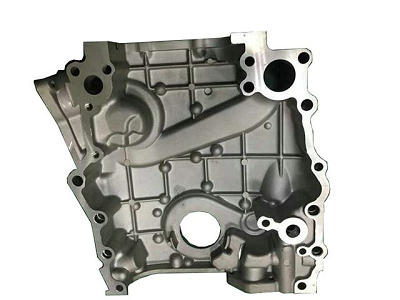
tlakové lití hliníku

Tloušťka stěny odlitků by měla být co nejkonzistentnější

tlakové lití hliníku

There are no hard and fast rules governing die casting parts wall thickness and consistency.  Inherent in the process is a wall section that possesses a dense fine-grained skin, 0.015-0.020 in. thick (0.4-0.5 mm).  The material between the surface skins tends to be less dense and large grained as a result of a longer solidification time.  This is where defects tend to congregate. Die casters have demonstrated the capability of casting 0.06-0.07 in. (1.5-1.8 mm) thick aluminum walls over large surface areas.  It is feasible to cast small areas as low as 0.04 in. (1 mm). Zinc alloys flow more readily, and can be cast to wall thickness as low as 0.03 in. (.75 mm) Magnesium alloys can be cast to wall thickness 0.035-0.045 in. (.89-1.14 mm) Wall sections should be as uniform as possible.  It is difficult to achieve uniform and rapid solidification of the alloy if the heat load varies from one location to another in the die.  Thinner walls contribute a lesser heat load than heavier walls and will have a longer die life. Intersections of walls, ribs and gussets should blend with transitions and generous radii Generous radii, outside corners, and transitions promote metal flow and internal integrity.  Radii and fillets also enhance structural integrity by reducing stress concentrations in the casting.  Additionally, fillets reduce heat concentration in both the die and castings.  Hot spots that result from sharp corners promote shrinkage voids in the casting. These hot spots also reduce die life at sharp corners in the die cavity steel. Standard draft should be specified Draft is highly desirable on surfaces parallel to the direction of die draw because it facilitates ejection by allowing the casting to release easily from the die surfaces.  The NADCA Product Standards recommendations for minimum draft should be specified. Sharp corners should be eliminated or minimized If sharp corners are required, they readily are accommodated at parting lines and at the junctions of die components.  Sharp corners should be broken with radii or chamfers. Undercuts should be avoided Undercuts should be avoided because they may require machining operations or additional die components, such as retractable core slides.  Slides increase the cost of die fabrication and maintenance.  They can also add to cycle time and manufacturing problems if they flash.  If possible, the component should be redesigned to eliminate undercuts.
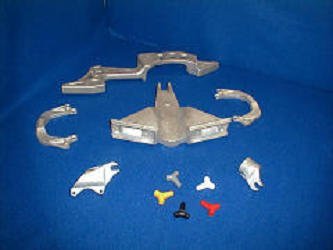
Hliníkové díly pro letectví a kosmonautiku

Tlakové lití hliníku a jeho význam v leteckém průmyslu

hliníkové odlitky, formy na odlévání hliníku, tlakové lití hliníku, tlakové lití hliníku, společnosti zabývající se tlakovým litím, společnost zabývající se tlakovým litím

Hliníkové tlakové odlitky mají pozoruhodné využití v různých průmyslových odvětvích, zejména v leteckém a kosmickém průmyslu, kde má největší význam přesnost a špičkový standard. Tyto předměty se používají při výrobě malých i velkých součástí v leteckém průmyslu. Kromě toho se hliníkové odlitky pod tlakem používají jak v klíčovém vojenském, tak i v komerčním sektoru. Důvod je jednoduchý - jsou to cenově výhodná řešení a poskytují úžasné výsledky. Kromě nákladového efektu jsou díly vyrobené z tlakového lití hliníku navíc připraveny odolávat extrémním povětrnostním podmínkám a zvýšenému poškození. Dalším zásadním důvodem pro použití hliníkových výrobků v letadlech je to, že mouka je relativně cenově dostupná než jiné kovy, které se odlévají pod tlakem. Další, hliník má potenciál dostat se s jinými kovy, aby poskytl trvanlivost a mnohem flexibilnější. S hliníkovými odlitky nemusíte dělat kompromisy ohledně standardu, přesto je můžete vyrábět za mnohem přijatelnější výrobní náklady. Dále, všechny normy, které byly stanoveny pro použití kovových součástí, hliník uvolnit potřebu na maximum. Proto jsou certifikované bezpečné pro použití v letadlech, cenově dostupné a mají všechny vlastnosti, které jsou potřebné pro létající plavidla. Odlévání hliníku je tedy na vzestupu jako nikdy předtím. Dále je špičkovou vlastností hliníkového tlakového odlitku to, že jeho hmotnost je příznivá pro práce v letadle. Jak se tedy vlastně odlévání hliníku provádí a jaké jsou s tím spojené procesy? Odpověď je jednoduchá. Hliníková slitina se nejprve vtlačí do špičkové oceli vysokou rychlostí a silou při vysoké teplotě. Výsledkem jsou nadstandardní výrobky, které jsou velmi lehké a tenkostěnné, ideální pro použití jako součásti letadel. Je třeba zmínit, že lití hliníku je náročná technika. Pouze skutečně zkušený a špičkový tým inženýrů může zajistit, že díly budou mít špičkové objemy nebo vynikající tolerance a povrchovou úpravu. Ve skutečnosti je tento typ silového lití mnohem známější než gravitační tlakové lití nebo lití do písku. Je to proto, že potřeba obrábění je u tohoto typu počasí pro zinkové nebo hliníkové odlitky extrémně nízká vzhledem k těsným tolerancím odlitků. Přestože náklady na nástroje při odlévání hliníku nebo spíše jakéhokoli kovu jsou podstatně vyšší než u ostatních dvou typů, mechanické vlastnosti, kterých se takto dosáhne, jsou z hlediska funkčnosti mnohem lepší.

Co je to upínací síla při tlakovém lití

A380 Hliníkové tlakové lití, formy na odlévání hliníku, tlakové lití hliníku, společnosti zabývající se tlakovým litím

Die Casting clamping force is the force applied to a mold by clamping unit of HPDC die casting machine. The clamping force must be grater their separating force. Which applied by the injection of molten metal into the mold The clamping fore > separating force How to calculate the separating force (opening force)? Opening force is the force acting on the cavity to make the die expand during the production of die casting part. The opening force can be calculated by the following formula: F=PXA F: opening force P: specific injection pressure A: Total projected area What is Specific injection pressure? Molten metal is ladled through the shot hole into the cold chamber and the shot plunger pushes the metal into the die. The pressure applied by plunger to push the metal into the die is specific injection pressure. Injection pressure use for different type of casting: For standard casting =600 kg/cm2 For technical casting =600−800 kg/cm2 For pressure testing casting =800 kg/cm2 What is projected area? The anticipated region is a two-dimensional zone estimation of a three-dimensional article by anticipating its shape on the plane. Total projected area =casting projected area + slide projected area + runner projected area + overflow projected area Example Casting projected areas =56000mm2 Overflow + runner projected area =22400mm2 (40% of total casting projected area ) Slide projected area=projected area must be selected in the plane that is normal to be direction of core travel x tanꬾ Angle of wedge = angle of finger cam angle + 2degree Force FY = F X Tan ꬾ ꬾ = angle of wedge lock Example: Slide core 1 projected area=area normal to direction of travel × tanꬾ =5000× tan20 degree =5000× 0.36 =1800 m2 Slide core 2 projected area=4500×tan 20degree= 1620mm2 so, Total projected area= 56000+22400+1800+1620mm2                                                                        =81820 mm2 What is separating force (Opening force)? (For technical casting=600−800 kg/cm2) (800 kg/cm2       =8kg/mm2) Opening force = specific pressure ×total projected area =8 kg/mm2 × 81820mm2 =654560 kg/mm2 (1 ton = 1000kg) =654.56 T Die clamping force The clamping force must be grater then the separating force. Locking force require =F×1.2 =654.56×1.2 =785.472 tons We select the 900T machine What is fill ratio, how it is important for selecting machine tonnage? It is the percent of liquid metal vulnerable chamber contrasted with the absolute volume of the virus chamber. Another method for saying it would be the level of metal contrasted with the level of air exposed to the harsh elements chamber For Example 50% full (of metal) = 50% air remaining The level of fill is significant in light of the fact that it is utilized to ascertain the ideal moderate shot speed. This can have a quality impact on the casting. Fill ratio (30-40%) is good for automobile die casting component quality.

Výrobní společnost pro tlakové lití

Proces tlakového lití krok za krokem

formy na odlévání hliníku, tlakové lití hliníku, tlakové lití, tlakové lití hliníku, společnosti zabývající se tlakovým litím, společnost zabývající se tlakovým litím, Výrobce tlakových odlitků

The climbing phase: The 1st step is to prepare the die halves for casting by cleaning the faces of each die then applying lubrication or release agent. Once the die has been prepared, the die halves are closed and clamped together with pressure applied from the die-cast machine. The clamping force will depend upon the size of the machine but must be more than the opposing force trying to open the die during the casting process. The injection phase: The ingots are added to the furnace and kept molten at a set temperature according to the metal being used. The molten metal is transferred to an injection chamber and injected into the closed die pressure ranging from 1000 to 20,000 psi. The pressure is maintained while the metal solidifies. The amount is injected into the die is known as the ‘shot’ The injection of metal into the die is very short, this ensures the metals do not start to solidify before the die is completely filled. The cooling phase: After the injection is complete, the molten metal needs to solidify before the die is opened. The cooling time will depend upon the part geometry as well as the metal thermodynamic properties. The wall thickness of the parts plays a big factor in the cooling time, the thicker the wall section the longer the cooling time required. The ejection phase: After the cooling time has elapsed, the two die halves can be opened. An ejection mechanism then pushes the solidified casting out of the die. The force of the ejection will be determined by the size of the part, bearing in mind, the part shrink during the cooling process and tends to stick to the die surface. Once the part has been ejected, the die can be closed ready for the next injection cycle. The trimming phase During the cooling and solidification phase, the casting will solidify as a complete cast unit which includes the part, flash, and any runner system This excess material must be trimmed off to leave just the main cast product. Method of trimming includes trim tools, band saw are manually clipping. Any trimmed metal is either scrapped or recycled if permitted. Advantages of die casting: Die casting is fast Die casting can be produced in seconds each part and quantities of hundreds to thousands of metal parts each day. Near net shape Die casting are produced “near net shapes” no matter how complex the shape are how tight the tolerances are. Lighter weights Die casting are stronger because of the material surface skin not the thickness of materials so parts can weigh less with thinner casting wall thicknesses. Die casting is versatile Many more part shapes and sizes can be produced using the die casting manufacturing process. Die casting are durable Die castings parts are metal and have a long service life. Die castings are inexpensive Die castings are fast to produce and useless material. Die casting are typically less expensive than most other metal parts manufacturing processes.    

Tlakové lití zinku

Výhodná výroba pro procesy tlakového lití zinku

tlakové lití hliníku, tlakové lití hliníku, společnosti zabývající se tlakovým litím, Tlakové lití zinku

The process of die casting with pressure injection can be followed until mid-1800. The components used were tin and lead, but the use has disappeared with the introduction of zinc and Aluminium alloys. This process has evolved over the years, from low-pressure injection molds to casting molds at pressures of up to 4,500 psi. The process can create high-quality products with excellent end surfaces. Die Casting is an economical and efficient process for making various shapes. Considered superior to other manufacturing techniques, it is durable and aesthetic and combines perfectly with other parts of the machine that are part thereof. Dying has many advantages. Among these, the main is its ability to produce complex forms with a higher tolerance level than other mass-production methods. Thousands of identical prints can be produced before you need to add new mold tools. High Die-pressure is a manufacturing process where aluminum that has been melted is injected by a casting machine under extreme pressure on steel or molds to make the design and detail parts of the model you want to make. Casting in tons of universal tightening. This record reflects the amount of pressure given on the matrix. The engine size varies from 400 to 4000 tons. There are many advantages to using the die casting process compared to others. Die casting produces parts with thinner walls, narrower size limits and processes can be accelerated. Labor costs and finishing are the lowest with the dice. This process facilitates to obtain intricate forms with narrower tolerances. Unlike the forgery process, you can insert the kernel into the product created by this process. Forms that cannot be obtained from rods or tubes can be easily achieved with casting. The number of operational processes is smaller, which leads to the reduction of waste materials. Die casting is used when you need a stable, dimensional and durable component. They withstand heat and maintain a good level of tolerance, an important condition for each part of a good machine. They are stronger and lighter than the part made by other printing methods. Its parts are not welded or screwed, which greatly increases its efficiency. Another advantage is the many workarounds that you can get with the launch. Surfaces can be smooth or textured, which facilitates the application and its use. Hopefully, this information can help you and thank you for reading the article about Zinc Die casting.

Tlakové lití hliníku

Čína Die Casting Service

tlakové lití hliníku, společnost zabývající se tlakovým litím, Výrobce tlakových odlitků, Tlakové lití zinku

Capacity To Meet Your Aluminum, Magnesium, Zinc and Vacuum Die Casting Needs. Aluminum Die Casting Providing high-quality Aluminum die casting parts at competitive prices requires modem die casting equipment. To reduce the effects that extreme cooling temperatures have on dies CNM TECH is converting its die cooling system from water to oil. Oil maintains a warmer die temperature that contributes to a more uniform casting and extends die life, an important factor in part costs. CNM TECH Die Casting company is adapting robotic controls to the operation of die casting machines. This permits a substantial increase in production rates, important in both controlling costs and meeting delivery requirements. It also allows us to use our people in ways which make better use of their skills and experience. To lower production costs, CNM TECH Die Casting manufacturer has developed and patented, new, low volume, energy efficient aluminum melting furnaces. Since aluminum can be melted efficiently in small quantities, it allows the company to supply casting machines with different alloys of aluminum simultaneously. Casting machines don’t have to stand to wait for a large furnace to supply the proper alloy. Schedules aren’t built around what alloy is in the furnace. Zinc Die Casting For applications where high impact strength, low cost and close dimensional limits are important design considerations, zinc die casting plays an important role. Zinc normally permits higher production rates than aluminum and parts can be designed with thinner cross-sections. The resulting parts are highly resistant to corrosion and receptive to a variety of beautiful finishes. High rates of production and uniform quality are maintained by die casting machines with automatic extractors. Vacuum Die Casting Vacuum die casting is preferred by many casting buyers because it results in a less porous part. CNM TECH’s Vert-a-Cast machines, with a clamping force of 400 tons, are capable of producing castings automatically at a much faster pace than manually-operated horizontal machines. Vacuum die casting, a CNM TECH capability for ten years, is often the only economical way to meet critical porosity specifications. Maintenance, repair, changes and corrections on dies are accomplished promptly in CNM TECH’s fully-equipped tool and die shop. Alloy materials are melted, fluxed and cleaned in the central furnace before being transferred to die casting equipment. If you have any die casting requirement, you are welcome to send us your requirement for a quotation.

Proces tlakového lití

tlakové lití hliníku, tlakové lití, společnosti zabývající se tlakovým litím, formy pro tlakové lití, díly pro tlakové lití, proces tlakového lití

Společnost CNM Die Casting je schopna nabízet různé odlitky včetně tlakového lití, investičního lití, lití do trvalých forem a lití do písku pro širokou škálu slitin, včetně všech slitin litých pod tlakem, mnoha slitin pro trvalé formy a mnoha hořčíkových slitin. Naše výrobní postupy byly na světovém trhu s odlitky přijaty jako rovnocenné nebo lepší než konvenční tlakové lití. Výhody procesu tlakového lití CNM Lepší kontrola rozměrů Zlepšené tolerance příčných dělících čar Snížení pórovitosti plynů Zlepšené vlastnosti vyvážení hotových rotačních dílů Použití vložek “odlévaných na místě” Lepší mechanické vlastnosti díky účinné modifikaci slitiny Lepší vlastnosti při opotřebení díky mikrostruktuře s menší velikostí zrn Lepší flexibilita, pokud jde o slitiny a typy odlitků Obrábění Obráběcí oddělení společnosti CNM Die Casting využívá koncepci pracovních buněk a vysokorychlostní flexibilní obráběcí zařízení k dokončení sekundárních operací na odlitcích CNM, takže díl nebo podsestava je připravena k instalaci, když opouští náš závod. Společnost CNM Die Casting se vyvíjela a agresivně reagovala na požadavky zákazníků na poskytování služeb vysokorychlostního obrábění a montáže bez počátečních kapitálových výdajů. Tím, že se do každého dílu započítává část nákladů na stávající zařízení, zákazník těží z rychlejšího sestavení a minimálních počátečních kapitálových výdajů. Společnost CNM Die Casting provozuje 8 strojů na tlakové lití, kompletní vlastní výrobu forem pro tlakové lití a CNC obrábění v zařízení o rozloze více než 20 000 čtverečních metrů v čínském DONGGUANU. Naše integrované výrobní kapacity spolu s více než 100 zaměstnanci nám umožňují být vaším komplexním servisem v oblasti tlakového lití a být trvale cenově konkurenceschopní při zachování vysokého standardu kvality. Níže je uvedeno srovnání procesů tlakového lití Kovy, které lze odlévat Min. a max. hmotnost, kg Tolerance na rozměr,% Povrchová úprava,µ m Min. velikost průřezu, mm Tah stupňů Rychlost výroby,ks/hod Min. jádrový otvor,mm Pórovitost Odlévání do písku Hliník Ocel CI a další 0,03, 100 0,10, 200, 000 0,03, 50, 000 0,09 až 0.03 4 8 8 3 6 3,5 4 až 7 10 až 15 6 5 Trvalé lití do forem Litina Al a Mg 0,01, 50 0,01, 10 0,01 min 2 5 3 2 50 4,5 až 6 6 6 4 Tlakové lití Al Mg Zn 0,015, 35 0,015, 35 0,05, 80 0,0015 0,0015 1 1 1 0,8 1.2 0,5 2 2 2 2 75 až 150 300 až 350 2,5 2,5 0,8 2 Přesné investiční lití Ocel Hliník 0,005, 25 0,002, 10 0,003, až 0,005 1 1 1 0,8 1 až 3 N/A 0,5 až 1,25 1 Skořepinové lití Ocel Litina Hliník 0.05, 120 0,03, 50 0,03, 15 0,01 až 0,003 6 6 2,5 3,5 3 1,5 2 až 3 30 až 80 3 až 6 1 Odstředivé lití Hliník Ocel Litina do 400 0,002 0,004 0,004 0,6 až 3,5 0,6 až 1,2 3 30 až 50 N/A 1 až

Výrobní společnost pro tlakové lití

tlakové lití hliníku, díly pro tlakové lití

CNM Die Casting is your one-stop, complete service Die Caster for various die casting parts including aluminum die casting, investment casting, sand casting. We offer you a single source for engineered die castings, together with cutting-edge engineering resources, advanced production capabilities and complete secondary finishing. CNM Die Casting supplies high-quality aluminum, zinc, brass and magnesium die castings. We operate our casting factory in DongGuan, China for various castings, machining, assembly and die building, with over 20,000 square feet of total floor space. We are a leader in innovative quality control systems. Our quality manufacturing system includes a process failure detection system at every casting press. Rigorous 100% inspection is as much a production operation as any other manufacturing step and is woven into the sequential standardized work to assure manufacturing quality in finishing and machining. As one of the divisions of CNM Manufacturing Group, CNM Die Casting can be more responsive to its customers and, simultaneously, offer more competitive, “made in China” pricing on quality products.   CNM Die Casting’s tooling department builds dies with state-of-the-art equipment. Along with our experienced engineering and tooling department, we design tooling and assist customers with casting design issues. Excellent control of design and tool building allows us to produce high quality tools and parts at lower cost, and more quickly than anyone else in the industry. Our Engineering and Tooling Department offers: Tool Engineers to ensure specifications and dimensional criteria are met to the customer’s requirements Design Engineers with the latest CAD/CAM technologies to design both product and tooling for the customer’s specification. Technical on-site product design assistance for die castings Production tooling built with CNC machines by in-house full capability large tooling facility state-of-the-art EDM machines rapidly burn cavities to near-finished condition with oscillating feed. Prototyping in the same tooling intended for production Production tools are built with premium grade materials

O službách odlévání kovů

tlakové lití hliníku, společnosti zabývající se tlakovým litím, díly pro tlakové lití, vysokotlaké lití, Odlévání hořčíku, Tlakové lití hořčíku, Tlakové lití zinku

Metal casting services involve the shaping of free-flowing liquid metals through the use of dies, molds, or patterns.  Castings are generally roughly finished due to the nature of their production.  In many cases, additional finishing is required to remove burrs and other artefacts of the casting process.  Metal castings services are used to design a wide range of components and finished products.  Everything from simple nails and fasteners to engine blocks can be fabricated using metal casting services.  Common metal casting processes include sand casting, die casting, permanent mold casting, investment casting, centrifugal casting, and lost foam casting. Sand Casting Sand casting is used to make large parts (typically iron, but also bronze, brass, aluminum). Molten metal is poured into a mold cavity formed out of sand (natural or synthetic). Sand castings generally have a rough surface, sometimes with surface impurities and surface variations. Die-casting includes a number of processes in which reusable dies or molds are used to produce casting.  The die contains an impression of the finished product together with it’s running, feeding and venting systems.  The die is capable of a regular cycle and of (quickly) dissipating the heat of the metal poured into it.  Once the liquid metal has cooled sufficiently, the mold is opened and the casting can be removed and finished. Permanent Mold Casting In permanent mold casting, molten metal is poured into cast iron molds, coated with a ceramic mold wash. Cores can be a metal, sand, sand shell, or other materials. When completed, the molds are opened and the castings are ejected.   Investment casting services involve molding patterns by the injection of a special wax into a metal die.  The patterns are assembled into a cluster around a wax runner system. The ‘tree’ of patterns is then coated with 8-10 layers of refractory material. The assembly is heated to remove the wax.  The hot mold is cast, and when cool, the mold material is removed by impact, vibration, grit blasting, high-pressure water blasting or chemical dissolution leaving the castings, which are then removed from the runner system. Centrifugal casting Centrifugal casting services are used to produce castings that are cylindrical in shape.  In centrifugal casting, a permanent mold is rotated about its axis at high speeds as the molten metal is poured. The molten metal is centrifugally thrown towards the inside mold wall, where it solidifies. The casting is usually a fine grain casting with a very fine-grained outer diameter, which is resistant to atmospheric corrosion, a typical need with pipes. The inside diameter has more impurities and inclusions, which can be machined away. Lost foam casting Lost foam casting (LFC) is metal casting services that use foam filled patterns to produce castings.  Foam is injected into a pattern, filling all areas, leaving no cavities.  When molten metal is injected into the pattern, the foam is burned off allowing the casting to take shape. Die casting Die casting and metal casting includes a number of processes in which reusable dies or molds are used to produce casting. The die is capable of a regular cycle and of (quickly) dissipating the heat of the metal poured into it. Once the liquid metal has cooled sufficiently, the mold or is opened and the casting can be removed and finished.   In the die casting process, molten metal is injected under pressure into a reusable mold or die. The die contains an impression of the casting together with it’s running, feeding and venting systems. The die is capable of a regular cycle and of (quickly) dissipating the heat of the metal poured into them. Once the liquid metal has cooled sufficiently, the mold or is opened and the metal casting can be removed and finished. high pressure die casting The high pressure die casting process is the most widely used, representing about 50% of all light alloy casting production. Low pressure die casting currently accounts for about 20% of production and its use is increasing. Gravity die casting accounts for the rest, with the exception of a small but growing contribution from the recently introduced vacuum die casting and squeeze casting process. the design of low pressure and gravity die casting dies for improved die filling, optimized solidification pattern and maximum yield. Gravity die-casting is suitable for mass production and for fully mechanized casting. Low-pressure die casting is especially suited to the production of components that are symmetric about an axis of rotation. Light automotive wheels are normally manufactured by this technique. Die casting metals can vary widely, and different die casting companies may have the ability to work with anyone or number of them. Some of the most common metal casting types include aluminum die casting, brass die casting, lead die casting (the most popular for model die casting), magnesium die casting, and zinc die casting. Hope all of that information is enough for your reference, but if you want to know more information, you are welcome to contact us by phone or email.

Co je gravitační lití

hliníkové odlitky, formy na odlévání hliníku, tlakové lití hliníku, tlakové lití, tlakové lití hliníku, společnosti zabývající se tlakovým litím, formy pro tlakové lití, díly pro tlakové lití, Gravitační odlévání, vstřikovací formy Čína, výroba vstřikovacích forem

Rozdíl mezi tlakovým litím hliníku a gravitačním litím Tlakové lití hliníku je víc než jen záminka k hraní si s roztaveným kovem, ve skutečnosti je to skvělý způsob, jak vytvářet umělecká díla a složité strojní zařízení nebo jiné předměty, které by jinak bylo téměř nemožné vyrobit. Tlakové lití hliníku je skutečně skvělý způsob, jak ušetřit peníze... a přitom si hrát s roztaveným kovem. Důvodem, proč hliníkové tlakové lití přežilo zkoušku časem, je otázka efektivity. Některé z nejstarších příkladů odlévání byly nalezeny v Číně a pocházejí z doby před tisíci a tisíci lety. Ve skutečnosti se odléváním hliníku zabývaly všechny významné civilizace od Egypťanů po Římany. Tato dovednost se vrátila do módy v období renesance a od té doby se dále rozvíjela a vyvíjela. Zatímco lití do písku je nejoblíbenějším procesem odlévání, existuje mnoho a mnoho dalších postupů, které jsou k dispozici dvorním slévačům. Ne každý bude odlévat těžké kusy, jako jsou součásti motorů, nebo odlévat vlastní motocykly. Takže pro ty, kteří chtějí vyrábět pouze dekorativní kusy, nebudete používat stejný proces odlévání jako tito těžcí slévači. Umělci, kteří vytvářejí sochy nebo ozdoby v malém měřítku, a hobbyisté, kteří potřebují dekorativní nádech pro svůj model letadla nebo lodi, možná budou chtít zvážit použití gravitačního lití pro své potřeby. Co je gravitační lití Gravitační lití se zdá být užitečné zejména při práci s hliníkem a jinými lehkými slitinami. Základní myšlenka tohoto procesu odlévání je v podstatě přesně taková, jak napovídá název. Kov se do formy dostává působením gravitační síly. Většina ostatních postupů odlévání buď využívá přirozený rozdíl tlaku, jako je tomu u některých postupů odlévání do písku, nebo využívá nucený tlak, jako je tomu u odstředivého odlévání, aby se roztavený kov dostal do formy. Jedním z nejčastějších použití gravitačního lití je použití trvalých forem. Trvalá forma, nazývaná také matrice, je skutečně ekonomická pouze pro ty, kteří plánují používat stejnou formu mnohokrát a budou potřebovat udržet kvalitu na konstantní úrovni. Zatímco některé dočasné formy lze používat opakovaně, kvalita hotového výrobku začne časem trpět. U zápustkových forem zůstane kvalita stejná. Na zápustkové formy je třeba pohlížet jako na investici. Ano, budou dražší než jiné formy, nicméně přežijí levnější varianty forem. U trvalých forem se při jejich výrobě používá litina, ocel a další kovy. Při výrobě permanentních forem se používá gravitační lití s příjemnými výsledky. Gravitační odlévání se obvykle používá v případech, kdy je hotový výrobek založen spíše na vizuální než na strukturální stránce, což je důvod, proč je tato metoda oblíbená u umělců a dokonce i u některých šperkařů. Ztráta pevnosti je způsobena nedostatkem tlaku, který se při tomto procesu používá. Pro ty, kteří potřebují pevnost, ale přesto chtějí použít gravitační lití, bude třeba použít větší množství roztaveného kovu, což zvýší hmotnost. přejděte na https://www.aludiecasting.com/ a dozvíte se více o gravitačním lití Spoléhání se na gravitaci bude vyžadovat trpělivost, i když u větších výrobků bude potřeba. Pokud potřebujete pro své podnikání službu gravitačního lití nebo tlakového lití hliníku, hořčíku nebo zinku. Můžete nám poslat svůj požadavek na cenovou nabídku, stačí nám poslat návrh 3D dílu a váš požadavek, pak se můžete posadit a my tam uděláme zbytek za vás, pro spolupráci s námi se musíte postarat pouze o trh na vaší straně a my budeme vaše zázemí, abychom se postarali o dobu dodání, přepravu, kvalitu a technickou stránku.

Přejít nahoru

Získat nabídku