tlakové lití hliníku

Tloušťka stěny odlitků by měla být co nejkonzistentnější

tlakové lití hliníku

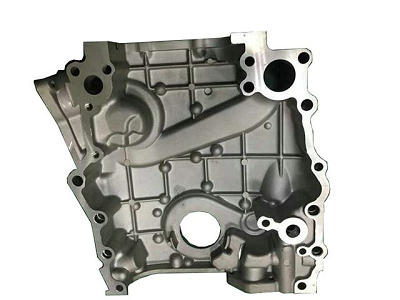
There are no hard and fast rules governing die casting parts wall thickness and consistency.  Inherent in the process is a wall section that possesses a dense fine-grained skin, 0.015-0.020 in. thick (0.4-0.5 mm).  The material between the surface skins tends to be less dense and large grained as a result of a longer solidification time.  This is where defects tend to congregate. Die casters have demonstrated the capability of casting 0.06-0.07 in. (1.5-1.8 mm) thick aluminum walls over large surface areas.  It is feasible to cast small areas as low as 0.04 in. (1 mm). Zinc alloys flow more readily, and can be cast to wall thickness as low as 0.03 in. (.75 mm) Magnesium alloys can be cast to wall thickness 0.035-0.045 in. (.89-1.14 mm) Wall sections should be as uniform as possible.  It is difficult to achieve uniform and rapid solidification of the alloy if the heat load varies from one location to another in the die.  Thinner walls contribute a lesser heat load than heavier walls and will have a longer die life. Intersections of walls, ribs and gussets should blend with transitions and generous radii Generous radii, outside corners, and transitions promote metal flow and internal integrity.  Radii and fillets also enhance structural integrity by reducing stress concentrations in the casting.  Additionally, fillets reduce heat concentration in both the die and castings.  Hot spots that result from sharp corners promote shrinkage voids in the casting. These hot spots also reduce die life at sharp corners in the die cavity steel. Standard draft should be specified Draft is highly desirable on surfaces parallel to the direction of die draw because it facilitates ejection by allowing the casting to release easily from the die surfaces.  The NADCA Product Standards recommendations for minimum draft should be specified. Sharp corners should be eliminated or minimized If sharp corners are required, they readily are accommodated at parting lines and at the junctions of die components.  Sharp corners should be broken with radii or chamfers. Undercuts should be avoided Undercuts should be avoided because they may require machining operations or additional die components, such as retractable core slides.  Slides increase the cost of die fabrication and maintenance.  They can also add to cycle time and manufacturing problems if they flash.  If possible, the component should be redesigned to eliminate undercuts.
Hliníkové díly pro letectví a kosmonautiku

Tlakové lití hliníku a jeho význam v leteckém průmyslu

hliníkové odlitky, formy na odlévání hliníku, tlakové lití hliníku, tlakové lití hliníku, společnosti zabývající se tlakovým litím, společnost zabývající se tlakovým litím

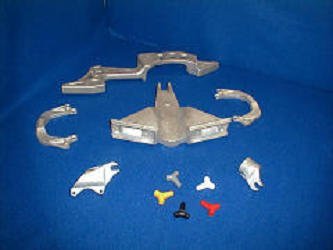
Aluminum die casting items are of remarkable use in different industry sectors and more so in the aerospace engineering where precision and top standard items is of greatest significance. These items are used in building both little as well as the big components in the aviation industry. Additional, die casting aluminum are used both in the pivotal military sector as well as commercial. The reason for this is easy – they are cost-friendly solutions and provide amazing outcomes. Apart from being cost effect, the parts made from die casting aluminum are additionally prepared to endure extreme weather situations and increased damages. Another vital reason for using aluminum products in aircraft is that the meal is comparatively affordable than other metals that are die casted. Additional,  aluminum has the potential to get with other metals in order to provide durability and much flexible. With aluminum casted products, you do not have to compromise on the standard yet can them at much affordable production cost. Further, all the standards that have been set for using of metal components, aluminum relax the need to the utmost. Hence, they are certified secure for use in planes, affordable and have all the qualities that are needed for flying crafts. So casting aluminum is on the boost like never before. Further, the top thing about an aluminum die cast part is that its weight is favorable for the aircraft works. So, how actually is casting Aluminum done and what are the processes involved? Well, the reply is simple. Aluminum alloy is first forced into a top-grade steel at high speed and force in a high temperature. This outcomes in superior standard products that are very light and thin walled perfect for use as aircraft components. It is to be mentioned here that Aluminum diet casting is a hard technique. Only a truly experienced and top standard team of engineers can make sure that the parts come with top volumes or with excellent tolerances and surface finish. Actually, this type of force casting is far more famous than gravity die casting or sand casting. This is because the need for machining is this type weather for Zinc or aluminum casting is extremely low due to the close casting tolerances. Though the tooling cost in casting Aluminum or rather any metal are considerably higher than the other 2 types yet, the mechanical properties achieved thus are far excellent in terms of functionality.

Co je to upínací síla při tlakovém lití

A380 Hliníkové tlakové lití, formy na odlévání hliníku, tlakové lití hliníku, společnosti zabývající se tlakovým litím

Die Casting clamping force is the force applied to a mold by clamping unit of HPDC die casting machine. The clamping force must be grater their separating force. Which applied by the injection of molten metal into the mold The clamping fore > separating force How to calculate the separating force (opening force)? Opening force is the force acting on the cavity to make the die expand during the production of die casting part. The opening force can be calculated by the following formula: F=PXA F: opening force P: specific injection pressure A: Total projected area What is Specific injection pressure? Molten metal is ladled through the shot hole into the cold chamber and the shot plunger pushes the metal into the die. The pressure applied by plunger to push the metal into the die is specific injection pressure. Injection pressure use for different type of casting: For standard casting =600 kg/cm2 For technical casting =600−800 kg/cm2 For pressure testing casting =800 kg/cm2 What is projected area? The anticipated region is a two-dimensional zone estimation of a three-dimensional article by anticipating its shape on the plane. Total projected area =casting projected area + slide projected area + runner projected area + overflow projected area Example Casting projected areas =56000mm2 Overflow + runner projected area =22400mm2 (40% of total casting projected area ) Slide projected area=projected area must be selected in the plane that is normal to be direction of core travel x tanꬾ Angle of wedge = angle of finger cam angle + 2degree Force FY = F X Tan ꬾ ꬾ = angle of wedge lock Example: Slide core 1 projected area=area normal to direction of travel × tanꬾ =5000× tan20 degree =5000× 0.36 =1800 m2 Slide core 2 projected area=4500×tan 20degree= 1620mm2 so, Total projected area= 56000+22400+1800+1620mm2                                                                        =81820 mm2 What is separating force (Opening force)? (For technical casting=600−800 kg/cm2) (800 kg/cm2       =8kg/mm2) Opening force = specific pressure ×total projected area =8 kg/mm2 × 81820mm2 =654560 kg/mm2 (1 ton = 1000kg) =654.56 T Die clamping force The clamping force must be grater then the separating force. Locking force require =F×1.2 =654.56×1.2 =785.472 tons We select the 900T machine What is fill ratio, how it is important for selecting machine tonnage? It is the percent of liquid metal vulnerable chamber contrasted with the absolute volume of the virus chamber. Another method for saying it would be the level of metal contrasted with the level of air exposed to the harsh elements chamber For Example 50% full (of metal) = 50% air remaining The level of fill is significant in light of the fact that it is utilized to ascertain the ideal moderate shot speed. This can have a quality impact on the casting. Fill ratio (30-40%) is good for automobile die casting component quality.

Výrobní společnost pro tlakové lití

Proces tlakového lití krok za krokem

formy na odlévání hliníku, tlakové lití hliníku, tlakové lití, tlakové lití hliníku, společnosti zabývající se tlakovým litím, společnost zabývající se tlakovým litím, Výrobce tlakových odlitků

The climbing phase: The 1st step is to prepare the die halves for casting by cleaning the faces of each die then applying lubrication or release agent. Once the die has been prepared, the die halves are closed and clamped together with pressure applied from the die-cast machine. The clamping force will depend upon the size of the machine but must be more than the opposing force trying to open the die during the casting process. The injection phase: The ingots are added to the furnace and kept molten at a set temperature according to the metal being used. The molten metal is transferred to an injection chamber and injected into the closed die pressure ranging from 1000 to 20,000 psi. The pressure is maintained while the metal solidifies. The amount is injected into the die is known as the ‘shot’ The injection of metal into the die is very short, this ensures the metals do not start to solidify before the die is completely filled. The cooling phase: After the injection is complete, the molten metal needs to solidify before the die is opened. The cooling time will depend upon the part geometry as well as the metal thermodynamic properties. The wall thickness of the parts plays a big factor in the cooling time, the thicker the wall section the longer the cooling time required. The ejection phase: After the cooling time has elapsed, the two die halves can be opened. An ejection mechanism then pushes the solidified casting out of the die. The force of the ejection will be determined by the size of the part, bearing in mind, the part shrink during the cooling process and tends to stick to the die surface. Once the part has been ejected, the die can be closed ready for the next injection cycle. The trimming phase During the cooling and solidification phase, the casting will solidify as a complete cast unit which includes the part, flash, and any runner system This excess material must be trimmed off to leave just the main cast product. Method of trimming includes trim tools, band saw are manually clipping. Any trimmed metal is either scrapped or recycled if permitted. Advantages of die casting: Die casting is fast Die casting can be produced in seconds each part and quantities of hundreds to thousands of metal parts each day. Near net shape Die casting are produced “near net shapes” no matter how complex the shape are how tight the tolerances are. Lighter weights Die casting are stronger because of the material surface skin not the thickness of materials so parts can weigh less with thinner casting wall thicknesses. Die casting is versatile Many more part shapes and sizes can be produced using the die casting manufacturing process. Die casting are durable Die castings parts are metal and have a long service life. Die castings are inexpensive Die castings are fast to produce and useless material. Die casting are typically less expensive than most other metal parts manufacturing processes.    

Tlakové lití zinku

Výhodná výroba pro procesy tlakového lití zinku

tlakové lití hliníku, tlakové lití hliníku, společnosti zabývající se tlakovým litím, Tlakové lití zinku

The process of die casting with pressure injection can be followed until mid-1800. The components used were tin and lead, but the use has disappeared with the introduction of zinc and Aluminium alloys. This process has evolved over the years, from low-pressure injection molds to casting molds at pressures of up to 4,500 psi. The process can create high-quality products with excellent end surfaces. Die Casting is an economical and efficient process for making various shapes. Considered superior to other manufacturing techniques, it is durable and aesthetic and combines perfectly with other parts of the machine that are part thereof. Dying has many advantages. Among these, the main is its ability to produce complex forms with a higher tolerance level than other mass-production methods. Thousands of identical prints can be produced before you need to add new mold tools. High Die-pressure is a manufacturing process where aluminum that has been melted is injected by a casting machine under extreme pressure on steel or molds to make the design and detail parts of the model you want to make. Casting in tons of universal tightening. This record reflects the amount of pressure given on the matrix. The engine size varies from 400 to 4000 tons. There are many advantages to using the die casting process compared to others. Die casting produces parts with thinner walls, narrower size limits and processes can be accelerated. Labor costs and finishing are the lowest with the dice. This process facilitates to obtain intricate forms with narrower tolerances. Unlike the forgery process, you can insert the kernel into the product created by this process. Forms that cannot be obtained from rods or tubes can be easily achieved with casting. The number of operational processes is smaller, which leads to the reduction of waste materials. Die casting is used when you need a stable, dimensional and durable component. They withstand heat and maintain a good level of tolerance, an important condition for each part of a good machine. They are stronger and lighter than the part made by other printing methods. Its parts are not welded or screwed, which greatly increases its efficiency. Another advantage is the many workarounds that you can get with the launch. Surfaces can be smooth or textured, which facilitates the application and its use. Hopefully, this information can help you and thank you for reading the article about Zinc Die casting.

Tlakové lití hliníku

Čína Die Casting Service

tlakové lití hliníku, společnost zabývající se tlakovým litím, Výrobce tlakových odlitků, Tlakové lití zinku

Capacity To Meet Your Aluminum, Magnesium, Zinc and Vacuum Die Casting Needs. Aluminum Die Casting Providing high-quality Aluminum die casting parts at competitive prices requires modem die casting equipment. To reduce the effects that extreme cooling temperatures have on dies CNM TECH is converting its die cooling system from water to oil. Oil maintains a warmer die temperature that contributes to a more uniform casting and extends die life, an important factor in part costs. CNM TECH Die Casting company is adapting robotic controls to the operation of die casting machines. This permits a substantial increase in production rates, important in both controlling costs and meeting delivery requirements. It also allows us to use our people in ways which make better use of their skills and experience. To lower production costs, CNM TECH Die Casting manufacturer has developed and patented, new, low volume, energy efficient aluminum melting furnaces. Since aluminum can be melted efficiently in small quantities, it allows the company to supply casting machines with different alloys of aluminum simultaneously. Casting machines don’t have to stand to wait for a large furnace to supply the proper alloy. Schedules aren’t built around what alloy is in the furnace. Zinc Die Casting For applications where high impact strength, low cost and close dimensional limits are important design considerations, zinc die casting plays an important role. Zinc normally permits higher production rates than aluminum and parts can be designed with thinner cross-sections. The resulting parts are highly resistant to corrosion and receptive to a variety of beautiful finishes. High rates of production and uniform quality are maintained by die casting machines with automatic extractors. Vacuum Die Casting Vacuum die casting is preferred by many casting buyers because it results in a less porous part. CNM TECH’s Vert-a-Cast machines, with a clamping force of 400 tons, are capable of producing castings automatically at a much faster pace than manually-operated horizontal machines. Vacuum die casting, a CNM TECH capability for ten years, is often the only economical way to meet critical porosity specifications. Maintenance, repair, changes and corrections on dies are accomplished promptly in CNM TECH’s fully-equipped tool and die shop. Alloy materials are melted, fluxed and cleaned in the central furnace before being transferred to die casting equipment. If you have any die casting requirement, you are welcome to send us your requirement for a quotation.

Proces tlakového lití

tlakové lití hliníku, tlakové lití, společnosti zabývající se tlakovým litím, formy pro tlakové lití, díly pro tlakové lití, proces tlakového lití

CNM Die Casting has the ability to offer various castings including die casting, investment casting, permanent mould casting, and sand casting for a wide range of alloys, including all die-cast alloys, many permanent mold alloys, and many magnesium alloys. Our manufacturing processes have been accepted by the world casting market as equal or superior to conventional die casting. Benefits of the CNM Die Casting Process Better dimensional control Improved cross parting line tolerances Reduction in gas porosity Improved balance properties of finished rotating parts Use of “cast-in-place” inserts Improved mechanical properties due to effective alloy modification Better wear properties due to smaller grain size microstructure Improved flexibility regarding alloys and types of castings Machining CNM Die Casting’s Machining Section utilizes the work cell concept and high-speed flexible machining equipment to complete secondary operations to CNM’s castings so that a part or subassembly is ready to install when it leaves our facility. CNM Die Casting has evolved and responded aggressively to customer demands for providing high-speed machining and assembly services without initial capital expenditures. By factoring a portion of the cost of the existing equipment into each part, the customer benefits from faster set-ups and minimal initial capital outlays. CNM Die Casting operates 8 die cast machines, complete in-house die casting mold making and CNC machining in an over 20,000-square-foot facility in DONGGUAN, China. Our integrated manufacturing capabilities, together with over 100 employees, allow us to be your One-Stop, complete service die caster, and be consistently price competitive, while also maintaining a high standard of quality.   Below are Comparison of die casting processes Metals that can be cast Min.and Max mass, kg Tolerance on dim.,% Surface finish,µ m Min. section size, mm Draft deg Production rate,pcs/hr Min. cored hole,mm Porosity Sand Casting Aluminium Steel CI and others 0.03, 100 0.10, 200, 000 0.03, 50, 000 0.09 to 0.03 4 8 8 3 6 3.5 4 to 7 10 to 15 6 5 Permanent Mould Casting Cast iron Al and Mg 0.01, 50 0.01, 10 0.01 min 2 5 3 2 50 4.5 to 6 6 4 Die Casting Al Mg Zn 0.015, 35 0.015, 35 0.05, 80 0.0015 0.0015 1 1 1 0.8 1.2 0.5 2 2 2 75 to 150 300 to 350 2.5 2.5 0.8 2 Precision Investment Casting Steel Aluminium 0.005, 25 0.002, 10 0.003, to 0.005 1 1 1 0.8 1 to 3   N/A 0.5 to 1.25 1 Shell moulding Steel Cast iron Aluminium 0.05, 120 0.03, 50 0.03, 15 0.01 to 0.003 6 6 2.5 3.5 3 1.5 2 to 3 30 to 80 3 to 6 1 Centrifugal casting Aluminium Steel Cast iron up to 400 0.002 0.004 0.004 0.6 to 3.5 0.6 to 1.2 3 30 to 50  N/A 1 to

Výrobní společnost pro tlakové lití

tlakové lití hliníku, díly pro tlakové lití

CNM Die Casting is your one-stop, complete service Die Caster for various die casting parts including aluminum die casting, investment casting, sand casting. We offer you a single source for engineered die castings, together with cutting-edge engineering resources, advanced production capabilities and complete secondary finishing. CNM Die Casting supplies high-quality aluminum, zinc, brass and magnesium die castings. We operate our casting factory in DongGuan, China for various castings, machining, assembly and die building, with over 20,000 square feet of total floor space. We are a leader in innovative quality control systems. Our quality manufacturing system includes a process failure detection system at every casting press. Rigorous 100% inspection is as much a production operation as any other manufacturing step and is woven into the sequential standardized work to assure manufacturing quality in finishing and machining. As one of the divisions of CNM Manufacturing Group, CNM Die Casting can be more responsive to its customers and, simultaneously, offer more competitive, “made in China” pricing on quality products.   CNM Die Casting’s tooling department builds dies with state-of-the-art equipment. Along with our experienced engineering and tooling department, we design tooling and assist customers with casting design issues. Excellent control of design and tool building allows us to produce high quality tools and parts at lower cost, and more quickly than anyone else in the industry. Our Engineering and Tooling Department offers: Tool Engineers to ensure specifications and dimensional criteria are met to the customer’s requirements Design Engineers with the latest CAD/CAM technologies to design both product and tooling for the customer’s specification. Technical on-site product design assistance for die castings Production tooling built with CNC machines by in-house full capability large tooling facility state-of-the-art EDM machines rapidly burn cavities to near-finished condition with oscillating feed. Prototyping in the same tooling intended for production Production tools are built with premium grade materials

O službách odlévání kovů

tlakové lití hliníku, společnosti zabývající se tlakovým litím, díly pro tlakové lití, vysokotlaké lití, Odlévání hořčíku, Tlakové lití hořčíku, Tlakové lití zinku

Metal casting services involve the shaping of free-flowing liquid metals through the use of dies, molds, or patterns.  Castings are generally roughly finished due to the nature of their production.  In many cases, additional finishing is required to remove burrs and other artefacts of the casting process.  Metal castings services are used to design a wide range of components and finished products.  Everything from simple nails and fasteners to engine blocks can be fabricated using metal casting services.  Common metal casting processes include sand casting, die casting, permanent mold casting, investment casting, centrifugal casting, and lost foam casting. Sand Casting Sand casting is used to make large parts (typically iron, but also bronze, brass, aluminum). Molten metal is poured into a mold cavity formed out of sand (natural or synthetic). Sand castings generally have a rough surface, sometimes with surface impurities and surface variations. Die-casting includes a number of processes in which reusable dies or molds are used to produce casting.  The die contains an impression of the finished product together with it’s running, feeding and venting systems.  The die is capable of a regular cycle and of (quickly) dissipating the heat of the metal poured into it.  Once the liquid metal has cooled sufficiently, the mold is opened and the casting can be removed and finished. Permanent Mold Casting In permanent mold casting, molten metal is poured into cast iron molds, coated with a ceramic mold wash. Cores can be a metal, sand, sand shell, or other materials. When completed, the molds are opened and the castings are ejected.   Investment casting services involve molding patterns by the injection of a special wax into a metal die.  The patterns are assembled into a cluster around a wax runner system. The ‘tree’ of patterns is then coated with 8-10 layers of refractory material. The assembly is heated to remove the wax.  The hot mold is cast, and when cool, the mold material is removed by impact, vibration, grit blasting, high-pressure water blasting or chemical dissolution leaving the castings, which are then removed from the runner system. Centrifugal casting Centrifugal casting services are used to produce castings that are cylindrical in shape.  In centrifugal casting, a permanent mold is rotated about its axis at high speeds as the molten metal is poured. The molten metal is centrifugally thrown towards the inside mold wall, where it solidifies. The casting is usually a fine grain casting with a very fine-grained outer diameter, which is resistant to atmospheric corrosion, a typical need with pipes. The inside diameter has more impurities and inclusions, which can be machined away. Lost foam casting Lost foam casting (LFC) is metal casting services that use foam filled patterns to produce castings.  Foam is injected into a pattern, filling all areas, leaving no cavities.  When molten metal is injected into the pattern, the foam is burned off allowing the casting to take shape. Die casting Die casting and metal casting includes a number of processes in which reusable dies or molds are used to produce casting. The die is capable of a regular cycle and of (quickly) dissipating the heat of the metal poured into it. Once the liquid metal has cooled sufficiently, the mold or is opened and the casting can be removed and finished.   In the die casting process, molten metal is injected under pressure into a reusable mold or die. The die contains an impression of the casting together with it’s running, feeding and venting systems. The die is capable of a regular cycle and of (quickly) dissipating the heat of the metal poured into them. Once the liquid metal has cooled sufficiently, the mold or is opened and the metal casting can be removed and finished. high pressure die casting The high pressure die casting process is the most widely used, representing about 50% of all light alloy casting production. Low pressure die casting currently accounts for about 20% of production and its use is increasing. Gravity die casting accounts for the rest, with the exception of a small but growing contribution from the recently introduced vacuum die casting and squeeze casting process. the design of low pressure and gravity die casting dies for improved die filling, optimized solidification pattern and maximum yield. Gravity die-casting is suitable for mass production and for fully mechanized casting. Low-pressure die casting is especially suited to the production of components that are symmetric about an axis of rotation. Light automotive wheels are normally manufactured by this technique. Die casting metals can vary widely, and different die casting companies may have the ability to work with anyone or number of them. Some of the most common metal casting types include aluminum die casting, brass die casting, lead die casting (the most popular for model die casting), magnesium die casting, and zinc die casting. Hope all of that information is enough for your reference, but if you want to know more information, you are welcome to contact us by phone or email.

Co je gravitační lití

hliníkové odlitky, formy na odlévání hliníku, tlakové lití hliníku, tlakové lití, tlakové lití hliníku, společnosti zabývající se tlakovým litím, formy pro tlakové lití, díly pro tlakové lití, Gravitační odlévání, vstřikovací formy Čína, výroba vstřikovacích forem

Different Between Aluminum Die Casting and Gravity Casting Aluminium Die Casting is more than just an excuse to play with the molten metal it is actually a great way to create art and complicated pieces of machinery or other items that would otherwise be nearly impossible to make. Aluminum die Casting is really a great way to save money…while playing with molten metal. The reason that aluminum die Casting has survived the test of time is a matter of efficiency. Some of the earliest casting examples have been found in China dating back thousands and thousands of years. In fact, every major civilization from the Egyptians to the Romans practised aluminum casting. This skill came back into vogue during the Renaissance and has continued to advance and evolve from there. While Sand Casting is the most popular casting process there are many, many more processes available to the backyard foundries. Not everyone is going to be casting heavy pieces like engine parts or cast their own motorcycles. So for those that just want to make decorative pieces, you will not be using the same casting process as these heavy duty casters.  For artists creating small scale statues or embellishes and for hobbyists that need a decorative touch to their model plane or boat might want to consider using gravity casting for their needs. What is Gravity Casting Gravity Casting seems to be especially useful when dealing with aluminum and other light alloys. The basic idea behind this casting process is pretty much exactly what the name suggests. The metal is introduced into the mold by the force of gravity. Most other casting process either use natural pressure difference like the kind in certain sand casting procedures or they use forced pressure like in centrifugal casting to get the molten metal into the mold. One of the most common uses for gravity casting is when permanent molds are going to be used. Also called a die, the permanent mold is really only economical for those planning on using the same mold numerous times and will need to keep the quality at a constant level. While some temporary molds can be repeatedly used the quality of the finished product will begin to suffer over time. With die molds the quality will remain the same. Die molds should be seen as an investment. Yes, they will be more costly than other molds; however, they will outlast cheaper options for molds. With Permanent molds, they are created using cast iron, steel, and other metals. Gravity casting is used for the permanent mold process with pleasing results. Gravity casting is usually used when the finished product is more visually based then structurally based which is why this method is a favourite of artists and even some jewellers. The loss of strength is due to the lack of pressure used in this process. For those that need the strength but still want to use gravity casting, more of the molten metal will need to be used which will increase the weight. go to https://www.aludiecasting.com/ to know more about gravity casting Relying on gravity will take patience, although it will be needed for larger products. If you need gravity casting or aluminum die casting, magnesium die casting or zinc die casting service for your business. You are welcome to send us your requirement for quote, you only need to send us your 3D part design and your requirement, then you can sit back and we will do there rest for you, to work with us you only need to take care of the market at your side, and we will be your back up to take care of lead time, shipment, quality and technical.

Přejít nahoru

Získat nabídku