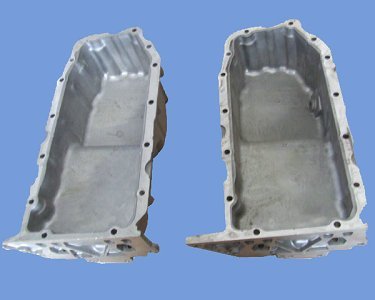
Tlakové lití zinku

Díly pro tlakové lití zinku

Tlakové lití ze zinkové slitiny Zamak 3 Zamak 5

hliníkové odlitky, Zamak 2 tlakové lití, Zámek 3, Zamak 3 tlakové lití, Zámek 5, Zamak 5 tlakové lití, Zamak tlakové lití, tlakové lití ze zinkové slitiny, Tlakové lití zinku

Zinkové tlakové lití Popis : Pro naše zinkové tlakové lití používáme čtyři nejkvalitnější zinkové slitiny - Zamak 3, Zamak 5, ZA-8 a Zamak 2 - protože nabízejí jedinečné výhody pro vytváření vysoce přesných tlakových odlitků. Zamak 3: Zamak 3, nejoblíbenější zinková slitina, se vyznačuje výjimečnou tažností a rázovou houževnatostí. Zamak 5: Zamak 5, který se obvykle používá v automobilovém průmyslu a pro malé motory, vykazuje vynikající odolnost proti tečení, tvrdost a pevnost. Tlakové odlitky ze zamaku 3 nebo 5? Pro všechny naše zinkové tlakové odlitky používáme zinkovou slitinu Zamak-3 nebo Zamak-5. Speciální. Slitiny se vyrábějí v našem plně automatickém vlastním oddělení slévání zinku, kde vyrábíme všechny druhy zinkových slitin pro tlakové lití. Naše denní kapacita slévání zinku je 16 metrických tun. Každý žár slitiny je testován počítačovým spektrometrem na metalurgické složení. Rádi vám vypracujeme cenovou nabídku na vaše požadavky na levné velkoobjemové malé přesné zinkové komponenty pro tlakové lití s hmotností v rozmezí od 0,25 gms do 125 gms. Specializujeme se na vzácnou kombinaci obojího - přesných rozměrů a dekorativní povrchové úpravy ZA-8: Ještě pevnější než Zamak 3 a 5, ZA-zamak8 je ideální volbou pro projekty odlévání do horké komory. Dobře se hodí i pro více možností pokovení a povrchové úpravy. Zamak 2: V porovnání s ostatními slitinami Zamak nabízí Zamak 2 vyšší tečení a dlouhodobou pevnost a tvrdost. Slouží jako vynikající ložiskový materiál a je známo, že eliminuje potřebu pouzder a opotřebitelných vložek v součástkách pro tlakové lití. Zamak 3, Zamak 5, ZA-8 a Zamak 2 se dobře hodí pro tlakové lití díky své schopnosti: - Vyrábět velmi tenké stěny a tvary blízké čistému tvaru - Dosahovat vysoké úrovně přesnosti - Nabízet teplotní flexibilitu až do 150° F - Poskytovat spolehlivost s vynikajícími ložiskovými vlastnostmi - Vykazovat zvýšenou odolnost proti opotřebení Zašlete nám prosím buď vaše vzorky, výkres a další podrobnosti a my vám okamžitě zašleme naši cenovou nabídku.

Tlakové lití zinku

Výhodná výroba pro procesy tlakového lití zinku

tlakové lití hliníku, tlakové lití hliníku, společnosti zabývající se tlakovým litím, Tlakové lití zinku

The process of die casting with pressure injection can be followed until mid-1800. The components used were tin and lead, but the use has disappeared with the introduction of zinc and Aluminium alloys. This process has evolved over the years, from low-pressure injection molds to casting molds at pressures of up to 4,500 psi. The process can create high-quality products with excellent end surfaces. Die Casting is an economical and efficient process for making various shapes. Considered superior to other manufacturing techniques, it is durable and aesthetic and combines perfectly with other parts of the machine that are part thereof. Dying has many advantages. Among these, the main is its ability to produce complex forms with a higher tolerance level than other mass-production methods. Thousands of identical prints can be produced before you need to add new mold tools. High Die-pressure is a manufacturing process where aluminum that has been melted is injected by a casting machine under extreme pressure on steel or molds to make the design and detail parts of the model you want to make. Casting in tons of universal tightening. This record reflects the amount of pressure given on the matrix. The engine size varies from 400 to 4000 tons. There are many advantages to using the die casting process compared to others. Die casting produces parts with thinner walls, narrower size limits and processes can be accelerated. Labor costs and finishing are the lowest with the dice. This process facilitates to obtain intricate forms with narrower tolerances. Unlike the forgery process, you can insert the kernel into the product created by this process. Forms that cannot be obtained from rods or tubes can be easily achieved with casting. The number of operational processes is smaller, which leads to the reduction of waste materials. Die casting is used when you need a stable, dimensional and durable component. They withstand heat and maintain a good level of tolerance, an important condition for each part of a good machine. They are stronger and lighter than the part made by other printing methods. Its parts are not welded or screwed, which greatly increases its efficiency. Another advantage is the many workarounds that you can get with the launch. Surfaces can be smooth or textured, which facilitates the application and its use. Hopefully, this information can help you and thank you for reading the article about Zinc Die casting.

Co je zinkové tlakové lití Zamak

společnost zabývající se tlakovým litím, Výrobce tlakových odlitků, díly pro tlakové lití, výrobky pro tlakové lití, Tlakové lití zinku

Zinc die casting Parts is referred to as the hot-chamber process. It is the method by which zinc (zamak) is heated under high temperatures and the molten material forced into a zinc die casting mold under high pressure to produce product with a similar shape as the die. As the metal moves through the die, air escapes through the vents. Once the die is full, the high pressure is maintained until it solidifies and the die is separated to release the finished zinc cast. After casting, no further modification is usually required. Use of Zinc Die Casting Zinc (zamak) is known for its high strength, accuracy, ductility, ease of casting, high thermal and electrical conductivity, and long life. As such, the zinc die casting is applied in the manufacture of high quality industrial and building materials. Die casting started in the automotive industry and it is still widely used in the manufacture of automotive components. The door locks casing, pulley, and the camshaft are some of the car parts that are made of zinc casting. In the construction industry, zinc die casting is utilized in the manufacture of components such as door knobs, faucets, and roofing. On the other hand, there are many zinc casting machine parts, such as electrical fittings. Zinc Die Casting Process Zinc is cast using the hot-chamber process due to its low melting temperatures. Cold chamber process is applied in the casting of metals with high melting temperatures such as the aluminium. The zinc die casting process involves the preparation of the metal, die preparation, and finishing. It commences with the preparation of the die followed by the metal. Notably, the die can be used once or severally depending on the component being manufactured. If it was used before, it should be lubricated to ease the removal of the cast metal. Afterwards, the ejector die half and the cover die half are screwed. The cover die half has a sprue through which the molten metal is injected while the ejector die has ejector pins for removing the castings. Preparation of the die is followed by melting of the ZA or the ZAMALAK alloy on a furnace. The physical properties of the product dictates the choice of the alloy. Due to metal hardness and strength, the furnace temperature is usually very high. The oxidized parts of the metal are removed at this stage to raise the purity of the finished product. Various chemicals can be added to improve physical properties of the finished alloy. Once the molten metal is prepared, it is injected into the feed system under high pressure. Most of the systems have several dies for efficiency and mass production. The raised pressure ensures that the molten zinc alloy gets into the mold as fast as possible, no air gets into the molten metal, and the expulsion of the air in the die through the vents. After filling the die, the pressure is raised further until the zinc alloy casting solidifies. The process also involves cooling using water. Then, the two dies are separated and the metal cast is removed. This is followed by the cleaning of the feed system to get rid of the flash. Further finishing can be carried out depending with the final use of the product. The runner that is removed from the final product and the flash are usually recycled.

Tlakové lití hliníku

Čína Die Casting Service

tlakové lití hliníku, společnost zabývající se tlakovým litím, Výrobce tlakových odlitků, Tlakové lití zinku

Capacity To Meet Your Aluminum, Magnesium, Zinc and Vacuum Die Casting Needs. Aluminum Die Casting Providing high-quality Aluminum die casting parts at competitive prices requires modem die casting equipment. To reduce the effects that extreme cooling temperatures have on dies CNM TECH is converting its die cooling system from water to oil. Oil maintains a warmer die temperature that contributes to a more uniform casting and extends die life, an important factor in part costs. CNM TECH Die Casting company is adapting robotic controls to the operation of die casting machines. This permits a substantial increase in production rates, important in both controlling costs and meeting delivery requirements. It also allows us to use our people in ways which make better use of their skills and experience. To lower production costs, CNM TECH Die Casting manufacturer has developed and patented, new, low volume, energy efficient aluminum melting furnaces. Since aluminum can be melted efficiently in small quantities, it allows the company to supply casting machines with different alloys of aluminum simultaneously. Casting machines don’t have to stand to wait for a large furnace to supply the proper alloy. Schedules aren’t built around what alloy is in the furnace. Zinc Die Casting For applications where high impact strength, low cost and close dimensional limits are important design considerations, zinc die casting plays an important role. Zinc normally permits higher production rates than aluminum and parts can be designed with thinner cross-sections. The resulting parts are highly resistant to corrosion and receptive to a variety of beautiful finishes. High rates of production and uniform quality are maintained by die casting machines with automatic extractors. Vacuum Die Casting Vacuum die casting is preferred by many casting buyers because it results in a less porous part. CNM TECH’s Vert-a-Cast machines, with a clamping force of 400 tons, are capable of producing castings automatically at a much faster pace than manually-operated horizontal machines. Vacuum die casting, a CNM TECH capability for ten years, is often the only economical way to meet critical porosity specifications. Maintenance, repair, changes and corrections on dies are accomplished promptly in CNM TECH’s fully-equipped tool and die shop. Alloy materials are melted, fluxed and cleaned in the central furnace before being transferred to die casting equipment. If you have any die casting requirement, you are welcome to send us your requirement for a quotation.

Tlakové lití dílů

Vysoce kvalitní díly pro tlakové lití

společnosti zabývající se tlakovým litím, společnost zabývající se tlakovým litím, Výrobce tlakových odlitků, díly pro tlakové lití, Tlakové lití zinku

Váš vysoce kvalitní zdroj hliníkových, hořčíkových a zinkových tlakových odlitků; opracované a dokončené, připravené k montáži. Společnost CNM Die Casting si stanovila za cíl kvalitu výrobků a během posledních deseti let se dostala na špičku ve svém oboru. Odběratelé tlakových odlitků se obracejí na společnost CNM TECH, aby jim pomohla omezit problémy se zmetkovitostí, se kterými se setkali u jiných dodavatelů dílů. Výrobce ventilů na zemní plyn zaznamenal zmetkovitost až 40%, dokud je neodlila společnost CNM TECH. Nyní jen velmi málo jejich dílů nesplňuje přísnou úroveň testování 100% na tlakové netěsnosti. Kvalita založená na inženýrských zkušenostech Ve společnosti CNM TECH Die Casting začíná kvalita zkušenou inženýrskou pomocí. Součástí služeb jsou konzultace ohledně návrhu dílů a výběru hliníkové slitiny. Někdy mohou drobné změny v konstrukci dílu zvýšit rychlost výroby a odstranit potenciální problémy s kvalitou. Konečným výsledkem je kvalitnější díl s nižšími jednotkovými náklady. Aby bylo jisté, že hotové díly pro tlakové lití splňují specifikace slitin, kontrolují se vstupní materiály i vzorky hotových výrobků na spektrometru Jarrell-Ash. Kvalita, která se pohybuje s výrobou, a ne pouze kontrola finálního dílu Výroba začíná po přijetí finálního návrhu dílu. Náš program kontroly kvality pak zahájí sérii kontrol, aby zjistil, zda byl díl vyroben v rámci stanovených tolerancí. Nejprve se testují slitiny, aby se zajistilo, že splňují specifikace našich zákazníků. Poté statistické vzorkování během procesů odlévání a obrábění poskytuje včasné varování před výrobními vadami a pomáhá předcházet výrobě vadných hotových dílů. Četnost kontrol lze předem stanovit podle požadavků na zakázku, abyste měli jistotu, že obdržené díly jsou díly, které můžete použít. Tři souřadnicové měřicí stroje (CMM) umožňují kontrolovat rozměry dokončených dílů podle specifikací uložených v počítači, aby bylo zajištěno, že přesnost byla zachována po celou dobu výroby. Na přání zákazníka lze také provést únavové zkoušky dokončených dílů v simulovaných provozních podmínkách. Ať už vaše specifikace vyžadují tlakovou těsnost, kritické rozměry a detaily nebo absenci podpovrchových diskontinuit, lidé z oddělení kontroly kvality společnosti CNM TECH mají pro tuto práci potřebné vybavení a školení. Pravidelný kontrolní program odlévacích a obráběcích zařízení nám pomáhá udržovat těsné tolerance. Zařízení, které je ve špičkovém provozním stavu, přináší našim zákazníkům výhody v podobě nižších nákladů i kratších dodacích lhůt. Pracovníci údržby v závodě mohou rychle odstranit problémy se stroji a zajistit plynulost výroby. Tento online katalog vás seznámí s našimi možnostmi a umožní vám krátkou prohlídku našeho zařízení. Více než 150 zaměstnanců sdílí náš zájem o včasné dodávky dílů připravených k montáži tlakovým litím a náš cíl usilovat o nejvyšší kvalitu. Inženýři společnosti CNM TECH jsou k dispozici pro konzultace v raných fázích návrhu, aby pomohli zajistit, že hotové díly splňují požadavky na tolerance a kvalitu a zároveň hospodárně využívají procesy tlakového lití. Rozměrový souřadnicový měřicí stroj se používá k měření odlitků podle stanovených tolerancí. Osvědčené, přísné techniky zajištění kvality používané u výrobce tlakových odlitků CNM TECH dokáží splnit nejnáročnější průmyslové normy.

O službách odlévání kovů

tlakové lití hliníku, společnosti zabývající se tlakovým litím, díly pro tlakové lití, vysokotlaké lití, Odlévání hořčíku, Tlakové lití hořčíku, Tlakové lití zinku

Metal casting services involve the shaping of free-flowing liquid metals through the use of dies, molds, or patterns.  Castings are generally roughly finished due to the nature of their production.  In many cases, additional finishing is required to remove burrs and other artefacts of the casting process.  Metal castings services are used to design a wide range of components and finished products.  Everything from simple nails and fasteners to engine blocks can be fabricated using metal casting services.  Common metal casting processes include sand casting, die casting, permanent mold casting, investment casting, centrifugal casting, and lost foam casting. Sand Casting Sand casting is used to make large parts (typically iron, but also bronze, brass, aluminum). Molten metal is poured into a mold cavity formed out of sand (natural or synthetic). Sand castings generally have a rough surface, sometimes with surface impurities and surface variations. Die-casting includes a number of processes in which reusable dies or molds are used to produce casting.  The die contains an impression of the finished product together with it’s running, feeding and venting systems.  The die is capable of a regular cycle and of (quickly) dissipating the heat of the metal poured into it.  Once the liquid metal has cooled sufficiently, the mold is opened and the casting can be removed and finished. Permanent Mold Casting In permanent mold casting, molten metal is poured into cast iron molds, coated with a ceramic mold wash. Cores can be a metal, sand, sand shell, or other materials. When completed, the molds are opened and the castings are ejected.   Investment casting services involve molding patterns by the injection of a special wax into a metal die.  The patterns are assembled into a cluster around a wax runner system. The ‘tree’ of patterns is then coated with 8-10 layers of refractory material. The assembly is heated to remove the wax.  The hot mold is cast, and when cool, the mold material is removed by impact, vibration, grit blasting, high-pressure water blasting or chemical dissolution leaving the castings, which are then removed from the runner system. Centrifugal casting Centrifugal casting services are used to produce castings that are cylindrical in shape.  In centrifugal casting, a permanent mold is rotated about its axis at high speeds as the molten metal is poured. The molten metal is centrifugally thrown towards the inside mold wall, where it solidifies. The casting is usually a fine grain casting with a very fine-grained outer diameter, which is resistant to atmospheric corrosion, a typical need with pipes. The inside diameter has more impurities and inclusions, which can be machined away. Lost foam casting Lost foam casting (LFC) is metal casting services that use foam filled patterns to produce castings.  Foam is injected into a pattern, filling all areas, leaving no cavities.  When molten metal is injected into the pattern, the foam is burned off allowing the casting to take shape. Die casting Die casting and metal casting includes a number of processes in which reusable dies or molds are used to produce casting. The die is capable of a regular cycle and of (quickly) dissipating the heat of the metal poured into it. Once the liquid metal has cooled sufficiently, the mold or is opened and the casting can be removed and finished.   In the die casting process, molten metal is injected under pressure into a reusable mold or die. The die contains an impression of the casting together with it’s running, feeding and venting systems. The die is capable of a regular cycle and of (quickly) dissipating the heat of the metal poured into them. Once the liquid metal has cooled sufficiently, the mold or is opened and the metal casting can be removed and finished. high pressure die casting The high pressure die casting process is the most widely used, representing about 50% of all light alloy casting production. Low pressure die casting currently accounts for about 20% of production and its use is increasing. Gravity die casting accounts for the rest, with the exception of a small but growing contribution from the recently introduced vacuum die casting and squeeze casting process. the design of low pressure and gravity die casting dies for improved die filling, optimized solidification pattern and maximum yield. Gravity die-casting is suitable for mass production and for fully mechanized casting. Low-pressure die casting is especially suited to the production of components that are symmetric about an axis of rotation. Light automotive wheels are normally manufactured by this technique. Die casting metals can vary widely, and different die casting companies may have the ability to work with anyone or number of them. Some of the most common metal casting types include aluminum die casting, brass die casting, lead die casting (the most popular for model die casting), magnesium die casting, and zinc die casting. Hope all of that information is enough for your reference, but if you want to know more information, you are welcome to contact us by phone or email.

Přejít nahoru

Získat nabídku