Co je zinkové tlakové lití Zamak

společnost zabývající se tlakovým litím, Výrobce tlakových odlitků, díly pro tlakové lití, výrobky pro tlakové lití, Tlakové lití zinku

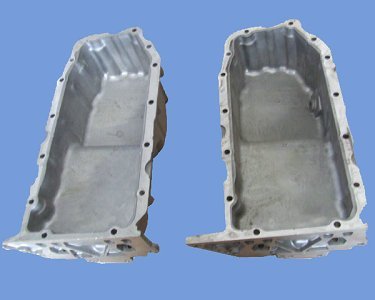
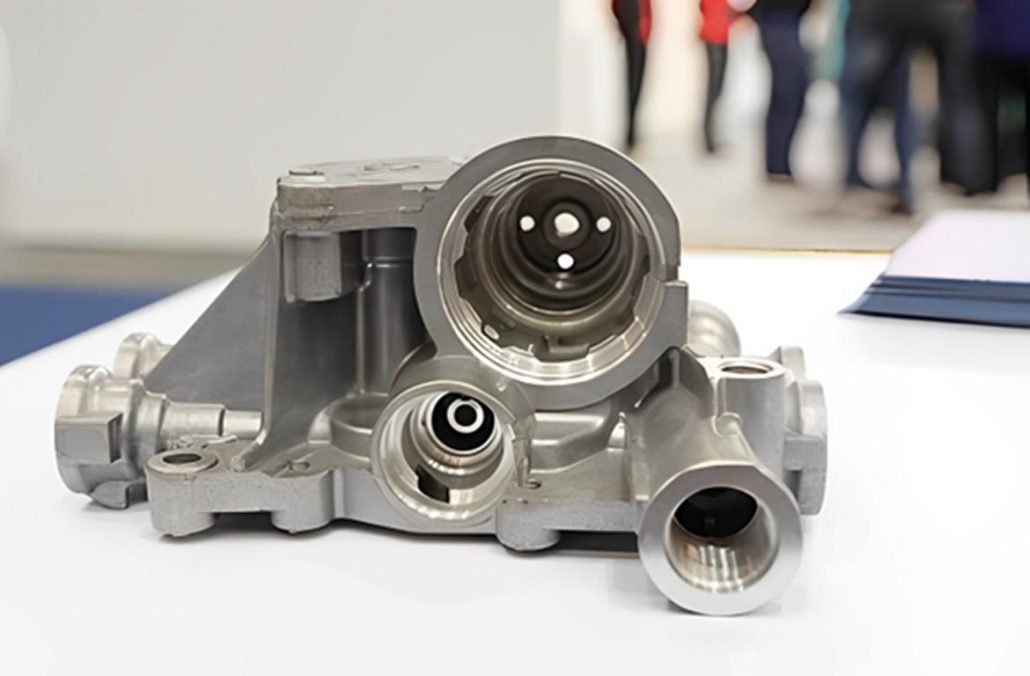
Zinc die casting Parts is referred to as the hot-chamber process. It is the method by which zinc (zamak) is heated under high temperatures and the molten material forced into a zinc die casting mold under high pressure to produce product with a similar shape as the die. As the metal moves through the die, air escapes through the vents. Once the die is full, the high pressure is maintained until it solidifies and the die is separated to release the finished zinc cast. After casting, no further modification is usually required. Use of Zinc Die Casting Zinc (zamak) is known for its high strength, accuracy, ductility, ease of casting, high thermal and electrical conductivity, and long life. As such, the zinc die casting is applied in the manufacture of high quality industrial and building materials. Die casting started in the automotive industry and it is still widely used in the manufacture of automotive components. The door locks casing, pulley, and the camshaft are some of the car parts that are made of zinc casting. In the construction industry, zinc die casting is utilized in the manufacture of components such as door knobs, faucets, and roofing. On the other hand, there are many zinc casting machine parts, such as electrical fittings. Zinc Die Casting Process Zinc is cast using the hot-chamber process due to its low melting temperatures. Cold chamber process is applied in the casting of metals with high melting temperatures such as the aluminium. The zinc die casting process involves the preparation of the metal, die preparation, and finishing. It commences with the preparation of the die followed by the metal. Notably, the die can be used once or severally depending on the component being manufactured. If it was used before, it should be lubricated to ease the removal of the cast metal. Afterwards, the ejector die half and the cover die half are screwed. The cover die half has a sprue through which the molten metal is injected while the ejector die has ejector pins for removing the castings. Preparation of the die is followed by melting of the ZA or the ZAMALAK alloy on a furnace. The physical properties of the product dictates the choice of the alloy. Due to metal hardness and strength, the furnace temperature is usually very high. The oxidized parts of the metal are removed at this stage to raise the purity of the finished product. Various chemicals can be added to improve physical properties of the finished alloy. Once the molten metal is prepared, it is injected into the feed system under high pressure. Most of the systems have several dies for efficiency and mass production. The raised pressure ensures that the molten zinc alloy gets into the mold as fast as possible, no air gets into the molten metal, and the expulsion of the air in the die through the vents. After filling the die, the pressure is raised further until the zinc alloy casting solidifies. The process also involves cooling using water. Then, the two dies are separated and the metal cast is removed. This is followed by the cleaning of the feed system to get rid of the flash. Further finishing can be carried out depending with the final use of the product. The runner that is removed from the final product and the flash are usually recycled.
Velkoobchodní výrobce hliníkových odlitků

Tlakové lití dílů

Výrobce tlakových odlitků, díly pro tlakové lití

Machining and Finishing Operations For Ready-To-Assemble Die Casting Parts. Over 20 years, CNM die casting company, Incorporated has provided high-quality aluminum, magnesium, and zinc die casting parts and services. CNM TECH specializes in the design, engineering, and production of complex die-cast parts in a broad range of sizes. Our experienced team of engineers, technicians, designers, machinists, finishers, and production staff excel at producing precision castings that are meticulously machined to tight tolerances, finished to customer specifications, and delivered ready for assembly. Regardless of quantity, part type, alloy, cast-and-trim to cosmetic finish, CNM TECH is a solution driven die-casting partner that works with you to produce the best possible products cost-effectively and efficiently. In order to supply ready-to-assemble component die casting parts, CNM TECH Die Casting manufacturer maintains a fully-equipped production machine shop. It’s staffed with machinists experienced in working with aluminum and zinc. Here, modern machine tools, supported by regular maintenance and a statistical process control program, can turn out production quantities of high-quality parts to meet your manufacturing schedules. CNM TECH has the capability of handling machining requirements where tolerances must be held to a few ten-thousandths of an inch and where production quality control records must be provided. CNM TECH also maintains close working relationships with local suppliers of a variety of finishing services such as plating, anodizing and painting. This assures you of a smooth flow of work through a single, responsible source and, at the same time, provides access to a wide variety of finishing options. Inventory capabilities to meet your just-in-time production needs. CNM TECH warehouses parts inventories for customers with just-in-time production schedules. Once a predetermined inventory level has been established, we can set manufacturing schedules to maintain the stock you require. Actual parts delivery is aided by our central location and easy access to interstate highways. Let’s talk about the difference that quality can make in your die casting parts. If you’re interested in lowering your current casting reject rate or if you feel your part quantities are reaching a volume that can justify die casting, please give us a call. We’ve invested a lot of ourselves in maintaining tight quality control standards and we’d like to put that investment to work for you. Finished parts can be packed to any specification for timely delivery anywhere in the country. CNM TECH’s location puts the entire upper Midwest within the overnight delivery time.  

Tlakové lití hliníku

Čína Die Casting Service

tlakové lití hliníku, společnost zabývající se tlakovým litím, Výrobce tlakových odlitků, Tlakové lití zinku

Capacity To Meet Your Aluminum, Magnesium, Zinc and Vacuum Die Casting Needs. Aluminum Die Casting Providing high-quality Aluminum die casting parts at competitive prices requires modem die casting equipment. To reduce the effects that extreme cooling temperatures have on dies CNM TECH is converting its die cooling system from water to oil. Oil maintains a warmer die temperature that contributes to a more uniform casting and extends die life, an important factor in part costs. CNM TECH Die Casting company is adapting robotic controls to the operation of die casting machines. This permits a substantial increase in production rates, important in both controlling costs and meeting delivery requirements. It also allows us to use our people in ways which make better use of their skills and experience. To lower production costs, CNM TECH Die Casting manufacturer has developed and patented, new, low volume, energy efficient aluminum melting furnaces. Since aluminum can be melted efficiently in small quantities, it allows the company to supply casting machines with different alloys of aluminum simultaneously. Casting machines don’t have to stand to wait for a large furnace to supply the proper alloy. Schedules aren’t built around what alloy is in the furnace. Zinc Die Casting For applications where high impact strength, low cost and close dimensional limits are important design considerations, zinc die casting plays an important role. Zinc normally permits higher production rates than aluminum and parts can be designed with thinner cross-sections. The resulting parts are highly resistant to corrosion and receptive to a variety of beautiful finishes. High rates of production and uniform quality are maintained by die casting machines with automatic extractors. Vacuum Die Casting Vacuum die casting is preferred by many casting buyers because it results in a less porous part. CNM TECH’s Vert-a-Cast machines, with a clamping force of 400 tons, are capable of producing castings automatically at a much faster pace than manually-operated horizontal machines. Vacuum die casting, a CNM TECH capability for ten years, is often the only economical way to meet critical porosity specifications. Maintenance, repair, changes and corrections on dies are accomplished promptly in CNM TECH’s fully-equipped tool and die shop. Alloy materials are melted, fluxed and cleaned in the central furnace before being transferred to die casting equipment. If you have any die casting requirement, you are welcome to send us your requirement for a quotation.

Tlakové lití dílů

Vysoce kvalitní díly pro tlakové lití

společnosti zabývající se tlakovým litím, společnost zabývající se tlakovým litím, Výrobce tlakových odlitků, díly pro tlakové lití, Tlakové lití zinku

Váš vysoce kvalitní zdroj hliníkových, hořčíkových a zinkových tlakových odlitků; opracované a dokončené, připravené k montáži. Společnost CNM Die Casting si stanovila za cíl kvalitu výrobků a během posledních deseti let se dostala na špičku ve svém oboru. Odběratelé tlakových odlitků se obracejí na společnost CNM TECH, aby jim pomohla omezit problémy se zmetkovitostí, se kterými se setkali u jiných dodavatelů dílů. Výrobce ventilů na zemní plyn zaznamenal zmetkovitost až 40%, dokud je neodlila společnost CNM TECH. Nyní jen velmi málo jejich dílů nesplňuje přísnou úroveň testování 100% na tlakové netěsnosti. Kvalita založená na inženýrských zkušenostech Ve společnosti CNM TECH Die Casting začíná kvalita zkušenou inženýrskou pomocí. Součástí služeb jsou konzultace ohledně návrhu dílů a výběru hliníkové slitiny. Někdy mohou drobné změny v konstrukci dílu zvýšit rychlost výroby a odstranit potenciální problémy s kvalitou. Konečným výsledkem je kvalitnější díl s nižšími jednotkovými náklady. Aby bylo jisté, že hotové díly pro tlakové lití splňují specifikace slitin, kontrolují se vstupní materiály i vzorky hotových výrobků na spektrometru Jarrell-Ash. Kvalita, která se pohybuje s výrobou, a ne pouze kontrola finálního dílu Výroba začíná po přijetí finálního návrhu dílu. Náš program kontroly kvality pak zahájí sérii kontrol, aby zjistil, zda byl díl vyroben v rámci stanovených tolerancí. Nejprve se testují slitiny, aby se zajistilo, že splňují specifikace našich zákazníků. Poté statistické vzorkování během procesů odlévání a obrábění poskytuje včasné varování před výrobními vadami a pomáhá předcházet výrobě vadných hotových dílů. Četnost kontrol lze předem stanovit podle požadavků na zakázku, abyste měli jistotu, že obdržené díly jsou díly, které můžete použít. Tři souřadnicové měřicí stroje (CMM) umožňují kontrolovat rozměry dokončených dílů podle specifikací uložených v počítači, aby bylo zajištěno, že přesnost byla zachována po celou dobu výroby. Na přání zákazníka lze také provést únavové zkoušky dokončených dílů v simulovaných provozních podmínkách. Ať už vaše specifikace vyžadují tlakovou těsnost, kritické rozměry a detaily nebo absenci podpovrchových diskontinuit, lidé z oddělení kontroly kvality společnosti CNM TECH mají pro tuto práci potřebné vybavení a školení. Pravidelný kontrolní program odlévacích a obráběcích zařízení nám pomáhá udržovat těsné tolerance. Zařízení, které je ve špičkovém provozním stavu, přináší našim zákazníkům výhody v podobě nižších nákladů i kratších dodacích lhůt. Pracovníci údržby v závodě mohou rychle odstranit problémy se stroji a zajistit plynulost výroby. Tento online katalog vás seznámí s našimi možnostmi a umožní vám krátkou prohlídku našeho zařízení. Více než 150 zaměstnanců sdílí náš zájem o včasné dodávky dílů připravených k montáži tlakovým litím a náš cíl usilovat o nejvyšší kvalitu. Inženýři společnosti CNM TECH jsou k dispozici pro konzultace v raných fázích návrhu, aby pomohli zajistit, že hotové díly splňují požadavky na tolerance a kvalitu a zároveň hospodárně využívají procesy tlakového lití. Rozměrový souřadnicový měřicí stroj se používá k měření odlitků podle stanovených tolerancí. Osvědčené, přísné techniky zajištění kvality používané u výrobce tlakových odlitků CNM TECH dokáží splnit nejnáročnější průmyslové normy.

Čína strojírenské stroje

Čína strojírenské stroje

In 2011, the competition in the hex bolt China engineering machinery market will be more intensely, on the basis of enhancing domestic enterprises’ self-confidence previously, the battle of Chinese engineering machinery market is bound to become fiercely, except the competition between domestic jaw crusher brands, the competition with foreign brands also will continue to upgrade with the pace of China local enterprises’ international development accelerating. China blow molding machine market has attracted international attention with its rapid development in 2010. Under the guidance of the state a series of correct measures, the bag making machine industry economic operation maintains steady and rapid growth; the main economic benefit indices are better. 2011 is the beginning year of the Twelfth Five Year, under the pressure of the state strengthening the macroeconomic regulation and the real estate industry’s control, the growth rate of engineering plastic valve industry will fall back significantly. Under the inflation pressure, the terminal sales of blow molding machine industry will be influenced to a certain degree. But these are not able to stop the engineering machinery market to go strong clip continuously, the signing of the indemnification house construction sign military order and the new investment upsurge of water conservancy construction have shored up Chinese engineering machinery market to a great extent. The major medium-sized PVC fitting enterprises have begun to expand their production capacity and market share in 2010, which has left hidden unsafety for the overcapacity of engineering slitting machine market in 2011 or even the future. The capacity expansion has promoted the demand for engineering machinery market tending to saturation; however, the increasing white hot of engineering machinery market has speeded up the pace of capacity expansion. If this situation is not improved, the continuous cycle certainly will result in overcapacity. As for the current development situation of Chinese engineering machinery market, the products such as excavators, cranes and concrete machinery have huge development potential, and the market is optimistic. Take the excavator industry as an example, enterprises such as Wuliangye, Rongan, Chery and Geely have turned around the excavator market. Such a large scale cross-industry restructuring, combined with the uneven brand degree, product performance and quality of engineering machinery market, it not only will impact the whole industry sales, but also will trigger a series of low-end overcapacity, and even lead to unfair competition in the industry. In addition, at the beginning of this year, from the recruitment situation all over the country, we can see that the talent shortage is particularly acute in construction machinery industry, especially the urgent need for high-end integrated talent, not a “labour shortage ” can be described. The labour costs rising and the raw material costs increase is certainly a challenge for engineering machines industry. Especially at present, many enterprises are facing that no matter how high wages they provide, they still can’t recruit much-needed talent. In 2011, the competition in engineering machinery market will be even more intense, under the situation of all kinds of risks, China construction machinery industry must have a long-term perspective, while occupying mainland market actively, it also should accelerate the pace of approaching overseas market, speed up energy saving pace, and find new opportunities for the transformation development of machinery enterprise constantly in crisis.

Proces tlakového lití

tlakové lití hliníku, tlakové lití, společnosti zabývající se tlakovým litím, formy pro tlakové lití, díly pro tlakové lití, proces tlakového lití

Společnost CNM Die Casting je schopna nabízet různé odlitky včetně tlakového lití, investičního lití, lití do trvalých forem a lití do písku pro širokou škálu slitin, včetně všech slitin litých pod tlakem, mnoha slitin pro trvalé formy a mnoha hořčíkových slitin. Naše výrobní postupy byly na světovém trhu s odlitky přijaty jako rovnocenné nebo lepší než konvenční tlakové lití. Výhody procesu tlakového lití CNM Lepší kontrola rozměrů Zlepšené tolerance příčných dělících čar Snížení pórovitosti plynů Zlepšené vlastnosti vyvážení hotových rotačních dílů Použití vložek “odlévaných na místě” Lepší mechanické vlastnosti díky účinné modifikaci slitiny Lepší vlastnosti při opotřebení díky mikrostruktuře s menší velikostí zrn Lepší flexibilita, pokud jde o slitiny a typy odlitků Obrábění Obráběcí oddělení společnosti CNM Die Casting využívá koncepci pracovních buněk a vysokorychlostní flexibilní obráběcí zařízení k dokončení sekundárních operací na odlitcích CNM, takže díl nebo podsestava je připravena k instalaci, když opouští náš závod. Společnost CNM Die Casting se vyvíjela a agresivně reagovala na požadavky zákazníků na poskytování služeb vysokorychlostního obrábění a montáže bez počátečních kapitálových výdajů. Tím, že se do každého dílu započítává část nákladů na stávající zařízení, zákazník těží z rychlejšího sestavení a minimálních počátečních kapitálových výdajů. Společnost CNM Die Casting provozuje 8 strojů na tlakové lití, kompletní vlastní výrobu forem pro tlakové lití a CNC obrábění v zařízení o rozloze více než 20 000 čtverečních metrů v čínském DONGGUANU. Naše integrované výrobní kapacity spolu s více než 100 zaměstnanci nám umožňují být vaším komplexním servisem v oblasti tlakového lití a být trvale cenově konkurenceschopní při zachování vysokého standardu kvality. Níže je uvedeno srovnání procesů tlakového lití Kovy, které lze odlévat Min. a max. hmotnost, kg Tolerance na rozměr,% Povrchová úprava,µ m Min. velikost průřezu, mm Tah stupňů Rychlost výroby,ks/hod Min. jádrový otvor,mm Pórovitost Odlévání do písku Hliník Ocel CI a další 0,03, 100 0,10, 200, 000 0,03, 50, 000 0,09 až 0.03 4 8 8 3 6 3,5 4 až 7 10 až 15 6 5 Trvalé lití do forem Litina Al a Mg 0,01, 50 0,01, 10 0,01 min 2 5 3 2 50 4,5 až 6 6 6 4 Tlakové lití Al Mg Zn 0,015, 35 0,015, 35 0,05, 80 0,0015 0,0015 1 1 1 0,8 1.2 0,5 2 2 2 2 75 až 150 300 až 350 2,5 2,5 0,8 2 Přesné investiční lití Ocel Hliník 0,005, 25 0,002, 10 0,003, až 0,005 1 1 1 0,8 1 až 3 N/A 0,5 až 1,25 1 Skořepinové lití Ocel Litina Hliník 0.05, 120 0,03, 50 0,03, 15 0,01 až 0,003 6 6 2,5 3,5 3 1,5 2 až 3 30 až 80 3 až 6 1 Odstředivé lití Hliník Ocel Litina do 400 0,002 0,004 0,004 0,6 až 3,5 0,6 až 1,2 3 30 až 50 N/A 1 až

Výrobní společnost pro tlakové lití

tlakové lití hliníku, díly pro tlakové lití

CNM Die Casting is your one-stop, complete service Die Caster for various die casting parts including aluminum die casting, investment casting, sand casting. We offer you a single source for engineered die castings, together with cutting-edge engineering resources, advanced production capabilities and complete secondary finishing. CNM Die Casting supplies high-quality aluminum, zinc, brass and magnesium die castings. We operate our casting factory in DongGuan, China for various castings, machining, assembly and die building, with over 20,000 square feet of total floor space. We are a leader in innovative quality control systems. Our quality manufacturing system includes a process failure detection system at every casting press. Rigorous 100% inspection is as much a production operation as any other manufacturing step and is woven into the sequential standardized work to assure manufacturing quality in finishing and machining. As one of the divisions of CNM Manufacturing Group, CNM Die Casting can be more responsive to its customers and, simultaneously, offer more competitive, “made in China” pricing on quality products.   CNM Die Casting’s tooling department builds dies with state-of-the-art equipment. Along with our experienced engineering and tooling department, we design tooling and assist customers with casting design issues. Excellent control of design and tool building allows us to produce high quality tools and parts at lower cost, and more quickly than anyone else in the industry. Our Engineering and Tooling Department offers: Tool Engineers to ensure specifications and dimensional criteria are met to the customer’s requirements Design Engineers with the latest CAD/CAM technologies to design both product and tooling for the customer’s specification. Technical on-site product design assistance for die castings Production tooling built with CNC machines by in-house full capability large tooling facility state-of-the-art EDM machines rapidly burn cavities to near-finished condition with oscillating feed. Prototyping in the same tooling intended for production Production tools are built with premium grade materials

O službách odlévání kovů

tlakové lití hliníku, společnosti zabývající se tlakovým litím, díly pro tlakové lití, vysokotlaké lití, Odlévání hořčíku, Tlakové lití hořčíku, Tlakové lití zinku

Metal casting services involve the shaping of free-flowing liquid metals through the use of dies, molds, or patterns.  Castings are generally roughly finished due to the nature of their production.  In many cases, additional finishing is required to remove burrs and other artefacts of the casting process.  Metal castings services are used to design a wide range of components and finished products.  Everything from simple nails and fasteners to engine blocks can be fabricated using metal casting services.  Common metal casting processes include sand casting, die casting, permanent mold casting, investment casting, centrifugal casting, and lost foam casting. Sand Casting Sand casting is used to make large parts (typically iron, but also bronze, brass, aluminum). Molten metal is poured into a mold cavity formed out of sand (natural or synthetic). Sand castings generally have a rough surface, sometimes with surface impurities and surface variations. Die-casting includes a number of processes in which reusable dies or molds are used to produce casting.  The die contains an impression of the finished product together with it’s running, feeding and venting systems.  The die is capable of a regular cycle and of (quickly) dissipating the heat of the metal poured into it.  Once the liquid metal has cooled sufficiently, the mold is opened and the casting can be removed and finished. Permanent Mold Casting In permanent mold casting, molten metal is poured into cast iron molds, coated with a ceramic mold wash. Cores can be a metal, sand, sand shell, or other materials. When completed, the molds are opened and the castings are ejected.   Investment casting services involve molding patterns by the injection of a special wax into a metal die.  The patterns are assembled into a cluster around a wax runner system. The ‘tree’ of patterns is then coated with 8-10 layers of refractory material. The assembly is heated to remove the wax.  The hot mold is cast, and when cool, the mold material is removed by impact, vibration, grit blasting, high-pressure water blasting or chemical dissolution leaving the castings, which are then removed from the runner system. Centrifugal casting Centrifugal casting services are used to produce castings that are cylindrical in shape.  In centrifugal casting, a permanent mold is rotated about its axis at high speeds as the molten metal is poured. The molten metal is centrifugally thrown towards the inside mold wall, where it solidifies. The casting is usually a fine grain casting with a very fine-grained outer diameter, which is resistant to atmospheric corrosion, a typical need with pipes. The inside diameter has more impurities and inclusions, which can be machined away. Lost foam casting Lost foam casting (LFC) is metal casting services that use foam filled patterns to produce castings.  Foam is injected into a pattern, filling all areas, leaving no cavities.  When molten metal is injected into the pattern, the foam is burned off allowing the casting to take shape. Die casting Die casting and metal casting includes a number of processes in which reusable dies or molds are used to produce casting. The die is capable of a regular cycle and of (quickly) dissipating the heat of the metal poured into it. Once the liquid metal has cooled sufficiently, the mold or is opened and the casting can be removed and finished.   In the die casting process, molten metal is injected under pressure into a reusable mold or die. The die contains an impression of the casting together with it’s running, feeding and venting systems. The die is capable of a regular cycle and of (quickly) dissipating the heat of the metal poured into them. Once the liquid metal has cooled sufficiently, the mold or is opened and the metal casting can be removed and finished. high pressure die casting The high pressure die casting process is the most widely used, representing about 50% of all light alloy casting production. Low pressure die casting currently accounts for about 20% of production and its use is increasing. Gravity die casting accounts for the rest, with the exception of a small but growing contribution from the recently introduced vacuum die casting and squeeze casting process. the design of low pressure and gravity die casting dies for improved die filling, optimized solidification pattern and maximum yield. Gravity die-casting is suitable for mass production and for fully mechanized casting. Low-pressure die casting is especially suited to the production of components that are symmetric about an axis of rotation. Light automotive wheels are normally manufactured by this technique. Die casting metals can vary widely, and different die casting companies may have the ability to work with anyone or number of them. Some of the most common metal casting types include aluminum die casting, brass die casting, lead die casting (the most popular for model die casting), magnesium die casting, and zinc die casting. Hope all of that information is enough for your reference, but if you want to know more information, you are welcome to contact us by phone or email.

Druckguss

hliníkové odlitky

Druckguss-Was ist Druckguss Druckgießen ist eine weitverbreitete, nicht ausfahrbare Technik, bei der Metall unter hohem Druck in den Formhohlraum gedrückt wird. Druckgießformen, die als Matrizen bekannt sind, können wiederholt zur Herstellung von Gussstücken in verschiedenen Größen, Formen und Wandstärken verwendet werden. Die Formhohlräume sind mit komplizierten Designs entworfen, die es ermöglichen, komplexe Formen mit Genauigkeit, Oberflächengüte und Attraktivität herzustellen. In den frühen Tagen des Druckgusses wurde nur ein Niederdruck-Einspritzverfahren verwendet, aber heutzutage werden Hochdruck-Druckgusstechniken wie Squeeze Casting und halbfeste Druckgussverfahren verwendet, um mehr als 4500 Pfund pro Quadratzoll zu gießen. Anfangs waren nur Zinn und Blei die Kaste, aber jetzt müssen auch Magnesium, Kupfer und andere Legierungen mit diesem sehr beliebten Verfahren gegossen werden. Druckguss-Prozess Bei diesem Verfahren werden geschmolzenes Metall oder andere Materialien unter hohem Druck in die Hohlräume der Stahlform gedrückt. Dies sind zweiteilige Formen, die aus legiertem Werkzeugstahl hergestellt sind - Die Fixierwerkzeughälfte und die Ausstoßwerkzeughälfte. Die Matrize oder Form wird mit dem Eindruck der Komponente hergestellt, die gegossen werden soll. Es gibt vier Arten von Formen: Einzelner Hohlraum, um eine Komponente zu produzieren Mehrere Hohlräume zur Herstellung einer Anzahl von identischen Teilen Einheit sterben um verschiedene Teile auf einmal zu produzieren Kombinationen sterben, um mehrere verschiedene Teile für eine Montage herzustellen Das geschmolzene Metall wird unter hohem Druck und hoher Geschwindigkeit in die Form eingespritzt, was dazu beiträgt, ein Gussteil herzustellen, das glatt und genau wie die ursprüngliche Form ist. Das Druckgießen erfolgt durch Anwendung von Druck unter Verwendung eines Kompressors, wodurch Luftblasen aus dem Formgummi eliminiert werden. Der Druck wird auf der Form aufrechterhalten, bis das heiße Metall erstarrt. Wenn das Metall gehärtet ist, wird die Form geöffnet, um das Gussteil zu entfernen. Es gibt verschiedene Varianten des grundlegenden Prozesses, mit denen Gussteile für bestimmte Anwendungen hergestellt werden können. Diese beinhalten: Pressgießen - Ein Verfahren, bei dem geschmolzene Legierung ohne Turbulenz und Gaseinschluss bei hohem Druck gegossen wird, um qualitativ hochwertige, dichte, wärmebehandelbare Komponenten zu erhalten. Semi-Solid-Moulding - Ein Verfahren, bei dem halbfeste Metallblöcke gegossen werden, um dichte, wärmebehandelbare Gussstücke mit geringer Porosität bereitzustellen. Legierungen verwendet Beim Druckguss werden vorwiegend Aluminium-, Kupfer-, Blei-, Zink- und Zinnlegierungen eingesetzt. automatisierung In der heutigen Zeit werden hochentwickelte Druckgießmaschinen eingesetzt, die eine konsequente Qualitätskontrolle gewährleisten. Jeder maschinell bearbeitete Druckguss unterscheidet sich in dem Verfahren, bei dem geschmolzenes Metall in die Form gegossen wird. Automatisierungen werden verwendet, um Werkzeuge zu schmieren, das Metall in die Kammer zu gießen, usw. Zwei Verfahren, die als Heißkammer- und Kaltkammerverfahren bezeichnet werden, werden zum Druckgießen verwendet. anwendungen Druckguss eignet sich am besten zum Gießen von mittelgroßen Teilen mit komplexen Details. Druckguss ist die größte Gusstechnik, die zur Herstellung von Konsumgütern, gewerblichen und industriellen Produkten wie Automobilen, Spielzeug, Teilen von Spülen, Steckergehäusen, Zahnrädern usw. verwendet wird. Die meisten Druckgussstücke werden aus Nichteisenmetallen wie Aluminum Druckguss und Magnesium-Druckguss hergestellt , etc. Vorteile Ein wirtschaftlicher Prozess, der für eine breite Palette komplexer Anwendungen eingesetzt werden kann Teile haben eine längere Lebensdauer, Maßgenauigkeit und enge Toleranz Die Nachbearbeitung kann vollständig entfallen Ein Prozess, der vollständig automatisiert werden kann Form kann auch wiederholt verwendet werden.Nachteile Das Wurfgewicht muss zwischen 30 Gramm liegen. Gießen muss kleiner als 600 mm sein Hohe Anschaffungskosten Begrenzt auf hoch fließfähige Metalle.

vysokotlaké lití dílů

Co je tlakové lití

tlakové lití

What is die casting Die casting is a manufacturing process for producing accurately dimension, sharply defined, smooth or textured-surface metal parts. It is accomplished by forcing molten metal under high pressure into reusable metal dies. The process is often described as the shortest distance between raw material and finished product. The term, “die casting,” is also used to describe the finished part. The term “gravity die casting” refers to castings made in metal molds under a gravity head. It is known as permanent mold casting in the U.S.A. and Canada. What we call “die casting” here is known as “high pressure die casting” in Europe. How are die castings produced First, a steel mold capable of producing tens of thousands of castings in rapid succession must be made in at least two sections to permit removal of castings. These sections are mounted securely in a machine and are arranged so that one is stationary (fixed die half) while the other is moveable (injector die half). To begin the casting cycle, the two die halves are clamped tightly together by the die casting machine. Molten metal is injected into the die cavity where it solidifies quickly. The die halves are drawn apart and the casting is ejected. Die casting dies can be simple or complex, having moveable slides, cores, or other sections depending on the complexity of the casting. The complete cycle of the die casting process is by far the fastest known for producing precise non-ferrous metal parts. This is in marked contrast to sand casting which requires a new sand mold for each casting. While the permanent mold process uses iron or steel molds instead of sand, it is considerably slower, and not as precise as die casting. Types of machines for die casting Regardless of the type of machine used, it is essential that die halves, cores and/or other moveable sections be securely locked in place during the casting cycle. Generally, the clamping force of the machine is governed by (a) the projected surface area of the casting (measured at the die parting line) and (b) the pressure used to inject metal into the die. Most machines use toggle type mechanisms actuated by hydraulic cylinders (sometimes air pressure) to achieve locking. Others use direct acting hydraulic pressure. Safety interlock systems are used to prevent the die from opening during the casting cycles. Die casting machines, large or small, very fundamentally only in the method used to inject molten metal into the die. These are classified and described as either hot or cold chamber die casting machines. Hot Chamber die casting machines Hot chamber machines (Fig.1) are used primarily for zinc, and low melting point alloys which do not readily attack and erode metal pots, cylinders and plungers. Advanced technology and development of new, higher temperature materials have extended the use of this equipment for magnesium alloy die casting. Figure 1: Hot Chamber Machine. Diagram illustrates the plunger mechanism which is submerged in molten metal. Modern machines are hydraulically operated and equipped with automatic cycling controls and safety devices. In the hot chamber machine, the injection mechanism is immersed in molten metal in a furnace attached to the machine. As the plunger is raised, a port opens allowing molten metal to fill the cylinder. As the plunger moves downward sealing the port, it forces molten metal through the gooseneck and nozzle into the die. After the metal has solidified, the plunger is withdrawn, the die opens, and the resulting casting is ejected. Hot chamber machines are rapid in operation. Cycle times vary from less than one second for small components weighing less than one ounce to thirty seconds for a casting of several pounds. Dies are filled quickly (normally between five and forty milliseconds) and metal is injected at high pressures (1,500 to over 4,500 psi). Nevertheless, modern technology gives close control over these values, thus producing castings with fine detail, close tolerances and high strength. Cold Chamber die casting machines Cold chamber machines (Fig. 2) differ from hot chamber machines primarily in one respect; the injection plunger and cylinder are not submerged in molten metal. The molten metal is poured into a “cold chamber” through a port or pouring slot by a hand or automatic ladle. A hydraulically operated plunger, advancing forward, seals the port forcing the metal into the locked die at high pressures. Injection pressures range from 3,000 to over 10,000 psi for both aluminum and magnesium alloys, and from 6,000 to over 15,000 psi for copper base alloys. Figure 2: Cold Chamber Machine. Diagram illustrates die, cold chamber and horizontal ram or plunger (in charging position). Die casting provides complex shapes within closer tolerances than many other mass production processes. In a cold chamber machine, more molten metal is poured into the chamber that is needed to fill the die cavity. This helps sustain sufficient pressure to pack the cavity solidly with casting alloy. Excess metal is ejected along with the casting and is part of the complete shot. Operation of a “cold chamber” machine is a little slower than a “hot chamber” machine because of the ladling operation. A cold chamber machine is used for high melting point die casting alloys because plunger and cylinder assemblies are less subject to attack since they are not submerged in molten metal. Die casting and their construction Die casting dies (Fig. 3) are made of alloy tool steels in at least two sections called fixed die half and ejector die half. The fixed die half is mounted on the side toward the molten metal injection system. The ejector die half, to which the die casting adheres, and from which it is ejected when the die is opened, is mounted on the moveable platen of the machine. The fixed die half of the die is designed to contain the sprue hole through which molten metal enters the die. The ejector half usually contains the runners (passageways) and gates (inlets) which route molten metal to the cavity (or cavities) of the die. The ejector

Přejít nahoru

Získat nabídku