tlakové lití zinku

Co je tlakové lití? Vše, co potřebujete vědět o odlévání kovů

Co je tlakové lití? Vše, co potřebujete vědět o odlévání kovů

tlakové lití

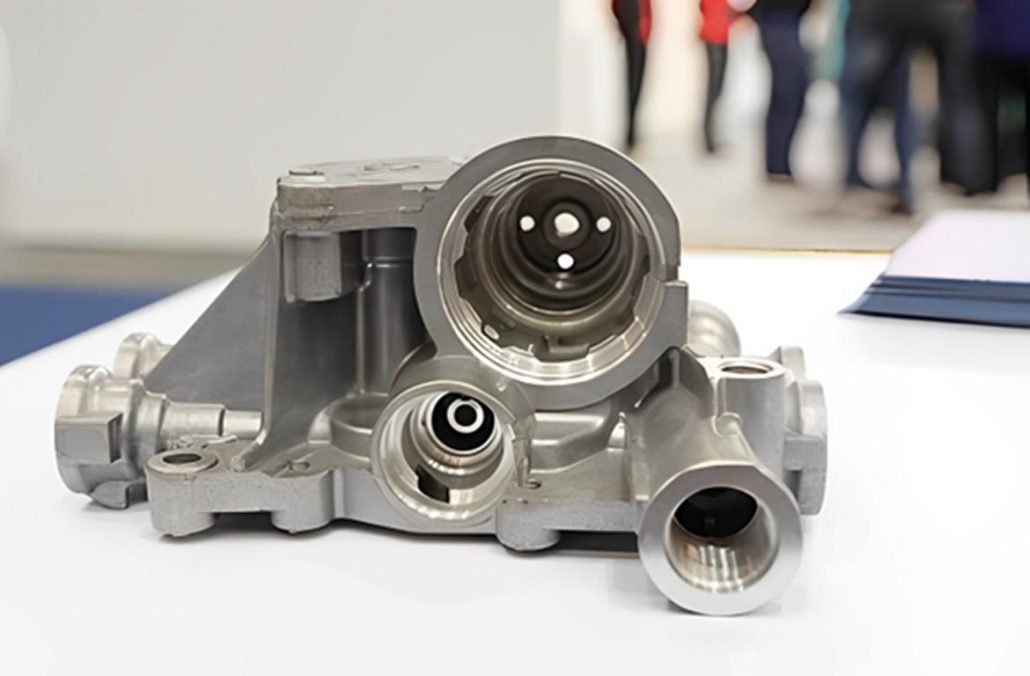
This is a manufacturing process in which molten metal is forced using pressure to fill a mold cavity also known as die casting. The mold is usually of high-quality steel and hence the part can be produced in large quantities the term is used to mean the manufacture of many parts. The finished part is then produced by opening the mold after the molten metal is cooled and forms a solid layer. This kind of use of the process is mostly applied in making intricate metal used in the production of different parts that require high accuracy in measurement and polished surfaces. Die casting can be done on aluminium, zinc, and magnesium but other metals can also be used on a case depending on application and other requirements. Die casting is considered to be one of the expert manufacturing techniques in the conception of mass production of small to medium-sized components out of metals. The popularity of the method has been spread across automotive, aerospace, electronics, and industrial machines due to its ability to produce durable lightweight intricately tailored parts. However, this process is widely recognized for its ability to manufacture products with complex geometry that would be very hard to make using conventional techniques. How Die Casting Works Molding is the first part of the die-casting process. On one side of the mold, there is a half, and it is a half of a particular design to make the mold shaped like the final product. Cavities and cores are designed for the molds that are usually custom-made so that the part can be replicated as closely as possible. 1. Molten Metal Injection: Then the molten metal is injected into the mold cavity under high pressure to form the desired shape. The metal is usually heated to one degree above the melting strain to make it fluid. In die casting, the pressure that the molten metal is pushed into the mold can be from several thousand to tens of thousands of psi (pounds per square inch), to be sure that the molten metal gets into every detail of the mold. 2. Solidification: This occurs when the metal is injected into the casing cavity whereby it cools and the metal hardens. The quality of the casting depends upon the cooling rate. Additional modes of failure (shear, climb, and glide) come into play in this case and result in faster cooling higher strength better surface finish, and slower cooling which could result in more internal defects and lower mechanical properties. Water-cooling systems built into the mold are usually used to assist the cooling process. 3. Ejection: Following this, the metal is allowed to cool and solidify and it is then easy to remove the mold from the larger casting and eject the part. Then most of the time is used in the pushing out part from the mold using a mechanical ejector system. This depends on the complexity of the part that requires other extra steps, namely trimming and machining to deliver the final shape and dimension. 4. Quality Control: A quality check is then performed on a part after ejection. It can involve dimensional verification, visual inspection, and mechanical testing to confirm that the part is equal to or better than the requirements. High precision and repeatability are theoretically achieved in die casting. Types of Die Casting There are two types of Die casting, they are hot chamber die casting and cold chamber die casting. These are all good and have their advantages, limitations and ideal applications. 1. Hot Chamber Die Casting The process most suitable for metals such as zinc, magnesium, and lead is a hot chamber die casting since the process is done at high temperatures, and melting points. The injection system is installed inside the melting furnace in this way, the metal is always in contact with the chamber. Advantages: Disadvantages: 2. Cold Chamber Die Casting The metals that have higher melting points like aluminium, brass and copper are cast in cold chamber die casting. In this case, the molten metal is tapped from a second furnace injected into the cold chamber then into the mold cavity. Advantages: Disadvantages: The Comparison of Die Casting Methods: Hot Chamber vs. Cold Chamber Here is a comparison of the most common types of two die-casting methods, Feature Hot Chamber Die Casting Cold Chamber Die Casting Metal Compatibility Best for low-melting-point metals (e.g., zinc, lead) Best for high-melting-point metals (e.g., aluminium, brass) Cycle Time Faster cycle times Slower cycle times Mold Wear Higher mold wear due to direct contact with molten metal Lower mold wear Cost Lower cost for high-volume production Higher initial cost, but better for high-strength metals Complexity of Parts Good for simpler parts Better for more complex, larger parts Advantages of Die Casting It is one of the largest advantages that die casting is one of the main preferred methods of large-scale production of products from metal alloys. 1. High Precision and Accuracy There are many advantages of die casting, which makes it convenient to offer high die precision. This method of production is also widely used for the production of parts, which requires good dimensional accuracy which is very crucial as it defines tolerance levels required in a specific job. One should note that die casting is the only manufacturing technique that can produce given parts with the utmost complexities such as the intricacies of its geometries.  2. High Production Rates In terms of large volumes, die casting is very efficient. Parts are quickly and cheaply produced once the first mold is created with very little labor involved. The demand for simulated powders is particularly high in industries like automotive and electronics where large volumes of the same parts are required. 3. Complex Designs and Thin Walls Complex design can be achieved by die casting, which would be difficult or impossible to achieve by traditional manufacturing methods. The process can make parts with thin walls, and complex internal structures, and can accommodate undercuts; thus making it the
Výběr správné společnosti pro tlakové lití slitin: Kompletní průvodce

Výběr správné společnosti pro tlakové lití slitin: Kompletní průvodce

tlakové lití hliníku, společnosti zabývající se tlakovým litím

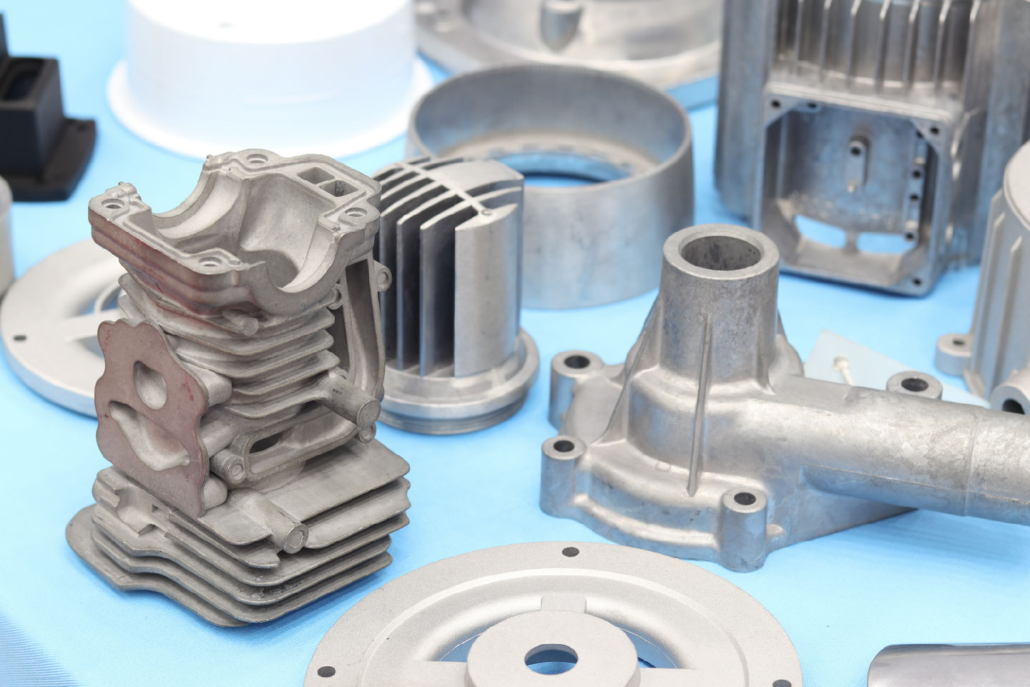
Alloy die casting is essential to the manufacturing industry because it relies heavily on high precision, durable, and cost-effective metal components. In a revolutionary impact on modern manufacturing, this process has made possible the mass production of intricate metal parts to a very high standard of accuracy and consistency. By specialized companies which as alloy die casting companies, in service industries which as automotive, aerospace, electronics, medical, and heavy machines for building tailor resultant metal components in their specific areas of needs. A professional alloy die casting company makes use of the latest technologies and high-quality materials coupled with a strict quality control process to deliver your products that suit industry standards. If choosing the right company matters, you may choose, one way or another, between a truly reliable product that will last for years and a faulty component that will fail early. The article gives you a detailed overview of Alloy die casting, emphasizing its importance, benefits and the most essential factors to consider when choosing the best Alloy die casting company. Alloy die casting knowledge is essential if you’re a manufacturer seeking the manufacture of precisely engineered parts or a business in search of economic manufacturing options. What is Alloy Die Casting? The metal manufacturing process in which molten metal is injected into a mold (die) under high pressure is called alloy die casting. Implementation of this method is widely used for the production of complex shapes with tight tolerances. The common use of various metal alloys, such as aluminium, zinc, and magnesium, in die casting is because of their good strength properties and corrosion resistance. Types of Alloys Used in Die Casting Alloys used in die casting have a great effect on the selections in the process of die casting, it leads directly to the strength and weight, corrosion resistance and overall performance of the final product. Alloys that differ vary by different industries based on their mechanical properties, durability, and the end use necessary to them. The most commonly used alloys in die casting are mentioned below. 1. Aluminum Alloys A good thermal conductivity, combined with corrosion resistance and lightweight strength, means aluminium die casting is preferred by researchers and manufacturers the world over. In industries that require durable and relatively light components, this alloy type is used. Key Features: Applications: 2. Zinc Alloys Since it has high strength, low melting point and excellent precision, zinc is another commonly used alloy in die casting. For manufacturing small, detailed parts it is ideal. Key Features: Applications: 3. Magnesium Alloys Its lightness makes it extremely suitable to be used for industries seeking to cut weight without compromising on strength, hence this metal is named magnesium. Key Features: Applications: 4. Copper-Based Alloys Brass and bronze are examples of copper-based alloys which are high electrical conductors, corrosion resistant, and good wear resistors. Such alloys are used for applications where the electrical and thermal performance have to be superb. Key Features: Applications: Benefits of Working with a Reliable Alloy Die Casting Company The right alloy die company allows you to select high-quality products that follow industry standards. Here are the key benefits: 1. High Precision and Consistency A top die-casting company has good machinery and rigorous quality control measures to produce the dimensions with very few defects. 2. Cost-Effectiveness Die casting is a very efficient process that also reduces the material and energy costs of the final product significantly compared to other metal-forming processes. 3. Customization and Versatility A custom solution-based casting company is a reputable company that provides custom solutions that are based on particular industry necessities and provides different alloy options. 4. Faster Production and Short Lead Times Automated systems are used in modern die-casting companies to increase their speed of production and meet strict deadlines. 5. Durability and Strength Alloy die-cast parts are well known to be very durable, and thus suitable for use under demanding conditions. How to Choose the Best Alloy Die Casting Company When you select a die-casting manufacturer, you should consider the following: 1. Experience and Industry Expertise Check with the company’s track record, if it had experienced years doing alloy die casting, if its attempt in your industry was proven. 2. Quality Certifications and Standards Make sure the business follows the codec of the industry which might be: 3. Advanced Technology and Equipment To maintain accuracy and reduce the need for physical labor, a modern die-casting company will employ such equipment as a CNC machine, vacuum cast, and robotic automation. 4. Material Selection and Customization Have a company with multiple alloy options and customization so you can find the specific design that your company offers. 5. Strong Supply Chain and On-Time Delivery Efficient logistics and speedy delivery of products are brought about by reliable suppliers. 6. Prototyping and Testing Capabilities Very critical is to prototype and with rigorous quality testing (X-ray inspection and tensile strength) on the product. 7. Competitive Pricing Although price must not be the only consideration, a good die-casting firm can offer competitive prices without sacrificing quality. Industries That Rely on Alloy Die Casting 1. Automotive Industry 2. Aerospace Industry 3. Electronics Industry 4. Medical Equipment 5. Consumer Products Challenges in Alloy Die Casting and How Companies Overcome Them Alloy die casting is a well-known manufacturing process, which faces some challenges and that have an impact on quality, cost and sustainability. Innovative solutions are also implemented by leading alloy die-casting companies to overcome these problems resulting in high-quality production, optimized costs as well and minimized impact on the environment. 1. Managing Porosity and Defects Porosity is one of the most common problems encountered in die casting where gas bubbles or shrinkage cavities occur inside the metal. It can also reduce the structural integrity of the part and impact functionality. This would be addressed by manufacturers using the use of vacuum-assisted die casting, entrapping a minimum amount of air and improved metal density. Moreover, the porosity can be reduced by using pressure-tight casting techniques, design of the mold and proper

Tlakové lití zinku

Význam tlakového lití zinku v automobilovém průmyslu

tlakové lití hliníku, společnosti zabývající se tlakovým litím, společnost zabývající se tlakovým litím, Výrobce tlakových odlitků, díly pro tlakové lití, Zamak 3 tlakové lití, Zinkový odlitek Zamak 3, Zámek 5, Zamak 5 tlakové lití, Zamak tlakové lití, tlakové lití ze zinkové slitiny, Tlakové lití zinku

What is Die Casting? Die casting is a metal casting process which is characterized by pressing molten metal into the mold cavity. The mold cavity is made using two hardened tool steel molds that are worked on during processing and work similarly to injection molds. Most die-casting is made from non-ferrous metals, especially zinc, copper, aluminum, magnesium, tin, lead, and tin-based alloys. Depending on the type of metal being thrown, a thermal or cold engine is used. The zinc die casting process is very popular for making parts in building and industrial fields, but the most common application is in the automotive industry. In fact, cars have different parts that can be made through die casting, in such a way that the modern process of die casting was originally started for the automotive industry. With the casting process often no further machining is needed after casting: not only is the accuracy up to 99.8%, but the casted products can also be used raw because they have a pleasant finish. The use of zinc die casting is almost 28% in the automotive industry, followed by the building and hardware sector. Zinc has become one of the most important metals in the auto parts industry, especially for products such as door lock housing, pawl, gears and retractor pulleys in seat belt systems, but also for camshaft and sensor components. By using this metal and its alloys, it is possible to achieve strength, ductility, and flexibility that would not be possible with other materials. In addition, zinc can be the right choice to get high-quality aesthetic components, with tight tolerances that are not possible with other materials, and to get embossing and grooves for mechanical components or gears. Zinc Die Casting Mechanisms in Automotive As said before, the automotive industry is the most common die casting application: using zinc and its alloys makes it possible to produce components that are able to achieve high aesthetic quality, with tight and narrow tolerance for shape morphology. Zinc alloys are also used for coatings because of its many benefits, such as improving the anti-corrosion properties of zinc which are already impressive. Below you can find a number of possible examples of zinc plating: Interior aesthetic section Sunroofs Section Mechanical parts Engine and other underhood components Power steering system Parts and brake system Air conditioning components and systems Chassis hardware Parts in the seat belt system Components of climate control Fuel system Advantages for Zinc Die Casting: An efficient & economical process offering various forms & forms possible. High-Speed ​​Production Dimension Accuracy & Stability Strength & weight Several finishing techniques are available Simple Assembly The Die Casting process began with the use of lead and lead alloys, magnesium and copper alloys which were quickly followed, and in the 1930s, many modern alloys still in use today are available. This process evolved from casting low-pressure injection to modern high-pressure injection of 4,500 pounds per square inch. The modern process is capable of producing high integrity, clean casting forms with excellent surface finishes. Zinc casting alloy is a strong, durable and cost-effective engineering material. Their mechanical properties are competitive and are usually higher than cast aluminum, magnesium, bronze, plastic and most cast iron.

Tlakové lití zinku

Výhodná výroba pro procesy tlakového lití zinku

tlakové lití hliníku, tlakové lití hliníku, společnosti zabývající se tlakovým litím, Tlakové lití zinku

The process of die casting with pressure injection can be followed until mid-1800. The components used were tin and lead, but the use has disappeared with the introduction of zinc and Aluminium alloys. This process has evolved over the years, from low-pressure injection molds to casting molds at pressures of up to 4,500 psi. The process can create high-quality products with excellent end surfaces. Die Casting is an economical and efficient process for making various shapes. Considered superior to other manufacturing techniques, it is durable and aesthetic and combines perfectly with other parts of the machine that are part thereof. Dying has many advantages. Among these, the main is its ability to produce complex forms with a higher tolerance level than other mass-production methods. Thousands of identical prints can be produced before you need to add new mold tools. High Die-pressure is a manufacturing process where aluminum that has been melted is injected by a casting machine under extreme pressure on steel or molds to make the design and detail parts of the model you want to make. Casting in tons of universal tightening. This record reflects the amount of pressure given on the matrix. The engine size varies from 400 to 4000 tons. There are many advantages to using the die casting process compared to others. Die casting produces parts with thinner walls, narrower size limits and processes can be accelerated. Labor costs and finishing are the lowest with the dice. This process facilitates to obtain intricate forms with narrower tolerances. Unlike the forgery process, you can insert the kernel into the product created by this process. Forms that cannot be obtained from rods or tubes can be easily achieved with casting. The number of operational processes is smaller, which leads to the reduction of waste materials. Die casting is used when you need a stable, dimensional and durable component. They withstand heat and maintain a good level of tolerance, an important condition for each part of a good machine. They are stronger and lighter than the part made by other printing methods. Its parts are not welded or screwed, which greatly increases its efficiency. Another advantage is the many workarounds that you can get with the launch. Surfaces can be smooth or textured, which facilitates the application and its use. Hopefully, this information can help you and thank you for reading the article about Zinc Die casting.

Co je zinkové tlakové lití Zamak

společnost zabývající se tlakovým litím, Výrobce tlakových odlitků, díly pro tlakové lití, výrobky pro tlakové lití, Tlakové lití zinku

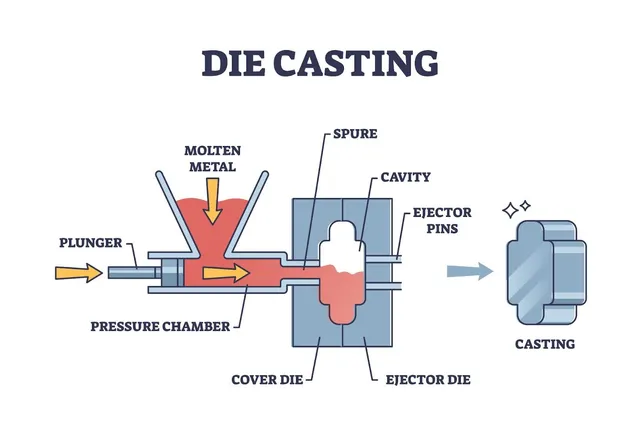
Zinc die casting Parts is referred to as the hot-chamber process. It is the method by which zinc (zamak) is heated under high temperatures and the molten material forced into a zinc die casting mold under high pressure to produce product with a similar shape as the die. As the metal moves through the die, air escapes through the vents. Once the die is full, the high pressure is maintained until it solidifies and the die is separated to release the finished zinc cast. After casting, no further modification is usually required. Use of Zinc Die Casting Zinc (zamak) is known for its high strength, accuracy, ductility, ease of casting, high thermal and electrical conductivity, and long life. As such, the zinc die casting is applied in the manufacture of high quality industrial and building materials. Die casting started in the automotive industry and it is still widely used in the manufacture of automotive components. The door locks casing, pulley, and the camshaft are some of the car parts that are made of zinc casting. In the construction industry, zinc die casting is utilized in the manufacture of components such as door knobs, faucets, and roofing. On the other hand, there are many zinc casting machine parts, such as electrical fittings. Zinc Die Casting Process Zinc is cast using the hot-chamber process due to its low melting temperatures. Cold chamber process is applied in the casting of metals with high melting temperatures such as the aluminium. The zinc die casting process involves the preparation of the metal, die preparation, and finishing. It commences with the preparation of the die followed by the metal. Notably, the die can be used once or severally depending on the component being manufactured. If it was used before, it should be lubricated to ease the removal of the cast metal. Afterwards, the ejector die half and the cover die half are screwed. The cover die half has a sprue through which the molten metal is injected while the ejector die has ejector pins for removing the castings. Preparation of the die is followed by melting of the ZA or the ZAMALAK alloy on a furnace. The physical properties of the product dictates the choice of the alloy. Due to metal hardness and strength, the furnace temperature is usually very high. The oxidized parts of the metal are removed at this stage to raise the purity of the finished product. Various chemicals can be added to improve physical properties of the finished alloy. Once the molten metal is prepared, it is injected into the feed system under high pressure. Most of the systems have several dies for efficiency and mass production. The raised pressure ensures that the molten zinc alloy gets into the mold as fast as possible, no air gets into the molten metal, and the expulsion of the air in the die through the vents. After filling the die, the pressure is raised further until the zinc alloy casting solidifies. The process also involves cooling using water. Then, the two dies are separated and the metal cast is removed. This is followed by the cleaning of the feed system to get rid of the flash. Further finishing can be carried out depending with the final use of the product. The runner that is removed from the final product and the flash are usually recycled.

Tlakové lití hliníku

Čína Die Casting Service

tlakové lití hliníku, společnost zabývající se tlakovým litím, Výrobce tlakových odlitků, Tlakové lití zinku

Capacity To Meet Your Aluminum, Magnesium, Zinc and Vacuum Die Casting Needs. Aluminum Die Casting Providing high-quality Aluminum die casting parts at competitive prices requires modem die casting equipment. To reduce the effects that extreme cooling temperatures have on dies CNM TECH is converting its die cooling system from water to oil. Oil maintains a warmer die temperature that contributes to a more uniform casting and extends die life, an important factor in part costs. CNM TECH Die Casting company is adapting robotic controls to the operation of die casting machines. This permits a substantial increase in production rates, important in both controlling costs and meeting delivery requirements. It also allows us to use our people in ways which make better use of their skills and experience. To lower production costs, CNM TECH Die Casting manufacturer has developed and patented, new, low volume, energy efficient aluminum melting furnaces. Since aluminum can be melted efficiently in small quantities, it allows the company to supply casting machines with different alloys of aluminum simultaneously. Casting machines don’t have to stand to wait for a large furnace to supply the proper alloy. Schedules aren’t built around what alloy is in the furnace. Zinc Die Casting For applications where high impact strength, low cost and close dimensional limits are important design considerations, zinc die casting plays an important role. Zinc normally permits higher production rates than aluminum and parts can be designed with thinner cross-sections. The resulting parts are highly resistant to corrosion and receptive to a variety of beautiful finishes. High rates of production and uniform quality are maintained by die casting machines with automatic extractors. Vacuum Die Casting Vacuum die casting is preferred by many casting buyers because it results in a less porous part. CNM TECH’s Vert-a-Cast machines, with a clamping force of 400 tons, are capable of producing castings automatically at a much faster pace than manually-operated horizontal machines. Vacuum die casting, a CNM TECH capability for ten years, is often the only economical way to meet critical porosity specifications. Maintenance, repair, changes and corrections on dies are accomplished promptly in CNM TECH’s fully-equipped tool and die shop. Alloy materials are melted, fluxed and cleaned in the central furnace before being transferred to die casting equipment. If you have any die casting requirement, you are welcome to send us your requirement for a quotation.

O službách odlévání kovů

tlakové lití hliníku, společnosti zabývající se tlakovým litím, díly pro tlakové lití, vysokotlaké lití, Odlévání hořčíku, Tlakové lití hořčíku, Tlakové lití zinku

Metal casting services involve the shaping of free-flowing liquid metals through the use of dies, molds, or patterns.  Castings are generally roughly finished due to the nature of their production.  In many cases, additional finishing is required to remove burrs and other artefacts of the casting process.  Metal castings services are used to design a wide range of components and finished products.  Everything from simple nails and fasteners to engine blocks can be fabricated using metal casting services.  Common metal casting processes include sand casting, die casting, permanent mold casting, investment casting, centrifugal casting, and lost foam casting. Sand Casting Sand casting is used to make large parts (typically iron, but also bronze, brass, aluminum). Molten metal is poured into a mold cavity formed out of sand (natural or synthetic). Sand castings generally have a rough surface, sometimes with surface impurities and surface variations. Die-casting includes a number of processes in which reusable dies or molds are used to produce casting.  The die contains an impression of the finished product together with it’s running, feeding and venting systems.  The die is capable of a regular cycle and of (quickly) dissipating the heat of the metal poured into it.  Once the liquid metal has cooled sufficiently, the mold is opened and the casting can be removed and finished. Permanent Mold Casting In permanent mold casting, molten metal is poured into cast iron molds, coated with a ceramic mold wash. Cores can be a metal, sand, sand shell, or other materials. When completed, the molds are opened and the castings are ejected.   Investment casting services involve molding patterns by the injection of a special wax into a metal die.  The patterns are assembled into a cluster around a wax runner system. The ‘tree’ of patterns is then coated with 8-10 layers of refractory material. The assembly is heated to remove the wax.  The hot mold is cast, and when cool, the mold material is removed by impact, vibration, grit blasting, high-pressure water blasting or chemical dissolution leaving the castings, which are then removed from the runner system. Centrifugal casting Centrifugal casting services are used to produce castings that are cylindrical in shape.  In centrifugal casting, a permanent mold is rotated about its axis at high speeds as the molten metal is poured. The molten metal is centrifugally thrown towards the inside mold wall, where it solidifies. The casting is usually a fine grain casting with a very fine-grained outer diameter, which is resistant to atmospheric corrosion, a typical need with pipes. The inside diameter has more impurities and inclusions, which can be machined away. Lost foam casting Lost foam casting (LFC) is metal casting services that use foam filled patterns to produce castings.  Foam is injected into a pattern, filling all areas, leaving no cavities.  When molten metal is injected into the pattern, the foam is burned off allowing the casting to take shape. Die casting Die casting and metal casting includes a number of processes in which reusable dies or molds are used to produce casting. The die is capable of a regular cycle and of (quickly) dissipating the heat of the metal poured into it. Once the liquid metal has cooled sufficiently, the mold or is opened and the casting can be removed and finished.   In the die casting process, molten metal is injected under pressure into a reusable mold or die. The die contains an impression of the casting together with it’s running, feeding and venting systems. The die is capable of a regular cycle and of (quickly) dissipating the heat of the metal poured into them. Once the liquid metal has cooled sufficiently, the mold or is opened and the metal casting can be removed and finished. high pressure die casting The high pressure die casting process is the most widely used, representing about 50% of all light alloy casting production. Low pressure die casting currently accounts for about 20% of production and its use is increasing. Gravity die casting accounts for the rest, with the exception of a small but growing contribution from the recently introduced vacuum die casting and squeeze casting process. the design of low pressure and gravity die casting dies for improved die filling, optimized solidification pattern and maximum yield. Gravity die-casting is suitable for mass production and for fully mechanized casting. Low-pressure die casting is especially suited to the production of components that are symmetric about an axis of rotation. Light automotive wheels are normally manufactured by this technique. Die casting metals can vary widely, and different die casting companies may have the ability to work with anyone or number of them. Some of the most common metal casting types include aluminum die casting, brass die casting, lead die casting (the most popular for model die casting), magnesium die casting, and zinc die casting. Hope all of that information is enough for your reference, but if you want to know more information, you are welcome to contact us by phone or email.

vysokotlaké lití dílů

Co je tlakové lití

tlakové lití

What is die casting Die casting is a manufacturing process for producing accurately dimension, sharply defined, smooth or textured-surface metal parts. It is accomplished by forcing molten metal under high pressure into reusable metal dies. The process is often described as the shortest distance between raw material and finished product. The term, “die casting,” is also used to describe the finished part. The term “gravity die casting” refers to castings made in metal molds under a gravity head. It is known as permanent mold casting in the U.S.A. and Canada. What we call “die casting” here is known as “high pressure die casting” in Europe. How are die castings produced First, a steel mold capable of producing tens of thousands of castings in rapid succession must be made in at least two sections to permit removal of castings. These sections are mounted securely in a machine and are arranged so that one is stationary (fixed die half) while the other is moveable (injector die half). To begin the casting cycle, the two die halves are clamped tightly together by the die casting machine. Molten metal is injected into the die cavity where it solidifies quickly. The die halves are drawn apart and the casting is ejected. Die casting dies can be simple or complex, having moveable slides, cores, or other sections depending on the complexity of the casting. The complete cycle of the die casting process is by far the fastest known for producing precise non-ferrous metal parts. This is in marked contrast to sand casting which requires a new sand mold for each casting. While the permanent mold process uses iron or steel molds instead of sand, it is considerably slower, and not as precise as die casting. Types of machines for die casting Regardless of the type of machine used, it is essential that die halves, cores and/or other moveable sections be securely locked in place during the casting cycle. Generally, the clamping force of the machine is governed by (a) the projected surface area of the casting (measured at the die parting line) and (b) the pressure used to inject metal into the die. Most machines use toggle type mechanisms actuated by hydraulic cylinders (sometimes air pressure) to achieve locking. Others use direct acting hydraulic pressure. Safety interlock systems are used to prevent the die from opening during the casting cycles. Die casting machines, large or small, very fundamentally only in the method used to inject molten metal into the die. These are classified and described as either hot or cold chamber die casting machines. Hot Chamber die casting machines Hot chamber machines (Fig.1) are used primarily for zinc, and low melting point alloys which do not readily attack and erode metal pots, cylinders and plungers. Advanced technology and development of new, higher temperature materials have extended the use of this equipment for magnesium alloy die casting. Figure 1: Hot Chamber Machine. Diagram illustrates the plunger mechanism which is submerged in molten metal. Modern machines are hydraulically operated and equipped with automatic cycling controls and safety devices. In the hot chamber machine, the injection mechanism is immersed in molten metal in a furnace attached to the machine. As the plunger is raised, a port opens allowing molten metal to fill the cylinder. As the plunger moves downward sealing the port, it forces molten metal through the gooseneck and nozzle into the die. After the metal has solidified, the plunger is withdrawn, the die opens, and the resulting casting is ejected. Hot chamber machines are rapid in operation. Cycle times vary from less than one second for small components weighing less than one ounce to thirty seconds for a casting of several pounds. Dies are filled quickly (normally between five and forty milliseconds) and metal is injected at high pressures (1,500 to over 4,500 psi). Nevertheless, modern technology gives close control over these values, thus producing castings with fine detail, close tolerances and high strength. Cold Chamber die casting machines Cold chamber machines (Fig. 2) differ from hot chamber machines primarily in one respect; the injection plunger and cylinder are not submerged in molten metal. The molten metal is poured into a “cold chamber” through a port or pouring slot by a hand or automatic ladle. A hydraulically operated plunger, advancing forward, seals the port forcing the metal into the locked die at high pressures. Injection pressures range from 3,000 to over 10,000 psi for both aluminum and magnesium alloys, and from 6,000 to over 15,000 psi for copper base alloys. Figure 2: Cold Chamber Machine. Diagram illustrates die, cold chamber and horizontal ram or plunger (in charging position). Die casting provides complex shapes within closer tolerances than many other mass production processes. In a cold chamber machine, more molten metal is poured into the chamber that is needed to fill the die cavity. This helps sustain sufficient pressure to pack the cavity solidly with casting alloy. Excess metal is ejected along with the casting and is part of the complete shot. Operation of a “cold chamber” machine is a little slower than a “hot chamber” machine because of the ladling operation. A cold chamber machine is used for high melting point die casting alloys because plunger and cylinder assemblies are less subject to attack since they are not submerged in molten metal. Die casting and their construction Die casting dies (Fig. 3) are made of alloy tool steels in at least two sections called fixed die half and ejector die half. The fixed die half is mounted on the side toward the molten metal injection system. The ejector die half, to which the die casting adheres, and from which it is ejected when the die is opened, is mounted on the moveable platen of the machine. The fixed die half of the die is designed to contain the sprue hole through which molten metal enters the die. The ejector half usually contains the runners (passageways) and gates (inlets) which route molten metal to the cavity (or cavities) of the die. The ejector

Přejít nahoru

Získat nabídku