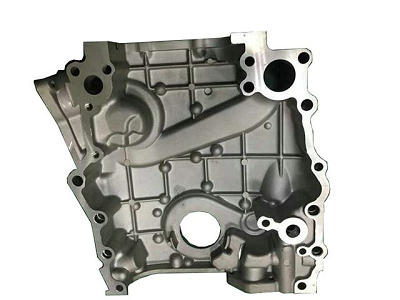
trykstøbning af aluminium

Støbeemnernes vægtykkelse skal være så ensartet som muligt

trykstøbning af aluminium

There are no hard and fast rules governing die casting parts wall thickness and consistency.  Inherent in the process is a wall section that possesses a dense fine-grained skin, 0.015-0.020 in. thick (0.4-0.5 mm).  The material between the surface skins tends to be less dense and large grained as a result of a longer solidification time.  This is where defects tend to congregate. Die casters have demonstrated the capability of casting 0.06-0.07 in. (1.5-1.8 mm) thick aluminum walls over large surface areas.  It is feasible to cast small areas as low as 0.04 in. (1 mm). Zinc alloys flow more readily, and can be cast to wall thickness as low as 0.03 in. (.75 mm) Magnesium alloys can be cast to wall thickness 0.035-0.045 in. (.89-1.14 mm) Wall sections should be as uniform as possible.  It is difficult to achieve uniform and rapid solidification of the alloy if the heat load varies from one location to another in the die.  Thinner walls contribute a lesser heat load than heavier walls and will have a longer die life. Intersections of walls, ribs and gussets should blend with transitions and generous radii Generous radii, outside corners, and transitions promote metal flow and internal integrity.  Radii and fillets also enhance structural integrity by reducing stress concentrations in the casting.  Additionally, fillets reduce heat concentration in both the die and castings.  Hot spots that result from sharp corners promote shrinkage voids in the casting. These hot spots also reduce die life at sharp corners in the die cavity steel. Standard draft should be specified Draft is highly desirable on surfaces parallel to the direction of die draw because it facilitates ejection by allowing the casting to release easily from the die surfaces.  The NADCA Product Standards recommendations for minimum draft should be specified. Sharp corners should be eliminated or minimized If sharp corners are required, they readily are accommodated at parting lines and at the junctions of die components.  Sharp corners should be broken with radii or chamfers. Undercuts should be avoided Undercuts should be avoided because they may require machining operations or additional die components, such as retractable core slides.  Slides increase the cost of die fabrication and maintenance.  They can also add to cycle time and manufacturing problems if they flash.  If possible, the component should be redesigned to eliminate undercuts.
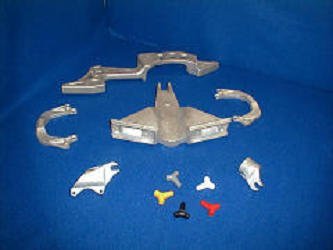
Luft- og rumfartsdele i aluminium

Trykstøbning af aluminium og dets betydning i luftfartsindustrien

Støbning af aluminium, støbeforme af aluminium, trykstøbning af aluminium, trykstøbning af aluminium, Trykstøbningsvirksomheder, trykstøbningsfirma

Aluminiumsstøbegods er af bemærkelsesværdig brug i forskellige industrisektorer og endnu mere i rumfartsteknik, hvor præcision og topstandard er af største betydning. Disse emner bruges til at bygge både små og store komponenter i luftfartsindustrien. Derudover bruges trykstøbt aluminium både i den centrale militære sektor og i den kommercielle. Årsagen til dette er enkel - de er omkostningsvenlige løsninger og giver fantastiske resultater. Ud over at være omkostningseffektive er dele fremstillet af trykstøbt aluminium desuden forberedt på at modstå ekstreme vejrsituationer og øgede skader. En anden vigtig grund til at bruge aluminiumsprodukter i fly er, at måltidet er forholdsvis billigt i forhold til andre metaller, der er trykstøbt. Derudover har aluminium potentialet til at gå sammen med andre metaller for at give holdbarhed og meget fleksibilitet. Med aluminiumsstøbte produkter behøver du ikke at gå på kompromis med standarden, men kan alligevel få dem til meget overkommelige produktionsomkostninger. Desuden er alle de standarder, der er sat for brug af metalkomponenter, aluminium afslappet behovet til det yderste. Derfor er de certificeret sikre til brug i fly, overkommelige og har alle de kvaliteter, der er nødvendige for flyvende fartøjer. Så støbning af aluminium er på vej op som aldrig før. Desuden er det bedste ved en støbt aluminiumsdel, at dens vægt er gunstig for flyets arbejde. Så hvordan udføres støbning af aluminium faktisk, og hvad er de involverede processer? Tja, svaret er enkelt. Aluminiumslegeringen presses først ind i et førsteklasses stål ved høj hastighed og kraft i en høj temperatur. Dette resulterer i overlegne standardprodukter, der er meget lette og tyndvæggede, og som er perfekte til brug som flykomponenter. Det skal her nævnes, at aluminiumsstøbning er en hård teknik. Kun et virkelig erfarent team af ingeniører af højeste standard kan sørge for, at delene kommer i topvolumen eller med fremragende tolerancer og overfladefinish. Faktisk er denne type kraftstøbning langt mere berømt end tyngdekraftsstøbning eller sandstøbning. Dette skyldes, at behovet for bearbejdning er denne type vejr for zink- eller aluminiumsstøbning er ekstremt lavt på grund af de tætte støbningstolerancer. Selvom værktøjsomkostningerne ved støbning af aluminium eller rettere ethvert metal er betydeligt højere end de andre 2 typer, er de mekaniske egenskaber, der opnås således, langt fremragende med hensyn til funktionalitet.

Hvad er trykstøbningens spændekraft

A380 trykstøbning af aluminium, støbeforme af aluminium, trykstøbning af aluminium, Trykstøbningsvirksomheder

Die Casting-spændekraft er den kraft, der påføres en form af spændeenheden på HPDC-dybstøbemaskinen. Spændekraften skal være større end deres adskillelseskraft. Som påføres ved indsprøjtning af smeltet metal i formen Fastspænding > adskillelseskraft Hvordan beregnes adskillelseskraften (åbningskraften)? Åbningskraft er den kraft, der virker på hulrummet for at få matricen til at udvide sig under produktionen af trykstøbningsdelen. Åbningskraften kan beregnes ved hjælp af følgende formel: F=PXA F: åbningskraft P: specifikt indsprøjtningstryk A: samlet projiceret areal Hvad er specifikt indsprøjtningstryk? Smeltet metal hældes gennem sprøjtehullet ind i det kolde kammer, og sprøjtestemplet skubber metallet ind i matricen. Det tryk, stemplet udøver for at skubbe metallet ind i matricen, er det specifikke indsprøjtningstryk. Indsprøjtningstryk bruges til forskellige typer støbning: Til standardstøbning =600 kg/cm2 Til teknisk støbning =600-800 kg/cm2 Til trykprøvningsstøbning =800 kg/cm2 Hvad er det forventede område? Det forventede område er et todimensionelt zoneestimat af en tredimensionel artikel ved at forudse dens form i planet. Samlet projiceret areal = projiceret støbeareal + projiceret glideareal + projiceret løberareal + projiceret overløbsareal Eksempel Projekterede støbearealer =56000mm2 Projekteret overløbsareal + løberareal =22400mm2 (40% af det samlede projicerede støbeareal). projiceret område = det projicerede område skal vælges i det plan, der er vinkelret på kernens bevægelsesretning x tanꬾ Kilevinkel = vinkel på fingerkamvinkel + 2 grader Kraft FY = F X Tan ꬾ ꬾ = kilelåsens vinkel Eksempel: Glidekerne 1 projiceret areal=areal normalt til kørselsretning × tanꬾ =5000× tan20 grader =5000× 0,36 =1800 m2 Glidekerne 2 projiceret areal=4500×tan 20 grader= 1620mm2 så, samlet projiceret areal= 56000+22400+1800+1620mm2 =81820 mm2 Hvad er adskillelseskraft (åbningskraft)? (For teknisk støbning=600-800 kg/cm2) (800 kg/cm2 =8kg/mm2) Åbningskraft = specifikt tryk × samlet projiceret areal =8 kg/mm2 × 81820mm2 =654560 kg/mm2 (1 ton = 1000kg) =654,56 T Spændekraft Spændekraften skal være større end adskillelseskraften. Låsekraften kræver =F×1,2 =654,56×1,2 =785,472 tons Vi vælger 900T-maskinen Hvad er fyldningsgrad, hvordan er det vigtigt for valg af maskintonnage? Det er procentdelen af flydende metal i det sårbare kammer i forhold til viruskammerets absolutte volumen. En anden metode til at sige det ville være niveauet af metal i modsætning til niveauet af luft udsat for de barske elementer kammer For eksempel 50% fuld (af metal) = 50% luft tilbage Fyldningsniveauet er vigtigt i lyset af det faktum, at det bruges til at fastslå den ideelle moderate skudhastighed. Dette kan have en kvalitetspåvirkning på støbningen. Fyldningsgrad (30-40%) er god til bilstøbning af komponentkvalitet.

Virksomhed til fremstilling af trykstøbning

Trykstøbningsprocessen trin for trin

støbeforme af aluminium, trykstøbning af aluminium, trykstøbning, trykstøbning af aluminium, Trykstøbningsvirksomheder, trykstøbningsfirma, Producent af trykstøbning

Klatrefasen: Det første trin er at forberede formhalvdelene til støbning ved at rengøre fladerne på hver form og derefter påføre smøring eller slipmiddel. Når formen er klargjort, lukkes formhalvdelene og spændes sammen med et tryk fra trykstøbemaskinen. Spændekraften afhænger af maskinens størrelse, men skal være større end den modsatte kraft, der forsøger at åbne matricen under støbeprocessen. Indsprøjtningsfasen: Barrerne lægges i ovnen og holdes smeltet ved en bestemt temperatur alt efter, hvilket metal der skal bruges. Det smeltede metal overføres til et indsprøjtningskammer og sprøjtes ind i den lukkede form med et tryk på mellem 1000 og 20.000 psi. Trykket opretholdes, mens metallet størkner. Mængden, der sprøjtes ind i matricen, kaldes ‘skuddet’ Indsprøjtningen af metal i matricen er meget kort, hvilket sikrer, at metallerne ikke begynder at størkne, før matricen er helt fyldt. Afkølingsfasen: Når indsprøjtningen er færdig, skal det smeltede metal størkne, før matricen åbnes. Afkølingstiden afhænger af emnets geometri og metallets termodynamiske egenskaber. Emnets vægtykkelse spiller en stor rolle for afkølingstiden; jo tykkere vægsektionen er, desto længere afkølingstid kræves der. Udstødningsfasen: Når køletiden er gået, kan de to matricehalvdele åbnes. En udstødningsmekanisme skubber derefter den størknede støbning ud af formen. Udstødningskraften bestemmes af emnets størrelse, og man skal huske på, at emnet krymper under afkølingsprocessen og har tendens til at klæbe til formens overflade. Når emnet er skubbet ud, kan matricen lukkes, så den er klar til næste indsprøjtningscyklus. Trimmingsfasen Under afkølings- og størkningsfasen størkner støbningen som en komplet støbt enhed, der omfatter emnet, flash og et eventuelt løbesystem. Dette overskydende materiale skal trimmes af, så der kun er det støbte hovedprodukt tilbage. Metoden til trimning omfatter trimmeværktøjer, båndsav og manuel klipning. Alt afkortet metal bliver enten skrottet eller genanvendt, hvis det er tilladt. Fordele ved trykstøbning: Trykstøbning er hurtig Trykstøbning kan produceres på få sekunder for hver del og i mængder på hundreder til tusinder af metaldele hver dag. Nær nettoform Trykstøbning produceres “nær nettoform”, uanset hvor kompleks formen er, og hvor snævre tolerancerne er. Lettere vægt Trykstøbning er stærkere på grund af materialets overflade og ikke materialets tykkelse, så dele kan veje mindre med tyndere støbevægstykkelser. Trykstøbning er alsidig Mange flere emneformer og -størrelser kan produceres ved hjælp af trykstøbningsprocessen. Trykstøbning er holdbart Trykstøbte dele er af metal og har en lang levetid. Trykstøbninger er billige Trykstøbninger er hurtige at producere og ubrugelige materialer. Trykstøbning er typisk billigere end de fleste andre fremstillingsprocesser for metaldele.    

Trykstøbning af zink

Gunstig fremstilling til zinkstøbningsprocesser

trykstøbning af aluminium, trykstøbning af aluminium, Trykstøbningsvirksomheder, Trykstøbning af zink

The process of die casting with pressure injection can be followed until mid-1800. The components used were tin and lead, but the use has disappeared with the introduction of zinc and Aluminium alloys. This process has evolved over the years, from low-pressure injection molds to casting molds at pressures of up to 4,500 psi. The process can create high-quality products with excellent end surfaces. Die Casting is an economical and efficient process for making various shapes. Considered superior to other manufacturing techniques, it is durable and aesthetic and combines perfectly with other parts of the machine that are part thereof. Dying has many advantages. Among these, the main is its ability to produce complex forms with a higher tolerance level than other mass-production methods. Thousands of identical prints can be produced before you need to add new mold tools. High Die-pressure is a manufacturing process where aluminum that has been melted is injected by a casting machine under extreme pressure on steel or molds to make the design and detail parts of the model you want to make. Casting in tons of universal tightening. This record reflects the amount of pressure given on the matrix. The engine size varies from 400 to 4000 tons. There are many advantages to using the die casting process compared to others. Die casting produces parts with thinner walls, narrower size limits and processes can be accelerated. Labor costs and finishing are the lowest with the dice. This process facilitates to obtain intricate forms with narrower tolerances. Unlike the forgery process, you can insert the kernel into the product created by this process. Forms that cannot be obtained from rods or tubes can be easily achieved with casting. The number of operational processes is smaller, which leads to the reduction of waste materials. Die casting is used when you need a stable, dimensional and durable component. They withstand heat and maintain a good level of tolerance, an important condition for each part of a good machine. They are stronger and lighter than the part made by other printing methods. Its parts are not welded or screwed, which greatly increases its efficiency. Another advantage is the many workarounds that you can get with the launch. Surfaces can be smooth or textured, which facilitates the application and its use. Hopefully, this information can help you and thank you for reading the article about Zinc Die casting.

Trykstøbning af aluminium

Kina Trykstøbningsservice

trykstøbning af aluminium, trykstøbningsfirma, Producent af trykstøbning, Trykstøbning af zink

Capacity To Meet Your Aluminum, Magnesium, Zinc and Vacuum Die Casting Needs. Aluminum Die Casting Providing high-quality Aluminum die casting parts at competitive prices requires modem die casting equipment. To reduce the effects that extreme cooling temperatures have on dies CNM TECH is converting its die cooling system from water to oil. Oil maintains a warmer die temperature that contributes to a more uniform casting and extends die life, an important factor in part costs. CNM TECH Die Casting company is adapting robotic controls to the operation of die casting machines. This permits a substantial increase in production rates, important in both controlling costs and meeting delivery requirements. It also allows us to use our people in ways which make better use of their skills and experience. To lower production costs, CNM TECH Die Casting manufacturer has developed and patented, new, low volume, energy efficient aluminum melting furnaces. Since aluminum can be melted efficiently in small quantities, it allows the company to supply casting machines with different alloys of aluminum simultaneously. Casting machines don’t have to stand to wait for a large furnace to supply the proper alloy. Schedules aren’t built around what alloy is in the furnace. Zinc Die Casting For applications where high impact strength, low cost and close dimensional limits are important design considerations, zinc die casting plays an important role. Zinc normally permits higher production rates than aluminum and parts can be designed with thinner cross-sections. The resulting parts are highly resistant to corrosion and receptive to a variety of beautiful finishes. High rates of production and uniform quality are maintained by die casting machines with automatic extractors. Vacuum Die Casting Vacuum die casting is preferred by many casting buyers because it results in a less porous part. CNM TECH’s Vert-a-Cast machines, with a clamping force of 400 tons, are capable of producing castings automatically at a much faster pace than manually-operated horizontal machines. Vacuum die casting, a CNM TECH capability for ten years, is often the only economical way to meet critical porosity specifications. Maintenance, repair, changes and corrections on dies are accomplished promptly in CNM TECH’s fully-equipped tool and die shop. Alloy materials are melted, fluxed and cleaned in the central furnace before being transferred to die casting equipment. If you have any die casting requirement, you are welcome to send us your requirement for a quotation.

Trykstøbningsproces

trykstøbning af aluminium, trykstøbning, Trykstøbningsvirksomheder, Trykstøbningsform, Dele til trykstøbning, Trykstøbningsproces

CNM Die Casting has the ability to offer various castings including die casting, investment casting, permanent mould casting, and sand casting for a wide range of alloys, including all die-cast alloys, many permanent mold alloys, and many magnesium alloys. Our manufacturing processes have been accepted by the world casting market as equal or superior to conventional die casting. Benefits of the CNM Die Casting Process Better dimensional control Improved cross parting line tolerances Reduction in gas porosity Improved balance properties of finished rotating parts Use of “cast-in-place” inserts Improved mechanical properties due to effective alloy modification Better wear properties due to smaller grain size microstructure Improved flexibility regarding alloys and types of castings Machining CNM Die Casting’s Machining Section utilizes the work cell concept and high-speed flexible machining equipment to complete secondary operations to CNM’s castings so that a part or subassembly is ready to install when it leaves our facility. CNM Die Casting has evolved and responded aggressively to customer demands for providing high-speed machining and assembly services without initial capital expenditures. By factoring a portion of the cost of the existing equipment into each part, the customer benefits from faster set-ups and minimal initial capital outlays. CNM Die Casting operates 8 die cast machines, complete in-house die casting mold making and CNC machining in an over 20,000-square-foot facility in DONGGUAN, China. Our integrated manufacturing capabilities, together with over 100 employees, allow us to be your One-Stop, complete service die caster, and be consistently price competitive, while also maintaining a high standard of quality.   Below are Comparison of die casting processes Metals that can be cast Min.and Max mass, kg Tolerance on dim.,% Surface finish,µ m Min. section size, mm Draft deg Production rate,pcs/hr Min. cored hole,mm Porosity Sand Casting Aluminium Steel CI and others 0.03, 100 0.10, 200, 000 0.03, 50, 000 0.09 to 0.03 4 8 8 3 6 3.5 4 to 7 10 to 15 6 5 Permanent Mould Casting Cast iron Al and Mg 0.01, 50 0.01, 10 0.01 min 2 5 3 2 50 4.5 to 6 6 4 Die Casting Al Mg Zn 0.015, 35 0.015, 35 0.05, 80 0.0015 0.0015 1 1 1 0.8 1.2 0.5 2 2 2 75 to 150 300 to 350 2.5 2.5 0.8 2 Precision Investment Casting Steel Aluminium 0.005, 25 0.002, 10 0.003, to 0.005 1 1 1 0.8 1 to 3   N/A 0.5 to 1.25 1 Shell moulding Steel Cast iron Aluminium 0.05, 120 0.03, 50 0.03, 15 0.01 to 0.003 6 6 2.5 3.5 3 1.5 2 to 3 30 to 80 3 to 6 1 Centrifugal casting Aluminium Steel Cast iron up to 400 0.002 0.004 0.004 0.6 to 3.5 0.6 to 1.2 3 30 to 50  N/A 1 to

Virksomhed til fremstilling af trykstøbning

trykstøbning af aluminium, Dele til trykstøbning

CNM Die Casting is your one-stop, complete service Die Caster for various die casting parts including aluminum die casting, investment casting, sand casting. We offer you a single source for engineered die castings, together with cutting-edge engineering resources, advanced production capabilities and complete secondary finishing. CNM Die Casting supplies high-quality aluminum, zinc, brass and magnesium die castings. We operate our casting factory in DongGuan, China for various castings, machining, assembly and die building, with over 20,000 square feet of total floor space. We are a leader in innovative quality control systems. Our quality manufacturing system includes a process failure detection system at every casting press. Rigorous 100% inspection is as much a production operation as any other manufacturing step and is woven into the sequential standardized work to assure manufacturing quality in finishing and machining. As one of the divisions of CNM Manufacturing Group, CNM Die Casting can be more responsive to its customers and, simultaneously, offer more competitive, “made in China” pricing on quality products.   CNM Die Casting’s tooling department builds dies with state-of-the-art equipment. Along with our experienced engineering and tooling department, we design tooling and assist customers with casting design issues. Excellent control of design and tool building allows us to produce high quality tools and parts at lower cost, and more quickly than anyone else in the industry. Our Engineering and Tooling Department offers: Tool Engineers to ensure specifications and dimensional criteria are met to the customer’s requirements Design Engineers with the latest CAD/CAM technologies to design both product and tooling for the customer’s specification. Technical on-site product design assistance for die castings Production tooling built with CNC machines by in-house full capability large tooling facility state-of-the-art EDM machines rapidly burn cavities to near-finished condition with oscillating feed. Prototyping in the same tooling intended for production Production tools are built with premium grade materials

Om Metal Casting Services

trykstøbning af aluminium, Trykstøbningsvirksomheder, Dele til trykstøbning, trykstøbning under højt tryk, Støbning af magnesium, Trykstøbning af magnesium, Trykstøbning af zink

Metal casting services involve the shaping of free-flowing liquid metals through the use of dies, molds, or patterns.  Castings are generally roughly finished due to the nature of their production.  In many cases, additional finishing is required to remove burrs and other artefacts of the casting process.  Metal castings services are used to design a wide range of components and finished products.  Everything from simple nails and fasteners to engine blocks can be fabricated using metal casting services.  Common metal casting processes include sand casting, die casting, permanent mold casting, investment casting, centrifugal casting, and lost foam casting. Sand Casting Sand casting is used to make large parts (typically iron, but also bronze, brass, aluminum). Molten metal is poured into a mold cavity formed out of sand (natural or synthetic). Sand castings generally have a rough surface, sometimes with surface impurities and surface variations. Die-casting includes a number of processes in which reusable dies or molds are used to produce casting.  The die contains an impression of the finished product together with it’s running, feeding and venting systems.  The die is capable of a regular cycle and of (quickly) dissipating the heat of the metal poured into it.  Once the liquid metal has cooled sufficiently, the mold is opened and the casting can be removed and finished. Permanent Mold Casting In permanent mold casting, molten metal is poured into cast iron molds, coated with a ceramic mold wash. Cores can be a metal, sand, sand shell, or other materials. When completed, the molds are opened and the castings are ejected.   Investment casting services involve molding patterns by the injection of a special wax into a metal die.  The patterns are assembled into a cluster around a wax runner system. The ‘tree’ of patterns is then coated with 8-10 layers of refractory material. The assembly is heated to remove the wax.  The hot mold is cast, and when cool, the mold material is removed by impact, vibration, grit blasting, high-pressure water blasting or chemical dissolution leaving the castings, which are then removed from the runner system. Centrifugal casting Centrifugal casting services are used to produce castings that are cylindrical in shape.  In centrifugal casting, a permanent mold is rotated about its axis at high speeds as the molten metal is poured. The molten metal is centrifugally thrown towards the inside mold wall, where it solidifies. The casting is usually a fine grain casting with a very fine-grained outer diameter, which is resistant to atmospheric corrosion, a typical need with pipes. The inside diameter has more impurities and inclusions, which can be machined away. Lost foam casting Lost foam casting (LFC) is metal casting services that use foam filled patterns to produce castings.  Foam is injected into a pattern, filling all areas, leaving no cavities.  When molten metal is injected into the pattern, the foam is burned off allowing the casting to take shape. Die casting Die casting and metal casting includes a number of processes in which reusable dies or molds are used to produce casting. The die is capable of a regular cycle and of (quickly) dissipating the heat of the metal poured into it. Once the liquid metal has cooled sufficiently, the mold or is opened and the casting can be removed and finished.   In the die casting process, molten metal is injected under pressure into a reusable mold or die. The die contains an impression of the casting together with it’s running, feeding and venting systems. The die is capable of a regular cycle and of (quickly) dissipating the heat of the metal poured into them. Once the liquid metal has cooled sufficiently, the mold or is opened and the metal casting can be removed and finished. high pressure die casting The high pressure die casting process is the most widely used, representing about 50% of all light alloy casting production. Low pressure die casting currently accounts for about 20% of production and its use is increasing. Gravity die casting accounts for the rest, with the exception of a small but growing contribution from the recently introduced vacuum die casting and squeeze casting process. the design of low pressure and gravity die casting dies for improved die filling, optimized solidification pattern and maximum yield. Gravity die-casting is suitable for mass production and for fully mechanized casting. Low-pressure die casting is especially suited to the production of components that are symmetric about an axis of rotation. Light automotive wheels are normally manufactured by this technique. Die casting metals can vary widely, and different die casting companies may have the ability to work with anyone or number of them. Some of the most common metal casting types include aluminum die casting, brass die casting, lead die casting (the most popular for model die casting), magnesium die casting, and zinc die casting. Hope all of that information is enough for your reference, but if you want to know more information, you are welcome to contact us by phone or email.

Hvad er gravitationsstøbning?

Støbning af aluminium, støbeforme af aluminium, trykstøbning af aluminium, trykstøbning, trykstøbning af aluminium, Trykstøbningsvirksomheder, Trykstøbningsform, Dele til trykstøbning, Støbning ved hjælp af tyngdekraft, sprøjtestøbeform Kina, Fremstilling af sprøjtestøbeforme

Forskellen mellem aluminiumsstøbning og tyngdekraftsstøbning Aluminiumsstøbning er mere end bare en undskyldning for at lege med smeltet metal, det er faktisk en fantastisk måde at skabe kunst og komplicerede maskiner eller andre ting på, som ellers ville være næsten umulige at lave. Aluminiumsstøbning er virkelig en god måde at spare penge på ... mens man leger med smeltet metal. Grunden til, at trykstøbning i aluminium har overlevet tidens tand, er et spørgsmål om effektivitet. Nogle af de tidligste eksempler på støbning er fundet i Kina og går tusinder og atter tusinder af år tilbage. Faktisk praktiserede alle større civilisationer fra egypterne til romerne aluminiumsstøbning. Denne færdighed kom på mode igen i renæssancen og er fortsat med at udvikle sig derfra. Mens sandstøbning er den mest populære støbeproces, er der mange, mange flere processer til rådighed for baggårdsstøberierne. Det er ikke alle, der skal støbe tunge emner som motordele eller støbe deres egne motorcykler. Så dem, der bare vil lave pyntegenstande, vil ikke bruge den samme støbeproces som disse tunge støbegods. For kunstnere, der laver små statuer eller udsmykninger, og for hobbyfolk, der har brug for et dekorativt touch til deres modelfly eller -båd, kan det være en god idé at overveje at bruge tyngdekraftsstøbning til deres behov. Hvad er gravitationsstøbning Gravitationsstøbning synes at være særlig nyttig, når man har med aluminium og andre lette legeringer at gøre. Den grundlæggende idé bag denne støbeproces er stort set præcis, hvad navnet antyder. Metallet føres ind i formen ved hjælp af tyngdekraften. De fleste andre støbeprocesser bruger enten naturlige trykforskelle som i visse sandstøbningsprocedurer, eller de bruger tvangstryk som i centrifugalstøbning for at få det smeltede metal ind i formen. En af de mest almindelige anvendelser af gravitationsstøbning er, når der skal bruges permanente støbeforme. Den permanente form, der også kaldes en matrice, er egentlig kun økonomisk for dem, der planlægger at bruge den samme form mange gange og skal holde kvaliteten på et konstant niveau. Mens nogle midlertidige forme kan bruges gentagne gange, vil kvaliteten af det færdige produkt begynde at lide over tid. Med støbeforme forbliver kvaliteten den samme. Støbeforme skal ses som en investering. Ja, de vil være dyrere end andre forme, men de vil holde længere end billigere former. Permanente støbeforme skabes ved hjælp af støbejern, stål og andre metaller. Tyngdekraftsstøbning bruges til den permanente formproces med behagelige resultater. Tyngdekraftsstøbning bruges normalt, når det færdige produkt er mere visuelt baseret end strukturelt baseret, og derfor er denne metode en favorit blandt kunstnere og endda nogle guldsmede. Tabet af styrke skyldes det manglende tryk, der bruges i denne proces. For dem, der har brug for styrke, men stadig ønsker at bruge tyngdekraftsstøbning, skal der bruges mere af det smeltede metal, hvilket øger vægten. gå til https://www.aludiecasting.com/ for at få mere at vide om tyngdekraftsstøbning Det kræver tålmodighed at stole på tyngdekraften, selv om det er nødvendigt for større produkter. Hvis du har brug for tyngdekraftstøbning eller aluminiumsstøbning, magnesiumstøbning eller zinkstøbningstjeneste til din virksomhed. Du er velkommen til at sende os dit krav om tilbud, du behøver kun at sende os dit 3D-design og dit krav, så kan du læne dig tilbage, og vi vil gøre der resten for dig, for at arbejde med os behøver du kun at tage sig af markedet på din side, og vi vil være din sikkerhedskopi for at tage sig af leveringstid, forsendelse, kvalitet og teknisk.

Rul til toppen

Få et tilbud