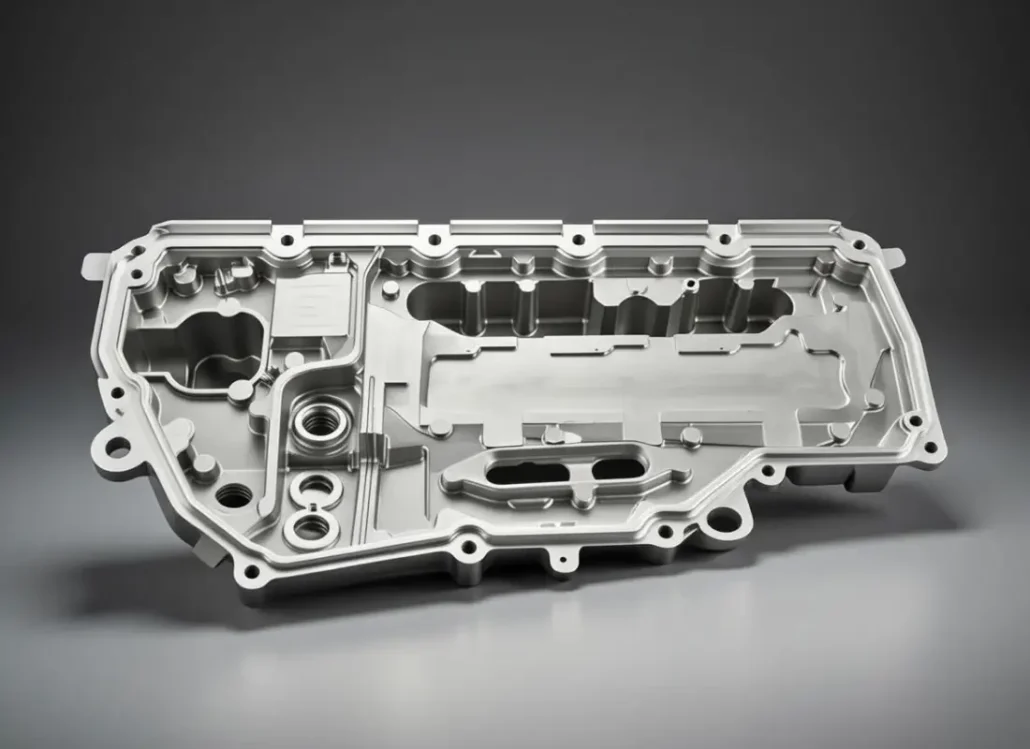
trykstøbning

Trykstøbningsproces

trykstøbning af aluminium, trykstøbning, Trykstøbningsvirksomheder, Trykstøbningsform, Dele til trykstøbning, Trykstøbningsproces

CNM Die Casting har mulighed for at tilbyde forskellige støbninger, herunder trykstøbning, investeringsstøbning, permanent formstøbning og sandstøbning til en lang række legeringer, herunder alle trykstøbte legeringer, mange permanente formlegeringer og mange magnesiumlegeringer. Vores fremstillingsprocesser er blevet accepteret af verdens støbemarked som lige så gode eller bedre end konventionel trykstøbning. Fordele ved CNM's trykstøbningsproces Bedre dimensionel kontrol Forbedrede tolerancer for tværgående skillelinjer Reduktion af gasporøsitet Forbedrede balanceegenskaber for færdige roterende dele Brug af “cast-in-place”-indsatser Forbedrede mekaniske egenskaber på grund af effektiv legeringsmodifikation Bedre slidegenskaber på grund af mikrostruktur med mindre kornstørrelse Forbedret fleksibilitet med hensyn til legeringer og typer af støbegods Bearbejdning CNM Die Castings bearbejdningsafdeling bruger arbejdscellekonceptet og fleksibelt højhastighedsbearbejdningsudstyr til at gennemføre sekundære operationer på CNM's støbegods, så en del eller underenhed er klar til at blive installeret, når den forlader vores anlæg. CNM Die Casting har udviklet sig og reageret aggressivt på kundernes krav om at levere højhastighedsbearbejdning og montering uden indledende kapitaludgifter. Ved at indregne en del af omkostningerne til det eksisterende udstyr i hver del får kunden fordel af hurtigere opsætninger og minimale startinvesteringer. CNM Die Casting driver 8 trykstøbemaskiner, komplet intern fremstilling af trykstøbningsforme og CNC-bearbejdning i et over 20.000 kvadratmeter stort anlæg i DONGGUAN, Kina. Vores integrerede produktionskapacitet sammen med over 100 medarbejdere giver os mulighed for at være din One-Stop, komplette service trykstøbning og være konsekvent priskonkurrencedygtig, samtidig med at vi opretholder en høj kvalitetsstandard. Nedenfor er en sammenligning af trykstøbningsprocesser Metaller, der kan støbes Min. og maks. masse, kg Tolerance på mål,% Overfladefinish,µ m Min. sektionsstørrelse, mm Trækgrad Produktionshastighed,stk/time Min. kernehul,mm Porøsitet Sandstøbning Aluminium Stål CI og andre 0,03, 100 0,10, 200, 000 0,03, 50, 000 0,09 til 0.03 4 8 8 3 6 3,5 4 til 7 10 til 15 6 5 Permanent formstøbning Støbejern Al og Mg 0,01, 50 0,01, 10 0,01 min 2 5 3 2 50 4,5 til 6 6 4 Trykstøbning Al Mg Zn 0,015, 35 0,015, 35 0,05, 80 0,0015 0,0015 1 1 1 0,8 1.2 0,5 2 2 2 75 til 150 300 til 350 2,5 2,5 0,8 2 Præcisionsstøbning Stål Aluminium 0,005, 25 0,002, 10 0,003, til 0,005 1 1 1 0,8 1 til 3 N/A 0,5 til 1,25 1 Skalstøbning Stål Støbejern Aluminium 0.05, 120 0,03, 50 0,03, 15 0,01 til 0,003 6 6 2,5 3,5 3 1,5 2 til 3 30 til 80 3 til 6 1 Centrifugalstøbning Aluminium Stål Støbejern op til 400 0,002 0,004 0,004 0,6 til 3,5 0,6 til 1,2 3 30 til 50 N/A 1 til
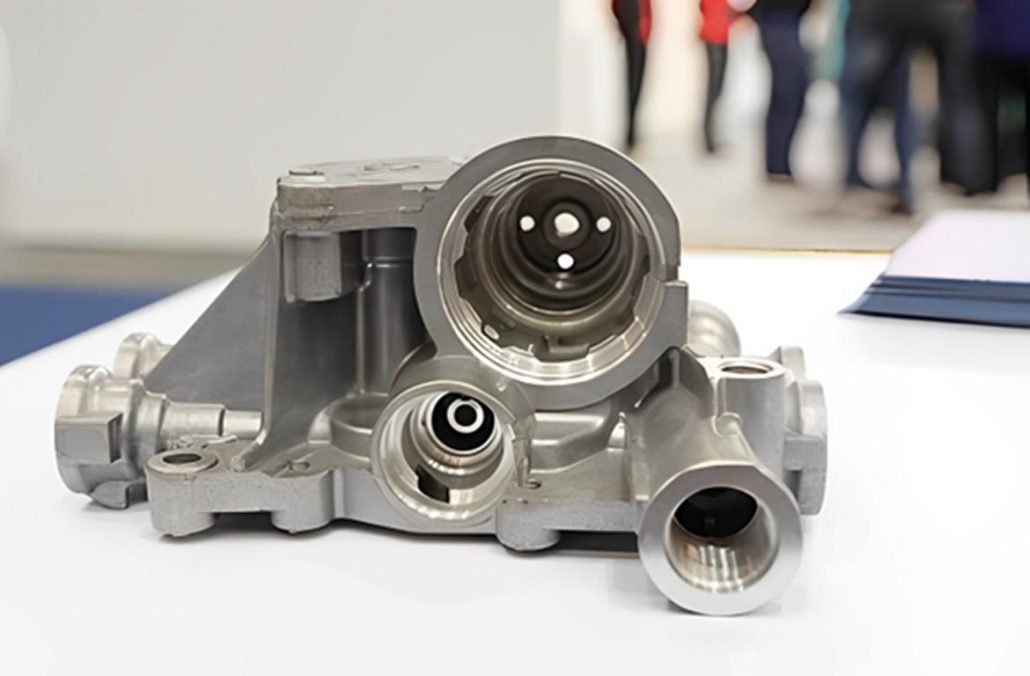
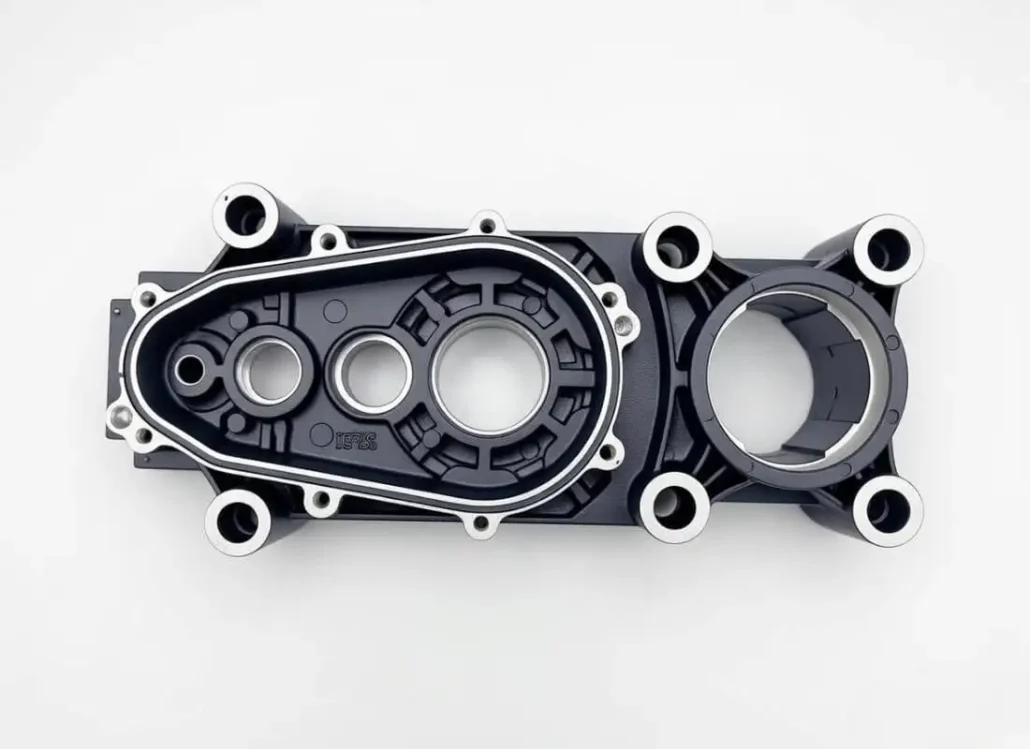
Del til trykstøbning under højt tryk

Hvad er trykstøbning?

trykstøbning

What is die casting Die casting is a manufacturing process for producing accurately dimension, sharply defined, smooth or textured-surface metal parts. It is accomplished by forcing molten metal under high pressure into reusable metal dies. The process is often described as the shortest distance between raw material and finished product. The term, “die casting,” is also used to describe the finished part. The term “gravity die casting” refers to castings made in metal molds under a gravity head. It is known as permanent mold casting in the U.S.A. and Canada. What we call “die casting” here is known as “high pressure die casting” in Europe. How are die castings produced First, a steel mold capable of producing tens of thousands of castings in rapid succession must be made in at least two sections to permit removal of castings. These sections are mounted securely in a machine and are arranged so that one is stationary (fixed die half) while the other is moveable (injector die half). To begin the casting cycle, the two die halves are clamped tightly together by the die casting machine. Molten metal is injected into the die cavity where it solidifies quickly. The die halves are drawn apart and the casting is ejected. Die casting dies can be simple or complex, having moveable slides, cores, or other sections depending on the complexity of the casting. The complete cycle of the die casting process is by far the fastest known for producing precise non-ferrous metal parts. This is in marked contrast to sand casting which requires a new sand mold for each casting. While the permanent mold process uses iron or steel molds instead of sand, it is considerably slower, and not as precise as die casting. Types of machines for die casting Regardless of the type of machine used, it is essential that die halves, cores and/or other moveable sections be securely locked in place during the casting cycle. Generally, the clamping force of the machine is governed by (a) the projected surface area of the casting (measured at the die parting line) and (b) the pressure used to inject metal into the die. Most machines use toggle type mechanisms actuated by hydraulic cylinders (sometimes air pressure) to achieve locking. Others use direct acting hydraulic pressure. Safety interlock systems are used to prevent the die from opening during the casting cycles. Die casting machines, large or small, very fundamentally only in the method used to inject molten metal into the die. These are classified and described as either hot or cold chamber die casting machines. Hot Chamber die casting machines Hot chamber machines (Fig.1) are used primarily for zinc, and low melting point alloys which do not readily attack and erode metal pots, cylinders and plungers. Advanced technology and development of new, higher temperature materials have extended the use of this equipment for magnesium alloy die casting. Figure 1: Hot Chamber Machine. Diagram illustrates the plunger mechanism which is submerged in molten metal. Modern machines are hydraulically operated and equipped with automatic cycling controls and safety devices. In the hot chamber machine, the injection mechanism is immersed in molten metal in a furnace attached to the machine. As the plunger is raised, a port opens allowing molten metal to fill the cylinder. As the plunger moves downward sealing the port, it forces molten metal through the gooseneck and nozzle into the die. After the metal has solidified, the plunger is withdrawn, the die opens, and the resulting casting is ejected. Hot chamber machines are rapid in operation. Cycle times vary from less than one second for small components weighing less than one ounce to thirty seconds for a casting of several pounds. Dies are filled quickly (normally between five and forty milliseconds) and metal is injected at high pressures (1,500 to over 4,500 psi). Nevertheless, modern technology gives close control over these values, thus producing castings with fine detail, close tolerances and high strength. Cold Chamber die casting machines Cold chamber machines (Fig. 2) differ from hot chamber machines primarily in one respect; the injection plunger and cylinder are not submerged in molten metal. The molten metal is poured into a “cold chamber” through a port or pouring slot by a hand or automatic ladle. A hydraulically operated plunger, advancing forward, seals the port forcing the metal into the locked die at high pressures. Injection pressures range from 3,000 to over 10,000 psi for both aluminum and magnesium alloys, and from 6,000 to over 15,000 psi for copper base alloys. Figure 2: Cold Chamber Machine. Diagram illustrates die, cold chamber and horizontal ram or plunger (in charging position). Die casting provides complex shapes within closer tolerances than many other mass production processes. In a cold chamber machine, more molten metal is poured into the chamber that is needed to fill the die cavity. This helps sustain sufficient pressure to pack the cavity solidly with casting alloy. Excess metal is ejected along with the casting and is part of the complete shot. Operation of a “cold chamber” machine is a little slower than a “hot chamber” machine because of the ladling operation. A cold chamber machine is used for high melting point die casting alloys because plunger and cylinder assemblies are less subject to attack since they are not submerged in molten metal. Die casting and their construction Die casting dies (Fig. 3) are made of alloy tool steels in at least two sections called fixed die half and ejector die half. The fixed die half is mounted on the side toward the molten metal injection system. The ejector die half, to which the die casting adheres, and from which it is ejected when the die is opened, is mounted on the moveable platen of the machine. The fixed die half of the die is designed to contain the sprue hole through which molten metal enters the die. The ejector half usually contains the runners (passageways) and gates (inlets) which route molten metal to the cavity (or cavities) of the die. The ejector

Hvad er gravitationsstøbning?

Støbning af aluminium, støbeforme af aluminium, trykstøbning af aluminium, trykstøbning, trykstøbning af aluminium, Trykstøbningsvirksomheder, Trykstøbningsform, Dele til trykstøbning, Støbning ved hjælp af tyngdekraft, sprøjtestøbeform Kina, Fremstilling af sprøjtestøbeforme

Forskellen mellem aluminiumsstøbning og tyngdekraftsstøbning Aluminiumsstøbning er mere end bare en undskyldning for at lege med smeltet metal, det er faktisk en fantastisk måde at skabe kunst og komplicerede maskiner eller andre ting på, som ellers ville være næsten umulige at lave. Aluminiumsstøbning er virkelig en god måde at spare penge på ... mens man leger med smeltet metal. Grunden til, at trykstøbning i aluminium har overlevet tidens tand, er et spørgsmål om effektivitet. Nogle af de tidligste eksempler på støbning er fundet i Kina og går tusinder og atter tusinder af år tilbage. Faktisk praktiserede alle større civilisationer fra egypterne til romerne aluminiumsstøbning. Denne færdighed kom på mode igen i renæssancen og er fortsat med at udvikle sig derfra. Mens sandstøbning er den mest populære støbeproces, er der mange, mange flere processer til rådighed for baggårdsstøberierne. Det er ikke alle, der skal støbe tunge emner som motordele eller støbe deres egne motorcykler. Så dem, der bare vil lave pyntegenstande, vil ikke bruge den samme støbeproces som disse tunge støbegods. For kunstnere, der laver små statuer eller udsmykninger, og for hobbyfolk, der har brug for et dekorativt touch til deres modelfly eller -båd, kan det være en god idé at overveje at bruge tyngdekraftsstøbning til deres behov. Hvad er gravitationsstøbning Gravitationsstøbning synes at være særlig nyttig, når man har med aluminium og andre lette legeringer at gøre. Den grundlæggende idé bag denne støbeproces er stort set præcis, hvad navnet antyder. Metallet føres ind i formen ved hjælp af tyngdekraften. De fleste andre støbeprocesser bruger enten naturlige trykforskelle som i visse sandstøbningsprocedurer, eller de bruger tvangstryk som i centrifugalstøbning for at få det smeltede metal ind i formen. En af de mest almindelige anvendelser af gravitationsstøbning er, når der skal bruges permanente støbeforme. Den permanente form, der også kaldes en matrice, er egentlig kun økonomisk for dem, der planlægger at bruge den samme form mange gange og skal holde kvaliteten på et konstant niveau. Mens nogle midlertidige forme kan bruges gentagne gange, vil kvaliteten af det færdige produkt begynde at lide over tid. Med støbeforme forbliver kvaliteten den samme. Støbeforme skal ses som en investering. Ja, de vil være dyrere end andre forme, men de vil holde længere end billigere former. Permanente støbeforme skabes ved hjælp af støbejern, stål og andre metaller. Tyngdekraftsstøbning bruges til den permanente formproces med behagelige resultater. Tyngdekraftsstøbning bruges normalt, når det færdige produkt er mere visuelt baseret end strukturelt baseret, og derfor er denne metode en favorit blandt kunstnere og endda nogle guldsmede. Tabet af styrke skyldes det manglende tryk, der bruges i denne proces. For dem, der har brug for styrke, men stadig ønsker at bruge tyngdekraftsstøbning, skal der bruges mere af det smeltede metal, hvilket øger vægten. gå til https://www.aludiecasting.com/ for at få mere at vide om tyngdekraftsstøbning Det kræver tålmodighed at stole på tyngdekraften, selv om det er nødvendigt for større produkter. Hvis du har brug for tyngdekraftstøbning eller aluminiumsstøbning, magnesiumstøbning eller zinkstøbningstjeneste til din virksomhed. Du er velkommen til at sende os dit krav om tilbud, du behøver kun at sende os dit 3D-design og dit krav, så kan du læne dig tilbage, og vi vil gøre der resten for dig, for at arbejde med os behøver du kun at tage sig af markedet på din side, og vi vil være din sikkerhedskopi for at tage sig af leveringstid, forsendelse, kvalitet og teknisk.

Bearbejdning af trykstøbning

Trykstøbning

Støbning af aluminium, støbeforme af aluminium, trykstøbning af aluminium, trykstøbning, trykstøbning af aluminium, Trykstøbningsvirksomheder, Trykstøbningsform, Dele til trykstøbning

What is die casting? Die casting, from a mold shop perspective, is less about simply shaping molten metal and more about repeatedly “copying” a part using a hardened steel tool. In daily production, molten alloy is injected into the die cavity under high pressure, filling the geometry in a fraction of a second. Once the metal solidifies, the mold opens and the part is ejected, ready for the next cycle. The whole process runs fast, but the real work is in the tooling and process setup rather than the machine alone. On the die casting shop floor, what matters most is consistency. After the die is properly tuned, the process can deliver thousands of identical parts with stable dimensions and surface quality. However, this reliability depends heavily on early-stage mold design—issues like venting, shrinkage, and flow balance must be solved upfront, because they are difficult to fix later in production. What is Aluminum die casting? Aluminum die casting is a casting liquid die forging method. Die casting process is a kind of special high pressure die casting machine to accomplish the process. Its basic technological process is: first metal or aluminium alloy liquid in low or high-speed casting filling into the die mold cavity, die with a moveable type cavity surface. It with the liquid aluminum alloy cooling process pressure forging blank, both the elimination of shrinkage defects, also make the rough internal Aluminum Die Casting organization to forge the broken crystal. Rough comprehensive mechanical properties are improved significantly. How To Find Right Aluminum Die Casting Sources Are you looking for the high quality and ultimate die casting services for your business? Well, you better need to hire the right service provider who must be experienced in the very same domain. Yes, it is highly necessary to invest some time who can offer very high-quality results and that is by paying the very affordable amount. Before we talk about how to find the right company, it is highly necessary to know more about Die casting. Well, this is the most important manufacturing technology which is used by many industries which are looking for all sorts of parts to commence the work and for that it is necessary to go with the aluminum die casting process. With the help of die casting mold, it will help in molding the complexity of the metal substance exactly in the same manner as you are looking to have. Yes, the final product can have virtually any size depending on what designer desires, thus there is nothing impossible for the best and great service providers at all. When it comes to finding a right service provider for aluminum casting parts, you better invest time over the net and find out the most experienced, reliable and friendly service provider to meet the exact requirements without any fail. Also, you better find out someone who can easily work on any customized requirements of the clients as well as they must possess great goodwill in the market. Also, you can investigate their previous projects and check how best they are in the die casting and how they have helped other companies to complete their requirements. Not only this, even, you need to disclose them the complete information about your project requirements and check how well they are in offering you the correct guidance as well as what price they are quoting you up. Even, you can do this with different sources and go up with the best one who offers great services at the best prices. Moving up with the pro means they will consider mechanical properties, including tensile strength, yield, impact, hardness, and other various specifications in advance to offer you the best solutions. Not only this, pros will help in picking up the right metal which they perform by checking out the physical properties of the metal. Yes, before going up with the aluminum die casting, it is very important to know more about its conductivity or how it behaves under extreme stress or heat. Pros also determine the composition of different alloys, check what are the common uses for the primary element, they also check out a complete list of die-cast alloys, check out the needed properties, and everything to offer you something the best to meet your exact requirements. Why don’t you check out to go to the suggested source? Well, it will offer you the best services by offering you the casting of metal in the shortest possible of time, will make everything from the scratch and the best part is everything will be done in a budget-friendly manner. Technology is improving day by day and we are the one enjoying it up fully. Today, we can have every possible thing to make our work the best as well as offer us full convenience and complete peace of mind. Apart from others, talking about Die casting, it is a manufacturing process that can produce geometrically unique and impossible metal parts with the best use of reusable molds, called dies. The die casting process is very important and pros always make sure to use all the necessary things, called- furnace, metal, die casting machine, die and other various materials. The metal which is used here is always non-ferrous alloy, like- Zinc and aluminum, later it is melted in the furnace and then injected into the dies in the die casting machine for producing very complex metal parts. It is always better to approach the right company for aluminum casting parts as they always go with the best and authentic procedures in order to produce something the best. They may use different types of die casting machines, called – hot chamber machines and cold chamber machines for a perfect die casting solution. Hot chamber machines are used for those alloys which have low melting temperatures, such as zinc. And Cold chamber machines are used for those alloys with high melting temperatures, such as aluminum. Both machines work the same and once they are done with the molten metal, they inject the same

trykstøbning af aluminium

Trykstøbning af aluminium

Støbning af aluminium, støbeforme af aluminium, trykstøbning af aluminium, trykstøbning, trykstøbning af aluminium, Trykstøbningsvirksomheder, Trykstøbningsform, Dele til trykstøbning, trykstøbning under højt tryk, Trykstøbning af magnesium, trykstøbning

What is Aluminum die Casting Aluminum die casting can be understood as a highly controlled metal “injection” process rather than a simple pouring method. In a typical aluminum die casting manufacturing company, molten aluminum is forced into a hardened steel die under high pressure, allowing the metal alloys to fill even very thin sections and complex geometries within milliseconds. What makes this process valuable is not just speed, but repeatability—once the mold is tuned, thousands of parts can be produced with consistent dimensions and surface quality. From a practical manufacturing perspective, die casting is often chosen when a part demands tight tolerances, good surface finish, and minimal secondary machining. The upfront investment in tooling is relatively high, but it is offset by lower per-unit cost in volume production. Engineers also favor aluminum die casting because it combines lightweight properties with decent strength, corrosion resistance, and thermal conductivity. Benefits of aluminum die casting Metals and precautions related to aluminium die casting. Different types of aluminium alloys can be used in die Casting and aluminium molds, types of casting methods are used for making aluminum die casting, zinc die casting, magnesium die casting and many more. Type of Die Casting process Die Casting is the process of making Aluminium suitable for producing different types of products. It is a simple and inexpensive way to provide a wide variety of aluminium products. Some of the examples are Washington Monument, car engines, and power transmissions, etc, which were all produced through aluminum casting alloys process. Aluminium casting can be done in 3 ways:- Auminum die casting Mold Casting Sand Casting DIE CASTING Die casting is a manufacturing process for producing metal parts.  In die casting, die or mold cavities are created with hardened tool steel that has been previously machined to a particular shape. Here in die casting, Aluminium is melted first and is poured into a steel die under high pressure forcefully. This manufacturing technique is normally used for high volume production, the process we normally called high pressure die casting or pressure die casting process MOLD CASTING About mold casting, mold and cores can be of either steel or any other metal. Here also the aluminium is melted first and is poured in the mold provided. Sometimes vacuum is also applied. In some situations, Permanent mold casting is seemed to be stronger than both die casting and sand casting methods. Semi-permanent mold casting techniques are used when permanent cores are impossible to remove from the finished part. SAND CASTING: Sand casting is the most versatile method of producing aluminium products. Usually, the molted aluminium is poured into a mold which is virtually pressed into a fine sand mixture. The pattern will be little larger than which needed for the aluminium shrinkage during solidification and cooling. Sand Casting is usually a slow process than both die casting and mold casting. Usually, it is used for small quantity products. Aluminum Casting Alloys The most important cast aluminum casting alloys system is Al-Si. Here high levels of Silicon contribute to give good casting characteristics. aluminum casting alloys are widely used in engineering structures and components where lightweight or corrosion-resistant is required. Methods and benefits of Aluminium die casting Metals and precautions related with aluminium die casting Different types of aluminium can be used for die Casting, Aluminum casting manufacturer & aluminum casting is used in order to cover different types of metals by using different types of methods. There are many methods used for aluminum casting and different types of benefits are obtained. With the help of aluminum casting and aluminum die casting it is possible to increase the life of metals and these can be used for a long time period with an amazing look and charm of metal. Methods Different types of methods are used for aluminium die casting. The main thing is to melt aluminum. High temperature is needed for melting aluminum. Special structures are used for the melting of aluminum. When aluminum casting is melted then it is poured on the target metals. Then the melted aluminum casting is allowed to get hard and it is ready to be used after some time period. There are special containers that are made to be used for the melting of aluminum. These structures are available in the market in different shapes and sizes. You are also able to make these structures at home by using the desired ingredients. You have many options in making these structures. If you are going to buy this structure from the market then you have to make a selection of the size and shapes. There are many options in terms of sizes and shapes and different types of prices are charged by makers. Working of these structures is also different as some use fuels and some use manual efforts for getting heat to make sure that aluminum casting could be heated and melted effectively. High temperatures are obtained in these structures and then aluminum casting is melted and then used on the target metals for the casting process. Benefits Aluminium Die Casting There are many types of benefits of aluminum die casting. Mainly this type of casting is done to make sure that the metal can remain safe from corrosion. Atmosphere conditions and moisture is bad for iron and casting can help to protect iron and increase its useful life. aluminium die casting is able to resist moisture and other harmful effects of the environment due to which it can be used on metals through casting. The protective shield is made on iron to make sure that it can be used for a long time period. aluminium die casting companies can be cast on iron and make a protective sheet. This protection is in the form of a shining layer which is obtained by using high temperatures. This layer is permanent and good looking along with increasing strength and useful life of metal. Mostly iron is cast with the help of aluminum. This is a cheap process and the user is able

Rul til toppen

Få et tilbud