Trykstøbning af zink

Hvad er trykstøbning? Alt hvad du behøver at vide om metalstøbning

Hvad er trykstøbning? Alt hvad du behøver at vide om metalstøbning

trykstøbning

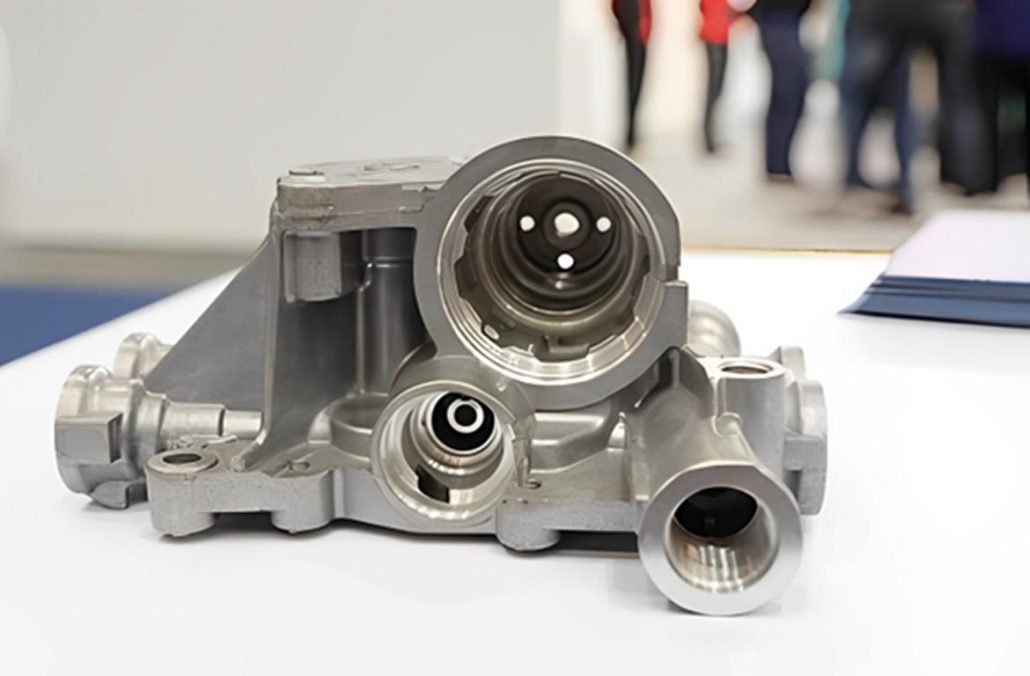
This is a manufacturing process in which molten metal is forced using pressure to fill a mold cavity also known as die casting. The mold is usually of high-quality steel and hence the part can be produced in large quantities the term is used to mean the manufacture of many parts. The finished part is then produced by opening the mold after the molten metal is cooled and forms a solid layer. This kind of use of the process is mostly applied in making intricate metal used in the production of different parts that require high accuracy in measurement and polished surfaces. Die casting can be done on aluminium, zinc, and magnesium but other metals can also be used on a case depending on application and other requirements. Die casting is considered to be one of the expert manufacturing techniques in the conception of mass production of small to medium-sized components out of metals. The popularity of the method has been spread across automotive, aerospace, electronics, and industrial machines due to its ability to produce durable lightweight intricately tailored parts. However, this process is widely recognized for its ability to manufacture products with complex geometry that would be very hard to make using conventional techniques. How Die Casting Works Molding is the first part of the die-casting process. On one side of the mold, there is a half, and it is a half of a particular design to make the mold shaped like the final product. Cavities and cores are designed for the molds that are usually custom-made so that the part can be replicated as closely as possible. 1. Molten Metal Injection: Then the molten metal is injected into the mold cavity under high pressure to form the desired shape. The metal is usually heated to one degree above the melting strain to make it fluid. In die casting, the pressure that the molten metal is pushed into the mold can be from several thousand to tens of thousands of psi (pounds per square inch), to be sure that the molten metal gets into every detail of the mold. 2. Solidification: This occurs when the metal is injected into the casing cavity whereby it cools and the metal hardens. The quality of the casting depends upon the cooling rate. Additional modes of failure (shear, climb, and glide) come into play in this case and result in faster cooling higher strength better surface finish, and slower cooling which could result in more internal defects and lower mechanical properties. Water-cooling systems built into the mold are usually used to assist the cooling process. 3. Ejection: Following this, the metal is allowed to cool and solidify and it is then easy to remove the mold from the larger casting and eject the part. Then most of the time is used in the pushing out part from the mold using a mechanical ejector system. This depends on the complexity of the part that requires other extra steps, namely trimming and machining to deliver the final shape and dimension. 4. Quality Control: A quality check is then performed on a part after ejection. It can involve dimensional verification, visual inspection, and mechanical testing to confirm that the part is equal to or better than the requirements. High precision and repeatability are theoretically achieved in die casting. Types of Die Casting There are two types of Die casting, they are hot chamber die casting and cold chamber die casting. These are all good and have their advantages, limitations and ideal applications. 1. Hot Chamber Die Casting The process most suitable for metals such as zinc, magnesium, and lead is a hot chamber die casting since the process is done at high temperatures, and melting points. The injection system is installed inside the melting furnace in this way, the metal is always in contact with the chamber. Advantages: Disadvantages: 2. Cold Chamber Die Casting The metals that have higher melting points like aluminium, brass and copper are cast in cold chamber die casting. In this case, the molten metal is tapped from a second furnace injected into the cold chamber then into the mold cavity. Advantages: Disadvantages: The Comparison of Die Casting Methods: Hot Chamber vs. Cold Chamber Here is a comparison of the most common types of two die-casting methods, Feature Hot Chamber Die Casting Cold Chamber Die Casting Metal Compatibility Best for low-melting-point metals (e.g., zinc, lead) Best for high-melting-point metals (e.g., aluminium, brass) Cycle Time Faster cycle times Slower cycle times Mold Wear Higher mold wear due to direct contact with molten metal Lower mold wear Cost Lower cost for high-volume production Higher initial cost, but better for high-strength metals Complexity of Parts Good for simpler parts Better for more complex, larger parts Advantages of Die Casting It is one of the largest advantages that die casting is one of the main preferred methods of large-scale production of products from metal alloys. 1. High Precision and Accuracy There are many advantages of die casting, which makes it convenient to offer high die precision. This method of production is also widely used for the production of parts, which requires good dimensional accuracy which is very crucial as it defines tolerance levels required in a specific job. One should note that die casting is the only manufacturing technique that can produce given parts with the utmost complexities such as the intricacies of its geometries.  2. High Production Rates In terms of large volumes, die casting is very efficient. Parts are quickly and cheaply produced once the first mold is created with very little labor involved. The demand for simulated powders is particularly high in industries like automotive and electronics where large volumes of the same parts are required. 3. Complex Designs and Thin Walls Complex design can be achieved by die casting, which would be difficult or impossible to achieve by traditional manufacturing methods. The process can make parts with thin walls, and complex internal structures, and can accommodate undercuts; thus making it the
At vælge den rigtige legeringsstøbningsvirksomhed: En komplet guide

At vælge den rigtige legeringsstøbningsvirksomhed: En komplet guide

trykstøbning af aluminium, Trykstøbningsvirksomheder

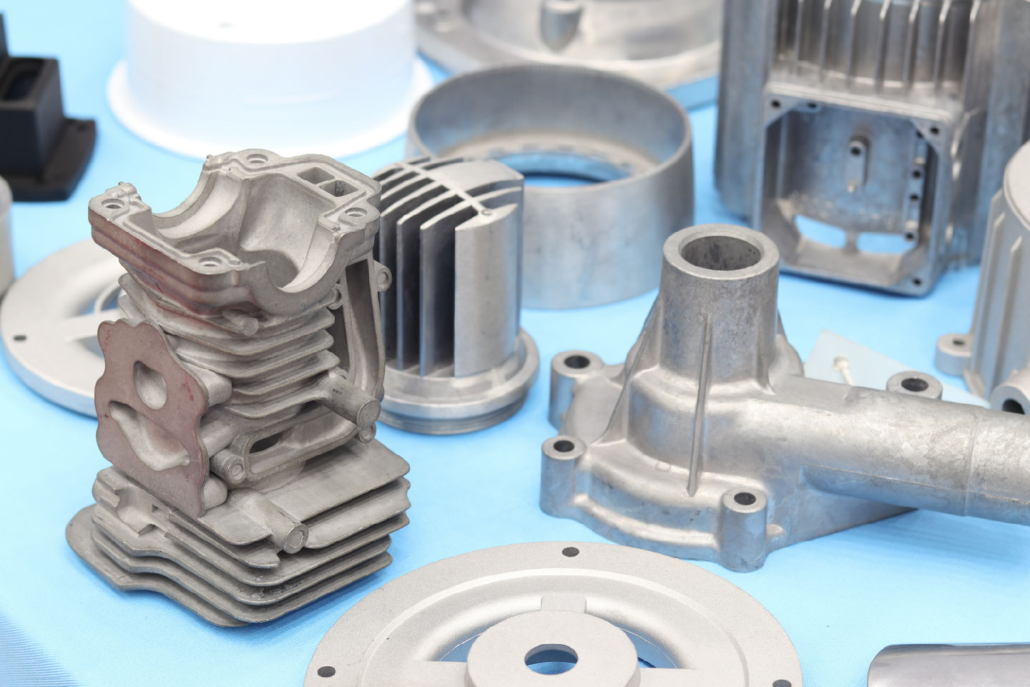
Alloy die casting is essential to the manufacturing industry because it relies heavily on high precision, durable, and cost-effective metal components. In a revolutionary impact on modern manufacturing, this process has made possible the mass production of intricate metal parts to a very high standard of accuracy and consistency. By specialized companies which as alloy die casting companies, in service industries which as automotive, aerospace, electronics, medical, and heavy machines for building tailor resultant metal components in their specific areas of needs. A professional alloy die casting company makes use of the latest technologies and high-quality materials coupled with a strict quality control process to deliver your products that suit industry standards. If choosing the right company matters, you may choose, one way or another, between a truly reliable product that will last for years and a faulty component that will fail early. The article gives you a detailed overview of Alloy die casting, emphasizing its importance, benefits and the most essential factors to consider when choosing the best Alloy die casting company. Alloy die casting knowledge is essential if you’re a manufacturer seeking the manufacture of precisely engineered parts or a business in search of economic manufacturing options. What is Alloy Die Casting? The metal manufacturing process in which molten metal is injected into a mold (die) under high pressure is called alloy die casting. Implementation of this method is widely used for the production of complex shapes with tight tolerances. The common use of various metal alloys, such as aluminium, zinc, and magnesium, in die casting is because of their good strength properties and corrosion resistance. Types of Alloys Used in Die Casting Alloys used in die casting have a great effect on the selections in the process of die casting, it leads directly to the strength and weight, corrosion resistance and overall performance of the final product. Alloys that differ vary by different industries based on their mechanical properties, durability, and the end use necessary to them. The most commonly used alloys in die casting are mentioned below. 1. Aluminum Alloys A good thermal conductivity, combined with corrosion resistance and lightweight strength, means aluminium die casting is preferred by researchers and manufacturers the world over. In industries that require durable and relatively light components, this alloy type is used. Key Features: Applications: 2. Zinc Alloys Since it has high strength, low melting point and excellent precision, zinc is another commonly used alloy in die casting. For manufacturing small, detailed parts it is ideal. Key Features: Applications: 3. Magnesium Alloys Its lightness makes it extremely suitable to be used for industries seeking to cut weight without compromising on strength, hence this metal is named magnesium. Key Features: Applications: 4. Copper-Based Alloys Brass and bronze are examples of copper-based alloys which are high electrical conductors, corrosion resistant, and good wear resistors. Such alloys are used for applications where the electrical and thermal performance have to be superb. Key Features: Applications: Benefits of Working with a Reliable Alloy Die Casting Company The right alloy die company allows you to select high-quality products that follow industry standards. Here are the key benefits: 1. High Precision and Consistency A top die-casting company has good machinery and rigorous quality control measures to produce the dimensions with very few defects. 2. Cost-Effectiveness Die casting is a very efficient process that also reduces the material and energy costs of the final product significantly compared to other metal-forming processes. 3. Customization and Versatility A custom solution-based casting company is a reputable company that provides custom solutions that are based on particular industry necessities and provides different alloy options. 4. Faster Production and Short Lead Times Automated systems are used in modern die-casting companies to increase their speed of production and meet strict deadlines. 5. Durability and Strength Alloy die-cast parts are well known to be very durable, and thus suitable for use under demanding conditions. How to Choose the Best Alloy Die Casting Company When you select a die-casting manufacturer, you should consider the following: 1. Experience and Industry Expertise Check with the company’s track record, if it had experienced years doing alloy die casting, if its attempt in your industry was proven. 2. Quality Certifications and Standards Make sure the business follows the codec of the industry which might be: 3. Advanced Technology and Equipment To maintain accuracy and reduce the need for physical labor, a modern die-casting company will employ such equipment as a CNC machine, vacuum cast, and robotic automation. 4. Material Selection and Customization Have a company with multiple alloy options and customization so you can find the specific design that your company offers. 5. Strong Supply Chain and On-Time Delivery Efficient logistics and speedy delivery of products are brought about by reliable suppliers. 6. Prototyping and Testing Capabilities Very critical is to prototype and with rigorous quality testing (X-ray inspection and tensile strength) on the product. 7. Competitive Pricing Although price must not be the only consideration, a good die-casting firm can offer competitive prices without sacrificing quality. Industries That Rely on Alloy Die Casting 1. Automotive Industry 2. Aerospace Industry 3. Electronics Industry 4. Medical Equipment 5. Consumer Products Challenges in Alloy Die Casting and How Companies Overcome Them Alloy die casting is a well-known manufacturing process, which faces some challenges and that have an impact on quality, cost and sustainability. Innovative solutions are also implemented by leading alloy die-casting companies to overcome these problems resulting in high-quality production, optimized costs as well and minimized impact on the environment. 1. Managing Porosity and Defects Porosity is one of the most common problems encountered in die casting where gas bubbles or shrinkage cavities occur inside the metal. It can also reduce the structural integrity of the part and impact functionality. This would be addressed by manufacturers using the use of vacuum-assisted die casting, entrapping a minimum amount of air and improved metal density. Moreover, the porosity can be reduced by using pressure-tight casting techniques, design of the mold and proper

Trykstøbning af zink

Betydningen af zinkstøbning i bilindustrien

trykstøbning af aluminium, Trykstøbningsvirksomheder, trykstøbningsfirma, Producent af trykstøbning, Dele til trykstøbning, zamak 3 trykstøbning, Zamak 3 zinkstøbning, zamak 5, zamak 5 trykstøbning, zamak trykstøbning, Trykstøbning af zinklegering, Trykstøbning af zink

Hvad er trykstøbning? Trykstøbning er en metalstøbningsproces, som er kendetegnet ved at presse smeltet metal ind i formhulrummet. Formhulrummet laves ved hjælp af to hærdede værktøjsstålforme, der bearbejdes under forarbejdningen og fungerer på samme måde som sprøjtestøbeforme. Det meste trykstøbning er lavet af ikke-jernholdige metaller, især zink, kobber, aluminium, magnesium, tin, bly og tinbaserede legeringer. Afhængigt af hvilken type metal, der støbes, bruges en termisk eller kold motor. Zinkstøbningsprocessen er meget populær til fremstilling af dele inden for byggeri og industri, men den mest almindelige anvendelse er i bilindustrien. Faktisk har biler forskellige dele, der kan fremstilles gennem trykstøbning, på en sådan måde, at den moderne proces med trykstøbning oprindeligt blev startet til bilindustrien. Med støbeprocessen er der ofte ikke behov for yderligere bearbejdning efter støbning: ikke alene er nøjagtigheden op til 99,8%, men de støbte produkter kan også bruges rå, fordi de har en behagelig finish. Brugen af zinkstøbning er næsten 28% i bilindustrien, efterfulgt af bygge- og hardwaresektoren. Zink er blevet et af de vigtigste metaller i bildelsindustrien, især til produkter som dørlåshus, pal, tandhjul og tilbagetrækningsskiver i sikkerhedssele-systemer, men også til knastaksel- og sensorkomponenter. Ved at bruge dette metal og dets legeringer er det muligt at opnå styrke, duktilitet og fleksibilitet, som ikke ville være mulig med andre materialer. Derudover kan zink være det rigtige valg til at få æstetiske komponenter af høj kvalitet med snævre tolerancer, som ikke er mulige med andre materialer, og til at få prægninger og riller til mekaniske komponenter eller tandhjul. Zinkstøbemekanismer i bilindustrien Som sagt er bilindustrien den mest almindelige anvendelse af trykstøbning: Brug af zink og dets legeringer gør det muligt at producere komponenter, der er i stand til at opnå høj æstetisk kvalitet med stramme og snævre tolerancer for formmorfologi. Zinklegeringer bruges også til belægninger på grund af deres mange fordele, f.eks. forbedring af zinkens korrosionsbeskyttende egenskaber, som allerede er imponerende. Nedenfor kan du finde en række mulige eksempler på zinkbelægning: Interiør æstetisk sektion Soltag Sektion Mekaniske dele Motor og andre komponenter under motorhjelmen Servostyringssystem Dele og bremsesystem Klimaanlægskomponenter og -systemer Chassis hardware Dele i sikkerhedssele-systemet Komponenter til klimakontrol Brændstofsystem Fordele ved trykstøbning i zink: En effektiv og økonomisk proces, der giver mulighed for forskellige former. Højhastighedsproduktion Dimensionsnøjagtighed og stabilitet Styrke og vægt Flere efterbehandlingsteknikker er tilgængelige Enkel montering Trykstøbningsprocessen begyndte med brugen af bly og blylegeringer, magnesium- og kobberlegeringer, som hurtigt blev fulgt, og i 1930'erne er mange moderne legeringer, der stadig bruges i dag, tilgængelige. Denne proces udviklede sig fra lavtryksindsprøjtning til moderne højtryksindsprøjtning på 4.500 pund pr. kvadrattomme. Den moderne proces er i stand til at producere rene støbeformer med høj integritet og fremragende overfladefinish. Zinkstøbelegering er et stærkt, holdbart og omkostningseffektivt teknisk materiale. Deres mekaniske egenskaber er konkurrencedygtige og er normalt højere end støbt aluminium, magnesium, bronze, plast og det meste støbejern.

Trykstøbning af zink

Gunstig fremstilling til zinkstøbningsprocesser

trykstøbning af aluminium, trykstøbning af aluminium, Trykstøbningsvirksomheder, Trykstøbning af zink

Processen med trykstøbning med trykindsprøjtning kan følges frem til midten af 1800-tallet. De anvendte komponenter var tin og bly, men brugen er forsvundet med indførelsen af zink- og aluminiumlegeringer. Denne proces har udviklet sig gennem årene, fra lavtryksindsprøjtningsforme til støbeforme med et tryk på op til 4.500 psi. Processen kan skabe produkter af høj kvalitet med fremragende overflader. Trykstøbning er en økonomisk og effektiv proces til fremstilling af forskellige former. Den anses for at være bedre end andre fremstillingsteknikker, den er holdbar og æstetisk og passer perfekt sammen med andre maskindele, der er en del af den. Støbning har mange fordele. Blandt disse er den vigtigste dens evne til at producere komplekse former med et højere toleranceniveau end andre masseproduktionsmetoder. Der kan produceres tusindvis af identiske udskrifter, før du skal tilføje nye formværktøjer. Højtrykstøbning er en fremstillingsproces, hvor aluminium, der er smeltet, injiceres af en støbemaskine under ekstremt tryk på stål eller forme for at lave design- og detaljedele af den model, du vil lave. Støbning i tonsvis af universel stramning. Denne rekord afspejler den mængde tryk, der gives på matricen. Motorstørrelsen varierer fra 400 til 4000 tons. Der er mange fordele ved at bruge trykstøbningsprocessen sammenlignet med andre. Trykstøbning producerer dele med tyndere vægge, snævrere størrelsesgrænser, og processerne kan fremskyndes. Arbejdsomkostninger og efterbehandling er de laveste med terningerne. Denne proces gør det lettere at opnå indviklede former med snævrere tolerancer. I modsætning til forfalskningsprocessen kan du indsætte kernen i det produkt, der skabes ved denne proces. Former, der ikke kan opnås fra stænger eller rør, kan let opnås med støbning. Antallet af operationelle processer er mindre, hvilket fører til reduktion af affaldsmaterialer. Trykstøbning bruges, når du har brug for en stabil, dimensionel og holdbar komponent. De tåler varme og opretholder et godt toleranceniveau, hvilket er en vigtig betingelse for alle dele af en god maskine. De er stærkere og lettere end de dele, der fremstilles ved hjælp af andre trykmetoder. Delene er ikke svejset eller skruet sammen, hvilket øger effektiviteten betydeligt. En anden fordel er de mange løsninger, du kan få med lanceringen. Overfladerne kan være glatte eller strukturerede, hvilket letter anvendelsen og brugen. Forhåbentlig kan disse oplysninger hjælpe dig, og tak fordi du læste artiklen om zinkstøbning.

Hvad er Zamak Zink Die Casting Parts?

trykstøbningsfirma, Producent af trykstøbning, Dele til trykstøbning, Produkter til trykstøbning, Trykstøbning af zink

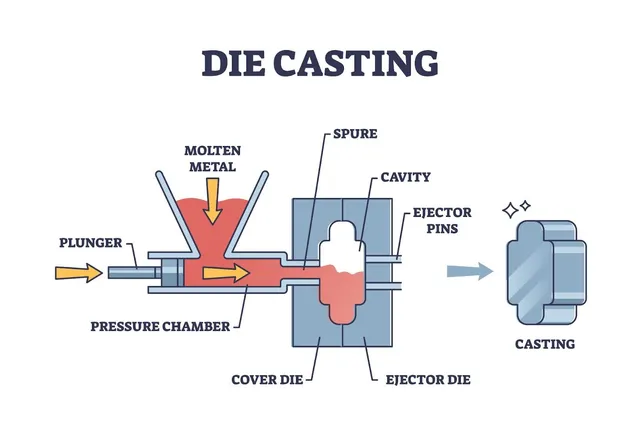
Zinkstøbning af dele kaldes varmekammerprocessen. Det er en metode, hvor zink (zamak) opvarmes ved høje temperaturer, og det smeltede materiale presses ind i en zinkstøbeform under højt tryk for at fremstille et produkt med samme form som støbeformen. Når metallet bevæger sig gennem formen, slipper der luft ud gennem åbningerne. Når formen er fuld, opretholdes det høje tryk, indtil det størkner, og formen skilles ad for at frigive den færdige zinkstøbning. Efter støbningen er der normalt ikke behov for yderligere modifikationer. Brug af zinkstøbning Zink (zamak) er kendt for sin høje styrke, nøjagtighed, duktilitet, lette støbning, høje termiske og elektriske ledningsevne og lange levetid. Derfor anvendes zinkstøbning til fremstilling af industri- og byggematerialer af høj kvalitet. Trykstøbning startede i bilindustrien, og det bruges stadig i vid udstrækning til fremstilling af bilkomponenter. Dørlåsens kabinet, remskiven og knastakslen er nogle af de bildele, der er lavet af zinkstøbning. I byggebranchen bruges zinkstøbning til fremstilling af komponenter som dørhåndtag, vandhaner og tagdækning. På den anden side er der mange maskindele i zinkstøbning, f.eks. elektriske fittings. Zinkstøbningsproces Zink støbes ved hjælp af varmekammerprocessen på grund af dets lave smeltetemperaturer. Koldkammerprocessen anvendes til støbning af metaller med høje smeltetemperaturer som f.eks. aluminium. Zinkstøbningsprocessen involverer forberedelse af metallet, forberedelse af formen og efterbehandling. Den begynder med forberedelsen af matricen efterfulgt af metallet. Formen kan bruges én eller flere gange afhængigt af den komponent, der skal fremstilles. Hvis den har været brugt før, skal den smøres for at gøre det lettere at fjerne det støbte metal. Bagefter skrues ejektorhalvdelen og dækhalvdelen på. Dækformen har en indsprøjtning, hvorigennem det smeltede metal sprøjtes ind, mens udstøderformen har udstøderpinde til at fjerne støbegodset. Forberedelsen af matricen efterfølges af smeltning af ZA- eller ZAMALAK-legeringen i en ovn. Produktets fysiske egenskaber dikterer valget af legering. På grund af metallets hårdhed og styrke er ovnens temperatur normalt meget høj. De oxiderede dele af metallet fjernes i denne fase for at øge renheden af det færdige produkt. Der kan tilsættes forskellige kemikalier for at forbedre den færdige legerings fysiske egenskaber. Når det smeltede metal er klargjort, sprøjtes det ind i fødesystemet under højt tryk. De fleste systemer har flere matricer for at sikre effektivitet og masseproduktion. Det forhøjede tryk sikrer, at den smeltede zinklegering kommer ind i formen så hurtigt som muligt, at der ikke kommer luft ind i det smeltede metal, og at luften i matricen udstødes gennem ventilationshullerne. Når formen er fyldt, hæves trykket yderligere, indtil zinklegeringsstøbningen størkner. Processen indebærer også afkøling med vand. Derefter adskilles de to matricer, og det støbte metal fjernes. Dette efterfølges af rengøring af indføringssystemet for at slippe af med flash. Yderligere efterbehandling kan udføres afhængigt af produktets endelige anvendelse. Den løber, der fjernes fra slutproduktet, og flashen genbruges normalt.

Trykstøbning af aluminium

Kina Trykstøbningsservice

trykstøbning af aluminium, trykstøbningsfirma, Producent af trykstøbning, Trykstøbning af zink

Kapacitet til at opfylde dine behov for trykstøbning af aluminium, magnesium, zink og vakuum. Trykstøbning i aluminium At levere trykstøbte dele i aluminium af høj kvalitet til konkurrencedygtige priser kræver moderne trykstøbningsudstyr. For at reducere de virkninger, som ekstreme køletemperaturer har på formene, konverterer CNM TECH sit formkølesystem fra vand til olie. Olie opretholder en varmere formtemperatur, der bidrager til en mere ensartet støbning og forlænger formens levetid, en vigtig faktor i delomkostningerne. CNM TECH Die Casting er ved at tilpasse robotstyringen til driften af trykstøbemaskinerne. Det giver mulighed for en betydelig stigning i produktionshastigheden, hvilket er vigtigt for både at kontrollere omkostningerne og opfylde leveringskravene. Det giver os også mulighed for at bruge vores medarbejdere på en måde, der udnytter deres færdigheder og erfaring bedre. For at sænke produktionsomkostningerne har CNM TECH Die Casting-producenten udviklet og patenteret nye, energieffektive aluminiumssmelteovne med lav volumen. Da aluminium kan smeltes effektivt i små mængder, giver det virksomheden mulighed for at forsyne støbemaskiner med forskellige legeringer af aluminium samtidig. Støbemaskiner behøver ikke at stå og vente på, at en stor ovn leverer den rette legering. Tidsplaner er ikke bygget op omkring, hvilken legering der er i ovnen. Zinkstøbning Til anvendelser, hvor høj slagstyrke, lave omkostninger og tætte dimensionsgrænser er vigtige designhensyn, spiller zinkstøbning en vigtig rolle. Zink giver normalt mulighed for højere produktionshastigheder end aluminium, og delene kan designes med tyndere tværsnit. De resulterende dele er meget modstandsdygtige over for korrosion og modtagelige for en række smukke overflader. Høje produktionshastigheder og ensartet kvalitet opretholdes af trykstøbemaskiner med automatiske udtræk. Vakuumstøbning Vakuumstøbning foretrækkes af mange støbekøbere, fordi det resulterer i en mindre porøs del. CNM TECH's Vert-a-Cast-maskiner med en spændekraft på 400 tons er i stand til at producere støbegods automatisk i et meget hurtigere tempo end manuelt betjente horisontale maskiner. Vakuumstøbning, som CNM TECH har stået for i ti år, er ofte den eneste økonomiske måde at opfylde kritiske porøsitetsspecifikationer på. Vedligeholdelse, reparation, ændringer og rettelser af matricer udføres hurtigt i CNM TECH's fuldt udstyrede værktøjs- og matriceværksted. Legeringsmaterialer smeltes, flusses og rengøres i den centrale ovn, før de overføres til trykstøbningsudstyret. Hvis du har behov for trykstøbning, er du velkommen til at sende os dit krav om et tilbud.

Om Metal Casting Services

trykstøbning af aluminium, Trykstøbningsvirksomheder, Dele til trykstøbning, trykstøbning under højt tryk, Støbning af magnesium, Trykstøbning af magnesium, Trykstøbning af zink

Metalstøbning involverer formning af fritflydende flydende metaller ved hjælp af matricer, forme eller mønstre. Støbegods er generelt groft efterbehandlet på grund af produktionens karakter. I mange tilfælde er det nødvendigt med yderligere efterbehandling for at fjerne grater og andre artefakter fra støbeprocessen. Metalstøbning bruges til at designe en bred vifte af komponenter og færdige produkter. Alt fra simple søm og skruer til motorblokke kan fremstilles ved hjælp af metalstøbning. Almindelige metalstøbningsprocesser omfatter sandstøbning, trykstøbning, permanent formstøbning, investeringsstøbning, centrifugalstøbning og støbning med tabt skum. Sandstøbning Sandstøbning bruges til at fremstille store dele (typisk jern, men også bronze, messing og aluminium). Smeltet metal hældes i et formhulrum, der er dannet af sand (naturligt eller syntetisk). Sandstøbninger har generelt en ru overflade, nogle gange med overfladeurenheder og overfladevariationer. Trykstøbning omfatter en række processer, hvor genanvendelige matricer eller forme bruges til at fremstille støbegods. Formen indeholder et aftryk af det færdige produkt sammen med dets løbe-, tilførsels- og udluftningssystemer. Formen er i stand til at køre en regelmæssig cyklus og til (hurtigt) at afgive varmen fra det metal, der hældes i den. Når det flydende metal er tilstrækkeligt afkølet, åbnes formen, og støbningen kan fjernes og færdiggøres. Permanent formstøbning Ved permanent formstøbning hældes smeltet metal i støbejernsforme, der er belagt med en keramisk formvask. Kernerne kan være af metal, sand, sandskaller eller andre materialer. Når de er færdige, åbnes formene, og støbegodset sprøjtes ud. Investeringsstøbning involverer støbning af mønstre ved indsprøjtning af en særlig voks i en metalform. Modellerne samles i en klynge omkring et vokskanal-system. ‘Træet’ af mønstre bliver derefter belagt med 8-10 lag ildfast materiale. Samlingen opvarmes for at fjerne voksen. Den varme form støbes, og når den er afkølet, fjernes formmaterialet ved slag, vibrationer, sandblæsning, højtryksvandblæsning eller kemisk opløsning, hvilket efterlader støbegodset, som derefter fjernes fra kanalsystemet. Centrifugalstøbning Centrifugalstøbning bruges til at producere støbegods, der er cylindrisk i formen. Ved centrifugalstøbning roterer en permanent form om sin akse ved høje hastigheder, mens det smeltede metal hældes. Det smeltede metal kastes centrifugalt mod den indvendige formvæg, hvor det størkner. Støbningen er normalt en finkornet støbning med en meget finkornet ydre diameter, som er modstandsdygtig over for atmosfærisk korrosion, hvilket er et typisk behov for rør. Den indvendige diameter har flere urenheder og indeslutninger, som kan bearbejdes væk. Lost foam casting Lost foam casting (LFC) er metalstøbning, hvor man bruger skumfyldte modeller til at producere støbegods. Skummet sprøjtes ind i et mønster og fylder alle områder uden at efterlade hulrum. Når smeltet metal sprøjtes ind i mønsteret, brændes skummet af, så støbningen kan tage form. Trykstøbning Trykstøbning og metalstøbning omfatter en række processer, hvor genanvendelige matricer eller forme bruges til at producere støbning. Formen er i stand til at køre en regelmæssig cyklus og (hurtigt) afgive varmen fra det metal, der hældes i den. Når det flydende metal er tilstrækkeligt afkølet, åbnes formen, og støbningen kan fjernes og færdiggøres. I trykstøbningsprocessen sprøjtes smeltet metal under tryk ind i en genanvendelig form eller matrice. Formen indeholder et aftryk af støbningen sammen med dens løbe-, tilførsels- og udluftningssystemer. Formen er i stand til at køre en regelmæssig cyklus og til (hurtigt) at afgive varmen fra det metal, der hældes i den. Når det flydende metal er afkølet tilstrækkeligt, åbnes formen, og metalstøbningen kan fjernes og færdiggøres. højtryksstøbning Højtryksstøbningsprocessen er den mest udbredte og står for omkring 50% af al produktion af letmetalstøbning. Lavtryksstøbning står i øjeblikket for ca. 20% af produktionen, og brugen af den er stigende. Gravitationsstøbning står for resten, med undtagelse af et lille, men voksende bidrag fra den nyligt introducerede vakuumstøbning og pressestøbning. designet af lavtryks- og gravitationsstøbningsforme til forbedret formfyldning, optimeret størkningsmønster og maksimalt udbytte. Gravitationsstøbning er velegnet til masseproduktion og til fuldt mekaniseret støbning. Lavtryksstøbning er især velegnet til produktion af komponenter, der er symmetriske omkring en rotationsakse. Lette bilhjul fremstilles normalt ved hjælp af denne teknik. Metaller til trykstøbning kan variere meget, og forskellige trykstøbningsvirksomheder kan have mulighed for at arbejde med en eller flere af dem. Nogle af de mest almindelige metalstøbningstyper omfatter trykstøbning af aluminium, trykstøbning af messing, trykstøbning af bly (den mest populære til trykstøbning af modeller), trykstøbning af magnesium og trykstøbning af zink. Håber, at alle disse oplysninger er nok til din reference, men hvis du vil vide mere information, er du velkommen til at kontakte os via telefon eller e-mail.

Del til trykstøbning under højt tryk

Hvad er trykstøbning?

trykstøbning

What is die casting Die casting is a manufacturing process for producing accurately dimension, sharply defined, smooth or textured-surface metal parts. It is accomplished by forcing molten metal under high pressure into reusable metal dies. The process is often described as the shortest distance between raw material and finished product. The term, “die casting,” is also used to describe the finished part. The term “gravity die casting” refers to castings made in metal molds under a gravity head. It is known as permanent mold casting in the U.S.A. and Canada. What we call “die casting” here is known as “high pressure die casting” in Europe. How are die castings produced First, a steel mold capable of producing tens of thousands of castings in rapid succession must be made in at least two sections to permit removal of castings. These sections are mounted securely in a machine and are arranged so that one is stationary (fixed die half) while the other is moveable (injector die half). To begin the casting cycle, the two die halves are clamped tightly together by the die casting machine. Molten metal is injected into the die cavity where it solidifies quickly. The die halves are drawn apart and the casting is ejected. Die casting dies can be simple or complex, having moveable slides, cores, or other sections depending on the complexity of the casting. The complete cycle of the die casting process is by far the fastest known for producing precise non-ferrous metal parts. This is in marked contrast to sand casting which requires a new sand mold for each casting. While the permanent mold process uses iron or steel molds instead of sand, it is considerably slower, and not as precise as die casting. Types of machines for die casting Regardless of the type of machine used, it is essential that die halves, cores and/or other moveable sections be securely locked in place during the casting cycle. Generally, the clamping force of the machine is governed by (a) the projected surface area of the casting (measured at the die parting line) and (b) the pressure used to inject metal into the die. Most machines use toggle type mechanisms actuated by hydraulic cylinders (sometimes air pressure) to achieve locking. Others use direct acting hydraulic pressure. Safety interlock systems are used to prevent the die from opening during the casting cycles. Die casting machines, large or small, very fundamentally only in the method used to inject molten metal into the die. These are classified and described as either hot or cold chamber die casting machines. Hot Chamber die casting machines Hot chamber machines (Fig.1) are used primarily for zinc, and low melting point alloys which do not readily attack and erode metal pots, cylinders and plungers. Advanced technology and development of new, higher temperature materials have extended the use of this equipment for magnesium alloy die casting. Figure 1: Hot Chamber Machine. Diagram illustrates the plunger mechanism which is submerged in molten metal. Modern machines are hydraulically operated and equipped with automatic cycling controls and safety devices. In the hot chamber machine, the injection mechanism is immersed in molten metal in a furnace attached to the machine. As the plunger is raised, a port opens allowing molten metal to fill the cylinder. As the plunger moves downward sealing the port, it forces molten metal through the gooseneck and nozzle into the die. After the metal has solidified, the plunger is withdrawn, the die opens, and the resulting casting is ejected. Hot chamber machines are rapid in operation. Cycle times vary from less than one second for small components weighing less than one ounce to thirty seconds for a casting of several pounds. Dies are filled quickly (normally between five and forty milliseconds) and metal is injected at high pressures (1,500 to over 4,500 psi). Nevertheless, modern technology gives close control over these values, thus producing castings with fine detail, close tolerances and high strength. Cold Chamber die casting machines Cold chamber machines (Fig. 2) differ from hot chamber machines primarily in one respect; the injection plunger and cylinder are not submerged in molten metal. The molten metal is poured into a “cold chamber” through a port or pouring slot by a hand or automatic ladle. A hydraulically operated plunger, advancing forward, seals the port forcing the metal into the locked die at high pressures. Injection pressures range from 3,000 to over 10,000 psi for both aluminum and magnesium alloys, and from 6,000 to over 15,000 psi for copper base alloys. Figure 2: Cold Chamber Machine. Diagram illustrates die, cold chamber and horizontal ram or plunger (in charging position). Die casting provides complex shapes within closer tolerances than many other mass production processes. In a cold chamber machine, more molten metal is poured into the chamber that is needed to fill the die cavity. This helps sustain sufficient pressure to pack the cavity solidly with casting alloy. Excess metal is ejected along with the casting and is part of the complete shot. Operation of a “cold chamber” machine is a little slower than a “hot chamber” machine because of the ladling operation. A cold chamber machine is used for high melting point die casting alloys because plunger and cylinder assemblies are less subject to attack since they are not submerged in molten metal. Die casting and their construction Die casting dies (Fig. 3) are made of alloy tool steels in at least two sections called fixed die half and ejector die half. The fixed die half is mounted on the side toward the molten metal injection system. The ejector die half, to which the die casting adheres, and from which it is ejected when the die is opened, is mounted on the moveable platen of the machine. The fixed die half of the die is designed to contain the sprue hole through which molten metal enters the die. The ejector half usually contains the runners (passageways) and gates (inlets) which route molten metal to the cavity (or cavities) of the die. The ejector

Rul til toppen

Få et tilbud