I soliti difetti di produzione nella pressofusione ad alta pressione: Cause, prevenzione e soluzioni

colata di alluminio, pressofusione, pressofusione ad alta pressione

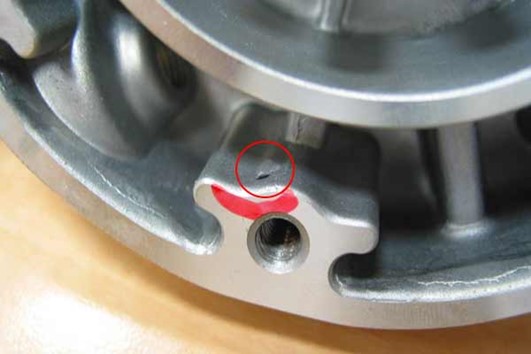
High-pressure die Casting (HPDC) is one of the most frequently utilized metal casting processes in current manufacturing. Manufacturers choose HPDC because it enables the production of complex metal parts that achieve both high precision and rapid production rates superior dimensional accuracy and smooth finishes. HPDC enables automotive and aerospace industries and the production of electronics components and consumer goods to manufacture lightweight durable parts for applications like engines and housings, structural elements, and mechanical assemblies. The manufacturing process of high-pressure die casting faces numerous risks that create substantial defects that decrease product quality while shortening the lifespan and compromising performance. Various defects form from improper mold design, turbulent molten metal flow, trapped gases, inconsistent cooling rates, and thermal stress during the production process. HPDC technology encounters seven primary defects which include porosity, cold shuts, shrinkage defects, flash formation, surface defects, misruns, die erosion, and soldering. These types of manufacturing defects cause deterioration of material strength while producing irregular dimensions and undesirable visual effects which can instigate component breakdown. Manufacturers combat production problems through the optimization of processing parameters and better-undermining methods along with controlled temperature systems and vacuum-assisted casting procedures. Real-time monitoring and simulation software are advanced quality control methods with further efficiency and reliability in the die-casting process. This article provides a comprehensive analysis of standard manufacturing issues during high-pressure die-casting technology with explanations of root causes and solution strategies to decrease these defects. It is only by understanding these challenges and applying best practices that manufacturers can improve the quality, longevity, and, of course, the performance of their die-cast components and simultaneously cut down on waste, and production costs. Proficiency in these manufacturing defects will assist die-casting engineers, production managers, and quality control specialists to optimize their processes for the best die-casting outcomes. 1. Porosity Porosity is defined by small holes or gas inclusions found within the metal matrix, and as a result, affects the mechanical properties, decreasing the strength, including allowing for air and gasses to pass through the structure, and leading to visible surface defects in die-casted products. Causes: Prevention & Solutions: 2. Cold Shut A cold shut is created when two streams of molten metal do not fuse properly and form weak bonding areas or visible seams in the casting. This defect not only decreases the mechanical strength but also increases the risk of a fracture, as well as negatively affects the component’s durability and appearance. Causes: Prevention & Solutions: 3. Shrinkage Defects Shrinkage defects occur due to shrinkage of metal during cooling which leads to internal voids or cavities, which deteriorate the structural integrity of casting. As a result, these defects reduce the mechanical strength of the final product, cause potential failure under stress, and cause poor surface quality, thus affecting both the functionality and aesthetics of the final products. Causes: Prevention & Solutions: 4. Flash Formation Excess thin metal layers formed at the parting line or die gap due to high-pressure metal escape are referred to as flash. Although flash can be trimmed off post-casting, over-flash leads to increased material waste, tool wear, and associated production costs and thus reduces the overall efficiency of the die-casting process. Causes: Prevention & Solutions: 5. Inspection of Surface Defects (Blisters, Crack and Wrinkles) A variety of surface defects, blisters, cracks, and wrinkles, degrade the visual appearance and mechanical strength of the casting and need to be prevented and eliminated. It causes weld defects that reduce the durability of the product, increase the rejection rate, and make the product stick poorly after post-casting treatments such as painting or coating. Causes: Prevention & Solutions: 6. Inclusions and Contamination Unwanted foreign particles, such as slag, oxide films, dirt, or other impurities, which are trapped in a final casting, create poor mechanical properties, weak structural integrity, and surface defects and are called inclusions. The presence of these contaminants can reduce die-cast component performance and durability so that they are not suitable for high-precision applications. Causes: Prevention & Solutions: 7. Misruns and Incomplete Fill A misrun occurs where there is a short filling of the mold cavity, which causes missing sections, thin walls, and weak points in the final component. Negative effects on the structural integrity and functionality of the part and in this way unsuitable for performance applications. Causes: Prevention & Solutions: 8. Die Erosion and Wear Molten erosion dies wear is the loss of the mold surfaces due to the high-speed metal continuously wearing the mold part surfaces until the required dimensions are achieved, which results in poor surface finish and short mold tool life. If this defect occurs, die replacement is common and consequently, production costs increase while casting quality varies. Causes: Prevention & Solutions: 9. Hot Cracking Cracks that occur during the semi-solid state of the metal, is due to high thermal stress and excessive shrinkage are known as hot cracking. These cracks degrade the mechanical integrity of the casting that is increase the chance of failure of the casting at the place where the cracks are present under stress or load. Causes: Prevention & Solutions: 10. Soldering The molten metal adheres to the die surface, which is difficult to remove with casting, causing surface defects, die wear as well as prolonged production downtime. Dimensional inaccuracies and poor surface finish are also caused by this defect, as it results in the overall compromised quality of the final product. Causes: Prevention & Solutions: Conclusion The high-pressure die casting is a powerful manufacturing process that creates complex metal parts at high accuracy at maximum efficiency. However, different kinds of defects arise using improper process parameters, material issues, and/or mold design flaws. Manufacturers can take preventive measures, e.g. optimal process control mold, properly selected material, etc., after understanding these usual manufacturing defects. A company can improve product quality, lower production costs, and achieve higher production efficiency in die-casting operations by emphasizing continuous process improvement as well as defect prevention strategies. Frequently Asked Questions (FAQs) 1. What are the major reasons for defects in high-pressure die casting? The main causes
Scegliere la giusta azienda di pressofusione di leghe: Una guida completa

Scegliere la giusta azienda di pressofusione di leghe: Una guida completa

pressofusione di alluminio, aziende di pressofusione

La pressofusione di leghe è essenziale per l'industria manifatturiera, che si basa in larga misura su componenti metallici di alta precisione, durevoli ed economici. Con un impatto rivoluzionario sulla produzione moderna, questo processo ha reso possibile la produzione di massa di parti metalliche complesse con uno standard molto elevato di precisione e coerenza. Da parte di aziende specializzate, come le aziende di pressofusione di leghe, in settori di servizio come quello automobilistico, aerospaziale, elettronico, medico e delle macchine pesanti, per la costruzione di componenti metallici su misura per le loro specifiche esigenze. Un'azienda professionale di pressofusione di leghe si avvale delle più recenti tecnologie e di materiali di alta qualità, abbinati a un rigoroso processo di controllo della qualità, per fornire prodotti adeguati agli standard del settore. Se la scelta dell'azienda giusta è importante, si può scegliere, in un modo o nell'altro, tra un prodotto veramente affidabile che durerà per anni e un componente difettoso che si guasterà presto. L'articolo offre una panoramica dettagliata sulla pressofusione in lega, sottolineandone l'importanza, i vantaggi e i fattori più essenziali da considerare nella scelta della migliore azienda di pressofusione in lega. La conoscenza della pressofusione in lega è essenziale per i produttori che desiderano fabbricare componenti di precisione o per le aziende in cerca di opzioni di produzione economiche. Che cos'è la pressofusione di leghe? Il processo di produzione dei metalli in cui il metallo fuso viene iniettato in uno stampo (matrice) ad alta pressione è chiamato pressofusione in lega. L'applicazione di questo metodo è ampiamente utilizzata per la produzione di forme complesse con tolleranze ristrette. L'uso comune di varie leghe metalliche, come l'alluminio, lo zinco e il magnesio, nella pressofusione è dovuto alle loro buone proprietà di forza e resistenza alla corrosione. Tipi di leghe utilizzate nella pressofusione Le leghe utilizzate nella pressofusione hanno un grande effetto sulle selezioni nel processo di pressofusione, che porta direttamente alla forza e al peso, alla resistenza alla corrosione e alle prestazioni complessive del prodotto finale. Le leghe variano da un settore all'altro in base alle loro proprietà meccaniche, alla durata e all'uso finale necessario. Le leghe più comunemente utilizzate nella pressofusione sono indicate di seguito. 1. Leghe di alluminio Una buona conducibilità termica, unita alla resistenza alla corrosione e alla leggerezza, fa sì che la pressofusione di alluminio sia preferita da ricercatori e produttori di tutto il mondo. Nelle industrie che richiedono componenti durevoli e relativamente leggeri, viene utilizzato questo tipo di lega. Caratteristiche principali: Applicazioni: 2. Leghe di zinco Grazie all'elevata resistenza, al basso punto di fusione e all'eccellente precisione, lo zinco è un'altra lega comunemente utilizzata nella pressofusione. È ideale per la produzione di parti piccole e dettagliate. Caratteristiche principali: Applicazioni: 3. Leghe di magnesio La sua leggerezza lo rende estremamente adatto a essere utilizzato per le industrie che cercano di ridurre il peso senza compromettere la resistenza, da cui questo metallo prende il nome di magnesio. Caratteristiche principali: Applicazioni: 4. Leghe a base di rame L'ottone e il bronzo sono esempi di leghe a base di rame che hanno un'elevata capacità di condurre elettricità, sono resistenti alla corrosione e all'usura. Queste leghe sono utilizzate per applicazioni in cui le prestazioni elettriche e termiche devono essere eccellenti. Caratteristiche principali: Applicazioni: Vantaggi della collaborazione con un'azienda affidabile di pressofusione di leghe La giusta azienda di pressofusione di leghe consente di selezionare prodotti di alta qualità che seguono gli standard industriali. Ecco i vantaggi principali: 1. Alta precisione e coerenza Un'azienda di pressofusione di alto livello dispone di buoni macchinari e di rigorose misure di controllo della qualità per produrre dimensioni con pochissimi difetti. 2. La pressofusione è un processo molto efficiente che riduce anche i costi di materiale ed energia del prodotto finale in modo significativo rispetto ad altri processi di formatura dei metalli. 3. Personalizzazione e versatilità Un'azienda di pressofusione basata su soluzioni personalizzate è un'azienda rinomata che fornisce soluzioni personalizzate basate su particolari esigenze del settore e offre diverse opzioni di lega. 4. Produzione più rapida e tempi brevi Nelle moderne aziende di pressofusione si utilizzano sistemi automatizzati per aumentare la velocità di produzione e rispettare le scadenze più rigide. 5. Durevolezza e resistenza Le parti pressofuse in lega sono note per essere molto durevoli e quindi adatte all'uso in condizioni difficili. Come scegliere la migliore azienda di pressofusione di leghe Quando si sceglie un produttore di pressofusione, è necessario considerare quanto segue: 1. Esperienza e competenza nel settore Verificate il track record dell'azienda, se ha avuto anni di esperienza nella pressofusione di leghe, se il suo tentativo nel vostro settore è stato comprovato. 2. Certificazioni e standard di qualità Assicuratevi che l'azienda segua i codici del settore: 3. Tecnologia e attrezzature avanzate Per mantenere l'accuratezza e ridurre la necessità di manodopera fisica, una moderna azienda di pressofusione utilizzerà attrezzature come macchine CNC, colate sotto vuoto e automazione robotizzata. 4. Scelta dei materiali e personalizzazione Un'azienda con più opzioni di leghe e di personalizzazione consente di trovare il design specifico che l'azienda offre. 5. Una catena di fornitura forte e una consegna puntuale Una logistica efficiente e una consegna rapida dei prodotti sono garantite da fornitori affidabili. 6. Capacità di prototipazione e test Molto importante è la prototipazione e i rigorosi test di qualità (ispezione a raggi X e resistenza alla trazione) sul prodotto. 7. Prezzi competitivi Anche se il prezzo non deve essere l'unica considerazione, una buona azienda di pressofusione può offrire prezzi competitivi senza sacrificare la qualità. Industrie che si affidano alla pressofusione di leghe 1. Industria automobilistica Industria automobilistica 2. Industria aerospaziale 3. Industria elettronica 4. Apparecchiature mediche Apparecchiature mediche 5. Prodotti di consumo Le sfide della pressofusione in lega e il modo in cui le aziende le superano La pressofusione in lega è un processo di produzione ben noto, che deve affrontare alcune sfide che hanno un impatto sulla qualità, sui costi e sulla sostenibilità. Le aziende leader nella pressofusione di leghe adottano soluzioni innovative per superare questi problemi, ottenendo una produzione di alta qualità, costi ottimizzati e un impatto minimo sull'ambiente. 1. La gestione della porosità e dei difetti La porosità è uno dei problemi più comuni riscontrati nella pressofusione, quando all'interno del metallo si formano bolle di gas o cavità da ritiro. Può anche ridurre l'integrità strutturale del pezzo e influire sulla funzionalità. Questo problema può essere affrontato dai produttori con l'uso della pressofusione sottovuoto, che intrappola una quantità minima di aria e migliora la densità del metallo. Inoltre, la porosità può essere ridotta utilizzando tecniche di colata a tenuta di pressione, la progettazione dello stampo e una corretta

Fornitore di pressofusione: Processo, applicazioni e considerazioni chiave

Fornitore di pressofusione: Processo, applicazioni e considerazioni chiave

Produttore di pressofusioni, processo di pressofusione

It is one of the widely used metal manufacturing processes, and it is highly efficient: producing high precision, durable, and complex components for many Industries. It injects molten metal, like aluminium, Zinc, or magnesium, inside of a steel mold (die) at very high pressure. It provides uniformity, internal strength and smashing surface finishes making it the right choice for use in automotive, aerospace, electronics, medical equipment, as well as consumer goods. A die-casting supplier is a very important company for the manufacture of high-quality parts that satisfy the industry requirements. They are suppliers, who are especially involved in designing, manufacturing and finishing the components or parts utilizing metal with strict tolerances and intricate geometries. Choosing the right supplier matters a lot for the success of any die-casting project as a good supplier should possess adequate expertise, state-of-the-art technology, and a history of successfully delivering precise and low-cost parts.Die casting is efficient in mass production and produces lightweight, yet strong parts, and as a result, the demand for die casting is increasing worldwide. Examples include reducing the weight of a vehicle, and enhancing fuel efficiency, through the use of die-cast aluminum and magnesium components in the automotive industry. In the same way, the electronics industry employs die casting to make heat sinks, enclosures and structural parts that are prone to high durability and electrical conductivity. When looking for a die-casting supplier, one should consider not only manufacturing capabilities but, more importantly, their quality control process, material expertise, and anything that may be left up to the supplier, such as machining, coating, and finishing. This provides a well-established supplier, therefore, reducing lead times, minimal defects and cost-effective production.  In this article, the die-casting process, materials used, the applications, advantages and important considerations of choosing a die-casting supplier are covered. Metal parts required to meet industrial applications need high performance and a reliable supplier fulfils this criterion for both small-batch production and large-scale production. The Die Casting Process: Step-by-Step Guide 1. Mold Preparation Mold (die) preparation and design accompany the initial step of this process. The two-part steel dies consist of a stationary cover die section and the movable ejector die section. Applied lubrication helps the molded flow metallic material smoothly while stopping the material from clinging. 2. Molten Metal Injection The chosen metals aluminum and zinc along with magnesium undergo high-temperature melting. Due to high pressure between 1,500 to 25,000 psi the molten metal enters the mold cavity. High injection pressure produces both accurate and even parts with low levels of flaws. 3. Cooling and Solidification The molten metal quickly reaches solid form during this process when forming parts to their designated shape. The components achieve superior high-strength properties because of the fast cooling process. 4. Ejection of the Part After metal solidification, the mold opens while ejector pins extract the completed part from its chamber. One mold cycle ends when it closes before starting another round of production. 5. Trimming and Finishing Machinists remove all undesirable remnants including flash and both sprees and runners from the part. The component requires supplementary finishing actions which involve sandblasting together with powder coating and anodizing operations to develop superior looks alongside functionality. Differences between Hot Chamber and Cold Chamber die-casting The die-casting process operates in either hot chamber die-casting or cold chamber die-casting formats. The main difference exists in how molten metal receives treatment before mould injection during these two techniques. The two methods differ in specific strengths together with restrictions which make them suitable for particular materials and production needs. The following section provides an elaborate comparison between hot chamber die-casting systems along cold chamber die-casting systems. 1. Process Overview Hot Chamber Die Casting • It requires a built-in furnace, which keeps the metal in a molten state. • Injection system is immersed in the molten metal, sucking it through the injection of a center and supplying it to the mold cavity. • The process is faster since there is no need to convey the metal from an independent melting station as in other processes. Cold Chamber Die Casting • Utilizes an external furnace for heating the metal to produce the required change in its state. • The molten metal is either ladled manually or automatically into the injection system and then it is injected into the mold. • The process is slower than the hot chamber one because the extra step of transferring molten metal takes time. 2. Suitable Metals Hot Chamber Die Casting • Like metals that melt below this temperature such as those that are not suitable to erode the injection system. • Common raw materials include: zinc, magnesium, lead and tin. Cold Chamber Die Casting • Applied to work with metals that have high a melting point which tends to deform the hot chamber system. • Common materials: aluminum, brass, copper, and magnesium alloys. 3. Production Speed Hot Chamber Die Casting • Higher speed of operations normally ranging between 5 to 15 operation cycles per minute. • The direct metal feed helps in avoiding the use of the ladling process in the making of the product. Cold Chamber Die Casting • Some of the disadvantages are the slow cycle times because of manual or fully automated metal transfer. • Other factors may take longer in the cooling and solidification process in this case with some of the alloys. 4. Equipment Durability Hot Chamber Die Casting • The submerged injection system has short service life since it deals with low-melting-point metals. • Longer equipment lifespan with proper maintenance. Cold Chamber Die Casting • Wear and tear increases with the rise in high temperatures especially in the case of aluminum and copper alloys. • Furniture and equipment may last for a shorter time and, therefore, may need constant replacement and maintenance. 5. Cost and Efficiency Hot Chamber Die Casting • High production since the time taken to complete a production cycle is short. • Lower operational costs because of integrated metal handling. Cold Chamber Die Casting • Increased energy costs by

Utensili per pressofusione: La pietra miliare della produzione di precisione

Utensili per pressofusione: La pietra miliare della produzione di precisione

colata di alluminio

Since the modern manufacturing world is surrounded by die-cast tooling, it is no wonder that die-cast tooling has become a critical step in manufacturing precise and reliable metal components. Whether it be automotive parts or consumer electronics, the aim is that the products are of the highest quality standards as regards durability, function, and appearance. It is this comprehensive guide of every part of die-cast tooling from the types to its advantages and disadvantages to the applications that you will find extremely helpful if you are fully into manufacturing.Although the cost of producing parts out of die-cast tooling is higher initially, on the other hand, it provides you with reduced material waste, faster production cycle time, and being ability to make complex designs with very little post-processing if any at all. Not only did advances in cooling systems and more efficient substitution parts like replacement inserts, surface coatings, and the like increase efficiency and durability but also less worn grids and better purge for the electrical system helped. What is Die Cast Tooling? Die-casting tooling means the tools and processes for die-cast tooling. These dies (molds) also shape molten metal into complex and accurate components under high pressure. The engineering of advanced die-cast tooling requires materials and meticulous design practice, as well as advanced engineering skills to facilitate the production of consistently produced defect-free parts.First, metal (usually aluminium, zinc, or magnesium) is melted and passed under high pressure into the die. The quality of the final product is dependent on the precision of the tooling, and that is why die-cast tooling is vital to industrial manufacturing. Components of Die Cast Tooling The process of die casting is a precision manufacturing process that greatly relies on the array of tools needed to produce high-quality metal parts. The combination of these tools is such that they are accurate, durable and efficient. The most common tools used in die casting are listed below. 1. Dies (Molds) The most critical tool in the process is the die, also called the mold. It consists of two halves: •             The cover die; stays stationary and aligned to the injection system. •             If it is an ejector Die, it moves to release the solidified casting. Hardened steel is used to make dies to withstand extreme pressures and high temperatures. They set what dimensions they will build, the complexity the final product will have and how precise it will be.  2. Cavity Inserts The internal shape of the die is formed by cavity inserts to create the intricate ones. Because of this, these inserts are replaceable, facilitating changing the die for different components without having to fabricate a new tool. 3. Core Pins To manufacture internal holes, slots, or intricate recesses, an internal feature is created with a core pin. To get the finished product or product of the finest quality possible, they are necessary. 4. Ejector Pins The completed casting is removed from the die cavity without damaging it by ejector pins. These pins are used for the ejection system, given for smooth and easy part removal. 5. Cooling Channels The die includes cooling channels to allow for regulating the respective temperature during casting. Because uniform cooling avoids defects like warping, cracking, or shrinkage, it also provides for constant quality. 6. Vents and Overflow Wells Trapped air is released from vents when molten metal is injected into the die and overflow wells are used to collect excess material. The final product is free of voids or air pockets, and both tools lend to that. 7. Trim Dies Trim dies are specialized tools to remove excess material i.e. flash from castings. Clean edges and accurate dimensions for the final product are assured because they promise it. 8. Lubrication Systems The die is lubricated with some aqueous lubricants to minimize wear, reduce friction, and also facilitate the removal of the part. Lubrication in its proper form improves die lifespan, prevents die shutoff and ensures smooth casting operations. 9. Shot Sleeves  Guides to the injection system are shot sleeves that guide the molten metal to the die cavity. The way they are designed to handle extreme heat and pressure means they work to smooth metal flow. 10. Sprayers Release agents are coated in the die using sprayers to prevent the molten metal from sticking to the die and making part removal easier. In order words, these tools work together to deliver consistent parts, high quality and without defects – indispensable for industries such as automotive, aerospace, electronics, etc. Types of Die Cast Tooling From die-cast tooling, there is nothing one size fits all. Depending on production requirements, various types of tooling are designed. Single-Cavity Tooling: This type of tooling produces one part per cycle. A low-volume production or prototyping system will suit. Multi-Cavity Tooling: Multi-cavity tooling enables the simultaneous production of multiple identical parts improving production efficiency. For high volume manufacturing it is very commonly used. Family Tooling: The entire tooling method is innovative, it produces many different parts in one cycle. It is particularly appropriate when assembling components that are to be manufactured together. Unit Die Tooling: Modular unit dies can substitute insert types or portions of the dies without redrawing the entire die. This reduces costs and downtime. Trim Dies: They are used to get rid of excess material (flash) from the finished part, making sure that the finished part meets the exact specifications. Benefits of Die-Cast Tooling Nowadays, die-cast tooling is indispensable because of its many advantages: Precision and Accuracy: High dimensional accuracy is achieved of course with die casting, part production with relatively tight tolerances, and intricate designs. Durability: These tools are from hard steel and are well capable of withstanding the rigours of high-pressure casting and increased use. Efficiency: The process gives a quick, economical way to produce identical parts without much scrap and is thus economical for large-scale production. Design Flexibility: With die-cast tooling, there are complex shapes, thin walls, and intricate details that are not possible under other manufacturing methods. Material Savings:

Alluminio verniciato a polvere: Tutto quello che c'è da sapere!

colata di alluminio

Aluminum Powder Coating provides parts with strong protection against corrosion and durability. It is perfect for both residential and commercial-scale projects.  The coating process makes it possible for manufacturers to arrive at reliability and longevity results. Powder coating improves the look of the parts/products, as well as their performance in different situations. Further, it does not wear out easily, peel, or rust. This makes it appropriate for use in areas where it comes into contact with the elements. This is largely due to the flexibility that is associated with powder coated aluminum in different uses. In many potentials, it merges fashion and the necessity to serve as a utility object in various contexts. What is the Aluminium Powder Coating Process? Aluminum powder coating is a process of applying a smooth and tough layer. It is relatively effective and takes several important phases for surface preparation for implementing the coating and curing of the applied coating material for maximizing durability. In the subsequent sections, let’s discuss its detailed process in a few steps:  1. Surface preparation: To appropriately apply powder coat aluminum​, it’s crucial to clean the aluminum surface prior. You can use abrasive blasting and can go with chemical cleaning to rid the surface of oils, grease, dirt, or oxidation. The preparation is imperative. Because all the contaminants can benefit from the adhesive characteristic aluminum powder coated parts. 2. Electrostatic Powder Application: After cleaning, and drying the material, the appropriate powder coating is applied. Operators apply an electrostatic gun to create an electrical discharge using a fine and dry powder on the aluminum surface. The particles of the powder are charged to enable them to cling to the aluminum. So, that the even distribution will give a uniform end to the surface. 3. Final Curing in a High Temperature: After applying the powder the aluminum piece is taken to a curing oven. Here, the fine/accomplishment powder melts and goes into the surface to be coated. While it hardens to form a surface of the coat. Temperature and time are the two most important factors in deciding how hard the coating is and how smooth the surface is after the coating cures. 4. Cooling and Quality inspection: Imperfections that may have occurred after the process. The final product obtained after curing is required to be checked for high quality before it is brought to the market. So, overall from start to end, every stage in the process plays a vital role in establishing a long-lasting, eye-catching layer to the aluminum. In addition, it helps it fight corrosion, scratches, and degradation. Therefore,  powder coated aluminum is suitable for use in different fields, be it in households, outdoors such as in decks and patio sets, or marine industries. Powder Coat Aluminum: What Benefits It Brings For Manufacturers Aluminum powder coating has numerous advantages for manufacturers other than enhancing appearance and performance. It can be highlighted that this type of heating is effective, durable, and very flexible. Now let me highlight the major advantages of the aluminum coat process. 1. Durability and Corrosion Protection: The powder coat used is made of aluminum hence providing a hard-wearing surface layer. This layer is more scratch-resistant, chip-resistant, and abrasion-resistant than any other normal paint. But it does not last for decades! This material also has high performances under different climates and water which leads to corrosion and fading respectively. 2. Eco-Friendly and Safe:  As for the liquid coatings, they contain liquid, solvent, and volatile hazardous components while in the powder coating, there is no one of them. Second, it produces little pollution and does not emit/release toxic gases. Further, the process lessens the blow of harming the environment, thereby the process is relatively safe for the workers handling it. 3. Customizable Finishes: Being a good conductor of heat, powder coat aluminum allows for a wide variety of colors and textures for consumers. No matter whether you like shiny, satin, or perhaps even trowel finish, powder coating provides the latter. Additionally, the coating can be adjusted to meet specific design needs or brand specifications. 4. Cost-Effective Solution: Aluminum is a popular material that can be powder coated at a relatively low rate of cost for large-scale jobs. It is fast, needs less retouching, and has a longer life span compared to the general paints. All these features make it easy to maintain and long lasting for instance ideal for commercial and residential use. What Are The Drawbacks of Powder Coated Aluminum: Although powder coating aluminum has its benefits it also has some demerits. Both options should be considered before concluding. Here are some of the usual ones: 1. Restricted Repair Possibility: The first limitation that comes alongside powder coating is the number of ways to repair a coated surface is relatively small. In general, if the coating is damaged, or says scratched, it is difficult to repair it without making it quite noticeable. The problem with paint is that you cannot go and spot-paint a small area without the texture and color looking different. 2. Initial Cost and Equipment: Another disadvantage involves the major initial cost of powder coating equipment. High-speed electrostatic guns and curing ovens are necessary. However, these tend to incur costlier compared to simple painting methods, especially for moderate or small-scale painting. 3. Complexity Of Surface Preparation: Surface preparation is a critical factor in the application of powder coatings. If the aluminum surface is not well cleaned and prepared well the coating will not stick well to the aluminum surface. The preliminary make-ups took more, and therefore more tiresome and thus took a lot of time to complete the task. 4. Suitable for Some Uses: Aluminum powder coating is only suitable for use on aluminum alloys. However, it may not be beneficial for any other types of material, and complex pattern to be used in the construction of the screen. At very detailed or small parts, the process may not work as intended and often needs further steps. What Does Powder Coating Mean for

prodotti di pressofusione in lega di alluminio

Pressofusione di leghe di alluminio 101

colata di alluminio

Aluminum alloy die casting is a die casting process that is a widely used process in manufacturing that involves producing accurate and intricate parts of metal with efficiency. In this case, we can list metals that have a variety of applications due to their capacity to be very strong and light simultaneously. Besides this, we can list that practically corrosion-resistant, i.e., aluminum alloys are particularly popular with car manufacturing. This article also looks into such areas as processes, properties, challenges, and applications of aluminum alloy die casting. We will get deep insights into its complete process, types, and differences from other processes. What is Die Casting? It is a manufacturing process that utilizes high pressure to force a molten metal to fill a mold cavity. It also allows the generation of excellent models with near-net shaping, accurate dimensions surface finish, and complicated shapes. Different Types of Die Casting Die-casting has many types. Let’s discuss these types in detail; 1. Hot Chamber Die Casting It is mostly suitable for zinc and magnesium alloys. This process takes submergence of the injection system in the molten metal to facilitate rapid casting. It is ideal for use in a large production but unadapted for utilization in high-melting-point alloys. you can go to zinc die casting to know more detail 2. Cold Chamber Die Casting It is a best fit for metals such as aluminum and brass having high melting points. Here we transfer the molten into a cold chamber and then inject it into the mold. It saves on the heat hazard to the equipment but has longer operating cycles. Got aluminum die casting services page to know more about this process. 3. Low-Pressure Die Casting The low-pressure die casting use with Used with aluminum and magnesium alloys. It causes minimal porosity but good structural quality. Besides this, it is time-consuming but suitable for creating the stronger part of the product. 4. High-Pressure Die Casting (HPDC) Common in aluminum, zinc, and magnesium alloys. Here we inject the molten metal at very high pressure into complicated shapes and fine surface textures. So, it is highly suitable for applications that need parts with large production quantities, and areas with large cross-sections may be porous. Go to high pressure die casting page to know more detail. 5. Gravity Die Casting Standing pressure is used to cast molten metal into a mold thus yielding strong and low porosity objects. It is used in production lines where we need to produce less number of parts at a time but it is comparatively slower than pressure-based processes. 7. Squeeze Die Casting Here we make semi-finished products by the pressure forging method where molten metal is high pressure and can also prevent casting porosity. This is suitable for the structure of a part; however, it has a higher cost and slow cycle time. Define Aluminum Alloy die casting Aluminum alloy die casting is a process in which molten aluminum alloy materials are forced under pressure into molds or dies. So, it can form the desired shape and a very smooth surface finish. It is employed in component manufacturing with complicated shapes that require high strength, stiffness, and low density integrated with good surface finish and accurate dimensions. The aluminum alloy has all the favorable characteristics of high corrosion and heat transfer coefficients and hardness-to-weight ratio. One of the benefits of this process is that die casting is suitable for large-scale production processes. Selecting the Right Material for Aluminium alloy Die Casting Materials used are very vital in the aluminum alloy die-casting business since they determine the efficiency, quality, reliability, and cost of the final product. Properly chosen alloys ensure: Aluminum alloys in die casting Die-casting aluminum alloys are common to many industries because these materials possess qualities that are desirable in dies such as lightweight, high strength, and corrosion resistance. Alloy Key Properties Applications Values A380 Strong, corrosion-resistant Engine blocks, housings Strength: 320 MPa A383 Crack-resistant, castable Electronics, thin parts Strength: 290 MPa A360 Corrosion-resistant, durable Marine, aerospace Strength: 330 MPa ADC12 Castable, corrosion-resistant Automotive, machinery Strength: 310 MPa AlSi9Cu3 Strong, wear-resistant Structural components Strength: 250–280 MPa Complete Process for Aluminum Alloy Die Casting Aluminum die casting entails the formation of elaborate and accurate first parts by the application of pressure on molten aluminum alloys. Below are the key stages: 1. Mold Preparation 2. Melting and Alloy Selection The aluminum alloys are brazed at a temperature of about 660 centigrade (1220 Fahrenheit) in a furnace. This aluminum is then kept at a relatively constant temperature to retain the material properties of the metal. 3. Injection When high pressure is used, it ensures that the molten aluminum flows right to the small crevices resulting in excellent finishes. 4. Cooling and Solidification It is the process during which the obtained molten aluminum cools and solidifies inside the given mold. Cooling minimizes defects such as shrinkage or warping that are brought about by dryness in the cast iron. 5. Ejection Finally when the casting is fully formed its mold is ejected from the casting using the ejector pins. The mold is then ready for the next cycle of use with the Epicor software. 6. Trimming and Finishing If necessary, runners, gates, and flash are removed from the casting leaving only the necessary shape and form of the object. Some of the operations include giving the required surface finishes such as sandblasting, polishing, or coating. Die Casting Aluminum Alloy Properties So, let’s discuss some of the important mechanical, chemical, and thermal properties of Aluminum alloy Diecasting; I. Mechanical Properties These may include; II. Thermal Properties The following are some thermal properties of diecasting aluminum alloy; III. Chemical Resistance: These are generally; These characteristics make aluminum alloys a premium material for die casting whose products are effective in different sectors. Design Guide for Aluminum Alloy Die Casting Design guide and material selection, both features play an important role in aluminum diecasting. So, let’s discuss the design guide properly; Design Factor Guideline Reasoning Wall Thickness Keep

aziende di pressofusione di alluminio

Le 10 principali aziende di pressofusione di alluminio in Cina e negli USA

aziende di pressofusione

Are you looking for Top Aluminum Die Casting Companies in the world’s industrial powerhouses? The USA and China have become significant participants in global aluminum die-casting services over decades by offering an array of services to fulfill precision-demanding sectors. Like in any business field, the project’s success usually depends on the partner you select. The most reputable, experienced die-cast companies always guarantee high-end products formulations, and satisfied outcomes. Due to diverse aluminum die-casting companies in the USA and China, it sometimes becomes challenging to figure out the right partner for your business. Don’t fret— We will compare the leading 10 Aluminum Die Casting Companies in China & USA in this article. 1. Sincere Tech Co., Ltd. Year Established: Over 15 years Core Business Capabilities: Plastic molding, aluminum, magnesium, and zinc die casting molds/tooling, machining, surface finishing, and Prodcut assembly services. Address: Building 1, No. 30 Huan Zhen Rd, Shang Dong Village, Qi Shi Town, Dongguan City, Guangdong Province, China, P.C.: 523000 Website: www.plasticmold.net Company Overview: Sincere Tech Co., Ltd. is a the leading aluminum die casting and mold facotry in China that is located in Dongguan, China. It mainly focuses on the highly precise plastic injection mold, aluminum die-casting mold, magnesium, and zinc die-casting, and plastic molding. Originally founded over 15 years ago, the company has grown to develop exceptional tooling and die-casting capabilities for a broad range of industries. Established with modern technology and experienced staff, Sincere Tech provides precise products that conform to modern industry standards. For clients in the computer peripheral industry that need die-cast parts and/or plastic injection parts, Sincere Tech can handle design, manufacturing, assembly, and other related services to provide the best quality and lowest cost through one-stop-shopping. Key Services Their Commitment to Quality: Sincere Tech’s team makes sure every product they develop conforms to the high-quality standards of the sphere. They entail sound quality control measures that encompass each stage of product development, including design and physical prototyping, assembly included. The firm employs an automated system and also incorporates manual checks on the products to notice any flaws during the production process. As highlighted, Sincere Tech is an ISO-certified company that helps validate the firm’s anvil on credible and long-lasting products. Industries Served: Sincere Tech serves a diverse range of industries, including: Why Choose Sincere Tech? Sincere Tech is your comprehensive solution provider for Aluminum die-cast part solutions. They have been in the business for over 15 years, and provide custom services such as design, prototyping, tooling, production, and assembly. The company presents its solutions at a lower price while preserving the highest quality level. It also provides good quotes and fast turnaround time for small and large complex projects whether you are planning for a few prototypes or 1000s of production parts. If you are looking for aluminum die casting companies in China that could offer you product design and development, product assembly, aluminum die casting and plastic injection molding, then they will be one of your best options. 2. GC Precision Mold – One of Aluminum Die Casting Companies in China Year Established: 2005Core Business Capabilities: Aluminum die casting (ADC12, A380, AL 6061, 6063 die casting), zinc die casting, precision CNC machining, and assembly.Address: Dongguan City Qiaotou Town, Jinglian No.40, Donghu Road, Guangdong Province, China.Website: www.thediecasting.com Company Introduction: GC Precision Mold is ranked among the large B2B Aluminum China Die Casting Companies. It was established in 1999. The company provides services such as aluminum, magnesium, and zinc-casting services to different industries across the globe. Besides general die casting, they also offer surpassed precision CNC machining, surface finishing as well and assembling services. By employing contemporary means and skilled professionals, GC Precision Mold offers its customers standard-quality products. They produce intricate engineering part and tolerance and with Six Sigma Surface Finish. The company ensures that its clients will obtain solutions including the design processes up to fabrication of the intended parts down to the final assembly of the particular molds, which fits the specific figures to the last detail. Their Commitment to Quality: GC Precision Mold manufactures products that always follow rigorous quality standards like ISO 9001:2015. It dictates high-quality products for its clientele. The company has a comprehensive quality control procedure which guarantees the products meet the set standard and are acceptable to the market. Industries Served: GC Precision Mold serves a wide range of industries, including: Why Choose GC Precision Mold? GC Precision Mold employs modern technology with skilled manpower to ensure a satisfied customer experience. Whether a client needs high-volume production or prototype service, GC Precision Mold provides the best on-demand high-quality service on a constrained budget. If you are looking for accurate aluminum die-casting solutions in China you can trust GC Precision mold. Feel free to request an instant online quote! If you are looking for aluminum die casting companies in China that could offer you 6061 and 6063 high pressure die casting, product assembly and plastic injection molding, then they will be one of your best options. 3. CNM Casting Year Established: Over 20 years Core Business Capabilities: Aluminum, magnesium, and zinc die casting, precision CNC machining, surface finishing, and assembly. Address: Room 101, No. 40, Donghu Road, Jinglian, Qiaotou Town, Dongguan City, Guangdong Province, China, P.C.: 523520 Website: www.thediecasting.com Company Introduction: CNM Tech Co., Ltd. was founded over 20 years ago. The company is located in Dongguan, China, and provides a wide set of die-casting services that involve aluminum, magnesium, as well as zinc alloys. They also make complicated castings and precise casting with the industrial application of automobile, electronics, aerospace, and home electric appliances. CNM Tech aims to deliver forth-durable, and highly complicated parts with fine features and spacial dimensions chiefly attributable to the ultra-modern equipment and human resource capital at its disposal. They serve customers who require modest quantities of prototypes as well as clients who require sizable production batches at inexpensive rates without compromising the quality. Another critical aspect of CNM Tech is close cooperation with the customer, as well as the

parti in pressofusione

Differenze tra la lega Zamak 3 e Zamak 5

zamak 3, zamak 5

Zamak alloys used commonly in die casting have attractive characteristics which include versatility, strength, and durability. Of all the Zinc die-casting alloys, Zamak3 and Zamak5 are the most prevalent due to their special characteristics and the versatility of the application areas. To avoid compromising its functions, it is important for manufacturers and engineers who make choices to learn and distinguish the various qualities of those alloys. This guide discusses all the differences and similarities between Zamak 3 and Zamak 5 as well as their use in multiple settings and their capabilities. What is Zamak? Zamak, a term that is an acronym for Zinc, Aluminum, Magnesium, and Kupfer, (original German for copper), denotes a group of zinc-based alloys widely used for die casting. Some of the properties that make these alloys desirable is; polished appearance, precise dimension, and high corrosion resistance. The Zamak type of alloy varies depending on the proportion of aluminum, magnesium, and copper it contains. The two common forms are Zamak 3 and Zamak 5, which have Different settings of parameters for different industries. Chemical Composition of Zamak 3 and Zamak 5 This is because the performance of Zamak 3 and Zamak 5 depends on the chemical composition. These two alloys contain major proportions of zinc but they differ in secondary elements which result in different properties. Element Zamak 3 Composition (%) Zamak 5 Composition (%)   Zinc (Zn) ~96 ~95.5 Aluminum (Al) ~3.9 ~3.9 Magnesium (Mg) ~0.04 ~0.04 Copper (Cu) 0 ~0.75 Key Differences Zamak 3 lacks copper, giving it slightly better corrosion resistance in specific environments. Zamak 5 contains about 0.75% copper, enhancing its strength and hardness. Mechanical Properties Comparison It is for this reason that Zamak 3 and Zamak 5 have some variations of the mechanical properties, which are a result of the differences in their formulation. This affects their usage as well as working efficiency under different circumstances. Table: Mechanical Properties of Zamak 3 vs. Zamak 5 Property Zamak 3 Zamak 5   Density (g/cm³) 6.6 6.7 Yield Strength (Mpa) 220 250 Elongation (%) 10 7 Hardness (Brinell) 82 90 Impact Strength (J) Higher than Zamak 5 Lower than Zamak 3 Analysis Strength: Zamak 5 has higher tensile and yield strength, making it more robust for demanding applications. Ductility: Zamak 3 exhibits better elongation and impact resistance, suitable for parts requiring flexibility. Hardness: Zamak 5’s higher hardness ensures better wear resistance. Applications of Zamak 3 and Zamak 5 die casting products Namely, the properties of Zamak 3 and Zamak 5 make them suitable for particular uses. Zamak 3 casting Applications Consumer Goods: Commonly seen on die-cast end products such as car door handles, zippers, and other small ornamental parts. Electronics: Zamak 3 die casting parts can also maintain a more stable dimension than other die-cast alloys, especially for housing or enclosure applications. Toys: Otherwise known for its good surface finish and easy-to-machine material, many die cast toys made with zamak 3 die casting process Zamak 5 die casting Applications Automotive Industry: Owing to high strength, Zamak 5 alloy die casting parts are used in the structural and functional parts of a variety of apparatus. Hardware: Writing instrument parts – zinc die casting hinges, brackets, locks, benefit from its increased hardness. Industrial Equipment: Zamak 5 die casting parts are the choice for all the zinc alloy parts experiencing high stresses. Table: Applications by Industry Industry Zamak 3 die casting   Zamak 5 die casting Consumer Goods Small decorative items Heavy-duty functional parts Automotive Low-stress interior parts High-stress structural parts Electronics Precision housings Heat-resistant components Advantages and Limitations Advantages of Zamak 3 die casting products Cost-Effective: Lower material cost compared to Zamak 5 alloys. Corrosion Resistance: Excellent in environments where copper would accelerate corrosion. Ease of Casting: Offers better fluidity during zinc die casting manufacturing process. Advantages of Zamak 5 die casting products Strength and Hardness: Higher mechanical strength and wear resistance. Durability: Better suited for high-stress applications. Surface Treatment: Enhanced suitability for plating and finishing. Limitations Zamak 3:      Maintenance of limited power when required to operate under high stress conditions. Zamak 5: This is another reason for a slightly lower corrosion resistance at higher concentrations of                                        copper present in the alloy. Die Casting Zamak 3 vs. Die Casting Zamak 5                Die casting is a process of forcing a metal at high pressure into a mold cavity. Both die-casting Zamak 3 and die-casting Zamak 5 excel in producing intricate shapes with tight tolerances, but there are notable differences: Parameter Die Casting Zamak 3 Die Casting Zamak 5 Fluidity Superior Slightly lower Shrinkage Minimal Slightly higher Casting Temperature Lower (~380°C) Slightly higher (~385°C) Machinability Excellent Good Die Casting Process Overview  Key Considerations: Ease of Use: Zamak 3 die casting also has drawing advantages over the other because of its comparatively lower casting temperature and better fluidity. Stress Tolerance: Therefore, Zamak 5 die casting can be used in an application with robust parts and components. Choosing the Right Alloy Factors to Consider Application Requirements: For applications that need high dimensional stability, corrosion resistance, and low-stress bearing: the Zamak 3 alloy material should be used. When selecting for strength and hardness choose Zamak 5 alloy for parts that require high levels of durability, and lower stress tolerance. Cost: It is observed that Zamak 3 alloy is slightly cheaper than Zamak 5 alloy. Environment: Zamak 3 may do better in corrosive circumstances because of a lack of copper in the alloy. Decision Table: Zamak 3 vs. Zamak 5 Requirement Recommended Alloy   High strength Zamak 5 alloy Cost efficiency Zamak 3 alloy Corrosion resistance Zamak 3 alloy Wear resistance Zamak 5 alloy Practical Use Cases for Zamak 3 and Zamak 5 Thus, we will investigate how adopted scenarios of Zamak 3 and Zamak 5 work in practice. This will also make clear to them the benefits and the nature of their applicability to certain functions. Zamak 3 in Practice  Electronics Industry: Zamak 3 die casting is used predominantly for applications in

zinco pressofuso produttore in Cina

Le 11 migliori aziende di pressofusione di zinco in Cina e negli USA

parti in pressofusione, Pressofusione di zinco

If you have metal alloy casting parts that require a high quality surface finish, such as polishing, plating, or electronic plating, then you should look for zinc die casting parts. Zinc or zamak die casting is frequently used in the production of precisely decorative parts, building accessories, door and window accessories, door hingers, die cast models, and other similar alloy products. The purpose of this article is to provide you with a concise introduction to the best 11 zinc die casting companies in China and the United States of America, as well as their casting capabilities and competitive advantages. With that in mind, let’s take a look at some of the most well-known businesses in this extensive guide. 1. Dongguan Sincere Tech Co., Ltd Dongguan Sincere Tech Co., Ltd is a mold manufacturer and zinc die casting company based in China. High-quality injection molds are the specialty of the company. It provides die-casting molds of aluminum, zinc, and magnesium along with the accuracy in plastic molding as well as molding. Services offered are for automotive, medical, and other sectors. The customers gain precision reliability and competitive charges for all the projects offered. The use of high-quality machines and equipment means that there is quality output with minimal deviations. Oversight of each project is left in the hands of skilled professionals to ensure that high standards are followed. The company has established a reputation as one of the leading companies because international clients have confidence in Dongguan Sincere Tech for success. Services Offered Dongguan Sincere Tech provides clients with a wide range of product development solutions. It ranges from the design process to the creation of prototypes, from production design to actual mass manufacturing. That is why mold creation and tooling services are considered to incorporate high precision of output product assembly, testing, and packaging. The company has immense experience in Die casting and plastic molding. Every move is performed with precision and clarity. The company makes sure that its products are according to the industry standards and values. Quick turnaround times and good results are guaranteed. Why Choose Dongguan Sincere Tech? Quality, precision, and reliability are the core values of Dongguan Sincere Tech Company. Quality assurance measures applied to the greatest level ensure the high quality and standards of the product. Raw materials of fine quality are used in the production of various products. The sophistication of manufacturing processes is used for better sturdiness. Every client is provided with high-performance and low-cost services. Accuracy and durability are the foremost aspects of designing the product. Professionals receive optimum levels of satisfaction in the services they offer to the customers as well as the products they manufacture. If you are seeking reliable and affordable molds, then Sincere Tech is a company you should look at. If you are looking for plastic injection molding, product assembly services China, and zinc die casting companies in China, you are welcome to contact with them for price. 2. GC Precision Mold Co., Ltd. GC Precision Mold Co., Ltd. is a leading Zinc die casting company in China offering vast experience of over two decades. Founded in 1999 and is primarily involved in the business of aluminum, zinc, and magnesium die-casting. In addition, they provide services for plastic molding, CNC machining, and surface finishing. GC Precision Mould works with different sectors of the economy such as automobile, electronics, and the healthcare sector. The company holds a reputation for its efficient production line. Its advanced machines are from 120 tons to 1650 tons. The services offered by the company include gravity casting, high-pressure die casting, and sand casting. They design and develop molds of specific interest. The accuracy and quality are ensured on every project to the maximum level. GC Precision Mould sells its products in the international market, specifically in North America and Europe. These companies provide efficient and convenient delivery and shipping for their customers in different parts of the globe. This has made them certified under the International Organization for Standardization (ISO) 9001 on quality. The company delivers customized solutions according to the client’s demand, thereby adding value. Core Services Provided GC Precision Mould Co., Ltd. provides a wide range of services: Die Casting: The materials used are aluminum, magnesium, zinc, and other custom alloys. Plastic Injection Molding: High precision in molding with a range of surface finishes. CNC Machining: CNC lathe turning and component manufacturing with high levels of accuracy. Surface Finish: Anodizing, powder coating, painting, and plating with chromium. Custom die casting Tooling: Equipment for difficult die casting and molding applications. Their die-casting services target the automotive, electronics, and consumer products industries. For every project, they employ modern tools and techniques, thus meeting the highest levels of production. They satisfy various customer needs since the machines used in manufacturing have a part-making capability of up to 50kg in weight. Why Choose GC Precision Mould Co. Ltd? GC Precision Mould is a reliable supplier of Zinc Die Casting Services. They provide steady and affordable services grounded on their many years of experience. The company emphasizes and assures a fast response time and works at a reasonable budget. GC Precision Mold offers a full spectrum of customer support starting from the time the project is initiated. From die casting, and CNC machining to plastic molding the company guarantees satisfaction to their customers. G.C Precision Mold Co., Ltd. focuses on constant innovation. They are always giving their best to advance their production systems and techniques. They are ISO 9001 certified and follow rigorous international standards for their products. They meet both small and big production needs in terms of service delivery. If you are looking for plastic injection molding, CNC machining, surface finish like anodzing, electronic plasting, 6063 or 6061 high pressure die casting, and zinc die casting manufacturers in China, you are welcome to contact with them for price. 3. CNM Casting CNM TECH is an advanced industrial zinc die casting company based in China, the CNM casting company is mainly involved in precision die-casting

Lavorazione CNC

Lavorazione del titanio

Parti di lavorazione del metallo

Titanium was once a material that was used by only a few select shops and was rarely touched by the average machinist, but now it is used much more frequently and has been used by many machinists over the course of their careers. The machining of titanium is not similar to that of standard materials such as aluminum and steel in the industry. However, because of their enormous profits, more shops are beginning to express an interest in these jobs. In this article, we will cover successful practices for cnc machining titanium, how to select the appropriate cutting tools, and things that need to be considered by machinists. wanto know more about other machining process, please go to Manufacturer of Turned Components page. Machining Titanium: Key Considerations CNC Machining with titanium is a complex process because of its strength, making it appropriate for most demanding applications while simultaneously being difficult to machine. It is vital to comprehend the details of the machining process to get the best outcome and extend the tool’s lifespan. Selection of Cutting Tools Machining titanium requires considering cutting tools. Since titanium is resistant to heat and hard, it is crucial to choose tools that can withstand these properties. Coated high-speed steel tools with tungsten, carbon, and vanadium are suitable because of their hardness retention at temperatures up to 600°C. These tools allow for better cutting and reduce the chances of chipped edges, improving the machining processes. Importance of Tool Coatings The coating of cutting tools is significant, and applying the correct type of coating will improve the cutting tools’ performance during titanium machining. Coatings such as titanium aluminum nitride (TiAlN) reduce heat generation by creating a layer of aluminum oxide on the tool’s surface. This layer minimizes heat conduction and chemical interaction between the tool and workpiece, increasing tool life and chip removal. Ensuring Stability in Machining Stability during titanium machining is vital to reduce vibration and increase the accuracy of the cutting. Due to the flexibility of titanium and high forces, chattering is likely to occur, which is detrimental to the quality of the machined surface. Work with more giant core-diameter end mills to improve stability and ensure the shortest distance between the spindle nose and the tooltip. Using constant machining feeds and speeds also reduces heat and strain hardening on the tool, thus maintaining the tool’s functionality and durability. Advantages of Climb Milling Climb milling has several benefits when used in custom titanium machining. In climb milling, the chip thickness starts from a wider one and gradually reduces, while in down milling, the opposite is true. This helps enhance the heat transfer to the chips rather than the workpiece, thus minimizing thermal stress and tool wear. Climb milling enhances shear and proper chip clearing behind the cutter, improving machining and surface finish efficiency. Knowledge of these strategies is crucial to the successful machining of titanium. Thus, selecting proper tools, appropriate coatings, stability, and adequate milling strategy will enable the machinists to obtain the desired dimensions and efficiency of the titanium components under the industrial requirements. Common Grades Used For CNC Machining Let’s discuss some common grades typically used in cnc titanium machining. Grade 1: Commercially pure titanium containing not more than 0.3% of Oxygen. Some of the most common types include grade 1 titanium with high ductility and low oxygen content. It has good machinability, high impact toughness, and high corrosion resistance and is applied in the medical, automobile, and aerospace industries. However, Grade 1 titanium has some drawbacks; it has lower strength than the other grades of titanium and thus cannot be used in areas where stress is applied. Grade 2 (Commercially Pure Titanium containing a standard amount of Oxygen) The second grade of titanium is also known as the workhorse titanium because of its average oxygen content, high corrosion resistance, formability, weldability, and ductility. It is widely used in the medical and aerospace industries, especially in aircraft engine parts, due to its mechanical characteristics that enable it to withstand the applied conditions. Grade 3(Pure titanium with a moderate quantity of oxygen) Grade 3 titanium is considered to have moderate mechanical properties such as corrosion, workability, and strength. It is not as commonly used in commercial applications as Grade 1 and 2. Still, it is used in medical, marine, and aerospace industries where consistent performance of parts and assemblies is required. Grade 4 (Pure Titanium with high oxygen content) Grade 4 titanium is one of the most powerful and chemically stable materials for cnc titanium machining. it is appreciated for its ability to work in harsh environments. Nonetheless, it has a high oxygen content, which makes it rather difficult to machine. It uses a lot of coolant and has high feed rates during machining. This grade is used in cryogenic vessels, chemical processing equipment, and airframe parts where high strength and toughness are essential. Grade 5 (Ti6Al4V) Ti6Al4V is an alpha-beta titanium alloy with 6% Al and 4% V; this material has good mechanical properties, including high strength, reasonable formability, and good corrosion resistance. It is used in power plants, offshore platforms, ships and ship parts, high-strength aerospace products, and so on.  The grade 5 titanium is applied in all the areas where high performance is needed in various conditions of the environment. Grade 6 (Ti 5Al-2.5Sn) Grade 6 titanium alloy has good stability and high strength and can quickly be joined, especially at high operating temperatures. This makes it ideal for use in airframes, jet engines, and other aerospace parts and components where the strength of the material is of utmost consideration. Due to its ability to handle high temperatures and stress conditions, it is suitable for rigorous conditions. Grade 7 (Ti-0.15Pd) When comparing Grade 2 with Grade 7, the latter contains palladium to improve the corrosion properties, particularly in chemical applications. It has good forming and welding characteristics, and because of its resistance to corrosive agents, it is extensively used in chemical processing equipment where strength and durability are essential.

Torna in alto

Richiedi un preventivo