CNC-maskinering

Den essensielle guiden til CNC-maskinverksteder

Den essensielle guiden til CNC-maskinverksteder

CNC-maskinering

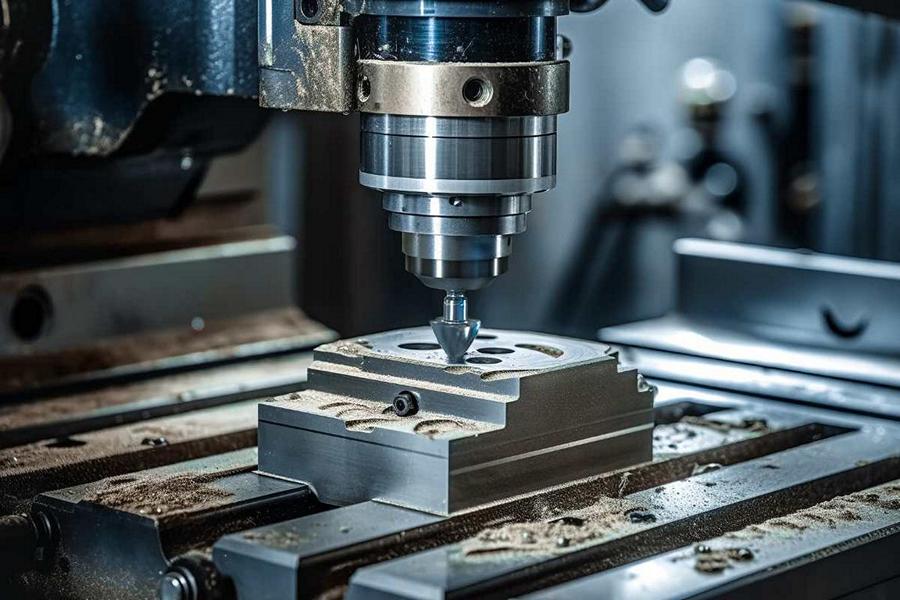
In the fast pace of manufacturing, CNC machine shops are the backbone of precision engineering, efficient machine shops, and technological advancement. The advanced facilities use Computer Numerical Control (CNC) technology to produce highly precise components for aerospace, automotive medical, and other industries. Traditional machining using manual labor and operator knowledge requires constant quality, slower production, less cost-effective. In contrast, CNC machining automates the whole process and has reliable consistency, fast production, and cost efficiency. A CNC machine shop is powered by a variety of super cool high-tech machines including CNC mills, lathes, routers, plasma cutters, and EDM machines that run on a computer with precise, auto-guided functions. The process starts by using computer-aided design (CAD) software and engineers making detailed 3D models of the particular component required in the system.  Using these designs, they are then converted into machine-readable G code that specifies the exact movements of cutting tools to create and shape raw materials products. Each material possessed specific mechanical and physical properties which made them suitable for a particular CNC machine shop. Without CNC machining, it would be difficult to work with such diverse materials and people would require durable, lightweight, heat-resistant, and even corrosion-proof parts when they need them. CNC machine shops have high precision and can be done with high efficiency, besides this, they provide scalability, repeatability and flexibility, enabling businesses to create from prototypes to mass production runs with little human involvement. CNC machining is at the forefront for industries that are actively trying to build more advanced and more complicated designs. This article details the how CNC machine shops operate, what type of machines they use, what materials they work with, and the industries they service. Knowing their role, capabilities, and the advantages the businesses can see who CNC machining service is best for. What is a CNC Machine Shop?  A CNC (Computer Numerical Control) machine shop is a place equipped with modern machine tools controlled by computer programs. They make shop with the sole purpose of producing high precision, complex parts for aerospace, automotive, medical, electronics and industrial manufacturing industries. Unlike traditional machining, which is done with the aid of hands-on operation, CNC machining makes the process automatic and facilitates higher accuracy, efficiency and consistency in production. How CNC Machine Shops Work In CNC machine shops, a computer aided design (CAD) software creates the digital model of the part. The G-code is then generated of this design which the CNC machine reads and uses to make the operations and movements. It precisely cuts, drills, shapes, or mills the material according to programmed instructions thus making the automation repeatable and free of errors. Types of CNC Machines in a CNC Shop There is usually a wide variety of CNC automated machining tools housed in CNC machine shops such as: CNC Milling Machines: are rotary-type cutting tool machines that use them to remove material from the workpiece and create shapes, holes and surface finishes.   CNC Lathes: these machines are meant to make cylindrical parts, by turning the workpiece while cutting tools perform its predefine shaping with high accuracy.  CNC Routers: The CNC router has long been in use for cutting wood, plastic and composites by carving intricate designs and patterns.  CNC Plasma Cutters: They use a high-temperature plasma torch to cut through metal sheets and the most readily useable metal in bulk quantities, depending on their size, is perfect for things like sheet metal fabrication. Electrical Discharge Machines (EDM): EDM uses electric discharges (sparks) to cut away material; thus without using cutting tools, it is ideal for detailing or fine cuts in hardened metals. Materials Used in CNC Machine Shops A huge variety of materials are used in CNC machine shops to produce high precision components for the aerospace, automotive, medical or manufacturing industries. But it is important to select the right material since it determines the durability, functionality and in general, the extent of the performance of the final product. Some of the most commonly used CNC machining materials are mentioned below. Metals  Aluminum:  Aluminum is famous for its lightweight properties, and corrosion resistance features which make the way to aerospace, automotive and consumer electronics. It also has good thermal and electrical conductivity and is therefore useful in heat exchangers and electronic components. Steel & Stainless Steel: It is a very durable metal that does not rust, does not wear out and does not get damaged in heat; hence used for medical tools, food processing machines, structural parts. It is very strong as well as durable. Titanium:  is a strong material with high strength and excellent corrosion resistance, which makes it a top choice for aerospace, medical implant, automotive etc. Extremely high temperature and extremely harsh conditions cause no problem to it. Brass & Copper: A metal commodity that is prized for its outstanding machinability, anti-corrosion and electric conductivity. Electrical fittings, plumbing fixtures and decorative hardware commonly use it. Plastics  Acetal (Branded Delrin): Strong and rigid, with good moisture resistance, acetal is a used in gears, bushings, and similar mechanical components that require low friction and high wear resistance. Polyethylene:  is a lightweight, chemically resistant material that is well suited for piping, containers and insulating parts. Food processing additionally makes use of it and so does medical application. Nylon:  It is known for its toughness and wear resistance and is often used in gears, bearings and automotive parts. It is also used for more industrial machinery components. Acrylic:  This has very good optical properties along with weather resistance. You will commonly find it used in signage, display cases and optical lenses. Composites  Carbon fibre reinforced plastic (CFRP):  material with a very strong and lightweight material, and it is widely used in the aerospace industry, sports equipment, automotive industries, etc. High rigidity and durability are provided. Fiberglass: One of the popular composite materials that’s well known for its strength, low weight and corrosion resistance. It is widely employed in automotive bodies, boat hulls and in industrial applications. Ceramics  Zirconia: the excellent hardness, and wear-resistance

produsent av dreide komponenter til den medisinske sektoren

Produsent av dreide komponenter

CNC-maskinering

Turning parts are products made through CNC turning, a process in which lathes or turning-milling centers shape workpieces using turning tools. These chisels revolve at a speed higher than 1,000 rpm and shave the workpiece to remove the unwanted material. The speed of turning and the feed rate depends on the material to be machined, the type of cutting tool, and the diameter of the workpiece. It is vital in forming rotationally symmetrical parts with high accuracy and productivity. In this article, you will find information about CNC manufacturer of turned components. in the medical, aerospace, connectors, and defense industries and the peculiarities of their production. Specialist in the Supply of Turned Parts for Medical Applications CNM focuses on cnc machining tight tolerance medical components for surgical tools, apparatuses, and equipment use. CNM has over thirty years of experience in manufacturing and can ensure that the tolerance of each part is precise and very, very tight. Our specialties include Ventricle Assist Devices (VADs), Lasik eye surgery equipment, CT & MRI scanner equipment, and surgical equipment, including Trocar/Cannula systems and biopsy cutters. Our core competencies include 5-axis milling and electrical discharge machining (EDM) services, and thus we are the preferred partner for cardiovascular devices, orthopedic implants, and dental equipment. Our metals and alloys are Titanium, Stainless Steel, Invar, Kovar, and Inconel; thus, all our parts, such as medical screws, implant prototypes, and custom molds, are precise. Our clean, temperature- and dust-controlled environment ensures we can achieve the closest tolerances required for medical use. The precision machining services offered by the company also include manufacturing surgical scissors, cannulas, biopsy tubes, and saw guides for bone surgery that require compliance with medical standards. Whether the application is micromachining or manufacturing of surgical instruments, CNM offers reliable and quality medical machining services for your needs worldwide. CNC Turning Aerospace Parts Manufacturer CNM specializes in manufacturing CNC-turned parts for aerospace, automobile, electronics, mechanical, medical, and dental instruments, military and defense, hunting, and fishing. We deal with materials like brass, stainless steel, plastic, aluminum alloy, steel, and titanium and manufacture items like pipe joints, connector joints, servo motor shafts, and anodized aluminum tubes. In aerospace cnc machining, CNM can manufacture parts used in different kinds of aircraft; military, commercial, and glider. We pay great attention to such issues as durability, compliance with the declared characteristics, and batch marking to obtain the high rates of performance and protection that are typical for aviation. Backed by advanced technology and a stringent machining system, CNM maintains precision with tight tolerances and offers comprehensive services under ISO9001:Certification in 2015. This involves the type of material to be used, the quality of the material, the labeling of all the materials used in the production, and the delivery time as per the client’s request. CNM has a good record and credible partners across the globe; America, Europe, the Middle East, Southeast Asia, Japan, and many more. The company takes pride in quality and reliability in all its activities to satisfy customers and achieve high performance in aerospace parts. Manufacturer of Turned Components For the Connector Industry CNM is a precision-turned components manufacturer particularly suited to the connector industry. Being a quality-conscious company focusing on cost and time, we use our vast experience in the industry and sophisticated machining technology to produce parts to your requirements. We have CNC sliding headstock machines for the connector dimensions from Ø5 mm up to Ø36 mm, and for some particular types of connectors, we have fixed headstock machines. However, for the dimensions up to Ø80 mm are also possible. Machining complex geometries is one of our strengths, as we use machines with up to 10 numerical axes, including B axes. CNM has the flexibility of batch sizes ranging from 500 to 20,000 and above, thus making it possible to meet the needs of small and large-scale projects. Our materials include aluminum, copper alloys, copper, brass, and ceiling, therefore affording flexibility and satisfying the requirements of the connector component industry. Some of the precision parts we offer are terminal blocks, connectors, adapters, sensor bodies, connection plugs, and sockets, all made to precise industry standards. In addition to machining, CNM provides a wide range of additional services with the help of reliable subcontractors: silvering, gilding, annealing, laser engraving, tribofinishing, and deburring. Also, we offer kit assembly services, strengthening our capacity to offer bundled services. Suppose you are in the connector industry and you need superior turned components for your turned parts. In that case, CNM is ready to serve you. Get in touch with us today to understand how we can help you with your manufacturing projects and improve them. Manufacturer of Turned Components For the Defense Industry CNM TECH.CO.,LTD is one of top 10 CNC machining services in the world, we specialize in CNC machining for accurate and high-quality defense parts and components. The authors are proud of the team of professional employees and the effective system of controls in the company. CNM is equipped with modern technology tools, CNM is ISO 9001, AS 9100D, and ITAR registered to supply aerospace and defense parts. Comprehensive Program Management Services  CNM offers numerous services in program management apart from CNC machining. We have a well-trained staff that can meet the rugged demands of the supply chain partners. Therefore, customer relations and their feedback are underlined as significant in developing sound program management systems. Our ISO 9001:The 2000, AS9100D, and ITAR certifications demonstrate the company’s commitment to timely, professional, and focused work. We very closely control our production process with the help of Epicor ERP/MRP system software. This means we can schedule and track parts in this integrated system from the shop floor, as shown below. It effectively manages various aspects, including It helps manage several aspects such as: Engineering support Kanban Pull Systems The first article inspections, or FAI for short. AOGs (Aircraft on the Ground) DX/DO requirements Forecasting is related to supplier portals Raw material sourcing Part machining Special process management Quality assurance Documentation Packaging & Shipment

CNC-maskinering av magnesium

Maskinering av magnesium

CNC-maskinering

Magnesium has exceptional characteristics, notably low density, and good machinability, for creating corrosion resistance in high-strength parts through CNC machining. However, the process of machining magnesium is quite a challenge because of the flammability of the material. When dealing with magnesium, safety measures are taken to reduce any risks likely associated with it. The machining of magnesium generates shavings and dust, which can easily be ignited, which is a great danger to CNC machinists. If not well controlled, the machining process will likely cause fires or explosions in the workshop. This article describes the main safety measures for working correctly with magnesium and other flammable metals. It focuses on proper methods of chip clearance and measures and precautionary measures to avoid fire in a machine shop. Challenges in Magnesium Machining Working with magnesium alloys is always accompanied by risks that must be managed adequately. These are some of the risks that should be understood when involved in the CNC machining of magnesium. Fire Hazard One of the significant problems in machining magnesium alloys is the flammability of the fine chips and dust produced during the process. These particles are highly inflammable, and even tiny sparks or excessive heat can easily cause them to catch fire, which is a big danger in the workshop. Tool Wear Due to its soft and abrasive nature, the magnesium material can wear out the cutting tool during CNC machining. This results in a lower machining rate and more tools that must be changed more often than not. Heat Generation It is also clear that magnesium alloys have low thermal conductivity, and therefore, heat is localized to the cutting zone. This high cutting temperature also negatively affects the tool’s life. Also, it increases the possibility of warping the workpiece and accelerates the tool wear rate. Surface Finish Challenges Achieving a high surface finish on magnesium alloys is challenging due to the presence of burr and machining deformation. All these issues must be addressed by applying the correct machining methods and selecting the right tools to achieve the desired high-quality surface finish. To address these issues, it is required to adhere to all the safety measures, correct use of tools, and information on the characteristics of magnesium and its machining for safety and effectiveness. Enormous Benefits CNC Magnesium Machining However, there are some advantages of using CNC machining magnesium despite the above risks. This is why magnesium is appropriate for use in industries that require light, such as the aerospace and automobile industries, whereby it enhances efficiency and fuel usage. It is a very lightweight material, but at the same time it has high strength. Thus, structures can be solid and slim, requiring less material. Magnesium is easily machined and thus can be produced in large quantities. The tools used are not easily damaged, cutting the cost. Because of its good thermal conductivity, it is suitable for applications where heat is to be conducted away from the product, such as the casing of electronic equipment. Also, magnesium has inherent EMI gasketing characteristics that shield sensitive electronics from interference. From the environmental point of view, magnesium is in abundance. It can be recycled, and in the machining processes, the amount of emission is negligible. Additionally, the energy used is less than that of other metals. This sustainability, coupled with flexibility in the type of surface finish that can be applied, such as painting or anodizing, makes magnesium a preferred material by manufacturers who desire high performance and, simultaneously want to reduce the impacts of their CNC machining on the environment. Safety Measures to be Adopted in CNC Machining of Magnesium Alloys CNC machining of magnesium alloys can be safe if the following measures for machining magnesium safety are observed: Here are vital tips to ensure the safe machining of magnesium. Keep Tools Sharp: One of the challenges that are associated with the machining of magnesium is heat production—using sharp tools when cutting is also essential to avoid heat accumulation. Blunt tools are likely to create a lot of friction and may cause sparks that lead to the ignition of magnesium chips. Carbide-tipped tools are preferred because they are hard and do not spark quickly at high temperatures. Avoid Tight Clearance Angles: One of the crucial things to consider when machining magnesium alloys is to avoid close tolerance angles. High cutting angles result in massive and consecutive chips that increase heat and the possibility of a fire outbreak due to the nature of the element magnesium. Produce Broken Chips: Set up your CNC machine to produce small and intermittent chips. This assists in removing heat from the cutting tool and the workpiece so that there are minimal chances of the material catching an open flame. This should be done by employing small back rake angles, low feed rates, and moderate to high cutting speeds. Use Mineral Oil-Based Coolants: When machining magnesium, it is recommended to use mineral oil coolants instead of water. Mineral oil reduces fire and explosion risks and enhances the surface finish. Aqueous solutions of coolants may corrode magnesium and cause the formation of flammable hydrogen gas. Employ Explosion-Proof Vacuum Systems: Employ explosion-proof vacuum systems to help extract magnesium chips and dust from the CNC machines. Discontinuous magnesium chips are also flammable; removing them in the workshop is crucial without causing a fire outbreak. Avoid Water in Case of Fire: Do not attempt to put the fire out with water during a magnesium fire, as this will only worsen it. Magnesium fires should be fought with dry Class-D fire extinguishers or dry sand. Thus, following the above measures, magnesium cnc machining can be done safely with less risk in the workplace. Choosing the Right Cutting Tool in CNC Machining of Magnesium Alloy Selecting the appropriate cutting tools is crucial to achieve the best results and safety when using CNC machining on magnesium alloys. Below is the categorization of the tools that are frequently utilized: High-Speed Steel (HSS) Tools: High-speed steel tools are easy to use and

maskinering av berylliumkobber

Bearbeiding av kobber

CNC-maskinering

Copper metals are highly valued for their appearance. Primarily, it is used in everyday art and on utensils. Copper has better material and electrical characteristics as compared to aluminum or aluminium. This makes it essential to produce complex parts. These parts are used in applications such as EDM electrodes. However, copper is typically challenging to machine. This hardness poses several problems as follows. The additives include aluminum, zinc, silicon, and tin. These combinations result in the formation of alloys such as brass and bronze. Nickel-silver alloys are also produced to meet specific requirements. Every one of the alloys is thus designed for exact machining applications. Therefore, they play a significant role in many fields. The machining of copper alloy parts becomes more accessible, allowing for more efficient production. This, in turn, enables production to be done more efficiently. Copper is still valuable for all areas because of its versatility. It is even more helpful when combined with other metals. Nevertheless, copper is irreplaceable, and the industry will continue to encounter it in the future. This article will focus on copper cnc machining methods, essential factors to consider, various uses of copper, and necessary machining services. So, let us help you decode the information you need to make the most of this instrumental metal. Copper CNC Machining: When it comes to CNC machining copper, there are two critical factors to keep in mind for optimal results: Optimal Tool Material Selection: Dealing with raw copper is problematic because the material is very soft, making tools wear out very fast and challenging to remove chips. One of the problems often faced is the creation of a built-up edge, which is a condition where copper particles cling to the tool and produce uneven surfaces. To eliminate these problems, it is necessary to employ cutting tools manufactured from materials like high-speed steel (HSS). HSS tools are specifically famous for cutting copper since it is a soft metal and do not blunt HSS tools quickly while using CNC machines. Setting the Ideal Feed Rate: The feed rate determines the speed at which the CNC cutting tool travels on the copper workpiece. When it comes to copper machining, it is advised that one should keep the feed rate between moderate and low. High feed rates can produce much heat, which is not preferred in precision machining applications. One of the critical aspects of controlling the feed rate is that it is vital for precision and surface finish during machining. If higher feed rates are required in your project, then it becomes mandatory to use cutting fluids or coolants because heat has to be taken out for better precision in the machining process. Selecting the Correct Grade of Material Choosing the correct grade of copper is one of the most critical decisions made during the design of any project. Electrolytic rigid pitch copper (ETPC), also known as pure copper (C101), has a purity of 99%. 99% reliability can be a problem and expensive, particularly regarding mechanical components. When comparing the two materials, C110 is more conductive than C101, more accessible to machines than C101, and sometimes cheaper. Selecting the correct material grade is crucial to achieving the design necessities in the proper manner. Manufacturability should be deemed regardless of the type of material incorporated in developing a product. One has to follow the principles of DFM to the letter to get the best outcome. Some recommendations include closely controlling the performance tolerance and dimensional checks. Do not make thin walls with small radii for improved machining. Wall thicknesses should be kept to a minimum of 0.5 mm for structural strength. For CNC milling, the size limit is 1200mm x 500mm x 152mm, while for CNC turning, it is 152mm x 394mm. Design undercuts with square profiles, full radii, or dovetails to reduce the machining operations. These guidelines are specific to copper components and are essential in enhancing on productivity and quality of the components. The Copper Alloys For Machining Copper materials include various commercial metals used in different industries depending on the required properties for a specific application. Pure Copper: Copper is known to be in the purest form, soft, and can be easily molded. It may contain a small percentage of alloying additions to improve its characteristics, such as improved strength. High-purity copper is used in electrical applications, including wiring, motors, other equipment, and industrial applications such as heat exchangers. The commercial grades of pure copper are classified by the UNS numbers C10100 to C13000. For applications requiring higher strength and hardness, such as machining beryllium copper, alloying pure copper with beryllium is a common practice. Electrolytic Copper: Electrolytic tough-pitch copper is obtained from cathode copper, refined by electrolysis, and contains deficient impurities. The most widely used grade is C11000, which offers electrical conductivity of up to 100% IACS and high flexibility, which makes it suitable for electrical applications such as windings, cables, and bus bars. Oxygen-Free Copper: Due to its shallow oxygen content, oxygen-free copper grades such as C10100 (Oxygen-free electronic) and C10200 (Oxygen-free) are characterized by shallow oxygen content and high electrical conductivity. These coppers are made under non-oxidizing conditions and are used in high vacuum electronics such as transmitter tubes and glass-to-metal seals. Free-Machining Coppers: These copper base alloys contain nickel, tin, phosphorus, and zinc additions, which aim to improve the machinability. Some well-known alloys include bronze, copper-tin-phosphorus, brass, and copper-zinc, characterized by high hardness, impact strength, workability, and corrosion resistance. It has uses in various machining operations, such as in machining coins, machined electrical parts, gears, bearings, and automotive hydraulic parts. Techniques of Machining Copper The following are some of the most efficient ways of machining copper: Machining copper as a material is a process that is associated with some difficulties due to the material’s flexibility, pliability, and durability. Nevertheless, copper can be alloyed with other elements such as zinc, tin, aluminum, silicon, and nickel, improving the possibility of machining copper. Such alloys are usually easier to cut than materials of similar

cnc-maskinering av komponenter

CNC-maskinerte komponenter

CNC-maskinering

Numerous engineers in various branches value the role of metal parts that are expected to have certain levels of precision and efficiency. This is especially the case in industries such as aerospace and transportation, where the components’ quality, safety, and functionality are paramount. In such circumstances, CNC-machined components are unavoidable. These are the reasons why CNC machining is widespread; it is fast, accurate, and precise, and this has made it famous all over the world. Below are some factors that you should put into consideration when selecting cnc machined parts for delicate operations. Use of CNC Machining in the Development of Complicated Parts CNC (Computer Numerical Control) machines operate with the help of instructions from a computer that controls the position of the cutting tools. The two most common categories of CNC machines are 3-axis and 5-axis machines, but contemporary CNC systems can have up to 12 axes. These multiple axes make it possible to create complex metal parts. For instance, a 3-axis CNC machine moves the cutting tool along three primary directions: The first one is the X-axis which is also known as the lengthwise movement; the second one is the Y-axis which is also known as the widthwise movement and the third one is the Z-axis which is used for the depth control. With these axes, cutting the required parts at a high speed and with precision of form is possible. In addition, several operations can be done in one setup because of the characteristics like the automatic tool change. This capability allows the company to produce cnc precision machined components faster and cheaper. Moreover, the company has always been able to create complex parts with tight tolerance. Tolerances for CNC Machined Parts However, there are several other factors that engineers have to consider concerning CNC machined parts other than their functionality and durability. When designing for the manufacturing process, the following factors should be taken into consideration: Cost Efficiency: Several factors that affect the cost of the CNC machined parts include setup cost, programming cost, cost of material, complexity of the part design, and the number of parts to be manufactured. These aspects should be controlled during a product’s design phase because this is when the best production methods at the least cost are defined. Lead Time: Based on the tolerance, complexity of the part, time taken to set up the CNC machine, and whether standard or special tools are used, the time taken to complete the machining process will vary. It is also important to realize that detailed design planning reduces lead time and overall productivity. Design Feasibility: Make sure your part is ready for CNC machining. For instance, making the cavities to be less than 2. It is important to point out that if one is making a hole of 5mm diameter and below, it may be considered micro-machining and may need some special tools. One has to consider the design option within the CNC machining process to shape cnc machined components. Tolerances: Tolerances depend on the construction material, the tools to produce the particular part in question, and the specific part being produced. Therefore, CNC machining can be precise to tiny tolerances, which, in turn, cost more than parts with less tolerance. Pros and Cons of CNC Machined Parts CNC-machined parts are ideal under certain conditions: However, CNC-machined parts are suitable under the following circumstances: Low to Medium Volume Production: CNC is most suitable for low to medium-volume production since the cost of setting up and the cost of the tools is recovered by the time it takes to produce each part. Complex Geometries: Due to the kind of technology that is applied in CNC machining, it is ideal for use in making parts that have complex shapes. Prioritizing Short Lead Times: This implies that in one cycle of the CNC machining process, several operations can be performed, which can be very beneficial in terms of the time taken to manufacture compared to other methods. Hence, if the above-mentioned design and tolerance factors are considered, coupled with the circumstances under which CNC machining should be applied, engineers can be assured that they will produce accurate, high-quality, and relatively cheaper cnc machining components.     CNC machining and its Alternatives CNC machining is a very efficient and accurate method of manufacturing however it is not always applicable for all projects. Even though using techniques like metal stamping for significant production needs, such as mass production, is more appropriate and cost-effective. If cost is a problem, you may have to opt for manufacturing processes that do not necessarily need a lot of capital, such as stamping or sheet metal forming. These methods can be very cheap while at the same time yielding good results. It is also important to note that CNC machining is not rigid on the type of material that can be processed, but some of the materials may not be very suitable since heat is used. Evaluating the appropriateness of the material is very crucial when it comes to manufacturing to produce the best results and, at the same time, minimize the costs. Machining Industries and Their Function CNC machining companies do not only provide precision parts but also manufacturing tools and devices that are needed by other industries of precision manufacturing. The following is a breakdown of CNC machined parts: This manufacturing process involves the removal of material from the raw material to give highly accurate parts. CNC Drill CNC drills are used for dulling, milling, and any other required shape on the workpiece. They cut through materials to the depth that was set earlier. This makes it possible to accurately position and dimension the holes, especially for assembly and fit in large structures. CNC drills are flexible since they can drill on various materials based on the required job. They are essential in developing the precision and accuracy of the produced parts. CNC drills are precise and ensure the holes are drilled to the standard. This method is appropriate for

presisjonsstøpt

CNC-bearbeiding av aluminium

aluminiumsstøping, CNC-maskinering

Aluminium er mye brukt i CNC-maskinering på grunn av fordelene med maskinerte deler i forskjellige bransjer. Denne artikkelen er viet til maskinering av cnc-aluminiumsdeler og dens egenskaper, typer legeringer, maskineringsmetoder, verktøy og bruksområder. Aluminium i CNC-maskinering Maskinering av aluminium gjennom CNC foretrekkes fordi aluminium er svært maskinbearbeidbart; det er blant de mest bearbeidede materialene i verden etter stål. Noen egenskaper inkluderer myk, duktil og ikke-magnetisk, og den rene formen er sølvhvit i fargen. Det virkelig fine med aluminium er imidlertid at det kan legeres med andre elementer som mangan, kobber og magnesium for å skape en rekke aluminiumlegeringer med forbedrede egenskaper. CNC-bearbeiding av aluminium: Få mest mulig ut av fordelene: 1. Bearbeidbarhet: Aluminium er relativt enkelt å maskinbearbeide fordi det er mykt og lett kan spaltes opp, og det kan derfor bearbeides raskere og med mindre kraft enn stål, til en billigere pris. Det gjør det også lettere å deformere under bearbeidingsprosessen, noe som gjør det enklere for CNC-maskiner å produsere svært nøyaktige deler med tettere toleranser. 2. Styrke-til-vekt-forhold: Aluminium er en tredjedel lettere enn stål og har en styrke på en tiendedel av stål. Dermed egner det seg godt til bruk i deler som krever et høyt styrke/vekt-forhold. Noen av industriene som drar stor nytte av aluminium, er ved å produsere cnc-maskinerte aluminiumsdeler til bil- og luftfartsindustrien fordi det er lett, men ekstremt sterkt. 3. Motstand mot korrosjon: Aluminium har en iboende egenskap som gjør at det ikke korroderer under normale miljøforhold, og det kan beskyttes ytterligere ved anodisering, slik at materialet kan brukes i miljøer som er utsatt for marine eller atmosfæriske forhold. 4. Ytelse ved lave temperaturer: Det finnes noen materialer som endrer sine mekaniske egenskaper og blir like sterke som papir ved lave temperaturer, men dette er ikke tilfelle med aluminium. 5. Elektrisk ledningsevne: Mens ren aluminium har høy elektrisk ledningsevne, har aluminiumlegeringer også tilstrekkelig ledningsevne for elektrisk bruk, noe som oppfyller behovene til forskjellige bransjer. 6. Resirkulerbarhet og miljøvennlighet: Aluminium er et resirkulerbart materiale, noe som bidrar til å skåne miljøet ved å redusere avfallsmengden og energiforbruket i bearbeidingsprosessen. 7. Anodiseringspotensial: Det faktum at aluminiumsoverflatene kan anodiseres, forbedrer også slitasje- og korrosjonsbestandigheten til de bearbeidede aluminiumsdelene. Muligheten til å anodisere aluminium i forskjellige lyse farger ivaretar det estetiske aspektet. Mange bruksområder Aluminium er populært innen CNC-maskinering på grunn av sin allsidighet og andre egnede egenskaper i mange bransjer. Fra bildeler til flydeler, elektriske deler og til og med komplekse mekaniske deler - aluminiums holdbarhet og ytelse i ulike bruksområder er tydelig, noe som fører til kreativitet. Derfor er ikke aluminiums popularitet innen CNC-maskinering tilfeldig - det skyldes fordelene, mulighetene og perspektivene som dette materialet tilbyr innen produksjon. Aluminium brukes fortsatt i stor utstrekning til maskinbearbeidede deler på grunn av ytelsen, miljøvennligheten og fleksibiliteten etter hvert som industrien utvikler seg. Typiske aluminiumslegeringer som brukes i CNC-maskinering Aluminiumslegeringer er de mest foretrukne materialene i CNC-maskinering på grunn av deres fleksibilitet og gode mekaniske egenskaper. Nedenfor finner du noen aluminiumkvaliteter som ofte brukes i CNC-maskineringsprosesser: 1. EN AW-2007 / 3.1645 / AlCuMgPb Denne legeringen inneholder kobber i området 4-5% og er kjent for sin styrke, lette vekt og høye nytteverdi. Den brukes hovedsakelig til produksjon av maskindeler, bolter, nagler, muttere, skruer og gjengestenger. Det er også relativt sprøtt, har lav sveisbarhet og korrosjonsbestandighet, og krever derfor anodisering etter maskinering. 2. EN AW-5083 / 3.3547 / Al-Mg4,5Mn Denne legeringen er kjent for å fungere eksepsjonelt godt under ekstreme forhold; den har magnesium, krom og manga Itboaa har høy korrosjonsbestandighet og opprettholder sin styrke selv når den sveises. Den brukes blant annet i kryogenisk utstyr, marine konstruksjoner, trykkutstyr og kjemiske applikasjoner. 3. EN AW 5754 / 3. 3535 / Al-Mg3 Denne smidde aluminium-magnesiumlegeringen har god korrosjon og høy styrke, den brukes i sveisede strukturer, gulvbelegg, kjøretøykarosserier og matbehandlingsutstyr. 4. EN AW-6060 / 3. 3206 / Al-MgSi Denne legeringen er varmebehandlingsbar og har god formbarhet. Den er mye brukt i bygg- og anleggsbransjen, medisinsk utstyr og bilindustrien. 5. EN AW-7075 / 3.4365 / Al-Zn6MgCu Selv om denne legeringen bare er gjennomsnittlig når det gjelder maskinbearbeidbarhet, har den et høyt forhold mellom styrke og tetthet og god motstand mot atmosfæriske forhold og brukes i luftfarts-, våpen- og formverktøyindustrien. 6. EN AW-6061 / 3. 3211 / Al-Mg1SiCu Denne legeringen har svært høy strekkfasthet og brukes til tungt belastede konstruksjoner som jernbanevogner, maskindeler og romfartskonstruksjoner. 7. EN AW-6082 / 3. 2315 / Al-Si1Mg Denne legeringen har middels styrke og god sveisbarhet og brukes i offshorekonstruksjoner og containere fordi den er motstandsdyktig mot spenningskorrosjon. Disse aluminiumslegeringene har en rekke ulike mekaniske egenskaper. De velges i henhold til kravene til CNC-maskineringsapplikasjonene for å garantere best mulig ytelse og lang levetid i den tiltenkte bruken. Vanlige teknikker for CNC-maskinering av aluminium I CNC-maskinering av aluminium er det flere teknikker som kan brukes for å få høy nøyaktighet og presisjon i aluminiumsdelene. Disse prosessene er ment å møte ulike behov og krav, noe som vil gi det beste resultatet når det gjelder kvalitet og ytelse. CNC-dreining er fortsatt en av de grunnleggende operasjonene i aluminiumsbearbeiding. I denne operasjonen dreier arbeidsstykket rundt sin egen akse, mens skjæreverktøyet forblir fast. Dermed er det mulig å fjerne materiale og forme arbeidsstykket. Denne metoden brukes mye til å produsere sylindriske eller koniske former i aluminiumsdeler. En annen vanlig teknikk er CNC-fresing av aluminium, der verktøyet holdes stasjonært mens skjæreverktøyet roteres for å skjære i arbeidsstykket. Denne prosessen gjør det mulig å skjære i forskjellige retninger og er ideell for å skjære former og design i aluminiumsdeler. Lomme- eller lommefresing er en spesiell type CNC-fresing i aluminium

CNC-maskinering av bronse

Maskinering av bronse

CNC-maskinering

Kobberbronse i CNC-maskinering Bronse er et metall som brukes i en lang rekke bransjer og bruksområder. Det er laget av kobber, tinn og andre legeringer for å gi styrke, holdbarhet og korrosjonsbestandighet. På grunn av sin allsidighet er det mye brukt i CNC-maskineringsapplikasjoner, spesielt i produksjon av deler med høy nøyaktighet, som lagre, tannhjul og andre komplekse deler. Bronsens bearbeidbarhet og bruksområder Bronse har god bearbeidbarhet som gjør det enkelt å skjære, bore og forme ved hjelp av datastyrte maskiner som CNC, noe som gjør den viktig i bransjer som krever høy nøyaktighet, for eksempel romfart, bilindustri og produksjon av medisinsk utstyr. Forbedring av bronsens egenskaper Det er derfor det er mulig å forbedre bronsens mekaniske egenskaper og ytelse ved å endre bronsens sammensetning og behandling. Fosfor forbedrer for eksempel slitestyrken, mens aluminium øker styrken og hardheten for å passe til et gitt bruksområde. CNC-maskinering av bronse: Prosessens trinn CNC-maskinering av bronse innebærer bruk av CNC-maskiner (Computer Numerical Control). Prosessen begynner med en CAD-modell, og CAM-programvaren lager verktøybaner. Bronsematerialet blir deretter behandlet og plassert på CNC-maskinens arbeidsbord for fresing, dreiing, boring og annet detaljarbeid som gravering eller etsing. Kvalitetskontroll og polering Etter bearbeiding utføres inspeksjon ved hjelp av nøyaktige måleverktøy for å kontrollere at de fastsatte toleransene og kvaliteten overholdes. Noen av de siste operasjonene, som polering eller sliping, kan gjøres for å gi den nødvendige overflatefinishen før riktig pakking for transport eller for påfølgende operasjoner. Kompetanse og optimalisering av CNC-operatører er svært viktig i prosessen med å bruke CNC-maskiner til å maskinere bronse, siden de bidrar til å oppnå de beste resultatene når det gjelder nøyaktighet, ytelse og holdbarhet for de bearbeidede komponentene. Fordeler med CNC-maskinering av bronse CNC-maskinering av bronse har mange fordeler som gjør den mye brukt i forskjellige bransjer. Den første fordelen er at friksjonskoeffisienten er lav, og det er derfor ikke nødvendig å påføre smøremiddel ofte under skjæring, slik tilfellet er med andre metaller som er tettere. Denne egenskapen øker ikke bare effektiviteten i produksjonsprosessen, men påvirker også kostnadene på en positiv måte. Bronse har også høy slitestyrke og brukes på deler som må være mer slitesterke enn andre elementer i en maskin. Når det gjelder maskinering, kan følgende fordeler tilskrives bruken av bronse på en rekke måter. Den har høy bearbeidbarhet og kan derfor enkelt bearbeides til ønsket form og fasong. Den kan også formes til intrikate former uten at skjæreverktøyene blir sløve. Dette sparer ikke bare tid, men også skjæreverktøyene, noe som i sin tur bidrar til å redusere kostnadene i det lange løp. En annen egenskap ved dette metallet er at det er svært korrosjonsbestandig, som nevnt ovenfor. Dette gjør det til et foretrukket materiale for deler som er i kontakt med miljøet eller korroderende stoffer. Dessuten er bronse ganske motstandsdyktig og samtidig ganske formbart, noe som gjør det ganske allsidig. Det er ikke det hardeste av alle metaller, men den tilfredsstillende styrken, kombinert med fleksibiliteten, gjør det egnet til konstruksjonsdeler og ornamenter. Når det gjelder varmeledningsevne, er det en fordel med bronse at den har høy varmeledningsevne. Det bidrar også til avkjøling under bearbeidingsprosessen, slik at arbeidsstykket ikke blir varmt og reduserer muligheten for at det krymper eller ekspanderer i størrelse. Dette er viktig for å sikre nøyaktighet i produksjonsprosessene og for å unngå sløsing med materialer og verktøy. Komponenter som lagre, tannhjul og glideelementer egner seg spesielt godt til bruk i bronse på grunn av den lave friksjonskoeffisienten, som gjør at delene glir jevnt og over lengre tid. Ulemper med CNC-maskinering av bronse CNC-maskinering av bronse har faktisk sine fordeler, men det har også sine ulemper som bør vurderes. Problemet med bronse er at det er relativt kostbart å skaffe de riktige materialene å jobbe med i utgangspunktet. Bronse er en kombinasjon av kobber og tinn, og som sådan er det relativt kostbart enn andre materialer som kan brukes i CNC-maskinering av bronse, noe som gjør de totale kostnadene for prosjekter som krever bruk av bronse høye. En annen ulempe er problemet med når verktøyene blir sløve og må slipes. Bronse er relativt mykere, og som et resultat av dette slites maskineringsverktøyene raskere og må derfor skiftes ut ofte. Dette øker produksjonskostnadene og krever overvåking av verktøyene fra tid til annen. Når det gjelder maskinering av bronse vs messing, er CNC-maskinering av bronse også relativt lettere å få fine detaljer og former enn andre metaller. Det er på grunn av dets mykhet. Materialet er ikke like hardt som metall, og holder derfor kanskje ikke like godt på finere detaljer, noe som kan være en ulempe, spesielt for detaljerte prosjekter. Den siste ulempen med å bruke bronse i CNC-maskinering er at det vil ta lengre tid å bearbeide materialet. Den andre ulempen med bronse er at det tar relativt lengre tid å utføre maskineringsoperasjoner på bronsen enn på stål, noe som øker tiden det tar å produsere. Dette kan påvirke prosjektets tidslinje og kan kreve noen endringer i planleggingen og programmeringen av prosjektet. Dessuten genererer maskinering av bronselager mer varme enn maskinering av andre harde metaller som aluminium og stål. Denne varmen kan være svært ødeleggende for verktøyene og kvaliteten på kappingen, og det kan derfor være nødvendig å overvåke den ofte og redusere maskineringstakten for å sikre at varmerelaterte problemer er under god kontroll. Disse utfordringene viser at det er nødvendig å ta hensyn til og legge en strategi når man skal utføre CNC-maskinering av bronse i prosjekter. Vanlige bronselegeringer for CNC-maskinering Her er noen

CNC-maskinering av prototyper

CNC-bearbeiding av prototyper

aluminiumsstøping, CNC-maskinering

En omfattende guide til CNC-bearbeiding av prototyper CNC-bearbeiding av prototyper er et verdifullt valg for å produsere små mengder prototyper til store volumer raskt sammenlignet med de andre metodene. Flere typer prototyper kan enkelt lages ved CNC-prototypbearbeiding. Utseendeprototyper, som for eksempel bilprototyper, gir visuelle ledetråder om den endelige delens utseende og oppførsel. Funksjonelle prototyper krever derimot mer presisjon, og de understreker derfor produktets struktur og stabilitet. Artikkelen viser hva CNC-maskinerte prototyper er, og hvilke fordeler og ulemper de har. Videre vil den fremheve de viktigste aspektene, inkludert; Hva er Prototype CNC Maskinering? Prototypen cnc-bearbeiding er en subtraktiv produksjonsprosess for nøyaktig produksjon av prototypekomponenter som kan brukes til forskjellige formål. Disse prototypekomponentene brukes til testing og designfaser for delfunksjonaliteter. I tillegg er de primære formålene med slike tester for å identifisere visuals, markedsføring eller fundraising. I utgangspunktet produserer cnc-prototypemaskinering prøvene av et produkt eller en maskin som, hvis godkjent, vil fortsette til stadiene av designfinalisering, produksjon og salg. CNCs allsidighet gjør at du kan lage prototyper fra forskjellige materialer som økonomisk plast til høystyrkemetaller for å lage prototyper. Hvorfor er CNC-maskinering en verdifull prosess? CNC-maskinering er et eksepsjonelt alternativ for prototyping av detaljerte funksjonsdeler. For det første gir den høy presisjon, nøyaktighet og dimensjonsstabilitet til deler på grunn av de datastyrte kontrollene som strengt overvåker bevegelsen til arbeidsstykket og skjæreverktøyet. Denne graden av kontroll garanterer at prototypen som produseres, er nøyaktig den samme som designet. I tillegg er hurtigbearbeiding av prototyper bemerkelsesverdig rask, og gjør det mulig å gjenskape kompliserte prototypemønstre med toleranser på opptil +/- 0,005x. I motsetning til prosesser som sprøytestøping, smiing eller 3D-utskrift, som ofte tar flere måneder å oppfylle strenge toleransekrav, og støpeformer. Med avanserte CNC-maskiner kan du derfor lage prototyper umiddelbart etter at CAD-modellen er konvertert til CAM-filer eller g-koder. Typer CNC-maskiner som brukes til prototyping: Det finnes forskjellige maskineringsmetoder som brukes til å forme funksjonelle prototyper og sluttbruksprodukter. CNC-dreining av prototyper: CNC-dreining, ved hjelp av en roterende maskin kalt dreiebenker, for å lage cnc-prototyping av avrundede eller symmetriske komponenter. Prosessen er en kombinasjon av materialet som spinnes raskt og et skjæreverktøy i henhold til programmert kode for å forme deler eller produkter av høy kvalitet med nøyaktige spesifikasjoner. Dreiebenkmaskinene anses som ideelle maskiner for prototyper med runde midtseksjoner på grunn av deres spesialisering i runde komponenter. CNC-fresing av prototyper: For intrikate prototyper kan det være nødvendig med en CNC-maskin som har opptil fem akser, cnc-fresing er troverdig. De ekstra aksene er de som gjør det mulig å ha en mer nøyaktig skjæring, og dermed opprettelsen av de kompliserte delene, men kostnadene er høyere. Ved CNC-fresing av prototyper skjærer det datastyrte verktøyhodet ut den endelige prototypen fra den store materialblokken. Startblokken er grunnlaget for hele maskineringsprosessen. CNC-rutere CNC-ruteren er den beste måten å lage prototyper på, fordi den lar deg designe produktet akkurat slik du vil ha det. CNC-rutere er som CNC-freser og -maskiner, men de er rimeligere, og de har et gantry-system som gjør arbeidsområdet større enn maskinens størrelse. Denne utformingen begrenser likevel kompleksiteten. Freser er det beste alternativet for arbeid med materialer som tre, plast og myke metaller som aluminium. De brukes vanligvis av industrielle maskinister og småbedrifter for å replikere eksakte designprodukter. Vanligvis brukes 3-aksede eller 2-aksede fresere mye til intrikate design. Blant disse brukes 2-dimensjonale fresere til enklere geometriske komponenter, mens 3-dimensjonale deler lages ved hjelp av 3-dimensjonale komponenter. Likevel kan de ikke være like presise som CNC-freser. Fordi prosessen med å lage eller snu detaljerte CNC-filer basert på verktøyet og maskinen tilegner seg mye dyktighet eller dyktige fagfolk. CNC Laser Cutter CNC Laser Cutter er en teknikk som bruker en høyenergistråle med laserskjæring for å forme et prototypeprodukt, som deretter testes og forbedres til det endelige produktet er laget. Laserskjærerne som er sterke nok til å brukes av små selskaper, kan håndtere metaller som aluminium, så vel som solid plast som akryl, tekstiler, kompositter og tre for prototyp CNC-bearbeiding. Deres fleksibilitet er grunnen til at de er de mest populære blant de små bedriftene som ønsker å lage mange prototyper uten å gå utover budsjettet. Laserskjærere kan imidlertid forårsake “svimerker” på prototypdelens overflate på grunn av varmen som genereres under skjæreprosessen. I tillegg er designkompleksiteten vanligvis begrenset, ettersom disse CNC-maskinene for det meste kan bruke flere akser til produktutvikling. CNC-maskinering anses som en ideell prosess som brukes i ulike produksjonsfelt. Den bidrar til å forme svært detaljerte og komplekse deler med eksepsjonell dimensjonsstabilitet og høy grad av presisjon. I de fleste bransjer er en fungerende prototype, eller til og med en versjon som viser produktets funksjonalitet, det aller viktigste. For funksjonelle prototyper som krever høy styrke, mekanisk stabilitet og spesifikke egenskaper som additive metoder ikke kan tilby, er maskinbearbeidede verktøy derimot vanligvis det beste valget. Bruksområder for CNC-maskinering av presisjonsprototyper La oss diskutere ulike bransjer som bruker maskinering av presisjonsprototyper til å forme lette komponenter for testing og validering av design før de setter i gang produksjonsprosjekter i større skala. Her er noen av de vanligste bransjene som bruker CNC-maskinering som en primær kilde til å produsere deler eller produkter med streng standardkvalitet og eksakte spesifikasjoner. Medisinsk industri I det medisinske feltet er CNC-maskinering den mest avgjørende faktoren som gjør prototypingsprosessen raskere. For eksempel trenger farmasøytiske selskaper vanligvis prototyper for å demonstrere at produktet fungerer før den endelige produksjonen. Presisjon og nøyaktighet er de viktigste faktorene, spesielt innen medisinsk utstyr, og CNC-maskinering sørger for at prototypene er nøyaktige kopier av det endelige produktet og kan fungere perfekt i deres

cnc-maskinering av komponenter

CNC-maskineringstjenester Kina

aluminiumsstøping, CNC-maskinering

Do you need a fast and effective cnc machining china service provider? CNM is your reliable cnc machining china factory. Our highly specialized machinists, engineers, quality control personnel, and CNC technology provide high-quality manufacturing for your products. CNM provides CNC milling, CNC turning, CNC grinding, and wire EDM services and aims to deliver precise and quality work. At CNM, our CNC manufacturing facility is certified ISO 9001:2015, based on the company’s core competency of tooling and manufacturing small quantity end-use parts. We also offer 3D printing and injection molding services to meet our china cnc machining and manufacturing solutions. We also provide a variety of materials for a machined part and a variety of surface finishes based on your needs. CNC is an acronym for Computer Numerical Control. It is a process that employs machines operated by instructions in G-code to cut and shape materials. These are the multi-axial milling machines, lathes, and routers, all CNC-based but with a different strategy. In CNC milling machines, the workpiece is held in place while the cutter shapes it, while in CNC turning machines, the cutting tool and the material are turned to create the part. Choosing CNM for your cnc machining needs ensures that you get efficient performance, modern technology, and assurance of quality and niche products for different sectors. Our China CNC Machining Service At the CNC machine shop in China, CNM possesses a modern CNC machine shop equipped with different kinds of precision CNC machines. We provide 3-axis- to 5-axis machining to ensure precision in cutting complex components. Comprehensive In-House Machining We adhere to ISO 2768-F machining standards; we are in a position to offer all-round machining services for parts of various sizes and shapes. Our CNC milling can take in workpieces with diameters ranging from 2mm to 350mm to suit our customers’ needs and accuracy levels. For more information about CNM’s diverse skills and services, please visit. Quality Assured Raw Materials CNM also confirms that all the materials used conform to the provisions of the RoHS directive and any other specifications as may be provided by the client. We also offer material certificates and SGS reports for your reference; we have a wide range of steel, aluminum, stainless steel, titanium, and engineering plastics like PEEK, PC, and POM. ISO Certified Precision CNM is an ISO-approved CNC machine shop in China; therefore, it has to adhere to strict quality control measures. Today’s testing equipment supports this commitment to accuracy, which is why we are the best for precision milling services. Learn more about our quality assurance procedures. Flexible Order Quantities CNM can satisfy any small or large order of many units to be manufactured. Our critical services are short-run precision CNC milling, turning, and mass production, which enable us to meet different customer needs in the best way possible. Rapid Turnaround CNM offers a quotation for the work within a single day, and the work can be commenced and completed quickly. A highly qualified and experienced staff, including a separate R&D department, ensures proper work and high performance. Global Customer Base CNM is ready to work with clients from the EU and North America, providing them with the best quality CNC machining according to global standards. Precision & High Quality CNC Machining Services at CNM At CNM, our CNC machines can work with high accuracy to give various features and components. CNC milling machines are particularly suitable for making deep recesses, inclined planes, holes, and slots, while CNC lathes make round, similar-shaped parts. The tolerances that can be held on our CNC milling and turning machines are minimal, sometimes as good as ±0. 001mm. They can only work with metals and plastics, provided that the latter are solid blocks. This capability makes CNC machining different from other additive manufacturing technologies like 3D printing, mainly dealing with plastics and a few metals. Why Choose CNM cnc machining services china for Your Projects? At CNM, we ensure that all the products produced are accurate and of the highest quality. Our engineers, machinists, and quality control staff collaborate to ensure that all the projects are done to the required standard. Nothing but the best is offered here, from the latest CNC technologies to the most rigorous quality control measures. Diverse Material Expertise We deal in a wide range of materials to guarantee that our clients receive their desired products for their projects. Starting from aluminum to stainless steel, brass, or even titanium and Inconel, CNM has it all for you. We also have specialities in plastics like POM, PTFE, and PC, and we ensure you get all the required materials. Certified Excellence Our facilities adhere to rigorous industry standards, including ISO 9001:For quality management, ISO 9001:2015, and ISO 14001:2015 for environmental practices. ISO 13485:CNM is a 2016 medical device manufacturing certification that ensures all procedures’ conformity and quality.  Cost-Effective Solutions In the manufacturing processes, we use DFM principles to minimize manufacturing costs while ensuring that the quality of the product is not compromised. CNM has cost-effective manufacturing solutions that are within your budget and ensure efficient manufacturing from the ground up. Swift Turnaround Times Located near the major transport hubs in the southern region of China, CNM guarantees the speedy production and shipment of products. We appreciate the speed without sacrificing quality so your products reach you as soon as possible. Customized CNC Machining Services CNM provides custom parts and complex materials for special projects where certain parts must be machined. The flexibility and the orientation to the client’s needs ensure that all the features will be considered and solved effectively and efficiently. CNM’s Advanced CNC Machining Services CNM mainly specializes in providing high accuracy cnc machined parts for metals and plastics. In both cases, whether it is prototype or production parts, CNM makes sure that the cycle times are short and that there is no compromise on the quality. Benefit from our commitment to excellence, including free standard shipping on all orders and compliance with ISO 9001:2015, ISO 13485:2003, AS9100D, and

Skroll til toppen

Få et tilbud