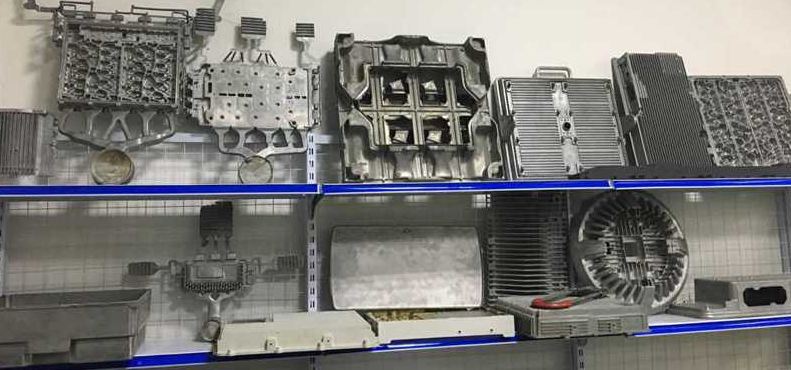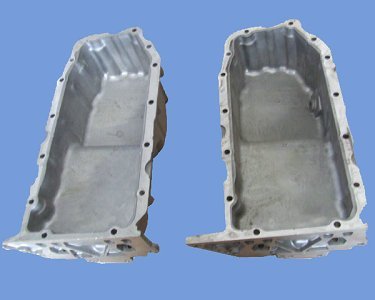
Hva er Zamak sinkstøpedeler

trykkstøpefirma, Produsent av støpegods, trykkstøpte deler, trykkstøpeprodukter, Pressstøping av sink

Zinc die casting Parts is referred to as the hot-chamber process. It is the method by which zinc (zamak) is heated under high temperatures and the molten material forced into a zinc die casting mold under high pressure to produce product with a similar shape as the die. As the metal moves through the die, air escapes through the vents. Once the die is full, the high pressure is maintained until it solidifies and the die is separated to release the finished zinc cast. After casting, no further modification is usually required. Use of Zinc Die Casting Zinc (zamak) is known for its high strength, accuracy, ductility, ease of casting, high thermal and electrical conductivity, and long life. As such, the zinc die casting is applied in the manufacture of high quality industrial and building materials. Die casting started in the automotive industry and it is still widely used in the manufacture of automotive components. The door locks casing, pulley, and the camshaft are some of the car parts that are made of zinc casting. In the construction industry, zinc die casting is utilized in the manufacture of components such as door knobs, faucets, and roofing. On the other hand, there are many zinc casting machine parts, such as electrical fittings. Zinc Die Casting Process Zinc is cast using the hot-chamber process due to its low melting temperatures. Cold chamber process is applied in the casting of metals with high melting temperatures such as the aluminium. The zinc die casting process involves the preparation of the metal, die preparation, and finishing. It commences with the preparation of the die followed by the metal. Notably, the die can be used once or severally depending on the component being manufactured. If it was used before, it should be lubricated to ease the removal of the cast metal. Afterwards, the ejector die half and the cover die half are screwed. The cover die half has a sprue through which the molten metal is injected while the ejector die has ejector pins for removing the castings. Preparation of the die is followed by melting of the ZA or the ZAMALAK alloy on a furnace. The physical properties of the product dictates the choice of the alloy. Due to metal hardness and strength, the furnace temperature is usually very high. The oxidized parts of the metal are removed at this stage to raise the purity of the finished product. Various chemicals can be added to improve physical properties of the finished alloy. Once the molten metal is prepared, it is injected into the feed system under high pressure. Most of the systems have several dies for efficiency and mass production. The raised pressure ensures that the molten zinc alloy gets into the mold as fast as possible, no air gets into the molten metal, and the expulsion of the air in the die through the vents. After filling the die, the pressure is raised further until the zinc alloy casting solidifies. The process also involves cooling using water. Then, the two dies are separated and the metal cast is removed. This is followed by the cleaning of the feed system to get rid of the flash. Further finishing can be carried out depending with the final use of the product. The runner that is removed from the final product and the flash are usually recycled.

Engros produsent av støpegods i aluminium

Støping av deler

Produsent av støpegods, trykkstøpte deler

Machining and Finishing Operations For Ready-To-Assemble Die Casting Parts. Over 20 years, CNM die casting company, Incorporated has provided high-quality aluminum, magnesium, and zinc die casting parts and services. CNM TECH specializes in the design, engineering, and production of complex die-cast parts in a broad range of sizes. Our experienced team of engineers, technicians, designers, machinists, finishers, and production staff excel at producing precision castings that are meticulously machined to tight tolerances, finished to customer specifications, and delivered ready for assembly. Regardless of quantity, part type, alloy, cast-and-trim to cosmetic finish, CNM TECH is a solution driven die-casting partner that works with you to produce the best possible products cost-effectively and efficiently. In order to supply ready-to-assemble component die casting parts, CNM TECH Die Casting manufacturer maintains a fully-equipped production machine shop. It’s staffed with machinists experienced in working with aluminum and zinc. Here, modern machine tools, supported by regular maintenance and a statistical process control program, can turn out production quantities of high-quality parts to meet your manufacturing schedules. CNM TECH has the capability of handling machining requirements where tolerances must be held to a few ten-thousandths of an inch and where production quality control records must be provided. CNM TECH also maintains close working relationships with local suppliers of a variety of finishing services such as plating, anodizing and painting. This assures you of a smooth flow of work through a single, responsible source and, at the same time, provides access to a wide variety of finishing options. Inventory capabilities to meet your just-in-time production needs. CNM TECH warehouses parts inventories for customers with just-in-time production schedules. Once a predetermined inventory level has been established, we can set manufacturing schedules to maintain the stock you require. Actual parts delivery is aided by our central location and easy access to interstate highways. Let’s talk about the difference that quality can make in your die casting parts. If you’re interested in lowering your current casting reject rate or if you feel your part quantities are reaching a volume that can justify die casting, please give us a call. We’ve invested a lot of ourselves in maintaining tight quality control standards and we’d like to put that investment to work for you. Finished parts can be packed to any specification for timely delivery anywhere in the country. CNM TECH’s location puts the entire upper Midwest within the overnight delivery time.  

Pressstøping av aluminium

Kina Die Casting Service

trykkstøping av aluminium, trykkstøpefirma, Produsent av støpegods, Pressstøping av sink

Capacity To Meet Your Aluminum, Magnesium, Zinc and Vacuum Die Casting Needs. Aluminum Die Casting Providing high-quality Aluminum die casting parts at competitive prices requires modem die casting equipment. To reduce the effects that extreme cooling temperatures have on dies CNM TECH is converting its die cooling system from water to oil. Oil maintains a warmer die temperature that contributes to a more uniform casting and extends die life, an important factor in part costs. CNM TECH Die Casting company is adapting robotic controls to the operation of die casting machines. This permits a substantial increase in production rates, important in both controlling costs and meeting delivery requirements. It also allows us to use our people in ways which make better use of their skills and experience. To lower production costs, CNM TECH Die Casting manufacturer has developed and patented, new, low volume, energy efficient aluminum melting furnaces. Since aluminum can be melted efficiently in small quantities, it allows the company to supply casting machines with different alloys of aluminum simultaneously. Casting machines don’t have to stand to wait for a large furnace to supply the proper alloy. Schedules aren’t built around what alloy is in the furnace. Zinc Die Casting For applications where high impact strength, low cost and close dimensional limits are important design considerations, zinc die casting plays an important role. Zinc normally permits higher production rates than aluminum and parts can be designed with thinner cross-sections. The resulting parts are highly resistant to corrosion and receptive to a variety of beautiful finishes. High rates of production and uniform quality are maintained by die casting machines with automatic extractors. Vacuum Die Casting Vacuum die casting is preferred by many casting buyers because it results in a less porous part. CNM TECH’s Vert-a-Cast machines, with a clamping force of 400 tons, are capable of producing castings automatically at a much faster pace than manually-operated horizontal machines. Vacuum die casting, a CNM TECH capability for ten years, is often the only economical way to meet critical porosity specifications. Maintenance, repair, changes and corrections on dies are accomplished promptly in CNM TECH’s fully-equipped tool and die shop. Alloy materials are melted, fluxed and cleaned in the central furnace before being transferred to die casting equipment. If you have any die casting requirement, you are welcome to send us your requirement for a quotation.

Støping av deler

Støpedeler av høy kvalitet

trykkstøpefirmaer, trykkstøpefirma, Produsent av støpegods, trykkstøpte deler, Pressstøping av sink

Your High-Quality Source For Aluminum, Magnesium and Zinc Die Castings; Machined and Finished, Ready For Assembly. Setting product quality as the company goal, CNM Die Casting has risen to the top of its industry during the past ten years. Die casting buyers to look to CNM TECH to help reduce reject problems they have encountered with other component part suppliers. A manufacturer of natural gas valves experienced reject levels of up to 40% until they were cast by CNM TECH. Now, very few of their parts fail to meet a rigorous 100% testing level for pressure leaks. Quality based on engineering experience At CNM TECH Die Casting company, quality begins with experienced engineering assistance. Consultation on part design and aluminum alloy selection are part of the service. Sometimes minor changes in part design can increase production rates and eliminate potential quality problems. The end result is a better part at a lower unit cost. To be sure finished die casting parts to meet alloy specifications, both incoming materials and finished product samples are checked on the Jarrell-Ash spectrometer. Quality that moves with production instead of just a final part check Production starts after a final part design is accepted. Our quality control program then begins a series of checks to determine that the part has been produced within the specified tolerances. First, alloys are tested to make sure they meet our customer’s specifications. Then, statistical sampling during the casting and machining processes provides an early warning of manufacturing defects and helps to prevent the production of defective finished parts. Inspection frequencies can be predetermined by the job requirements to make certain that the parts you receive are parts you can use. A Three Coordinate Measuring Machine (CMM) allows completed part dimensions to be checked against computer-stored specifications to assure that accuracy has been maintained throughout the entire production run. Fatigue testing for completed parts can also be carried out under simulated operating conditions if required by the customer. Whether your specifications call for pressure tightness, critical dimensions and details, or freedom from subsurface discontinuities, CNM TECH quality assurance people have the equipment and training for the job. A regular inspection program on casting and machining equipment helps us maintain close tolerances. Equipment that’s in top operating condition benefits our customers in both reduced costs and shorter lead times. In-plant maintenance personnel can quickly correct machine problems and smooth production flow. This online catalogue will introduce you to our capabilities and give you a brief tour of our facility. Over 150 employees share our interest in providing on-time delivery of ready-for-assembly die casting parts and our objective of striving for the highest quality. CNM TECH engineers are available for consultation at early design stages to help assure finished parts meet tolerance and quality requirements while making economical use of die casting processes. The dimensional coordinate measuring machine is used to measure castings against specified tolerances. Proven, rigid quality assurance techniques applied at CNM TECH Die Casting manufacturer can meet the most demanding industrial standards.

Kina Ingeniørmaskiner

Kina Ingeniørmaskiner

In 2011, the competition in the hex bolt China engineering machinery market will be more intensely, on the basis of enhancing domestic enterprises’ self-confidence previously, the battle of Chinese engineering machinery market is bound to become fiercely, except the competition between domestic jaw crusher brands, the competition with foreign brands also will continue to upgrade with the pace of China local enterprises’ international development accelerating. China blow molding machine market has attracted international attention with its rapid development in 2010. Under the guidance of the state a series of correct measures, the bag making machine industry economic operation maintains steady and rapid growth; the main economic benefit indices are better. 2011 is the beginning year of the Twelfth Five Year, under the pressure of the state strengthening the macroeconomic regulation and the real estate industry’s control, the growth rate of engineering plastic valve industry will fall back significantly. Under the inflation pressure, the terminal sales of blow molding machine industry will be influenced to a certain degree. But these are not able to stop the engineering machinery market to go strong clip continuously, the signing of the indemnification house construction sign military order and the new investment upsurge of water conservancy construction have shored up Chinese engineering machinery market to a great extent. The major medium-sized PVC fitting enterprises have begun to expand their production capacity and market share in 2010, which has left hidden unsafety for the overcapacity of engineering slitting machine market in 2011 or even the future. The capacity expansion has promoted the demand for engineering machinery market tending to saturation; however, the increasing white hot of engineering machinery market has speeded up the pace of capacity expansion. If this situation is not improved, the continuous cycle certainly will result in overcapacity. As for the current development situation of Chinese engineering machinery market, the products such as excavators, cranes and concrete machinery have huge development potential, and the market is optimistic. Take the excavator industry as an example, enterprises such as Wuliangye, Rongan, Chery and Geely have turned around the excavator market. Such a large scale cross-industry restructuring, combined with the uneven brand degree, product performance and quality of engineering machinery market, it not only will impact the whole industry sales, but also will trigger a series of low-end overcapacity, and even lead to unfair competition in the industry. In addition, at the beginning of this year, from the recruitment situation all over the country, we can see that the talent shortage is particularly acute in construction machinery industry, especially the urgent need for high-end integrated talent, not a “labour shortage ” can be described. The labour costs rising and the raw material costs increase is certainly a challenge for engineering machines industry. Especially at present, many enterprises are facing that no matter how high wages they provide, they still can’t recruit much-needed talent. In 2011, the competition in engineering machinery market will be even more intense, under the situation of all kinds of risks, China construction machinery industry must have a long-term perspective, while occupying mainland market actively, it also should accelerate the pace of approaching overseas market, speed up energy saving pace, and find new opportunities for the transformation development of machinery enterprise constantly in crisis.

Støpeprosessen

trykkstøping av aluminium, pressstøping, trykkstøpefirmaer, støpeform, trykkstøpte deler, trykkstøpeprosessen

CNM Die Casting kan tilby ulike typer støpegods, inkludert pressstøping, investeringsstøping, støping i permanent støpeform og sandstøping for et bredt spekter av legeringer, inkludert alle pressstøpte legeringer, mange permanente støpeformlegeringer og mange magnesiumlegeringer. Produksjonsprosessene våre har blitt akseptert av verdens støpemarked som likeverdige eller overlegne i forhold til konvensjonell pressstøping. Fordelene med CNM Die Casting-prosessen Bedre dimensjonskontroll Forbedrede toleranser for tverrskillelinjer Redusert gassporøsitet Forbedrede balanseegenskaper for ferdige roterende deler Bruk av “cast-in-place”-innsatser Forbedrede mekaniske egenskaper på grunn av effektiv legeringsmodifisering Bedre slitasjeegenskaper på grunn av mikrostruktur med mindre kornstørrelse Forbedret fleksibilitet med hensyn til legeringer og typer støpegods Maskinering CNM Die Castings maskinseksjon benytter arbeidscellekonseptet og fleksibelt høyhastighetsutstyr for maskinering for å fullføre sekundære operasjoner på CNMs støpegods, slik at en del eller underenhet er klar til montering når den forlater anlegget vårt. CNM Die Casting har utviklet seg og respondert aggressivt på kundenes krav om å kunne tilby høyhastighetsbearbeiding og monteringstjenester uten innledende kapitalutgifter. Ved å inkludere en del av kostnadene for det eksisterende utstyret i hver enkelt del, får kunden fordelen av raskere oppsett og minimale startinvesteringer. CNM Die Casting har åtte støpemaskiner, komplett egenproduksjon av støpeformer og CNC-maskinering i et over 20 000 kvadratmeter stort anlegg i DONGGUAN i Kina. Vår integrerte produksjonskapasitet, sammen med over 100 ansatte, gjør det mulig for oss å være din One-Stop, komplett service die caster, og være konsekvent konkurransedyktig på pris, samtidig som vi opprettholder en høy kvalitetsstandard. Nedenfor finner du en sammenligning av støpeprosesser Metaller som kan støpes Min. og maks. masse, kg Toleranse på dim.TP5T Overflatefinish,µ m Min. snittstørrelse, mm Utkastgrad Produksjonshastighet,stk/time Min. kjernehull,mm Porøsitet Sandstøping Aluminium Stål CI og andre 0,03, 100 0,10, 200, 000 0,03, 50, 000 0,09 til 0.03 4 8 8 3 6 3,5 4 til 7 10 til 15 6 5 Kokillestøping Støpejern Al og Mg 0,01, 50 0,01, 10 0,01 min 2 5 3 2 50 4,5 til 6 6 4 Kokillestøping Al Mg Zn 0,015, 35 0,015, 35 0,05, 80 0,0015 0,0015 0,0015 1 1 1 1 0,8 1.2 0,5 2 2 2 2 75 til 150 300 til 350 2,5 2,5 0,8 2 Presisjonsstøp Stål Aluminium 0,005, 25 0,002, 10 0,003, til 0,005 1 1 1 1 0,8 1 til 3 N/A 0,5 til 1,25 1 Kokillestøping Stål Støpejern Aluminium 0.05, 120 0,03, 50 0,03, 15 0,01 til 0,003 6 6 2,5 3,5 3 1,5 2 til 3 30 til 80 3 til 6 1 Sentrifugalstøping Aluminium Stål Støpejern opp til 400 0,002 0,004 0,004 0,6 til 3,5 0,6 til 1,2 3 30 til 50 N/A 1 til

Die Casting Manufacture Company

trykkstøping av aluminium, trykkstøpte deler

CNM Die Casting er din one-stop, komplett service Die Caster for ulike støpegodsdeler, inkludert aluminiumstøping, investeringsstøping, sandstøping. Vi tilbyr deg en enkelt kilde for konstruerte støpegods, sammen med banebrytende tekniske ressurser, avanserte produksjonsmuligheter og komplett sekundær etterbehandling. CNM Die Casting leverer støpegods av høy kvalitet i aluminium, sink, messing og magnesium. Vi driver vår støpefabrikk i DongGuan, Kina, for ulike typer støpegods, maskinering, montering og formbygging, med et samlet areal på over 20 000 kvadratmeter. Vi er ledende innen innovative kvalitetskontrollsystemer. Vårt kvalitetsproduksjonssystem inkluderer et system for deteksjon av prosessfeil ved hver støpepresse. Den strenge 100%-inspeksjonen er en del av produksjonen på lik linje med alle andre produksjonstrinn, og er en del av det sekvensielle, standardiserte arbeidet for å sikre produksjonskvaliteten ved etterbehandling og maskinering. Som en av divisjonene i CNM Manufacturing Group kan CNM Die Casting være mer lydhør overfor kundene sine og samtidig tilby mer konkurransedyktige priser på kvalitetsprodukter “made in China”. CNM Die Castings verktøyavdeling bygger støpeformer med toppmoderne utstyr. Sammen med vår erfarne ingeniør- og verktøyavdeling designer vi verktøy og hjelper kundene med støpedesign. Takket være god kontroll på design og verktøybygging kan vi produsere verktøy og deler av høy kvalitet til lavere kostnader og raskere enn noen andre i bransjen. Vår avdeling for konstruksjon og verktøy tilbyr Verktøyingeniører som sørger for at spesifikasjonene og dimensjonskriteriene oppfylles i henhold til kundens krav Designingeniører med den nyeste CAD/CAM-teknologien for å designe både produkt og verktøy i henhold til kundens spesifikasjoner. Teknisk produktdesignassistanse på stedet for støpegods Produksjonsverktøy bygget med CNC-maskiner ved hjelp av et stort, internt verktøyanlegg med full kapasitet. Toppmoderne EDM-maskiner brenner raskt hulrom til nesten ferdig tilstand med oscillerende mating. Prototyping i samme verktøy som er beregnet for produksjon Produksjonsverktøyene er bygget med førsteklasses materialer

Om Metal Casting Services

trykkstøping av aluminium, trykkstøpefirmaer, trykkstøpte deler, høytrykksstøping, Støping av magnesium, Pressstøping av magnesium, Pressstøping av sink

Metal casting services involve the shaping of free-flowing liquid metals through the use of dies, molds, or patterns.  Castings are generally roughly finished due to the nature of their production.  In many cases, additional finishing is required to remove burrs and other artefacts of the casting process.  Metal castings services are used to design a wide range of components and finished products.  Everything from simple nails and fasteners to engine blocks can be fabricated using metal casting services.  Common metal casting processes include sand casting, die casting, permanent mold casting, investment casting, centrifugal casting, and lost foam casting. Sand Casting Sand casting is used to make large parts (typically iron, but also bronze, brass, aluminum). Molten metal is poured into a mold cavity formed out of sand (natural or synthetic). Sand castings generally have a rough surface, sometimes with surface impurities and surface variations. Die-casting includes a number of processes in which reusable dies or molds are used to produce casting.  The die contains an impression of the finished product together with it’s running, feeding and venting systems.  The die is capable of a regular cycle and of (quickly) dissipating the heat of the metal poured into it.  Once the liquid metal has cooled sufficiently, the mold is opened and the casting can be removed and finished. Permanent Mold Casting In permanent mold casting, molten metal is poured into cast iron molds, coated with a ceramic mold wash. Cores can be a metal, sand, sand shell, or other materials. When completed, the molds are opened and the castings are ejected.   Investment casting services involve molding patterns by the injection of a special wax into a metal die.  The patterns are assembled into a cluster around a wax runner system. The ‘tree’ of patterns is then coated with 8-10 layers of refractory material. The assembly is heated to remove the wax.  The hot mold is cast, and when cool, the mold material is removed by impact, vibration, grit blasting, high-pressure water blasting or chemical dissolution leaving the castings, which are then removed from the runner system. Centrifugal casting Centrifugal casting services are used to produce castings that are cylindrical in shape.  In centrifugal casting, a permanent mold is rotated about its axis at high speeds as the molten metal is poured. The molten metal is centrifugally thrown towards the inside mold wall, where it solidifies. The casting is usually a fine grain casting with a very fine-grained outer diameter, which is resistant to atmospheric corrosion, a typical need with pipes. The inside diameter has more impurities and inclusions, which can be machined away. Lost foam casting Lost foam casting (LFC) is metal casting services that use foam filled patterns to produce castings.  Foam is injected into a pattern, filling all areas, leaving no cavities.  When molten metal is injected into the pattern, the foam is burned off allowing the casting to take shape. Die casting Die casting and metal casting includes a number of processes in which reusable dies or molds are used to produce casting. The die is capable of a regular cycle and of (quickly) dissipating the heat of the metal poured into it. Once the liquid metal has cooled sufficiently, the mold or is opened and the casting can be removed and finished.   In the die casting process, molten metal is injected under pressure into a reusable mold or die. The die contains an impression of the casting together with it’s running, feeding and venting systems. The die is capable of a regular cycle and of (quickly) dissipating the heat of the metal poured into them. Once the liquid metal has cooled sufficiently, the mold or is opened and the metal casting can be removed and finished. high pressure die casting The high pressure die casting process is the most widely used, representing about 50% of all light alloy casting production. Low pressure die casting currently accounts for about 20% of production and its use is increasing. Gravity die casting accounts for the rest, with the exception of a small but growing contribution from the recently introduced vacuum die casting and squeeze casting process. the design of low pressure and gravity die casting dies for improved die filling, optimized solidification pattern and maximum yield. Gravity die-casting is suitable for mass production and for fully mechanized casting. Low-pressure die casting is especially suited to the production of components that are symmetric about an axis of rotation. Light automotive wheels are normally manufactured by this technique. Die casting metals can vary widely, and different die casting companies may have the ability to work with anyone or number of them. Some of the most common metal casting types include aluminum die casting, brass die casting, lead die casting (the most popular for model die casting), magnesium die casting, and zinc die casting. Hope all of that information is enough for your reference, but if you want to know more information, you are welcome to contact us by phone or email.

Druckguss

aluminiumsstøping

Druckguss-Was ist Druckguss Druckgießen ist eine weitverbreitete, nicht ausfahrbare Technik, bei der Metall unter hohem Druck in den Formhohlraum gedrückt wird. Druckgießformen, die als Matrizen bekannt sind, können wiederholt zur Herstellung von Gussstücken in verschiedenen Größen, Formen und Wandstärken verwendet werden. Die Formhohlräume sind mit komplizierten Designs entworfen, die es ermöglichen, komplexe Formen mit Genauigkeit, Oberflächengüte und Attraktivität herzustellen. In den frühen Tagen des Druckgusses wurde nur ein Niederdruck-Einspritzverfahren verwendet, aber heutzutage werden Hochdruck-Druckgusstechniken wie Squeeze Casting und halbfeste Druckgussverfahren verwendet, um mehr als 4500 Pfund pro Quadratzoll zu gießen. Anfangs waren nur Zinn und Blei die Kaste, aber jetzt müssen auch Magnesium, Kupfer und andere Legierungen mit diesem sehr beliebten Verfahren gegossen werden. Druckguss-Prozess Bei diesem Verfahren werden geschmolzenes Metall oder andere Materialien unter hohem Druck in die Hohlräume der Stahlform gedrückt. Dies sind zweiteilige Formen, die aus legiertem Werkzeugstahl hergestellt sind – Die Fixierwerkzeughälfte und die Ausstoßwerkzeughälfte. Die Matrize oder Form wird mit dem Eindruck der Komponente hergestellt, die gegossen werden soll. Es gibt vier Arten von Formen: Einzelner Hohlraum, um eine Komponente zu produzieren Mehrere Hohlräume zur Herstellung einer Anzahl von identischen Teilen Einheit sterben um verschiedene Teile auf einmal zu produzieren Kombinationen sterben, um mehrere verschiedene Teile für eine Montage herzustellen Das geschmolzene Metall wird unter hohem Druck und hoher Geschwindigkeit in die Form eingespritzt, was dazu beiträgt, ein Gussteil herzustellen, das glatt und genau wie die ursprüngliche Form ist. Das Druckgießen erfolgt durch Anwendung von Druck unter Verwendung eines Kompressors, wodurch Luftblasen aus dem Formgummi eliminiert werden. Der Druck wird auf der Form aufrechterhalten, bis das heiße Metall erstarrt. Wenn das Metall gehärtet ist, wird die Form geöffnet, um das Gussteil zu entfernen. Es gibt verschiedene Varianten des grundlegenden Prozesses, mit denen Gussteile für bestimmte Anwendungen hergestellt werden können. Diese beinhalten: Pressgießen – Ein Verfahren, bei dem geschmolzene Legierung ohne Turbulenz und Gaseinschluss bei hohem Druck gegossen wird, um qualitativ hochwertige, dichte, wärmebehandelbare Komponenten zu erhalten. Semi-Solid-Moulding – Ein Verfahren, bei dem halbfeste Metallblöcke gegossen werden, um dichte, wärmebehandelbare Gussstücke mit geringer Porosität bereitzustellen. Legierungen verwendet Beim Druckguss werden vorwiegend Aluminium-, Kupfer-, Blei-, Zink- und Zinnlegierungen eingesetzt.Automatisierung In der heutigen Zeit werden hochentwickelte Druckgießmaschinen eingesetzt, die eine konsequente Qualitätskontrolle gewährleisten. Jeder maschinell bearbeitete Druckguss unterscheidet sich in dem Verfahren, bei dem geschmolzenes Metall in die Form gegossen wird. Automatisierungen werden verwendet, um Werkzeuge zu schmieren, das Metall in die Kammer zu gießen, usw. Zwei Verfahren, die als Heißkammer- und Kaltkammerverfahren bezeichnet werden, werden zum Druckgießen verwendet.Anwendungen Druckguss eignet sich am besten zum Gießen von mittelgroßen Teilen mit komplexen Details. Druckguss ist die größte Gusstechnik, die zur Herstellung von Konsumgütern, gewerblichen und industriellen Produkten wie Automobilen, Spielzeug, Teilen von Spülen, Steckergehäusen, Zahnrädern usw. verwendet wird. Die meisten Druckgussstücke werden aus Nichteisenmetallen wie Aluminum  Druckguss und Magnesium-Druckguss hergestellt , etc.Vorteile Ein wirtschaftlicher Prozess, der für eine breite Palette komplexer Anwendungen eingesetzt werden kann Teile haben eine längere Lebensdauer, Maßgenauigkeit und enge Toleranz Die Nachbearbeitung kann vollständig entfallen Ein Prozess, der vollständig automatisiert werden kann Form kann auch wiederholt verwendet werden.Nachteile Das Wurfgewicht muss zwischen 30 Gramm liegen. Gießen muss kleiner als 600 mm sein Hohe Anschaffungskosten Begrenzt auf hoch fließfähige Metalle.

høytrykksstøpedel

Hva er pressstøping?

pressstøping

Hva er pressstøping Pressstøping er en produksjonsprosess for å fremstille metalldeler med nøyaktige dimensjoner, skarpt definerte, glatte eller strukturerte overflater. Den utføres ved å presse smeltet metall under høyt trykk inn i gjenbrukbare metallformer. Prosessen beskrives ofte som den korteste avstanden mellom råmateriale og ferdig produkt. Begrepet “pressstøping” brukes også for å beskrive den ferdige delen. Begrepet “gravitasjonsstøping” refererer til støpegods laget i metallformer under et gravitasjonshode. Det er kjent som permanent mold casting i USA og Canada. Det vi kaller “die casting” her, er kjent som “high pressure die casting” i Europa. Hvordan produseres støpegods? For det første må en stålform som kan produsere titusenvis av støpegods i rask rekkefølge, lages i minst to seksjoner for å gjøre det mulig å ta ut støpegodset. Disse seksjonene monteres fast i en maskin og er ordnet slik at den ene er stasjonær (fast formhalvdel), mens den andre er bevegelig (injektorformhalvdel). For å starte støpesyklusen klemmes de to formhalvdelene tett sammen av støpemaskinen. Smeltet metall sprøytes inn i formhulen, der det størkner raskt. Formhalvdelene trekkes fra hverandre, og støpegodset støpes ut. Støpeformene kan være enkle eller komplekse, med bevegelige glidere, kjerner eller andre seksjoner, avhengig av hvor kompleks støpeoppgaven er. Den komplette syklusen i pressstøpeprosessen er den raskeste kjente for produksjon av presise deler i ikke-jernholdig metall. Dette står i sterk kontrast til sandstøping, som krever en ny sandform for hver støping. Selv om den permanente støpeprosessen bruker støpeformer av jern eller stål i stedet for sand, er den betydelig langsommere og ikke like presis som pressstøping. Typer støpemaskiner Uavhengig av hvilken type maskin som brukes, er det avgjørende at formhalvdelene, kjernene og/eller andre bevegelige deler er sikkert låst på plass under støpesyklusen. Generelt styres maskinens klemkraft av (a) støpestykkets projiserte overflateareal (målt ved formens skillelinje) og (b) trykket som brukes til å sprøyte metall inn i formen. De fleste maskiner bruker vippemekanismer som aktiveres av hydrauliske sylindere (noen ganger lufttrykk) for å oppnå låsing. Andre bruker direktevirkende hydraulisk trykk. Sikkerhetssperresystemer brukes for å hindre at formen åpnes under støpesyklusene. Støpemaskiner, store eller små, skiller seg fra hverandre kun ved metoden som brukes for å injisere smeltet metall i støpeformen. Disse klassifiseres og beskrives som enten varm- eller kaldkammerstøpemaskiner. Varmkammerstøpemaskiner Varmkammermaskiner (fig. 1) brukes først og fremst til sink og legeringer med lavt smeltepunkt som ikke så lett angriper og eroderer metallgryter, sylindere og stempler. Avansert teknologi og utvikling av nye materialer med høyere temperatur har utvidet bruken av dette utstyret til støping av magnesiumlegeringer. Figur 1: Varmkammermaskin. Diagrammet illustrerer stempelmekanismen som er nedsenket i smeltet metall. Moderne maskiner er hydraulisk betjent og utstyrt med automatisk sykluskontroll og sikkerhetsanordninger. I varmkammermaskinen er injeksjonsmekanismen nedsenket i smeltet metall i en ovn som er festet til maskinen. Når stempelet heves, åpnes en port slik at sylinderen fylles med smeltet metall. Når stempelet beveger seg nedover og tetter porten, presses det smeltede metallet gjennom svanehalsen og dysen inn i matrisen. Etter at metallet har størknet, trekkes stempelet tilbake, matrisen åpnes, og det ferdige støpegodset skytes ut. Varmkammermaskiner er raske i drift. Syklustiden varierer fra mindre enn ett sekund for små komponenter som veier mindre enn ett gram, til tretti sekunder for en støpegods på flere kilo. Formene fylles raskt (normalt mellom fem og førti millisekunder), og metallet sprøytes inn med høyt trykk (fra 1500 til over 4500 psi). Likevel gir moderne teknologi god kontroll over disse verdiene, noe som gir støpegods med fine detaljer, små toleranser og høy styrke. Kaldkammerstøpemaskiner Kaldkammermaskiner (fig. 2) skiller seg fra varmkammermaskiner først og fremst på ett punkt: Injeksjonsstempelet og sylinderen er ikke nedsenket i smeltet metall. Det smeltede metallet helles inn i et “kaldt kammer” gjennom en port eller en hellespalte ved hjelp av en manuell eller automatisk øse. Et hydraulisk betjent stempel, som beveger seg fremover, forsegler åpningen og tvinger metallet inn i den låste matrisen ved høyt trykk. Injeksjonstrykket varierer fra 3000 til over 10 000 psi for både aluminium- og magnesiumlegeringer, og fra 6000 til over 15 000 psi for kobberlegeringer. Figur 2: Kaldkammermaskin. Diagrammet illustrerer støpeformen, kaldkammeret og den horisontale stempelet (i ladeposisjon). Trykkstøping gir komplekse former med mindre toleranser enn mange andre masseproduksjonsprosesser. I en kaldkammermaskin helles det mer smeltet metall inn i kammeret enn det som trengs for å fylle formhulen. Dette bidrar til å opprettholde et tilstrekkelig trykk til å fylle hulrommet godt med støpelegering. Overflødig metall støpes ut sammen med støpegodset og er en del av det ferdige støpet. Driften av en kaldkammermaskin er litt langsommere enn en varmkammermaskin på grunn av øseoperasjonen. En kaldkammermaskin brukes til støpelegeringer med høyt smeltepunkt fordi stempelet og sylinderen er mindre utsatt for angrep siden de ikke er nedsenket i smeltet metall. Støping og konstruksjon av støpeformer Støpeformene (fig. 3) er laget av legert verktøystål i minst to seksjoner, kalt fast formhalvdel og ejektorformhalvdel. Den faste formhalvdelen er montert på siden mot innsprøytningssystemet for smeltet metall. Utstøterformhalvdelen, som støpegodset fester seg til og støpes ut fra når formen åpnes, er montert på maskinens bevegelige plate. Den faste formhalvdelen er konstruert for å inneholde granathullet som det smeltede metallet kommer inn i formen gjennom. Utstøterhalvdelen inneholder vanligvis løperne (passasjene) og portene (innløpene) som leder det smeltede metallet til hulrommet (eller hulrommene) i matrisen. Ejektoren

Skroll til toppen

Få et tilbud