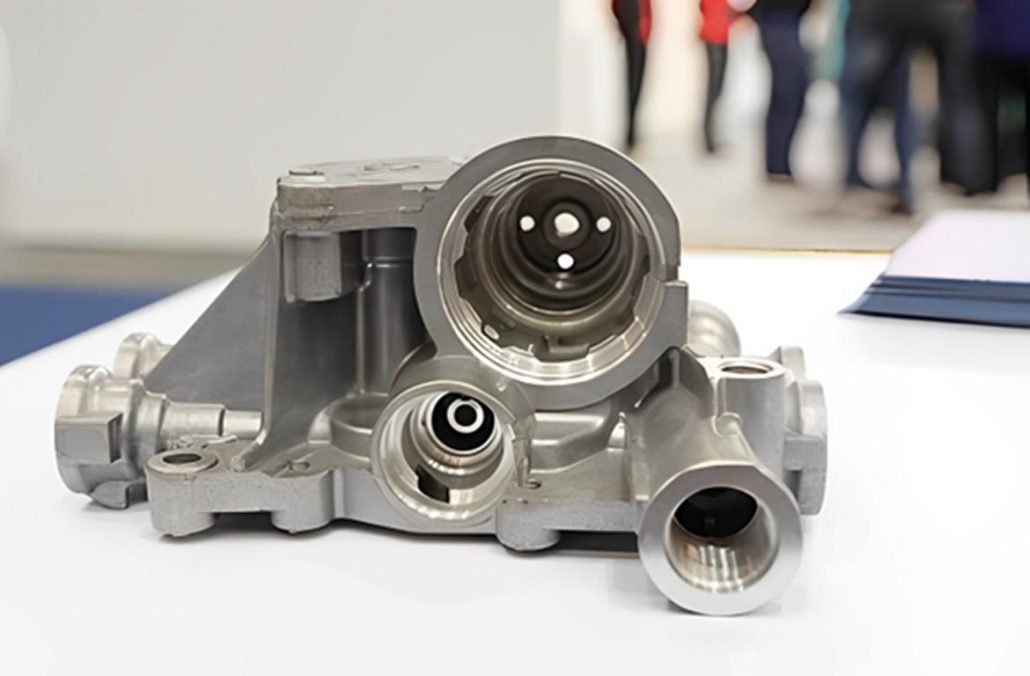
pressofusione di alluminio

I 10 principali produttori di prodotti in alluminio in Cina e negli Stati Uniti

I 10 principali produttori di prodotti in alluminio in Cina e negli Stati Uniti

colata di alluminio

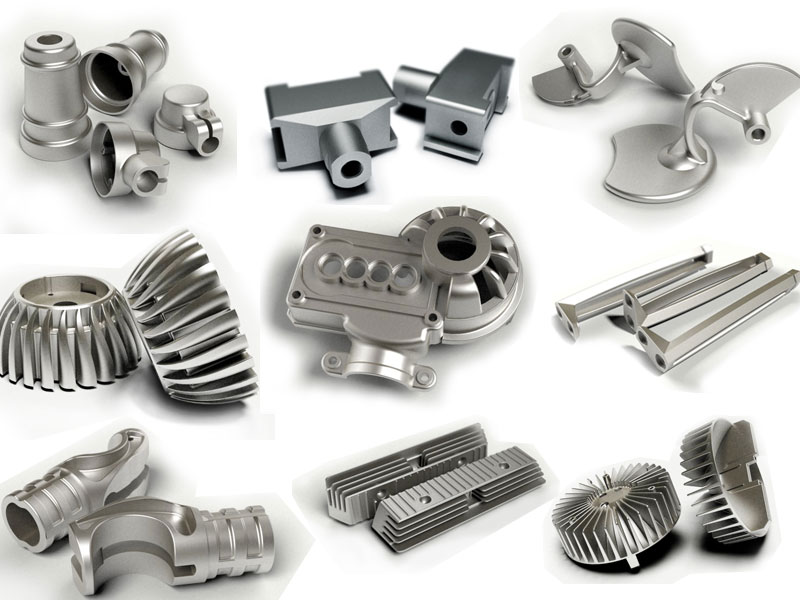
Aluminum Product Manufacturers are crucial in the industries of automotive, aerospace, electronics, packaging, etc. Therefore, many top-tier aluminum product manufacturers have risen in China and the USA due to the growing demand for lightweight, durable, and recyclable materials. Innovative, with high-quality standards, and dedicated to sustainability, these companies are known for their innovation.   Other leading metal manufacturing countries include China and the USA, where the most important players have been developing new methods of manufacturing aluminum. Some of the companies that have aluminum die casting, CNC machining, and precision molding’ are CNM Tech Co., Ltd., GC Precision Mold Co., Ltd., and Sincere Tech in China. With the industry demanding strict quality for high-performance aluminum components, these firms focus on various industries.Major manufacturers such as United Aluminum Corporation, Arconic Corporation, Kaiser Aluminum, and JW Aluminum have stood out as pioneers in aluminum rolling, extrusion, and fabrication in the USA. These companies operate in the field of cutting-edge aluminum solutions for aerospace, automotive, and industrial applications. This article presents 10 of the top aluminum product manufacturers based on innovation, sustainability, and excellent quality of their wares in different worlds 1.  CNM Tech Co., Ltd. Year of Establishment: 20+Number of Employees: 100-200Business Type: CNM Tech is focused on aluminum, magnesium, and zinc die casting, CNC machining, surface finishing, and assembly. Website and Contact Website: https://www.thediecasting.com/Contact: +86 13045898002Email: sales@thediecasting.comAddress: Factory Address: Rm 101, No.40, Donghu Road, Jinglian, Qiaotou town, Dongguan city, Guangdong Province, China. 523520. Company Profile Founded over 20 years ago, CNM Tech Co., Ltd., is one of the leading Chinese manufacturers of die-casting solutions. The company is based in Dongguan, China, where it provides a thorough assortment of services including aluminum, magnesium, and zinc die casting, precision CNC machining, surface finishing, and assembly. They have expertise in automobile, electronics, aerospace, and hospitality appliance markets, to name a few.  Their Quality Commitments CNM Tech is dedicated to providing high-quality, low-cost products while abiding by extremely tight quality control standards under the auspices of ISO 9001. They take a customer-centric approach, providing personalized services from the time of initial consultation and beyond, from availability to post-production support services to maintain long-term partnerships all over the world.  Why Choose CNM Casting? As a name known in the die-casting industry, CNM Tech specializes in providing high-quality manufacturing solutions with advanced technology, and a customer-oriented approach. These are reasons why CNM Tech is your number one reason. The choice of CNM Tech guarantees a reliable manufacturing partner that implements innovations and focuses on quality and customer success. 2.  GC Precision Mold Co., Ltd. Year of Establishment: 1999Number of Employees: 100-200Business Type: Serving industries such as the auto, aero, and electronics industries, the company has gained international market trust. Website and Contact: Website: https://aludiecasting.com/Contact: +86 131 4886 5556Email: info@aludiecasting.comAddress: Factory Address 1: No. 30 Huan Zhen Rd, Qi Shi Town, Dongguan City, Guangdong Province China, 523516 Company Profile Founded in 1999, GC Precision Mold Co., Ltd. is a global leader in high-quality aluminum die casting and nonferrous metal products. It has two special properties plants located in Dongguan, China, and offers services including high-pressure die casting, sand casting, and forging. As a result of over two decades of experience, the company delivers precision, consistent quality, and flexible material offerings to a variety of industries such as automotive, aerospace, and electronics. Both client satisfaction and GC Precision Mold commit to honorable words and behavior in providing the best product. Their Quality Commitments Its various certificates are proof that GC Precision Mold Co., Ltd. adheres to the highest standards of quality and operational excellence. The company possesses certificates from ISO 9001 on Quality Management Systems, which demonstrates the company’s ability to provide the product according to customer requirements at all stages and to enhance quality systematically. Why Choose GC Precision Mold Co., Ltd.? When you are choosing a company in pursuit of top-grade die casting and metal products, there are many benefits to choosing GC Precision Mold Co., Ltd. 3. Sincere Tech Year of Establishment: 2005Number of Employees: 100-200Business Type: Sincere Tech, is a leading Chinese manufacturer of custom plastic injection molds and aluminum product manufacturer. Website and Contact Website: https://plas.co/Phone: +86 135 30801277Email: steve@sincere-tech.comAddress: Rm101, N041, Donghu road, JingLian cun, qiaotou town, Donggguan City, Guangdong Province, China. 523000. Company Profile We are Sincere Tech, a world-renowned leading Chinese manufacturer of custom plastic injection molds and aluminum die-casting solution Injection Molding services. The company was founded in 2005 and has successfully established itself as a professional and highly reliable, high-precision, cost-effective, and high-quality production service provider to the world. From automotive, medical, electronics, home appliances, food packaging, cosmetics, etc. industries, Sincere Tech is equipped with state-of-the-art technology, expert engineering, and strict quality control. Their Quality Commitments ISO 9001:2015 and QS 9000:2015 standards are the only hallmarks we take seriously to maintain high-quality standards for our products and services since Sincere Tech. Their investment in advanced technologies, such as 5-axis CNC machines and FANUC systems, underscores their commitment to precision and efficiency. Confidentiality is also a company standard, promising Non-Disclosure Agreements (NDAs) for the protection of client projects. Why Choose Sincere Tech? 4. United Aluminum Corporation Year of Establishment: 1981Number of Employees: 1000+Business Type: Custom Rolled® Aluminum Coil Manufacturer and Supplier, Precision Slitting, Annealing, Surface Finishing. Website and Contact Website: https://unitedaluminum.com/Phone: 800-243-2515 / 203-239-5881Email: Sales@UnitedAluminum.comAddress: 100 United Drive, PO Box 215 North Haven, CT 06473 Company Profile United Aluminum (founded in 1891) is a leading supplier of Custom Rolled® Aluminum Coil to industries such as automotive, aerospace, medical, and packaging. These alloys are 3003, 2024, and 7075 and these guys offer precision slitting, annealing, and surface finishing. They have advanced facilities in which they produce high quality at very cheap rates. Additionally, United Aluminum supplies an Aluminum Coil Calculator resource to help its clients make educated choices. Their Quality Commitments Commitment to Quality and Customer Satisfaction a very high standard of quality is maintained by United Aluminum and the company is ISO 9001:2015 certified. Other than this, they concentrate

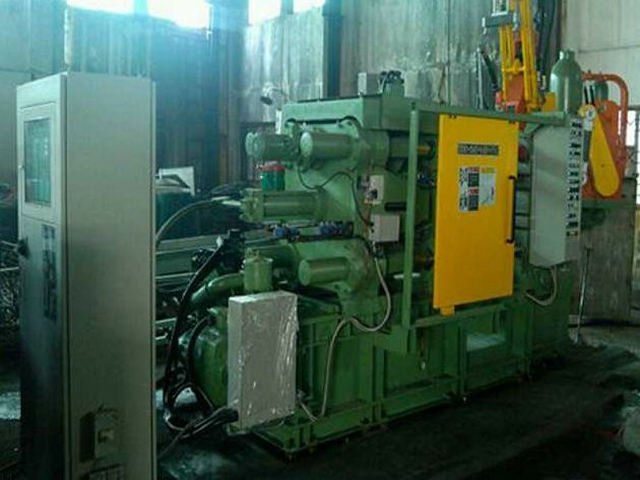
I 10 principali produttori di colate di alluminio in Cina e negli Stati Uniti

colata di alluminio

Because it is lightweight, strong, and durable, aluminum casting is widely used throughout different industries from automotive to aerospace, electronics to consumer goods. The manufacturing process calls for aluminum parts to be made by pouring molten metal into molds for the production of highly detailed and precise components. Aluminum is a very versatile metal as it is easily recyclable and corrosion resistant and hence provides an excellent option for many applications. China and the USA, in recent years, are the two major global hubs for aluminum casting production and they both have a wide manufacturer range in the various industries and sectors. Mass production is the hallmark of China, which can then deliver reasonable prices and a variety of casting solutions for large production. However, the USA boasts a great number of top-tier companies that specialize in high quality, precision casting, advanced technology, and ecofriendly approaches, working with those industries that require sophisticated and custom-made aluminum cast components. In this article, we will overview the top 10 aluminum casting companies in China and the USA describing their capabilities, experience in the industry, and something unique to help the companies choose the right aluminum casting manufacturing partner. 1.  GC Precision Mold Co., Ltd. Year of Establishment: 1999Number of Employees: 100-200Business Type: Serving industries such as the auto, aero, and electronics industries, the company has gained international market trust. Website and Contact: Website: https://aludiecasting.com/Contact: +86 131 4886 5556Email: info@aludiecasting.comAddress: Factory Address 1: No. 30 Huan Zhen Rd, Qi Shi Town, Dongguan City, Guangdong Province China, 523516 Company Profile Founded in 1999, GC Precision Mold Co., Ltd. is a global leader in high-quality aluminum die casting and nonferrous metal products. It has two special properties plants located in Dongguan, China, and offers services including high-pressure die casting, sand casting, and forging. As a result of over two decades of experience, the company delivers precision, consistent quality, and flexible material offerings to a variety of industries such as automotive, aerospace, and electronics. Both client satisfaction and GC Precision Mold commit to honorable words and behavior in providing the best product. Their Quality Commitments Its various certificates are proof that GC Precision Mold Co., Ltd. adheres to the highest standards of quality and operational excellence. The company possesses certificates from ISO 9001 on Quality Management Systems, which demonstrates the company’s ability to provide the product according to customer requirements at all stages and to enhance quality systematically. Why Choose GC Precision Mold Co., Ltd.? When you are choosing a company in pursuit of top-grade die casting and metal products, there are many benefits to choosing GC Precision Mold Co., Ltd. 2.  CNM Tech Co., Ltd. Year of Establishment: 20+Number of Employees: 100-200Business Type: CNM Tech is focused on aluminum, magnesium, and zinc die casting, CNC machining, surface finishing, and assembly. Website and Contact: Website: https://www.thediecasting.com/Contact: +86 13045898002Email: sales@thediecasting.comAddress: Factory Address: Rm 101, No.40, Donghu Road, Jinglian, Qiaotou town, Dongguan city, Guangdong Province, China. 523520. Company Profile Founded over 20 years ago, CNM Tech Co., Ltd., is one of the leading Chinese manufacturers of die-casting solutions. The company is based in Dongguan, China, where it provides a thorough assortment of services including aluminum, magnesium, and zinc die casting, precision CNC machining, surface finishing, and assembly. They have expertise in automobile, electronics, aerospace, and hospitality appliance markets, to name a few.  Their Quality Commitments CNM Tech is dedicated to providing high-quality, low-cost products while abiding by extremely tight quality control standards under the auspices of ISO 9001. They take a customer-centric approach, providing personalized services from the time of initial consultation and beyond, from availability to post-production support services to maintain long-term partnerships all over the world.  Why Choose CNM Casting? As a name known in the die-casting industry, CNM Tech specializes in providing high-quality manufacturing solutions with advanced technology, and a customer-oriented approach. These are reasons why CNM Tech is your number one reason. The choice of CNM Tech guarantees a reliable manufacturing partner that implements innovations and focuses on quality and customer success. 3. Delron Industrial Co., ltd Year of Establishment: 1990Number of Employees: 300+Business Type: Delron Industrial Co., Ltd. provides die casting, CNC machining, precision forging, assembly, and automotive, LED lighting solutions. Website and Contact: Website: https://www.delron.com.cn/Contact: +86-574-88106850Email: info@delron.com.cnAddress: South Building, No. 1299, East Yinxian Avenue, Ningbo, China, 315100. Company Profile Founded in 1990, Delron Industrial Co., Ltd. is recognized as one of the top die-casting and precision machining service providers in China (Ningbo). With subsidiary activities including CNC machining, die casting, turning, milling, forging, etc., the company serves diverse industries like automotive, LED lighting, aviation, etc. Delron emphasizes a high-quality product, and on-time delivery, at a competitive price. Using the most advanced technology to provide a variety of services such as heat treatment, chrome plating, and assembling.  Their Quality Commitments Delron Industrial Co., Ltd. strives to supply high-quality merchandise utilizing advanced manufacturing know-how while following rigorous standards. As the company is customer-oriented and as the company puts very much emphasis on precision and reliability, it has strict quality control procedures in place for all products. They aim to always keep and satisfy customer expectations, all in a cost-efficient and timely manner. Why Choose Delron industrial Co., ltd Casting? 4.  American Precision Die Casting Year of Establishment: 2006Number of Employees: 150-300Business Type: Suppliers of high-impact components for the automotive, military, industrial, and consumer business sectors. Website and Contact: Website: https://apdiecasting.com/Contact: (573) 885-0018Email: lhoffman@apdiecasting.comAddress: 100 American Way, Cuba, MO 65453 Company Profile American Precision Die Casting (APDC), started in 2006 in Cuba, Missouri (USA), is a leading aluminum die casting maker. APDC has over 200 years of combined expertise serving these industries, automotive, military, and consumer products. Precision Aluminum die-cast parts formed by the company are durable, lightweight, and precise components using tight tolerances. APDC carries out high-volume as well as low-quantity specialized projects using advanced technology which provides cost efficiency quality and customer satisfaction. Their Quality Commitments APDC strictly practices to guarantee that each product exceeds customer expectations and exceeds or matches standards.

Azienda di pressofusione di zinco

Panoramica dell'industria delle aziende di pressofusione di zinco

colata di alluminio

Zinc die casting is a manufacturing process that involves the production of intricate and strong metal parts using molten zinc. This is one of the most economical and efficient ways of making high-quality components with high dimensional accuracy. It is a process of injecting molten zinc into a steel mold under high pressure to create parts that are strong, lightweight, and corrosion-resistant. The characteristics of zinc die casting make it suitable for use in industries like automotive, electronics, aerospace, consumer goods and industrial equipment. In today’s manufacturing world, zinc die casting companies are critical because they provide high-quality precision-engineered components specifically what industries need. The majority of these kinds of companies specialize in creating parts with sophisticated shapes, fine surfaces, and tight tolerances. Besides producing high-performance die-cast components, most zinc die casting manufacturers also provide value-added services like designing, tooling, machining and finishing to satisfy customer’s requirements. The zinc die-casting market is spread wide across the globe, from North America to Asia and Europe, and companies are bringing their expertise, technological advancements and manufacturing capabilities to the table. The companies in these regions are known for their innovation, quality and sustainability in the manufacturing process. Using state-of-the-art equipment and advanced technologies they guarantee that each product will be of the highest standard in terms of strength, durability and precision. Zinc die casting is of utmost importance as it is the central process of producing components that enable the functionality of many products we use daily. Zinc die casting companies are important suppliers for industries that need automotive parts such as gears and engine components, electronic housings and medical devices. The demand for high-quality, low-cost components is expected to continue to rise and these zinc die casting companies are expected to be the leaders in innovation, product development and sustainability practices of the die-casting industry. The following sections will cover some of the major players in the zinc die-casting industry, their capabilities and how they contribute to the zinc die-casting market. What is Zinc Die Casting? The manufacturing process of zinc die casting is to inject molten zinc or a zinc alloy under high pressure into pre pre-designed steel mold or die. It quickly solidifies into a metal part that is detailed and uniform without much post-processing. The process, which is very fast, precise, and able to produce lightweight metal parts that are strong enough, is called this. Because of zinc’s unusual properties, such as its low melting point and high fluidity, intricate designs that are difficult to produce with other metals can be made using zinc. Zinc Die Casting Key Characteristics: Because it is repeatable and can produce large amounts of identical parts with very little variation, the process is widely used in mass production. The History and Evolution of Zinc Die Casting The history of zinc die casting goes back to the early 19th century. With the evolution over time, the process has gone through a lot of evolution with the move of the advancement in the materials, machinery and the manufacturing techniques. Early Developments (19th Century) The first die-casting processes occurred in the 1830s and were used to make movable type for printing presses. Although an important printing industry has existed since ancient times, the introduction of die casting substantially changed the printing industry by making the manufacture of metal parts more rapid and more exact. Growth in the 20th Century By the early 1900s, die casting had grown beyond printing to other industries such as automotive and consumer goods. Stronger, more versatile die-cast products were invented in the 1920s when zinc and aluminium alloys were invented. Zinc die casting was all the more essential in World War II since manufacturers required lightweight, tough and high-precision components for military and aircraft production. After the war, the technologies of die casting grew with the expansion of post-war industrial growth. Modern Advancements (21st Century) Today, cutting-edge innovations like automated machines, computer-aided design (CAD) and 3D printing for mod development exist in the use of zinc die casting. The use of recycled zinc has also increased sustainability efforts, which has made die-casting more environmentally friendly. However, due to Industry 4.0, manufacturers are joining robotics, AI autonomous quality control and real-time data monitoring to boost the efficiency of production and decrease defects. This is what has made zinc die casting such an important part of modern manufacturing. Importance of Zinc Die Casting in Modern Manufacturing Zinc die casting is an important part of many industries as it offers manufacturers a dependable, efficient and cost-effective way of producing precision-engineered parts. As such, it becomes increasingly important as industries require lighter, stronger and more complex components for modern applications. 1. Automotive Industry In the automotive sector, zinc die casting is widely used to manufacture: Zinc’s durability, lightweight properties and corrosion resistance make these parts more efficient and more durable, which in turn makes vehicles more efficient and more durable. 2. Electronics and Telecommunications Zinc is a preferred material for electronic devices due to its excellent thermal and electrical conductivity. The following uses zinc die-cast parts: 3. Consumer Goods and Home Appliances Zinc die-cast components are used in many everyday household products such as: Manufacturers can produce durable and aesthetically pleasing components having smooth surface finish using zinc die casting. 4. Industrial and Aerospace Applications Zinc die casting also leads to the production of high precision, lightweight parts that can withstand harsh environments and extreme temperatures and find its use in industrial and aerospace applications. These parts are critical parts for safety and reliability in the critical area. 5. Environmental and Sustainability Benefits Zinc is a fully recyclable metal, so there is less waste produced and reduced manufacturing and sustainability costs. Zinc die casting requires lower energy consumption than other metals and is therefore an eco-friendly option for mass production. The Zinc Die Casting Process There are several critical steps in zinc die casting: 1. The steel mold is coated with a lubricant to ease the release of cast parts during mold preparation. 2. Molten zinc is injected into the

Che cos'è la pressofusione? Tutto quello che c'è da sapere sulla fusione dei metalli

Che cos'è la pressofusione? Tutto quello che c'è da sapere sulla fusione dei metalli

pressofusione

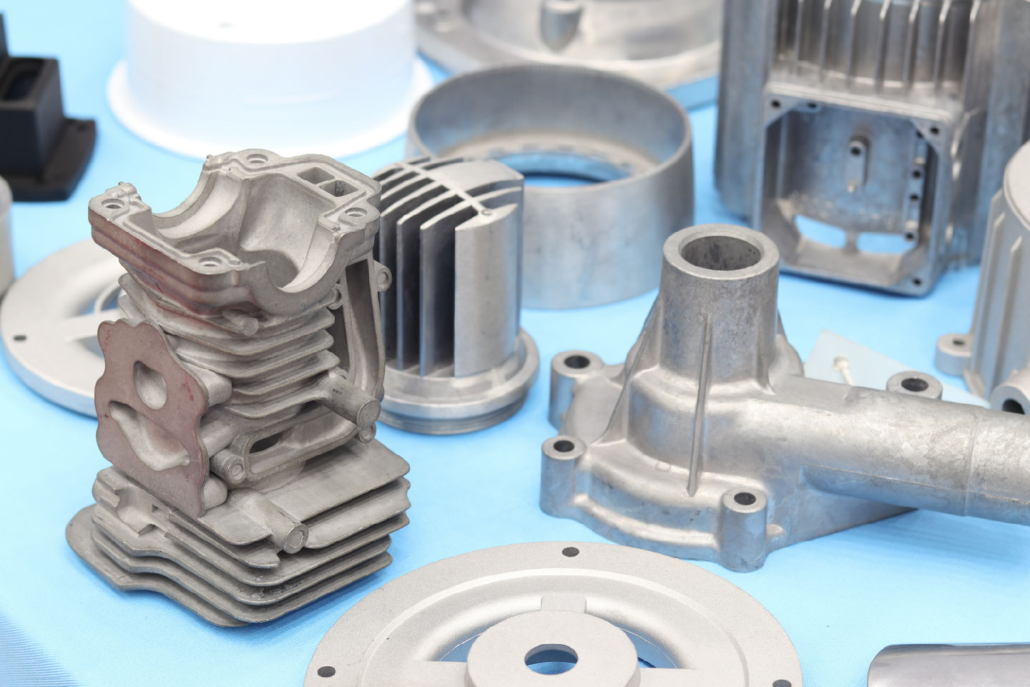
This is a manufacturing process in which molten metal is forced using pressure to fill a mold cavity also known as die casting. The mold is usually of high-quality steel and hence the part can be produced in large quantities the term is used to mean the manufacture of many parts. The finished part is then produced by opening the mold after the molten metal is cooled and forms a solid layer. This kind of use of the process is mostly applied in making intricate metal used in the production of different parts that require high accuracy in measurement and polished surfaces. Die casting can be done on aluminium, zinc, and magnesium but other metals can also be used on a case depending on application and other requirements. Die casting is considered to be one of the expert manufacturing techniques in the conception of mass production of small to medium-sized components out of metals. The popularity of the method has been spread across automotive, aerospace, electronics, and industrial machines due to its ability to produce durable lightweight intricately tailored parts. However, this process is widely recognized for its ability to manufacture products with complex geometry that would be very hard to make using conventional techniques. How Die Casting Works Molding is the first part of the die-casting process. On one side of the mold, there is a half, and it is a half of a particular design to make the mold shaped like the final product. Cavities and cores are designed for the molds that are usually custom-made so that the part can be replicated as closely as possible. 1. Molten Metal Injection: Then the molten metal is injected into the mold cavity under high pressure to form the desired shape. The metal is usually heated to one degree above the melting strain to make it fluid. In die casting, the pressure that the molten metal is pushed into the mold can be from several thousand to tens of thousands of psi (pounds per square inch), to be sure that the molten metal gets into every detail of the mold. 2. Solidification: This occurs when the metal is injected into the casing cavity whereby it cools and the metal hardens. The quality of the casting depends upon the cooling rate. Additional modes of failure (shear, climb, and glide) come into play in this case and result in faster cooling higher strength better surface finish, and slower cooling which could result in more internal defects and lower mechanical properties. Water-cooling systems built into the mold are usually used to assist the cooling process. 3. Ejection: Following this, the metal is allowed to cool and solidify and it is then easy to remove the mold from the larger casting and eject the part. Then most of the time is used in the pushing out part from the mold using a mechanical ejector system. This depends on the complexity of the part that requires other extra steps, namely trimming and machining to deliver the final shape and dimension. 4. Quality Control: A quality check is then performed on a part after ejection. It can involve dimensional verification, visual inspection, and mechanical testing to confirm that the part is equal to or better than the requirements. High precision and repeatability are theoretically achieved in die casting. Types of Die Casting There are two types of Die casting, they are hot chamber die casting and cold chamber die casting. These are all good and have their advantages, limitations and ideal applications. 1. Hot Chamber Die Casting The process most suitable for metals such as zinc, magnesium, and lead is a hot chamber die casting since the process is done at high temperatures, and melting points. The injection system is installed inside the melting furnace in this way, the metal is always in contact with the chamber. Advantages: Disadvantages: 2. Cold Chamber Die Casting The metals that have higher melting points like aluminium, brass and copper are cast in cold chamber die casting. In this case, the molten metal is tapped from a second furnace injected into the cold chamber then into the mold cavity. Advantages: Disadvantages: The Comparison of Die Casting Methods: Hot Chamber vs. Cold Chamber Here is a comparison of the most common types of two die-casting methods, Feature Hot Chamber Die Casting Cold Chamber Die Casting Metal Compatibility Best for low-melting-point metals (e.g., zinc, lead) Best for high-melting-point metals (e.g., aluminium, brass) Cycle Time Faster cycle times Slower cycle times Mold Wear Higher mold wear due to direct contact with molten metal Lower mold wear Cost Lower cost for high-volume production Higher initial cost, but better for high-strength metals Complexity of Parts Good for simpler parts Better for more complex, larger parts Advantages of Die Casting It is one of the largest advantages that die casting is one of the main preferred methods of large-scale production of products from metal alloys. 1. High Precision and Accuracy There are many advantages of die casting, which makes it convenient to offer high die precision. This method of production is also widely used for the production of parts, which requires good dimensional accuracy which is very crucial as it defines tolerance levels required in a specific job. One should note that die casting is the only manufacturing technique that can produce given parts with the utmost complexities such as the intricacies of its geometries.  2. High Production Rates In terms of large volumes, die casting is very efficient. Parts are quickly and cheaply produced once the first mold is created with very little labor involved. The demand for simulated powders is particularly high in industries like automotive and electronics where large volumes of the same parts are required. 3. Complex Designs and Thin Walls Complex design can be achieved by die casting, which would be difficult or impossible to achieve by traditional manufacturing methods. The process can make parts with thin walls, and complex internal structures, and can accommodate undercuts; thus making it the

I soliti difetti di produzione nella pressofusione ad alta pressione: Cause, prevenzione e soluzioni

colata di alluminio, pressofusione, pressofusione ad alta pressione

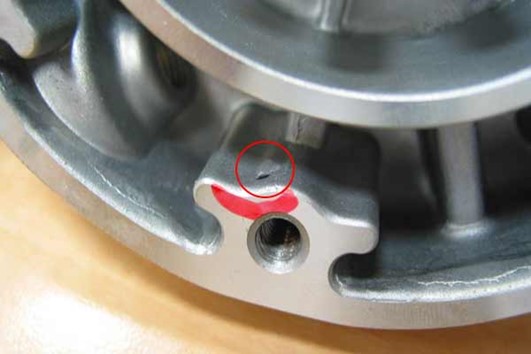
High-pressure die Casting (HPDC) is one of the most frequently utilized metal casting processes in current manufacturing. Manufacturers choose HPDC because it enables the production of complex metal parts that achieve both high precision and rapid production rates superior dimensional accuracy and smooth finishes. HPDC enables automotive and aerospace industries and the production of electronics components and consumer goods to manufacture lightweight durable parts for applications like engines and housings, structural elements, and mechanical assemblies. The manufacturing process of high-pressure die casting faces numerous risks that create substantial defects that decrease product quality while shortening the lifespan and compromising performance. Various defects form from improper mold design, turbulent molten metal flow, trapped gases, inconsistent cooling rates, and thermal stress during the production process. HPDC technology encounters seven primary defects which include porosity, cold shuts, shrinkage defects, flash formation, surface defects, misruns, die erosion, and soldering. These types of manufacturing defects cause deterioration of material strength while producing irregular dimensions and undesirable visual effects which can instigate component breakdown. Manufacturers combat production problems through the optimization of processing parameters and better-undermining methods along with controlled temperature systems and vacuum-assisted casting procedures. Real-time monitoring and simulation software are advanced quality control methods with further efficiency and reliability in the die-casting process. This article provides a comprehensive analysis of standard manufacturing issues during high-pressure die-casting technology with explanations of root causes and solution strategies to decrease these defects. It is only by understanding these challenges and applying best practices that manufacturers can improve the quality, longevity, and, of course, the performance of their die-cast components and simultaneously cut down on waste, and production costs. Proficiency in these manufacturing defects will assist die-casting engineers, production managers, and quality control specialists to optimize their processes for the best die-casting outcomes. 1. Porosity Porosity is defined by small holes or gas inclusions found within the metal matrix, and as a result, affects the mechanical properties, decreasing the strength, including allowing for air and gasses to pass through the structure, and leading to visible surface defects in die-casted products. Causes: Prevention & Solutions: 2. Cold Shut A cold shut is created when two streams of molten metal do not fuse properly and form weak bonding areas or visible seams in the casting. This defect not only decreases the mechanical strength but also increases the risk of a fracture, as well as negatively affects the component’s durability and appearance. Causes: Prevention & Solutions: 3. Shrinkage Defects Shrinkage defects occur due to shrinkage of metal during cooling which leads to internal voids or cavities, which deteriorate the structural integrity of casting. As a result, these defects reduce the mechanical strength of the final product, cause potential failure under stress, and cause poor surface quality, thus affecting both the functionality and aesthetics of the final products. Causes: Prevention & Solutions: 4. Flash Formation Excess thin metal layers formed at the parting line or die gap due to high-pressure metal escape are referred to as flash. Although flash can be trimmed off post-casting, over-flash leads to increased material waste, tool wear, and associated production costs and thus reduces the overall efficiency of the die-casting process. Causes: Prevention & Solutions: 5. Inspection of Surface Defects (Blisters, Crack and Wrinkles) A variety of surface defects, blisters, cracks, and wrinkles, degrade the visual appearance and mechanical strength of the casting and need to be prevented and eliminated. It causes weld defects that reduce the durability of the product, increase the rejection rate, and make the product stick poorly after post-casting treatments such as painting or coating. Causes: Prevention & Solutions: 6. Inclusions and Contamination Unwanted foreign particles, such as slag, oxide films, dirt, or other impurities, which are trapped in a final casting, create poor mechanical properties, weak structural integrity, and surface defects and are called inclusions. The presence of these contaminants can reduce die-cast component performance and durability so that they are not suitable for high-precision applications. Causes: Prevention & Solutions: 7. Misruns and Incomplete Fill A misrun occurs where there is a short filling of the mold cavity, which causes missing sections, thin walls, and weak points in the final component. Negative effects on the structural integrity and functionality of the part and in this way unsuitable for performance applications. Causes: Prevention & Solutions: 8. Die Erosion and Wear Molten erosion dies wear is the loss of the mold surfaces due to the high-speed metal continuously wearing the mold part surfaces until the required dimensions are achieved, which results in poor surface finish and short mold tool life. If this defect occurs, die replacement is common and consequently, production costs increase while casting quality varies. Causes: Prevention & Solutions: 9. Hot Cracking Cracks that occur during the semi-solid state of the metal, is due to high thermal stress and excessive shrinkage are known as hot cracking. These cracks degrade the mechanical integrity of the casting that is increase the chance of failure of the casting at the place where the cracks are present under stress or load. Causes: Prevention & Solutions: 10. Soldering The molten metal adheres to the die surface, which is difficult to remove with casting, causing surface defects, die wear as well as prolonged production downtime. Dimensional inaccuracies and poor surface finish are also caused by this defect, as it results in the overall compromised quality of the final product. Causes: Prevention & Solutions: Conclusion The high-pressure die casting is a powerful manufacturing process that creates complex metal parts at high accuracy at maximum efficiency. However, different kinds of defects arise using improper process parameters, material issues, and/or mold design flaws. Manufacturers can take preventive measures, e.g. optimal process control mold, properly selected material, etc., after understanding these usual manufacturing defects. A company can improve product quality, lower production costs, and achieve higher production efficiency in die-casting operations by emphasizing continuous process improvement as well as defect prevention strategies. Frequently Asked Questions (FAQs) 1. What are the major reasons for defects in high-pressure die casting? The main causes

Scegliere la giusta azienda di pressofusione di leghe: Una guida completa

Scegliere la giusta azienda di pressofusione di leghe: Una guida completa

pressofusione di alluminio, aziende di pressofusione

La pressofusione di leghe è essenziale per l'industria manifatturiera, che si basa in larga misura su componenti metallici di alta precisione, durevoli ed economici. Con un impatto rivoluzionario sulla produzione moderna, questo processo ha reso possibile la produzione di massa di parti metalliche complesse con uno standard molto elevato di precisione e coerenza. Da parte di aziende specializzate, come le aziende di pressofusione di leghe, in settori di servizio come quello automobilistico, aerospaziale, elettronico, medico e delle macchine pesanti, per la costruzione di componenti metallici su misura per le loro specifiche esigenze. Un'azienda professionale di pressofusione di leghe si avvale delle più recenti tecnologie e di materiali di alta qualità, abbinati a un rigoroso processo di controllo della qualità, per fornire prodotti adeguati agli standard del settore. Se la scelta dell'azienda giusta è importante, si può scegliere, in un modo o nell'altro, tra un prodotto veramente affidabile che durerà per anni e un componente difettoso che si guasterà presto. L'articolo offre una panoramica dettagliata sulla pressofusione in lega, sottolineandone l'importanza, i vantaggi e i fattori più essenziali da considerare nella scelta della migliore azienda di pressofusione in lega. La conoscenza della pressofusione in lega è essenziale per i produttori che desiderano fabbricare componenti di precisione o per le aziende in cerca di opzioni di produzione economiche. Che cos'è la pressofusione di leghe? Il processo di produzione dei metalli in cui il metallo fuso viene iniettato in uno stampo (matrice) ad alta pressione è chiamato pressofusione in lega. L'applicazione di questo metodo è ampiamente utilizzata per la produzione di forme complesse con tolleranze ristrette. L'uso comune di varie leghe metalliche, come l'alluminio, lo zinco e il magnesio, nella pressofusione è dovuto alle loro buone proprietà di forza e resistenza alla corrosione. Tipi di leghe utilizzate nella pressofusione Le leghe utilizzate nella pressofusione hanno un grande effetto sulle selezioni nel processo di pressofusione, che porta direttamente alla forza e al peso, alla resistenza alla corrosione e alle prestazioni complessive del prodotto finale. Le leghe variano da un settore all'altro in base alle loro proprietà meccaniche, alla durata e all'uso finale necessario. Le leghe più comunemente utilizzate nella pressofusione sono indicate di seguito. 1. Leghe di alluminio Una buona conducibilità termica, unita alla resistenza alla corrosione e alla leggerezza, fa sì che la pressofusione di alluminio sia preferita da ricercatori e produttori di tutto il mondo. Nelle industrie che richiedono componenti durevoli e relativamente leggeri, viene utilizzato questo tipo di lega. Caratteristiche principali: Applicazioni: 2. Leghe di zinco Grazie all'elevata resistenza, al basso punto di fusione e all'eccellente precisione, lo zinco è un'altra lega comunemente utilizzata nella pressofusione. È ideale per la produzione di parti piccole e dettagliate. Caratteristiche principali: Applicazioni: 3. Leghe di magnesio La sua leggerezza lo rende estremamente adatto a essere utilizzato per le industrie che cercano di ridurre il peso senza compromettere la resistenza, da cui questo metallo prende il nome di magnesio. Caratteristiche principali: Applicazioni: 4. Leghe a base di rame L'ottone e il bronzo sono esempi di leghe a base di rame che hanno un'elevata capacità di condurre elettricità, sono resistenti alla corrosione e all'usura. Queste leghe sono utilizzate per applicazioni in cui le prestazioni elettriche e termiche devono essere eccellenti. Caratteristiche principali: Applicazioni: Vantaggi della collaborazione con un'azienda affidabile di pressofusione di leghe La giusta azienda di pressofusione di leghe consente di selezionare prodotti di alta qualità che seguono gli standard industriali. Ecco i vantaggi principali: 1. Alta precisione e coerenza Un'azienda di pressofusione di alto livello dispone di buoni macchinari e di rigorose misure di controllo della qualità per produrre dimensioni con pochissimi difetti. 2. La pressofusione è un processo molto efficiente che riduce anche i costi di materiale ed energia del prodotto finale in modo significativo rispetto ad altri processi di formatura dei metalli. 3. Personalizzazione e versatilità Un'azienda di pressofusione basata su soluzioni personalizzate è un'azienda rinomata che fornisce soluzioni personalizzate basate su particolari esigenze del settore e offre diverse opzioni di lega. 4. Produzione più rapida e tempi brevi Nelle moderne aziende di pressofusione si utilizzano sistemi automatizzati per aumentare la velocità di produzione e rispettare le scadenze più rigide. 5. Durevolezza e resistenza Le parti pressofuse in lega sono note per essere molto durevoli e quindi adatte all'uso in condizioni difficili. Come scegliere la migliore azienda di pressofusione di leghe Quando si sceglie un produttore di pressofusione, è necessario considerare quanto segue: 1. Esperienza e competenza nel settore Verificate il track record dell'azienda, se ha avuto anni di esperienza nella pressofusione di leghe, se il suo tentativo nel vostro settore è stato comprovato. 2. Certificazioni e standard di qualità Assicuratevi che l'azienda segua i codici del settore: 3. Tecnologia e attrezzature avanzate Per mantenere l'accuratezza e ridurre la necessità di manodopera fisica, una moderna azienda di pressofusione utilizzerà attrezzature come macchine CNC, colate sotto vuoto e automazione robotizzata. 4. Scelta dei materiali e personalizzazione Un'azienda con più opzioni di leghe e di personalizzazione consente di trovare il design specifico che l'azienda offre. 5. Una catena di fornitura forte e una consegna puntuale Una logistica efficiente e una consegna rapida dei prodotti sono garantite da fornitori affidabili. 6. Capacità di prototipazione e test Molto importante è la prototipazione e i rigorosi test di qualità (ispezione a raggi X e resistenza alla trazione) sul prodotto. 7. Prezzi competitivi Anche se il prezzo non deve essere l'unica considerazione, una buona azienda di pressofusione può offrire prezzi competitivi senza sacrificare la qualità. Industrie che si affidano alla pressofusione di leghe 1. Industria automobilistica Industria automobilistica 2. Industria aerospaziale 3. Industria elettronica 4. Apparecchiature mediche Apparecchiature mediche 5. Prodotti di consumo Le sfide della pressofusione in lega e il modo in cui le aziende le superano La pressofusione in lega è un processo di produzione ben noto, che deve affrontare alcune sfide che hanno un impatto sulla qualità, sui costi e sulla sostenibilità. Le aziende leader nella pressofusione di leghe adottano soluzioni innovative per superare questi problemi, ottenendo una produzione di alta qualità, costi ottimizzati e un impatto minimo sull'ambiente. 1. La gestione della porosità e dei difetti La porosità è uno dei problemi più comuni riscontrati nella pressofusione, quando all'interno del metallo si formano bolle di gas o cavità da ritiro. Può anche ridurre l'integrità strutturale del pezzo e influire sulla funzionalità. Questo problema può essere affrontato dai produttori con l'uso della pressofusione sottovuoto, che intrappola una quantità minima di aria e migliora la densità del metallo. Inoltre, la porosità può essere ridotta utilizzando tecniche di colata a tenuta di pressione, la progettazione dello stampo e una corretta

Fornitore di pressofusione: Processo, applicazioni e considerazioni chiave

Fornitore di pressofusione: Processo, applicazioni e considerazioni chiave

Produttore di pressofusioni, processo di pressofusione

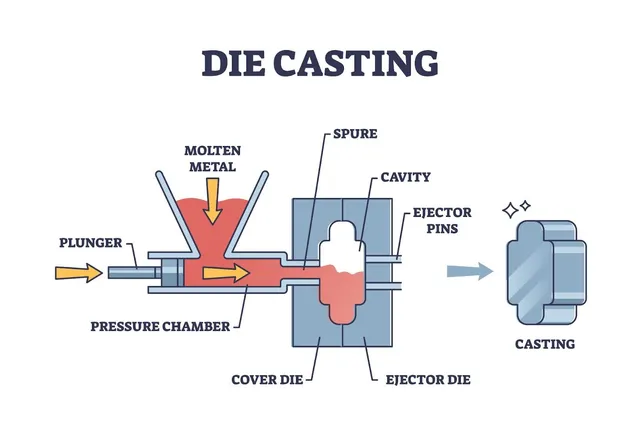
It is one of the widely used metal manufacturing processes, and it is highly efficient: producing high precision, durable, and complex components for many Industries. It injects molten metal, like aluminium, Zinc, or magnesium, inside of a steel mold (die) at very high pressure. It provides uniformity, internal strength and smashing surface finishes making it the right choice for use in automotive, aerospace, electronics, medical equipment, as well as consumer goods. A die-casting supplier is a very important company for the manufacture of high-quality parts that satisfy the industry requirements. They are suppliers, who are especially involved in designing, manufacturing and finishing the components or parts utilizing metal with strict tolerances and intricate geometries. Choosing the right supplier matters a lot for the success of any die-casting project as a good supplier should possess adequate expertise, state-of-the-art technology, and a history of successfully delivering precise and low-cost parts.Die casting is efficient in mass production and produces lightweight, yet strong parts, and as a result, the demand for die casting is increasing worldwide. Examples include reducing the weight of a vehicle, and enhancing fuel efficiency, through the use of die-cast aluminum and magnesium components in the automotive industry. In the same way, the electronics industry employs die casting to make heat sinks, enclosures and structural parts that are prone to high durability and electrical conductivity. When looking for a die-casting supplier, one should consider not only manufacturing capabilities but, more importantly, their quality control process, material expertise, and anything that may be left up to the supplier, such as machining, coating, and finishing. This provides a well-established supplier, therefore, reducing lead times, minimal defects and cost-effective production.  In this article, the die-casting process, materials used, the applications, advantages and important considerations of choosing a die-casting supplier are covered. Metal parts required to meet industrial applications need high performance and a reliable supplier fulfils this criterion for both small-batch production and large-scale production. The Die Casting Process: Step-by-Step Guide 1. Mold Preparation Mold (die) preparation and design accompany the initial step of this process. The two-part steel dies consist of a stationary cover die section and the movable ejector die section. Applied lubrication helps the molded flow metallic material smoothly while stopping the material from clinging. 2. Molten Metal Injection The chosen metals aluminum and zinc along with magnesium undergo high-temperature melting. Due to high pressure between 1,500 to 25,000 psi the molten metal enters the mold cavity. High injection pressure produces both accurate and even parts with low levels of flaws. 3. Cooling and Solidification The molten metal quickly reaches solid form during this process when forming parts to their designated shape. The components achieve superior high-strength properties because of the fast cooling process. 4. Ejection of the Part After metal solidification, the mold opens while ejector pins extract the completed part from its chamber. One mold cycle ends when it closes before starting another round of production. 5. Trimming and Finishing Machinists remove all undesirable remnants including flash and both sprees and runners from the part. The component requires supplementary finishing actions which involve sandblasting together with powder coating and anodizing operations to develop superior looks alongside functionality. Differences between Hot Chamber and Cold Chamber die-casting The die-casting process operates in either hot chamber die-casting or cold chamber die-casting formats. The main difference exists in how molten metal receives treatment before mould injection during these two techniques. The two methods differ in specific strengths together with restrictions which make them suitable for particular materials and production needs. The following section provides an elaborate comparison between hot chamber die-casting systems along cold chamber die-casting systems. 1. Process Overview Hot Chamber Die Casting • It requires a built-in furnace, which keeps the metal in a molten state. • Injection system is immersed in the molten metal, sucking it through the injection of a center and supplying it to the mold cavity. • The process is faster since there is no need to convey the metal from an independent melting station as in other processes. Cold Chamber Die Casting • Utilizes an external furnace for heating the metal to produce the required change in its state. • The molten metal is either ladled manually or automatically into the injection system and then it is injected into the mold. • The process is slower than the hot chamber one because the extra step of transferring molten metal takes time. 2. Suitable Metals Hot Chamber Die Casting • Like metals that melt below this temperature such as those that are not suitable to erode the injection system. • Common raw materials include: zinc, magnesium, lead and tin. Cold Chamber Die Casting • Applied to work with metals that have high a melting point which tends to deform the hot chamber system. • Common materials: aluminum, brass, copper, and magnesium alloys. 3. Production Speed Hot Chamber Die Casting • Higher speed of operations normally ranging between 5 to 15 operation cycles per minute. • The direct metal feed helps in avoiding the use of the ladling process in the making of the product. Cold Chamber Die Casting • Some of the disadvantages are the slow cycle times because of manual or fully automated metal transfer. • Other factors may take longer in the cooling and solidification process in this case with some of the alloys. 4. Equipment Durability Hot Chamber Die Casting • The submerged injection system has short service life since it deals with low-melting-point metals. • Longer equipment lifespan with proper maintenance. Cold Chamber Die Casting • Wear and tear increases with the rise in high temperatures especially in the case of aluminum and copper alloys. • Furniture and equipment may last for a shorter time and, therefore, may need constant replacement and maintenance. 5. Cost and Efficiency Hot Chamber Die Casting • High production since the time taken to complete a production cycle is short. • Lower operational costs because of integrated metal handling. Cold Chamber Die Casting • Increased energy costs by

Informazioni sui servizi di fusione dei metalli

pressofusione di alluminio, aziende di pressofusione, parti in pressofusione, pressofusione ad alta pressione, Colata di magnesio, Pressofusione di magnesio, Pressofusione di zinco

I servizi di fusione dei metalli prevedono la modellazione di metalli liquidi a flusso libero attraverso l'uso di stampi, matrici o modelli. Le fusioni sono generalmente rifinite in modo approssimativo a causa della natura della loro produzione. In molti casi, sono necessarie ulteriori finiture per rimuovere bave e altri artefatti del processo di fusione. I servizi di fusione dei metalli sono utilizzati per progettare un'ampia gamma di componenti e prodotti finiti. Tutto, dai semplici chiodi e dispositivi di fissaggio ai blocchi motore, può essere fabbricato utilizzando i servizi di fusione dei metalli. I processi più comuni di fusione dei metalli includono la colata in sabbia, la pressofusione, la colata in stampi permanenti, la colata per investimento, la colata centrifuga e la colata a schiuma persa. Colata in sabbia La colata in sabbia è utilizzata per realizzare pezzi di grandi dimensioni (tipicamente in ferro, ma anche in bronzo, ottone e alluminio). Il metallo fuso viene versato in una cavità dello stampo formata da sabbia (naturale o sintetica). Le fusioni in sabbia hanno generalmente una superficie ruvida, talvolta con impurità e variazioni superficiali. La pressofusione comprende una serie di processi in cui vengono utilizzati stampi o matrici riutilizzabili per produrre la fusione. Lo stampo contiene un'impronta del prodotto finito insieme ai sistemi di scorrimento, alimentazione e sfiato. Lo stampo è in grado di compiere un ciclo regolare e di dissipare (rapidamente) il calore del metallo versato al suo interno. Una volta che il metallo liquido si è raffreddato a sufficienza, lo stampo viene aperto e la colata può essere rimossa e rifinita. Colata in stampo permanente Nella colata in stampo permanente, il metallo fuso viene versato in stampi di ghisa, rivestiti con un lavaggio ceramico dello stampo. Le anime possono essere di metallo, sabbia, guscio di sabbia o altri materiali. Al termine, gli stampi vengono aperti e i getti vengono espulsi. I servizi di microfusione prevedono la modellazione di modelli mediante l'iniezione di una cera speciale in uno stampo metallico. I modelli vengono assemblati in un gruppo attorno a un sistema di scorrimento della cera. L'albero dei modelli viene quindi rivestito con 8-10 strati di materiale refrattario. Il gruppo viene riscaldato per rimuovere la cera. Lo stampo caldo viene colato e, una volta raffreddato, il materiale dello stampo viene rimosso per impatto, vibrazione, granigliatura, idrosabbiatura ad alta pressione o dissoluzione chimica, lasciando i getti che vengono poi rimossi dal sistema di colata. Colata centrifuga I servizi di colata centrifuga sono utilizzati per produrre getti di forma cilindrica. Nella colata centrifuga, uno stampo permanente viene fatto ruotare attorno al proprio asse ad alta velocità mentre viene versato il metallo fuso. Il metallo fuso viene proiettato centrifugamente verso la parete interna dello stampo, dove si solidifica. La colata è di solito a grana fine, con un diametro esterno molto fine, resistente alla corrosione atmosferica, un'esigenza tipica dei tubi. Il diametro interno presenta un maggior numero di impurità e inclusioni, che possono essere eliminate a macchina. Colata a schiuma persa La colata a schiuma persa (LFC) è un servizio di fusione di metalli che utilizza modelli riempiti di schiuma per produrre getti. La schiuma viene iniettata in un modello, riempiendo tutte le aree, senza lasciare cavità. Quando il metallo fuso viene iniettato nel modello, la schiuma viene bruciata e la colata prende forma. Colata in stampo La colata in stampo e la colata di metallo comprendono una serie di processi in cui vengono utilizzati stampi o matrici riutilizzabili per produrre la colata. Lo stampo è in grado di compiere un ciclo regolare e di dissipare (rapidamente) il calore del metallo versato al suo interno. Una volta che il metallo liquido si è raffreddato a sufficienza, lo stampo viene aperto e la colata può essere rimossa e rifinita. Nel processo di pressofusione, il metallo fuso viene iniettato sotto pressione in uno stampo o matrice riutilizzabile. Lo stampo contiene un'impronta della colata insieme ai sistemi di scorrimento, alimentazione e sfiato. Lo stampo è in grado di compiere un ciclo regolare e di dissipare (rapidamente) il calore del metallo versato al suo interno. Una volta che il metallo liquido si è raffreddato a sufficienza, lo stampo viene aperto e la colata di metallo può essere rimossa e rifinita. pressofusione ad alta pressione Il processo di pressofusione ad alta pressione è il più utilizzato e rappresenta circa il 50% di tutta la produzione di colate in lega leggera. La pressofusione a bassa pressione rappresenta attualmente circa 20% della produzione e il suo utilizzo è in aumento. La progettazione degli stampi per la pressofusione a bassa pressione e a gravità consente di migliorare il riempimento dello stampo, ottimizzare il modello di solidificazione e massimizzare la resa. La pressofusione a gravità è adatta alla produzione di massa e alla colata completamente meccanizzata. La pressofusione a bassa pressione è particolarmente adatta alla produzione di componenti simmetrici rispetto a un asse di rotazione. Le ruote leggere per autoveicoli sono normalmente prodotte con questa tecnica. I metalli per la pressofusione possono variare notevolmente e le diverse aziende di pressofusione possono essere in grado di lavorare con qualsiasi tipo o numero di metalli. Alcuni dei tipi di metallo più comuni sono la pressofusione di alluminio, la pressofusione di ottone, la pressofusione di piombo (la più popolare per la pressofusione di modelli), la pressofusione di magnesio e la pressofusione di zinco. Spero che tutte queste informazioni siano sufficienti per il vostro riferimento, ma se volete saperne di più, siete invitati a contattarci per telefono o via e-mail.

parte in pressofusione ad alta pressione

Che cos'è la pressofusione

pressofusione

What is die casting Die casting is a manufacturing process for producing accurately dimension, sharply defined, smooth or textured-surface metal parts. It is accomplished by forcing molten metal under high pressure into reusable metal dies. The process is often described as the shortest distance between raw material and finished product. The term, “die casting,” is also used to describe the finished part. The term “gravity die casting” refers to castings made in metal molds under a gravity head. It is known as permanent mold casting in the U.S.A. and Canada. What we call “die casting” here is known as “high pressure die casting” in Europe. How are die castings produced First, a steel mold capable of producing tens of thousands of castings in rapid succession must be made in at least two sections to permit removal of castings. These sections are mounted securely in a machine and are arranged so that one is stationary (fixed die half) while the other is moveable (injector die half). To begin the casting cycle, the two die halves are clamped tightly together by the die casting machine. Molten metal is injected into the die cavity where it solidifies quickly. The die halves are drawn apart and the casting is ejected. Die casting dies can be simple or complex, having moveable slides, cores, or other sections depending on the complexity of the casting. The complete cycle of the die casting process is by far the fastest known for producing precise non-ferrous metal parts. This is in marked contrast to sand casting which requires a new sand mold for each casting. While the permanent mold process uses iron or steel molds instead of sand, it is considerably slower, and not as precise as die casting. Types of machines for die casting Regardless of the type of machine used, it is essential that die halves, cores and/or other moveable sections be securely locked in place during the casting cycle. Generally, the clamping force of the machine is governed by (a) the projected surface area of the casting (measured at the die parting line) and (b) the pressure used to inject metal into the die. Most machines use toggle type mechanisms actuated by hydraulic cylinders (sometimes air pressure) to achieve locking. Others use direct acting hydraulic pressure. Safety interlock systems are used to prevent the die from opening during the casting cycles. Die casting machines, large or small, very fundamentally only in the method used to inject molten metal into the die. These are classified and described as either hot or cold chamber die casting machines. Hot Chamber die casting machines Hot chamber machines (Fig.1) are used primarily for zinc, and low melting point alloys which do not readily attack and erode metal pots, cylinders and plungers. Advanced technology and development of new, higher temperature materials have extended the use of this equipment for magnesium alloy die casting. Figure 1: Hot Chamber Machine. Diagram illustrates the plunger mechanism which is submerged in molten metal. Modern machines are hydraulically operated and equipped with automatic cycling controls and safety devices. In the hot chamber machine, the injection mechanism is immersed in molten metal in a furnace attached to the machine. As the plunger is raised, a port opens allowing molten metal to fill the cylinder. As the plunger moves downward sealing the port, it forces molten metal through the gooseneck and nozzle into the die. After the metal has solidified, the plunger is withdrawn, the die opens, and the resulting casting is ejected. Hot chamber machines are rapid in operation. Cycle times vary from less than one second for small components weighing less than one ounce to thirty seconds for a casting of several pounds. Dies are filled quickly (normally between five and forty milliseconds) and metal is injected at high pressures (1,500 to over 4,500 psi). Nevertheless, modern technology gives close control over these values, thus producing castings with fine detail, close tolerances and high strength. Cold Chamber die casting machines Cold chamber machines (Fig. 2) differ from hot chamber machines primarily in one respect; the injection plunger and cylinder are not submerged in molten metal. The molten metal is poured into a “cold chamber” through a port or pouring slot by a hand or automatic ladle. A hydraulically operated plunger, advancing forward, seals the port forcing the metal into the locked die at high pressures. Injection pressures range from 3,000 to over 10,000 psi for both aluminum and magnesium alloys, and from 6,000 to over 15,000 psi for copper base alloys. Figure 2: Cold Chamber Machine. Diagram illustrates die, cold chamber and horizontal ram or plunger (in charging position). Die casting provides complex shapes within closer tolerances than many other mass production processes. In a cold chamber machine, more molten metal is poured into the chamber that is needed to fill the die cavity. This helps sustain sufficient pressure to pack the cavity solidly with casting alloy. Excess metal is ejected along with the casting and is part of the complete shot. Operation of a “cold chamber” machine is a little slower than a “hot chamber” machine because of the ladling operation. A cold chamber machine is used for high melting point die casting alloys because plunger and cylinder assemblies are less subject to attack since they are not submerged in molten metal. Die casting and their construction Die casting dies (Fig. 3) are made of alloy tool steels in at least two sections called fixed die half and ejector die half. The fixed die half is mounted on the side toward the molten metal injection system. The ejector die half, to which the die casting adheres, and from which it is ejected when the die is opened, is mounted on the moveable platen of the machine. The fixed die half of the die is designed to contain the sprue hole through which molten metal enters the die. The ejector half usually contains the runners (passageways) and gates (inlets) which route molten metal to the cavity (or cavities) of the die. The ejector

Che cos'è la fusione per gravità

colata di alluminio, stampi per colata di alluminio, pressofusione di alluminio, pressofusione, alluminio pressofuso, aziende di pressofusione, stampo per pressofusione, parti in pressofusione, Colata a gravità, stampo ad iniezione Cina, costruzione di stampi a iniezione

Differenze tra la pressofusione di alluminio e la colata a gravità La pressofusione di alluminio non è solo una scusa per giocare con il metallo fuso, ma è in realtà un ottimo modo per creare arte e pezzi complicati di macchinari o altri oggetti che altrimenti sarebbero quasi impossibili da realizzare. La pressofusione di alluminio è davvero un ottimo modo per risparmiare denaro... giocando con il metallo fuso. Il motivo per cui la pressofusione di alluminio è sopravvissuta alla prova del tempo è una questione di efficienza. Alcuni dei primi esempi di fusione sono stati trovati in Cina e risalgono a migliaia di anni fa. In realtà, tutte le principali civiltà, dagli Egizi ai Romani, hanno praticato la fusione dell'alluminio. Questa abilità è tornata in auge durante il Rinascimento e da lì ha continuato a progredire ed evolversi. Sebbene la colata in sabbia sia il processo di fusione più diffuso, esistono molti altri processi a disposizione dei fonditori privati. Non tutti hanno intenzione di fondere pezzi pesanti come parti di motore o di fondere le proprie motociclette. Quindi, per coloro che desiderano realizzare solo pezzi decorativi, non utilizzeranno lo stesso processo di fusione di questi fonditori per impieghi gravosi. Per gli artisti che creano statue o abbellimenti in scala ridotta e per gli hobbisti che hanno bisogno di un tocco decorativo per il loro modello di aereo o di barca, potrebbero prendere in considerazione l'uso della colata per gravità per le loro esigenze. Che cos'è la colata per gravità La colata per gravità sembra essere particolarmente utile quando si ha a che fare con l'alluminio e altre leghe leggere. L'idea di base di questo processo di fusione è più o meno quella che suggerisce il nome. Il metallo viene introdotto nello stampo grazie alla forza di gravità. La maggior parte degli altri processi di colata utilizza una differenza di pressione naturale, come in alcune procedure di colata in sabbia, oppure una pressione forzata, come nella colata centrifuga, per introdurre il metallo fuso nello stampo. Uno degli usi più comuni della colata per gravità è quello di utilizzare stampi permanenti. Chiamato anche stampo, lo stampo permanente è davvero economico solo per coloro che prevedono di utilizzare lo stesso stampo numerose volte e devono mantenere la qualità a un livello costante. Sebbene alcuni stampi temporanei possano essere utilizzati ripetutamente, la qualità del prodotto finito inizierà a risentirne nel tempo. Con gli stampi la qualità rimarrà invariata. Gli stampi devono essere visti come un investimento. Certo, sono più costosi di altri stampi, ma dureranno più a lungo di altri stampi più economici. Gli stampi permanenti vengono creati utilizzando ghisa, acciaio e altri metalli. La colata per gravità viene utilizzata per il processo di stampaggio permanente con risultati piacevoli. La colata a gravità viene solitamente utilizzata quando il prodotto finito è più basato sull'aspetto visivo che su quello strutturale, motivo per cui questo metodo è il preferito dagli artisti e anche da alcuni gioiellieri. La perdita di resistenza è dovuta alla mancanza di pressione utilizzata in questo processo. Per coloro che hanno bisogno di forza ma vogliono comunque utilizzare la colata a gravità, sarà necessario utilizzare una quantità maggiore di metallo fuso, con conseguente aumento del peso. https://www.aludiecasting.com/ per saperne di più sulla colata a gravità Affidarsi alla gravità richiede pazienza, anche se sarà necessaria per i prodotti più grandi. Se avete bisogno di un servizio di colata a gravità o di pressofusione di alluminio, magnesio o zinco per la vostra azienda. Siete invitati a inviarci il vostro requisito per un preventivo, dovete solo inviarci il vostro disegno 3D della parte e il vostro requisito, quindi potete sedervi e noi faremo il resto per voi, per lavorare con noi dovete solo occuparvi del mercato al vostro fianco, e noi saremo il vostro supporto per occuparci di tempi di consegna, spedizione, qualità e tecnica.

Torna in alto

Richiedi un preventivo