Street light housing

Aluminum Die Casting Street Lighting Housing

aluminum casting, Aluminum Die Casting led lighting housing, LED light housing parts

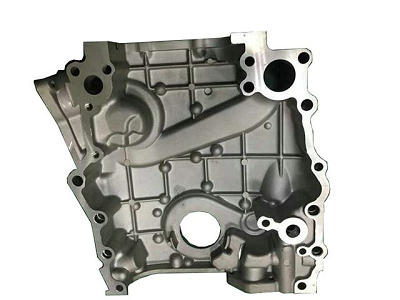
Aluminum Die casting has been proven as an ideal way to create various parts components of street lighting housing with assorted materials which range from; copper, zinc, aluminum, and lightweight aluminum alloys. Die casting operation guarantees dimensional precision which needs little or no machining required for finished the merchandise, the experts claim that die casting lighting housing is economically conceivable. And the several properties of aluminum can make it a great metal for designing die casting. Custom aluminum die casting street lighting housing is precious, unique, and not avoidable while in the light industry. just invest little cash for the die casting parts for street lighting housing, and you will create brand across the world. Die Casting Lighting Housing Right now it is a great time for led light industry. CNM TECH is Aluminum Die Casting led lighting housing makers, with xx years experience in Die casting, powder coating, Computer numerical control (CNC) machining, and so forth and provide the best die casting service for fixtures of different brand and for many parts for street lighting housing. What Is Actually Custom Die Cast Lighting Housing? This indicates you send out the drawing to die casting company and pay the die casting mold cost. And the supplier of die casting produce die casting light housing according to your drawing. They just can sell your owner product for you personally. No one other client can obtain your design. Therefore it’s your own unique design and style for the LED light housing parts in the marketplace. What Is Actually Public Die Casting Lighting Housing? That die casting supplier produces their particular light housing copy of few styles on the market. They sell to all clients. Therefore you observe the die casting LED lighting housing are all around the marketplace and not unique. The Things CNM TECH Die Casting Company Perform? We devoted our best experience to the die casting industry for the light firms. CNM TECH offers 8 years of experience in the LED street lighting marketplace. Therefore we constantly make custom made outdoor floor light housing. Therefore we do not make public die casting, and we are not going to demonstrate private drawing to the different light firms, we only make die casting street lighting housing for other die casting LED lighting housing according to customer design, and we will never sell those die casting housing parts to any other third parties. Our company built and delivered die casting aluminum elements on the highest standard. Constantly employing raw materials of the top grade and advanced equipment – Some Of The Die Casting Parts For Street Lighting Housing That We Can Make *- Led Housings *- Street Light Enclosure *- high pressure die casting shell *- led street light body *- outdoor flood light housing CNM TECH aluminum die casting solutions for LED lighting manufacturing parts are utilized in a number of leading marketplaces. We fulfill customers’ requirements for top quality demands which range from Housing for the heat sink, coolers, Housing intended for the light frame. We consider your wonderful satisfaction in our capability to decrease the manufacturing and tooling expenses. How You Can Custom Die Cast Aluminum Street Lighting Housing Parts With CNM TECH Services? 1- Clients send out the IGS/STEP drawings or perhaps sample to us to get an offer. 2- We will certainly discuss the main points to fulfill Castability. 3- Following customer`s approval on our rates, we will send out our three dimensional molding sketching for acceptance. 4- Following approving the 3D molding design, we will begin the production of the tooling/mold following the first deposit of mold/tooling cost paid out. 5- Following mold/tooling finished, will send that samples for customers examine; 6- Following samples accepted, will certainly put together the production on trial order following customer’s payment to get the balance for that mold/tooling cost. – So Why Choose CNM TECH As Lighting Housing die casting manufacturer? *- We are a good factory. We offer you one-stop service, right from mold design and style to part production for metallic aluminum die casting *- Very good communication with every of our client, specifically ready to talk about the details of your drawings. *- years in custom made die casting led light fitting, outdoor light fittings, street light die casting case by led streets light housing companies *- Weight variety of all die casting devices: length:2M, weight: 5g~40 kg. *- Aluminum Die-cast equipment tonnage sizes: 300T,500T,800T,1250T,2000T *- Surface finish and Surface Treatment: powder covering, polishing, sandblasting done in house *- Supplementary Machining: Deburring, Tapping, Drilling, Polishing, CNC Machining, Assemblage *- best die casting provider of Discolor, Philip, Dianming, and many others *- ISO9001 and as well, TS16949 Die Casting Manufacturer with CMM *- Numerous professional experiences plus more than two decades manufacturing track record *- Right from design and style, casting, screening to delivery service exports provide a 100% solution, *- Super accuracy, affordable selling price, and quick delivery service *- Superb QC, QA systems assure top quality *- Available for Original Equipment Manufacturing OEM and ODM solutions *- High accuracy, top quality Resilient elements hold long. *- Cast Effective Rate, High-strength, compact design. *- Body-material: Aluminum Alloy Die Casting. *- Very easily Assembly. *- Client-Oriented & Top quality Adherence. *- Dimensional Precision and Harmony. *- Endure High Operating Temperature ranges. *- Certainly Driveled on Time. *- Aluminum Die-cast light Housing *- With the top quality. *- Diverse surface treatment ISO9001: 2008 qualification. *- Longevity of Housing and Defend the light source. Call us today and discover more and also observe how we can save you money and time on crafted parts for street lighting housing components.if you want led light fittings. Led street light housing, Led Casing, please feel free to get in touch
Aluminum Die casting Led display cabinet housing

aluminum die casting led display cabinet, die casting street housing, led die casting housing

Aluminum Die-casting is a high pressure die casting process that is characterized by injection molten metal or alloy under high pressure into a die casting mold cavity. With this aluminum alloy forming technology, the led cabinets housing frame requires high precision dimension, lightweight, high strength, base on this requirement, metal sheet and aluminum profile process is not possible to meet make this high precision led cabinets housing frame, in that case, the die-casting aluminum process to make led display cabinets have become the mainstream in the led display market. The seems very simple when we see the led display frame, only need to make mold and production, that it, But if you think the difference is only the aesthetical design, you may be wrong. The raw material adopted, and the experience of die casting production technology determines the quality of aluminum die casting led cabinets housing. If we are talking about the connection precision between the each led cabinet, the depth of led housing, the weight of cabinet, and the cabinet housing strength, all of this item requires the high technology, most of the high-pressure aluminum die-casting led cabinet you could source in the market but you must find the right one who offers the best quality about the material, precision, strength, etc.   So sometimes, to make your purchasing decision upon the cost of the goods. But that must be in the premise of the same other components such as modules, PSU, etc. Usually, the low-cost aluminum die-casting led outdoor display cabinet is made from “public die casting mold“, i.e. every led display manufacturer could buy this die-casting led cabinet housing from the vendor and assemble their modules & components onto it. In this case, the aluminum die-casting housing cabinets themselves are the same, but how about the modules and other components?  So a further investigation is a requirement when you talk with the led display companies. If you’re not satisfied with a common aluminum die casting cabinet housing, and you want to have your own LED display cabinet to satisfy your special clients, then you need to open a new aluminum die casting mold, to make aluminum die casting tooling for the LED outdoor display cabinet is very high cost, if you only need a few hundred of LED cabinet housing, we suggest you not make your own die casting tooling. There are many options from different led display die casting companies as well. If you don’t have much experience in China led displays, you may feel confused about what is the high-end rental led display? When you buy a led outdoor display cabinet housing, we suggest you make sure something before ordering. First, get more information about the modules, the PSU, the control system, and other components and the technical features. For a high quality led display, that all the components are specially designed and adopted. everything must be different and outstanding? Second, no matter indoor & outdoor or different pixel pitch modules, they all share one die casting mold. To make special die casting mold that cost is very high,, so that makes sense the led display company would normally use one die casting mold for all the possible options. We are die casting company in China, make a custom die casting parts, led die casting for street lighting housing, die-casting housing for led display cabinet, etc. We have imported a large number of well-known brands of production equipment, all in one complete CNC process automatic assembly line equipment. On the basis of large-scale use of intelligent equipment, all of die casting parts made from us will be 100% checked before delivery. If you have any project requires led street lighting housing, an LED display cabinet or any other custom die casting parts, you are welcome to contact us.

Aluminum Aerospace parts

Aluminum die casting and its importance in Aerospace Industry

aluminum casting, aluminum casting molds, aluminum die casting, die casting aluminium, die casting companies, die casting company

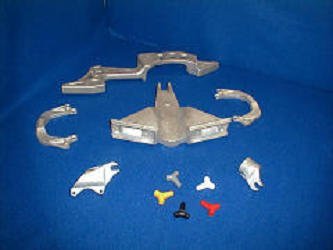
Aluminum die casting items are of remarkable use in different industry sectors and more so in the aerospace engineering where precision and top standard items is of greatest significance. These items are used in building both little as well as the big components in the aviation industry. Additional, die casting aluminum are used both in the pivotal military sector as well as commercial. The reason for this is easy – they are cost-friendly solutions and provide amazing outcomes. Apart from being cost effect, the parts made from die casting aluminum are additionally prepared to endure extreme weather situations and increased damages. Another vital reason for using aluminum products in aircraft is that the meal is comparatively affordable than other metals that are die casted. Additional,  aluminum has the potential to get with other metals in order to provide durability and much flexible. With aluminum casted products, you do not have to compromise on the standard yet can them at much affordable production cost. Further, all the standards that have been set for using of metal components, aluminum relax the need to the utmost. Hence, they are certified secure for use in planes, affordable and have all the qualities that are needed for flying crafts. So casting aluminum is on the boost like never before. Further, the top thing about an aluminum die cast part is that its weight is favorable for the aircraft works. So, how actually is casting Aluminum done and what are the processes involved? Well, the reply is simple. Aluminum alloy is first forced into a top-grade steel at high speed and force in a high temperature. This outcomes in superior standard products that are very light and thin walled perfect for use as aircraft components. It is to be mentioned here that Aluminum diet casting is a hard technique. Only a truly experienced and top standard team of engineers can make sure that the parts come with top volumes or with excellent tolerances and surface finish. Actually, this type of force casting is far more famous than gravity die casting or sand casting. This is because the need for machining is this type weather for Zinc or aluminum casting is extremely low due to the close casting tolerances. Though the tooling cost in casting Aluminum or rather any metal are considerably higher than the other 2 types yet, the mechanical properties achieved thus are far excellent in terms of functionality.

What is die casting clamping force

A380 Aluminum die casting, aluminum casting molds, aluminum die casting, die casting companies

Die Casting clamping force is the force applied to a mold by clamping unit of HPDC die casting machine. The clamping force must be grater their separating force. Which applied by the injection of molten metal into the mold The clamping fore > separating force How to calculate the separating force (opening force)? Opening force is the force acting on the cavity to make the die expand during the production of die casting part. The opening force can be calculated by the following formula: F=PXA F: opening force P: specific injection pressure A: Total projected area What is Specific injection pressure? Molten metal is ladled through the shot hole into the cold chamber and the shot plunger pushes the metal into the die. The pressure applied by plunger to push the metal into the die is specific injection pressure. Injection pressure use for different type of casting: For standard casting =600 kg/cm2 For technical casting =600−800 kg/cm2 For pressure testing casting =800 kg/cm2 What is projected area? The anticipated region is a two-dimensional zone estimation of a three-dimensional article by anticipating its shape on the plane. Total projected area =casting projected area + slide projected area + runner projected area + overflow projected area Example Casting projected areas =56000mm2 Overflow + runner projected area =22400mm2 (40% of total casting projected area ) Slide projected area=projected area must be selected in the plane that is normal to be direction of core travel x tanꬾ Angle of wedge = angle of finger cam angle + 2degree Force FY = F X Tan ꬾ ꬾ = angle of wedge lock Example: Slide core 1 projected area=area normal to direction of travel × tanꬾ =5000× tan20 degree =5000× 0.36 =1800 m2 Slide core 2 projected area=4500×tan 20degree= 1620mm2 so, Total projected area= 56000+22400+1800+1620mm2                                                                        =81820 mm2 What is separating force (Opening force)? (For technical casting=600−800 kg/cm2) (800 kg/cm2       =8kg/mm2) Opening force = specific pressure ×total projected area =8 kg/mm2 × 81820mm2 =654560 kg/mm2 (1 ton = 1000kg) =654.56 T Die clamping force The clamping force must be grater then the separating force. Locking force require =F×1.2 =654.56×1.2 =785.472 tons We select the 900T machine What is fill ratio, how it is important for selecting machine tonnage? It is the percent of liquid metal vulnerable chamber contrasted with the absolute volume of the virus chamber. Another method for saying it would be the level of metal contrasted with the level of air exposed to the harsh elements chamber For Example 50% full (of metal) = 50% air remaining The level of fill is significant in light of the fact that it is utilized to ascertain the ideal moderate shot speed. This can have a quality impact on the casting. Fill ratio (30-40%) is good for automobile die casting component quality.

Zinc die casting

The importance of zinc die casting in the automotive industry

die casting aluminium, die casting companies, die casting company, Die Casting Manufacturer, die casting parts, zamak 3 die casting, Zamak 3 zinc casting, zamak 5, zamak 5 die casting, zamak die casting, zinc alloy die casting, Zinc die casting

What is Die Casting? Die casting is a metal casting process which is characterized by pressing molten metal into the mold cavity. The mold cavity is made using two hardened tool steel molds that are worked on during processing and work similarly to injection molds. Most die-casting is made from non-ferrous metals, especially zinc, copper, aluminum, magnesium, tin, lead, and tin-based alloys. Depending on the type of metal being thrown, a thermal or cold engine is used. The zinc die casting process is very popular for making parts in building and industrial fields, but the most common application is in the automotive industry. In fact, cars have different parts that can be made through die casting, in such a way that the modern process of die casting was originally started for the automotive industry. With the casting process often no further machining is needed after casting: not only is the accuracy up to 99.8%, but the casted products can also be used raw because they have a pleasant finish. The use of zinc die casting is almost 28% in the automotive industry, followed by the building and hardware sector. Zinc has become one of the most important metals in the auto parts industry, especially for products such as door lock housing, pawl, gears and retractor pulleys in seat belt systems, but also for camshaft and sensor components. By using this metal and its alloys, it is possible to achieve strength, ductility, and flexibility that would not be possible with other materials. In addition, zinc can be the right choice to get high-quality aesthetic components, with tight tolerances that are not possible with other materials, and to get embossing and grooves for mechanical components or gears. Zinc Die Casting Mechanisms in Automotive As said before, the automotive industry is the most common die casting application: using zinc and its alloys makes it possible to produce components that are able to achieve high aesthetic quality, with tight and narrow tolerance for shape morphology. Zinc alloys are also used for coatings because of its many benefits, such as improving the anti-corrosion properties of zinc which are already impressive. Below you can find a number of possible examples of zinc plating: Interior aesthetic section Sunroofs Section Mechanical parts Engine and other underhood components Power steering system Parts and brake system Air conditioning components and systems Chassis hardware Parts in the seat belt system Components of climate control Fuel system Advantages for Zinc Die Casting: An efficient & economical process offering various forms & forms possible. High-Speed ​​Production Dimension Accuracy & Stability Strength & weight Several finishing techniques are available Simple Assembly The Die Casting process began with the use of lead and lead alloys, magnesium and copper alloys which were quickly followed, and in the 1930s, many modern alloys still in use today are available. This process evolved from casting low-pressure injection to modern high-pressure injection of 4,500 pounds per square inch. The modern process is capable of producing high integrity, clean casting forms with excellent surface finishes. Zinc casting alloy is a strong, durable and cost-effective engineering material. Their mechanical properties are competitive and are usually higher than cast aluminum, magnesium, bronze, plastic and most cast iron.

Die Casting manufacture company

The Die Casting Process Step By Step

aluminum casting molds, aluminum die casting, die casting, die casting aluminium, die casting companies, die casting company, Die Casting Manufacturer

The climbing phase: The 1st step is to prepare the die halves for casting by cleaning the faces of each die then applying lubrication or release agent. Once the die has been prepared, the die halves are closed and clamped together with pressure applied from the die-cast machine. The clamping force will depend upon the size of the machine but must be more than the opposing force trying to open the die during the casting process. The injection phase: The ingots are added to the furnace and kept molten at a set temperature according to the metal being used. The molten metal is transferred to an injection chamber and injected into the closed die pressure ranging from 1000 to 20,000 psi. The pressure is maintained while the metal solidifies. The amount is injected into the die is known as the ‘shot’ The injection of metal into the die is very short, this ensures the metals do not start to solidify before the die is completely filled. The cooling phase: After the injection is complete, the molten metal needs to solidify before the die is opened. The cooling time will depend upon the part geometry as well as the metal thermodynamic properties. The wall thickness of the parts plays a big factor in the cooling time, the thicker the wall section the longer the cooling time required. The ejection phase: After the cooling time has elapsed, the two die halves can be opened. An ejection mechanism then pushes the solidified casting out of the die. The force of the ejection will be determined by the size of the part, bearing in mind, the part shrink during the cooling process and tends to stick to the die surface. Once the part has been ejected, the die can be closed ready for the next injection cycle. The trimming phase During the cooling and solidification phase, the casting will solidify as a complete cast unit which includes the part, flash, and any runner system This excess material must be trimmed off to leave just the main cast product. Method of trimming includes trim tools, band saw are manually clipping. Any trimmed metal is either scrapped or recycled if permitted. Advantages of die casting: Die casting is fast Die casting can be produced in seconds each part and quantities of hundreds to thousands of metal parts each day. Near net shape Die casting are produced “near net shapes” no matter how complex the shape are how tight the tolerances are. Lighter weights Die casting are stronger because of the material surface skin not the thickness of materials so parts can weigh less with thinner casting wall thicknesses. Die casting is versatile Many more part shapes and sizes can be produced using the die casting manufacturing process. Die casting are durable Die castings parts are metal and have a long service life. Die castings are inexpensive Die castings are fast to produce and useless material. Die casting are typically less expensive than most other metal parts manufacturing processes.    

Zamak 3 zinc casting

Zamak 3 Die casting

aluminum casting, zamak 3, zamak 3 die casting, Zamak 3 zinc casting, zamak 5, zamak die casting, zinc alloy die casting, Zinc die casting

We offer ZAMAK 3 die casting for manufacturing ZAMAK 3 products. Our ZAMAK 3 products, productions capabilities, and warehousing facilities will give you quality parts at competitive prices. ZAMAK 3 is the most popular of the ZAMAK series of alloys for zinc die casting due to its castability and dimensional stability. ZAMAK 3 Properties: Ultimate Tensile Strength: psi x 103 (MPa) 41 (283) Yield Strength – 0.2% Offset: psi x 103 (MPa) 32 (221) Elongation: % in 2″ 10 Shear Strength: psi x 103 (MPa) 31 (214) Hardness: Brinell 82 Impact Strength: ft-lb (J) 432 (58) Fatigue Strength Rotary Bend – 5×10⁸ cycles: psi x 103 (MPa) 6.9 (48) Compressive Yield Strength 0.1% Offset: psi x 103 (MPa) 604 (414) Modulus of Elasticity – psi x 106 (MPa x 103) 12.46 (85.5) Poisson¡¯s Ratio 0.27 Density: lb/cu in (g/cm3) .24 (6.6) Melting Range: ¡ãF (¡ãC) 718-728 (381-387) Electrical Conductivity: %IACS 27 Thermal Conductivity: BTU/ft/hr/¡ãF (W/m/hr/¡ãC) 65.3 (113.0 Coefficient of Thermal Expansion: 68-212¡ãF µin/in/¡ãF (100-200¡ãC µm/mm/¡ãC) 15.2 (27.4) Specific Heat: BTU/lb/¡ãF (J/kg/¡ãC) .10 (419) Pattern of Die Shrinkage: in/in .007 Zinc Die Castings Applications Sporting Goods – Cost-saving approaches to machined components; – Coatings to match mating zinc parts; – Strength for tough applications; Medical – Innovative capabilities; – Precision designs as cast; – For use in many difficult applications; Switch – Multiple cavities for cost savings; – Multislide; Fasteners – Many sizes of panel nuts already tooled; – High speed tapping capabilities; Connector – Four slide technology to eliminate costly secondary; – Barrel plating for electroless nickel offers cost-effective protection and aesthetics; – Excellent conductive alloys; Fiber Optics – Capable of casting complex designs; – Close tolerance, as cast, components; – Equipment and experience to provide small components; Appliances – Thin wall castings with the strength to hold up in applications; – Surface finishes provide wear resistance ; – Alloys designed for application specifics ; Automotive – Capability to incorporate multiple components into a single zinc casting ; – Corrosion-resistant castings and platings ; – Secondary tapping capabilities ; – Zinc is an excellent dampening material ; The Detail of Zamak 3 zinc casting  Model No: Zamak 3 zinc casting ProductName: Zamak 3 or 5 die casting Product Origin: China Brand Name: CNM TECH Price Terms: FOB SZ Payment Terms: T/T CIF L/C Supply Ability:  300,000-400,000sets/month Delivery Lead Time: around 30 days If you want to purchase or know more information about Zamak 3 zinc casting,

Zinc die casting parts

Zinc alloy die casting Zamak 3 Zamak 5

aluminum casting, zamak 2 die casting, zamak 3, zamak 3 die casting, zamak 5, zamak 5 die casting, zamak die casting, zinc alloy die casting, Zinc die casting

Zinc Die Casting Description : We use four top-quality zinc alloys for our zinc die casting parts – Zamak 3, Zamak 5, ZA-8 and Zamak 2 — because they offer unique advantages for creating high-precision die castings. Zamak 3: As the most popular zinc alloy, Zamak 3 features exceptional ductility and impact strength. It works very well with multiple plating and finishing options, Zamak 5: Typically used in automotive and small engine applications, Zamak 5 exhibits excellent creep resistance, hardness, and strength. Zamak 3 or 5 die casting parts? For all our zinc die castings we use either Zamak-3 or Zamak-5 Zinc Alloy. Special. The Alloying is done in our fully automatic In-house Zinc Alloying section where we manufacture all kinds of Zinc Alloys for Die Casting. Our daily Zinc Alloying capacity is 16 Metric Tonnes. Every  Alloy Heat is tested by a computerized Spectrometer for metallurgical composition. We would be happy to quote for your requirements of low-cost high volume small precision  Zinc Die Casting components weighing in the range of 0.25 gms to 125 gms. We specialize in a rare combination of both – Accurate Sizes & Decorative Surface Finish ZA-8: Even stronger than Zamak 3 and 5, ZA-zamak8 is the ideal choice for hot chamber casting projects. It also works well with multiple plating and finishing options. Zamak 2: Compared to other Zamak alloys, Zamak 2 offers higher creep performance and long-term strength and hardness. It serves as an excellent bearing material and has been known to eliminate the need for bushings and wear inserts in die-casting components. Zamak 3, Zamak 5, ZA-8, and Zamak 2 is well suited for the die casting process due to their ability to: – Produce very thin walls and near net shapes – Achieve high levels of accuracy – Offer temperature flexibility up to 150° F – Provide reliability with superior bearing properties – Exhibit increased wear resistance Please send us either your samples, drawing and other details and we will send you our quote immediately.

Zinc die casting

Favorable Manufacturing For Zinc Die Casting Processes

aluminum die casting, die casting aluminium, die casting companies, Zinc die casting

The process of die casting with pressure injection can be followed until mid-1800. The components used were tin and lead, but the use has disappeared with the introduction of zinc and Aluminium alloys. This process has evolved over the years, from low-pressure injection molds to casting molds at pressures of up to 4,500 psi. The process can create high-quality products with excellent end surfaces. Die Casting is an economical and efficient process for making various shapes. Considered superior to other manufacturing techniques, it is durable and aesthetic and combines perfectly with other parts of the machine that are part thereof. Dying has many advantages. Among these, the main is its ability to produce complex forms with a higher tolerance level than other mass-production methods. Thousands of identical prints can be produced before you need to add new mold tools. High Die-pressure is a manufacturing process where aluminum that has been melted is injected by a casting machine under extreme pressure on steel or molds to make the design and detail parts of the model you want to make. Casting in tons of universal tightening. This record reflects the amount of pressure given on the matrix. The engine size varies from 400 to 4000 tons. There are many advantages to using the die casting process compared to others. Die casting produces parts with thinner walls, narrower size limits and processes can be accelerated. Labor costs and finishing are the lowest with the dice. This process facilitates to obtain intricate forms with narrower tolerances. Unlike the forgery process, you can insert the kernel into the product created by this process. Forms that cannot be obtained from rods or tubes can be easily achieved with casting. The number of operational processes is smaller, which leads to the reduction of waste materials. Die casting is used when you need a stable, dimensional and durable component. They withstand heat and maintain a good level of tolerance, an important condition for each part of a good machine. They are stronger and lighter than the part made by other printing methods. Its parts are not welded or screwed, which greatly increases its efficiency. Another advantage is the many workarounds that you can get with the launch. Surfaces can be smooth or textured, which facilitates the application and its use. Hopefully, this information can help you and thank you for reading the article about Zinc Die casting.

Metal Machining Parts

Metal Machining Parts

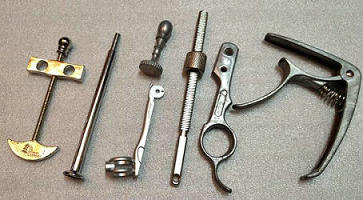
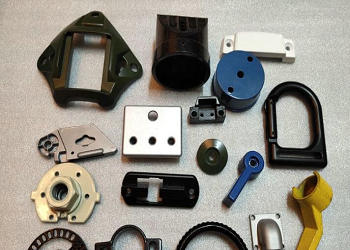
The use and production of metals parts have been a part of civilization for thousands of years. The Bronze Age, Copper Age, and Iron Age are proof that metals were widely used in the past by people all over the world, particularly in the Near East. Metal machining parts are indispensable to human activities, as planes, computers, and cars all have metal parts. Our metal machine factory creates metal parts for machinery, engines, cars, and other vehicles. The technology has made the production of these parts possible. Several kinds of metals are useful in making metal parts. Aluminum is widely used as a metal machining part due to its malleability. Aluminum parts make up much of an aircraft and have various uses in the transportation industry. Metal machine shops also use copper parts according to client specifications. Stainless steel, used mainly as hardware, cookware, and surgical equipment, is also used as a metal machining part. At CNM Tech, High precision CNC lathe and CNC center machines are used to process and form these metal parts. Our Metal machine shop also uses lathe machines, mill mixed machines, and punching machines. Metal machining uses measuring and testing equipment such as roughness testers, concentricity testers, and hardness testers to ensure that the metal parts are fit to be used. Surface treatment includes polishing, zinc plating, and chrome plating to ensure a nice finish. Thousands of metal machining parts can be ordered from a metal machine shop, and the shop can deliver it to the client in no time. Clients can also customize the design of each part. However, our metal machine shop is an ISO-certified company to ensure each metal part is up to standard and meets ISO requirements. As these metal machining parts are used for high precision production, our metal machining products undergo rigid testing. CNM Tech will deliver the best metal parts possible. This will ensure that the use of metal will increase productivity and that the metal is of the highest quality. Are your metal machining parts ready to start? Send us your requirement for quotation, we will quote you in two business days.

Scroll to Top

Get a quote