다이 캐스팅

콜드 챔버 다이 캐스팅: 전체 가이드

다이 캐스팅, 다이캐스팅 제조업체, 다이캐스팅 부품

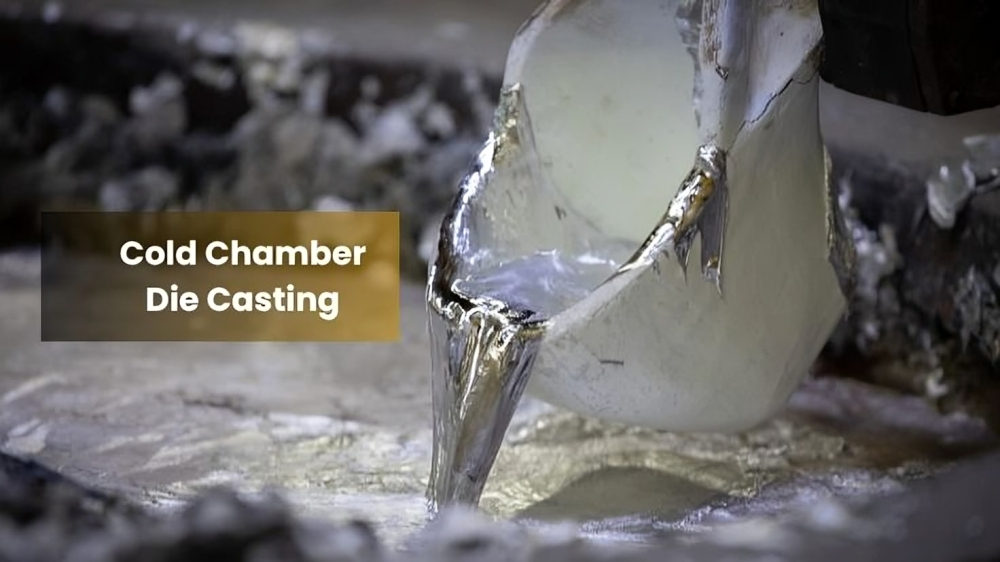
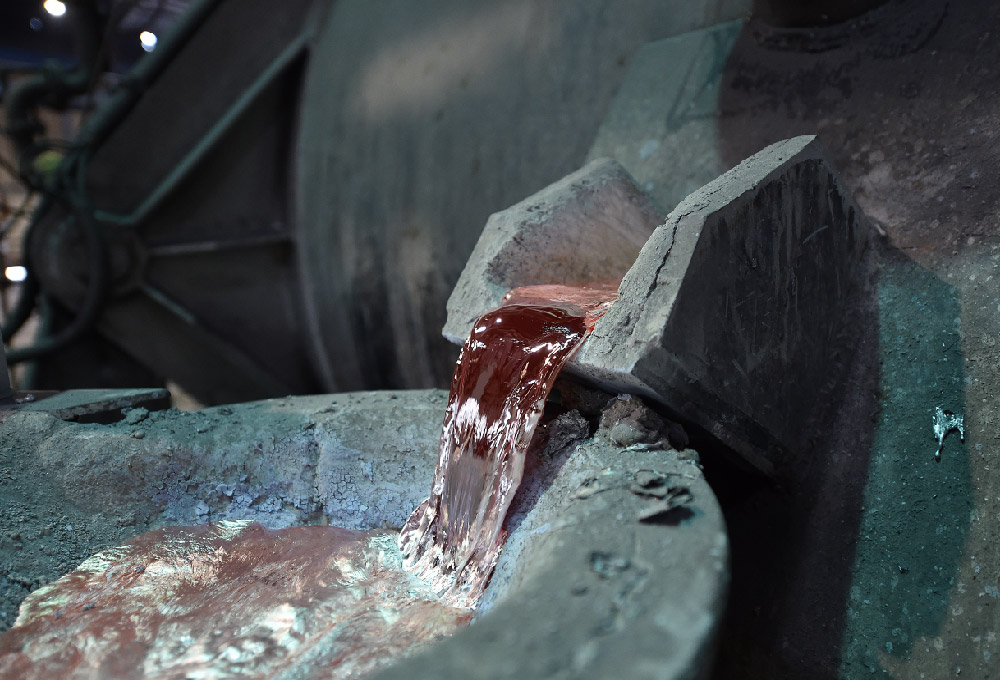
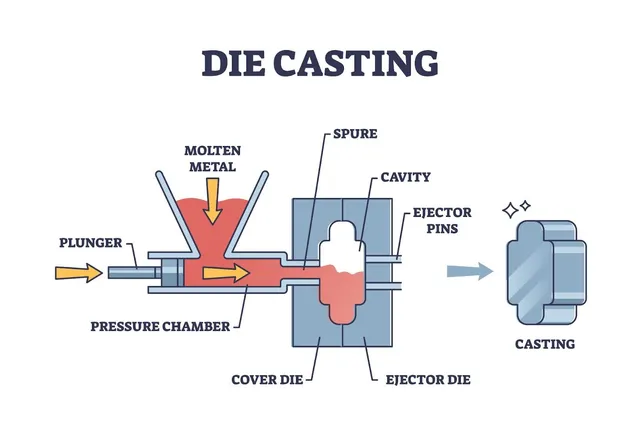
The cold chamber die casting process is initiated by first ladling molten metal into a separate injection chamber and then forcing it out into a steel mould. This process deals with high melting alloys such as aluminium, copper and magnesium. It is a tight-tolerance, high-pressure production process found in the automotive, electronics, and industrial parts production.  What is cold chamber die casting is and when to use it? Cold chamber die casting is a high-pressure moulding of metals, which would ruin or corrode a hot-chamber system. Practically, the operators melt the metal in a different furnace. Then they pour the molten metal into an unheated shot sleeve. The metal is forced into the closed mould by a hydraulic plunger with extreme pressure. The section hardens very rapidly, and the die is opened to spurt out the casting. This can be used when the alloy is of high melting temperature or where the alloy would corrode injection components, such as aluminium and copper alloys. The process sacrifices speed of the cycle for the scale and flexibility of the alloy.  Cold Chamber Die Casting Process Step-by-Step Cold chamber die casting is one of the most reliable techniques for making high-quality metal parts. Every process must be monitored in terms of temperature, pressure and time. Minor variations can impact the surface finish, strength and dimensional accuracy of the end product. Melting the Metal It starts by melting the metal in a separate furnace. Mostly used are aluminium, magnesium and copper alloys. In the case of aluminium, it is typically 650degC and 750degC. It is necessary to keep the melt clean. The impurities are eliminated by the operator with the help of fluxing agents and skimming tools. In case some oxide or gas is left, it may introduce defects such as porosity or inclusions in the future. In high-tech furnaces, a dosing system is the direct connection between the furnace and a die casting machine of China Cold. This guarantees that the temperature and composition of the molten metal are uniform in each shot. Molten Metal to the Shot Chamber Then molten metal is poured into the shot chamber or shot sleeve. This may be done manually or automatically. Manual ladling is easy, less fast and has more chances of entraping air. Automatic ladling systems, in their turn, provide the accurate amounts of metal with low turbulence. Oxidation and gas inclusion can be prevented by controlling the ladling speed and temperature. Others preheat the shot sleeve a little so that it will not suddenly drop in temperature, to allow the fluidity of injection. 3. Injection into the Die Cavity A hydraulic plunger is used to inject the high-pressure molten metal into the die cavity once it is in the shot sleeve. This is the fundamental phase of the cold chamber die casting. Injection pressure varies between 3,000 psi and more than 20,000 psi, depending on the size of the part and the alloy. The injection cycle normally contains two stages: The timeliness of these phases is critical. Recent China cold chamber die casting machinery, servo-hydraulic systems automatically regulate pressure and speed of every shot and guarantee homogeneity. Solidification and Cooling Opening and Part Ejection Die Once the metal has solidified, the die is opened by the machine, after which ejector pins or robotic arms take the casting out. It should be ejected only when fully solidified; otherwise, it is distorted. In complex shapes, there is more than one ejector pin, which guarantees the clean release of the die cavity. Robots take the parts on the automated lines and place them on conveyors to be trimmed and cooled. This increases handling damage reduction and accelerates production. Trimming and Finishing Inspection and Quality Control The last one is inspection and quality control. Every casting is inspected to guarantee that it has the necessary tolerances and quality standards. Popular types of inspection are: The machinery of modern China cold chamber die casting is usually equipped with sensors and software which keep track of all the parameters – Melt temperature, injection pressure, and die temperature, which enables quality monitoring in real time. Optimisation of process and control The quality of outcomes must rely on controlled quality at each step. Safety and Environmental Factors Usually used materials and alloys. The use of a cold chamber is preferred in alloys which cannot be utilised in hot-chamber machines. Most common materials used include aluminium alloys, magnesium, copper and a few combinations of zinc andaluminiumm where corrosion of the injection mechanism should be prevented at all costs. In the automotive structural parts, aluminium alloys prevail. Magnesium is applicable in situations where very lightness is an issue. Both alloys have their own melting point, fluidity and shrinkage behaviour, which need to be handled in mould design and process parameters.  Machinery and features – such as the China cold chamber die casting machine choice. Die casting machines: The Cold chamber die casting machines are made of a robust frame, high pressure injection unit, a hydraulic system and the control electronics. The modern machines provide servo-hydraulics to save energy and enhance control, computer controls to make the shot profiles programmable and integrated auxiliary systems such as die temperature controllers and automatic ladling systems. It is also possible to find China cold chamber die casting machine suppliers that offer a large variety of models and different price ranges in case you are sourcing machines. There are compact models of Chinese manufacturers that fit small shops and large tonnage machines that are appropriate to high-volume production. Chinese constructors tend to package melting and handling equipment to provide a turnkey line as well. Compare machines in terms of check maximum clamping force (tons), volume in the shot, speed control in an injection, die size, and automation.  Essentials of tooling and die design The hardened tool steel is normally die (mould. The design of the die should permit a controlled flow of metals and escaping gaseous air,  and gating and runners geometry and cooling channels in order to

하드웨어 다이 캐스팅

하드웨어 다이 캐스팅: 최신 제조를 위한 완벽한 가이드

다이 캐스팅

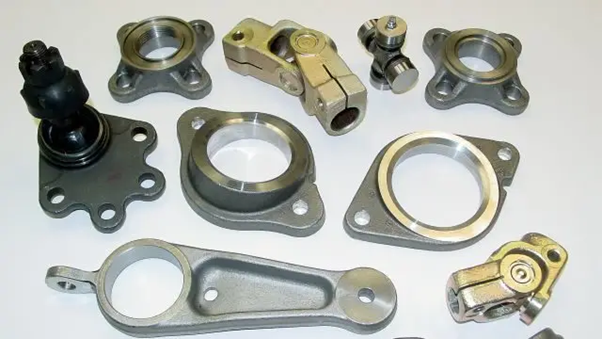
The modern competitive environment in the manufacturing industry has put industries under continuous pressure to manufacture hardware components that are robust, resilient, accurate, and economical. To attain these, firms use contemporary production methods that are quality and efficient. One of the most successful and popular processes is that of hardware die casting among them. Manufacturers are able to create hardware components that bring together complex detail with excellent strength by placing molten metal under high pressure into a mold made of steel. This process is used to produce both elements that have a smooth finish and even quality, as well as producing a significant number of elements at a reasonably low unit price. The relevance of hardware die casting is widespread in an array of industries. It is used in the automotive industry in the manufacture of light but strong components that result in fuel efficiency and safety. It can be used in electronics to make sustained housings, connectors and heat sinks. Precision parts are advantageous to aerospace companies in that they can withstand the harsh conditions, but the construction and furniture industries use them in their functional and decorative fittings. The article will be a complete investigation of the process of hardware die casting and its benefits, process, and materials. We shall also look at the position of the aluminum die casting hardware, the distinct advantages of the use of zinc die casting hardware and the increasing uses of the various parts of die casting hardware in the current industries. What is Hardware Die Casting? Hardware die casting is a specialized manufacturing method, which involves steel molds, otherwise molds, called dies, to form metal parts. This is done by melting metals like aluminum, zinc or magnesium and then forcing the molten metal into a die cavity at high pressure. After hardening of the metal, the mold is opened, and the component is forced out. The word hardware used here means minor yet vital parts such as hinges, brackets, handles, and locks, among other fittings. By casting them in die, the products are uniform, strong and cost-effective in contrast to other traditional methods of production like forging or machining. The Hardware Die Casting Process Design and Mold Preparation Hardware die casting- The die casting process starts by designing and preparing the mold, or die. A mold is designed by engineers using high-quality steel, which is hard enough to endure a higher number of molten metal injection cycles. The two halves of the mold are then molded and assembled to create a hollow into which the part will be shaped. To be efficient, the die will have inbuilt cooling channels to maintain its temperature and ejector pins, which will enable it to be easily released once it has solidified. Melting the Metal Once the mold is ready, the chosen metal is melted in a furnace at well-monitored temperatures. Aluminum and zinc are the most used, and it is important to maintain the appropriate molten state. The constant temperature enables the flowing molten material to fill the mold without forming defects and air bubbles. Injection into the Die After getting the metal to the correct molten state, it is forced into the die cavity with extremely high pressure that may range between 1500 and 25000 psi, depending on the material to be used and the intricacy of the design. It is a high-pressure injection method, which guarantees that all the sections of the mold are filled to the last detail, and the outcome is extremely precise. Cooling and Solidification Immediately the molten metal gets into the mold, it starts cooling and hardening. This process has to be well regulated since either rapid or slow cooling can lead to changes in the quality of the end product in terms of strength and precision. When an appropriate cooling cycle is maintained, the hardware components will be powerful and dimensionally accurate. Ejection and Finishing When the part is solid, the mold is opened, and the component is literally ejected by ejector pins. This is where the product is shaped, but it has excess material commonly referred to as a flash. This is removed and the portion can be subjected to further finishing processes of polishing, anodizing or coating to enhance its looks and workability. The cycle can be subsequently repeated continuously, and the manufacturers can manufacture huge numbers of the same type of die casting hardware parts with very high efficiency. Benefits of Hardware Die Casting Precision and Accuracy Among the most powerful positive aspects of the hardware die casting is the high precision that the process can provide. Complicated designs that are tightly tolerated can be generated in the process, and this can avoid further machining or even completely do away with it. This precision means that all the components fit in their use, be it in a vehicle, an electronic product, or building hardware. The manufacturers also like the fact that they are able to create complex shapes in the same process instead of using various manufacturing processes. Strength and Durability Die-cast metals are recognized to have a strong mechanical ability and outstanding endurance. Hardware components manufactured under the process of hardware die casting are capable of sustaining high weight, repeated application and subject to wear and tear without their functionality being affected. This is the reason why these parts tend to be applied in the most reliable industries, such as automotive and aerospace. Its durability also implies that there is a reduced need to replace products, and this is a value addition to the manufacturer and the end-users as well. Economical when dealing with large quantities The casting process is very cheap when mass production has to be done after the die has been produced. Firms can manufacture thousands or millions of parts of the same type with a very small variation. This capability to produce on a large scale and at a low cost per unit is among the factors that make hardware die casting more desirable compared to other

자동차 주조의 미래

자동차 주조의 미래: 혁신, 효율성, 성능: 자동차 주조의 미래

다이캐스팅 제조업체, 다이 캐스팅

자동차는 기술 발전에서 뒤처진 적이 없습니다. 최초의 자동차 제조용 강철 골조부터 최신 경량 합금에 이르기까지 자동차의 각 부품은 혁신을 통해 안전성, 내구성 및 성능을 향상시키기 위해 개선되어 왔습니다. 가장 중요한 발전 분야 중 하나는 자동차 주조 분야입니다. 이는 차량의 설계, 생산 및 최적화에 도움이 되었습니다. 자동차 주조란 용융 금속을 측정하고 금형에 부어 차량의 복잡한 부품을 성형하는 공정으로 정의할 수 있습니다. 이 방법은 정확하고 비용 효율적이며 대량 생산으로 확장할 수 있습니다. 오늘날 도로를 달리는 거의 모든 차량에는 주조된 여러 부품이 포함되어 있기 때문에 이러한 공정은 업계에서 매우 중요합니다. 이 기사에서는 자동차 주조의 역사, 제조, 장점 및 미래를 살펴보고, 자동차 주조, 다이캐스팅 자동차 부품 및 주조 자동차 부품이 현대 자동차의 형성에 어떻게 기여했는지 살펴봅니다. 자동차 주조의 역사 주조 방법은 수천 년 전으로 거슬러 올라가지만 19세기 말에서 20세기 초에 이르러서야 자동차 산업에 사용되기 시작했습니다. 최초의 자동차는 비효율적이고 무게가 많이 나갔으며, 대부분 단조 강철 부품을 사용했습니다. 대량 생산의 필요성이 증가함에 따라 제조업체는 더 저렴하고 빠른 솔루션을 찾아야 했습니다. 바로 이때가 자동차 주조 기술이 기존의 주조 기술을 대체하기 시작한 시기입니다. 주조를 통해 자동차 제조업체는 재료 낭비를 줄이면서 동일한 부품을 대량으로 대량 생산할 수 있게 되었습니다. 이는 대량 생산으로 이어졌고, 산업 호황기에 일반인도 자동차를 구매할 수 있게 된 이유 중 하나입니다. 오늘날 현대 자동차 주조는 최첨단 합금, 정확한 금형 및 자동화를 사용하여 국제 자동차 표준의 높은 기준을 충족합니다. 자동차 주조란 무엇인가요? 자동차 주조는 자동차 제조에 적용되는 제조 공정으로, 용융 금속을 금형에 부어 원하는 모양으로 응고 및 경화시켜 차량의 부품을 만드는 것입니다. 이는 제조업체가 기존의 기계 가공이나 단조에 비해 적은 노력으로 복잡하고 오래 지속되며 정확한 부품을 비용 효율적으로 제작할 수 있는 기술입니다. 엔진 블록 부품, 실린더 헤드 부품, 변속기 하우징 부품, 브레이크 부품 및 서스펜션 부품에 적용됩니다. 알루미늄, 주철, 강철, 마그네슘 등 다양한 합금을 통해 자동차 주조는 현대 자동차에 필요한 강도, 경량 설계 및 내구성을 제공합니다. 이 기술이 인기 있는 이유는 다음과 같습니다: 주조로 제작되는 일반적인 자동차 부품 자동차 주조의 종류 자동차 주조는 자동차 제조업체가 신뢰할 수 있고 가벼우며 비용 효율적인 부품을 대량으로 개발하는 데 도움이 되므로 자동차 주조가 필요합니다. 자동차 주조 없이는 현대 자동차를 대량으로 생산할 수 없습니다. 자동차 주조의 재료 알루미늄 가볍고 부식에 강한 유리인 알루미늄은 자동차 주조 분야에서 가장 선호되는 재료 중 하나입니다. 알루미늄은 자동차의 총 중량을 크게 줄여 연비와 기동성을 향상시킵니다. 또한 알루미늄은 열전도율이 우수하여 엔진 블록, 실린더 헤드 및 변속기 하우징에 적합합니다. 알루미늄은 제조업체가 강도를 잃지 않으면서도 고정밀 경량 부품을 만들 수 있기 때문에 많은 다이캐스팅 자동차 부품을 만드는 데 사용됩니다. 유연성과 안정성을 갖춘 알루미늄은 현대 자동차 제조에 가장 적합한 소재 중 하나입니다. 주철 주철은 강도, 내열성, 내마모성이 뛰어나 자동차 주조에서 널리 사용되는 또 다른 소재입니다. 주철은 알루미늄보다 무겁기 때문에 엔진 블록, 브레이크 드럼 및 서스펜션의 기타 부품과 같은 구조용 및 중장비용에 적합합니다. 내구성이 뛰어나 장기간 사용 및 고온 조건의 압력을 견딜 수 있어 강력하고 안정적인 성능이 필요한 차량에 필수적인 부품입니다. 강철 자동차 주물에서 강철은 높은 강도와 유연성으로 인해 선호되어 왔습니다. 강철 부품을 열처리하면 인성이 증가하므로 섀시 부품, 브래킷 및 구조 프레임에 이상적입니다. 강철은 알루미늄보다 무게가 더 나가지만, 자동차의 일부 안전에 중요한 부품에 강도와 운반 능력을 제공합니다. 또한 유연성이 뛰어나 엔지니어가 성능과 규제 요건을 모두 충족하는 부품을 개발할 수 있습니다. 마그네슘 합금 마그네슘 합금은 경량화가 우선시되는 이른바 자동차 주조품에서 그 활용도가 높아지고 있습니다. 이 합금은 매우 가벼우면서도 비구조 부품에 충분한 강도를 제공합니다. 마그네슘 부품은 특히 성능과 핸들링에 있어 총 중량을 최소화하는 것이 중요한 고성능 차량과 전기 자동차에서 인테리어 피팅, 엔진 커버 및 특정 구조 부품에 사용될 수 있습니다. 구리 합금 구리 합금은 높은 전기 및 열 전도성 때문에 자동차 주물로 만들어지기도 합니다. 부식에 강하고 강한 소재로 현대 자동차의 특정 전기 부품이나 열에 민감한 부품에 적용될 수 있습니다. 구리 합금은 알루미늄이나 강철만큼 널리 사용되지는 않지만 성능과 전도성이 중요한 경우와 같이 틈새 용도로 사용됩니다. 복합 재료 일부 제조업체는 자동차 기술의 발전과 함께 주조 자동차 부품에 복합 재료를 실험하고 있습니다. 이러한 소재는 무게를 줄이면서도 강도를 제공하기 위해 개발되었으며, 전기차와 하이브리드 자동차에 매우 유용하게 사용될 수 있습니다. 또한 복합 소재는 열 조절 및 내식성이 뛰어나 차세대 자동차 부품의 새로운 기술로 각광받고 있습니다. 자동차 주조 공정의 유형 자동차 산업은 각각 고유한 부품과 재료를 사용하는 다양한 주조 기술을 사용합니다. 가장 많이 사용되는 주조 기술을 살펴보겠습니다: 모래 주조 가장 오래된 기술 중 하나는 모래 주조로, 모래 주형을 사용하여 크고 복잡한 부품을 만드는 것입니다. 프로토타입이나 엔진 블록과 같은 무거운 부품에 가장 적합합니다. 다이캐스팅 다이캐스팅은 재사용 가능한 강철 주형에 용융 금속을 고압으로 주입해야 하는 공정입니다. 특히 가벼운 제품을 제작하는 데 적합한 기술이지만

콜드 챔버 다이 캐스팅

콜드 챔버 다이캐스팅 기술의 최신 동향

다이 캐스팅, 다이캐스팅 제조업체, 다이캐스팅 부품

Cold Chamber Die Casting is a precision type of manufacturing technique applied in the manufacture of complicated metal components characterized by high levels of strength and precision. This process can best be used in metals having a high threshold of the melting point, like aluminum, brass, and copper alloys. Cold chamber die casting systems are not placed into molten metal like a hot chamber die casting system; instead, the metal is put into the cold chamber die casting machine by manually ladling metal into the cold chamber die casting machine after it is melted in another furnace. The arrangement wears less on the machine and uses alloys that are tougher. Among the important factors that make companies opt to use this method are the special cold chamber die casting advantages and disadvantages. It has top dimensional accuracy, smooth surface finishes, as well as long cycle times. Nevertheless, its strength and durability of the constituents are its favorites in the automotive, aerospace, and electronic markets. The difference between hot and cold chamber die casting is crucial to make the right choice of the process. Hot chamber die casting is more rapid and applied to metals of low-melting point, such as zinc, whereas the cold chamber die casting system is designed to handle higher temperatures and stronger metals. Manufacturers will also be able to manufacture long-lasting and reliable parts with this process that have a high degree of precision in their specifications. In the present article, we are going to discuss the principle of operation of cold chamber die casting, its main parts, the nature of the metal employed, and technological parameters of cold chamber die casting, including clamping force and cycle time. The cold chamber die casting advantages and disadvantages will also be considered to provide you with a full picture of this important manufacturing process. What is the Cold Chamber Die Casting? Cold Chamber Die Casting: A cold chamber die casting process is a metal casting process where molten metal is ladled either manually or automatically into a separate cold chamber outside the injection system. Thereafter, the metal is pushed with high pressure into a mold cavity, which causes the metal to cool and crystallize in the desired shape. It is usually applied to metal with a large melting point, like brass, aluminum, and copper alloys. The purpose of avoiding corrosion and thermal fatigue that can result in improper working of components of the injection system, unlike in the hot chamber die casting process, where the injection mechanism is suspended in molten metal, the cold chamber process keeps the injection facilities segregated. The application of the practice of the latter, i.e., Cold Chamber Die Casting, is especially advantageous, where the metals used would harm the components, contacting them. High pressure can be used in the injection process itself, and denser, stronger components with a brilliant surface finish and dimensional stability would be possible. Die Casting Process- Step by Step The object of the Cold Chamber Die Casting technique is to make highly accurate and hard metal parts that are frequently composed of alloys that have melt-points that are at high temperatures, such as aluminum and brass. Let us have a step-by-step breakdown of how it works: 1. The External Furnace is used to melt the Metal The process is similar to that of hot chamber casting except that the melting of metal is done in a separate furnace outside. This is required in that the molten metal in the cold chamber casting will cause a high level of heat to be experienced internally that cannot be handled. The metal is melted, after which it is able to be transferred into the casting machine. 2. Pouring the molten metal into the Shot Sleeve Thereafter, the molten metal is ladled into the shot sleeve in the die casting machine. This is manually done or arm-driven. The shot sleeve is a strong, resistant to heat tube into which the metal rests and is later injected. This should be taken very fast to prevent premature solidification. 3. Plunger forces the metal into the die. A steel plunger travels into the shot sleeve and presses the molten metal at high pressure in the die cavities. The force makes sure that the metal fills the mold even in any complicated pattern or with a very thin wall, and decreases the chances of any flaws, such as air pockets. 4. There is the Solidification of Metal within the Die When the mold is filled, the metal starts cooling and solidifying within the die. This solidification step is very important in coming up with a good and precise part. The cooling time is dependent on the part metal, part thickness, and die temperature. 5. The Brass Die and Ejector Pins Force-Out the Casting When the part has solidified, the clamping unit of the machine opens the die, and ejection pins force the casting out of the mold cavity. The portion is then moved to a cooler station or a trimming station. 6. Removal of Flash (Removal of Excess Metal) There is some over metal on the sides called flash that is around the edges of the casting where the halves of the die come together. This is then removed by mechanical trimming, grinding, or machining, depending on what the finish requires. This will prevent the final works from being below the intended shape and tolerance. 7. Die cycle reset and Lubrication The die is washed and greased before entering the next cycle in order to be of good quality and avoid sticking. When the oiling is done, the die is again clamped, and the machine is switched to reset for more cycles. 8. Quality Inspection and finishing This is a complete part that is checked to ensure quality defects do not exist, like cracks, shrinkage, or abnormalities on the surface. Depending on the end-use requirement of the part, it can be subjected to additional machining, surface treatment, or assembled (if required). Metals to be used in the

핫 챔버 다이 캐스팅

핫 챔버 다이 캐스팅: 중요한 제조 공정에 대한 심층 분석

다이 캐스팅

Hot Chamber Die Casting is a very effective manufacturing process which is used very widely to produce metal parts to very high precision and an excellent finish on the surface. It is particularly suitable for casting metals with low melting points like zinc, magnesium and some alloys containing lead. It is typified by the fact that the injection system is immersed in molten metal, and so, high-speed cycle times and economy of mass manufacturing are possible. One similar place of comparison always pops up when the castings are considered regarding cold chamber die casting versus hot chamber. Although they are both variations of pressure die casting, they differ so much in terms of design, applications, and compatibility of materials used. An example is the hot chamber die casting, which is high-speed die casting where the furnace has been replaced with a machine. That comes with the limitation of the lower-melting-point metals. Conversely, the cold chamber type of machines is more aptly used with those liquids of a high melting point, such as aluminium and brass, since the hot metal does not come in direct contact with the equipment. Hot Chamber Die Casting process is characterised by minimal waste of material, low costs of labour, and complex shapes manufacture with high tolerances. It is popular in such industries as automotive, electronics, plumbing and consumer products. Nevertheless, the decision on whether to use cold chamber die casting or hot chamber is also dependent on the type of material used and the part design aspect. The article examines the important details of Hot Chamber Die Casting, its parts, materials, process description, constraints, and reasons as to why it is an essential process in the contemporary manufacturing industry. What is Hot Chamber Die Casting? Hot Chamber Die Casting is a metal casting technique where the molten metal is injected into a mould cavity at high pressure. The unique part of the given method is where the injection mechanism is placed: It goes directly to the molten metal. Cycle times and production efficiency are high with this setup, especially in metals of low melting point like zinc, magnesium and some lead alloys. Hot chamber. The name describes the system’s hot chamber as the injection mechanism (a plunger and gooseneck) is in constant contact (filled) with the molten metal area. As the plunger descends, it compresses the molten metal through the gooseneck and into the die cavity. As the metal sets, the mould opens, and the part is ejected, and this process is repeated innumerable times. Hot Chamber Die Casting Process Hot Chamber Die Casting Process is a process of high-precision and speed manufacturing technology utilised in the manufacture of metal parts, where the accuracy of the tool is very important, with great surface finishing. It is most appropriate in the alloys of low melting points; zinc, magnesium, and lead are examples of low melting point alloys. Its main characteristics are short cycle times and great material efficiency. The process is extensive in the manufacturing of a variety of products mainly found in the automotive, electronic, appliance, and hardware industry because of its capability to create complicated ends easily at an affordable per-piece price. The hot chamber die casting process is listed below in a stepwise manner: Hot Chamber Die Casting Process- Step by Step Overview 1. The Metal is melted It starts with the molten moulding of the metal (which is usually zinc or magnesium), in an incorporated furnace of the die casting machine. The molten metal is kept at a constant temperature within the metal pot that is directly connected to the casting machine. This unending heat provision ensures that the casting processes are continuous. 2. The process of filling the Injection System In hot chamber systems, there is a portion of the molten metal with a part of a component known as the gooseneck submerged. The plunger, which runs inside the cylinder of injection, is pulled backwards to a position where the molten metal may gush down to the gooseneck into the inlet hole of injection. The next step will involve injecting this metal into the die cavity. 3. Molten Metal injection When the gooseneck is filled, the plunger is either pushed forward by hydraulic or pneumatic pressure, which forces the molten metal through the gooseneck channel into the mould cavity (also called the die). This is done at a high rate and pressure to make sure that the cavity is totally filled before the metal begins to harden. 4. Casting and solidifying in the mould This hot metal in the die is quickly cooled down by the comparatively cold steel of the mould. Solidification takes several seconds, based on the size and complexity of the part. In this step, die cooling channels assist in the removal of heat to ensure that the cycle speed is not reduced and defects such as shrinkage or porosity are avoided. 5. Ejecting and opening of the mould Once the metal has been solidified, the die halves are opened. The ejector system is placed on the movable half of the mould, and it operates under force via the use of ejector pins and forces the completed casting out of the cavity. It is ensured that the part can come out without being damaged during ejection. 6. Secondary operation and Trimming After it is ejected, the piece might contain an extra material called flash, runners or sprues. These are either hand-trimmed or auto-trimmed. The part can be processed further depending on the application, like surface finishing, machining or coating. 7. Repeat Cycle The machine clears and cleans up to be used again. Hot chamber die casting is characterised by having such a quick cycle time, sometimes creating a few finished parts in just 10 to 20seconds according to the complexity and size of the part. Cycle Time and Efficiency The speed is the greatest advantage of the process of hot chamber process. Hot chamber machines. Unlike cold chamber die casting, where the metal has to be ladled

중국과 세계의 합금 다이캐스팅 회사 

중국과 세계의 합금 다이캐스팅 회사 

다이 캐스팅, 다이캐스팅 회사, 다이캐스팅 회사

Alloy die casting is used to produce complicated metal pieces that require tight tolerances and have a very good finish. Among others, it has a major role in the automotive, aerospace, electronics, defence, medical device, and consumer product industries. All over the world, manufacturers work together, and China leads this industry because it has strong infrastructure, well-trained people, and good pricing. CNM Tech Co., Ltd., Sincere Tech, and GC Precision Mould Co., Ltd. are well-known companies in China’s die casting sector, and all of them handle mould design, CNC machining, and final assembly. These manufacturers make use of the very latest technology and follow worldwide quality standards such as ISO 9001. Most of their services support international customers, which gives them a major role in worldwide supply networks. Companies such as Nemak (Mexico), MRT Castings Ltd and Haworth Castings (UK), and PHB Inc. (USA) are good examples of advanced die casting technology outside Asia. Innovation, sustainability, and precision production are central to these companies, which deliver to the aerospace, medical, and electric vehicle sectors, which have strict regulations. Both these firms differ from others by being highly skilled and also placing a strong emphasis on quality, customer care, and green changes. The article discusses several leading die casting companies in China and around the world, highlighting their main qualities, strengths, and why they do well in this business market. Regardless of which part of the world you are looking to outsource to, the given profiles give you useful advice on your best choices. Alloy Die Casting In alloy die casting, liquid metal alloy is pressed with great force into dies made from steel, which can be reused many times. This production method helps create metal parts that are very accurate in their dimensions, smooth, and can be produced very efficiently. Main Characteristics of Alloy Die Casting: 1. Alloys Used: Most of these processes rely on non-ferrous metal alloys, for instance aluminum, zinc, and magnesium, which have their important advantages related to weight, how strong they are, corrosion resistance, and heat conductivity. 2. Process Overview: Melting the alloy happens next, done by putting the material in a furnace. A hardened steel mould receives the molten metal, which enters through a die casting machine. 3. Types of Die Casting are: Here are the main strengths of Alloy Die Casting: Common Applications: 1. CNM Tech Co., Ltd. Year of Establishment: 20+Number of Employees: 100-200Business Type: CNM Tech Co., Ltd. is a precision manufacturing company focused on die casting, CNC machining, and assembly services. Website and Contact Website: https://www.thediecasting.com/Contact: +86 13045898002Email: sales@thediecasting.comAddress: Factory Address: Rm 101, No.40, Donghu Road, Jinglian, Qiaotou town, Dongguan City, Guangdong Province, China. 523520. Company Profile  Making precision aluminum and zinc die-cast components is what The Die Casting Company is best known for. The company offers complete casting services by having the abilities needed for mould design, tooling, CNC machining, surface finishing, and quality testing all in-house. Serving the industries of automotive, electrical, and industrial machinery, it brings together engineering knowledge and ISO 9001 certificates. With aid from modern technology and a customer-friendly approach, The Die Casting Company offers high-performance, low-cost output and unchanging quality. Having its headquarters in India, Codeplay provides custom support and on-time deliveries to clients around the world. Quality Commitment  High quality is important to every task at The Die Casting Company. Starting with checking raw materials, the company uses strict quality control procedures all the way to the testing of finished products. Because it is ISO 9001 compliant, its facilities use the latest equipment and have a team of trained workers. Every single casting is carefully checked for measurements, strength, and appearance to meet what the client needs and what the industry requires. Because of this commitment, customers are happy, products perform reliably, and trust is built for the long run. Why Our Company? 2. Sincere Tech Year of Establishment: 2005Number of Employees: 100-200Business Type: Sincere Tech is one of China’s largest plastic injection mould manufacturers, die-casting producers, machining providers, and assembly providers. Website and Contact Website: https://plas.co/Phone: +86 135 30801277Email: steve@sincere-tech.comAddress: Rm101, N041, Donghu road, JingLian cun, qiaotou town, Dongguan City, Guangdong Province, China. 523000. Company Profile  In 2005, Sincere Tech (plas.co) was founded, and it has become a major Chinese provider of custom plastic injection molds and moulding services. Because of its 18 years in this field, the company is capable of providing extensive solutions such as mould design, CNC machining, die casting, silicone moulding, and assembly. Working in electronics, cars, medicine, and home appliances, Sincere Tech depends on high-tech machines such as 5-axis CNC and CMMs for accuracy and quality. Following international standards, the company observes ISO 9001:2015 and QS 9000:2015 certifications, making sure clients receive quality products within budget. Quality Commitment  At Sincere Tech, everything must be done with quality in mind. The company uses ISO 9001:2015 and QS 9000:2015 standards while making all its products. Through modern tools and strict regulations, Sincere Tech guarantees all its products are made exactly to spec. All processes, from laying out the design to completing assembly, are closely monitored to ensure certain parts are strong, precise, and make the customers happy, which is why it is respected by the industry. Why Our Company? 3.  GC Precision Mould Co., Ltd. Year of Establishment: 1999Number of Employees: 100-200Business Type: Our company, GC PrecisionMould Co., Ltd, does aluminium, zinc, and magnesium die casting, CNC machining, and plastic injection moulding Website and Contact Website: https://aludiecasting.com/Contact: +86 131 4886 5556Email: info@aludiecasting.comAddress: Factory Address 1: No. 30 Huan Zhen Rd, Qi Shi Town, Dongguan City, Guangdong Province, China, 523516 Company Profile  GC PrecisioMould Co., Ltd. began in 1999 and has now become one of the top worldwide suppliers of oddie-casting arts and machined products from nonferrous metals. Fireray Precision Equipment has been in the industry for over two decades and primarily does aluminum die casting, zinc die casting, bronze sand casting, aluminum gravity casting, and CNC precision machining. Based in Dongguan City, Guangdong Province, China, GC PrecisionMould Co., Ltd.

중국과 미국의 10대 다이캐스팅 기업

중국과 미국의 10대 다이캐스팅 기업

다이 캐스팅, 다이캐스팅 회사, 다이캐스팅 회사

The die-casting production method remains a fundamental process in making various products throughout multiple industries including automotive production together with aerospace applications and electronic components together with industrial machinery production. It is the process of injecting molten metal into a mold cavity under high pressure to obtain high precision and durable metal components. Numerous die-casting service companies emerged due to rising market demand for high-quality manufacturing solutions. The world’s most accomplished die-casting producers operate from China and the USA driven by both advances in their technological capabilities and strong dedication to manufacturing excellence. The Chinese market functions as a worldwide center for die casting where businesses deliver affordable services with stringent industry requirements. These manufacturers deliver whole service packages that include mold design alongside production services together with surface finishing and assembly solutions. The USA operates through an innovation-focused system while maintaining strict quality standards in addition to precise engineering practices. The die-casting companies in America provide solutions across various industry sectors which deliver exceptional performance qualities. This post is a list of the top 10 die-casting companies in China and the USA, with a history, and capabilities, and serves as a list. The mentioned companies lead the industry because they provide dependable production services at every scale together with specialized die-casting expertise. 1. Sincere Tech Year of Establishment: 2005Number of Employees: 100-200Business Type: Sincere Tech is one of the china’s largest plastic injection mold manufacturers, die-casting producers, machining providers and assembly providers. Website and Contact Website: https://plas.co/Phone: +86 135 30801277Email: steve@sincere-tech.comAddress: Rm101, N041, Donghu road, JingLian cun, qiaotou town, Donggguan City, Guangdong Province, China. 523000. Company Profile A Chinese supplier of plastic injection moulds and moulding services, Sincere Tech is a leading Chinese company. This company was founded in 2005, and stamping metal and plastic, precision plastic injection moulds, CNC machining, die casting and silicone moulding are its competitive edge in the market. Sincere Tech has advanced equipment, NDA protection, competitive prices and 18 years of experience in high-quality production. With injection moulding machines for 60 to 1800 tons that serve electronics, medical, automotive, or cosmetics industries, its components of under 1 gram to 8 kilograms are produced efficiently. Their Quality Commitments Sincere Tech is dedicated to creating products that meet international quality standards as per ISO 9001:2015 and QS 9000:2015. They have been dedicated to quality and this has enabled the company to cultivate a massive demand, exporting it to Finland and other countries. Amongst all the plastic injection molding industry partners that are providing almost the same quality of services, it is sincere Tech that stands out as a trustworthy and innovative partner for plastic injection moulding. Why Choose Sincere Tech? Customers seeking die-casting services from China or the USA should get in touch with these trustworthy manufacturing companies that will provide professional assistance. 2.  CNM Tech Co., Ltd. Year of Establishment: 20+Number of Employees: 100-200Business Type: CNM Tech Co., Ltd. is a precision manufacturing company focused on die casting, CNC machining and assembly services. Website and Contact Website: https://www.thediecasting.com/Contact: +86 13045898002Email: sales@thediecasting.comAddress: Factory Address: Rm 101, No.40, Donghu Road, Jinglian, Qiaotou town, Dongguan city, Guangdong Province, China. 523520. Company Profile Thediecasting.com is the official domain that CNM Tech Co., Ltd. operates under, which is an outstanding Chinese manufacturer of die-casting solutions. The company is a China-based aluminium, magnesium, and zinc die casting; CNC machining; surface finishing, and assembly business headquartered in Dongguan, China. CNM Tech has more than 20 years of experience in the fields of automotive, aerospace, electronics, etc. Due to the high precision manufacturing their in-house tooling shop and advanced CNC machines also ensure. CNM Tech provides all types of polishing, sandblasting, powder coating, oil painting etc. with high-quality finish products matching the needs of users worldwide. Their Quality Commitments CNM Tech Co., Ltd. is provided ISO 9001:2008, TS16949, and ISO 14001:2015 documents. In most cases, these will provide you with the assurance that the management of your company is top-notch and also will guarantee compliance with automotive industry standards and environmentally friendly activities undertaken by the company involved. As a result of strictly following quality and environmental regulations, CNM Tech provides great die-casting solutions with a minimal environmental impact with its excellent reputation in the market. Why Choose CNM Tech Co., Ltd? Customers seeking die-casting services from China or the USA should get in touch with these trustworthy manufacturing companies that will provide professional assistance. 3.  GC Precision Mold Co., Ltd. Year of Establishment: 1999Number of Employees: 100-200Business Type: Our company GC Precision Mold Co., Ltd. do aluminium, zinc and magnesium die casting, CNC machining, and plastic injection moulding. Website and Contact Website: https://aludiecasting.com/Contact: +86 131 4886 5556Email: info@aludiecasting.comAddress: Factory Address 1: No. 30 Huan Zhen Rd, Qi Shi Town, Dongguan City, Guangdong Province China, 523516 Company Profile GC Precision Mold Co., Ltd., operates under Aludiecasting.com is a die casting and precision machining manufacturing site that is one of the leading Chinese manufacturers. The company was founded in 1999 and the services include aluminium, zinc and magnesium die casting, plastic injection moulding, and CNC machining and surface finishing. They have state-of-the-art art machinery such as high-pressure die casting machines (120 – 1600 tons) and injection moulding machines (80 – 2800 tons connected to industries like automotive, aerospace and electronics. They have a very strict quality to provide the exact, durable and cheaper manufacturing solutions throughout the world. Their Quality Commitments GC Precision Mold Co Ltd provides the best die casting and machining solutions as specified in the ISO 9001 certification their quality control is so strict that they test for precision, CMM machines, X-rays and spectrometers to ensure a reliable product. Through strict adherence to international standards, the company ensures delivery of consistent, high-quality components with minimum customer complaints due to the reliability aspect for the reasons indicated in every project. Why choose GC Precision Mold Co., Ltd.? Customers seeking die-casting services from China or the USA should get in touch with these trustworthy manufacturing companies that will provide professional assistance. 4.

다이캐스팅이란 무엇인가요? 금속 주조에 대해 알아야 할 모든 것

다이캐스팅이란 무엇인가요? 금속 주조에 대해 알아야 할 모든 것

다이 캐스팅

This is a manufacturing process in which molten metal is forced using pressure to fill a mold cavity also known as die casting. The mold is usually of high-quality steel and hence the part can be produced in large quantities the term is used to mean the manufacture of many parts. The finished part is then produced by opening the mold after the molten metal is cooled and forms a solid layer. This kind of use of the process is mostly applied in making intricate metal used in the production of different parts that require high accuracy in measurement and polished surfaces. Die casting can be done on aluminium, zinc, and magnesium but other metals can also be used on a case depending on application and other requirements. Die casting is considered to be one of the expert manufacturing techniques in the conception of mass production of small to medium-sized components out of metals. The popularity of the method has been spread across automotive, aerospace, electronics, and industrial machines due to its ability to produce durable lightweight intricately tailored parts. However, this process is widely recognized for its ability to manufacture products with complex geometry that would be very hard to make using conventional techniques. How Die Casting Works Molding is the first part of the die-casting process. On one side of the mold, there is a half, and it is a half of a particular design to make the mold shaped like the final product. Cavities and cores are designed for the molds that are usually custom-made so that the part can be replicated as closely as possible. 1. Molten Metal Injection: Then the molten metal is injected into the mold cavity under high pressure to form the desired shape. The metal is usually heated to one degree above the melting strain to make it fluid. In die casting, the pressure that the molten metal is pushed into the mold can be from several thousand to tens of thousands of psi (pounds per square inch), to be sure that the molten metal gets into every detail of the mold. 2. Solidification: This occurs when the metal is injected into the casing cavity whereby it cools and the metal hardens. The quality of the casting depends upon the cooling rate. Additional modes of failure (shear, climb, and glide) come into play in this case and result in faster cooling higher strength better surface finish, and slower cooling which could result in more internal defects and lower mechanical properties. Water-cooling systems built into the mold are usually used to assist the cooling process. 3. Ejection: Following this, the metal is allowed to cool and solidify and it is then easy to remove the mold from the larger casting and eject the part. Then most of the time is used in the pushing out part from the mold using a mechanical ejector system. This depends on the complexity of the part that requires other extra steps, namely trimming and machining to deliver the final shape and dimension. 4. Quality Control: A quality check is then performed on a part after ejection. It can involve dimensional verification, visual inspection, and mechanical testing to confirm that the part is equal to or better than the requirements. High precision and repeatability are theoretically achieved in die casting. Types of Die Casting There are two types of Die casting, they are hot chamber die casting and cold chamber die casting. These are all good and have their advantages, limitations and ideal applications. 1. Hot Chamber Die Casting The process most suitable for metals such as zinc, magnesium, and lead is a hot chamber die casting since the process is done at high temperatures, and melting points. The injection system is installed inside the melting furnace in this way, the metal is always in contact with the chamber. Advantages: Disadvantages: 2. Cold Chamber Die Casting The metals that have higher melting points like aluminium, brass and copper are cast in cold chamber die casting. In this case, the molten metal is tapped from a second furnace injected into the cold chamber then into the mold cavity. Advantages: Disadvantages: The Comparison of Die Casting Methods: Hot Chamber vs. Cold Chamber Here is a comparison of the most common types of two die-casting methods, Feature Hot Chamber Die Casting Cold Chamber Die Casting Metal Compatibility Best for low-melting-point metals (e.g., zinc, lead) Best for high-melting-point metals (e.g., aluminium, brass) Cycle Time Faster cycle times Slower cycle times Mold Wear Higher mold wear due to direct contact with molten metal Lower mold wear Cost Lower cost for high-volume production Higher initial cost, but better for high-strength metals Complexity of Parts Good for simpler parts Better for more complex, larger parts Advantages of Die Casting It is one of the largest advantages that die casting is one of the main preferred methods of large-scale production of products from metal alloys. 1. High Precision and Accuracy There are many advantages of die casting, which makes it convenient to offer high die precision. This method of production is also widely used for the production of parts, which requires good dimensional accuracy which is very crucial as it defines tolerance levels required in a specific job. One should note that die casting is the only manufacturing technique that can produce given parts with the utmost complexities such as the intricacies of its geometries.  2. High Production Rates In terms of large volumes, die casting is very efficient. Parts are quickly and cheaply produced once the first mold is created with very little labor involved. The demand for simulated powders is particularly high in industries like automotive and electronics where large volumes of the same parts are required. 3. Complex Designs and Thin Walls Complex design can be achieved by die casting, which would be difficult or impossible to achieve by traditional manufacturing methods. The process can make parts with thin walls, and complex internal structures, and can accommodate undercuts; thus making it the

고압 다이캐스팅의 일반적인 제조 결함: 원인, 예방 및 해결 방법

알루미늄 주조, 다이 캐스팅, 고압 다이캐스팅

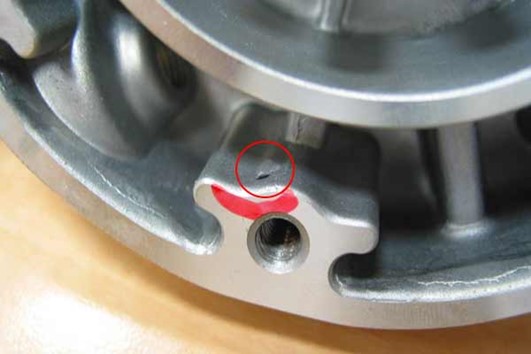
High-pressure die Casting (HPDC) is one of the most frequently utilized metal casting processes in current manufacturing. Manufacturers choose HPDC because it enables the production of complex metal parts that achieve both high precision and rapid production rates superior dimensional accuracy and smooth finishes. HPDC enables automotive and aerospace industries and the production of electronics components and consumer goods to manufacture lightweight durable parts for applications like engines and housings, structural elements, and mechanical assemblies. The manufacturing process of high-pressure die casting faces numerous risks that create substantial defects that decrease product quality while shortening the lifespan and compromising performance. Various defects form from improper mold design, turbulent molten metal flow, trapped gases, inconsistent cooling rates, and thermal stress during the production process. HPDC technology encounters seven primary defects which include porosity, cold shuts, shrinkage defects, flash formation, surface defects, misruns, die erosion, and soldering. These types of manufacturing defects cause deterioration of material strength while producing irregular dimensions and undesirable visual effects which can instigate component breakdown. Manufacturers combat production problems through the optimization of processing parameters and better-undermining methods along with controlled temperature systems and vacuum-assisted casting procedures. Real-time monitoring and simulation software are advanced quality control methods with further efficiency and reliability in the die-casting process. This article provides a comprehensive analysis of standard manufacturing issues during high-pressure die-casting technology with explanations of root causes and solution strategies to decrease these defects. It is only by understanding these challenges and applying best practices that manufacturers can improve the quality, longevity, and, of course, the performance of their die-cast components and simultaneously cut down on waste, and production costs. Proficiency in these manufacturing defects will assist die-casting engineers, production managers, and quality control specialists to optimize their processes for the best die-casting outcomes. 1. Porosity Porosity is defined by small holes or gas inclusions found within the metal matrix, and as a result, affects the mechanical properties, decreasing the strength, including allowing for air and gasses to pass through the structure, and leading to visible surface defects in die-casted products. Causes: Prevention & Solutions: 2. Cold Shut A cold shut is created when two streams of molten metal do not fuse properly and form weak bonding areas or visible seams in the casting. This defect not only decreases the mechanical strength but also increases the risk of a fracture, as well as negatively affects the component’s durability and appearance. Causes: Prevention & Solutions: 3. Shrinkage Defects Shrinkage defects occur due to shrinkage of metal during cooling which leads to internal voids or cavities, which deteriorate the structural integrity of casting. As a result, these defects reduce the mechanical strength of the final product, cause potential failure under stress, and cause poor surface quality, thus affecting both the functionality and aesthetics of the final products. Causes: Prevention & Solutions: 4. Flash Formation Excess thin metal layers formed at the parting line or die gap due to high-pressure metal escape are referred to as flash. Although flash can be trimmed off post-casting, over-flash leads to increased material waste, tool wear, and associated production costs and thus reduces the overall efficiency of the die-casting process. Causes: Prevention & Solutions: 5. Inspection of Surface Defects (Blisters, Crack and Wrinkles) A variety of surface defects, blisters, cracks, and wrinkles, degrade the visual appearance and mechanical strength of the casting and need to be prevented and eliminated. It causes weld defects that reduce the durability of the product, increase the rejection rate, and make the product stick poorly after post-casting treatments such as painting or coating. Causes: Prevention & Solutions: 6. Inclusions and Contamination Unwanted foreign particles, such as slag, oxide films, dirt, or other impurities, which are trapped in a final casting, create poor mechanical properties, weak structural integrity, and surface defects and are called inclusions. The presence of these contaminants can reduce die-cast component performance and durability so that they are not suitable for high-precision applications. Causes: Prevention & Solutions: 7. Misruns and Incomplete Fill A misrun occurs where there is a short filling of the mold cavity, which causes missing sections, thin walls, and weak points in the final component. Negative effects on the structural integrity and functionality of the part and in this way unsuitable for performance applications. Causes: Prevention & Solutions: 8. Die Erosion and Wear Molten erosion dies wear is the loss of the mold surfaces due to the high-speed metal continuously wearing the mold part surfaces until the required dimensions are achieved, which results in poor surface finish and short mold tool life. If this defect occurs, die replacement is common and consequently, production costs increase while casting quality varies. Causes: Prevention & Solutions: 9. Hot Cracking Cracks that occur during the semi-solid state of the metal, is due to high thermal stress and excessive shrinkage are known as hot cracking. These cracks degrade the mechanical integrity of the casting that is increase the chance of failure of the casting at the place where the cracks are present under stress or load. Causes: Prevention & Solutions: 10. Soldering The molten metal adheres to the die surface, which is difficult to remove with casting, causing surface defects, die wear as well as prolonged production downtime. Dimensional inaccuracies and poor surface finish are also caused by this defect, as it results in the overall compromised quality of the final product. Causes: Prevention & Solutions: Conclusion The high-pressure die casting is a powerful manufacturing process that creates complex metal parts at high accuracy at maximum efficiency. However, different kinds of defects arise using improper process parameters, material issues, and/or mold design flaws. Manufacturers can take preventive measures, e.g. optimal process control mold, properly selected material, etc., after understanding these usual manufacturing defects. A company can improve product quality, lower production costs, and achieve higher production efficiency in die-casting operations by emphasizing continuous process improvement as well as defect prevention strategies. Frequently Asked Questions (FAQs) 1. What are the major reasons for defects in high-pressure die casting? The main causes

다이캐스팅 제조 회사

단계별 다이 캐스팅 프로세스

알루미늄 주조 금형, 알루미늄 다이캐스팅, 다이 캐스팅, 다이캐스팅 알루미늄, 다이캐스팅 회사, 다이캐스팅 회사, 다이캐스팅 제조업체

The climbing phase: The 1st step is to prepare the die halves for casting by cleaning the faces of each die then applying lubrication or release agent. Once the die has been prepared, the die halves are closed and clamped together with pressure applied from the die-cast machine. The clamping force will depend upon the size of the machine but must be more than the opposing force trying to open the die during the casting process. The injection phase: The ingots are added to the furnace and kept molten at a set temperature according to the metal being used. The molten metal is transferred to an injection chamber and injected into the closed die pressure ranging from 1000 to 20,000 psi. The pressure is maintained while the metal solidifies. The amount is injected into the die is known as the ‘shot’ The injection of metal into the die is very short, this ensures the metals do not start to solidify before the die is completely filled. The cooling phase: After the injection is complete, the molten metal needs to solidify before the die is opened. The cooling time will depend upon the part geometry as well as the metal thermodynamic properties. The wall thickness of the parts plays a big factor in the cooling time, the thicker the wall section the longer the cooling time required. The ejection phase: After the cooling time has elapsed, the two die halves can be opened. An ejection mechanism then pushes the solidified casting out of the die. The force of the ejection will be determined by the size of the part, bearing in mind, the part shrink during the cooling process and tends to stick to the die surface. Once the part has been ejected, the die can be closed ready for the next injection cycle. The trimming phase During the cooling and solidification phase, the casting will solidify as a complete cast unit which includes the part, flash, and any runner system This excess material must be trimmed off to leave just the main cast product. Method of trimming includes trim tools, band saw are manually clipping. Any trimmed metal is either scrapped or recycled if permitted. Advantages of die casting: Die casting is fast Die casting can be produced in seconds each part and quantities of hundreds to thousands of metal parts each day. Near net shape Die casting are produced “near net shapes” no matter how complex the shape are how tight the tolerances are. Lighter weights Die casting are stronger because of the material surface skin not the thickness of materials so parts can weigh less with thinner casting wall thicknesses. Die casting is versatile Many more part shapes and sizes can be produced using the die casting manufacturing process. Die casting are durable Die castings parts are metal and have a long service life. Die castings are inexpensive Die castings are fast to produce and useless material. Die casting are typically less expensive than most other metal parts manufacturing processes.    

위로 스크롤

견적 받기