Fundición en cámara fría: Guía completa
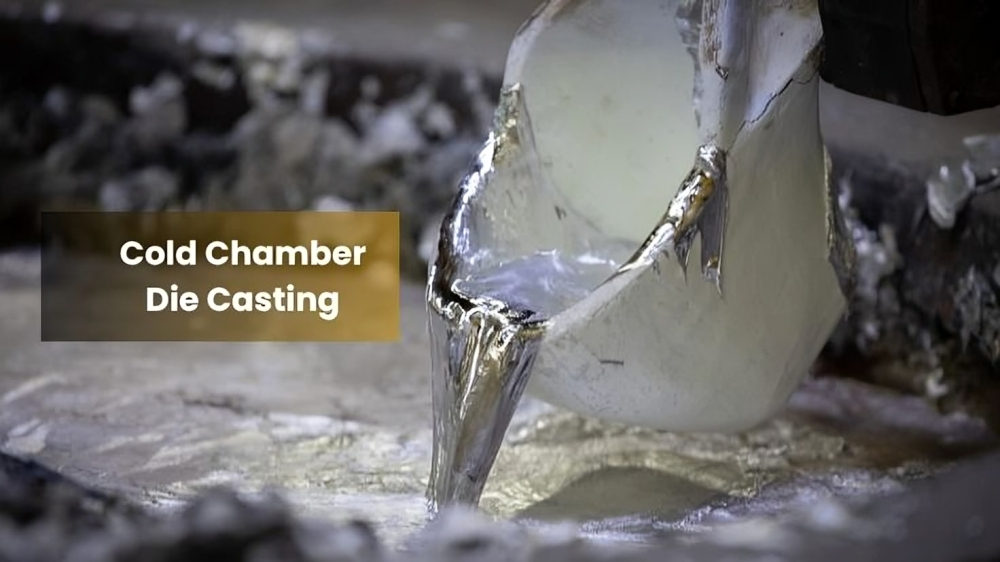
fundición a presión, Fabricante de fundición a presión, piezas de fundición a presiónEl proceso de fundición a presión en cámara fría se inicia vertiendo primero el metal fundido en una cámara de inyección separada y forzándolo después a salir en un molde de acero. Este proceso trabaja con aleaciones de alta fusión, como aluminio, cobre y magnesio. Se trata de un proceso de producción de alta presión y tolerancias estrictas que se utiliza en la fabricación de piezas industriales, electrónicas y de automoción. ¿Qué es la fundición a presión en cámara fría y cuándo utilizarla? La fundición a presión en cámara fría es un moldeo a alta presión de metales, que arruinarían o corroerían un sistema de cámara caliente. Prácticamente, los operarios funden el metal en otro horno. A continuación, vierten el metal fundido en un manguito de inyección sin calentar. El metal se introduce a presión en el molde cerrado mediante un émbolo hidráulico. La sección se endurece muy rápidamente y la matriz se abre para expulsar la pieza fundida. Puede utilizarse cuando la aleación tiene una temperatura de fusión elevada o cuando la aleación corroería los componentes de inyección, como las aleaciones de aluminio y cobre. El proceso sacrifica la velocidad del ciclo por la escala y la flexibilidad de la aleación. Proceso de fundición a presión en cámara fría paso a paso La fundición a presión en cámara fría es una de las técnicas más fiables para fabricar piezas metálicas de alta calidad. Cada proceso debe controlarse en términos de temperatura, presión y tiempo. Pequeñas variaciones pueden afectar al acabado superficial, la resistencia y la precisión dimensional del producto final. Fundición del metal Se empieza fundiendo el metal en un horno independiente. Los más utilizados son las aleaciones de aluminio, magnesio y cobre. En el caso del aluminio, suele ser de 650degC y 750degC. Es necesario mantener limpia la masa fundida. El operario elimina las impurezas con ayuda de fundentes y herramientas de espumado. Si queda algo de óxido o gas, puede introducir defectos como porosidad o inclusiones en el futuro. En los hornos de alta tecnología, un sistema de dosificación es la conexión directa entre el horno y una máquina de fundición a presión de China Cold. Esto garantiza que la temperatura y la composición del metal fundido sean uniformes en cada disparo. Metal fundido a la cámara de inyección A continuación, el metal fundido se vierte en la cámara o camisa de inyección. Esto puede hacerse manual o automáticamente. El vertido manual es fácil, menos rápido y tiene más posibilidades de atrapar aire. Por su parte, los sistemas de vertido automático proporcionan cantidades precisas de metal con poca turbulencia. La oxidación y la inclusión de gas pueden evitarse controlando la velocidad y la temperatura del cucharón. Otros precalientan un poco el manguito de inyección para que no baje bruscamente de temperatura, para permitir la fluidez de la inyección. 3. Se utiliza un émbolo hidráulico para inyectar el metal fundido a alta presión en la cavidad de la matriz una vez que se encuentra en el manguito de inyección. Esta es la fase fundamental de la fundición a presión en cámara fría. La presión de inyección varía entre 3.000 psi y más de 20.000 psi, dependiendo del tamaño de la pieza y de la aleación. El ciclo de inyección consta normalmente de dos fases: La puntualidad de estas fases es crítica. En las recientes máquinas de fundición a presión de cámara fría de China, los sistemas servohidráulicos regulan automáticamente la presión y la velocidad de cada disparo y garantizan la homogeneidad. Solidificación y enfriamiento Apertura de la matriz y expulsión de la pieza Una vez que el metal se ha solidificado, la matriz es abierta por la máquina, tras lo cual pasadores eyectores o brazos robóticos sacan la pieza fundida. Sólo debe expulsarse cuando está totalmente solidificada; de lo contrario, se deforma. En las formas complejas, hay más de un pasador eyector, lo que garantiza la salida limpia de la cavidad de la matriz. Los robots toman las piezas en las líneas automatizadas y las colocan en cintas transportadoras para recortarlas y enfriarlas. Esto aumenta la reducción de daños por manipulación y acelera la producción. Recorte y acabado Inspección y control de calidad El último es la inspección y el control de calidad. Cada pieza fundida se inspecciona para garantizar que tiene las tolerancias y los estándares de calidad necesarios. Los tipos de inspección más populares son: La maquinaria de la moderna fundición a presión en cámara fría de China suele estar equipada con sensores y software que realizan un seguimiento de todos los parámetros: temperatura de la masa fundida, presión de inyección y temperatura de la matriz, lo que permite controlar la calidad en tiempo real. Optimización del proceso y control La calidad de los resultados debe basarse en una calidad controlada en cada paso. Seguridad y factores medioambientales Materiales y aleaciones utilizados habitualmente. El uso de una cámara fría es preferible en aleaciones que no pueden utilizarse en máquinas de cámara caliente. Los materiales más utilizados son las aleaciones de aluminio, magnesio, cobre y algunas combinaciones de zinc y aluminiom en las que debe evitarse a toda costa la corrosión del mecanismo de inyección. En las piezas estructurales de automoción, predominan las aleaciones de aluminio. El magnesio es aplicable en situaciones en las que la ligereza es un problema. Ambas aleaciones tienen su propio punto de fusión, fluidez y comportamiento de contracción, que deben tenerse en cuenta en el diseño del molde y los parámetros del proceso. Maquinaria y características: como la elección de la máquina de fundición a presión de cámara fría de China. Máquinas de fundición a presión: Las máquinas de fundición a presión de cámara fría se componen de un bastidor robusto, una unidad de inyección de alta presión, un sistema hidráulico y la electrónica de control. Las máquinas modernas disponen de servohidráulica para ahorrar energía y mejorar el control, controles informáticos para hacer programables los perfiles de inyección y sistemas auxiliares integrados, como controladores de temperatura de la matriz y sistemas automáticos de cuchara. También es posible encontrar proveedores chinos de máquinas de fundición a presión de cámara fría que ofrecen una gran variedad de modelos y diferentes gamas de precios en caso de que esté buscando máquinas. Hay modelos compactos de fabricantes chinos que se adaptan a pequeños talleres y máquinas de gran tonelaje que son apropiadas para la producción de grandes volúmenes. Los constructores chinos tienden a empaquetar los equipos de fusión y manipulación para ofrecer también una línea llave en mano. Compare las máquinas en términos de comprobación de la fuerza de cierre máxima (toneladas), volumen en la inyección, control de velocidad en una inyección, tamaño de la matriz y automatización. Aspectos esenciales del diseño de herramientas y matrices El acero templado para herramientas suele ser el de la matriz (molde. El diseño de la matriz debe permitir un flujo controlado de metales y de aire gaseoso que se escapa, así como la geometría de las guías y los canales de refrigeración con el fin de