trykstøbning

Trykstøbning i koldt kammer: Komplet vejledning

trykstøbning, Producent af trykstøbning, Dele til trykstøbning

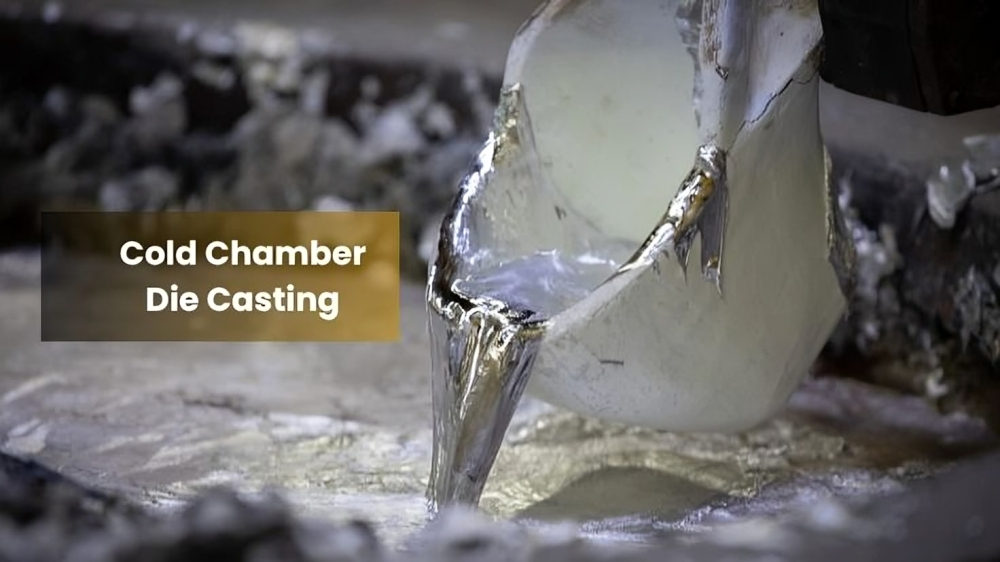
The cold chamber die casting process is initiated by first ladling molten metal into a separate injection chamber and then forcing it out into a steel mould. This process deals with high melting alloys such as aluminium, copper and magnesium. It is a tight-tolerance, high-pressure production process found in the automotive, electronics, and industrial parts production.  What is cold chamber die casting is and when to use it? Cold chamber die casting is a high-pressure moulding of metals, which would ruin or corrode a hot-chamber system. Practically, the operators melt the metal in a different furnace. Then they pour the molten metal into an unheated shot sleeve. The metal is forced into the closed mould by a hydraulic plunger with extreme pressure. The section hardens very rapidly, and the die is opened to spurt out the casting. This can be used when the alloy is of high melting temperature or where the alloy would corrode injection components, such as aluminium and copper alloys. The process sacrifices speed of the cycle for the scale and flexibility of the alloy.  Cold Chamber Die Casting Process Step-by-Step Cold chamber die casting is one of the most reliable techniques for making high-quality metal parts. Every process must be monitored in terms of temperature, pressure and time. Minor variations can impact the surface finish, strength and dimensional accuracy of the end product. Melting the Metal It starts by melting the metal in a separate furnace. Mostly used are aluminium, magnesium and copper alloys. In the case of aluminium, it is typically 650degC and 750degC. It is necessary to keep the melt clean. The impurities are eliminated by the operator with the help of fluxing agents and skimming tools. In case some oxide or gas is left, it may introduce defects such as porosity or inclusions in the future. In high-tech furnaces, a dosing system is the direct connection between the furnace and a die casting machine of China Cold. This guarantees that the temperature and composition of the molten metal are uniform in each shot. Molten Metal to the Shot Chamber Then molten metal is poured into the shot chamber or shot sleeve. This may be done manually or automatically. Manual ladling is easy, less fast and has more chances of entraping air. Automatic ladling systems, in their turn, provide the accurate amounts of metal with low turbulence. Oxidation and gas inclusion can be prevented by controlling the ladling speed and temperature. Others preheat the shot sleeve a little so that it will not suddenly drop in temperature, to allow the fluidity of injection. 3. Injection into the Die Cavity A hydraulic plunger is used to inject the high-pressure molten metal into the die cavity once it is in the shot sleeve. This is the fundamental phase of the cold chamber die casting. Injection pressure varies between 3,000 psi and more than 20,000 psi, depending on the size of the part and the alloy. The injection cycle normally contains two stages: The timeliness of these phases is critical. Recent China cold chamber die casting machinery, servo-hydraulic systems automatically regulate pressure and speed of every shot and guarantee homogeneity. Solidification and Cooling Opening and Part Ejection Die Once the metal has solidified, the die is opened by the machine, after which ejector pins or robotic arms take the casting out. It should be ejected only when fully solidified; otherwise, it is distorted. In complex shapes, there is more than one ejector pin, which guarantees the clean release of the die cavity. Robots take the parts on the automated lines and place them on conveyors to be trimmed and cooled. This increases handling damage reduction and accelerates production. Trimming and Finishing Inspection and Quality Control The last one is inspection and quality control. Every casting is inspected to guarantee that it has the necessary tolerances and quality standards. Popular types of inspection are: The machinery of modern China cold chamber die casting is usually equipped with sensors and software which keep track of all the parameters – Melt temperature, injection pressure, and die temperature, which enables quality monitoring in real time. Optimisation of process and control The quality of outcomes must rely on controlled quality at each step. Safety and Environmental Factors Usually used materials and alloys. The use of a cold chamber is preferred in alloys which cannot be utilised in hot-chamber machines. Most common materials used include aluminium alloys, magnesium, copper and a few combinations of zinc andaluminiumm where corrosion of the injection mechanism should be prevented at all costs. In the automotive structural parts, aluminium alloys prevail. Magnesium is applicable in situations where very lightness is an issue. Both alloys have their own melting point, fluidity and shrinkage behaviour, which need to be handled in mould design and process parameters.  Machinery and features – such as the China cold chamber die casting machine choice. Die casting machines: The Cold chamber die casting machines are made of a robust frame, high pressure injection unit, a hydraulic system and the control electronics. The modern machines provide servo-hydraulics to save energy and enhance control, computer controls to make the shot profiles programmable and integrated auxiliary systems such as die temperature controllers and automatic ladling systems. It is also possible to find China cold chamber die casting machine suppliers that offer a large variety of models and different price ranges in case you are sourcing machines. There are compact models of Chinese manufacturers that fit small shops and large tonnage machines that are appropriate to high-volume production. Chinese constructors tend to package melting and handling equipment to provide a turnkey line as well. Compare machines in terms of check maximum clamping force (tons), volume in the shot, speed control in an injection, die size, and automation.  Essentials of tooling and die design The hardened tool steel is normally die (mould. The design of the die should permit a controlled flow of metals and escaping gaseous air,  and gating and runners geometry and cooling channels in order to

Trykstøbning af hardware

Trykstøbning af hardware: En komplet guide til moderne produktion

trykstøbning

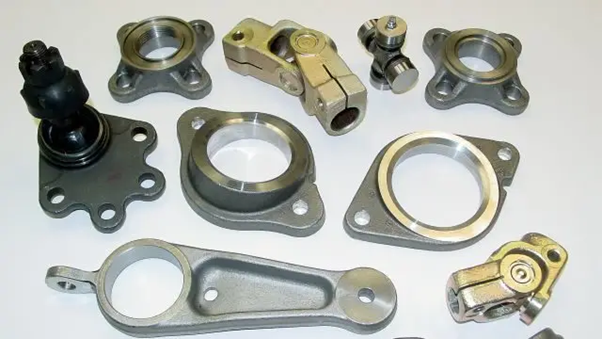
The modern competitive environment in the manufacturing industry has put industries under continuous pressure to manufacture hardware components that are robust, resilient, accurate, and economical. To attain these, firms use contemporary production methods that are quality and efficient. One of the most successful and popular processes is that of hardware die casting among them. Manufacturers are able to create hardware components that bring together complex detail with excellent strength by placing molten metal under high pressure into a mold made of steel. This process is used to produce both elements that have a smooth finish and even quality, as well as producing a significant number of elements at a reasonably low unit price. The relevance of hardware die casting is widespread in an array of industries. It is used in the automotive industry in the manufacture of light but strong components that result in fuel efficiency and safety. It can be used in electronics to make sustained housings, connectors and heat sinks. Precision parts are advantageous to aerospace companies in that they can withstand the harsh conditions, but the construction and furniture industries use them in their functional and decorative fittings. The article will be a complete investigation of the process of hardware die casting and its benefits, process, and materials. We shall also look at the position of the aluminum die casting hardware, the distinct advantages of the use of zinc die casting hardware and the increasing uses of the various parts of die casting hardware in the current industries. What is Hardware Die Casting? Hardware die casting is a specialized manufacturing method, which involves steel molds, otherwise molds, called dies, to form metal parts. This is done by melting metals like aluminum, zinc or magnesium and then forcing the molten metal into a die cavity at high pressure. After hardening of the metal, the mold is opened, and the component is forced out. The word hardware used here means minor yet vital parts such as hinges, brackets, handles, and locks, among other fittings. By casting them in die, the products are uniform, strong and cost-effective in contrast to other traditional methods of production like forging or machining. The Hardware Die Casting Process Design and Mold Preparation Hardware die casting- The die casting process starts by designing and preparing the mold, or die. A mold is designed by engineers using high-quality steel, which is hard enough to endure a higher number of molten metal injection cycles. The two halves of the mold are then molded and assembled to create a hollow into which the part will be shaped. To be efficient, the die will have inbuilt cooling channels to maintain its temperature and ejector pins, which will enable it to be easily released once it has solidified. Melting the Metal Once the mold is ready, the chosen metal is melted in a furnace at well-monitored temperatures. Aluminum and zinc are the most used, and it is important to maintain the appropriate molten state. The constant temperature enables the flowing molten material to fill the mold without forming defects and air bubbles. Injection into the Die After getting the metal to the correct molten state, it is forced into the die cavity with extremely high pressure that may range between 1500 and 25000 psi, depending on the material to be used and the intricacy of the design. It is a high-pressure injection method, which guarantees that all the sections of the mold are filled to the last detail, and the outcome is extremely precise. Cooling and Solidification Immediately the molten metal gets into the mold, it starts cooling and hardening. This process has to be well regulated since either rapid or slow cooling can lead to changes in the quality of the end product in terms of strength and precision. When an appropriate cooling cycle is maintained, the hardware components will be powerful and dimensionally accurate. Ejection and Finishing When the part is solid, the mold is opened, and the component is literally ejected by ejector pins. This is where the product is shaped, but it has excess material commonly referred to as a flash. This is removed and the portion can be subjected to further finishing processes of polishing, anodizing or coating to enhance its looks and workability. The cycle can be subsequently repeated continuously, and the manufacturers can manufacture huge numbers of the same type of die casting hardware parts with very high efficiency. Benefits of Hardware Die Casting Precision and Accuracy Among the most powerful positive aspects of the hardware die casting is the high precision that the process can provide. Complicated designs that are tightly tolerated can be generated in the process, and this can avoid further machining or even completely do away with it. This precision means that all the components fit in their use, be it in a vehicle, an electronic product, or building hardware. The manufacturers also like the fact that they are able to create complex shapes in the same process instead of using various manufacturing processes. Strength and Durability Die-cast metals are recognized to have a strong mechanical ability and outstanding endurance. Hardware components manufactured under the process of hardware die casting are capable of sustaining high weight, repeated application and subject to wear and tear without their functionality being affected. This is the reason why these parts tend to be applied in the most reliable industries, such as automotive and aerospace. Its durability also implies that there is a reduced need to replace products, and this is a value addition to the manufacturer and the end-users as well. Economical when dealing with large quantities The casting process is very cheap when mass production has to be done after the die has been produced. Firms can manufacture thousands or millions of parts of the same type with a very small variation. This capability to produce on a large scale and at a low cost per unit is among the factors that make hardware die casting more desirable compared to other

Fremtiden for støbegods til biler

Fremtiden for støbegods til biler: Innovation, effektivitet og ydeevne

Producent af trykstøbning, trykstøbning

Biler har aldrig været bagud i den teknologiske udvikling. Siden den første stålramme i bilproduktionen til de nyeste letvægtslegeringer er hver del af en bil blevet forbedret gennem innovation for at øge sikkerheden, holdbarheden og ydeevnen. Et af de mest betydningsfulde områder, hvor der er sket fremskridt, er inden for støbning af biler. Det har hjulpet med at designe, producere og optimere køretøjer. Udtrykket støbning af biler kan defineres som den proces, hvor det smeltede metal måles og hældes i formene for at forme indviklede dele af køretøjet. Metoden er præcis, omkostningseffektiv og kan skaleres til masseproduktion. Disse processer er vigtige i industrien, fordi næsten alle køretøjer på vejene i dag har flere dele, der er blevet støbt. Denne artikel undersøger de såkaldte bilstøbningers historie, fremstilling, fordele og fremtid og ser også på, hvordan den såkaldte bilstøbning, trykstøbte bildele og støbte bildele har bidraget til udformningen af den moderne bil. Historien om støbning af biler Støbemetoderne går flere tusinde år tilbage, men det var først i slutningen af det 19. og begyndelsen af det 20. århundrede, at de blev brugt i bilindustrien. De første biler var ineffektive og vejede meget og bestod hovedsageligt af smedede stålkomponenter. Med det øgede behov for at producere i store mængder var producenterne nødt til at finde en billigere og hurtigere løsning. Det var i denne periode, at teknikkerne til støbning af biler begyndte at erstatte de traditionelle. Ved hjælp af støbning kunne bilfabrikanterne fremstille mange af de samme dele i store mængder med mindre spild af materialer. Det førte til masseproduktion, og det var en af grundene til, at almindelige mennesker fik råd til biler under det industrielle boom. Moderne bilstøbning bruger i dag state-of-the-art legeringer, præcise støbeforme og automatisering for at opfylde de høje standarder i de internationale bilstandarder. Hvad er støbning af biler? Støbning af biler er en produktionsproces, der anvendes i bilindustrien til at fremstille dele af deres køretøjer ved at hælde smeltet metal i formene, hvor det størkner og hærder til den ønskede form. Det er en teknik, der gør det muligt for producenterne at fremstille komplekse, langtidsholdbare og nøjagtige dele omkostningseffektivt og med mindre indsats sammenlignet med traditionel bearbejdning eller smedning. Den finder anvendelse i dele til motorblokke, topstykker, gearkassehuse, bremser og ophæng. Ved hjælp af forskellige legeringer som aluminium, støbejern, stål og magnesium giver støbning til biler den styrke, det letvægtsdesign og den holdbarhed, der er nødvendig i moderne biler. Denne teknik er populær, fordi: Almindelige bildele fremstillet ved støbning: Typer af bilstøbning Kort sagt er bilstøbning nødvendig, da den hjælper bilproducenter med at udvikle pålidelige, lette og omkostningseffektive komponenter på massebasis. Moderne biler kan ikke masseproduceres uden. Materialer i støbegods til biler Aluminium Aluminium er et let og korrosionsbestandigt glas og er blandt de mest foretrukne materialer inden for støbegods til biler. Det giver store besparelser i bilernes samlede vægt og forbedrer brændstofeffektiviteten og manøvredygtigheden. Aluminium er også en god varmeleder, og derfor er det godt til motorblokke, topstykker og gearkassehuse. Aluminium bruges til at skabe mange trykstøbte bildele, da det gør det muligt for producenterne at skabe højpræcisions- og letvægtskomponenter uden at miste styrke. Med sin fleksibilitet og stabilitet er aluminium et af de bedste materialer i moderne bilproduktion. Støbejern Andre populære materialer i støbegods til biler er støbejern, fordi materialet har høj styrke, varmebestandighed og slidegenskaber. Støbejern er tungere end aluminium, og det er velegnet til strukturelle og tunge anvendelser som motorblokke, bremsetromler og andre dele af hjulophænget. Strukturen er meget holdbar, hvilket betyder, at sådanne dele kan modstå presset fra langvarig service og høje temperaturer, hvilket gør det vigtigt for køretøjer, der har brug for stærk og pålidelig ydeevne. Stål I støbegods til biler er stål blevet foretrukket på grund af dets høje styrke og fleksibilitet. Varmebehandling af ståldele øger sejheden, så de er ideelle til chassisdele, beslag og strukturelle rammer. Selv om stål vejer mere end aluminium, giver det styrke og bæreevne til nogle af bilens sikkerhedskritiske dele. Det er fleksibelt, og ingeniører kan udvikle komponenter, der opfylder både præstations- og lovkrav. Magnesiumlegeringer Magnesiumlegeringer finder i stigende grad anvendelse i såkaldte bilstøbegods, hvor vægttab er en prioritet. Disse legeringer er meget lette, men giver alligevel tilstrækkelig styrke til ikke-strukturelle dele. Magnesiumdele kan bruges i interiør, motordæksler og visse strukturelle dele, især i højtydende køretøjer og elektriske køretøjer, hvor minimering af den samlede vægt er vigtig for ydeevne og håndtering. Kobberlegeringer Kobberlegeringer laves nogle gange til såkaldte bilstøbegods på grund af deres høje elektriske og termiske ledningsevne. Det er korrosionsbestandige og stærke materialer, som kan anvendes til visse elektriske komponenter eller varmefølsomme dele i det moderne køretøj. Kobberlegeringer er ikke så udbredte som aluminium eller stål, men har nicheanvendelser, f.eks. hvor ydeevne og ledningsevne er vigtig. Kompositmaterialer Nogle producenter eksperimenterer med kompositmaterialer i støbte bildele i takt med udviklingen af bilteknologien. Disse materialer er udviklet til at spare vægt og stadig være stærke, og de kan være meget praktiske i el- og hybridbiler. Kompositter har også bedre varmeregulering og korrosionsbestandighed og er en ny teknologi i næste generation af bildele. Typer af støbeprocesser til biler Bilindustrien anvender en række støbeteknikker, hver med sine egne dele og materialer. Vi vil se på de mest populære: Sandstøbning En af de ældste teknikker er sandstøbning, hvor store, komplicerede komponenter fremstilles ved hjælp af sandforme. Den er bedst egnet til prototyper og tunge dele som f.eks. motorblokke. Trykstøbning Trykstøbning er den proces, der kræver højtryksindsprøjtning af smeltet metal i genanvendelige stålforme. Det er en teknik, der især er relevant til fremstilling af lette, men

Trykstøbning i koldt kammer

Moderne tendenser inden for koldkammerstøbningsteknologi

trykstøbning, Producent af trykstøbning, Dele til trykstøbning

Cold Chamber Die Casting is a precision type of manufacturing technique applied in the manufacture of complicated metal components characterized by high levels of strength and precision. This process can best be used in metals having a high threshold of the melting point, like aluminum, brass, and copper alloys. Cold chamber die casting systems are not placed into molten metal like a hot chamber die casting system; instead, the metal is put into the cold chamber die casting machine by manually ladling metal into the cold chamber die casting machine after it is melted in another furnace. The arrangement wears less on the machine and uses alloys that are tougher. Among the important factors that make companies opt to use this method are the special cold chamber die casting advantages and disadvantages. It has top dimensional accuracy, smooth surface finishes, as well as long cycle times. Nevertheless, its strength and durability of the constituents are its favorites in the automotive, aerospace, and electronic markets. The difference between hot and cold chamber die casting is crucial to make the right choice of the process. Hot chamber die casting is more rapid and applied to metals of low-melting point, such as zinc, whereas the cold chamber die casting system is designed to handle higher temperatures and stronger metals. Manufacturers will also be able to manufacture long-lasting and reliable parts with this process that have a high degree of precision in their specifications. In the present article, we are going to discuss the principle of operation of cold chamber die casting, its main parts, the nature of the metal employed, and technological parameters of cold chamber die casting, including clamping force and cycle time. The cold chamber die casting advantages and disadvantages will also be considered to provide you with a full picture of this important manufacturing process. What is the Cold Chamber Die Casting? Cold Chamber Die Casting: A cold chamber die casting process is a metal casting process where molten metal is ladled either manually or automatically into a separate cold chamber outside the injection system. Thereafter, the metal is pushed with high pressure into a mold cavity, which causes the metal to cool and crystallize in the desired shape. It is usually applied to metal with a large melting point, like brass, aluminum, and copper alloys. The purpose of avoiding corrosion and thermal fatigue that can result in improper working of components of the injection system, unlike in the hot chamber die casting process, where the injection mechanism is suspended in molten metal, the cold chamber process keeps the injection facilities segregated. The application of the practice of the latter, i.e., Cold Chamber Die Casting, is especially advantageous, where the metals used would harm the components, contacting them. High pressure can be used in the injection process itself, and denser, stronger components with a brilliant surface finish and dimensional stability would be possible. Die Casting Process- Step by Step The object of the Cold Chamber Die Casting technique is to make highly accurate and hard metal parts that are frequently composed of alloys that have melt-points that are at high temperatures, such as aluminum and brass. Let us have a step-by-step breakdown of how it works: 1. The External Furnace is used to melt the Metal The process is similar to that of hot chamber casting except that the melting of metal is done in a separate furnace outside. This is required in that the molten metal in the cold chamber casting will cause a high level of heat to be experienced internally that cannot be handled. The metal is melted, after which it is able to be transferred into the casting machine. 2. Pouring the molten metal into the Shot Sleeve Thereafter, the molten metal is ladled into the shot sleeve in the die casting machine. This is manually done or arm-driven. The shot sleeve is a strong, resistant to heat tube into which the metal rests and is later injected. This should be taken very fast to prevent premature solidification. 3. Plunger forces the metal into the die. A steel plunger travels into the shot sleeve and presses the molten metal at high pressure in the die cavities. The force makes sure that the metal fills the mold even in any complicated pattern or with a very thin wall, and decreases the chances of any flaws, such as air pockets. 4. There is the Solidification of Metal within the Die When the mold is filled, the metal starts cooling and solidifying within the die. This solidification step is very important in coming up with a good and precise part. The cooling time is dependent on the part metal, part thickness, and die temperature. 5. The Brass Die and Ejector Pins Force-Out the Casting When the part has solidified, the clamping unit of the machine opens the die, and ejection pins force the casting out of the mold cavity. The portion is then moved to a cooler station or a trimming station. 6. Removal of Flash (Removal of Excess Metal) There is some over metal on the sides called flash that is around the edges of the casting where the halves of the die come together. This is then removed by mechanical trimming, grinding, or machining, depending on what the finish requires. This will prevent the final works from being below the intended shape and tolerance. 7. Die cycle reset and Lubrication The die is washed and greased before entering the next cycle in order to be of good quality and avoid sticking. When the oiling is done, the die is again clamped, and the machine is switched to reset for more cycles. 8. Quality Inspection and finishing This is a complete part that is checked to ensure quality defects do not exist, like cracks, shrinkage, or abnormalities on the surface. Depending on the end-use requirement of the part, it can be subjected to additional machining, surface treatment, or assembled (if required). Metals to be used in the

Trykstøbning med varmt kammer

Trykstøbning i varmt kammer: Et dybt dyk ned i en afgørende produktionsproces

trykstøbning

Hot Chamber Die Casting is a very effective manufacturing process which is used very widely to produce metal parts to very high precision and an excellent finish on the surface. It is particularly suitable for casting metals with low melting points like zinc, magnesium and some alloys containing lead. It is typified by the fact that the injection system is immersed in molten metal, and so, high-speed cycle times and economy of mass manufacturing are possible. One similar place of comparison always pops up when the castings are considered regarding cold chamber die casting versus hot chamber. Although they are both variations of pressure die casting, they differ so much in terms of design, applications, and compatibility of materials used. An example is the hot chamber die casting, which is high-speed die casting where the furnace has been replaced with a machine. That comes with the limitation of the lower-melting-point metals. Conversely, the cold chamber type of machines is more aptly used with those liquids of a high melting point, such as aluminium and brass, since the hot metal does not come in direct contact with the equipment. Hot Chamber Die Casting process is characterised by minimal waste of material, low costs of labour, and complex shapes manufacture with high tolerances. It is popular in such industries as automotive, electronics, plumbing and consumer products. Nevertheless, the decision on whether to use cold chamber die casting or hot chamber is also dependent on the type of material used and the part design aspect. The article examines the important details of Hot Chamber Die Casting, its parts, materials, process description, constraints, and reasons as to why it is an essential process in the contemporary manufacturing industry. What is Hot Chamber Die Casting? Hot Chamber Die Casting is a metal casting technique where the molten metal is injected into a mould cavity at high pressure. The unique part of the given method is where the injection mechanism is placed: It goes directly to the molten metal. Cycle times and production efficiency are high with this setup, especially in metals of low melting point like zinc, magnesium and some lead alloys. Hot chamber. The name describes the system’s hot chamber as the injection mechanism (a plunger and gooseneck) is in constant contact (filled) with the molten metal area. As the plunger descends, it compresses the molten metal through the gooseneck and into the die cavity. As the metal sets, the mould opens, and the part is ejected, and this process is repeated innumerable times. Hot Chamber Die Casting Process Hot Chamber Die Casting Process is a process of high-precision and speed manufacturing technology utilised in the manufacture of metal parts, where the accuracy of the tool is very important, with great surface finishing. It is most appropriate in the alloys of low melting points; zinc, magnesium, and lead are examples of low melting point alloys. Its main characteristics are short cycle times and great material efficiency. The process is extensive in the manufacturing of a variety of products mainly found in the automotive, electronic, appliance, and hardware industry because of its capability to create complicated ends easily at an affordable per-piece price. The hot chamber die casting process is listed below in a stepwise manner: Hot Chamber Die Casting Process- Step by Step Overview 1. The Metal is melted It starts with the molten moulding of the metal (which is usually zinc or magnesium), in an incorporated furnace of the die casting machine. The molten metal is kept at a constant temperature within the metal pot that is directly connected to the casting machine. This unending heat provision ensures that the casting processes are continuous. 2. The process of filling the Injection System In hot chamber systems, there is a portion of the molten metal with a part of a component known as the gooseneck submerged. The plunger, which runs inside the cylinder of injection, is pulled backwards to a position where the molten metal may gush down to the gooseneck into the inlet hole of injection. The next step will involve injecting this metal into the die cavity. 3. Molten Metal injection When the gooseneck is filled, the plunger is either pushed forward by hydraulic or pneumatic pressure, which forces the molten metal through the gooseneck channel into the mould cavity (also called the die). This is done at a high rate and pressure to make sure that the cavity is totally filled before the metal begins to harden. 4. Casting and solidifying in the mould This hot metal in the die is quickly cooled down by the comparatively cold steel of the mould. Solidification takes several seconds, based on the size and complexity of the part. In this step, die cooling channels assist in the removal of heat to ensure that the cycle speed is not reduced and defects such as shrinkage or porosity are avoided. 5. Ejecting and opening of the mould Once the metal has been solidified, the die halves are opened. The ejector system is placed on the movable half of the mould, and it operates under force via the use of ejector pins and forces the completed casting out of the cavity. It is ensured that the part can come out without being damaged during ejection. 6. Secondary operation and Trimming After it is ejected, the piece might contain an extra material called flash, runners or sprues. These are either hand-trimmed or auto-trimmed. The part can be processed further depending on the application, like surface finishing, machining or coating. 7. Repeat Cycle The machine clears and cleans up to be used again. Hot chamber die casting is characterised by having such a quick cycle time, sometimes creating a few finished parts in just 10 to 20seconds according to the complexity and size of the part. Cycle Time and Efficiency The speed is the greatest advantage of the process of hot chamber process. Hot chamber machines. Unlike cold chamber die casting, where the metal has to be ladled

Legeret trykstøbningsvirksomhed i Kina og verden 

Legeret trykstøbningsvirksomhed i Kina og verden 

trykstøbning, Trykstøbningsvirksomheder, trykstøbningsfirma

Alloy die casting is used to produce complicated metal pieces that require tight tolerances and have a very good finish. Among others, it has a major role in the automotive, aerospace, electronics, defence, medical device, and consumer product industries. All over the world, manufacturers work together, and China leads this industry because it has strong infrastructure, well-trained people, and good pricing. CNM Tech Co., Ltd., Sincere Tech, and GC Precision Mould Co., Ltd. are well-known companies in China’s die casting sector, and all of them handle mould design, CNC machining, and final assembly. These manufacturers make use of the very latest technology and follow worldwide quality standards such as ISO 9001. Most of their services support international customers, which gives them a major role in worldwide supply networks. Companies such as Nemak (Mexico), MRT Castings Ltd and Haworth Castings (UK), and PHB Inc. (USA) are good examples of advanced die casting technology outside Asia. Innovation, sustainability, and precision production are central to these companies, which deliver to the aerospace, medical, and electric vehicle sectors, which have strict regulations. Both these firms differ from others by being highly skilled and also placing a strong emphasis on quality, customer care, and green changes. The article discusses several leading die casting companies in China and around the world, highlighting their main qualities, strengths, and why they do well in this business market. Regardless of which part of the world you are looking to outsource to, the given profiles give you useful advice on your best choices. Alloy Die Casting In alloy die casting, liquid metal alloy is pressed with great force into dies made from steel, which can be reused many times. This production method helps create metal parts that are very accurate in their dimensions, smooth, and can be produced very efficiently. Main Characteristics of Alloy Die Casting: 1. Alloys Used: Most of these processes rely on non-ferrous metal alloys, for instance aluminum, zinc, and magnesium, which have their important advantages related to weight, how strong they are, corrosion resistance, and heat conductivity. 2. Process Overview: Melting the alloy happens next, done by putting the material in a furnace. A hardened steel mould receives the molten metal, which enters through a die casting machine. 3. Types of Die Casting are: Here are the main strengths of Alloy Die Casting: Common Applications: 1. CNM Tech Co., Ltd. Year of Establishment: 20+Number of Employees: 100-200Business Type: CNM Tech Co., Ltd. is a precision manufacturing company focused on die casting, CNC machining, and assembly services. Website and Contact Website: https://www.thediecasting.com/Contact: +86 13045898002Email: sales@thediecasting.comAddress: Factory Address: Rm 101, No.40, Donghu Road, Jinglian, Qiaotou town, Dongguan City, Guangdong Province, China. 523520. Company Profile  Making precision aluminum and zinc die-cast components is what The Die Casting Company is best known for. The company offers complete casting services by having the abilities needed for mould design, tooling, CNC machining, surface finishing, and quality testing all in-house. Serving the industries of automotive, electrical, and industrial machinery, it brings together engineering knowledge and ISO 9001 certificates. With aid from modern technology and a customer-friendly approach, The Die Casting Company offers high-performance, low-cost output and unchanging quality. Having its headquarters in India, Codeplay provides custom support and on-time deliveries to clients around the world. Quality Commitment  High quality is important to every task at The Die Casting Company. Starting with checking raw materials, the company uses strict quality control procedures all the way to the testing of finished products. Because it is ISO 9001 compliant, its facilities use the latest equipment and have a team of trained workers. Every single casting is carefully checked for measurements, strength, and appearance to meet what the client needs and what the industry requires. Because of this commitment, customers are happy, products perform reliably, and trust is built for the long run. Why Our Company? 2. Sincere Tech Year of Establishment: 2005Number of Employees: 100-200Business Type: Sincere Tech is one of China’s largest plastic injection mould manufacturers, die-casting producers, machining providers, and assembly providers. Website and Contact Website: https://plas.co/Phone: +86 135 30801277Email: steve@sincere-tech.comAddress: Rm101, N041, Donghu road, JingLian cun, qiaotou town, Dongguan City, Guangdong Province, China. 523000. Company Profile  In 2005, Sincere Tech (plas.co) was founded, and it has become a major Chinese provider of custom plastic injection molds and moulding services. Because of its 18 years in this field, the company is capable of providing extensive solutions such as mould design, CNC machining, die casting, silicone moulding, and assembly. Working in electronics, cars, medicine, and home appliances, Sincere Tech depends on high-tech machines such as 5-axis CNC and CMMs for accuracy and quality. Following international standards, the company observes ISO 9001:2015 and QS 9000:2015 certifications, making sure clients receive quality products within budget. Quality Commitment  At Sincere Tech, everything must be done with quality in mind. The company uses ISO 9001:2015 and QS 9000:2015 standards while making all its products. Through modern tools and strict regulations, Sincere Tech guarantees all its products are made exactly to spec. All processes, from laying out the design to completing assembly, are closely monitored to ensure certain parts are strong, precise, and make the customers happy, which is why it is respected by the industry. Why Our Company? 3.  GC Precision Mould Co., Ltd. Year of Establishment: 1999Number of Employees: 100-200Business Type: Our company, GC PrecisionMould Co., Ltd, does aluminium, zinc, and magnesium die casting, CNC machining, and plastic injection moulding Website and Contact Website: https://aludiecasting.com/Contact: +86 131 4886 5556Email: info@aludiecasting.comAddress: Factory Address 1: No. 30 Huan Zhen Rd, Qi Shi Town, Dongguan City, Guangdong Province, China, 523516 Company Profile  GC PrecisioMould Co., Ltd. began in 1999 and has now become one of the top worldwide suppliers of oddie-casting arts and machined products from nonferrous metals. Fireray Precision Equipment has been in the industry for over two decades and primarily does aluminum die casting, zinc die casting, bronze sand casting, aluminum gravity casting, and CNC precision machining. Based in Dongguan City, Guangdong Province, China, GC PrecisionMould Co., Ltd.

Top 10 trykstøbningsvirksomheder i Kina og USA

Top 10 trykstøbningsvirksomheder i Kina og USA

trykstøbning, Trykstøbningsvirksomheder, trykstøbningsfirma

The die-casting production method remains a fundamental process in making various products throughout multiple industries including automotive production together with aerospace applications and electronic components together with industrial machinery production. It is the process of injecting molten metal into a mold cavity under high pressure to obtain high precision and durable metal components. Numerous die-casting service companies emerged due to rising market demand for high-quality manufacturing solutions. The world’s most accomplished die-casting producers operate from China and the USA driven by both advances in their technological capabilities and strong dedication to manufacturing excellence. The Chinese market functions as a worldwide center for die casting where businesses deliver affordable services with stringent industry requirements. These manufacturers deliver whole service packages that include mold design alongside production services together with surface finishing and assembly solutions. The USA operates through an innovation-focused system while maintaining strict quality standards in addition to precise engineering practices. The die-casting companies in America provide solutions across various industry sectors which deliver exceptional performance qualities. This post is a list of the top 10 die-casting companies in China and the USA, with a history, and capabilities, and serves as a list. The mentioned companies lead the industry because they provide dependable production services at every scale together with specialized die-casting expertise. 1. Sincere Tech Year of Establishment: 2005Number of Employees: 100-200Business Type: Sincere Tech is one of the china’s largest plastic injection mold manufacturers, die-casting producers, machining providers and assembly providers. Website and Contact Website: https://plas.co/Phone: +86 135 30801277Email: steve@sincere-tech.comAddress: Rm101, N041, Donghu road, JingLian cun, qiaotou town, Donggguan City, Guangdong Province, China. 523000. Company Profile A Chinese supplier of plastic injection moulds and moulding services, Sincere Tech is a leading Chinese company. This company was founded in 2005, and stamping metal and plastic, precision plastic injection moulds, CNC machining, die casting and silicone moulding are its competitive edge in the market. Sincere Tech has advanced equipment, NDA protection, competitive prices and 18 years of experience in high-quality production. With injection moulding machines for 60 to 1800 tons that serve electronics, medical, automotive, or cosmetics industries, its components of under 1 gram to 8 kilograms are produced efficiently. Their Quality Commitments Sincere Tech is dedicated to creating products that meet international quality standards as per ISO 9001:2015 and QS 9000:2015. They have been dedicated to quality and this has enabled the company to cultivate a massive demand, exporting it to Finland and other countries. Amongst all the plastic injection molding industry partners that are providing almost the same quality of services, it is sincere Tech that stands out as a trustworthy and innovative partner for plastic injection moulding. Why Choose Sincere Tech? Customers seeking die-casting services from China or the USA should get in touch with these trustworthy manufacturing companies that will provide professional assistance. 2.  CNM Tech Co., Ltd. Year of Establishment: 20+Number of Employees: 100-200Business Type: CNM Tech Co., Ltd. is a precision manufacturing company focused on die casting, CNC machining and assembly services. Website and Contact Website: https://www.thediecasting.com/Contact: +86 13045898002Email: sales@thediecasting.comAddress: Factory Address: Rm 101, No.40, Donghu Road, Jinglian, Qiaotou town, Dongguan city, Guangdong Province, China. 523520. Company Profile Thediecasting.com is the official domain that CNM Tech Co., Ltd. operates under, which is an outstanding Chinese manufacturer of die-casting solutions. The company is a China-based aluminium, magnesium, and zinc die casting; CNC machining; surface finishing, and assembly business headquartered in Dongguan, China. CNM Tech has more than 20 years of experience in the fields of automotive, aerospace, electronics, etc. Due to the high precision manufacturing their in-house tooling shop and advanced CNC machines also ensure. CNM Tech provides all types of polishing, sandblasting, powder coating, oil painting etc. with high-quality finish products matching the needs of users worldwide. Their Quality Commitments CNM Tech Co., Ltd. is provided ISO 9001:2008, TS16949, and ISO 14001:2015 documents. In most cases, these will provide you with the assurance that the management of your company is top-notch and also will guarantee compliance with automotive industry standards and environmentally friendly activities undertaken by the company involved. As a result of strictly following quality and environmental regulations, CNM Tech provides great die-casting solutions with a minimal environmental impact with its excellent reputation in the market. Why Choose CNM Tech Co., Ltd? Customers seeking die-casting services from China or the USA should get in touch with these trustworthy manufacturing companies that will provide professional assistance. 3.  GC Precision Mold Co., Ltd. Year of Establishment: 1999Number of Employees: 100-200Business Type: Our company GC Precision Mold Co., Ltd. do aluminium, zinc and magnesium die casting, CNC machining, and plastic injection moulding. Website and Contact Website: https://aludiecasting.com/Contact: +86 131 4886 5556Email: info@aludiecasting.comAddress: Factory Address 1: No. 30 Huan Zhen Rd, Qi Shi Town, Dongguan City, Guangdong Province China, 523516 Company Profile GC Precision Mold Co., Ltd., operates under Aludiecasting.com is a die casting and precision machining manufacturing site that is one of the leading Chinese manufacturers. The company was founded in 1999 and the services include aluminium, zinc and magnesium die casting, plastic injection moulding, and CNC machining and surface finishing. They have state-of-the-art art machinery such as high-pressure die casting machines (120 – 1600 tons) and injection moulding machines (80 – 2800 tons connected to industries like automotive, aerospace and electronics. They have a very strict quality to provide the exact, durable and cheaper manufacturing solutions throughout the world. Their Quality Commitments GC Precision Mold Co Ltd provides the best die casting and machining solutions as specified in the ISO 9001 certification their quality control is so strict that they test for precision, CMM machines, X-rays and spectrometers to ensure a reliable product. Through strict adherence to international standards, the company ensures delivery of consistent, high-quality components with minimum customer complaints due to the reliability aspect for the reasons indicated in every project. Why choose GC Precision Mold Co., Ltd.? Customers seeking die-casting services from China or the USA should get in touch with these trustworthy manufacturing companies that will provide professional assistance. 4.

Hvad er trykstøbning? Alt hvad du behøver at vide om metalstøbning

Hvad er trykstøbning? Alt hvad du behøver at vide om metalstøbning

trykstøbning

This is a manufacturing process in which molten metal is forced using pressure to fill a mold cavity also known as die casting. The mold is usually of high-quality steel and hence the part can be produced in large quantities the term is used to mean the manufacture of many parts. The finished part is then produced by opening the mold after the molten metal is cooled and forms a solid layer. This kind of use of the process is mostly applied in making intricate metal used in the production of different parts that require high accuracy in measurement and polished surfaces. Die casting can be done on aluminium, zinc, and magnesium but other metals can also be used on a case depending on application and other requirements. Die casting is considered to be one of the expert manufacturing techniques in the conception of mass production of small to medium-sized components out of metals. The popularity of the method has been spread across automotive, aerospace, electronics, and industrial machines due to its ability to produce durable lightweight intricately tailored parts. However, this process is widely recognized for its ability to manufacture products with complex geometry that would be very hard to make using conventional techniques. How Die Casting Works Molding is the first part of the die-casting process. On one side of the mold, there is a half, and it is a half of a particular design to make the mold shaped like the final product. Cavities and cores are designed for the molds that are usually custom-made so that the part can be replicated as closely as possible. 1. Molten Metal Injection: Then the molten metal is injected into the mold cavity under high pressure to form the desired shape. The metal is usually heated to one degree above the melting strain to make it fluid. In die casting, the pressure that the molten metal is pushed into the mold can be from several thousand to tens of thousands of psi (pounds per square inch), to be sure that the molten metal gets into every detail of the mold. 2. Solidification: This occurs when the metal is injected into the casing cavity whereby it cools and the metal hardens. The quality of the casting depends upon the cooling rate. Additional modes of failure (shear, climb, and glide) come into play in this case and result in faster cooling higher strength better surface finish, and slower cooling which could result in more internal defects and lower mechanical properties. Water-cooling systems built into the mold are usually used to assist the cooling process. 3. Ejection: Following this, the metal is allowed to cool and solidify and it is then easy to remove the mold from the larger casting and eject the part. Then most of the time is used in the pushing out part from the mold using a mechanical ejector system. This depends on the complexity of the part that requires other extra steps, namely trimming and machining to deliver the final shape and dimension. 4. Quality Control: A quality check is then performed on a part after ejection. It can involve dimensional verification, visual inspection, and mechanical testing to confirm that the part is equal to or better than the requirements. High precision and repeatability are theoretically achieved in die casting. Types of Die Casting There are two types of Die casting, they are hot chamber die casting and cold chamber die casting. These are all good and have their advantages, limitations and ideal applications. 1. Hot Chamber Die Casting The process most suitable for metals such as zinc, magnesium, and lead is a hot chamber die casting since the process is done at high temperatures, and melting points. The injection system is installed inside the melting furnace in this way, the metal is always in contact with the chamber. Advantages: Disadvantages: 2. Cold Chamber Die Casting The metals that have higher melting points like aluminium, brass and copper are cast in cold chamber die casting. In this case, the molten metal is tapped from a second furnace injected into the cold chamber then into the mold cavity. Advantages: Disadvantages: The Comparison of Die Casting Methods: Hot Chamber vs. Cold Chamber Here is a comparison of the most common types of two die-casting methods, Feature Hot Chamber Die Casting Cold Chamber Die Casting Metal Compatibility Best for low-melting-point metals (e.g., zinc, lead) Best for high-melting-point metals (e.g., aluminium, brass) Cycle Time Faster cycle times Slower cycle times Mold Wear Higher mold wear due to direct contact with molten metal Lower mold wear Cost Lower cost for high-volume production Higher initial cost, but better for high-strength metals Complexity of Parts Good for simpler parts Better for more complex, larger parts Advantages of Die Casting It is one of the largest advantages that die casting is one of the main preferred methods of large-scale production of products from metal alloys. 1. High Precision and Accuracy There are many advantages of die casting, which makes it convenient to offer high die precision. This method of production is also widely used for the production of parts, which requires good dimensional accuracy which is very crucial as it defines tolerance levels required in a specific job. One should note that die casting is the only manufacturing technique that can produce given parts with the utmost complexities such as the intricacies of its geometries.  2. High Production Rates In terms of large volumes, die casting is very efficient. Parts are quickly and cheaply produced once the first mold is created with very little labor involved. The demand for simulated powders is particularly high in industries like automotive and electronics where large volumes of the same parts are required. 3. Complex Designs and Thin Walls Complex design can be achieved by die casting, which would be difficult or impossible to achieve by traditional manufacturing methods. The process can make parts with thin walls, and complex internal structures, and can accommodate undercuts; thus making it the

Almindelige produktionsfejl i højtryksstøbning: Årsager, forebyggelse og løsninger

Støbning af aluminium, trykstøbning, trykstøbning under højt tryk

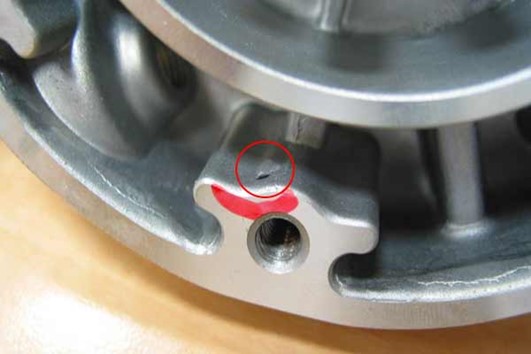
Højtryksstøbning (HPDC) er en af de mest anvendte metalstøbningsprocesser i den nuværende produktion. Producenter vælger HPDC, fordi den muliggør produktion af komplekse metaldele, der både opnår høj præcision og hurtige produktionshastigheder, overlegen dimensionel nøjagtighed og glat finish. HPDC gør det muligt for bil- og luftfartsindustrien og produktionen af elektronikkomponenter og forbrugsvarer at fremstille lette, holdbare dele til applikationer som motorer og huse, strukturelle elementer og mekaniske samlinger. Fremstillingsprocessen for højtryksstøbning står over for adskillige risici, der skaber betydelige defekter, som reducerer produktkvaliteten, samtidig med at levetiden forkortes og ydeevnen forringes. Forskellige defekter opstår på grund af forkert formdesign, turbulent strømning af smeltet metal, indesluttede gasser, inkonsekvente kølehastigheder og termisk stress under produktionsprocessen. HPDC-teknologien støder på syv primære defekter, som omfatter porøsitet, kolde lukninger, krympningsfejl, flashdannelse, overfladedefekter, fejlkørsler, matriceerosion og lodning. Disse typer produktionsfejl forårsager forringelse af materialestyrken, samtidig med at de giver uregelmæssige dimensioner og uønskede visuelle effekter, som kan føre til nedbrydning af komponenter. Producenter bekæmper produktionsproblemer gennem optimering af forarbejdningsparametre og bedre undermineringsmetoder sammen med kontrollerede temperatursystemer og vakuumassisterede støbeprocedurer. Realtidsovervågning og simuleringssoftware er avancerede kvalitetskontrolmetoder med yderligere effektivitet og pålidelighed i trykstøbningsprocessen. Denne artikel giver en omfattende analyse af standardproduktionsproblemer under højtryksstøbning med forklaringer på de grundlæggende årsager og løsningsstrategier for at mindske disse fejl. Det er kun ved at forstå disse udfordringer og anvende bedste praksis, at producenterne kan forbedre kvaliteten, levetiden og selvfølgelig ydeevnen af deres trykstøbte komponenter og samtidig skære ned på spild og produktionsomkostninger. Kendskab til disse produktionsfejl vil hjælpe trykstøbningsingeniører, produktionsledere og kvalitetskontrolspecialister med at optimere deres processer for at opnå de bedste trykstøbningsresultater. 1. Porøsitet Porøsitet defineres som små huller eller gasindeslutninger, der findes i metalmatrixen, og som derfor påvirker de mekaniske egenskaber, mindsker styrken, gør det muligt for luft og gasser at passere gennem strukturen og fører til synlige overfladefejl i trykstøbte produkter. Årsager: Forebyggelse og løsninger: 2. Cold Shut En cold shut opstår, når to strømme af smeltet metal ikke smelter ordentligt sammen og danner svage bindingsområder eller synlige sømme i støbningen. Denne fejl mindsker ikke kun den mekaniske styrke, men øger også risikoen for brud og har en negativ indvirkning på komponentens holdbarhed og udseende. Årsager: Forebyggelse og løsninger: 3. Krympningsdefekter Krympningsdefekter opstår på grund af krympning af metal under afkøling, hvilket fører til indre hulrum eller hulrum, som forringer støbningens strukturelle integritet. Som følge heraf reducerer disse defekter slutproduktets mekaniske styrke, forårsager potentiel svigt under stress og forårsager dårlig overfladekvalitet, hvilket påvirker både funktionaliteten og æstetikken i slutprodukterne. Årsager: Forebyggelse og løsninger: 4. Flashdannelse Overskydende tynde metallag, der dannes ved skillelinjen eller værktøjsspalten på grund af metaludslip under højt tryk, kaldes flash. Selvom flash kan trimmes af efter støbning, fører over-flash til øget materialespild, værktøjsslitage og tilhørende produktionsomkostninger og reducerer dermed den samlede effektivitet af trykstøbningsprocessen. Årsager: Forebyggelse og løsninger: 5. Inspektion af overfladefejl (blærer, revner og rynker) En række overfladefejl, blærer, revner og rynker, forringer støbningens visuelle udseende og mekaniske styrke og skal forebygges og elimineres. Det forårsager svejsedefekter, der reducerer produktets holdbarhed, øger afvisningsprocenten og får produktet til at hænge dårligt fast efter behandlinger efter støbningen, f.eks. maling eller belægning. Årsager: Forebyggelse og løsninger: 6. Indeslutninger og forurening Uønskede fremmede partikler som slagger, oxidfilm, snavs eller andre urenheder, som er fanget i en endelig støbning, skaber dårlige mekaniske egenskaber, svag strukturel integritet og overfladefejl og kaldes indeslutninger. Tilstedeværelsen af disse forureninger kan reducere trykstøbte komponenters ydeevne og holdbarhed, så de ikke er egnede til applikationer med høj præcision. Årsager: Forebyggelse og løsninger: 7. Fejlstøbninger og ufuldstændig fyldning En fejlstøbning opstår, når der er en kort fyldning af formhulrummet, hvilket forårsager manglende sektioner, tynde vægge og svage punkter i den endelige komponent. Det har negative effekter på emnets strukturelle integritet og funktionalitet og er på den måde uegnet til applikationer med høj ydeevne. Årsager: Forebyggelse og løsninger: 8. Erosion og slid af smelteværktøj er tabet af formoverflader på grund af højhastighedsmetallet, der kontinuerligt slider formdelens overflader, indtil de krævede dimensioner er opnået, hvilket resulterer i dårlig overfladefinish og kort levetid for formværktøjet. Hvis denne fejl opstår, er det almindeligt at udskifte formen, og derfor stiger produktionsomkostningerne, mens støbekvaliteten varierer. Årsager: Forebyggelse og løsninger: 9. Varmrevnedannelse Revner, der opstår i metallets halvfaste tilstand på grund af høj termisk stress og overdreven krympning, kaldes varmrevnedannelse. Disse revner forringer støbningens mekaniske integritet, hvilket øger risikoen for, at støbningen svigter på det sted, hvor revnerne er til stede under stress eller belastning. Årsager: Forebyggelse og løsninger: 10. Lodning Det smeltede metal klæber til formens overflade, hvilket er vanskeligt at fjerne ved støbning, hvilket forårsager overfladefejl, slid på formen samt forlænget produktionsstop. Dimensionelle unøjagtigheder og dårlig overfladefinish er også forårsaget af denne fejl, da det resulterer i en generelt forringet kvalitet af det endelige produkt. Årsager: Forebyggelse og løsninger: Konklusion Højtryksstøbning er en kraftfuld fremstillingsproces, der skaber komplekse metaldele med stor nøjagtighed og maksimal effektivitet. Der opstår dog forskellige slags defekter ved hjælp af forkerte procesparametre, materialeproblemer og/eller fejl i formdesignet. Producenter kan træffe forebyggende foranstaltninger, f.eks. optimal processtyring af formen, korrekt materialevalg osv. efter at have forstået disse sædvanlige produktionsfejl. En virksomhed kan forbedre produktkvaliteten, sænke produktionsomkostningerne og opnå højere produktionseffektivitet ved trykstøbning ved at lægge vægt på løbende procesforbedringer og strategier til forebyggelse af defekter. Ofte stillede spørgsmål (FAQ) 1. Hvad er de vigtigste årsager til fejl i højtryksstøbning? De vigtigste årsager

Virksomhed til fremstilling af trykstøbning

Trykstøbningsprocessen trin for trin

støbeforme af aluminium, trykstøbning af aluminium, trykstøbning, trykstøbning af aluminium, Trykstøbningsvirksomheder, trykstøbningsfirma, Producent af trykstøbning

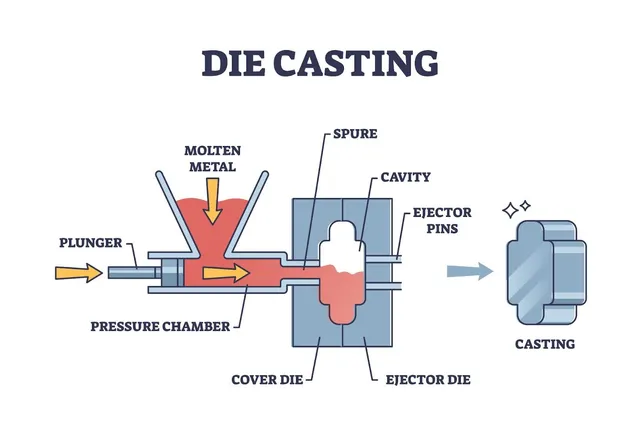
Klatrefasen: Det første trin er at forberede formhalvdelene til støbning ved at rengøre fladerne på hver form og derefter påføre smøring eller slipmiddel. Når formen er klargjort, lukkes formhalvdelene og spændes sammen med et tryk fra trykstøbemaskinen. Spændekraften afhænger af maskinens størrelse, men skal være større end den modsatte kraft, der forsøger at åbne matricen under støbeprocessen. Indsprøjtningsfasen: Barrerne lægges i ovnen og holdes smeltet ved en bestemt temperatur alt efter, hvilket metal der skal bruges. Det smeltede metal overføres til et indsprøjtningskammer og sprøjtes ind i den lukkede form med et tryk på mellem 1000 og 20.000 psi. Trykket opretholdes, mens metallet størkner. Mængden, der sprøjtes ind i matricen, kaldes ‘skuddet’ Indsprøjtningen af metal i matricen er meget kort, hvilket sikrer, at metallerne ikke begynder at størkne, før matricen er helt fyldt. Afkølingsfasen: Når indsprøjtningen er færdig, skal det smeltede metal størkne, før matricen åbnes. Afkølingstiden afhænger af emnets geometri og metallets termodynamiske egenskaber. Emnets vægtykkelse spiller en stor rolle for afkølingstiden; jo tykkere vægsektionen er, desto længere afkølingstid kræves der. Udstødningsfasen: Når køletiden er gået, kan de to matricehalvdele åbnes. En udstødningsmekanisme skubber derefter den størknede støbning ud af formen. Udstødningskraften bestemmes af emnets størrelse, og man skal huske på, at emnet krymper under afkølingsprocessen og har tendens til at klæbe til formens overflade. Når emnet er skubbet ud, kan matricen lukkes, så den er klar til næste indsprøjtningscyklus. Trimmingsfasen Under afkølings- og størkningsfasen størkner støbningen som en komplet støbt enhed, der omfatter emnet, flash og et eventuelt løbesystem. Dette overskydende materiale skal trimmes af, så der kun er det støbte hovedprodukt tilbage. Metoden til trimning omfatter trimmeværktøjer, båndsav og manuel klipning. Alt afkortet metal bliver enten skrottet eller genanvendt, hvis det er tilladt. Fordele ved trykstøbning: Trykstøbning er hurtig Trykstøbning kan produceres på få sekunder for hver del og i mængder på hundreder til tusinder af metaldele hver dag. Nær nettoform Trykstøbning produceres “nær nettoform”, uanset hvor kompleks formen er, og hvor snævre tolerancerne er. Lettere vægt Trykstøbning er stærkere på grund af materialets overflade og ikke materialets tykkelse, så dele kan veje mindre med tyndere støbevægstykkelser. Trykstøbning er alsidig Mange flere emneformer og -størrelser kan produceres ved hjælp af trykstøbningsprocessen. Trykstøbning er holdbart Trykstøbte dele er af metal og har en lang levetid. Trykstøbninger er billige Trykstøbninger er hurtige at producere og ubrugelige materialer. Trykstøbning er typisk billigere end de fleste andre fremstillingsprocesser for metaldele.    

Rul til toppen

Få et tilbud